Desert painting: its unique characteristics
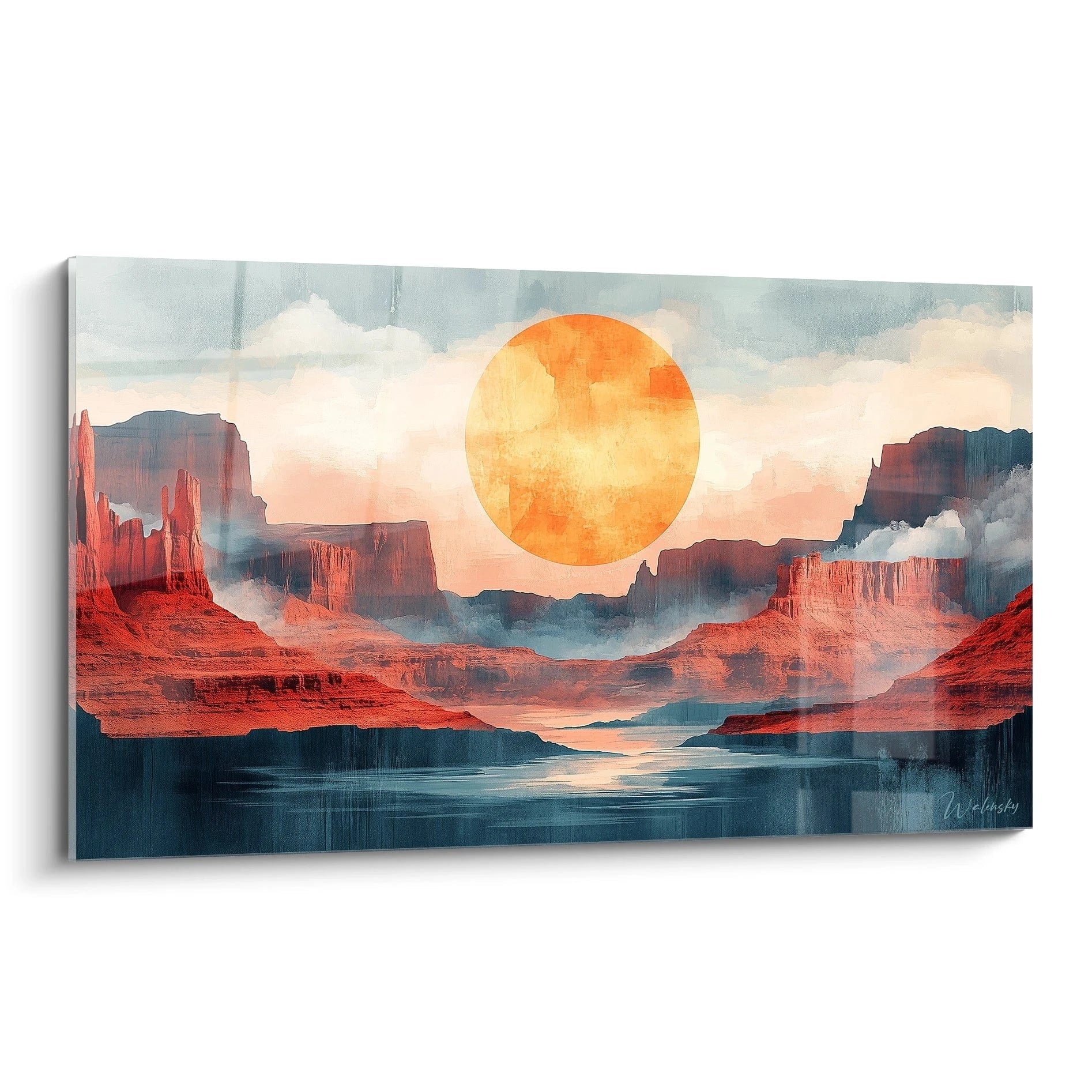
Discover this captivating desert painting where an imposing orange sun dominates the center of the composition, bathing the entire work in warm and enveloping light. The reddish rock formations rise majestically on either side, creating a spectacular canyon traversed by a watercourse with bluish reflections. The ethereal mist rising between the cliffs adds a mystical dimension to this desert artwork, where the balance between warmth and coolness creates a striking visual tension.
How this monumental desert canyon painting is structured
The composition of this desert painting is built around a perfect balance between verticality and horizontality. The imposing red cliffs frame the scene like a natural theater, guiding the gaze toward the central focal point: the solar orb in orange hues that radiates across the entire canvas. This symmetrical structure imparts a meditative stability to the whole, while the diagonal lines of the rock formations create subtle dynamism.
The perspective is treated with remarkable atmospheric depth, with foreground elements being more defined than distant formations that fade into the mist. The water winding through the center functions as a unifying element, visually linking the different zones of the desert painting while offering a vanishing line that guides the eye toward the horizon.
The colors of the desert painting and their harmony
The chromatic palette of this desert painting is structured around a striking contrast between warm and cool tones. The dominant colors are the vibrant terracotta reds and oranges of the cliffs, which capture the intense sunlight as if the rock itself were molten. These warm tones are balanced by the deep and soothing blues of the water and sky, creating a classic yet powerful complementary harmony.
The pastel shades of the sky and the vaporous whites of the clouds and mist bring a delicacy that contrasts with the telluric force of the rock formations. The emotional impact of this palette evokes simultaneously the arid heat of the desert and the soothing coolness of the oasis, creating a visual experience rich in sensory contrasts. The transitions between colors are particularly refined, with subtle gradations that suggest the natural variations of light on different surfaces.
- Terracotta red: dominant in the cliffs and mountains
- Golden orange: radiating from the central sun
- Cyan blue: present in the water and shadowed areas
- Pale pink: illuminating the sky at the horizon
- Pearlescent white: bringing lightness to the clouds and mist
Textures and technical details of the panoramic desert painting
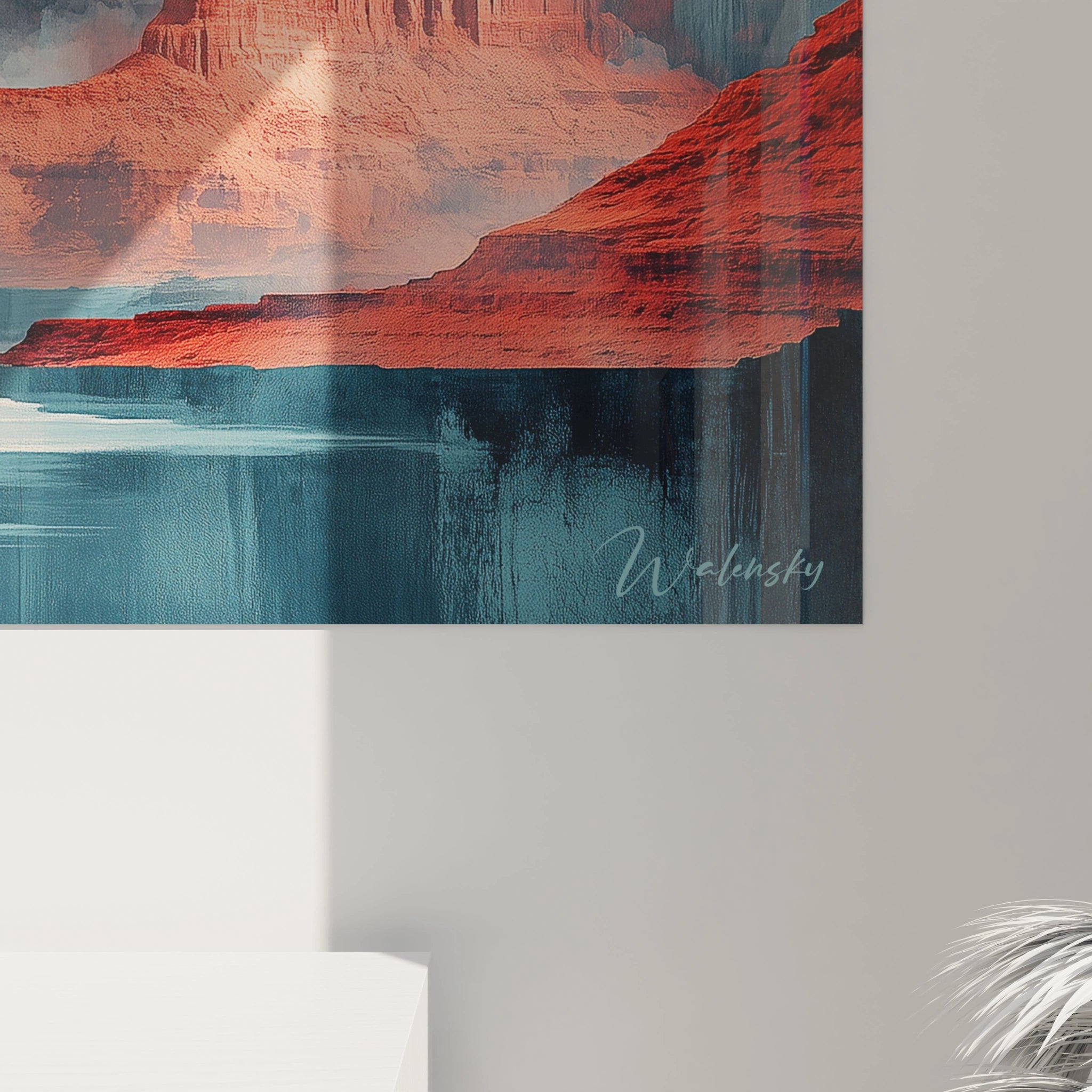
This desert painting reveals exceptional mastery of contrasting textures. The cliffs present a dense and granular quality that perfectly evokes the roughness of eroded rock, with clearly visible strata that tell the geological story of these formations. This texture is achieved through meticulous layering of pictorial layers and the probable use of scraping techniques to reveal the colored underlayers.
Conversely, the water surface is treated with remarkable fluidity, where light horizontal strokes and translucent touches create the illusion of movement and reflections. The central sun presents a particularly interesting texture, with a light diffusion effect obtained through plays of transparency and subtly blended chromatic transitions. The whole testifies to a mixed technique probably combining acrylic and texturing mediums, making it possible to achieve these different textural effects that enrich the visual experience of the desert painting.
What makes this desert sunset painting unique
The uniqueness of this desert painting lies in its ability to capture a transitional moment where light radically transforms the landscape. The representation of the sun is not merely an element of the composition but becomes a character in its own right, a quasi-divine presence that radiates and transfigures the entire canyon. This personification of the solar orb gives the work a cosmic dimension that transcends simple landscape representation.
The mist rising between the cliffs adds a distinctive element rarely observed in traditional representations of desert landscapes, suggesting a more complex and mysterious microecosystem. This desert wall decoration succeeds in capturing not only the visual appearance of a place, but also its atmospheric and energetic essence, thus creating an immersive experience where the observer can almost feel the heat of the sun and the coolness of the water.
Depth and details of the desert painting
Viewed from afar, this work immediately captivates through the visual impact of the contrast between the perfect circle of the orange sun and the reddish rock formations. The overall impression is one of harmonious balance between natural elements, with a coherent chromatic palette that immediately evokes the iconic landscapes of the American West, transformed by the magic of a sunset.
Upon closer approach, the desert painting reveals unsuspected wealth of detail. The geological strata of the cliffs become visible, telling millennia of Earth's history. The subtle variations of hues in the sky testify to a profound understanding of atmospheric light phenomena. The reflections on the water show meticulous observation of how light interacts with liquid surfaces. This attention to micro-details transforms an apparently simple scene into an endless visual exploration, where each glance reveals new elements to appreciate.
Where and how to showcase your large-format desert painting
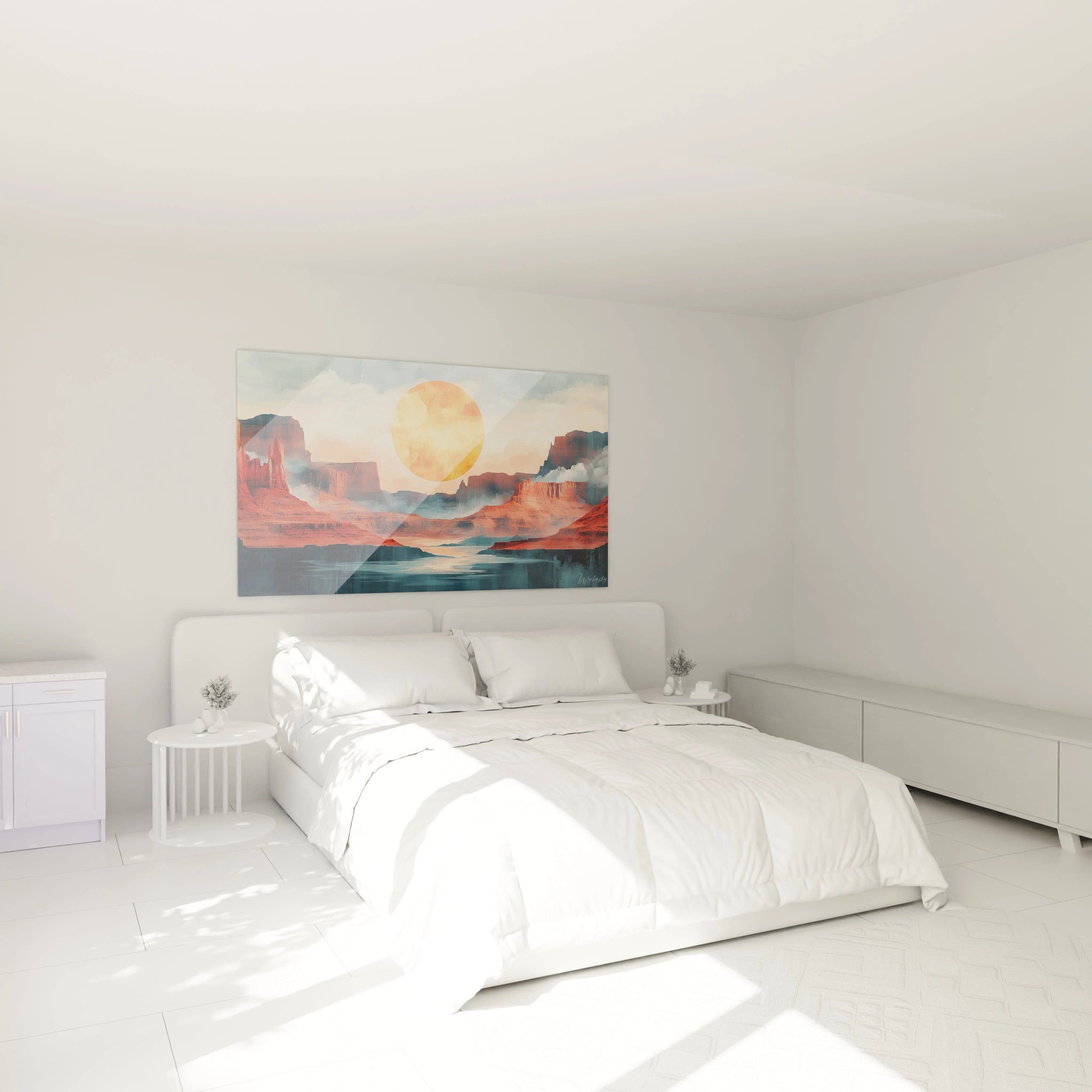
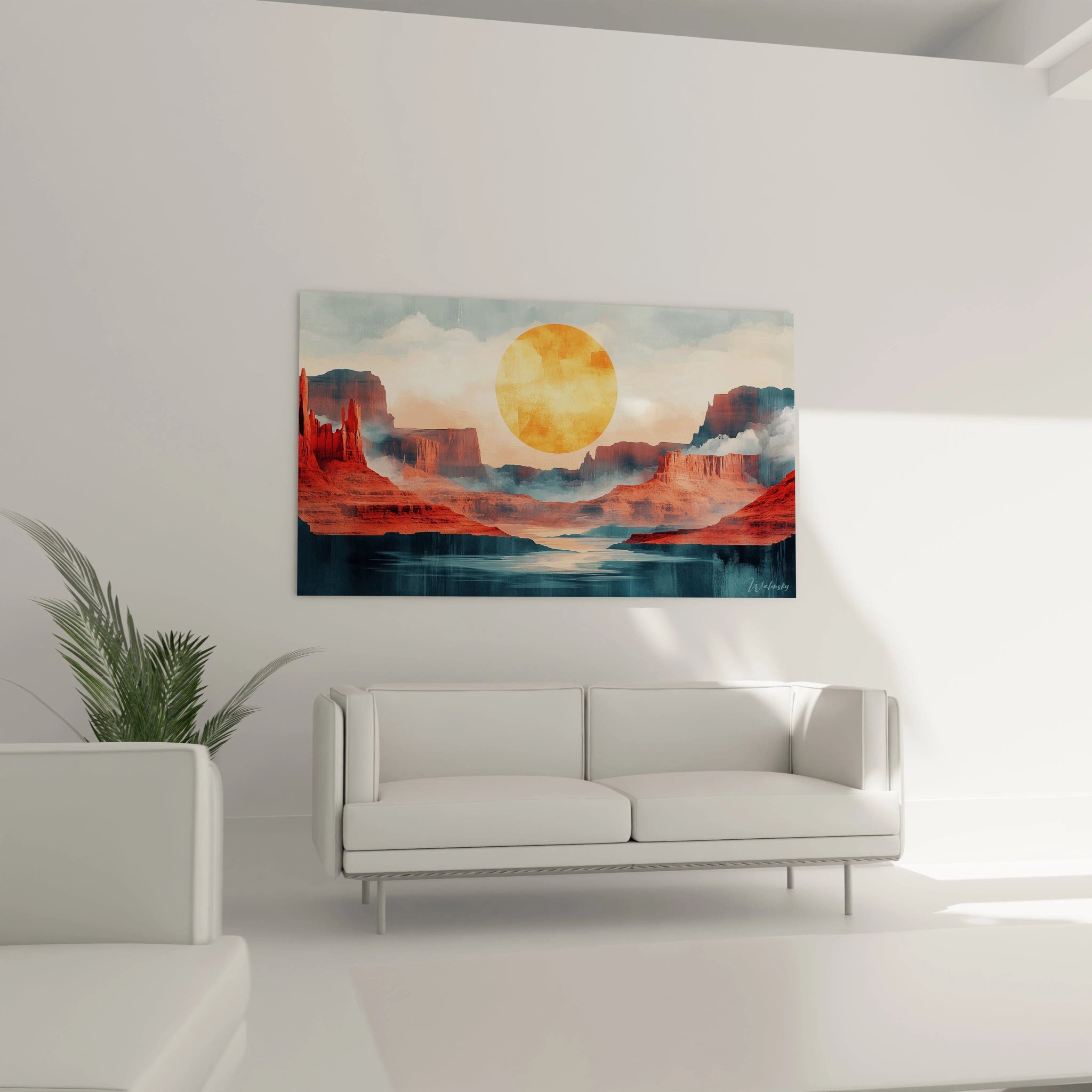
This desert painting will flourish particularly in a main living space with neutral tones, such as a living room or dining room with white or beige walls that will allow the vibrant colors of the work to shine fully. For optimal effect, position it on a clear wall where it can be admired without visual obstruction, ideally facing an indirect natural light source that will reveal all its nuances without creating annoying reflections.
Lighting is crucial to enhance this desert painting. Opt for a warm-temperature LED spotlight (around 3000K) directed toward the work, which will accentuate the orange and red tones while creating soft shadows that reinforce the depth effect. Avoid light sources that are too cold, as they would mute the warm hues that are the strength of this composition. In terms of decoration, pair it with streamlined furniture in natural materials like dark wood or havana leather that will echo the earthy tones of the work, thus creating a harmonious dialogue between your décor and this striking desert landscape.