Aerial view geological canvas: its unique characteristics
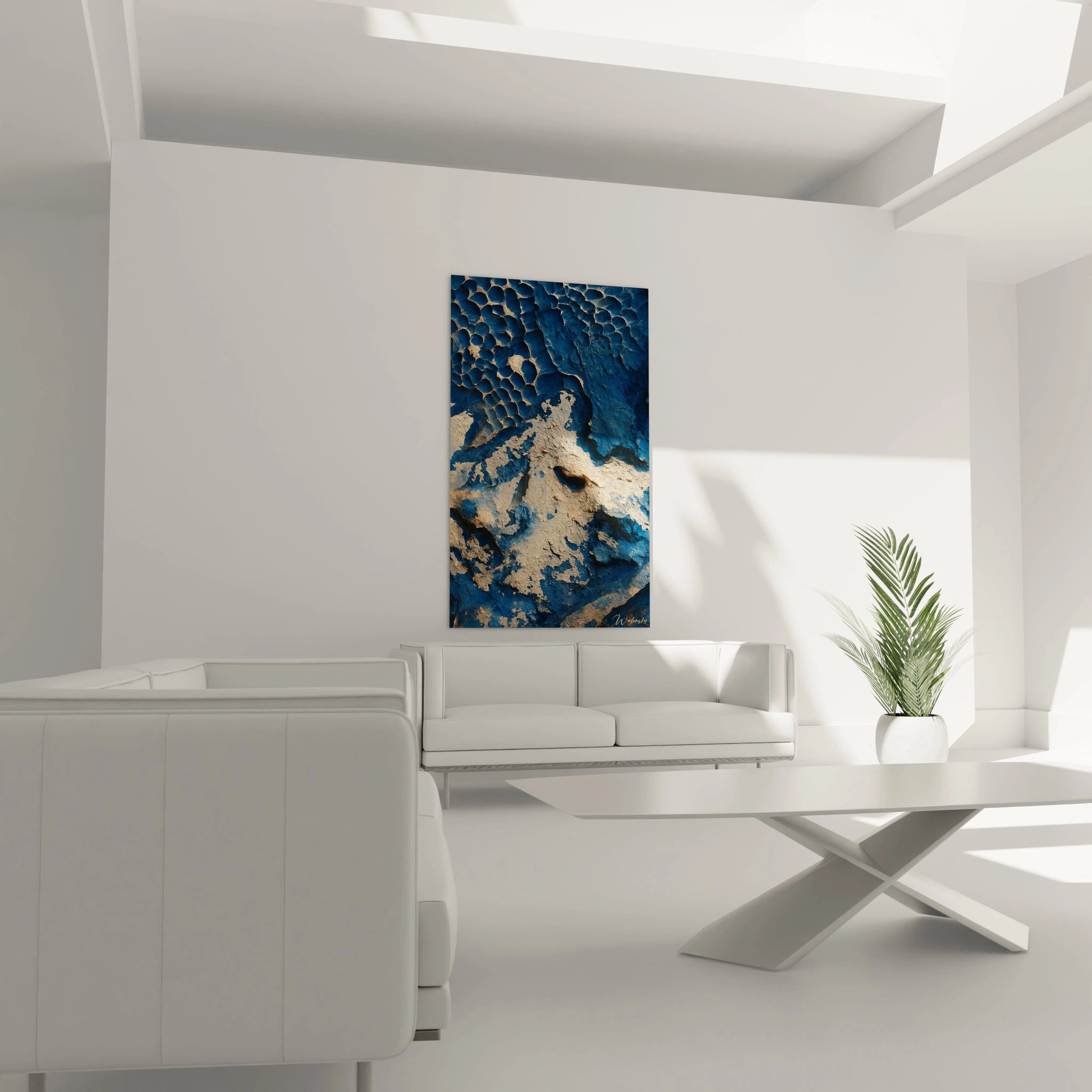
This aerial view geological canvas captivates instantly through its striking representation of rock formations seen from the sky. The work presents a fascinating perspective where alveolar textures and eroded surfaces meet, creating the perfect illusion of a natural landscape observed from above. The balanced composition between deep blue zones and beige sections creates an immediately identifiable terrestrial-celestial contrast.
What immediately distinguishes this aerial view canvas is its ability to transform organic textures into abstract cartography. The cellular formations in the upper part evoke rare geological structures one might discover when flying over desert or coastal regions, offering a visual experience at the intersection of art and geography.
How is this textured aerial view canvas structured
The composition of this textured aerial view canvas is organized around a subtle dialogue between rough and smooth surfaces. The upper half presents a distinctive alveolar structure with deep blue cells delimited by beige contours, creating an organic pattern that naturally guides the eye toward the center of the work.
The demarcation lines between different zones create a dynamic balance, with a progressive transition from cellular structures to flatter surfaces in the lower part. This spatial organization gives the textured aerial view canvas remarkable depth, inviting the observer to visually explore every corner of this artistic geography as if actually flying over this landscape.
The colors of the aerial view canvas and their harmony
The chromatic palette of this aerial view canvas is articulated around a striking contrast between:
- A deep and intense blue, almost cobalt, that dominates the upper zones
- A warm beige with earthy nuances that extends mainly in the lower part
- Subtle transitions toward navy blue tones in shadowed areas
- Delicate ochre touches that warm certain transition zones
This chromatic harmony of the aerial view canvas generates an immediate sense of contemplation. The blues recall marine depths or shadows cast over canyons, while the beiges perfectly evoke desert plateaus or sandbars seen from above. This chromatic duality creates visual balance that amplifies the aerial perspective effect.
Textures and technical details of the alveolar aerial view canvas
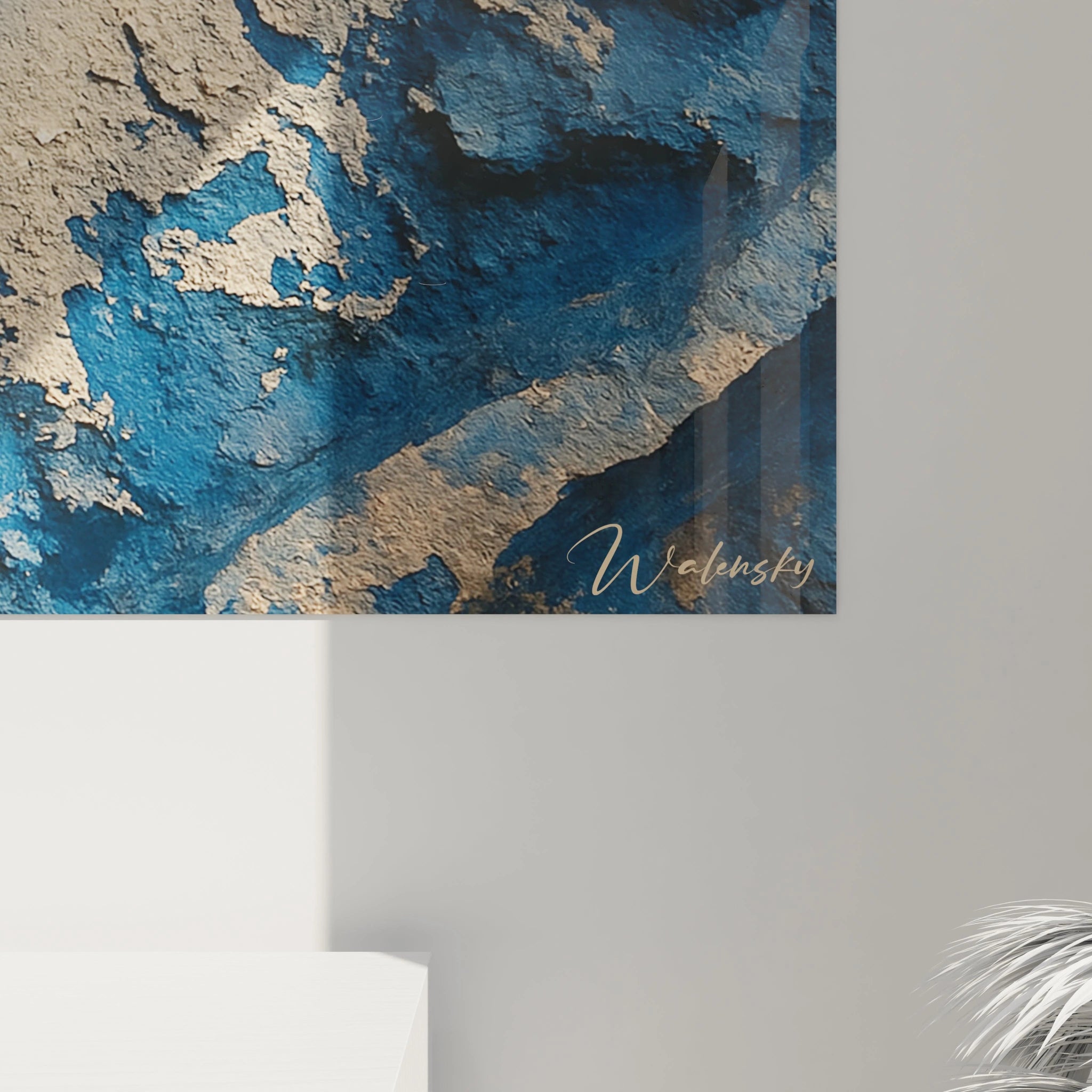
This alveolar aerial view canvas stands out for its exceptional tactile richness. The surface presents pronounced reliefs that capture light dramatically, creating a play of shadows and depths that reinforces the illusion of real topography. The cracked textures and cellular structures seem to have been created by successive material accumulation, then partially eroded.
The technique employed for this alveolar aerial view canvas reveals remarkable mastery of material effects. The blue zones present a smoother but deeper texture, contrasting with beige sections showing signs of crumbling and erosion. This juxtaposition of different textures amplifies the impression of contemplating genuine geological landscape formed by millennia of natural erosion.
What makes this geological aerial view canvas unique
The uniqueness of this geological aerial view canvas lies in its ability to merge abstraction and naturalistic representation. The work constantly oscillates between these two readings: viewed closely, it reveals fascinating abstract textures; observed as a whole, it immediately evokes a real landscape captured from above. This duality creates a rich and complex visual experience.
The geological wall decoration also presents particularly detailed cellular formations in its upper part reminiscent of certain rare natural phenomena such as "Giant's Causeway" or honeycomb limestone formations. This reference to existing but uncommon natural structures gives this aerial art a documentary dimension that transcends its purely decorative value.
Depth and details of the aerial view canvas
The visual experience of this aerial view canvas transforms considerably depending on observation distance. From afar, the work offers a coherent view of a structured landscape with marked chromatic contrasts between blue and beige. This overall perspective allows full appreciation of the flyover effect provided by the composition.
Moving closer, the aerial view canvas reveals a multitude of fascinating micro-details: fine cracks in beige zones, subtle variations in blue cavity depths, and gradual transitions between different textures. This wealth of detail invites prolonged contemplation, as if the observer realized a progressive zoom over unexplored territory, discovering new geological wonders at each observation level.
Where and how to showcase your textured aerial view canvas
To enhance this textured aerial view canvas in your interior, favor a location where natural light can play with its reliefs without creating direct reflections. A background wall in a contemporary living room or designer office makes an ideal setting, offering enough distance to appreciate both the overall composition and fine details of the work.
Lighting plays a crucial role in fully showcasing this textured aerial view canvas. Opt for soft directional lighting, slightly angled, that will highlight the reliefs and cavities of the surface. Regarding environment, pair this geological wall decoration with streamlined furniture in neutral tones - light gray, off-white or matte black - that will allow the work to express itself fully without excessive visual competition.