Desert Canyon Painting: Its Unique Characteristics
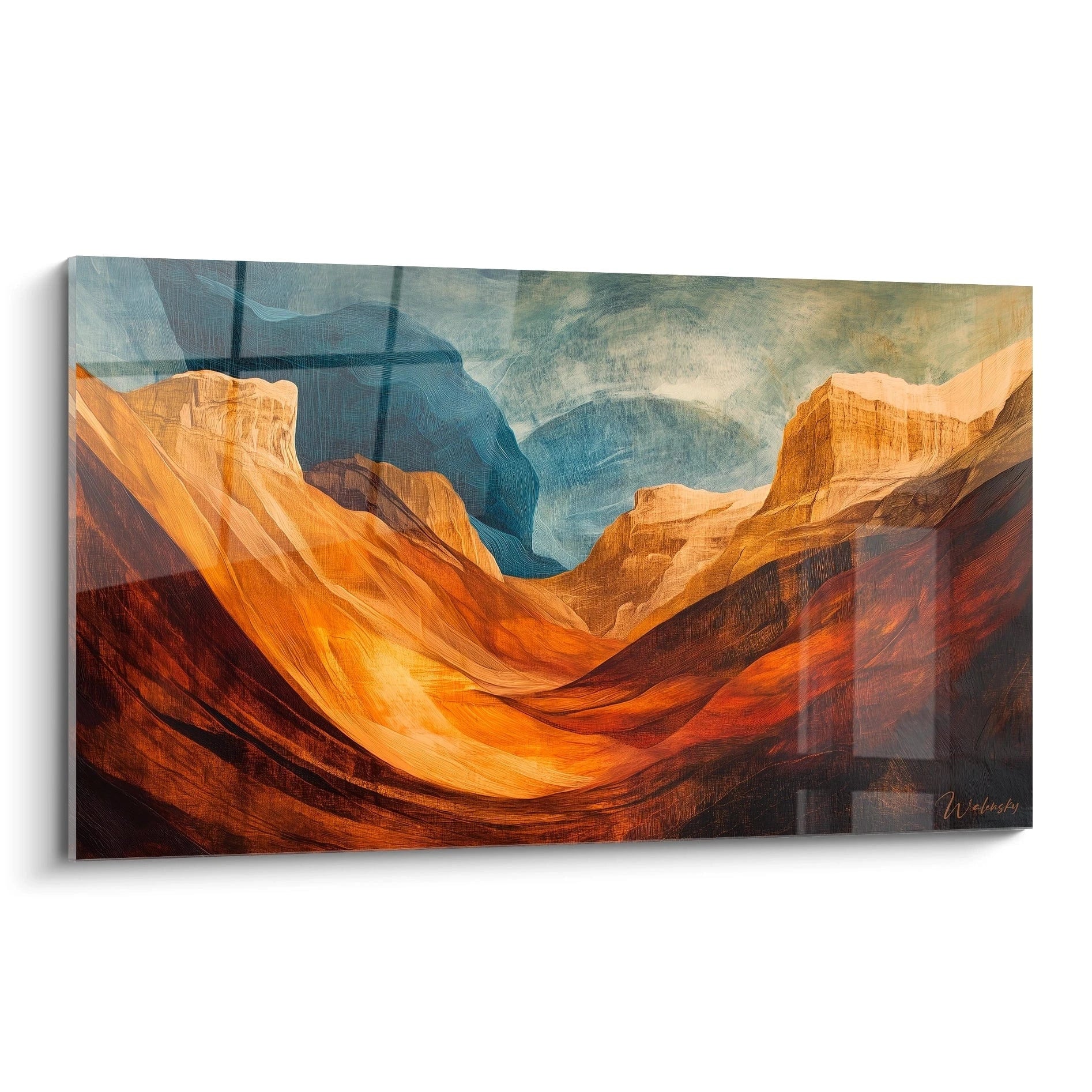
This desert canyon painting immediately captures attention through its striking play of contrasts between the warm tones of rock formations and the soothing blue sky. The work presents a majestic valley framed by sculpted cliffs with orangish and reddish hues. The first impression is one of total immersion in a grandiose landscape where light seems to emanate from the rocks themselves. The pictorial technique creates a sense of movement in the rocky strata, as if the desert canyon painting captures the very essence of the millennia of erosion that shaped these spectacular formations.
How This Flaming Ochre Canyon Painting is Structured
The structure of this flaming ochre canyon painting is based on a V-shaped composition that naturally guides the eye toward the center of the work. The rocky walls frame the scene majestically, creating a striking depth effect that invites the viewer to visually penetrate the canyon. The directional lines converge harmoniously toward the horizon, where the bluish sky meets the last mountain reliefs, establishing a natural vanishing point.
The perspective adopted places the observer at the very heart of the canyon, as if standing at the bottom of this majestic valley. This balanced composition plays with the proportions of the cliffs that occupy the lower two-thirds of the work, conveying a sense of monumentality while preserving the space necessary for the sky to bring lightness and openness to the whole.
The Colors of the Desert Canyon Painting and Their Harmony
The chromatic harmony of this desert canyon painting is based on a masterful complementary contrast between the warm tones of rock formations and the cerulean blue sky. The palette articulates around:
- A dominant vibrant orange that radiates the cliffs, evoking the intense heat of the desert
- Shades of deep red that accentuate the shadows and reliefs of the rock walls
- Subtle transitions toward ochre and gold on the parts most exposed to light
- A gradient of blues ranging from pale turquoise to sky blue that brings freshness and depth
These chromatic contrasts create a dynamic visual tension that animates the entire work. Light appears to come from a source located outside the frame, illuminating the flanks of the mountains and producing a dramatic effect that sublimates the canyon's reliefs. This orchestration of colors generates an impression of almost palpable warmth that dialogues with the ethereal freshness of the sky.
Textures and Technical Details of the Luminous Grand Canyon Painting
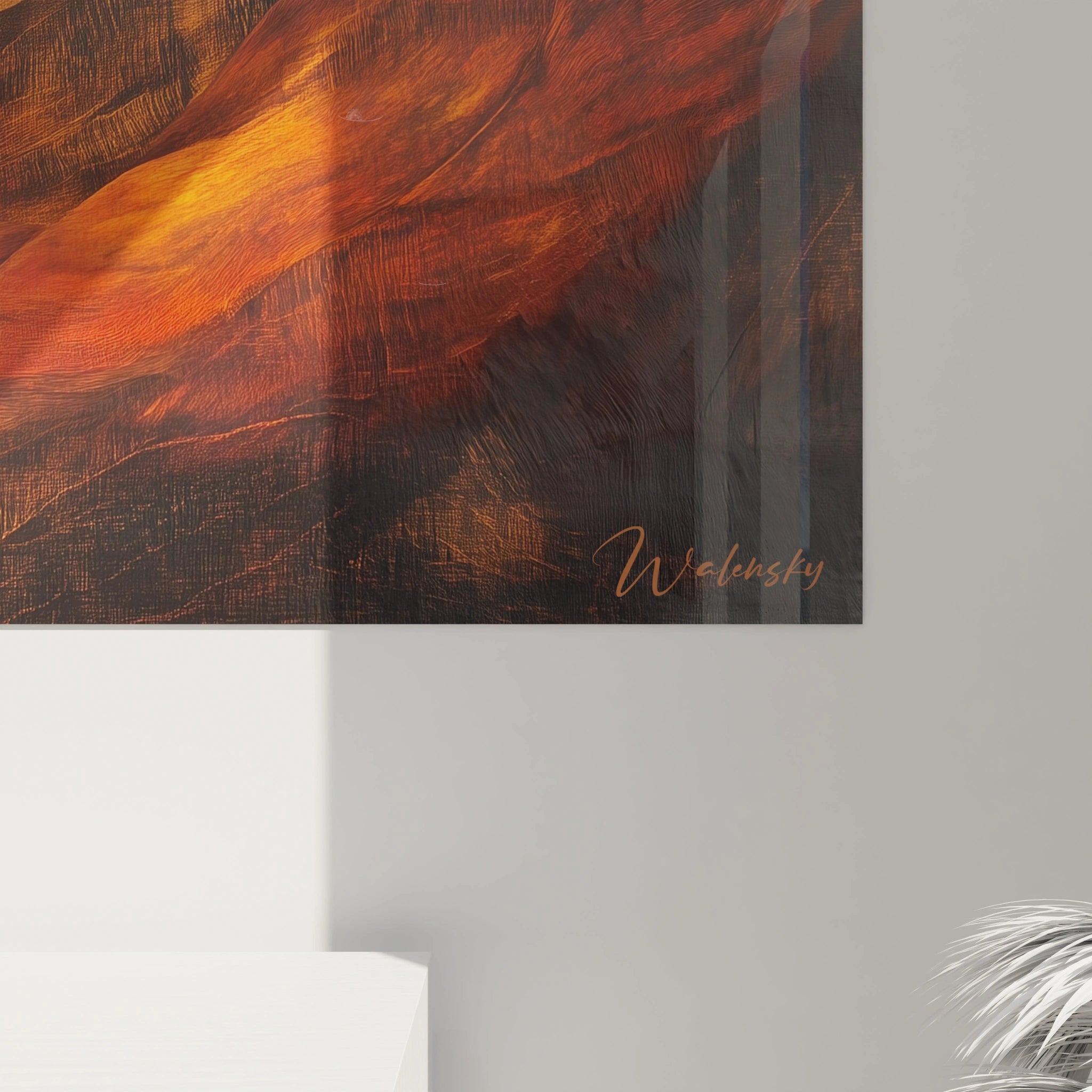
The textural richness of this luminous grand canyon painting is one of its major assets. The artist employed a technique of layering pictorial layers that confers remarkable depth to the rock surfaces. One distinctly observes the brushstrokes that follow the natural contours of geological strata, reinforcing the impression of movement and erosion characteristic of these formations.
The transition zones between shadow and light are treated with particular finesse, creating a striking relief effect. The rough texture of the cliffs contrasts with the lighter and more vaporous treatment of the sky, where horizontal brushstrokes suggest an atmosphere in motion. This juxtaposition of tactile textures for terrestrial elements and more fluid touches for celestial elements reinforces the duality between the mineral solidity of the canyon and the immateriality of the air.
What Makes This Desert Landscape Painting Unique
The singularity of this desert landscape painting lies in its ability to capture the precise moment when light transforms a mineral landscape into a transcending spectacle. Unlike other canyon representations that privilege the raw and arid aspect of the desert, this work celebrates the almost mystical dimension of these rock formations when bathed in particular light.
The perfect balance between geological realism and emotional interpretation constitutes a distinctive characteristic of this canyon wall décor. The meticulous details of rocky strata testify to careful observation of natural formations, while the intensification of colors and light treatment reveal an artistic sensitivity that transcends simple reproduction. This duality between descriptive accuracy and expressive interpretation grants the work a presence that captivates the eye durably.
Depth and Details of the Illuminated Canyon Painting
The visual experience of this illuminated canyon painting transforms according to the viewing distance. From afar, the work strikes with its majestic composition and the general harmony of its colors, producing an immediate impression of grandeur and serenity. Upon approaching, one progressively discovers the richness of details that animate the rock walls: fine geological strata, subtle variations of hues, and play of shadow and light that sculpt the reliefs.
At close range, the pictorial technique is fully revealed, unveiling meticulous work of layering and glazing that grants the rocks their characteristic luminosity. This progression in observation transforms the experience of the golden-tinted canyon painting into a contemplative journey that invites rediscovering the work from different angles and at different times of day, the ambient light subtly modifying the perception of colors and textures.
Where and How to Showcase Your Majestic Canyon Painting
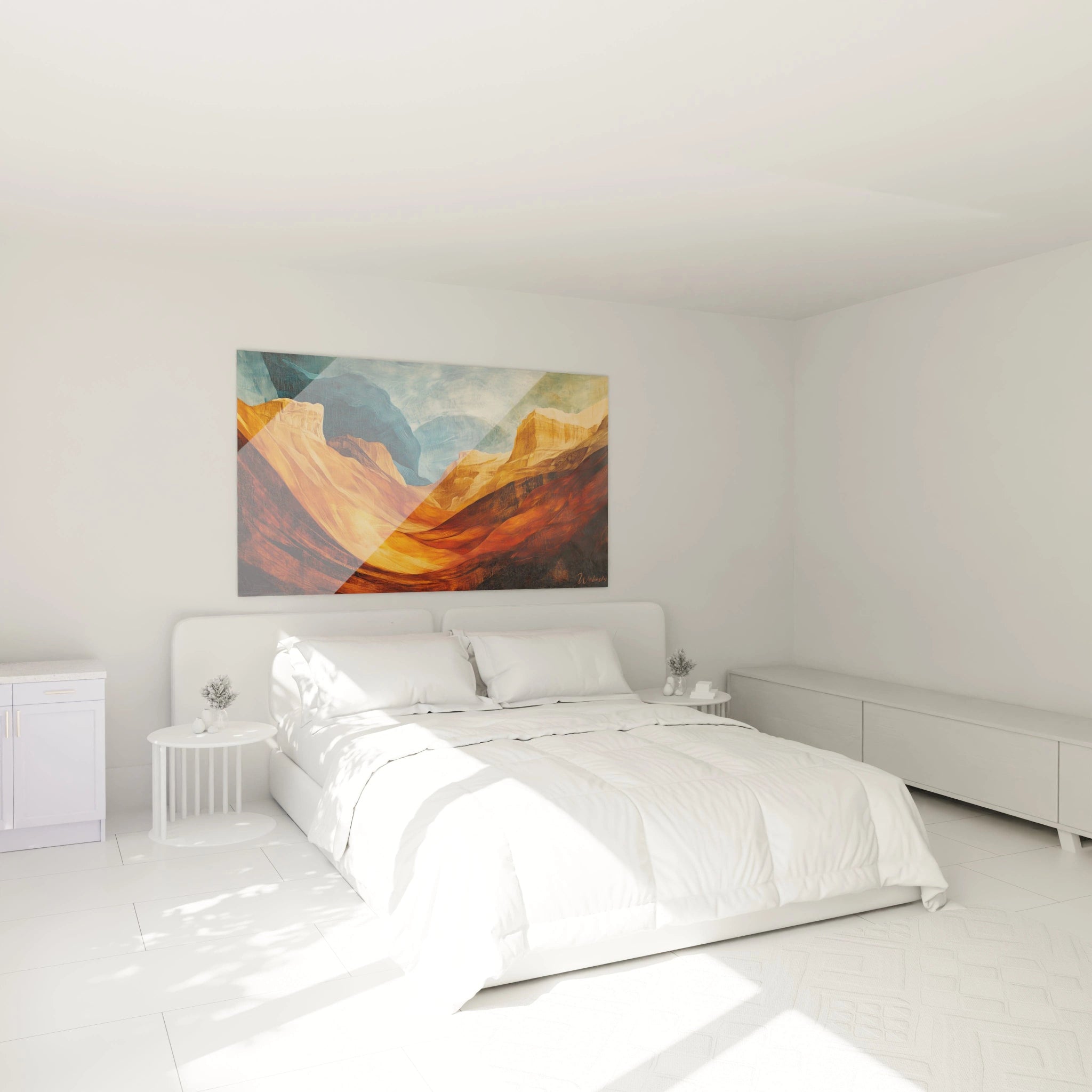
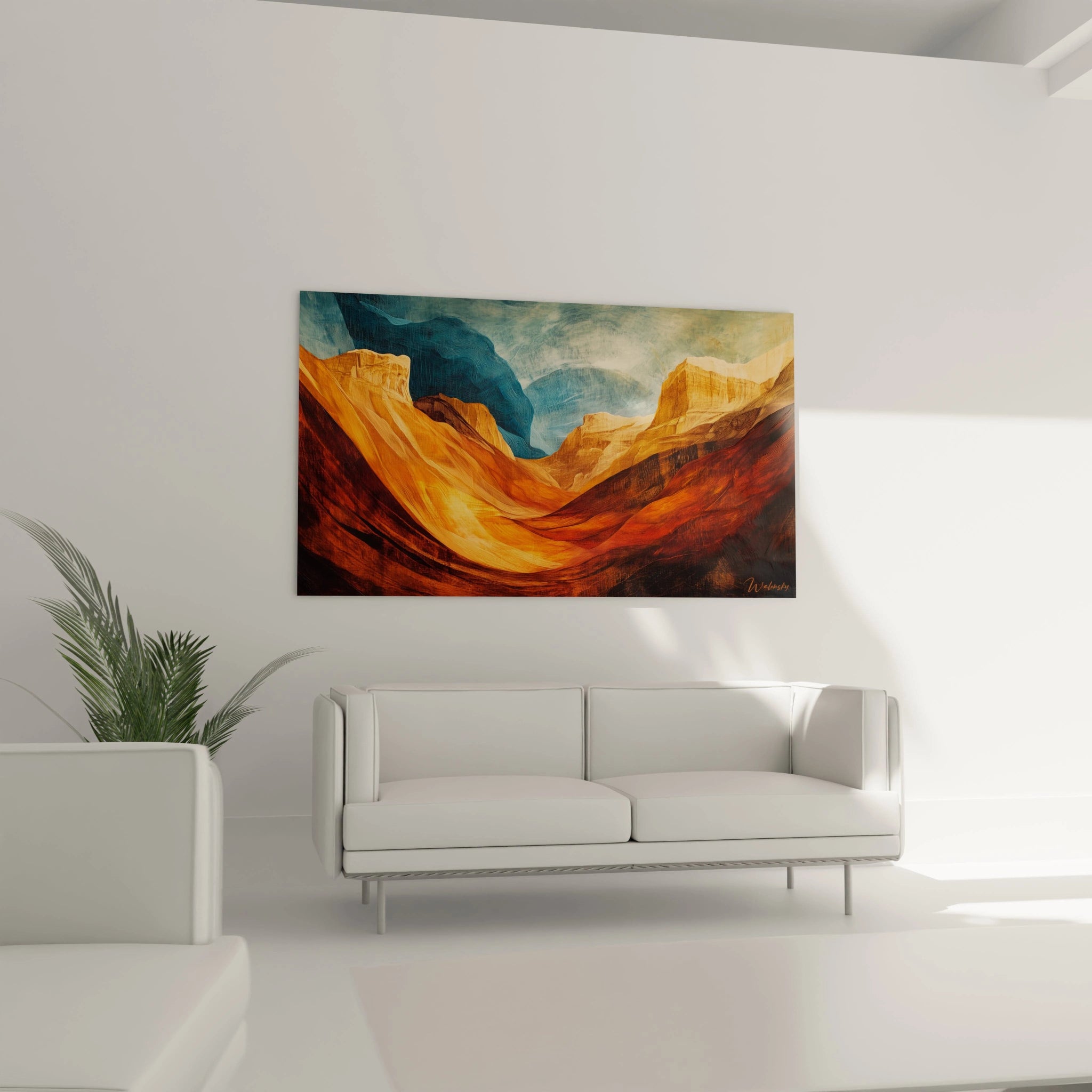
To magnify the visual impact of this majestic canyon painting, the display environment plays a crucial role. A wall of neutral color – white, pale gray, or light beige – will constitute an ideal setting allowing the vibrant colors of the work to fully express themselves. Soft directional lighting, slightly oriented toward the canvas, will accentuate the reliefs and textures while avoiding parasitic reflections on the surface.
This work will flourish particularly in spaces with streamlined architectural lines, where it can play its role as an open window onto nature. In a contemporary living room, it will bring warmth and depth, while in a professional environment such as a meeting room or executive office, it will instill creative and inspiring energy. For maximum impact, favor a location allowing you to contemplate the work both from afar and up close, thus offering the complete experience of its multiple levels of reading.