Rocks and water painting: its unique characteristics
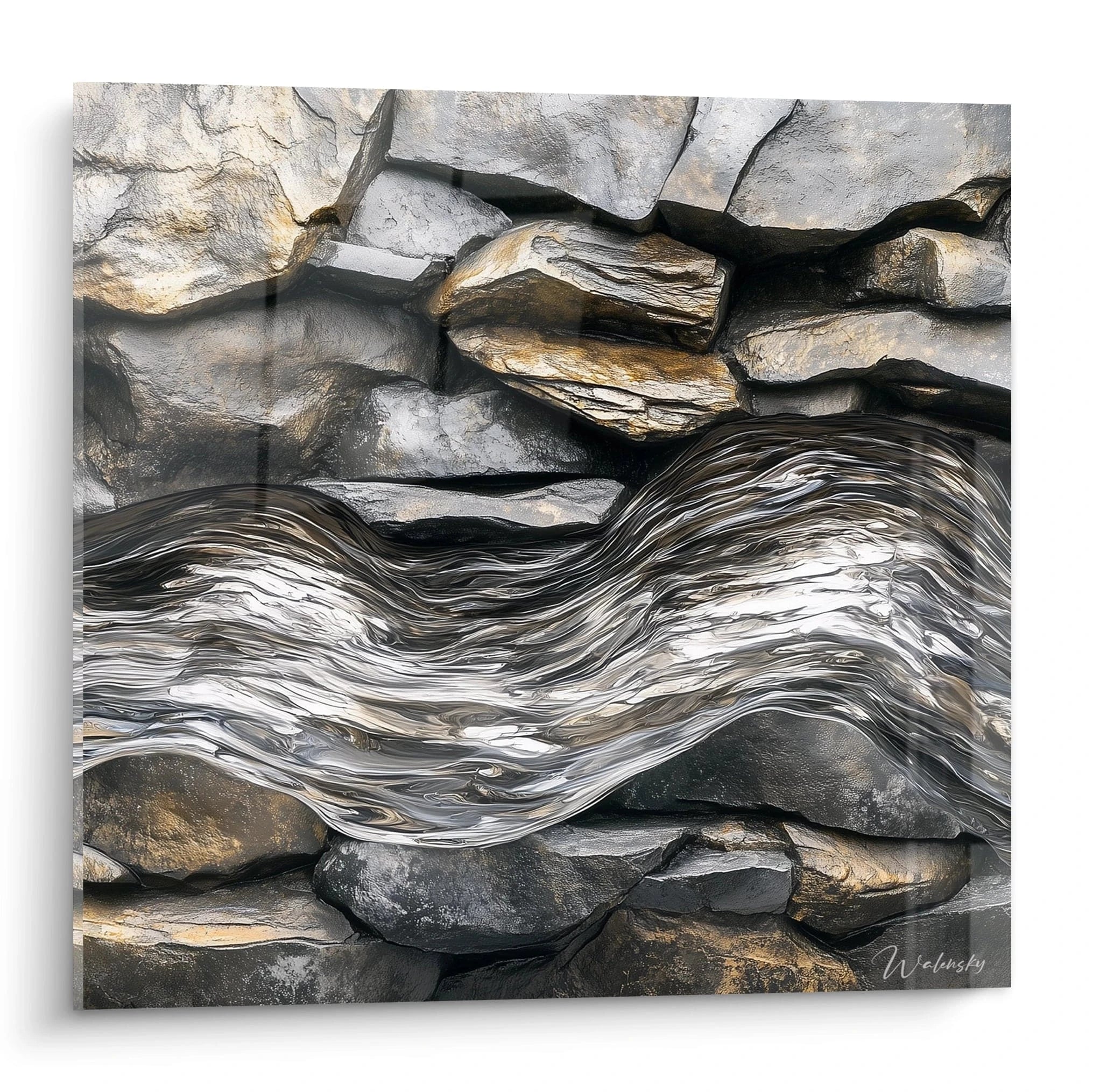
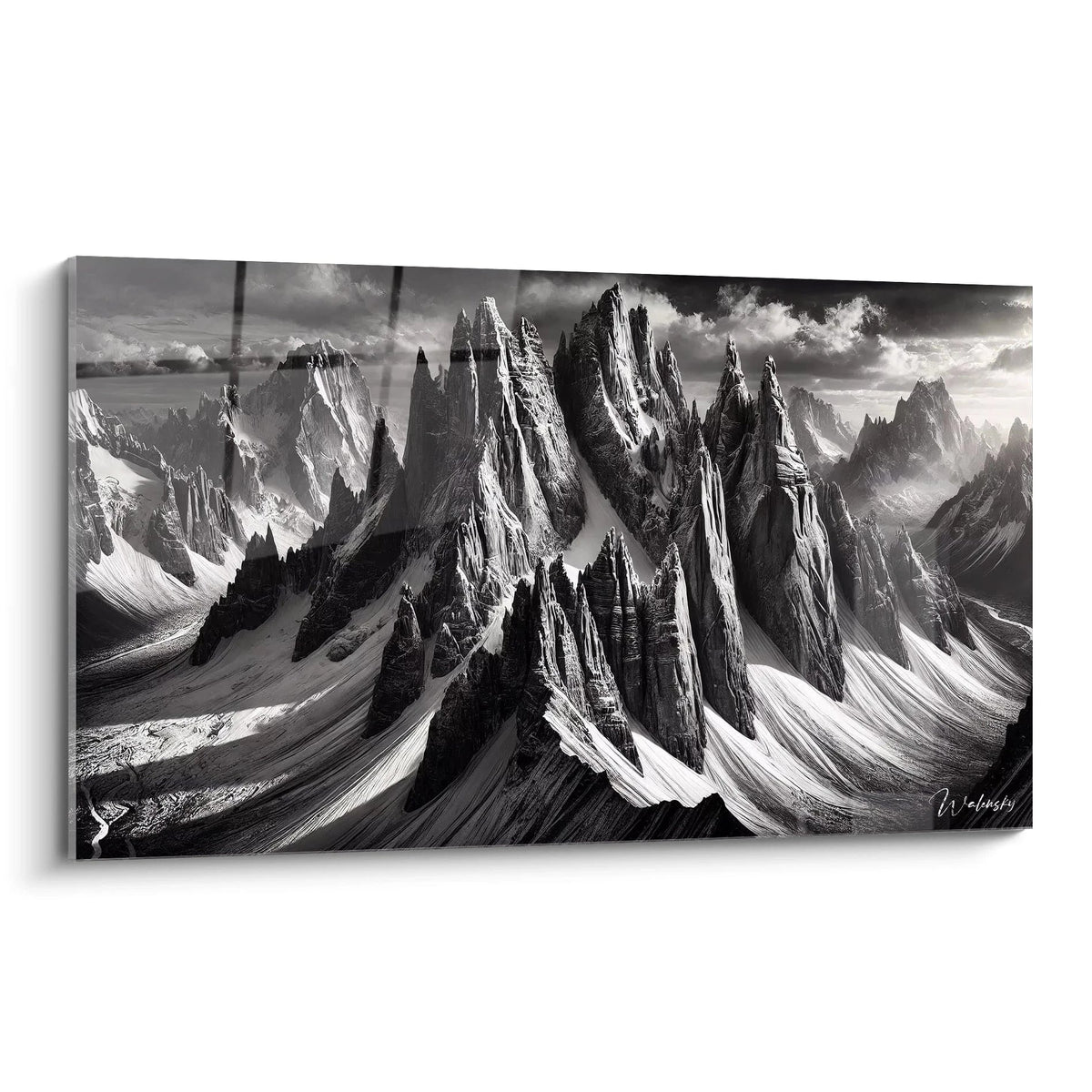
This rocks and water painting immediately captivates with its striking contrast between mineral solidity and silvery fluidity that traverses the work. The composition presents a fragmented rock structure with rough and irregular textures, traversed by an undulating flow of silvery matter that evokes a stylized water current. The dominant gray-black tones of the stones are punctuated by golden glints that create luminous focal points, while the fluid element in the center brings movement and dynamism to the whole.
How this fragmented rocks painting with silver current is structured
The work is organized according to a distinct horizontal partition, where rocky elements occupy mainly the upper and lower parts of the frame. This layout perfectly frames the central silver wave that traverses the image from side to side, creating a fluid horizontal movement. The rocks are arranged asymmetrically, with more imposing blocks in the upper part and smaller fragments in the lower section, which reinforces the sensation of weight and anchorage.
The directional lines of the composition follow mainly the undulating movement of the silvery element, whose sinuous curves naturally guide the gaze through the work. This structure creates a dynamic balance between stability and movement, where each rocky element seems deliberately placed to accentuate the contrast with the central fluidity.
The colors of the rocks and water painting and their harmony
The chromatic palette of this work rests on a restricted yet powerful harmony, where the following hues dominate:
- Anthracite gray and deep black of rocky elements
- Silvery white and metallic gray of the central fluid element
- Subtle touches of gold and bronze strategically distributed on rock surfaces
- Medium gray shades in transition zones between different elements
This monochrome palette is enhanced by the luminosity contrasts between the matte surfaces of the rocks and the shiny reflections of the fluid element. The golden accents bring punctual warmth that balances the cool dominance of the whole painting, thus creating a subtle yet effective visual tension.
Textures and technical details of the stratified rocks in motion painting
Textures constitute a fundamental element of this work. The rock surfaces present palpable roughness, with sharp edges, cracks and stratifications that evoke the geological nature of the material. Each stone seems to have its own history, with veins, chips and variations in hue that suggest the action of time and natural elements.
In striking contrast, the central fluid element presents a smooth and shiny texture, with longitudinal striations that accentuate the impression of movement. The technique used creates an almost metallic effect, where light seems to reflect and glide on the surface, reinforcing the illusion of a material in perpetual movement despite its fixity. This juxtaposition of textures creates a tactile tension that invites the spectator to imagine physical contact with these different surfaces.
What makes this rocks and silver flow painting unique
The uniqueness of this work lies in its capacity to transform a natural subject into an almost architectural composition. The artist succeeded in capturing the contradictory essence of stone and water without falling into literal representation, rather creating an interpretation that transcends simple mimicry to reach a poetic and symbolic dimension.
The way the fluid element seems both contained by the rocks and capable of traversing them creates an ambiguous and fascinating visual narrative. This mineral wall decor plays on our perception of the solid and the liquid, the stable and the moving, creating a visual experience that defies our habitual categories and invites us to reconsider our understanding of materials and states.
Depth and details of the rocks painting
From a distance, this work appears as an abstract composition playing on contrasts of textures and tones. The overall movement dominates perception then, with the silver wave that immediately captures attention through its brilliance and apparent fluidity contrasting with the dark mass of rocky elements.
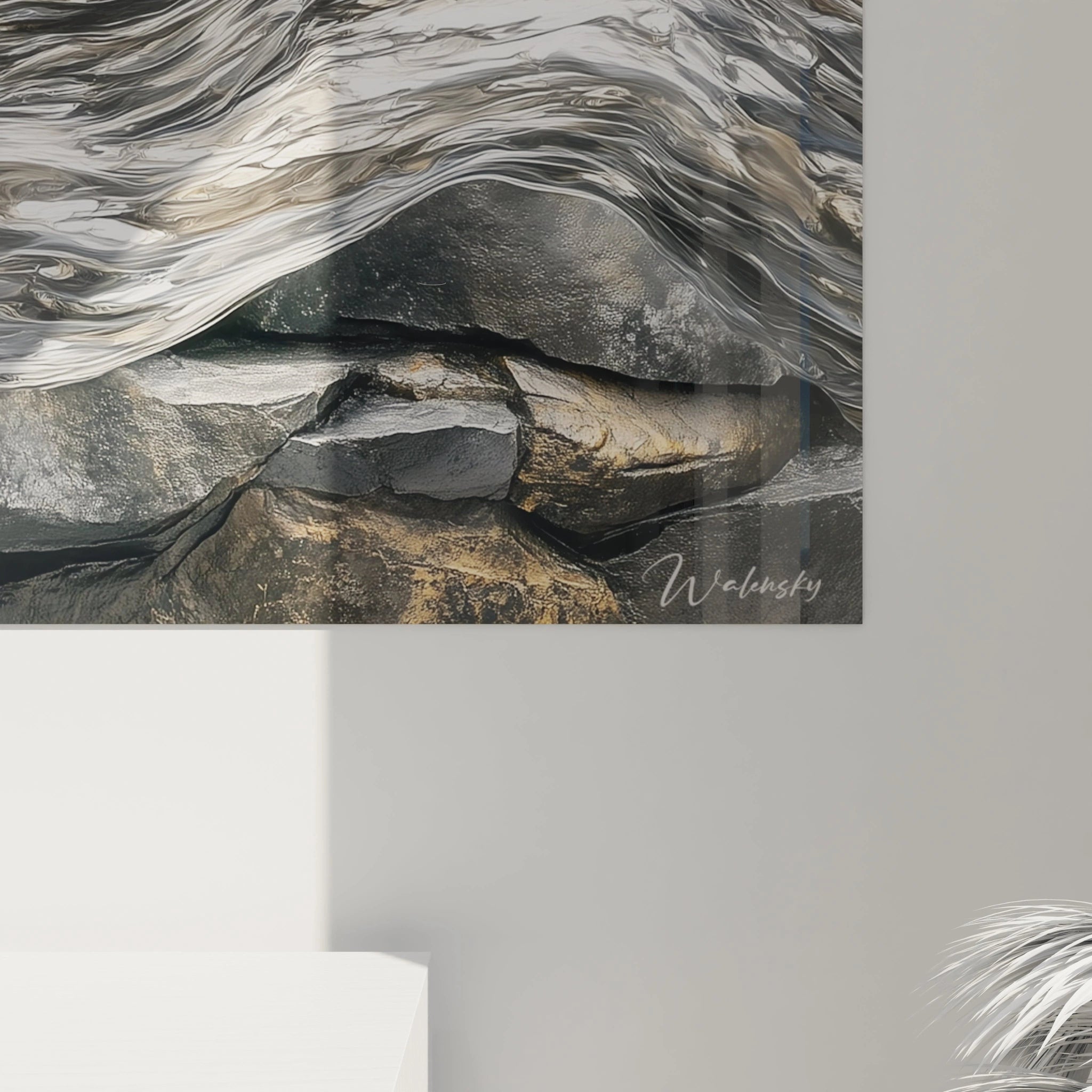
Drawing closer, a universe of details progressively reveals itself. Each rock fragment unveils its unique asperities, its micro-cracks and golden inclusions. The fluid element, in turn, reveals unexpected complexity of striations and luminosity variations that evoke the moving reflections of water under different lights. This ancient rocks painting offers thus a visual experience that renews itself according to observation distance and viewing angle, rewarding careful examination with ever-new richness of detail.
Where and how to showcase your rocks and fluid metal painting
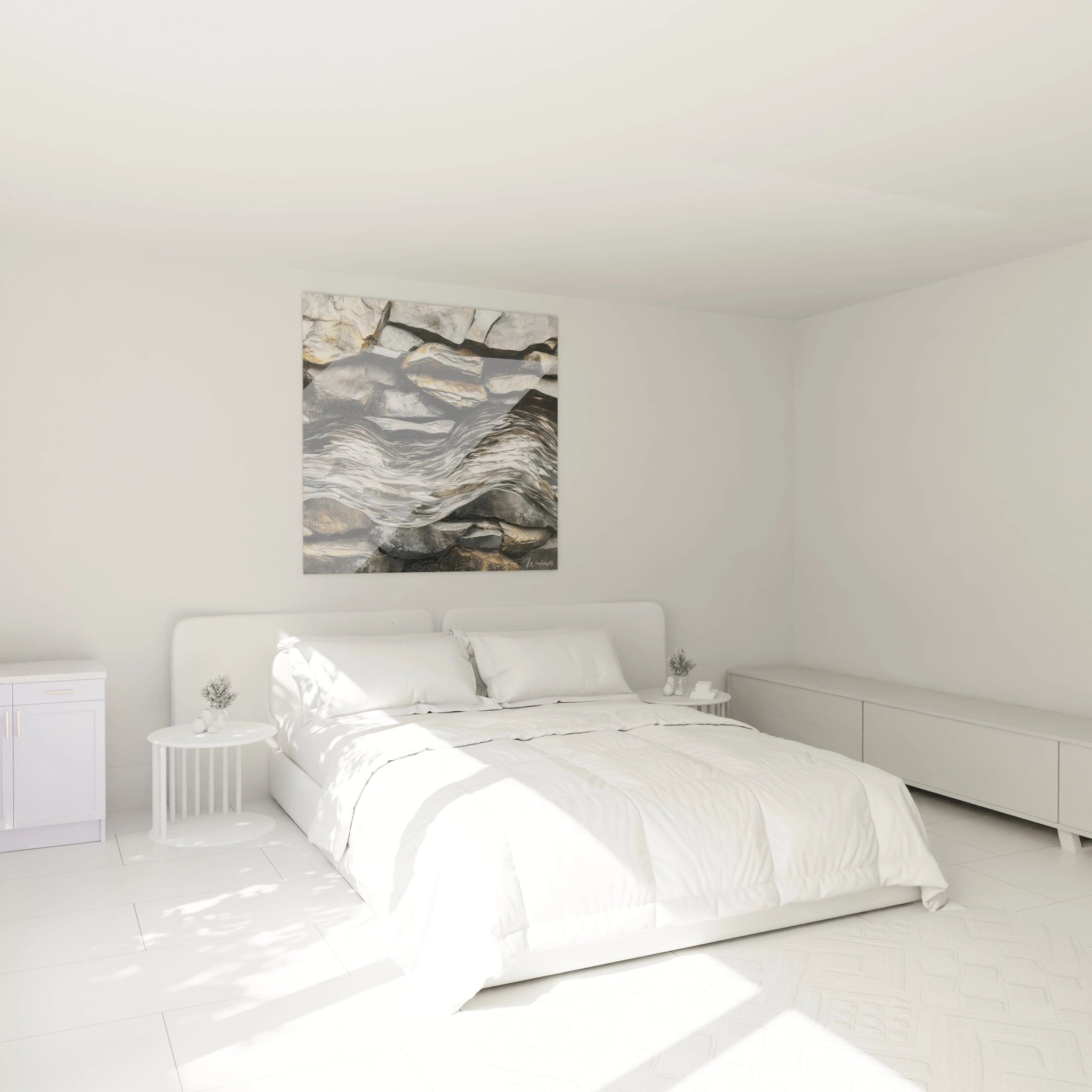
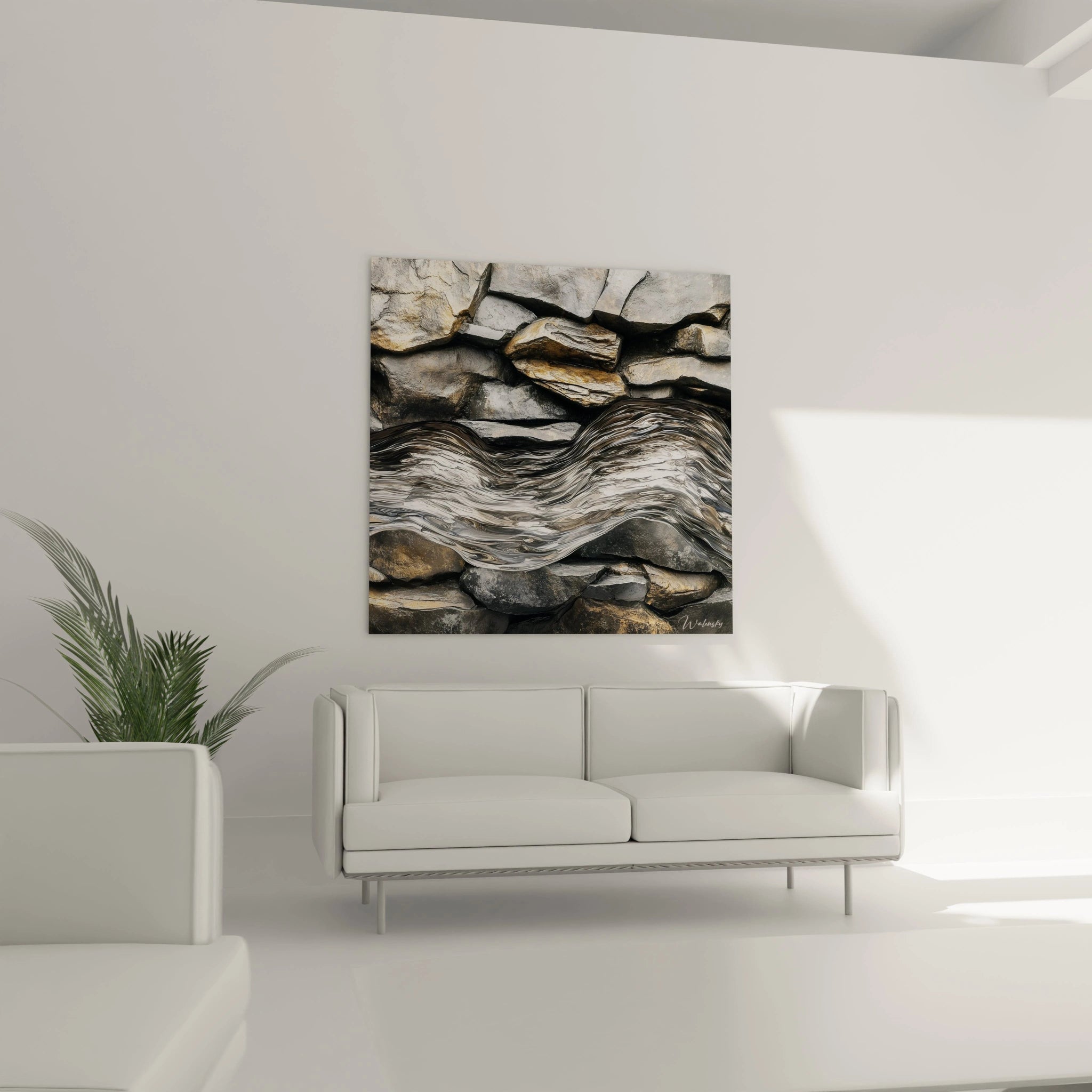
This mineral wall art will integrate perfectly into a contemporary interior with clean lines, where its contrast of textures and monochrome palette will bring depth and character without visually overloading the space. A neutral-colored wall—white, light gray or even raw concrete—will constitute an ideal background to enhance the subtle nuances of the work.
For optimal impact, favor directional lighting that will accentuate the reliefs of rocky elements and make the metallic reflections of the central wave stand out. The work can be the focal point of a minimalist living space, dialoguing harmoniously with contemporary-lined furniture and materials like raw wood, metal or glass. It will also find its place in a high-end professional environment, such as an executive office or reception space, where it will bring a touch of natural elegance and sophistication.