Cavalier painting: its unique characteristics
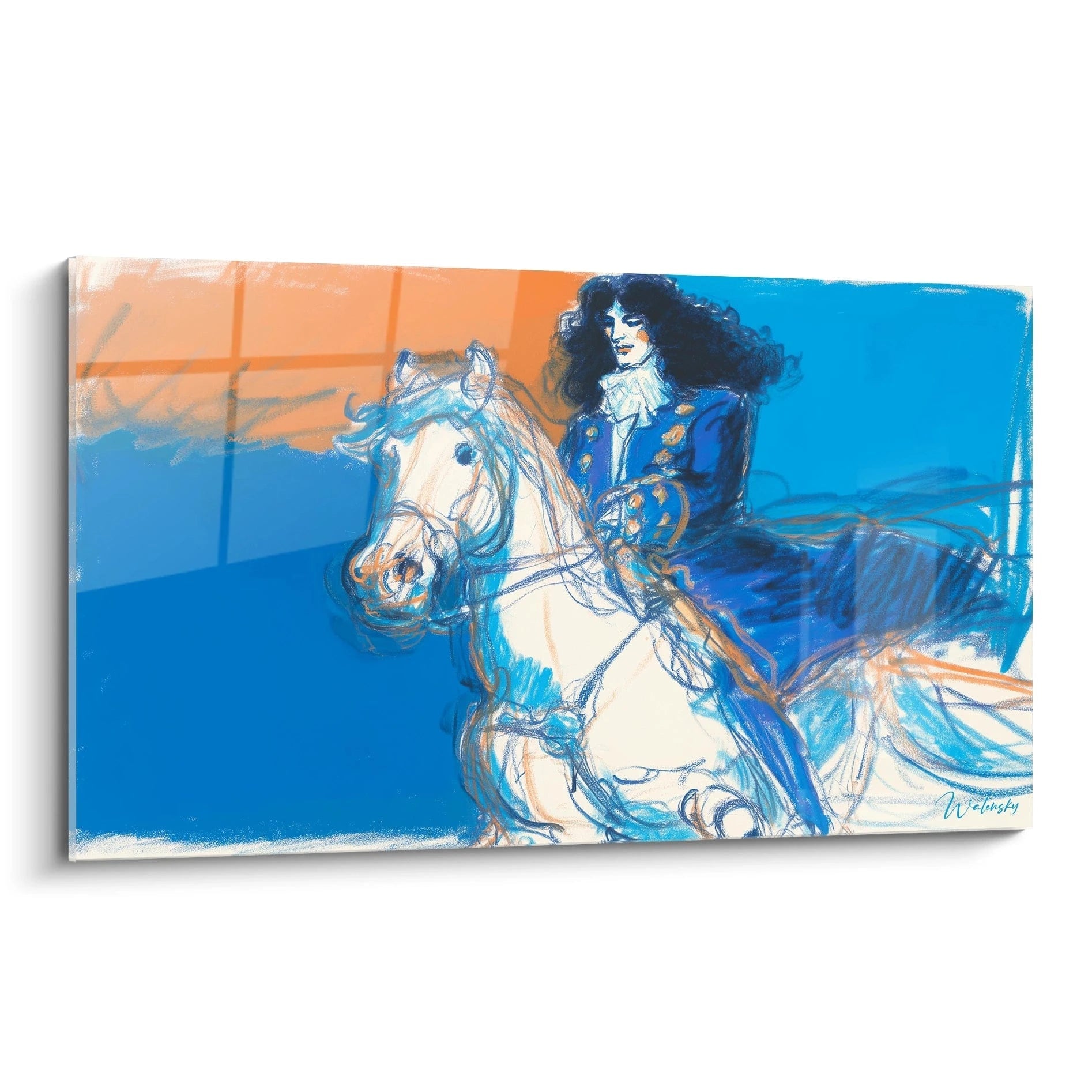
This work presents a cavalier painting with striking tonalities where deep blues and vibrant oranges dominate. The main character, mounted on a white horse with flowing manes, wears a period costume adorned with gilding evoking French aristocracy. This baroque cavalier painting captures a moment of gallop in dynamic composition. The artist privileged a pastel technique that confers upon the ensemble a characteristic powdery texture. Expressive traits and intense chromatic contrasts create a theatrical atmosphere typical of classical equestrian art.
How is this cavalier painting in motion structured
The composition of this dynamic cavalier painting articulates around an ascending diagonal guiding the eye from lower corner toward center. The rearing horse occupies two-thirds of pictorial space, creating controlled asymmetrical balance. The cavalier is positioned in the upper third, dominating the scene with prestige. The background in orange tonalities forms striking contrast with dominant blues in the foreground. This cavalier wall decoration brilliantly exploits negative space to accentuate ascending movement of the mount. Flight lines converge toward the character, reinforcing his status as main subject.
The colors of the cavalier painting and their harmony
The color palette of this blue-orange cavalier painting rests on bold complementary contrast. Saturated blues dominate composition, declining in cobalt, ultramarine and cerulean nuances. These cool tones are masterfully balanced by touches of cadmium orange and golden yellow warming the whole. This colorful cavalier work skillfully exploits warm-cool contrasts to create volume and depth. White highlights on the horse's coat bring luminosity and purity.
- Deep ultramarine blue for shadows
- Vibrant orange for dramatic background
- Pearlescent white for the mount
- Subtle gilding on the costume
Textures and technical details of the pastel cavalier painting
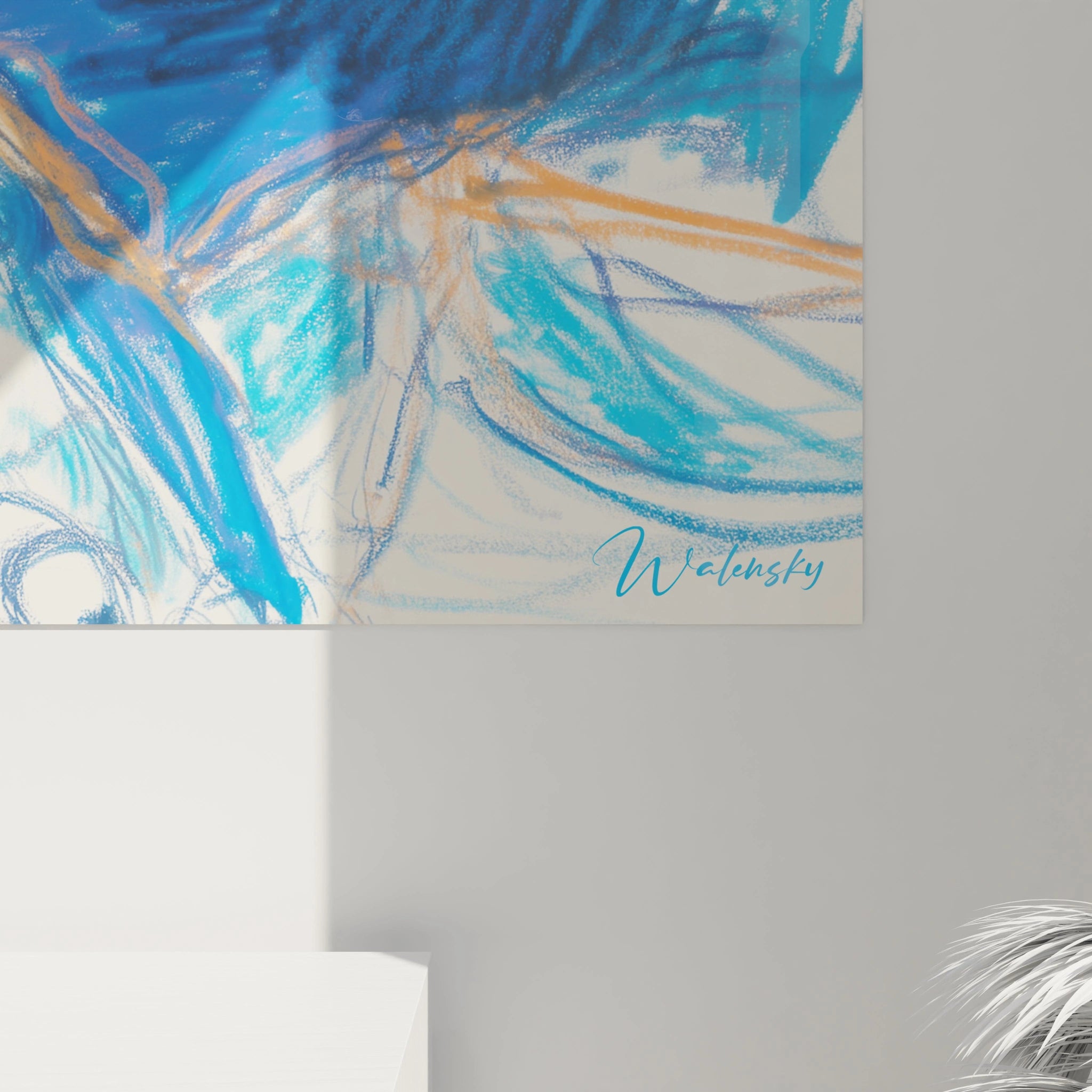
Pastel technique confers upon this artistic cavalier painting unique velvety texture. Visible impasto creates tactile reliefs, particularly sensitive on the horse's mane and costume folds. The artist exploited pastel's covering properties to obtain striking material effects. Light areas reveal work in overlaying translucent layers. This textured cavalier wall decoration presents contrasts between smooth and rough zones enriching visual experience. The discreet signature in the lower right corner testifies to technical execution mastery.
What makes this historical cavalier painting unique
This period-costume cavalier painting distinguishes itself through expressionist treatment of classical subject. The unusual association of blue and orange tones creates contemporary atmosphere on a timeless theme. Stylized horse proportions and theatrical gestures of the character confer remarkable dramatic dimension. This cavalier wall art transcends traditional equestrian portrait codes through chromatic liberty. Costume details, finely observed, testify to thorough documentary research. The facial expression, sketched yet expressive, reveals model's personality with economy of means.
Depth and details of the cavalier painting
Close observation of this detailed cavalier painting reveals pastel technique richness in texture rendering. From distance, the work impresses through chromatic impact and ascending movement. Drawing closer, one discovers facial modeling fineness and costume ornament precision. This premium cavalier wall decoration offers evolving visual experience depending on observation angle. Impasto creates shadow and light play animating the surface. The paper grain, visible through transparency, participates in overall material effect of this remarkable work.
Where and how to showcase your baroque cavalier painting
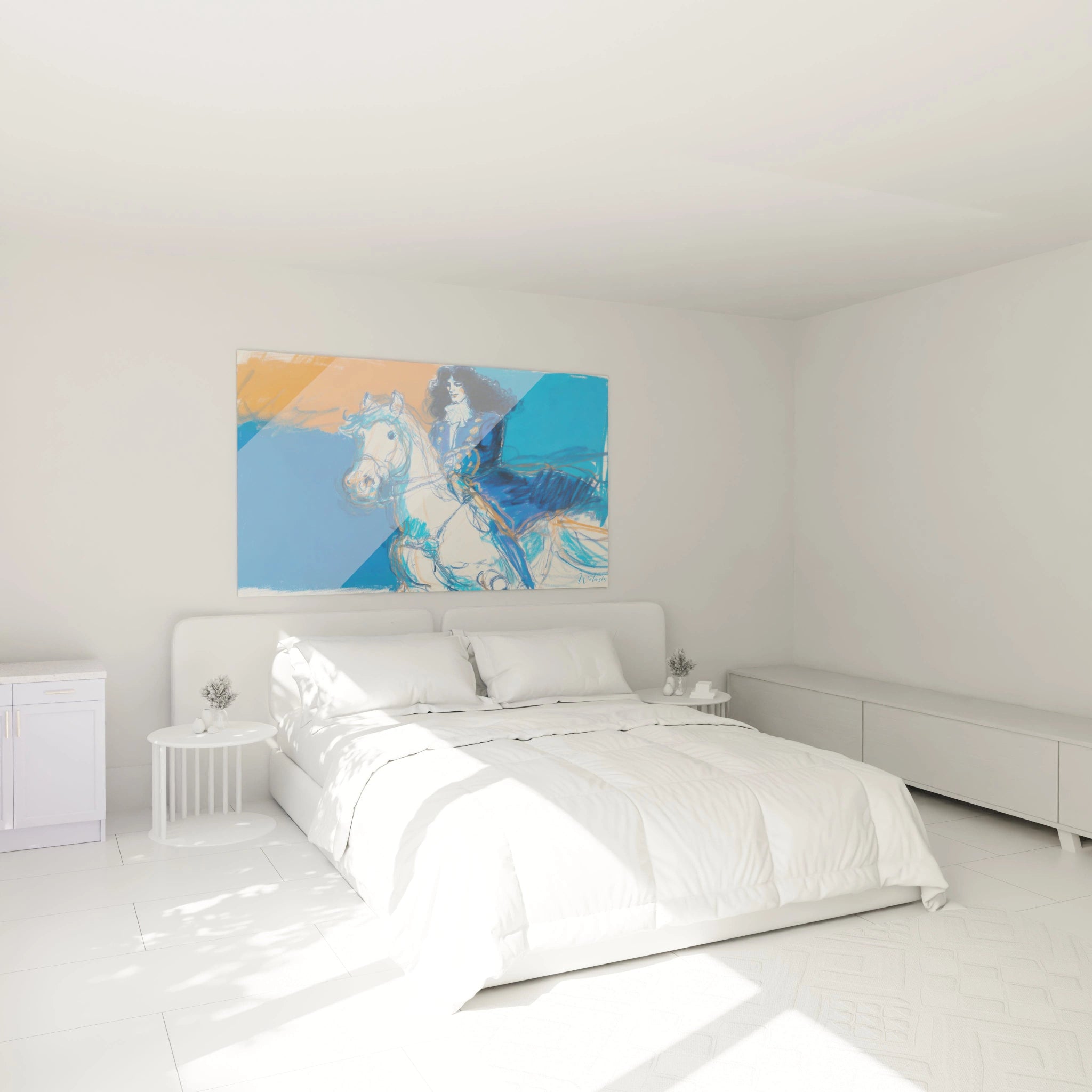
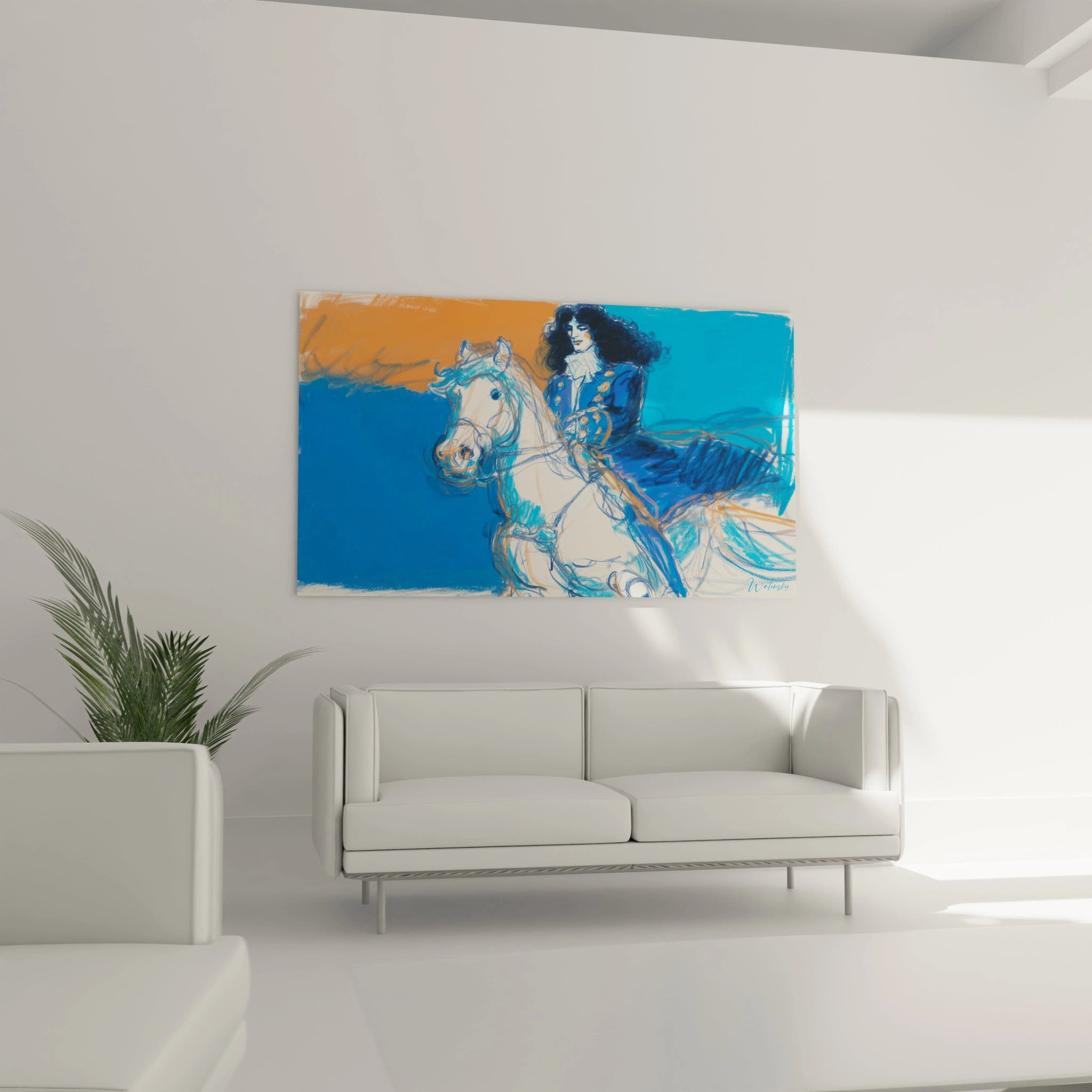
This decorative cavalier painting will flourish ideally in an interior with neutral tones where its vibrant colors can fully express. Adjustable LED lighting will reveal pastel technique subtleties without altering pigments. Association with dark wood furniture or beige tone textiles will create refined setting. This cavalier wall work will find its place in a living room, library, or director's office. White or pearl gray walls will constitute ideal neutral background. Sober framing, preferably in natural wood or brushed metal, will preserve ensemble elegance.
Tags - Main Keywords
- cavalier painting
- cavalier wall decoration
- cavalier wall art
- blue-orange cavalier painting
- baroque cavalier work