Desert canyon painting: its unique characteristics
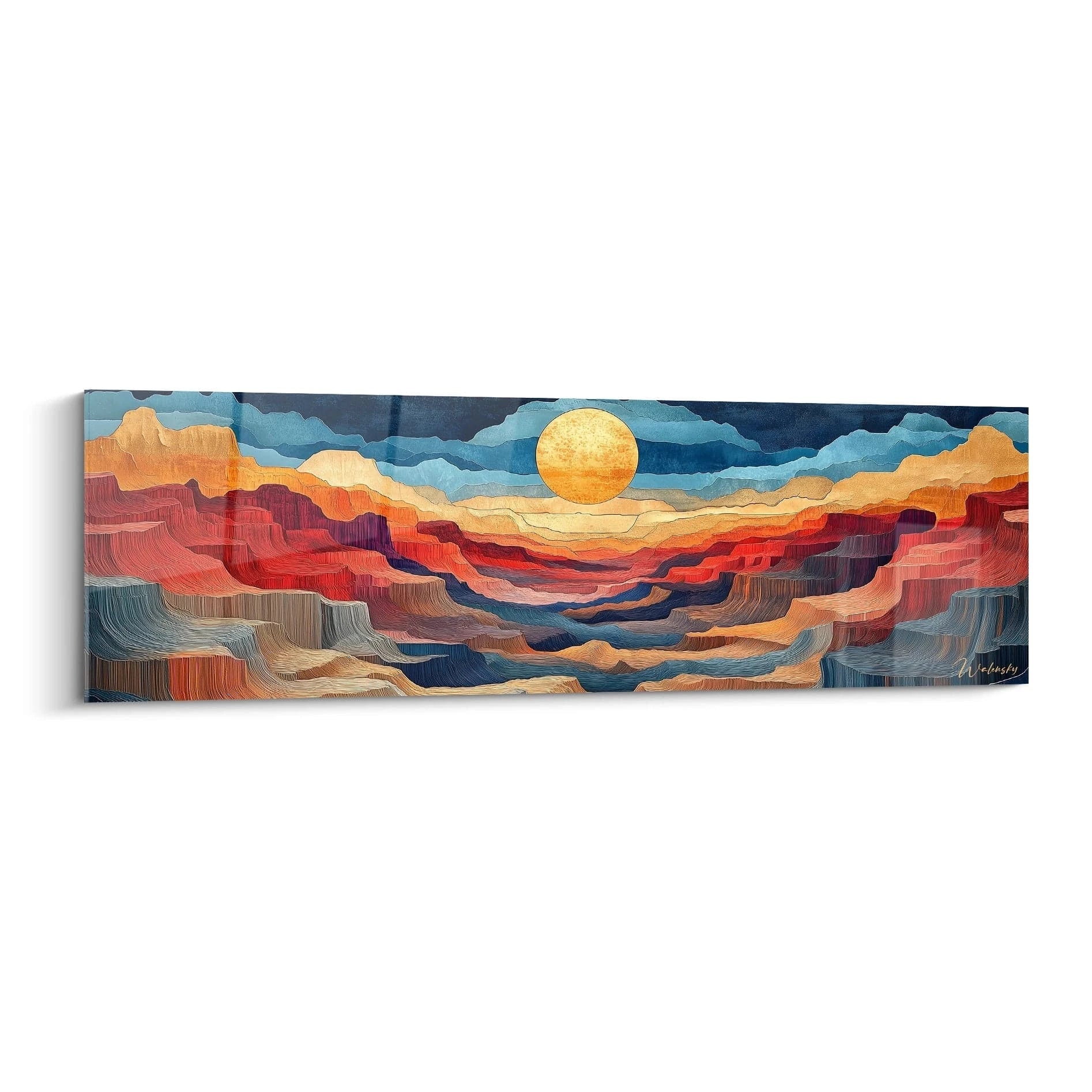
This desert canyon painting immediately captivates with its striking representation of a vast stratified landscape bathed in the golden light of a sunset. The artwork presents a panoramic composition where layers of rock in warm hues extend to the horizon, creating a remarkable depth effect. The sun, depicted as a perfect disc on the horizon, illuminates the entire scene with an orangey glow that diffuses harmoniously in the deep blue sky and over the undulating rock formations.
How is this stratified colored canyon painting structured
The composition of this artwork is masterfully organized around a central perspective that guides the eye toward the sun positioned on the horizon line. The canyon rock formations are represented by undulating horizontal lines extending across the painting, creating an immersive effect. The foreground presents more defined and textured strata, while the background progressively blends into atmospheric haze.
The directional lines subtly converge toward the luminous focal point, establishing perfect balance between chromatic masses. This layered structure creates a visual rhythm that evokes movement and depth, while maintaining overall harmony in the composition.
The colors of the desert canyon painting and their harmony
The chromatic palette of this artwork is dominated by three distinct color families that harmonize perfectly:
- The vibrant orange and red tones composing the main rock strata
- The deep blue nuances occupying the sky and certain shadow areas in the canyon
- The luminous golden and yellow tones radiating from the sun and diffusing across the horizon
This contrast between warm and cool colors creates dynamic visual tension. The transitions between different hues are achieved with subtlety that allows the eye to travel smoothly through the entire composition while appreciating the wealth of nuances.
Textures and technical details of the textured rocky canyon painting
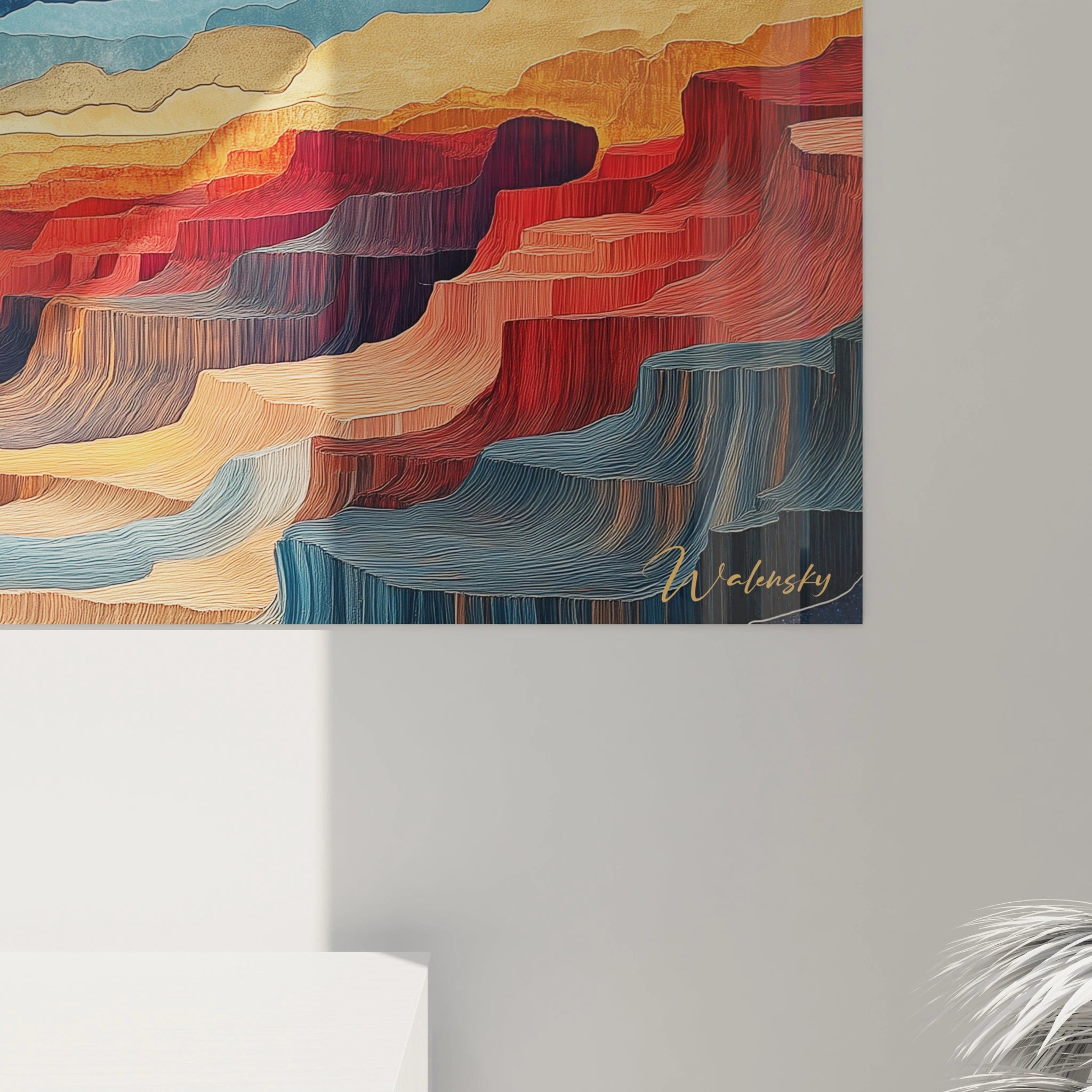
The artist employed a distinctive technique of closely spaced parallel lines that create a texture evoking natural geological strata. This linear approach gives the artwork an almost palpable tactile quality, particularly visible in the rock formations where horizontal brushstrokes suggest millennia of erosion. The surface presents subtle variation between smooth areas (like the sky and sun) and more textured zones (the canyon walls).
The light effect is masterfully rendered through gradual color and intensity transitions, creating an impression of atmospheric depth. This technique captures the interaction between the setting sun's light and the different surfaces of the desert landscape.
What makes this sunset canyon painting unique
The singularity of this wall décor canyon lies in its ability to fuse geographically recognizable representation with stylized artistic interpretation. The organic geometry of rock formations, rendered through fluid yet precise lines, creates tension between realism and abstraction. The perfect circularity of the sun contrasts with the undulating canyon lines, establishing an iconic presence in the composition.
The intensified chromatic palette transcends simple representation to achieve emotional dimension. The colors are not merely descriptive but expressive, communicating the warmth and majesty of the represented moment with intensity that exceeds simple observation.
Depth and details of the canyon painting
Viewed from afar, this artwork offers a striking impression of space and light, the overall composition capturing landscape immensity as a whole. When approaching, the viewer discovers the complexity of the colored strata and their delicate layering, revealing meticulous work of parallel lines that construct each rock formation with precision.
At very close range, texture becomes predominant, unveiling the work of material and subtle shade variations within each chromatic zone. This multiplicity of readings depending on viewing distance enriches the visual experience of the panoramic desert canyon painting, offering new discovery with each contemplation.
Where and how to showcase your vibrant stratified canyon painting
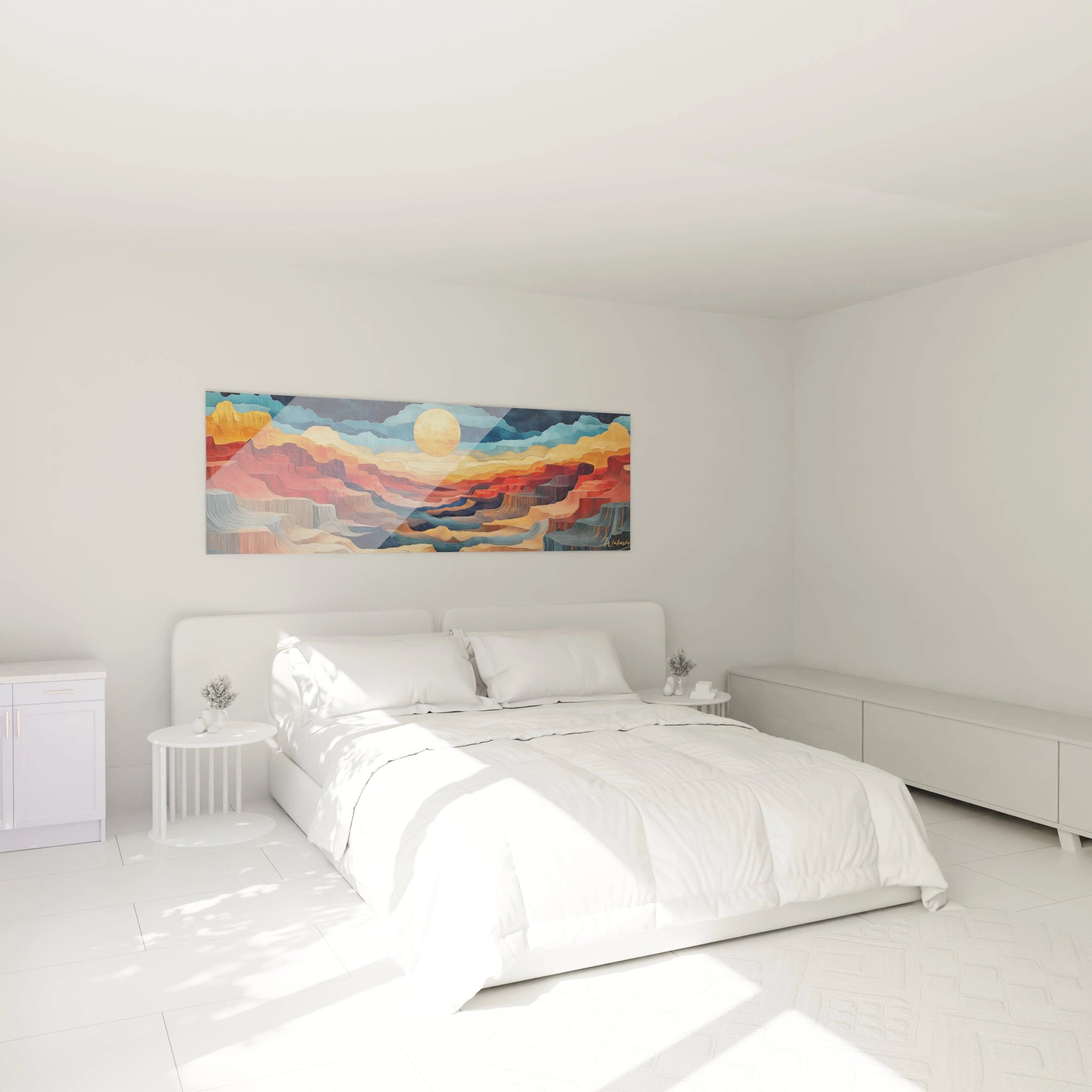
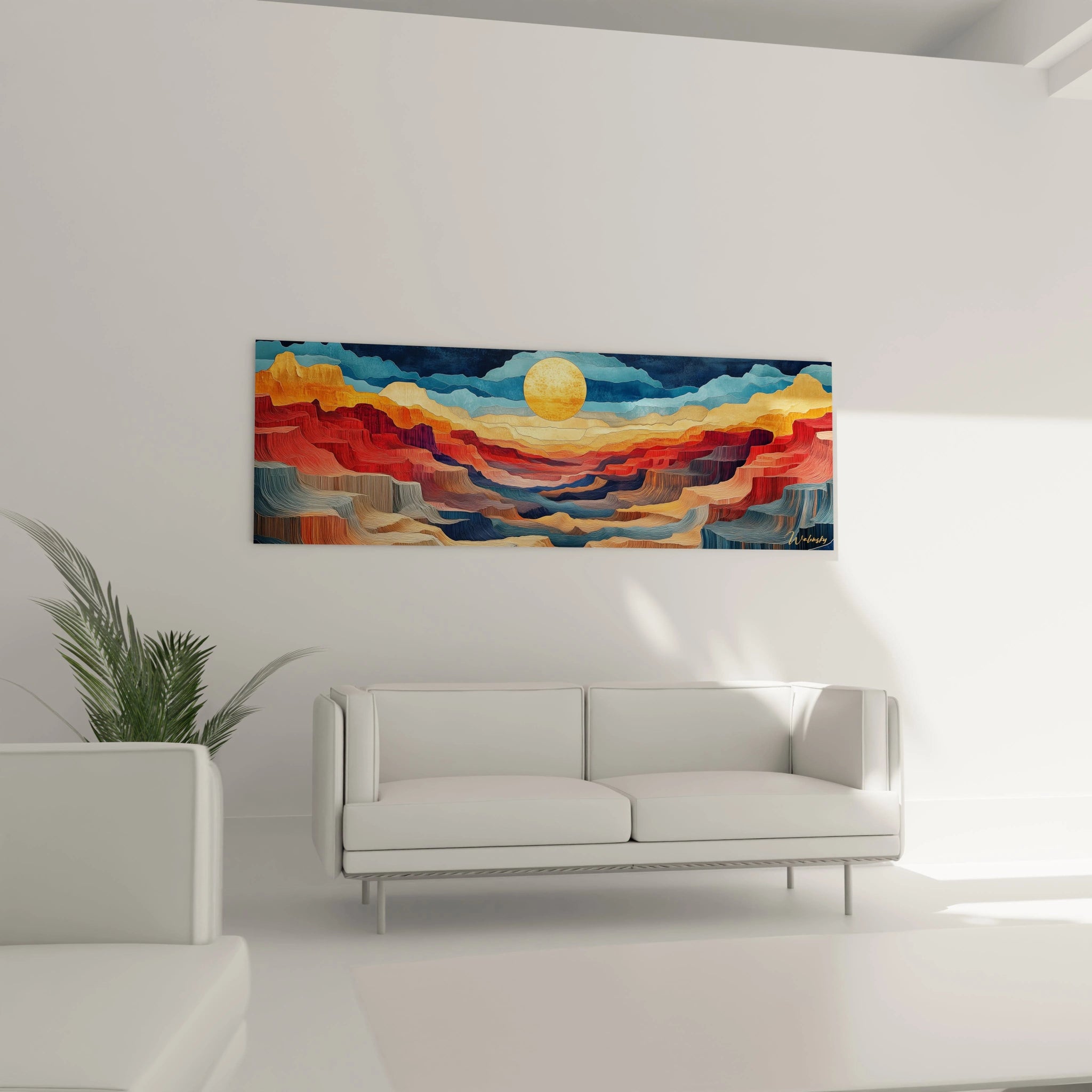
To magnify the visual impact of this canyon art mural, choose a spacious, uncluttered wall that will allow the artwork to breathe and fully express its panoramic character. A location facing an indirect natural light source is ideal for revealing chromatic subtleties without creating annoying reflections.
Artificial lighting should come from a soft, diffuse source, ideally positioned slightly above to reproduce the effect of natural light on the strata. For decoration, opt for neutral tones (beige, light gray, off-white) that will let the rich chromaticity of the painting express itself fully without visual competition. Natural wood or stone decorative elements will create harmonious dialogue with the textures represented in the artwork.