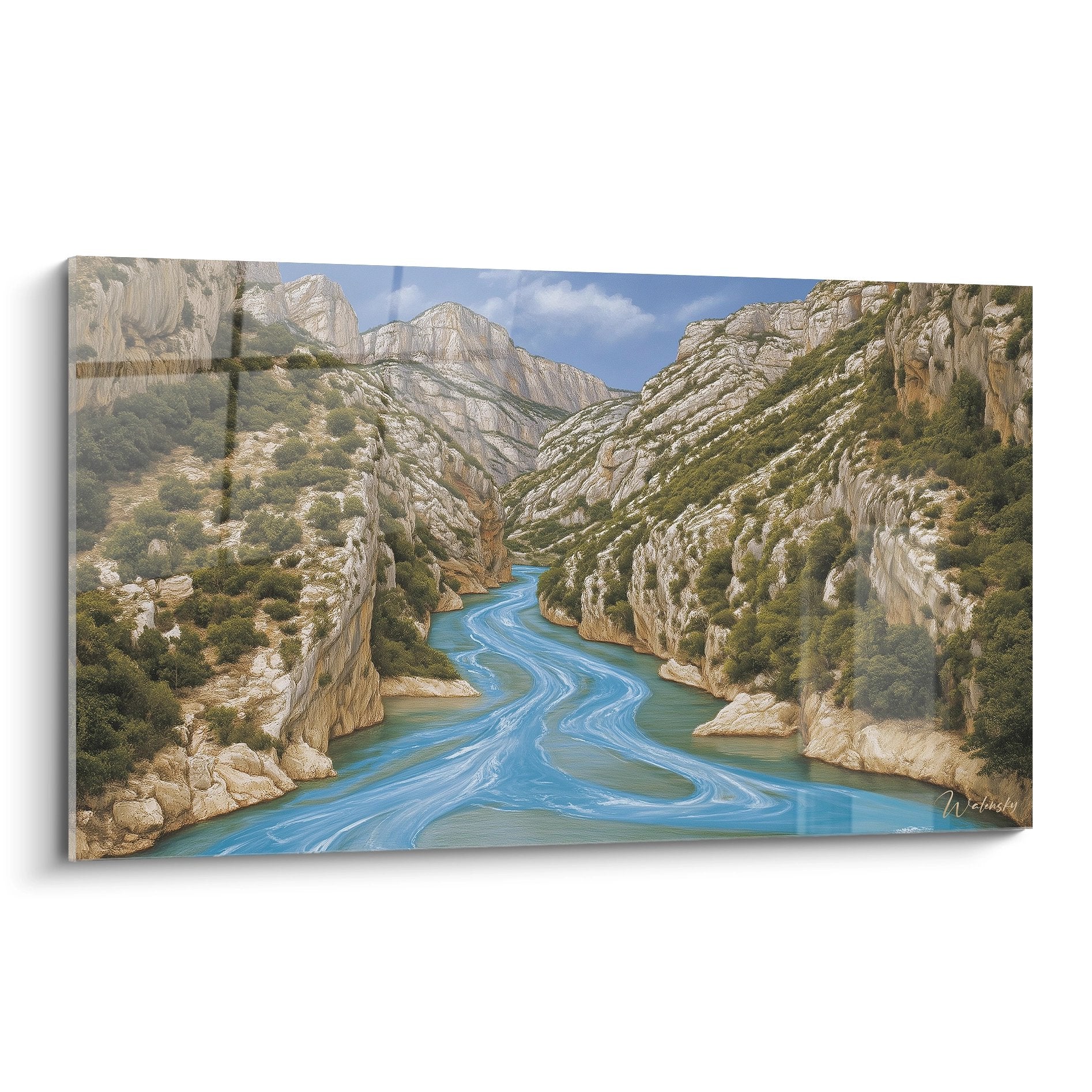
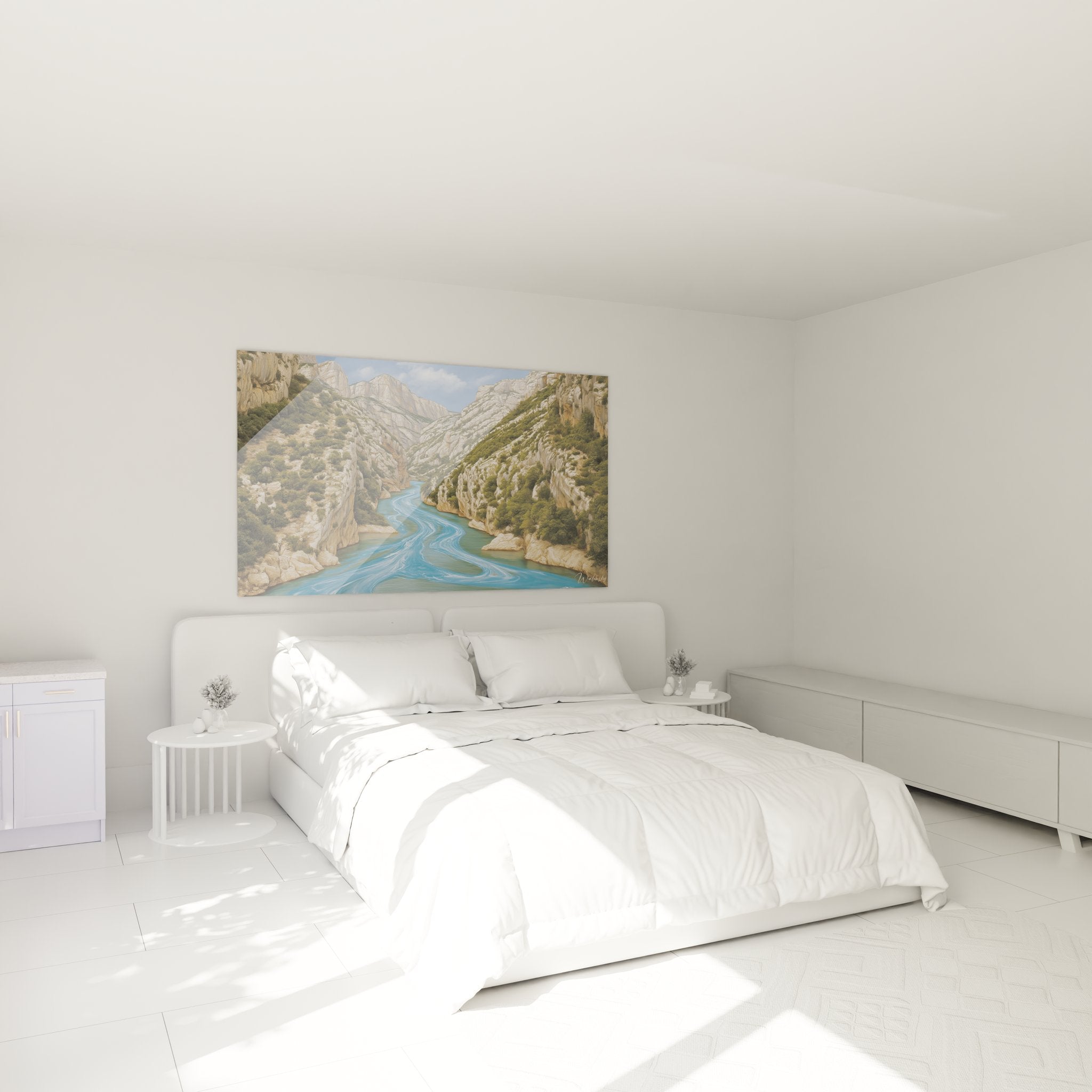
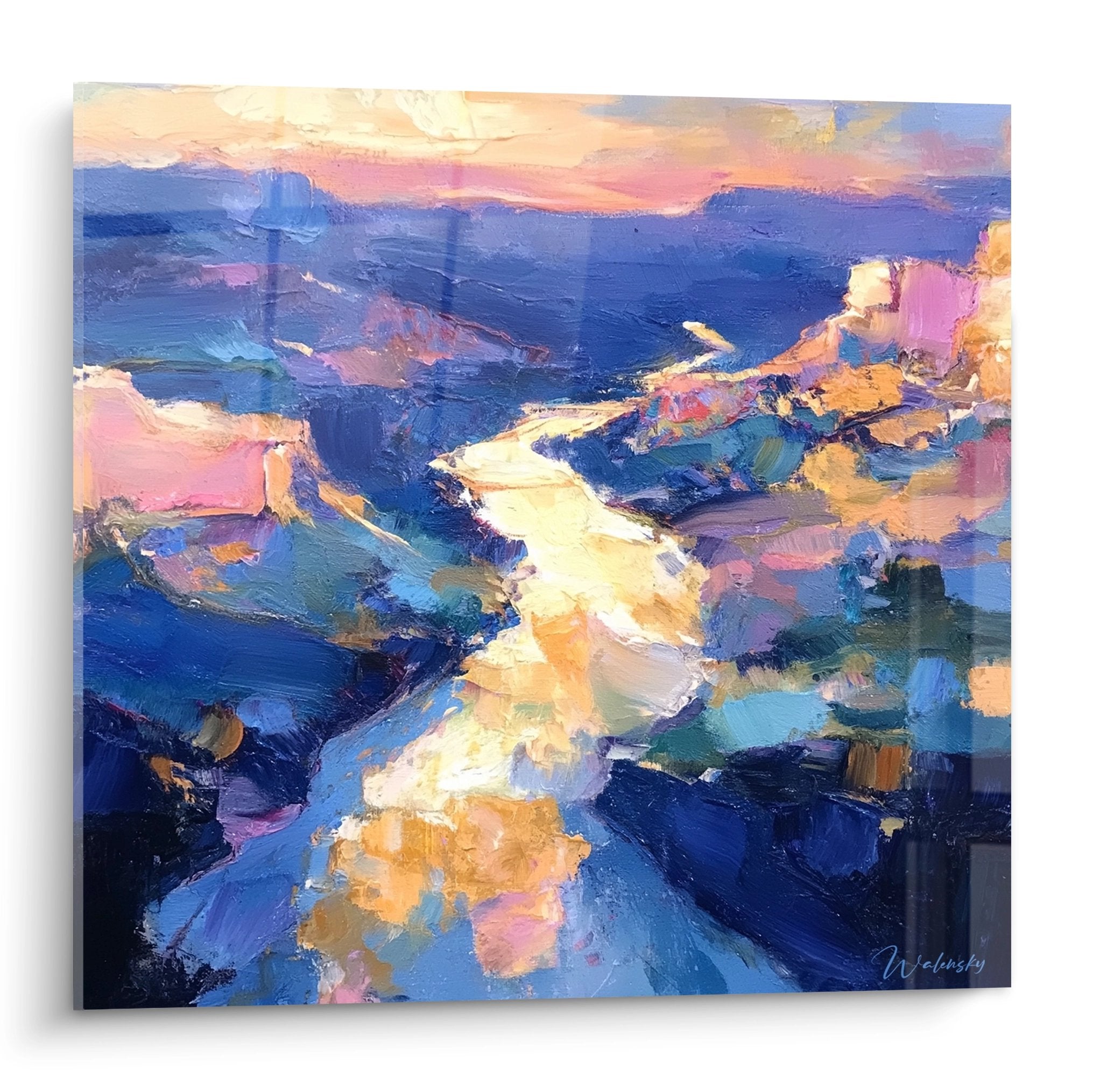
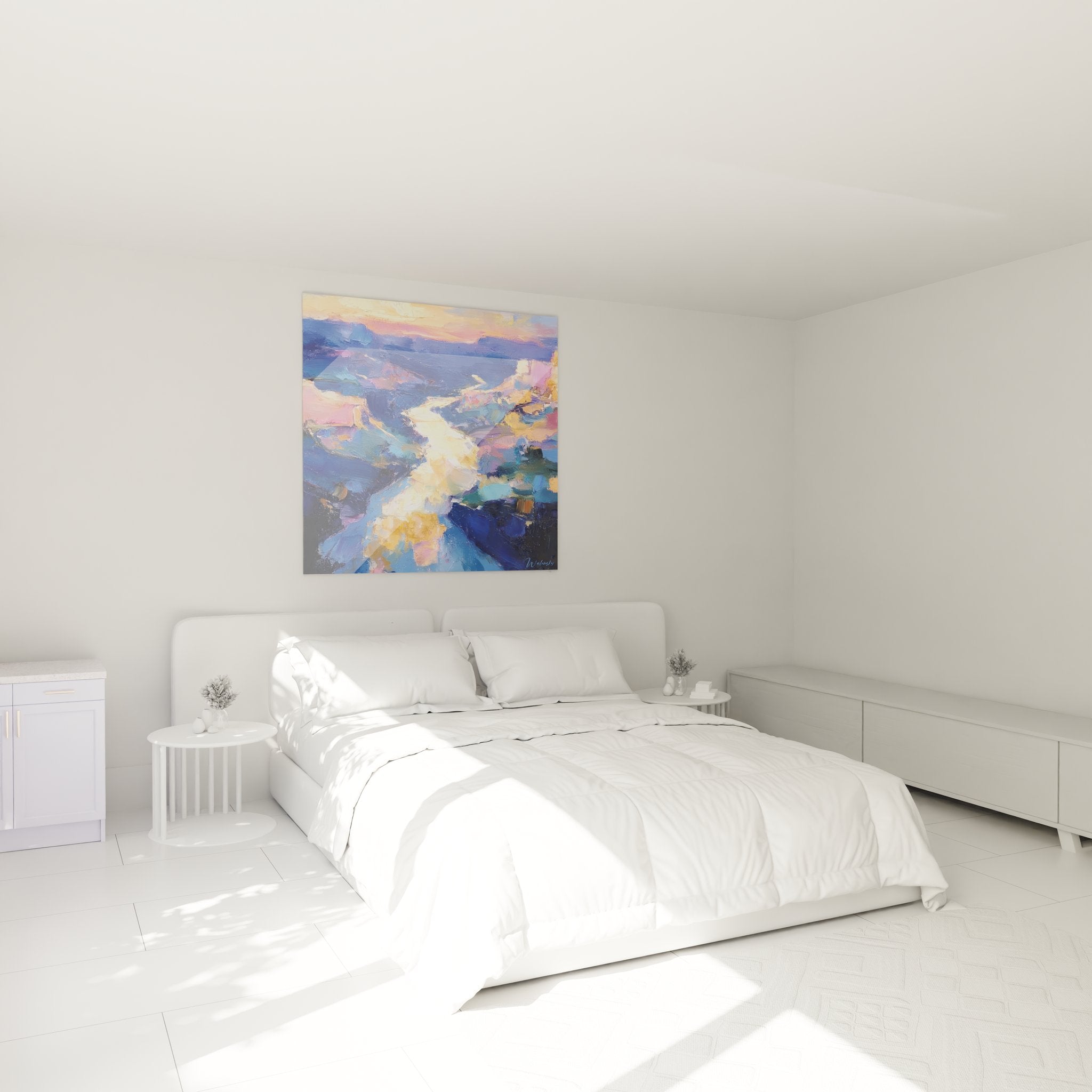
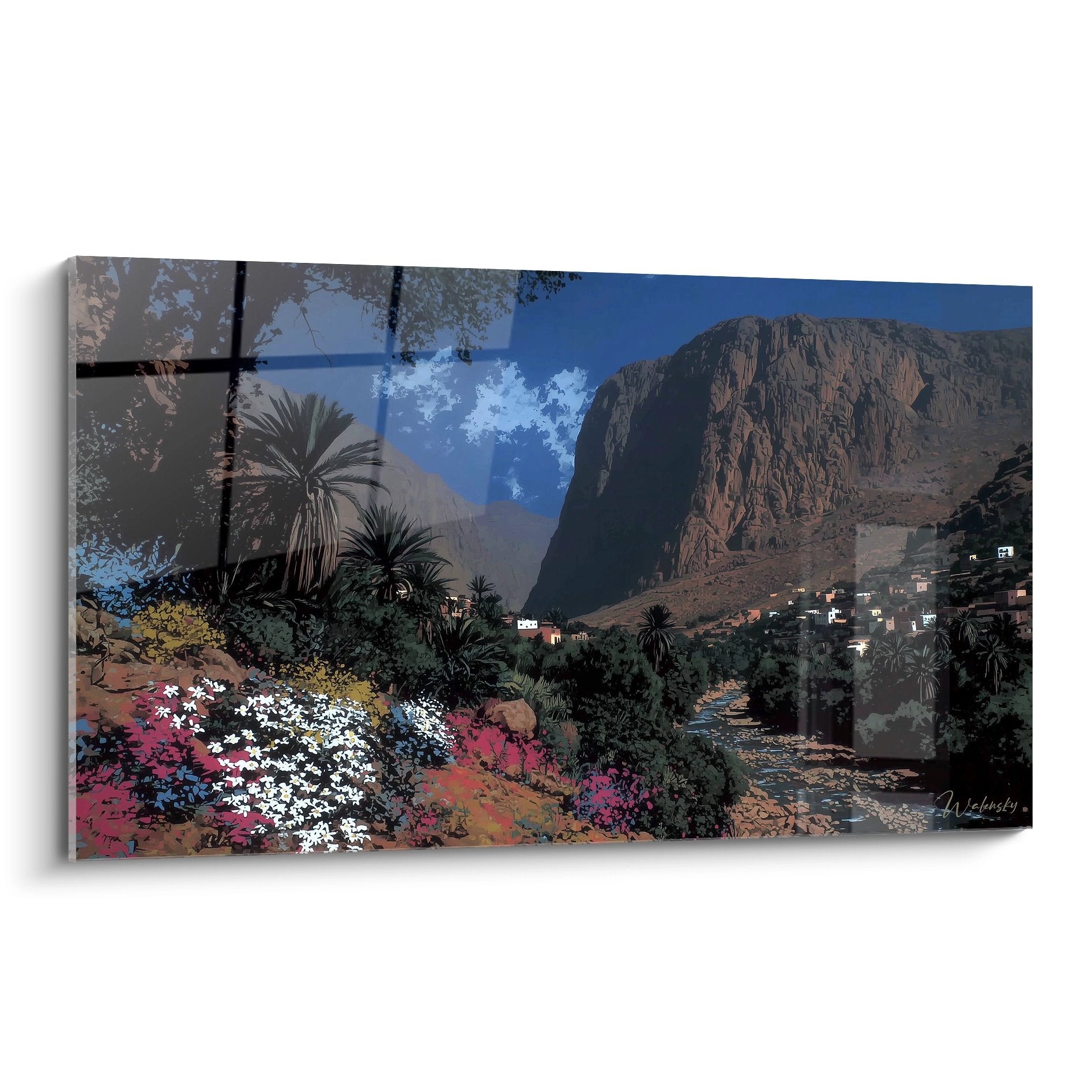
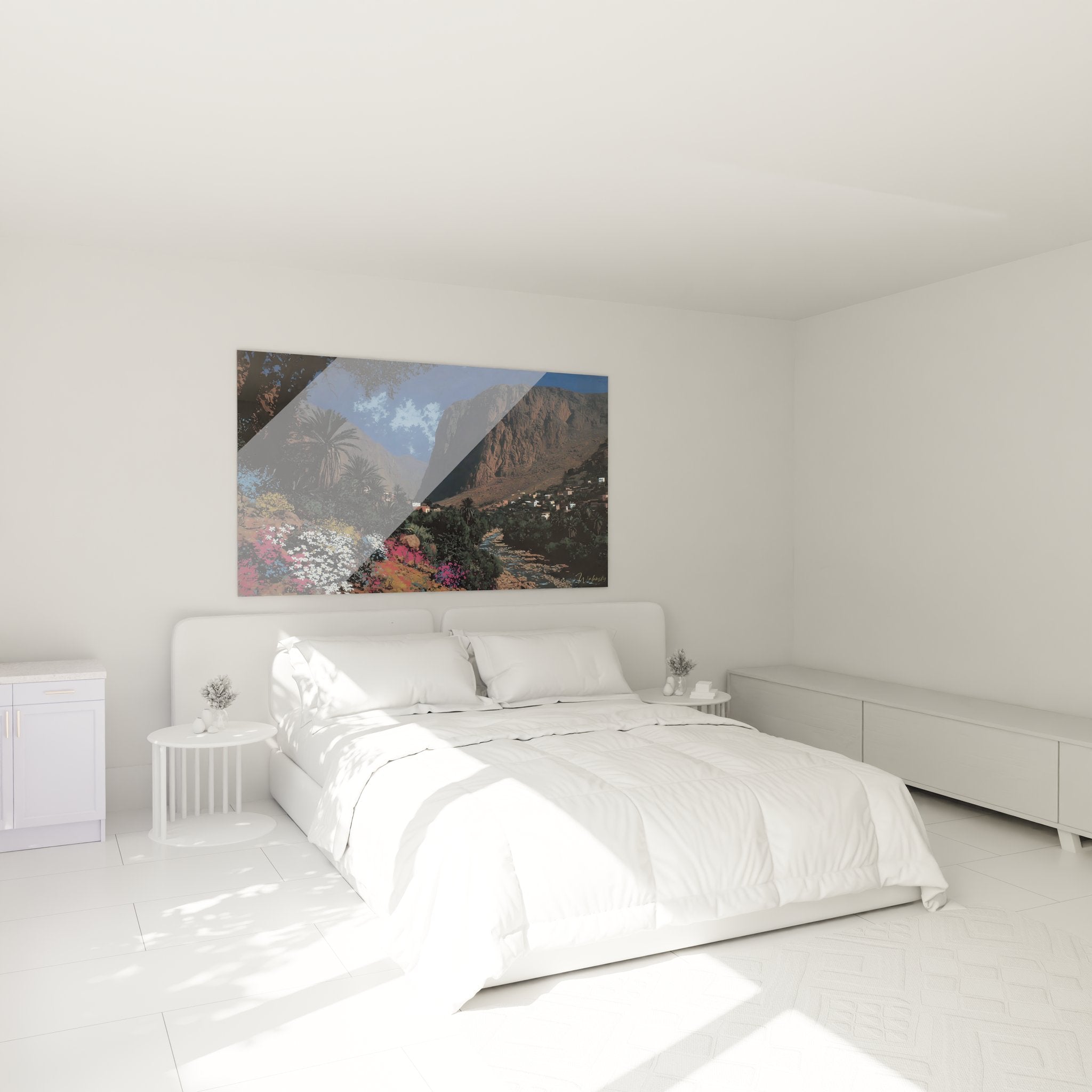
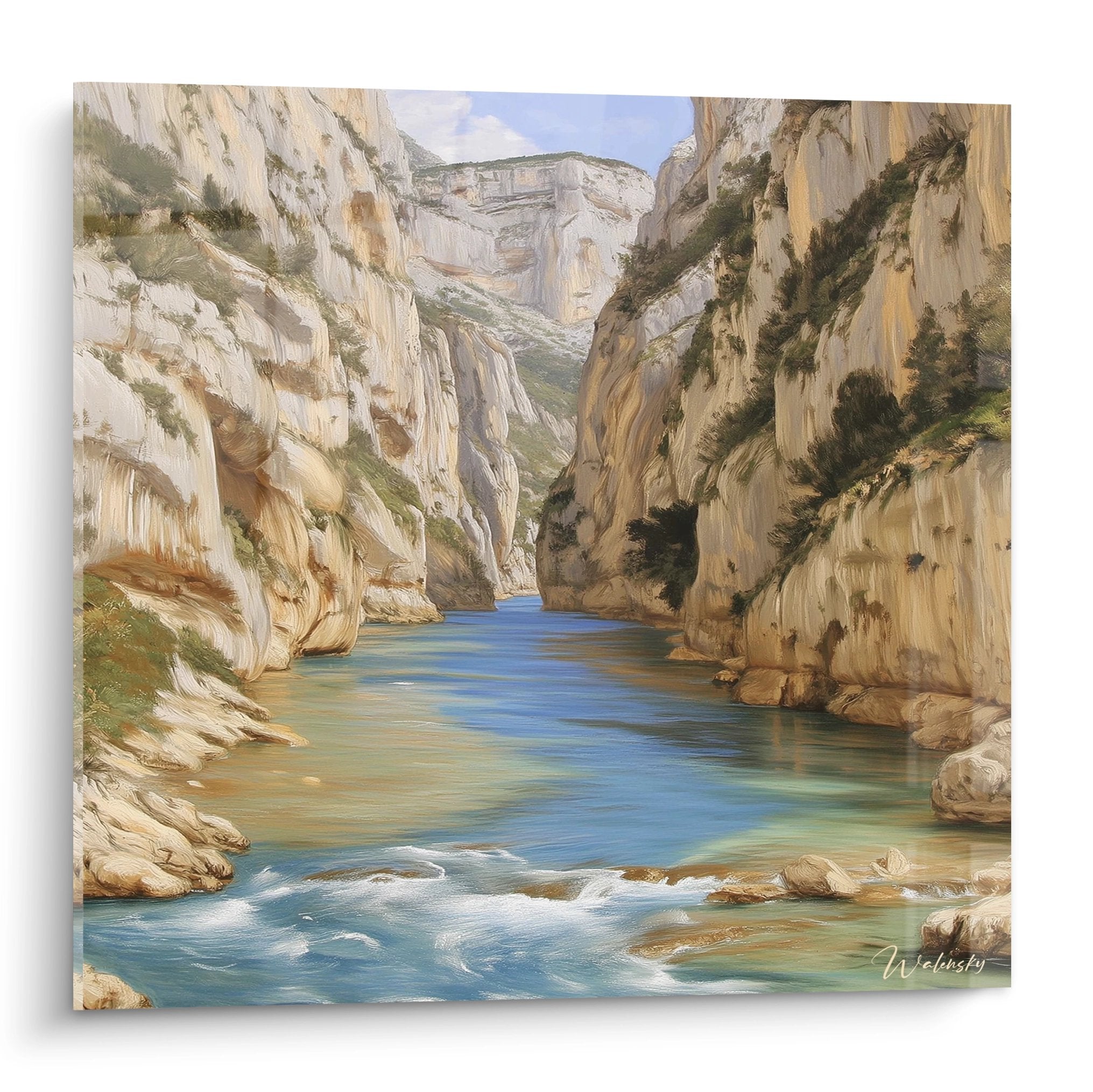
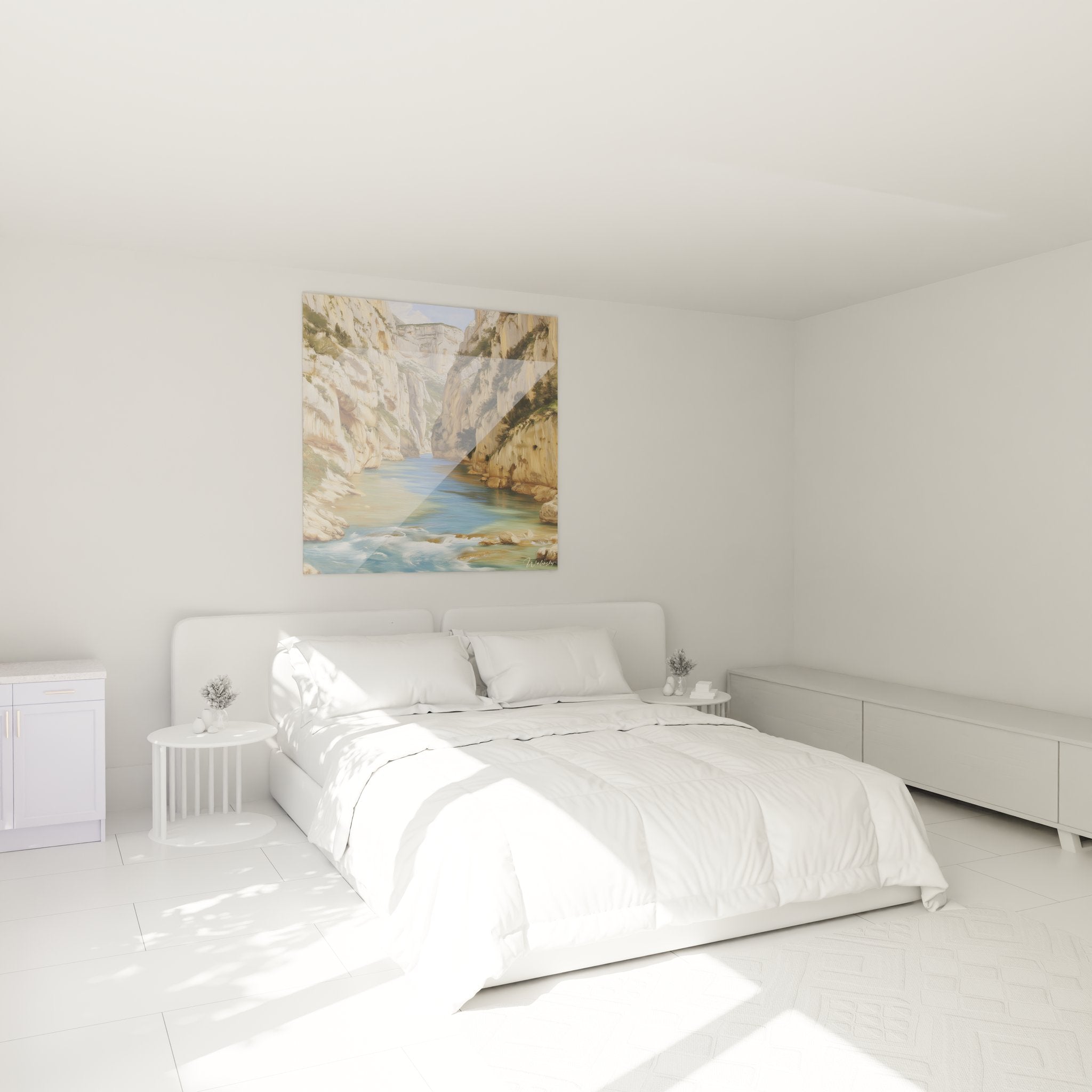
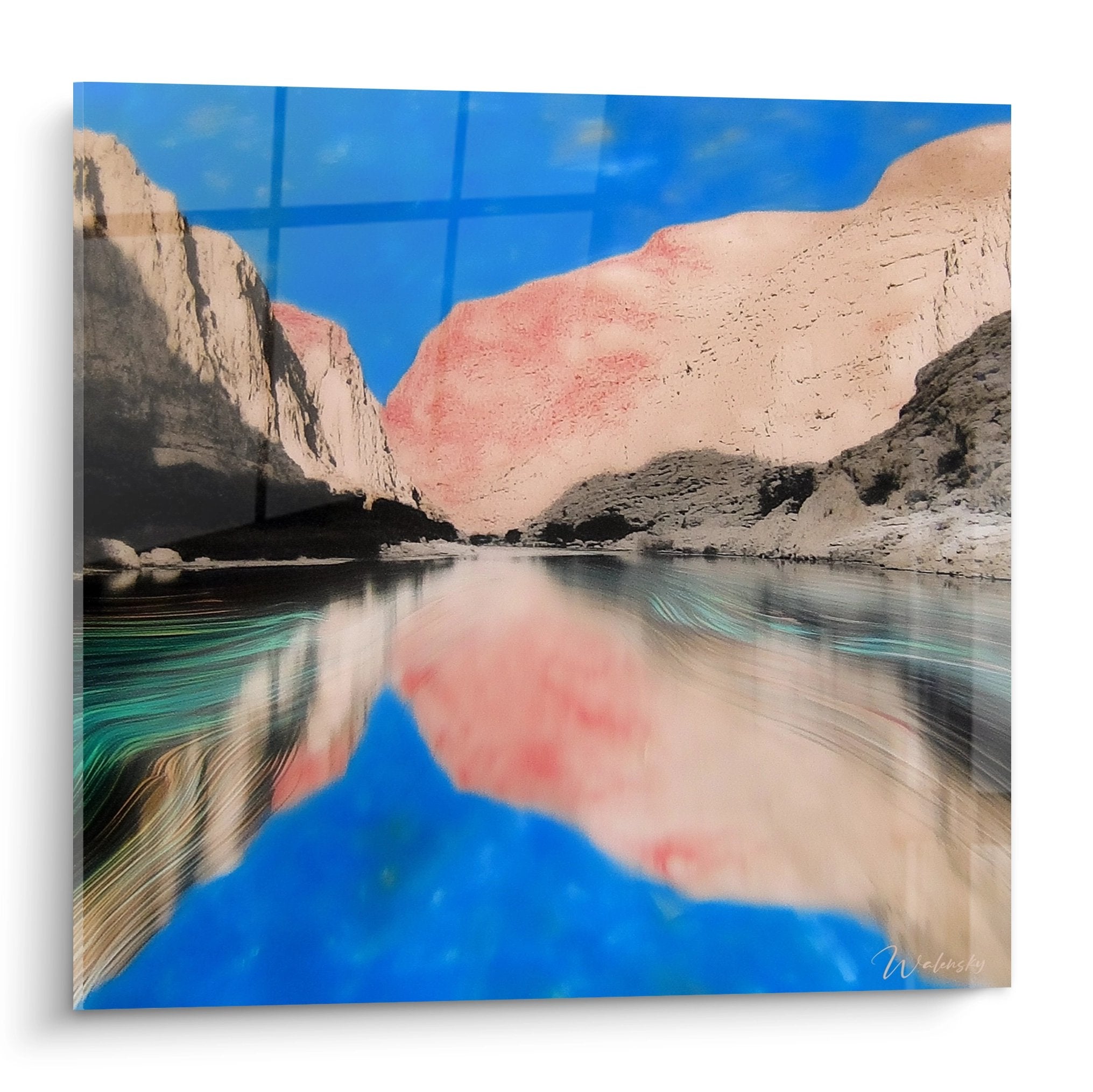
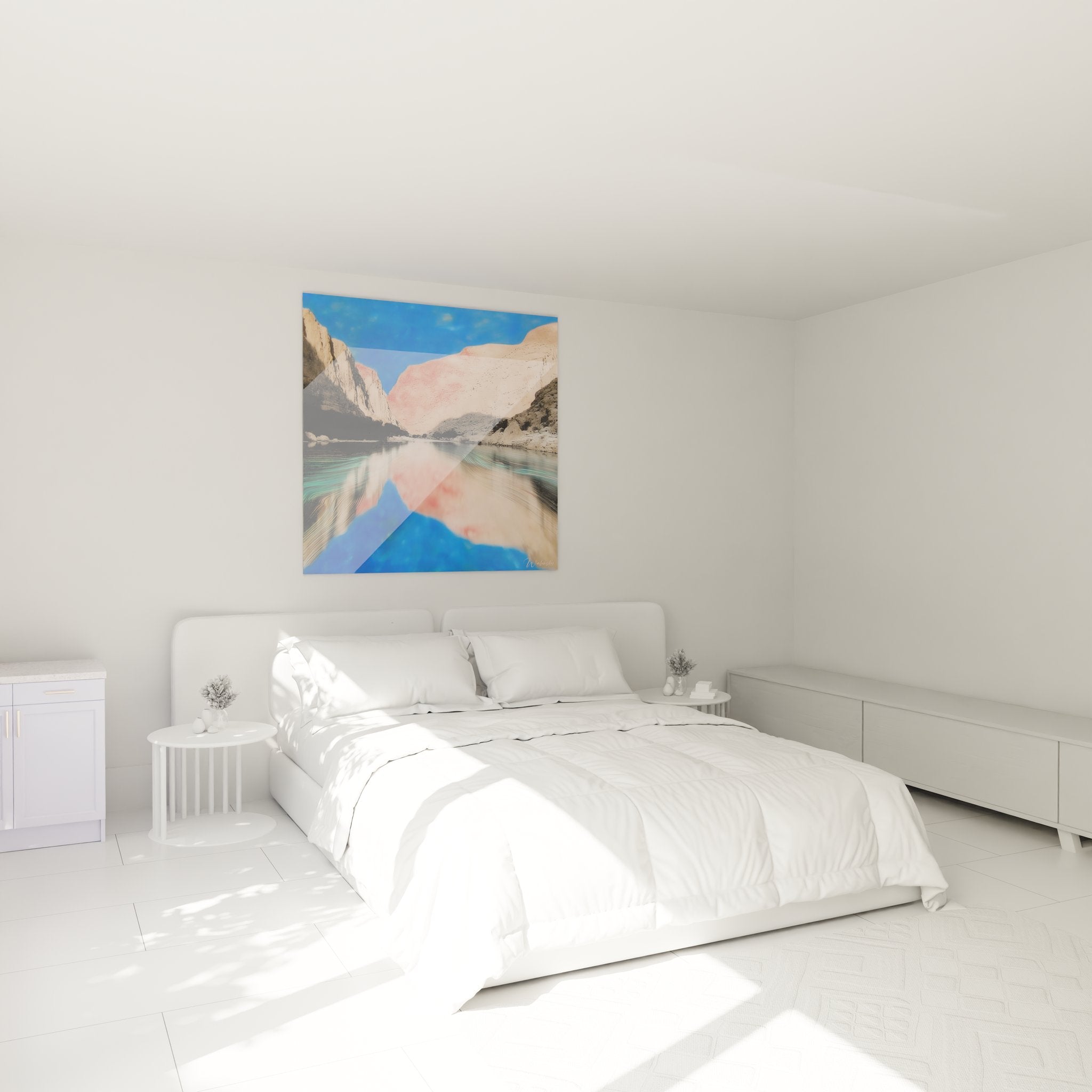
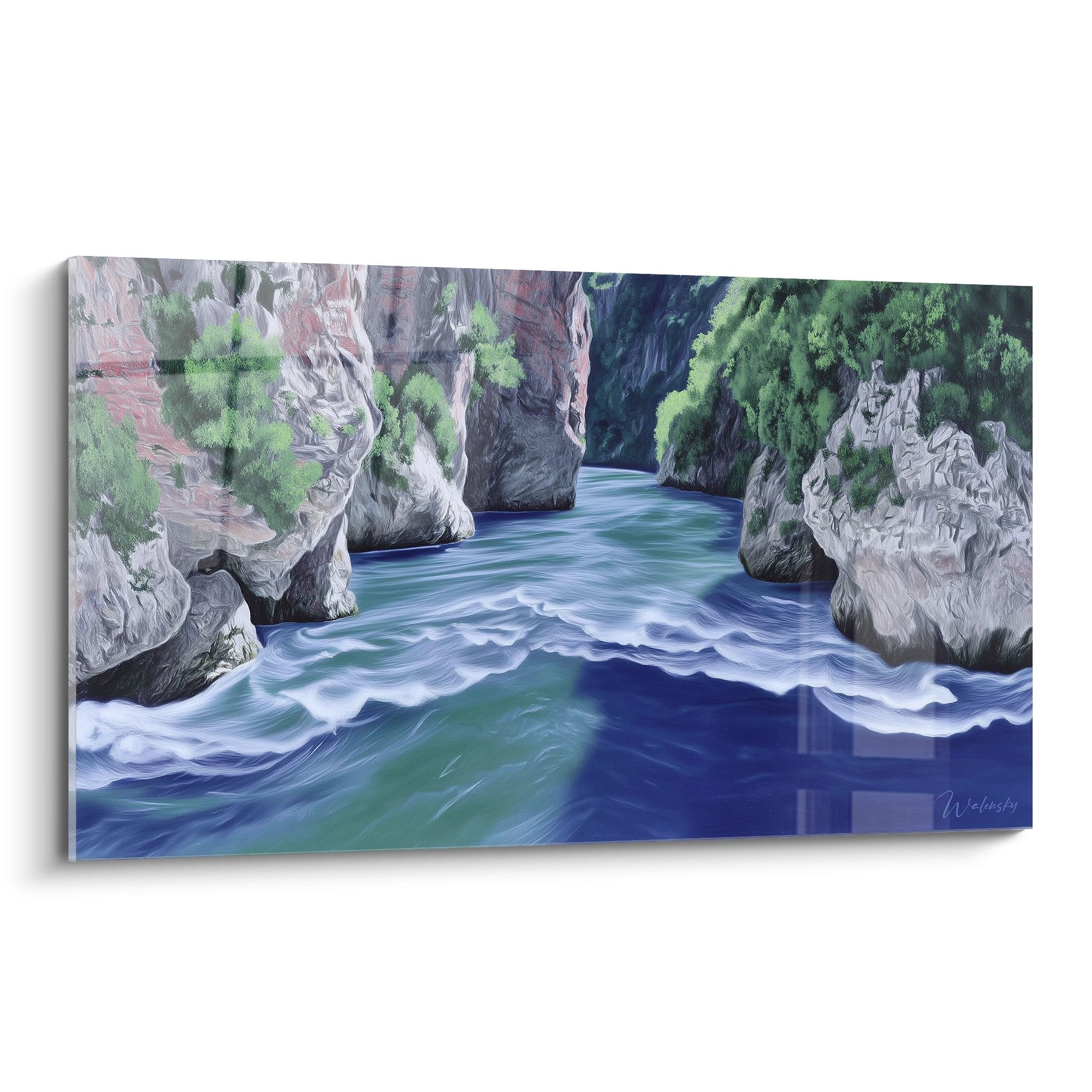
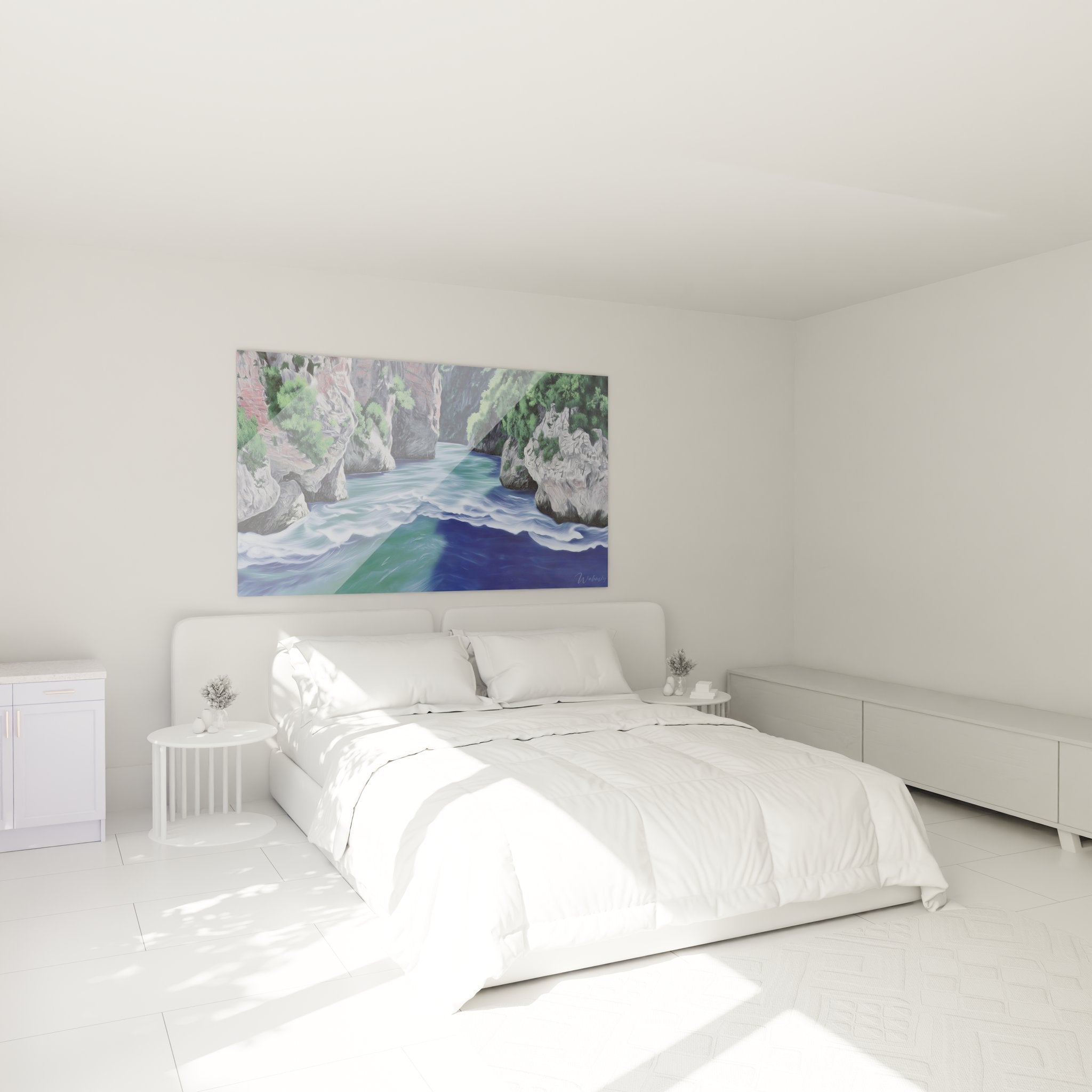
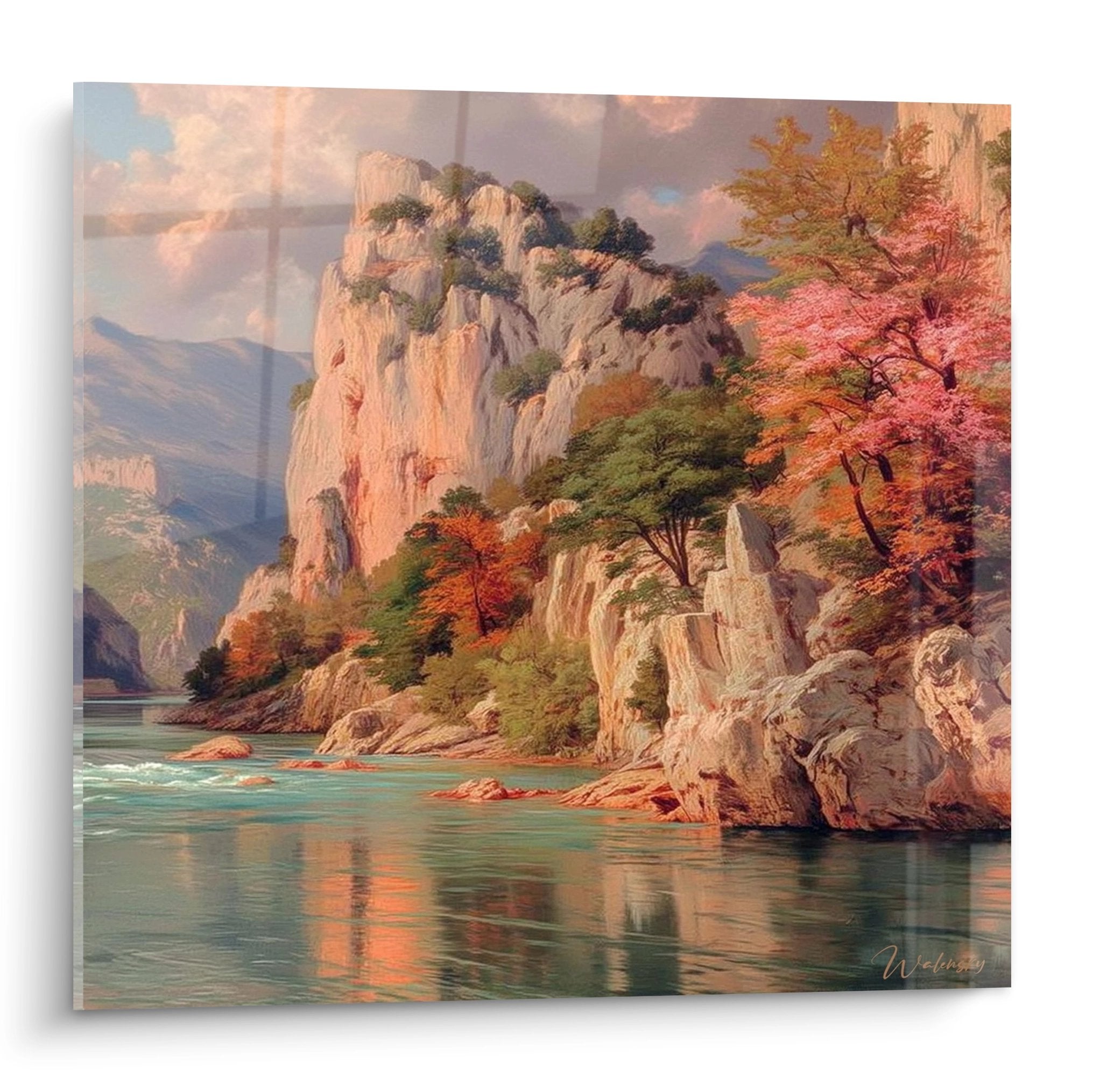
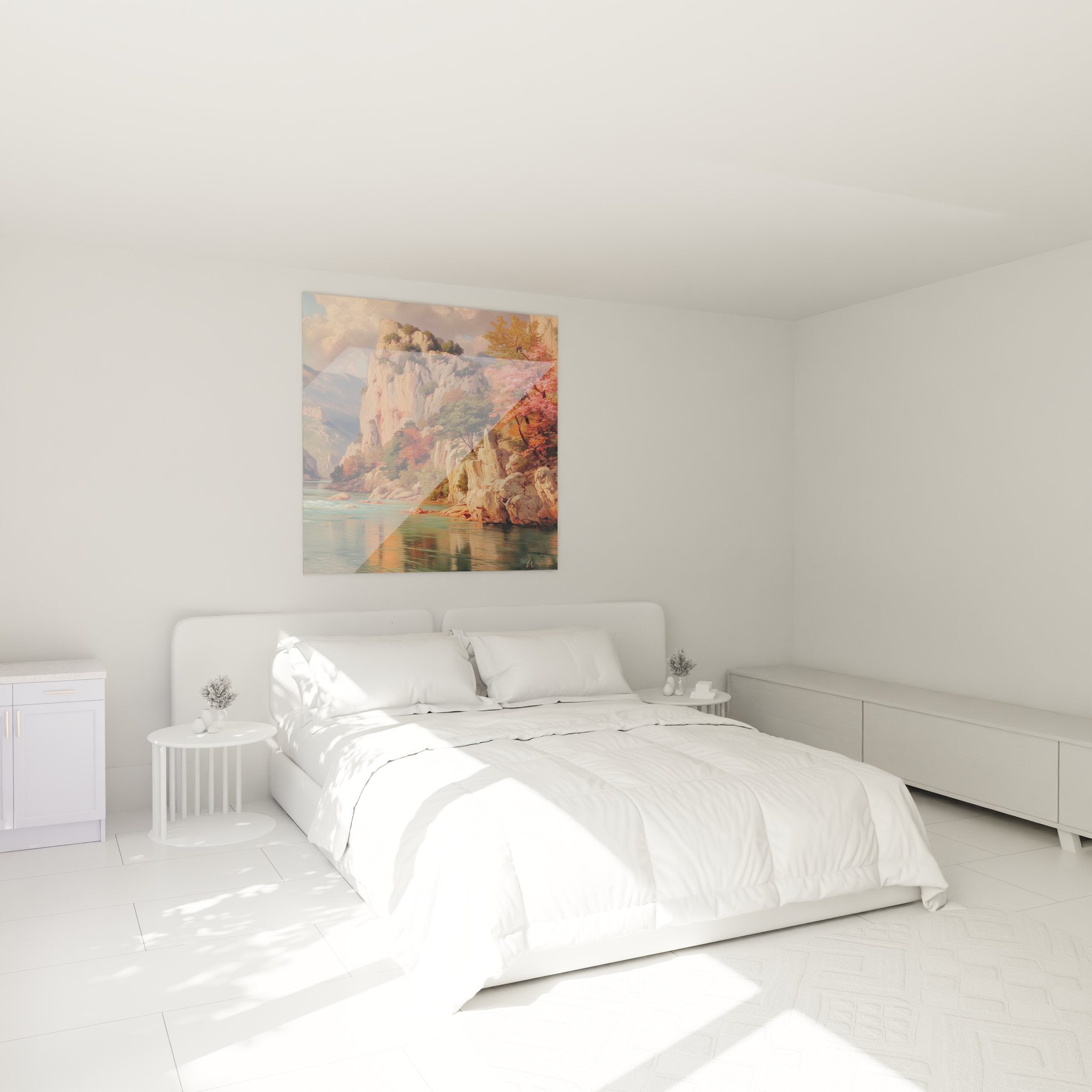
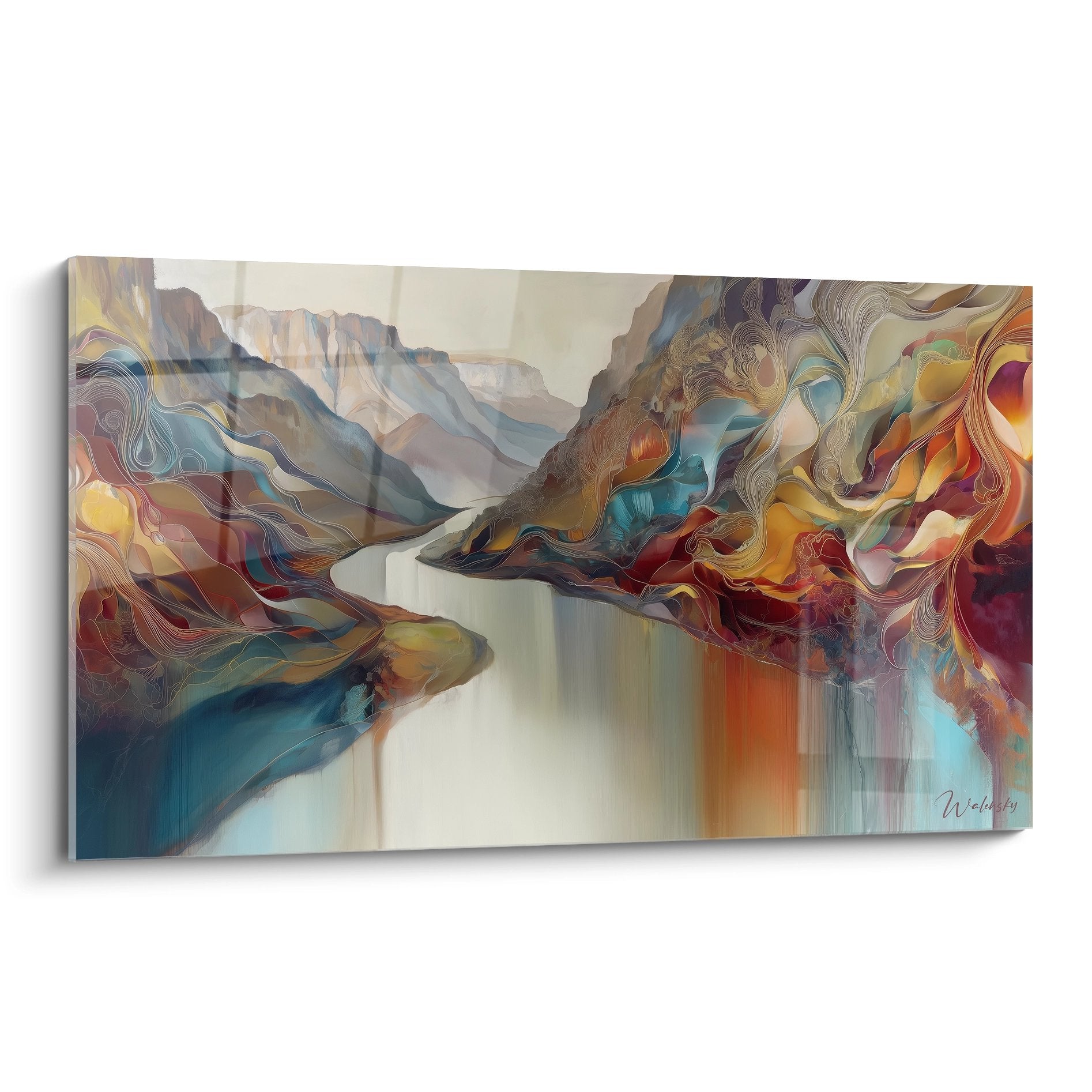
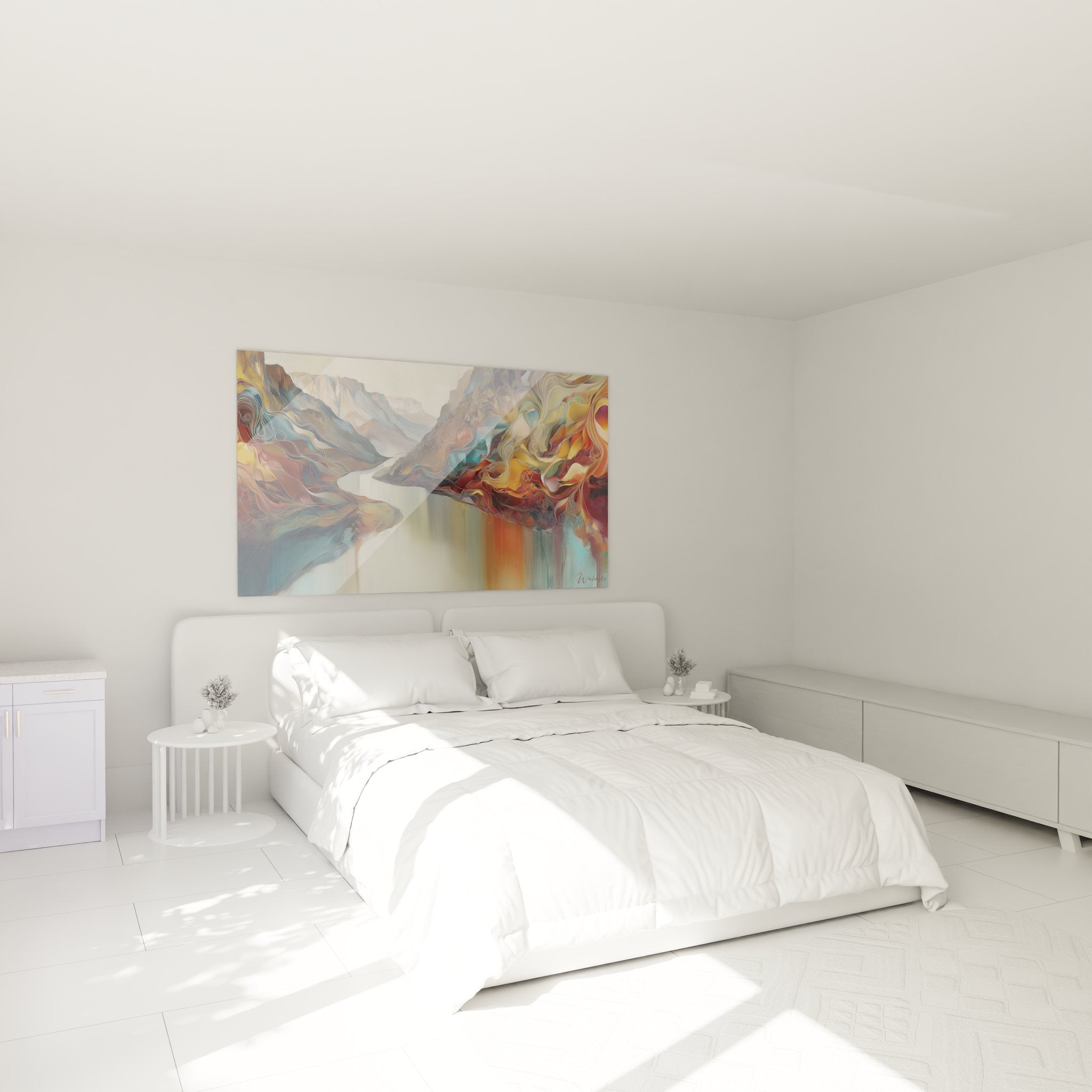
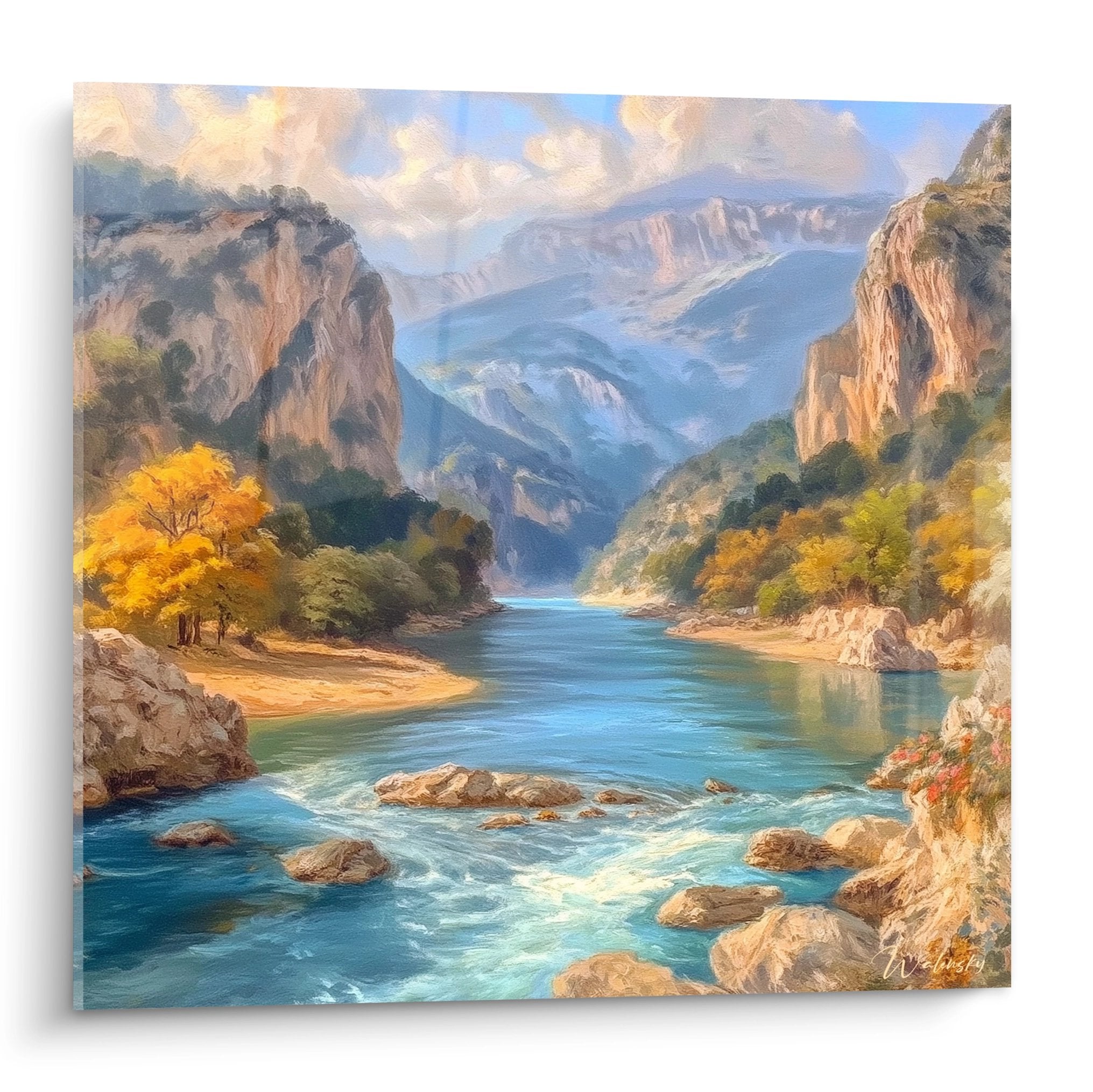
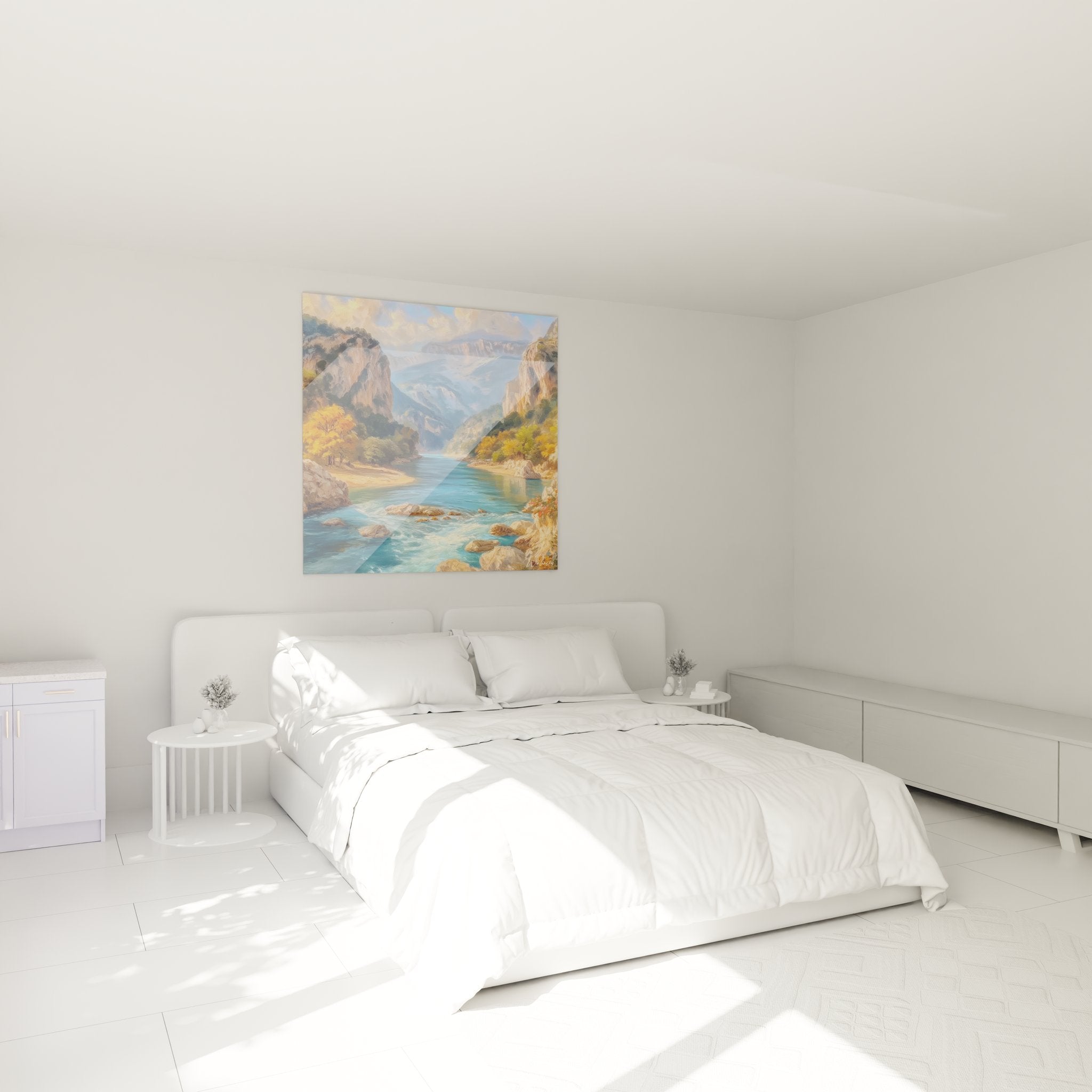
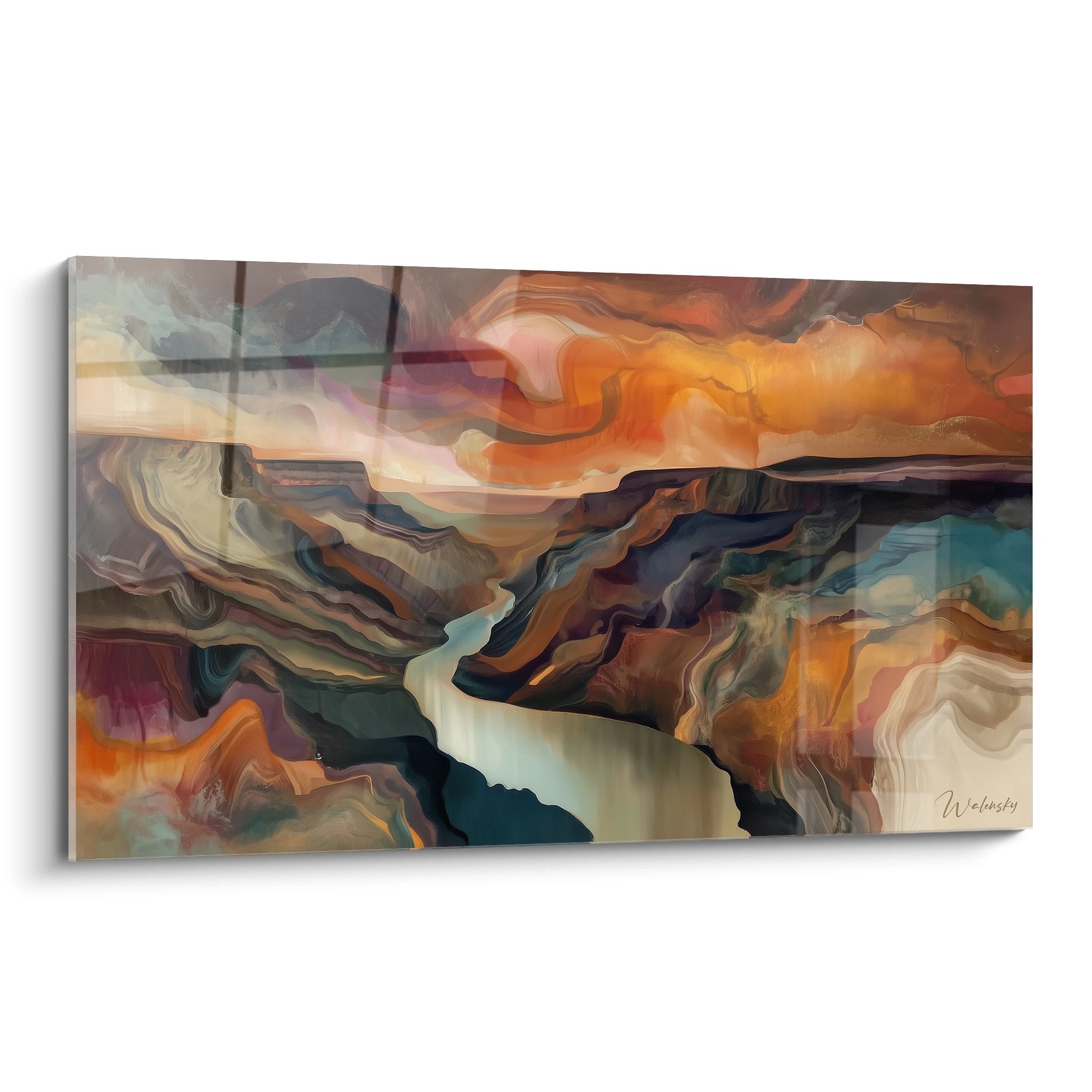
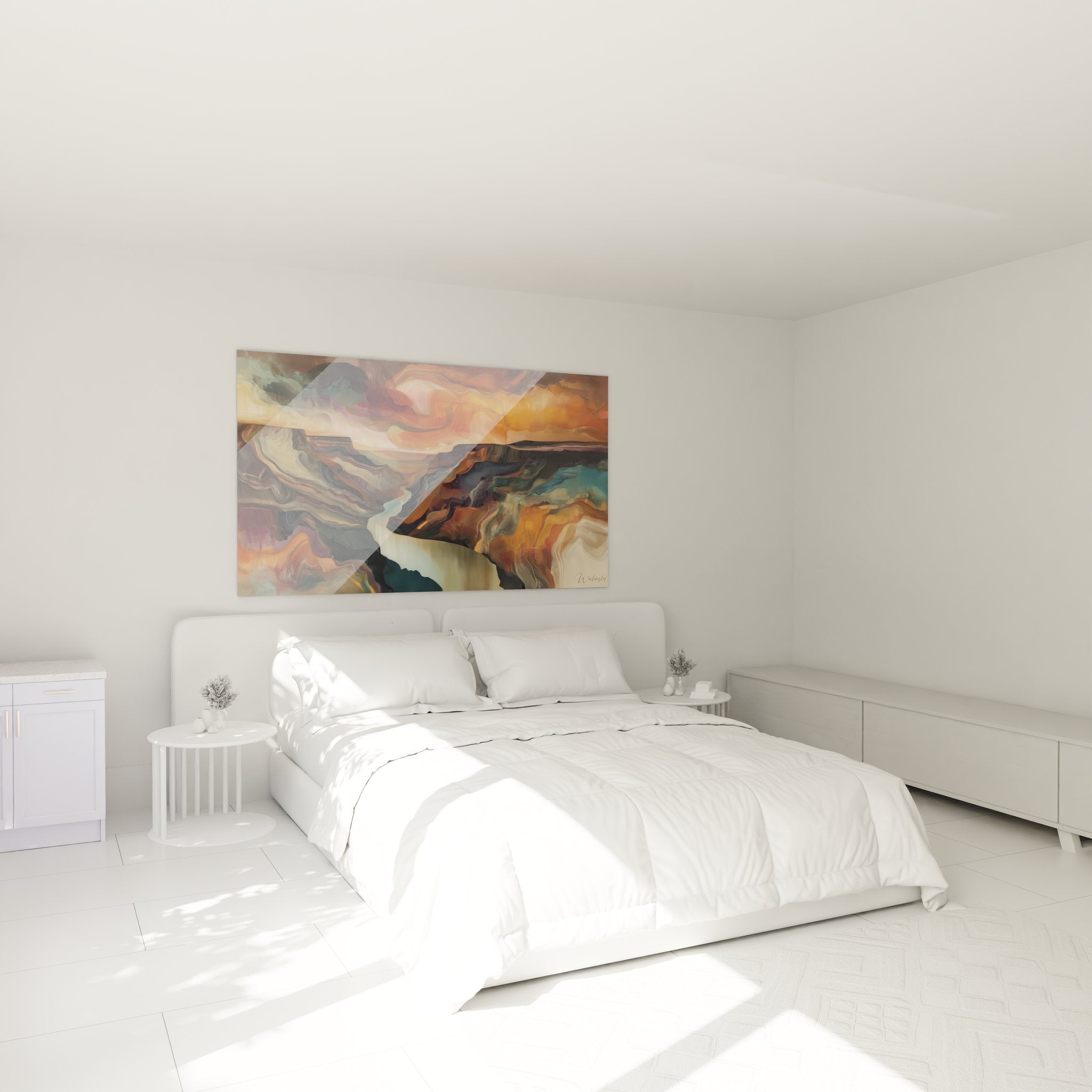
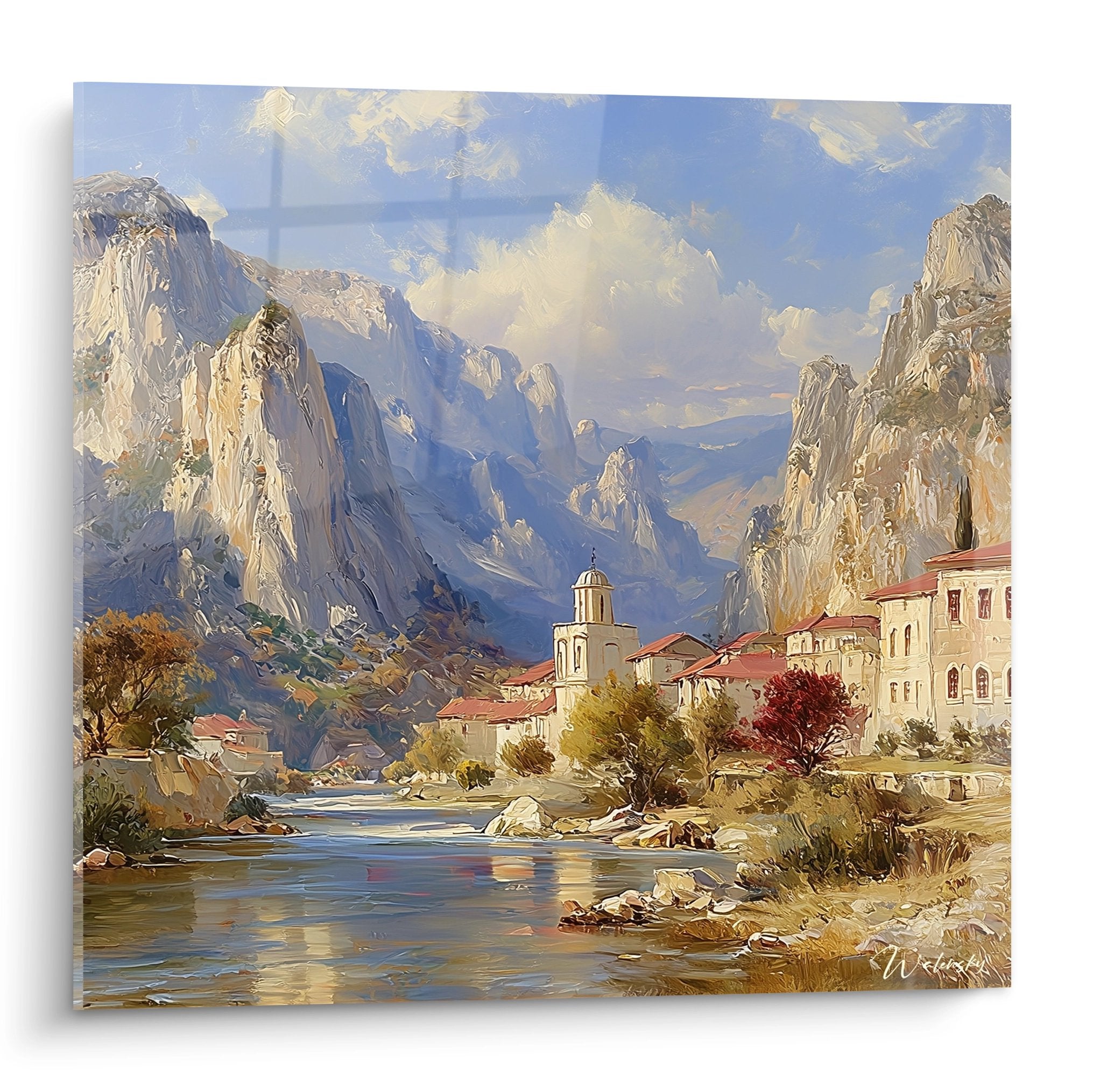
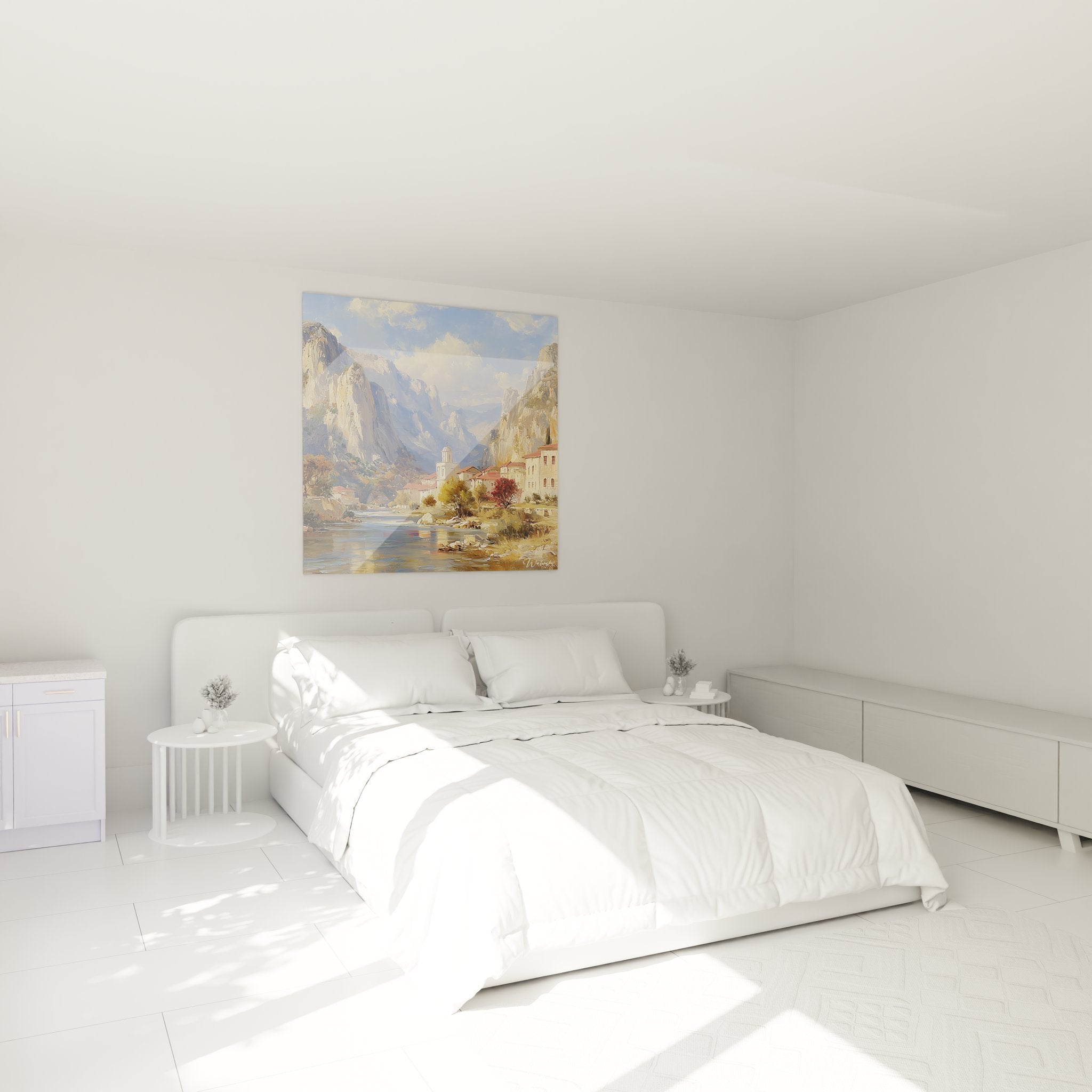
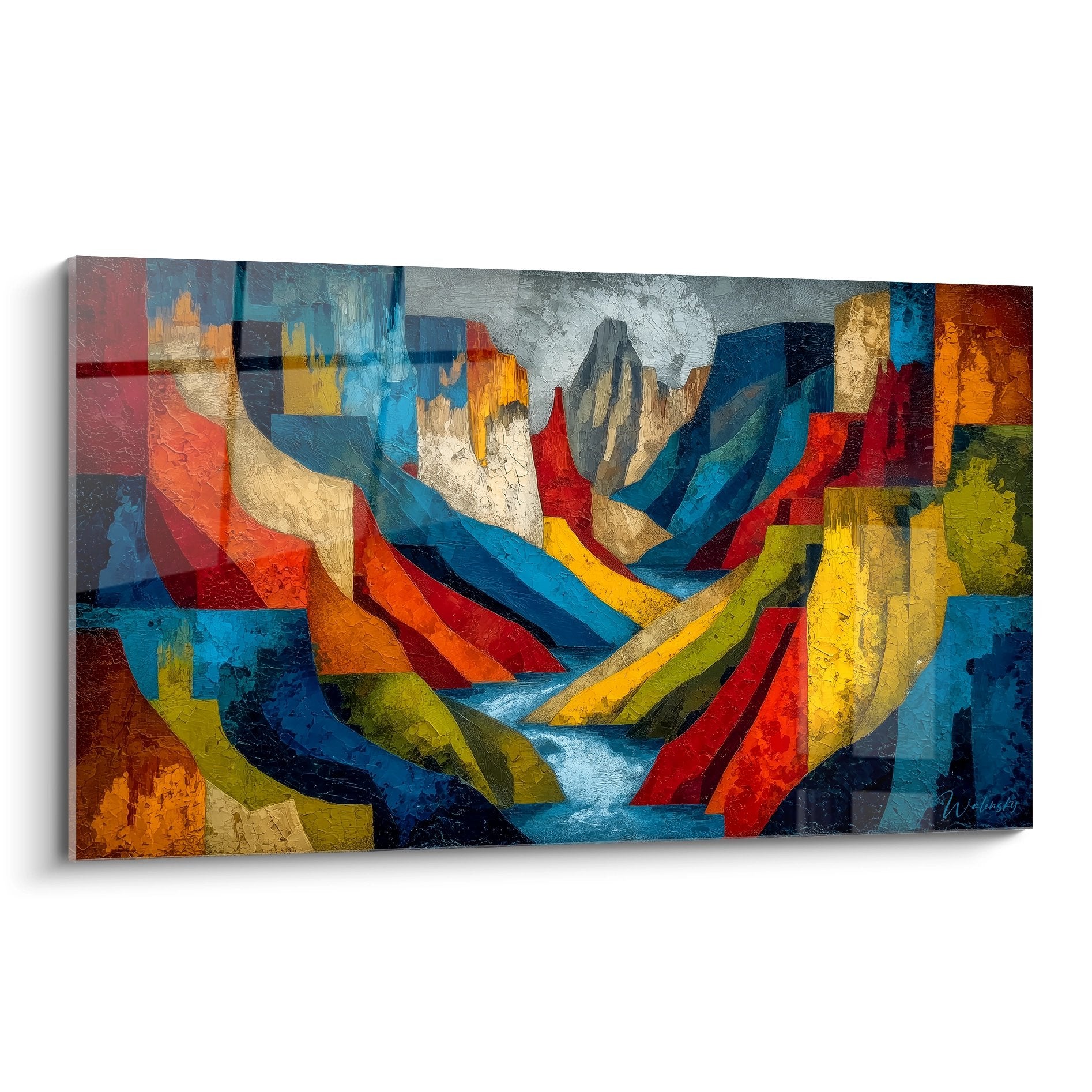
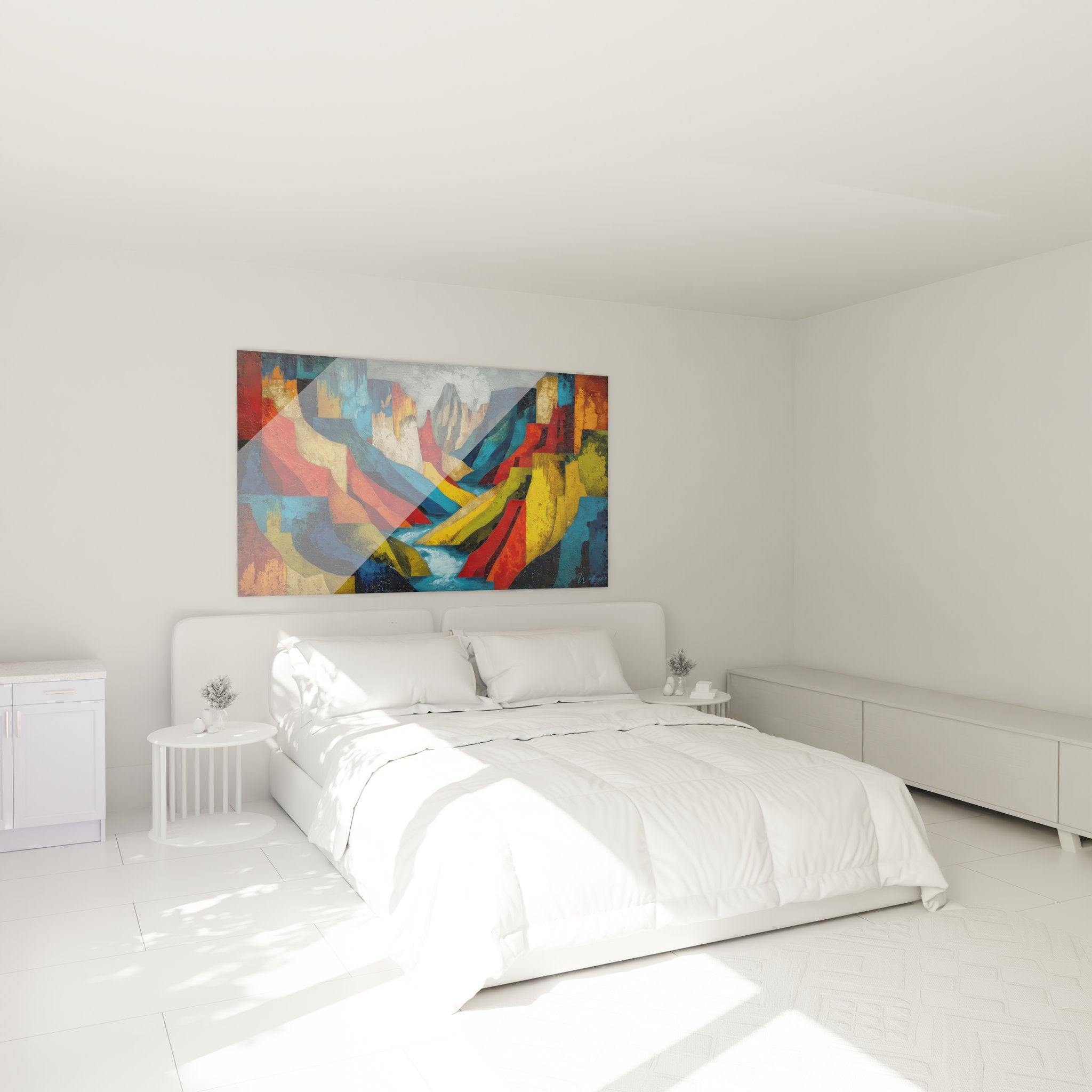
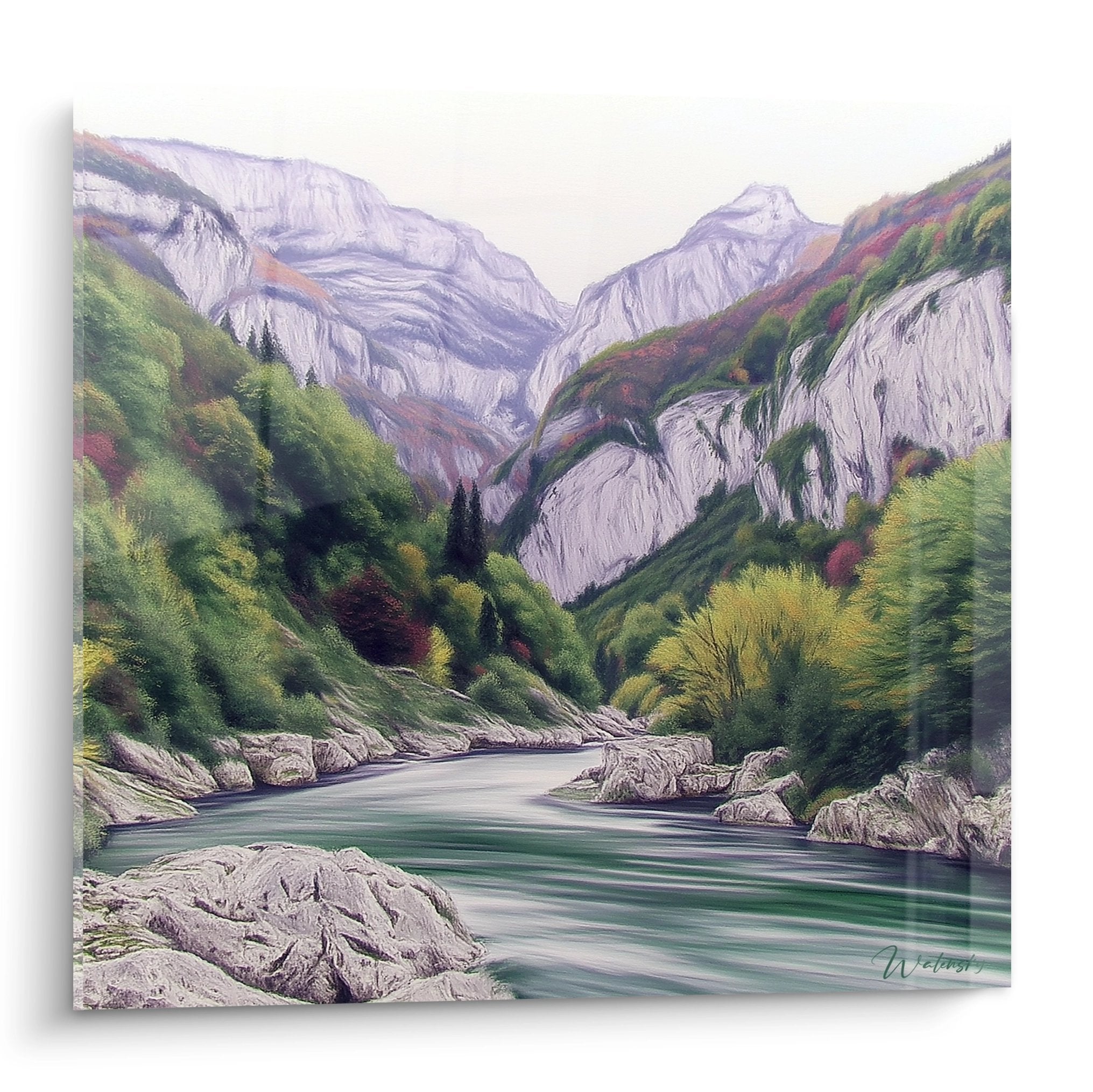
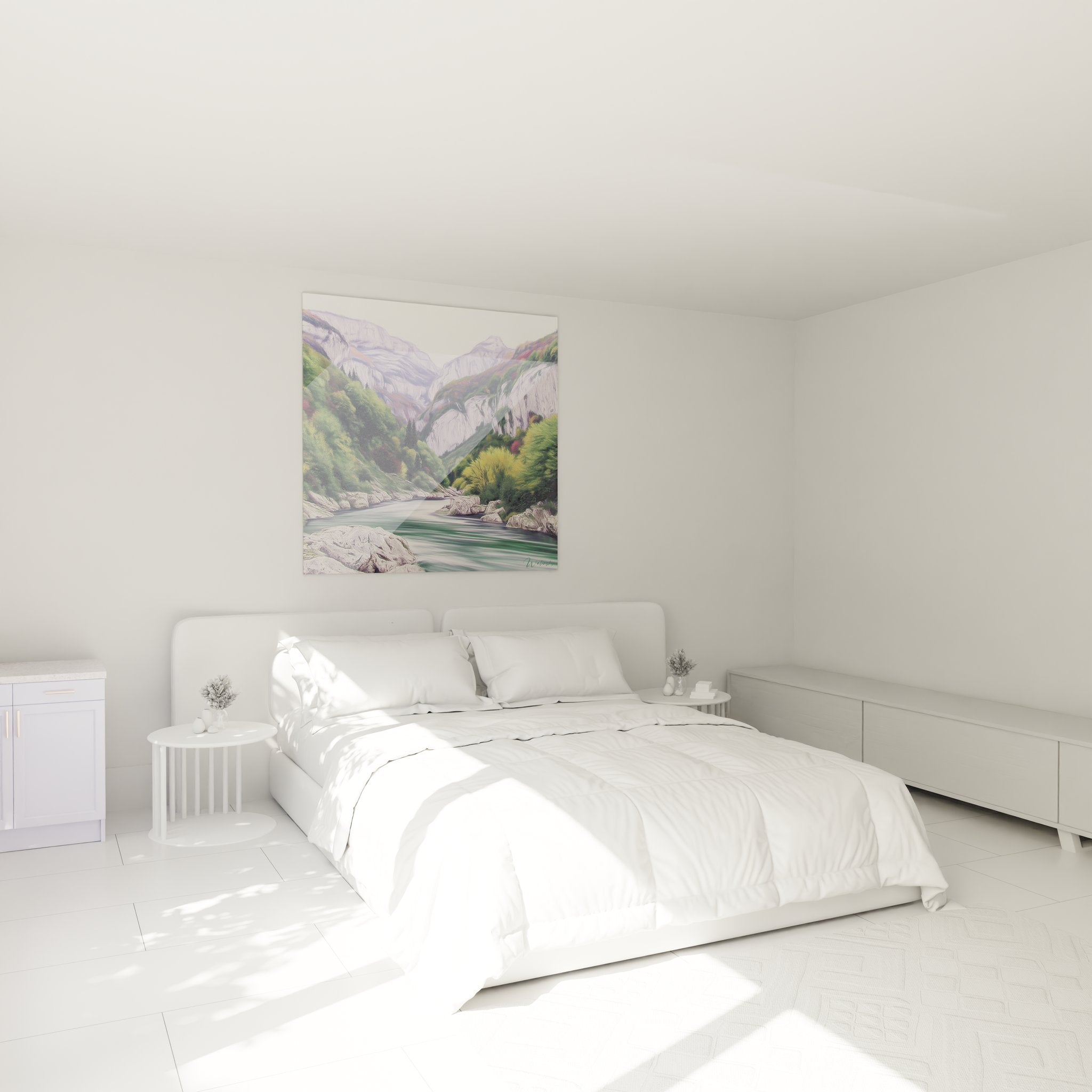
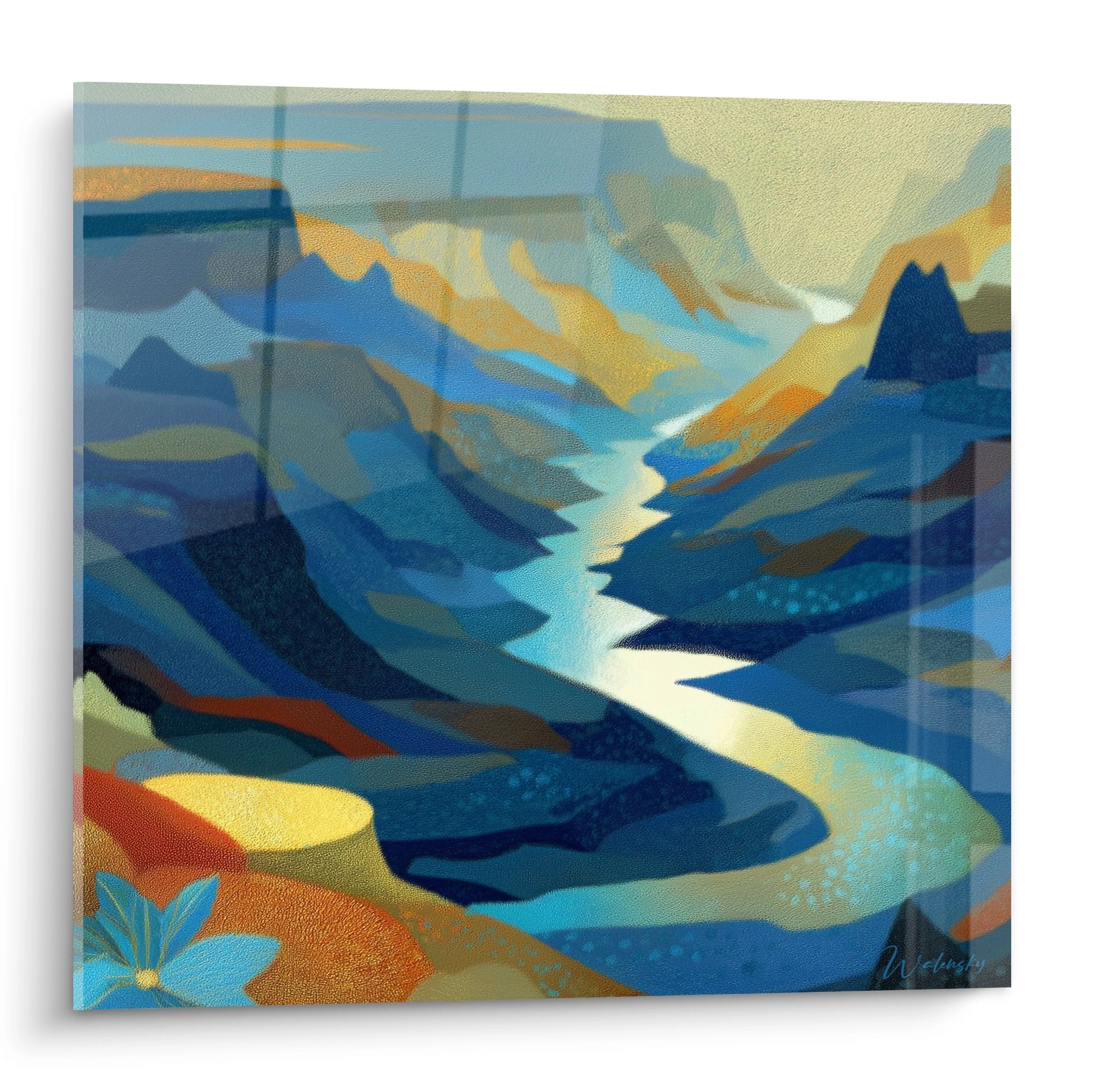
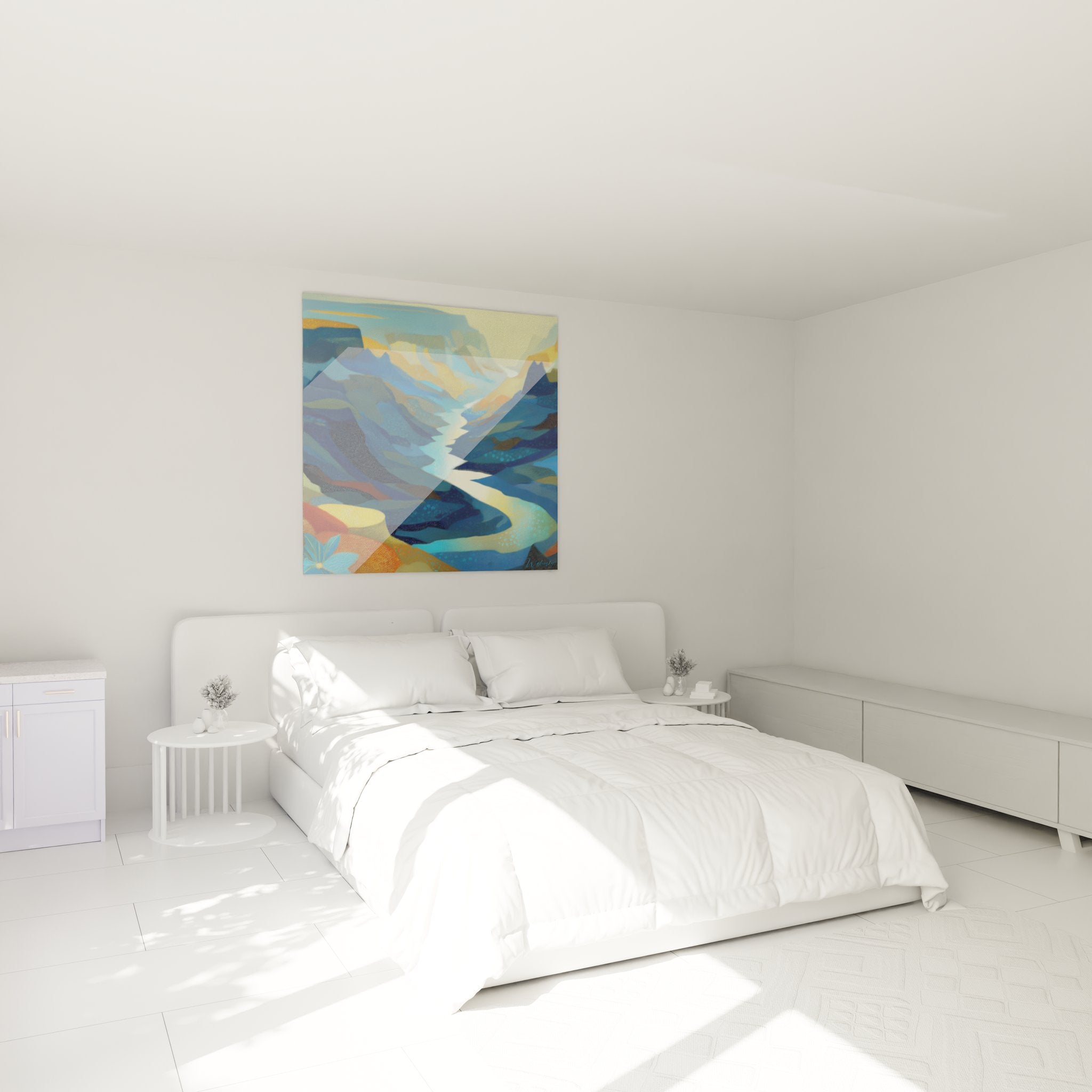
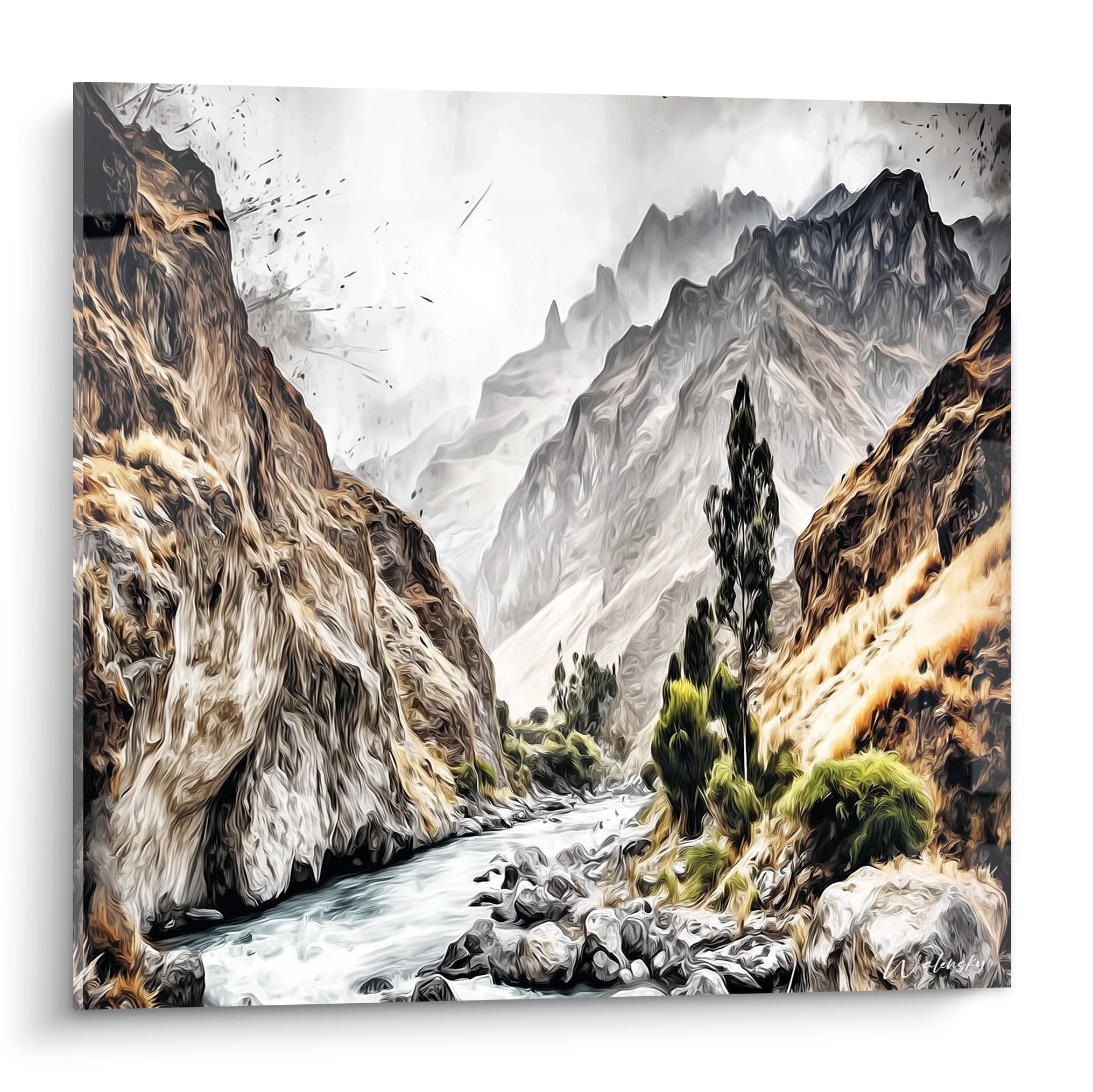
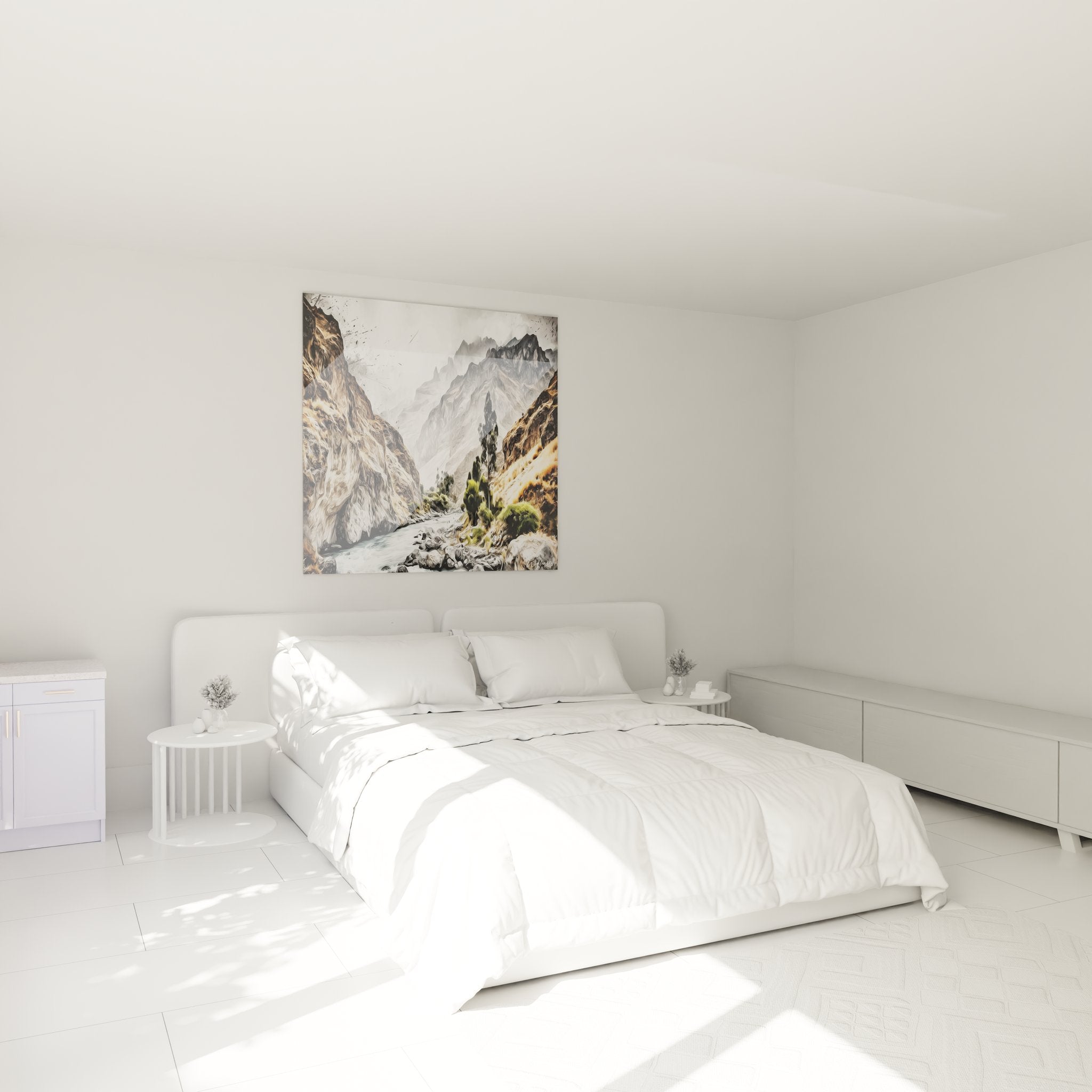
- Gorges and Canyons Wall Art Presentation
- Vertical Impact and Spatial Sensations
- Mineral Palettes and Geological Authenticity
- Monumentality and Residential Scale
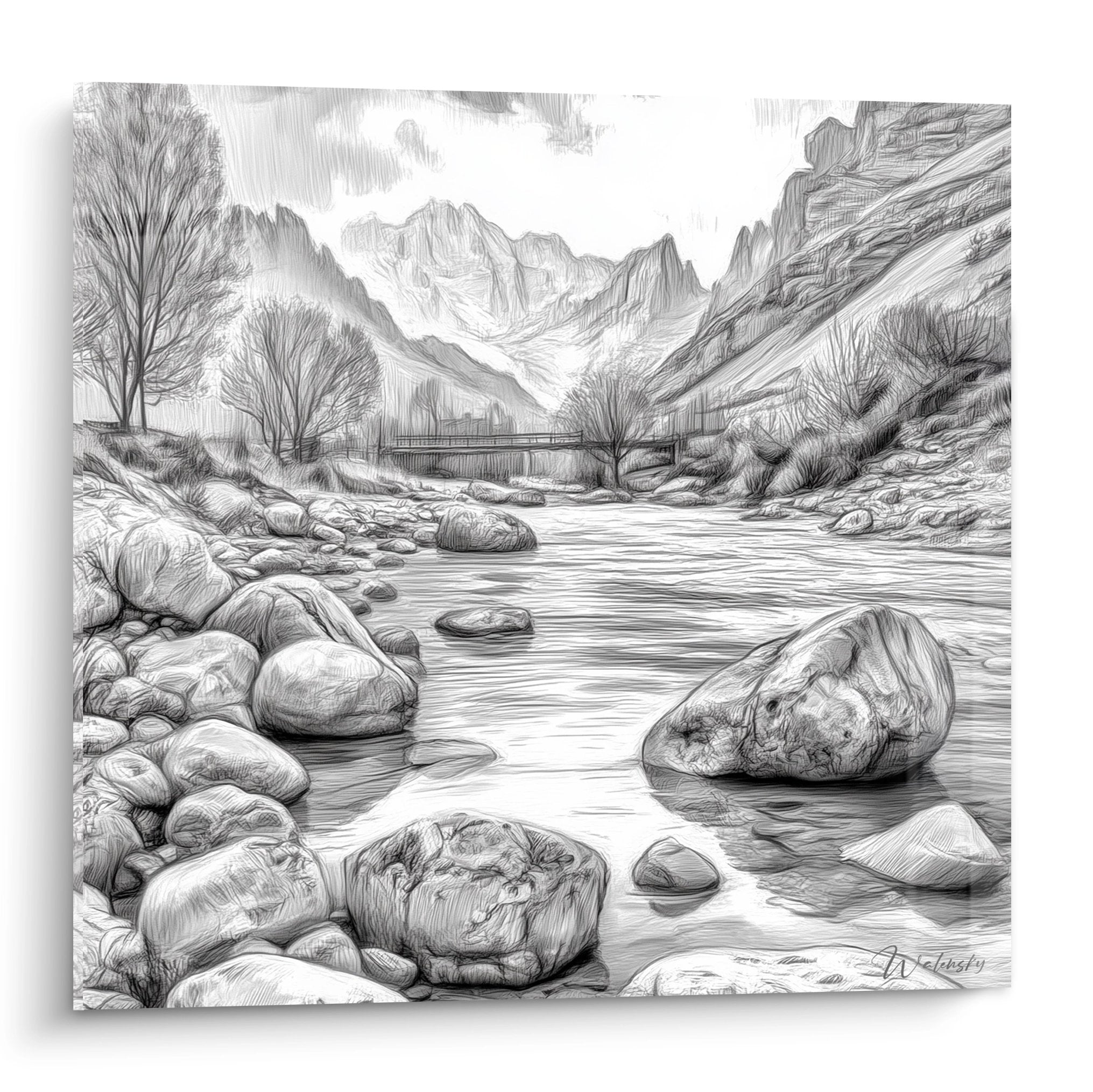
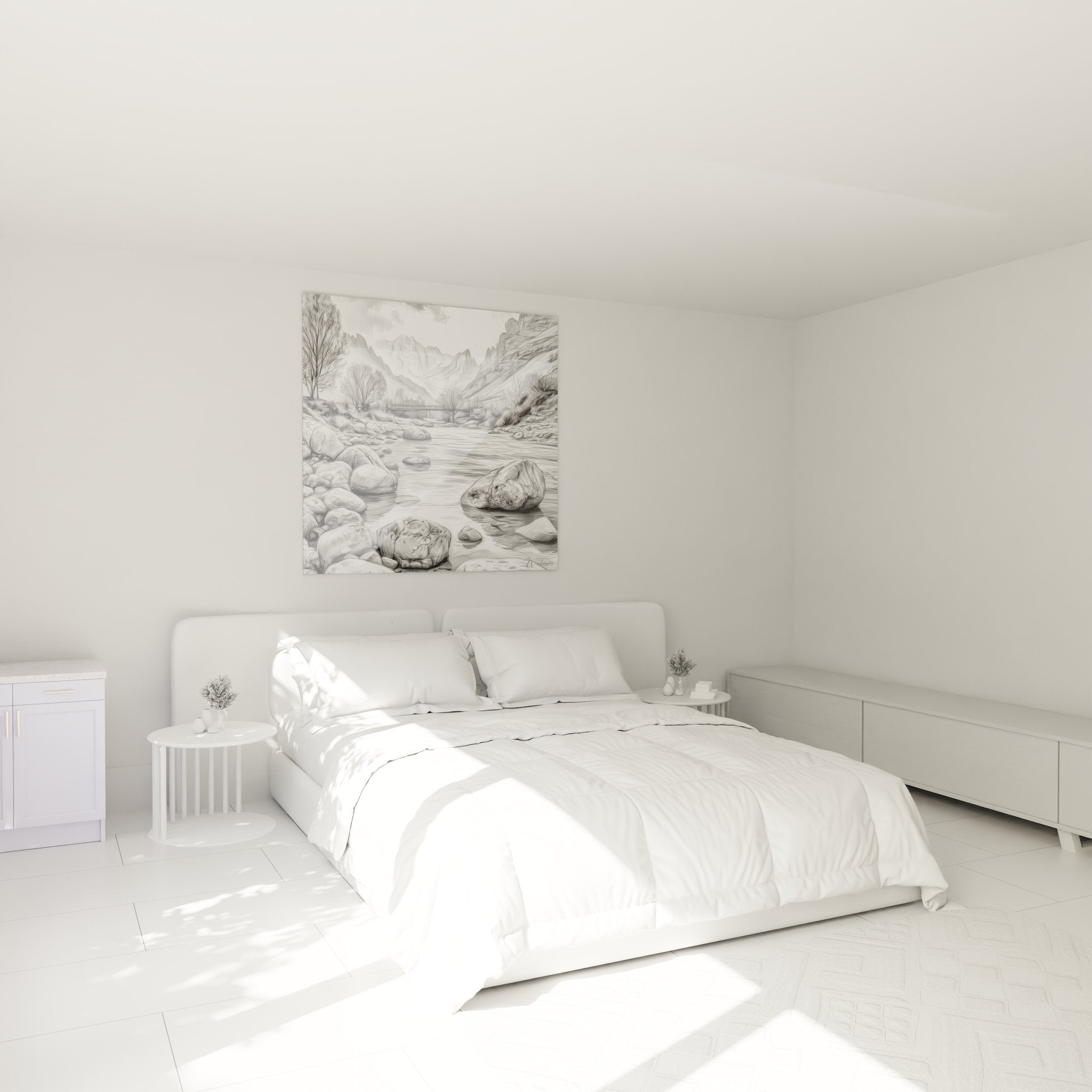
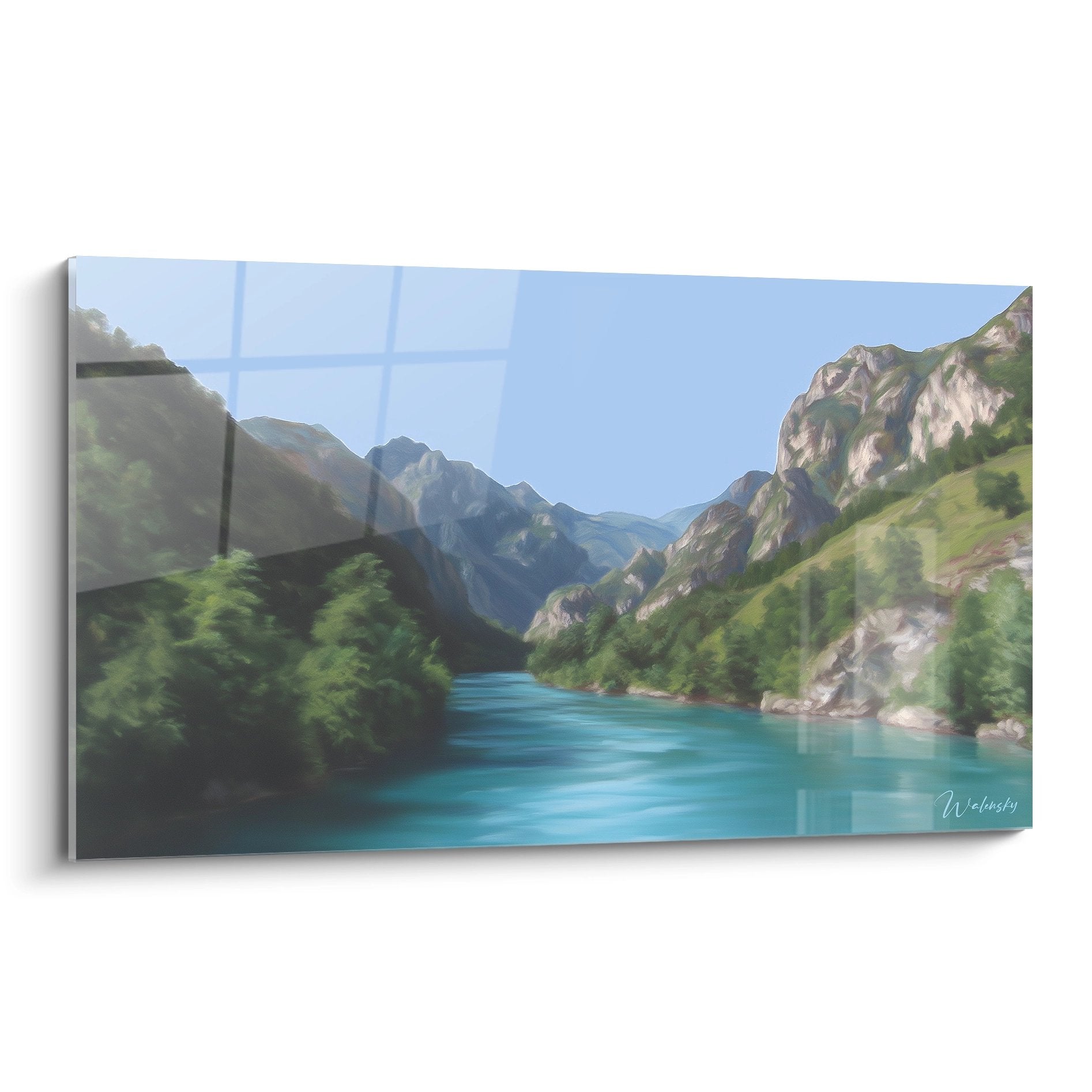
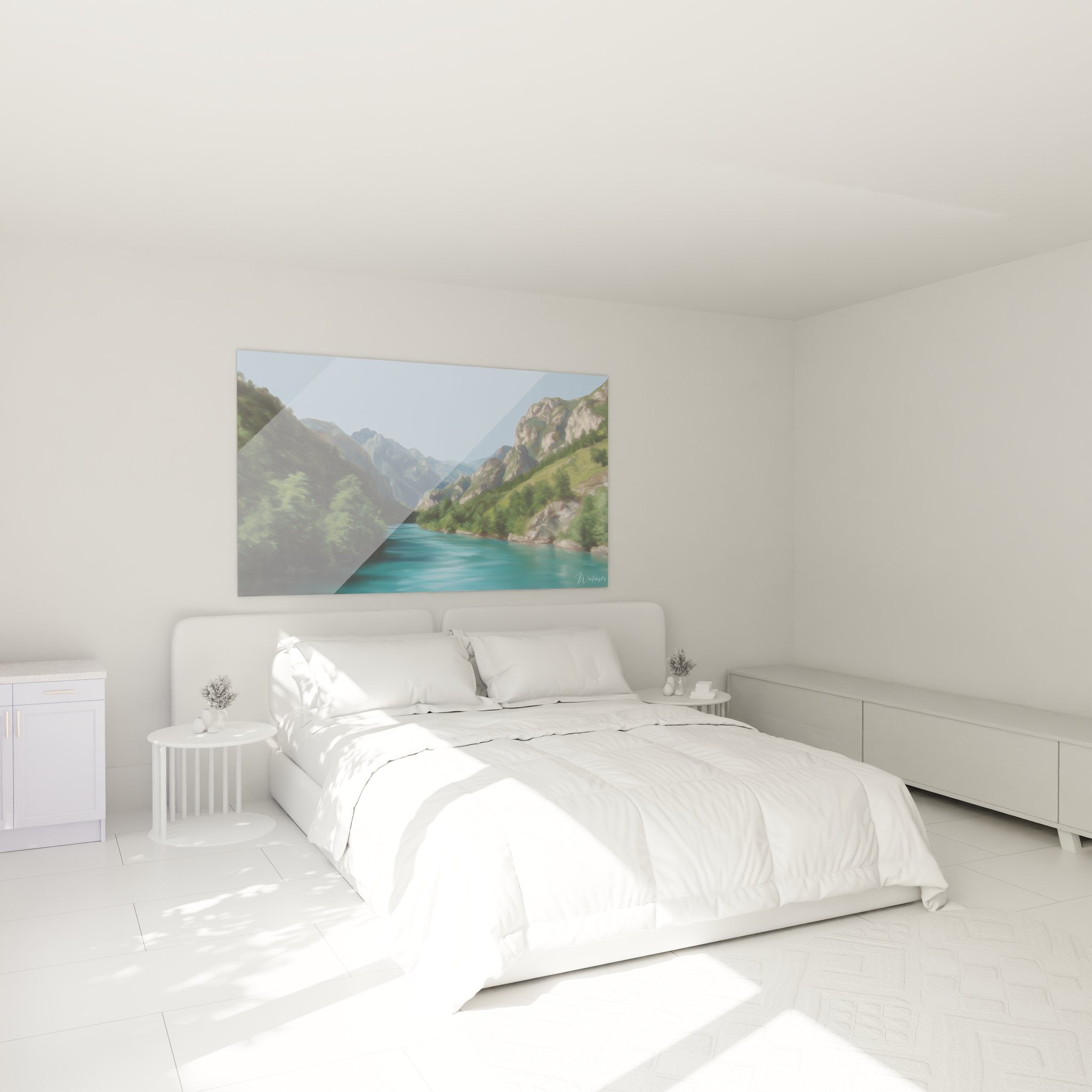
Gorges and canyons wall art radically transforms your interior's spatial perception by introducing a spectacular geological dimension. These large-scale mural representations capture the majesty of millennia-old rock formations, offering a visual window onto landscapes sculpted by erosion. Unlike conventional décor, these geological visualizations create unique architectural depth, amplifying spatial sensation while anchoring your habitat in an immemorial natural temporality. Each composition reveals sedimentary strata, vertiginous shadow play, and the desert immensity characteristic of emblematic canyon sites.
Geological Verticality and Psychospatial Transformation of Contemporary Interiors
Integrating gorges and canyons wall art in a residential environment triggers an immediate reconfiguration of volumetric perception. Vertiginous rock faces, reproduced at monumental scale, generate an elevation sensation that defies conventional architectural constraints. This mineral verticality creates a visual dialogue between ceiling and floor, establishing an ascending axis that liberates space from its habitual horizontal flatness.
How do canyon perspectives modify ceiling height perception?
Representations of deep gorges naturally exploit vertical sight lines, drawing the gaze upward with intensity rarely matched in classical wall decoration. Superimposed geological strata function as visual altitude markers, creating spatial extension illusions even in modest-sized rooms. Chromatic variations between different sedimentary layers accentuate this stratification, reinforcing the impression of three-dimensional depth. This photographed or illustrated natural architecture becomes a structural extension of your habitat.
The deep shadow zones characteristic of narrow gorges contrast with luminous highlights on rocky edges, producing constant visual dynamism. This light-shadow alternation stimulates the eye and maintains attention, transforming a static wall into an evolving narrative surface depending on viewing angle. Visitors experience progressive immersion, as though truly penetrating the represented geological fissure.
Spatial amplification through geological infinity
Unlike closed decorative patterns, canyon landscapes always suggest continuation beyond the visible frame. This perceptual openness psychologically abolishes the wall's physical limits, transforming a few square meters into a portal toward desert immensity. Monumental rock formations, when presented in large format, establish a scale relationship where the observer naturally positions themselves as an explorer facing natural grandeur.
Living spaces particularly benefit from this visual expansion. A salon equipped with a deep gorges representation instantly acquires a contemplative dimension, inviting geological reverie and mental travel. Home offices gain reflective depth, the millennial temporality of rock formations offering soothing contrast to professional daily rhythms. This constant mineral presence anchors inhabitants in an expanded temporal perspective.
Which spaces benefit most from vertical rock compositions?
Stairwells constitute the ideal location to maximize the verticality effect inherent in gorges visualizations. Natural ascending circulation of stairs perfectly echoes rock faces rising toward invisible summits. Narrow corridors also benefit from this visual opening, the canyon's deep perspective compensating for the passage's physical narrowness. Residential double-height spaces find their ultimate aesthetic justification in representations that naturally embrace available vertical amplitude.
Integration in meditation spaces or physical practices reinforces the earth-spirit connection sought in these activities. The apparent mineral stability of geological formations provides an anchoring sensation, while their majesty mentally elevates the practitioner. Reading areas gain immersive atmosphere, the reader unconsciously projecting themselves into shadowed canyon recesses, creating a psychological cocoon conducive to concentration.
Specific luminous interactions with canyon reliefs
The micro-topography of rock surfaces captured in these representations interacts uniquely with ambient artificial lighting. Asperities, fissures, and overhangs create shadow play that evolves according to light source orientation. Grazing lateral lighting dramatically accentuates apparent relief, while frontal illumination softens contrasts to reveal mineral chromatic nuances.
Seasonal natural light variations progressively transform these geological visualizations' appearance. Grazing morning rays exalt rough textures, while noon's zenith light flattens reliefs to privilege ochre and ferruginous tints. This perceptual mutability guarantees constant renewal of visual experience, preventing decorative fatigue even after years of daily exposure.
-
Vertical amplification: perceived ceiling height increase of 30-40% through ascending sight lines
-
Visual depth: creation of illusory space extending several dozen meters beyond the physical wall
-
Temporal anchoring: psychological connection with formations millions of years old
-
Contemplative dynamism: sustained visual interest through daily natural light variations
Architectural compatibility with different habitat styles
Minimalist contemporary interiors find in gorges representations a perfect organic counterpoint to their refined lines. Rock formations' natural complexity compensates for architectural sobriety without creating visual dissonance. Industrial lofts benefit from material continuity between their exposed structures and canyon visualizations' raw mineral surfaces. Traditional habitats gain an outward-opening dimension, gorges functioning as visual escapes compensating for classical architecture's relative closure.
Bioclimatic or ecological residences strengthen their philosophical coherence by integrating these manifestations of natural geological power. The implicit message of respect for extended temporalities and telluric forces perfectly aligns with environmental values these constructions embody. Professional spaces like medical or therapeutic practices use mineral landscapes' soothing effect to reduce patient anxiety, rocky stability unconsciously transmitting feelings of security.
Exclusive Mineral Palettes and Authentic Geological Chromaticity
Gorges and canyons wall art distinguishes itself through its unique chromatic spectrum, directly derived from sedimentation and oxidation processes spanning geological eras. Unlike artificial color ranges in conventional decoration, these mineral tints possess immediately perceptible organic authenticity. Deep ochres result from iron oxide concentration, vivid reds witness hematite, while cream strata reveal millennia-old limestone deposits.
How to integrate ferruginous tints in different chromatic contexts?
Red-oranges characteristic of American or Australian canyons create incomparable visual warmth, particularly flattering in north-facing spaces lacking direct sunlight. These earthy tonalities function as chromatic radiators, psychologically warming a room without actual thermal intervention. Association with neutral-toned furnishings—stone gray, sand beige, off-white—allows balancing mineral intensity without diluting it.
Subtle saturation variations within a single geological representation offer visual richness rarely accessible with monochrome décor. A rock face can simultaneously present intense red-brick zones, soft ochre passages, and gray-slate veins, creating a natural chromatic symphony. This integrated diversity dispenses with accumulating multiple decorative elements to achieve complex colored atmosphere. A single large-scale wall support suffices to establish complete chromatic identity.
Perceptual depth of colored stratifications
Superimposed sedimentary layers, each bearing its distinctive chromatic signature, create visual depth through color stratification. The eye naturally reads these horizontal or oblique bands as temporal and spatial distance markers. Darker zones—often situated in canyon recesses' shadowed corners—visually recede, while illuminated light edges appear advancing toward the observer. This tonal modulation generates perceptual relief rivaling the most sophisticated trompe-l'œil effects.
Sandstone characteristic tints of formations like those in Colorado or Verdon present particular internal luminosity. These sedimentary rocks, composed of quartz and feldspar grains, capture and diffuse light specifically, creating subtle halos even in photographic representations. This intrinsic luminous quality makes these visualizations particularly alive, avoiding the dullness sometimes associated with conventional wall décor.
Which material associations amplify mineral authenticity?
Optimal furniture accompaniment privileges raw and natural materials dialoguing with represented rock textures. Driftwood or patinated wood, oxidized metals like aged copper or corten steel, artisanal ceramics with irregular glazes—all create material coherence reinforcing geological universe credibility. Natural-tinted textiles—raw linen, unbleached wool, raw cotton—extend mineral palette without creating visual rupture.
Flooring actively participates in this aesthetic continuity. Natural stone slabs, solid wood parquet in warm tints, or earth-colored polished concrete establish harmonious transition between real floor and visualized rock formations. This material continuity from bottom to top creates an immersive environment where representation-reality boundaries partially blur. Botanical elements—succulents, cacti, desert vegetation—reinforce authenticity impression evoking true canyon rupestral flora.
-
Ochre-red palette: chromatic range from rosy beige to intense red-brick, exclusive to ferrous formations
-
Visible stratification: succession of colored bands revealing millions of years of sedimentation
-
Mineral luminosity: specific reflective quality of quartzose sandstone creating internal glow
-
Micro-local variations: chromatic diversity within a single represented geological formation
Geological regional variations' influence on ambiance
Mediterranean gorges like those of Verdon present bright calcarious white dominance, creating luminous and airy atmosphere ideal for restricted spaces. American southwest canyons privilege deep reds and saturated oranges, establishing intense warmth particularly suited to large wall surfaces. Australian Outback formations often combine ferruginous red and deep desert sky blue, offering dramatic contrast sought for spaces with strong personality.
Asian gorges, notably Himalayan formations, integrate more slate gray and cool tones, creating mineral sobriety compatible with refined aesthetics. This geographical diversity of canyon formations allows precisely adapting desired ambiance chromatic temperature. Discerning purchasers select their representation not only for landscape intrinsic beauty, but also according to geological origin corresponding to their specific decorative project.
Mineral tints' perceptual evolution through seasons
Natural sunlight variations throughout the year subtly modify represented geological tints' appearance. In winter, cold and grazing light reveals gray and blue nuances often masked in summer. During warm season, intense radiation exalts warm tonalities—ochres, reds, oranges—creating authentic desert warmth impression. This seasonal mutability guarantees perpetual renewal of visual experience, the same representation offering different aspects depending on periods.
Space owners equipped with these geological visualizations frequently report regular rediscovery of chromatic details overlooked during initial installation. A rose quartz vein invisible in direct light suddenly reveals itself under oblique twilight illumination. A subtle gradient between two strata becomes evident only under specific atmospheric conditions. This latent richness, progressively revealed, constitutes a major argument for acquiring superior-quality geological representations rather than conventional décor rapidly visually exhausted.
Geological Monumentality and Domestication of Sublime Scale
Integrating gorges and canyons wall art in residential habitat poses the fascinating question of transposing monumental scales toward measured domestic spaces. Authentic canyon formations rise several hundred meters, extend for kilometers, and required millions of years to form. Their wall representation, even at large scale, necessarily operates dimensional condensation which, paradoxically, intensifies visual impact by concentrating geological majesty within an immediately perceptible framework.
How do large formats amplify canyon immersion sensation?
Generous dimensions—often several meters wide and over two meters tall—allow reaching what environmental psychologists call the "perceptual immersion threshold." Beyond certain proportions, the brain ceases treating the image as simple decorative object and begins integrating it as spatial environment extension. Very large-format photographed or illustrated rock formations create an illusory window sufficiently vast to trigger this cognitive shift.
Peripheral vision plays a crucial role in this phenomenon. When canyon representation occupies a significant portion of visual field—ideally exceeding 60 degrees horizontal angle—the observer loses frame boundary awareness. Rock faces then appear truly enveloping space, creating tangible geological presence sensation. This immersion is particularly striking in main living areas where occupants spend several daily hours, enabling progressive familiarity with represented virtual topography.
Natural sublime domestication paradox
Eighteenth-century philosophers defined the sublime as that aesthetic experience mixing fascination and awe before nature's overwhelming manifestations. Canyons perfectly embody this category—their undeniable beauty accompanies potentially anxiety-inducing vertigo dimensions. Their residential habitat transposition accomplishes subtle domestication of this power, preserving wonderment while neutralizing anguish through framing and representational distance.
This tamed geological sublime version offers daily access to natural grandeur normally reserved for adventurous travelers. Inhabitants benefit from permanent connection with exceptional landscapes, without physical displacement constraints toward often isolated sites. Regular contemplation of these monumental formations nourishes existential perspective—facing millions of years inscribed in rock strata, daily concerns recover relative proportions.
Which dimensional ratios optimize monumental impact in interiors?
Spatial perception research suggests geological representation should occupy between 40% and 70% of available wall surface to maximize impact without creating visual overwhelm. Overly small compositions drown in surrounding architecture, losing spatial transformation potential. Conversely, total wall coverage can generate oppression sensation, particularly with narrow gorges featuring close rock faces. Optimal ratio preserves peripheral breathing while ensuring rock formation visual dominance.
Positioning height dramatically influences scale perception. Too-low vertical wall representations appear crushed by ceiling, annulling desired elevation effect. Placement where image's upper third approaches ceiling creates illusion rock formations extend beyond, virtually piercing architectural structure. This framing technique suggests habitat opens directly onto geological landscape, abolishing inside-outside separation.
-
Immersion threshold: minimum 2-meter width dimensions to trigger complete perceptual engagement
-
Coverage angle: occupying at least 60 degrees of horizontal visual field from primary observation position
-
Temporal compression: condensation of millions of geological years within immediately apprehensible framework
-
Domesticated sublime: preservation of majesty while neutralizing vertiginous anguish through reassuring framing
Human scale interaction with geological grandeur
Superior canyon representations subtly integrate scale indices—rupestral vegetation, stratifications of intuitively comprehensible size—enabling brains to reconstitute real formation dimensions. This reference element presence exponentially increases monumentality impression by rendering immensity measurable. Without them, even gigantic rock walls can be perceived as mere close-ups of several meters. With them, the same image reveals hundreds of meters height, provoking fascinating mental vertigo.
Some compositions deliberately play with scale ambiguity, presenting rock textures where observers hesitate between macro-photography of centimeters and panoramic view of several hundred meters. This cognitive uncertainty maintains visual engagement, brains continually attempting resolving dimensional riddles. First-time visualization discoverers often experience progressive scale revelation, provoking renewed wonder as understanding refines.
Compatibility with contemporary residential constraints
Contemporary urban habitats, often characterized by reduced floor surfaces but generous ceiling heights, find in vertical gorges representations perfectly adapted decorative solutions. Monumentality expresses itself according to available vertical axis rather than demanding impossible horizontal extension. Studios and two-room apartments particularly benefit from this vertical perceptual expansion, compensating planimetric tightness through unlimited elevation suggestion.
Open-plan living spaces—lofts, residential open-concept layouts—use these large geological compositions as space visual structuring elements. Lacking separator walls, imposing canyon representation establishes a focal point around which organizing functional zones. The lounge naturally orients toward this mineral immensity visual opening, while peripheral spaces organize as satellites. This organic structuring avoids physical partition rigidity while creating clear spatial hierarchy.
FAQ - Gorges and Canyons Wall Art
Why choose gorges and canyons wall art over other natural landscapes?
Canyon formations offer dramatic verticality and spatial depth few other natural landscapes match. Their natural geological architecture creates powerful sight lines structuring space visually while suggesting unlimited extension. Authentic mineral tints—ochres, ferrous reds, sandstone—provide organic chromatic warmth impossible to reproduce artificially, while millennia-old temporality inscribed in strata offers calming perspective toward daily concerns.
How to determine optimal placement for deep gorges representation?
Prioritize main walls enjoying maximum visibility from circulation and seating zones. Spaces with generous ceiling heights maximize characteristic gorges verticality effect. Avoid cluttered locations or frequent-passage areas fragmenting visual reading. Walls facing natural light sources better reveal chromatic nuances and apparent relief of represented rock formations.
Do canyon visualizations suit professional spaces?
Absolutely, these geological representations excel in professional environments seeking simultaneously serious and inspiring atmosphere. Architecture or engineering firms particularly value rock formations evoking structure, resistance, and temporality notions. Reception areas and waiting rooms benefit from mineral landscape soothing effect, reducing visitor anxiety. Meeting rooms gain contemplative depth, facilitating strategic reflection through extended temporal scale reminders.
Which complementary decorative associations reinforce established geological universe?
Privilege raw natural materials dialoguing with rock textures: driftwood or patinated wood, oxidized metals, artisanal ceramics, natural stones. Earth-toned textiles—linen, raw wool, raw cotton—extend mineral palette. Parsimoniously integrate authentic desert vegetation—cacti, succulents, euphorbias—evoking true canyon flora without cluttering space. Indirect or grazing lateral lighting exalts apparent relief and creates shadow play recalling natural deep gorges.