Chamois painting: its unique characteristics
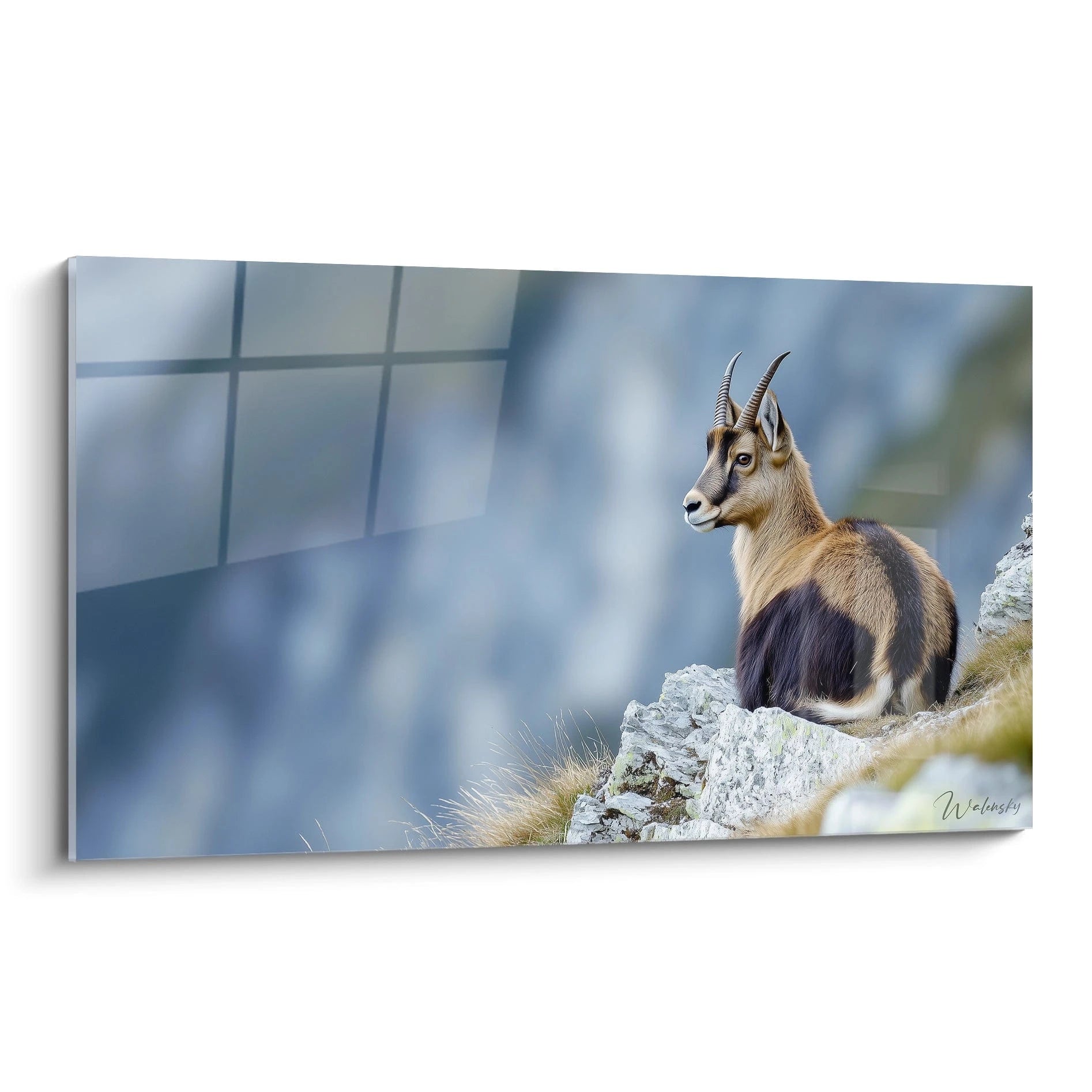
This chamois painting immediately captivates with its striking depiction of a majestic specimen perched on an alpine rock formation. The work presents a chamois with a vigilant gaze, turned toward the horizon, perfectly embodying the essence of this emblematic mountain animal. Its elegant silhouette stands out with precision against a background with bluish tones representing vast mountainous expanses.
The first visual impression is one of a privileged encounter with this wild creature, as if we were observing it in its natural habitat without disturbing its contemplation. The mountain chamois painting captures this moment of quietude where the animal, alert yet serene, surveys its territory. The characteristic horns, curved backward with their distinctive striations, are rendered with remarkable precision that testifies to careful observation of the species' anatomy.
The distinctive element of this work lies in the perfect mastery of contrasts between the main subject, treated meticulously, and the mountainous environment suggested by more vaporous hues. This approach creates a visual depth that invites the eye to travel between the chamois in the foreground and the mountains fading into the mist.
How this alpine chamois painting is structured
The composition of this alpine chamois painting reveals a skillfully orchestrated balance. The main subject occupies the right side of the image, creating a dynamic visual tension that naturally guides the eye. This off-center position allows appreciation of both the animal in its finest details and the immensity of the mountainous landscape surrounding it, suggesting the harmony between the creature and its environment.
The guiding lines of the work primarily follow the chamois silhouette and the contours of the rocks on which it stands, forming an ascending diagonal that evokes the verticality of the mountains. This visual structure conveys an impression of stability and balance, while suggesting the height and majesty of the alpine environment where the animal evolves.
The perspective adopted places the observer slightly below the chamois, accentuating its nobility and dominion over its territory. This specific viewpoint creates a respectful connection between the spectator and the animal, which seems aware of our presence without being disturbed by it. The Chamois of the Alps painting thus perfectly captures the natural dignity of this inhabitant of the heights.
The use of space is characterized by a skillful balance between areas of meticulous detail and more suggested areas. This approach allows attention to be concentrated on the chamois while placing the animal in a spatial context that evokes the immensity of mountainous landscapes.
The colors of the chamois painting and their harmony
The chromatic palette of this chamois painting distinguishes itself through its subtlety and coherence with the subject represented. The dominant colors are articulated around:
- Beige and fawn tones for the chamois' main coat, accurately rendering the texture and color characteristic of its summer fur
- Darker shades, leaning toward chocolate brown, to mark distinctive areas on its back and flanks
- Light grays and whites for rock formations, evoking the limestone or granite of alpine massifs
- Blue gradients for the background, ranging from blue-gray to deeper blue, suggesting morning mist and the depth of valleys
The contrast between the warm tones of the chamois' coat and the cool tones of the mountainous environment creates a visual tension that admirably highlights the main subject. This juxtaposition of color temperatures in this naturalistic chamois painting reinforces the animal's presence while harmoniously integrating it into its habitat.
The chosen tonalities accurately reflect the natural colors found in alpine habitats, testifying to meticulous observation and a deep understanding of the mountain ecosystem. The subtle nuances in the chamois' coat, with its variations between light beige and more intense brown, confer a living and authentic dimension to the representation.
The emotional impact of these chromatic choices is undeniable: they evoke the serenity of the alpine heights, the purity of mountain air, and the wild beauty of high-altitude landscapes, creating a soothing and contemplative visual experience.
Textures and technical details of the mountain chamois painting
Careful observation of this mountain chamois painting reveals remarkable texture treatment that greatly contributes to its striking realism. The animal's coat presents subtle variations that suggest its softness and density. The short hair on the head and legs contrasts with the fuller coat on the body, creating an almost tangible tactile impression.
The special effects of light and shadow sculpture the three-dimensional form of the chamois, emphasizing volumes and accentuating the animal's physical presence. The light seems to come from the left, gently illuminating the chamois' profile and creating shadow areas that reinforce its modeling. This light treatment confers an almost photographic quality to the representation, while maintaining the artistic sensitivity inherent to an exceptional chamois painting.
The artistic techniques identifiable in this work suggest meticulous work, probably achieved through successive layers to obtain the richness of details and color depth. The precision in rendering the striated horns, expressive eyes, and subtle coat variations testify to impressive technical mastery and exemplary patience.
The texture of the rocks also receives careful treatment, with asperities and irregularities that perfectly evoke the rough and eroded nature of alpine rock formations. These details contribute to the authenticity of the wild chamois painting and firmly anchor the animal in its natural environment.
What makes this chamois painting unique
The uniqueness of this chamois painting resides above all in the perfect capture of a moment of wild contemplation. The chamois' expression, its gaze directed toward the horizon, suggests an intelligence and consciousness rarely perceived in animal representations. This quality bestows upon the work an almost spiritual dimension, as if we were witnessing a moment of communion between the animal and the nature surrounding it.
The specific framing, which places the chamois on its rocky promontory facing immensity, creates powerful visual narration evoking the freedom and majestic solitude of alpine creatures. This chamois wall decoration does not merely represent an animal, it tells the story of an existence adapted to the extreme conditions of the heights.
The exceptional quality of anatomical detail rendering constitutes another remarkable aspect of this work. The precision with which the hooves adapted to steep terrain, the characteristic horns, and the powerful musculature of the chamois are treated testifies to a thorough knowledge of the animal and a certain respect for its biological integrity.
The perfect balance between realistic treatment of the main subject and atmospheric suggestion of the mountainous environment creates an artistic tension that elevates this chamois wall art beyond simple animal representation. This duality between precision and suggestion invites renewed contemplation, revealing new details and nuances with each glance.
Depth and details of the majestic alpine chamois painting
The visual experience of this majestic alpine chamois painting transforms remarkably depending on the viewing distance. Seen from afar, the work offers a striking impression of unity and harmony, where the chamois appears as an element perfectly integrated into its mountainous environment. The animal's distinctive silhouette stands out elegantly against the bluish background, creating an instantly recognizable and memorable image.
As you progressively approach, the eye discovers the extraordinary richness of details that animate the composition. The subtle variations in the chamois' coat, the reflections in its alert eye, the precise texture of its ringed horns, and the finely drawn musculature beneath the fur reveal the level of minuteness invested in creating this work.
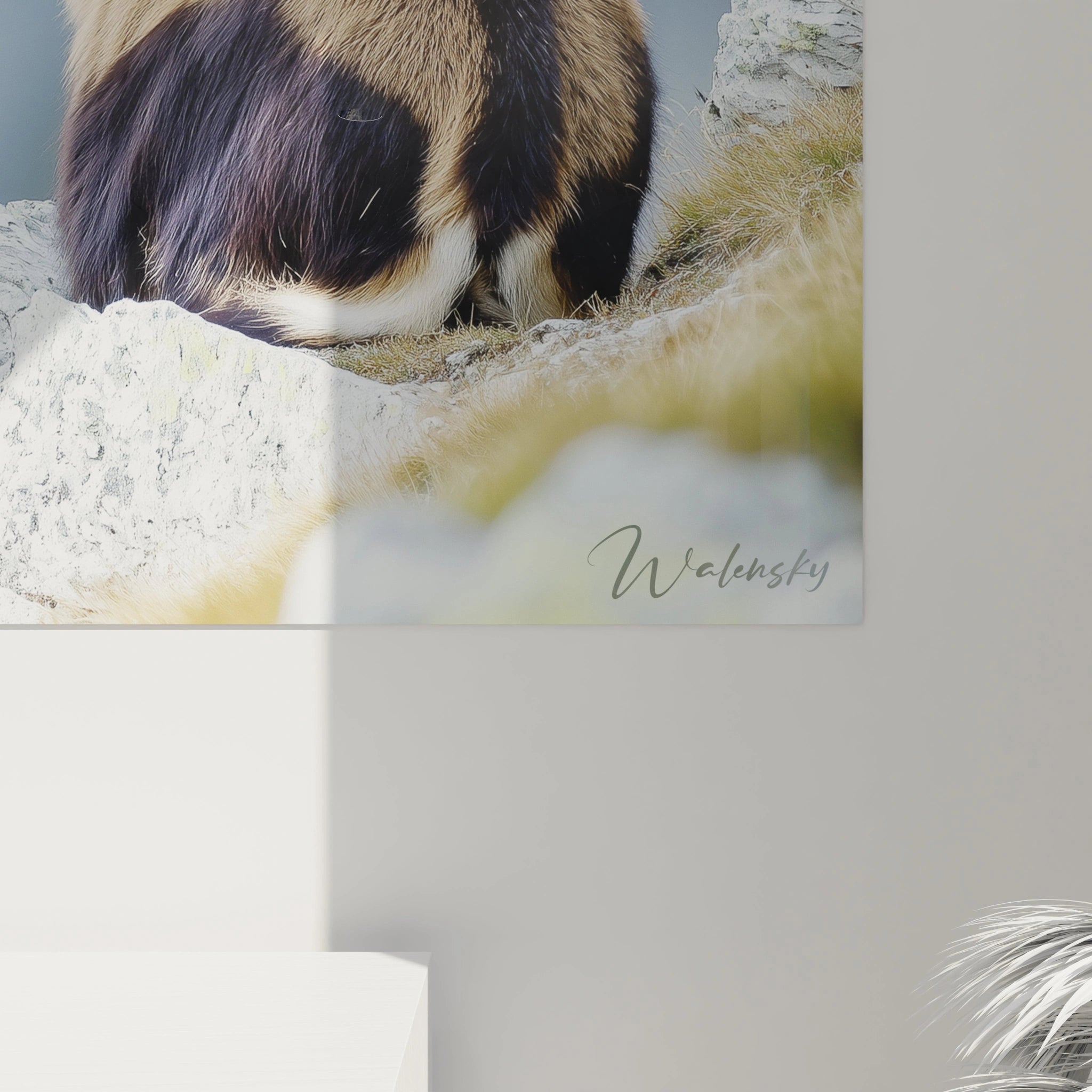
At very close distance, microscopic details become perceptible: the fine hair strands around the muzzle, the delicate nuances in the iris, the texture variations on the rocks, or even the suggestion of alpine grass blades. These almost invisible elements at normal distance considerably enrich the aesthetic experience of the watchful mountain chamois painting and testify to virtuoso technical execution.
The overall effect at distance nonetheless remains perfectly coherent, with balanced composition that naturally guides the eye between the chamois, its rocky base, and the mountainous background. This ability to function visually at different viewing distances is one of the remarkable qualities of this work.
Where and how to showcase your chamois painting
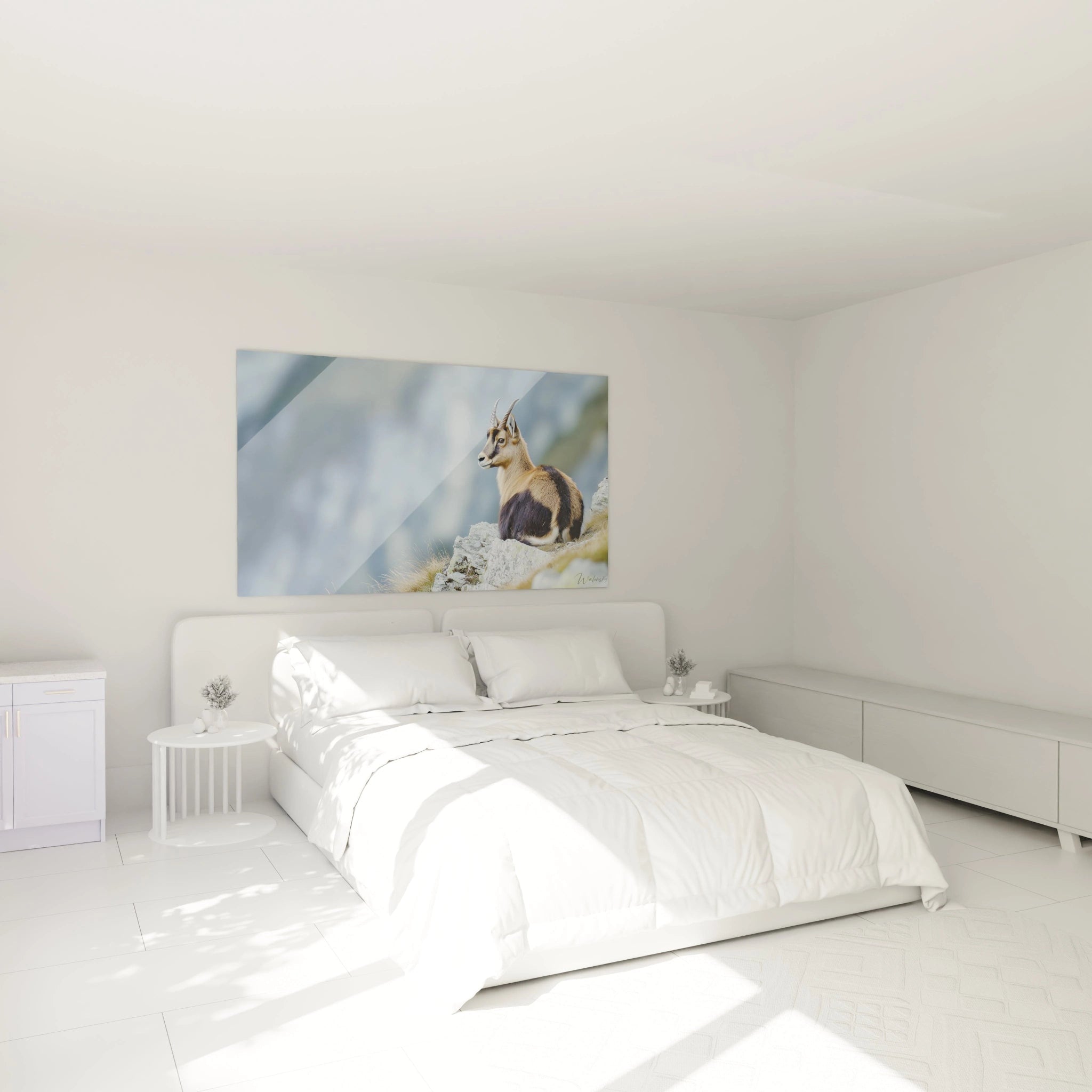
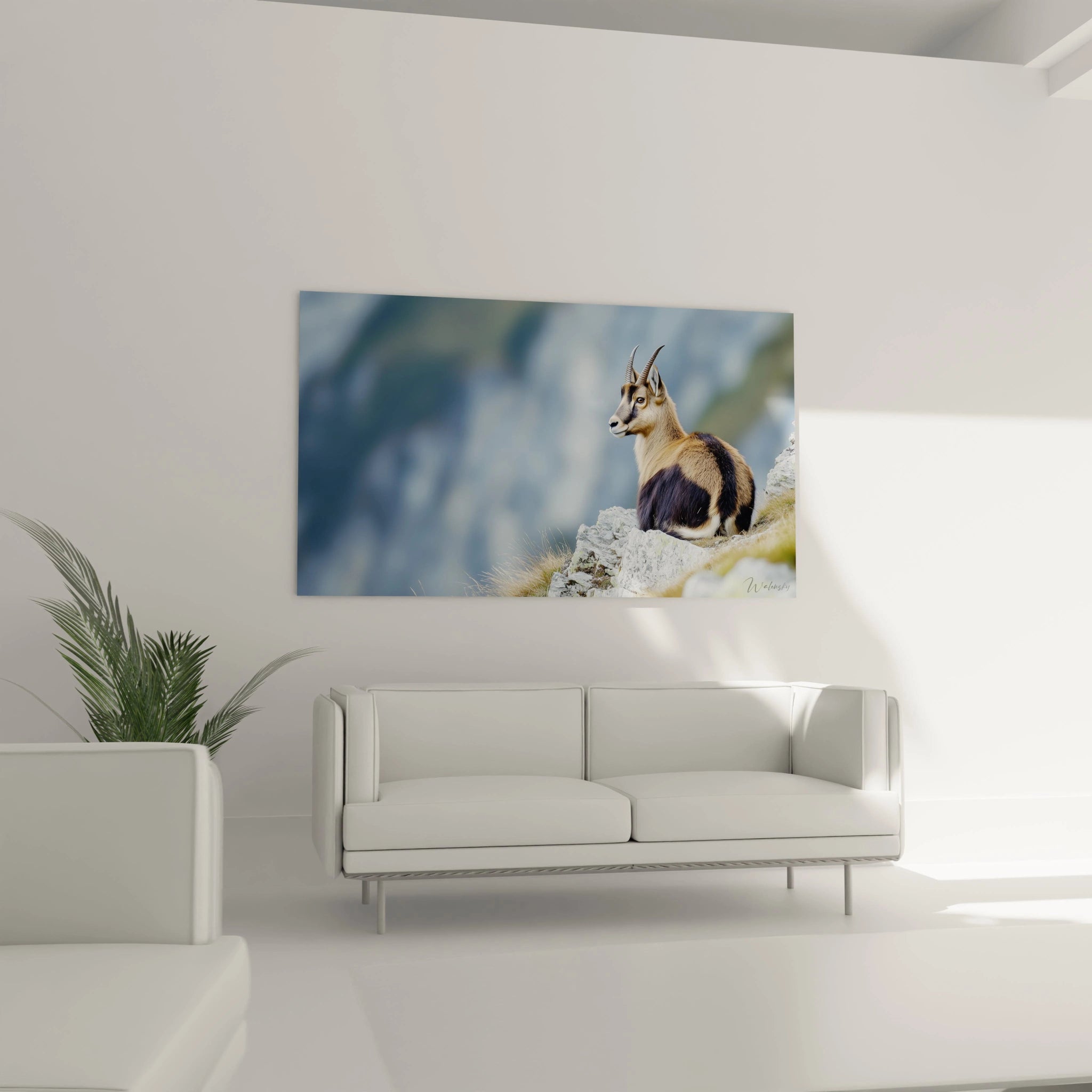
The harmonious integration of this chamois painting into an interior warrants reflection on the environment that will ideally highlight it. Spaces with neutral tones—beiges, creams, light grays, or off-whites—offer a perfect setting for the work's natural colors. A plain wall, without competing patterns, will allow the composition to express itself fully and become an elegant focal point in the room.
Lighting plays a crucial role in appreciating this work: soft directional light, such as that produced by a spot at moderate intensity, will reveal the richness of textures and details without creating bothersome reflections. Ideally, the chamois painting will benefit from dedicated lighting that highlights its visual qualities throughout the day and evening.
To complete visual harmony, decorative elements in natural materials—wood, stone, wool, or linen—will create coherent dialogue with the work's organic qualities. Complementary shades such as soft blues, sage greens, or warm browns in surrounding textiles and accessories will subtly underscore the colors present in the painting while creating a harmonious and calming overall ensemble.
Frequently asked questions about this chamois painting
What is the best way to appreciate the subtle details in this Alps chamois painting?
To fully appreciate the subtle details of this work, adequate lighting is essential. Indirect natural light or full-spectrum artificial lighting will reveal the delicate nuances of the coat and chromatic variations in the landscape. Also take time to observe the work at different distances to progressively discover the meticulous details that enrich the composition.
How will this chamois painting behave in a room with colored walls?
This chamois painting will harmonize particularly well with neutral tones or soft blues that recall the hues of the mountainous background. On an intensely colored wall, the work could lose its chromatic subtlety. If your interior features vibrant colors, consider framing that creates a buffer zone between the wall and the work, allowing it to retain its visual impact.
What is the average price for acquiring a chamois painting of this quality?
The price of a chamois painting of this quality depends on several factors: dimensions, artist reputation, techniques used, and subject rarity. For a work presenting this level of detail and technical mastery, the investment generally falls within a moderate to high price range on the contemporary animal art market. This acquisition represents a lasting investment in a work whose presence will enrich your daily environment.
How do you maintain and preserve the visual quality of this chamois painting over time?
To preserve your chamois painting's beauty, avoid direct exposure to sunlight which could alter the pigments. Maintain stable humidity levels in the room and gently dust the surface with a soft feather duster or non-lint microfiber cloth. Framing with UV-protective glass will offer additional protection while allowing full appreciation of the work's visual qualities.
Does this chamois painting suit all interior styles?
Thanks to its natural subject and balanced chromatic palette, this chamois painting integrates harmoniously into a vari