Apollo Painting: its unique characteristics
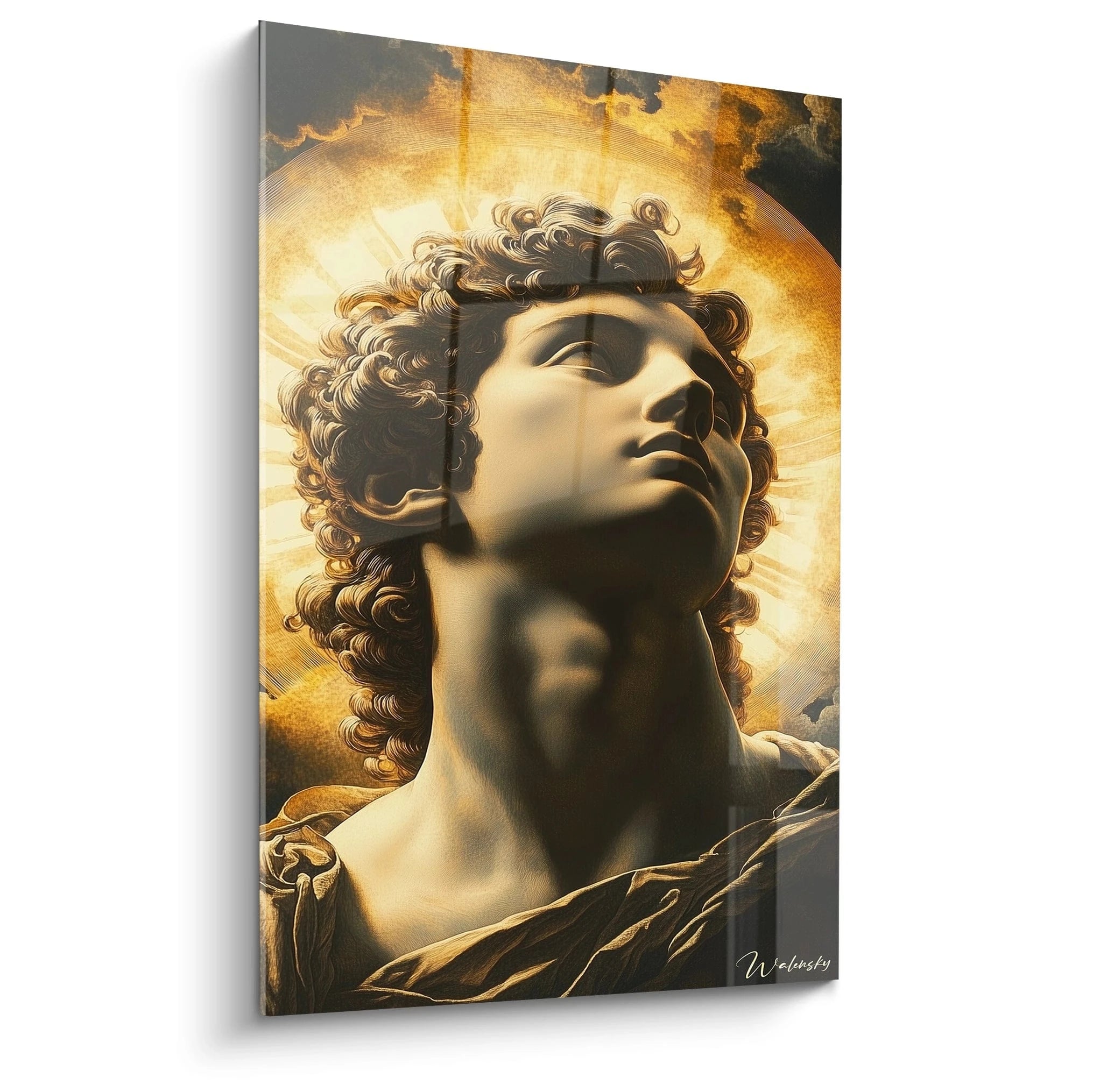
The Apollo painting captivates immediately with its majestic depiction of the Greek divinity, bathed in a brilliant golden aura. This striking work presents an Apollo with sublime face turned toward the heavens, perfectly embodying the classical ideal of male beauty. The centered composition highlights the divine profile with remarkable precision.
This mythological Apollo painting distinguishes itself through its extraordinary luminous treatment, creating a solar halo effect radiating around the god's face. The carefully detailed curls of his hair frame his perfect features, while his serene expression evokes the divine transcendence characteristic of classical representations.
How is this neoclassical style Apollo painting structured
The composition of this neoclassical style Apollo painting rests on perfect balance between light and shadow. The main subject occupies the composition's center, with face slightly inclined upward creating an ascending directional line that guides the gaze toward the work's upper portion.
Circular lines formed by the luminous aura perfectly frame Apollo's profile, creating undeniable focal point. The perspective is designed to magnify the god, presenting him as if emerging from darkness toward light, symbolizing his divine nature. Space utilization emphasizes the central figure while leaving peripheral zones in mysterious penumbra.
The colors of the Apollo painting and their harmony
This Apollo painting is characterized by a carefully orchestrated chromatic palette around three dominant tints:
- The brilliant gold that radiates from the center, symbolizing Apollo's solar nature
- The beige and ivory tones that delicately model the divinity's face and neck
- The deep and rich blacks that constitute the background, reinforcing dramatic contrast
This tricolor harmony creates striking contrast between divine luminosity and cosmic darkness. The subtle transitions between golden and beige tones confer remarkable depth to the divine portrait Apollo painting, while shadow areas accentuate the dramatic effect of the whole.
Textures and technical details of the large-format Apollo painting
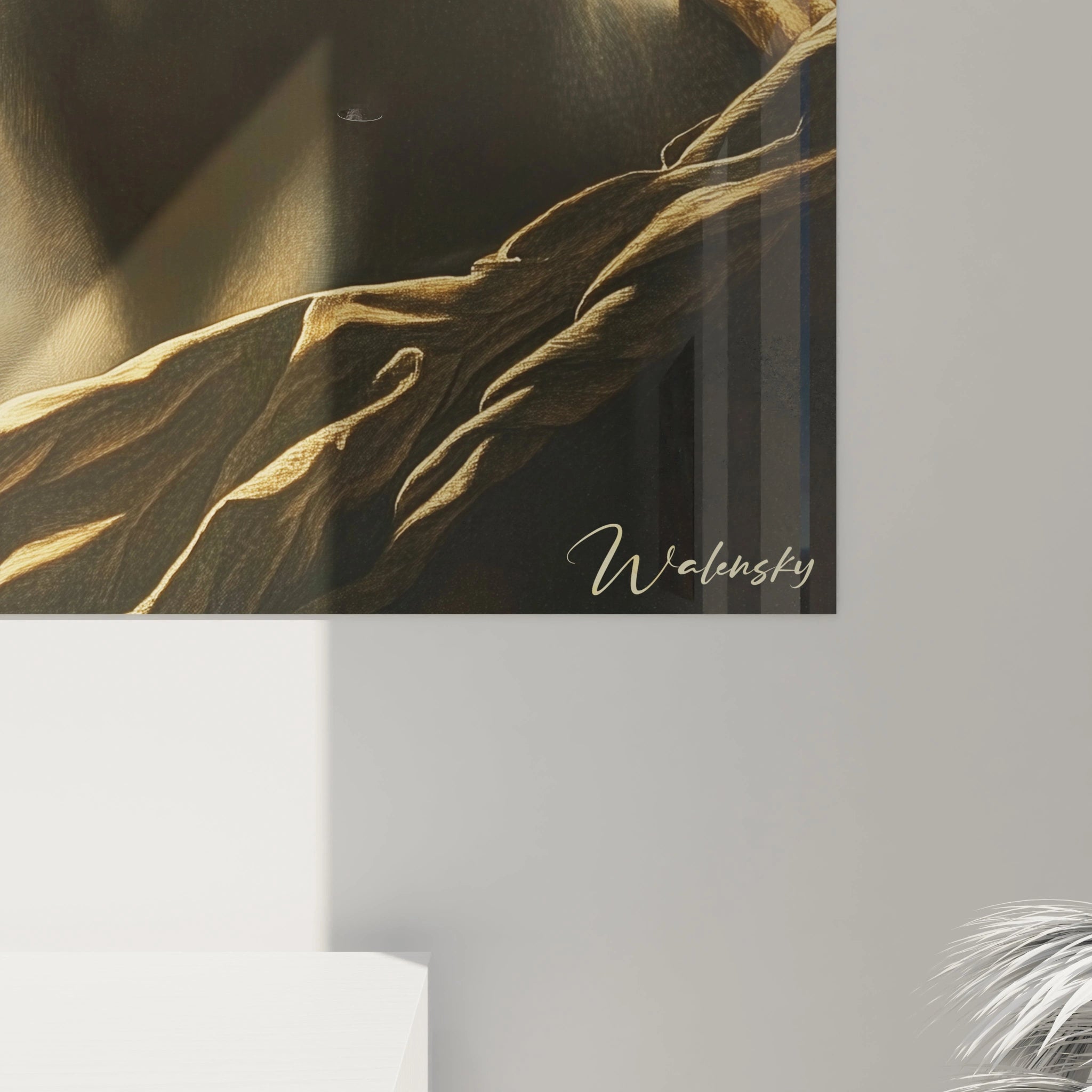
The large-format Apollo painting reveals exceptional mastery of textures. Apollo's skin presents a smooth, almost marbled finish, recalling classical sculptures. Hair curls are rendered with meticulous precision, each curl being individually defined.
The radiating light effect is achieved through fine concentric hatch techniques that create impression of movement and vibration. Transitions between illuminated and shadow zones testify to meticulous work of superimposed glazes. Details of the drapery visible on the shoulder reveal rougher texture, deliberately contrasting with the smooth perfection of the divine face.
What makes this luminous Apollo painting unique
This luminous Apollo painting distinguishes itself through its contemporary interpretation of a classical subject. The exceptional intensity of the golden aura surrounding the face creates an almost photographic effect, giving the impression that light truly emanates from the work itself.
The bold composition placing the face at dynamic angle rather than traditional frontal pose confers remarkable vitality to this mythological wall decoration. Apollo's enigmatic expression, between divine serenity and contained intensity, captivates the gaze and invites contemplation. Anatomical precision coupled with dramatic lighting effect testifies to exceptional technical mastery.
Depth and details of the Apollo painting
Observed closely, this Apollo painting reveals fascinating richness of micro-details. The subtle tone variations on the face create perfect three-dimensional modeling. Golden reflections in hair curls seem to change intensity depending on observation angle.
At distance, the work produces striking effect of divine apparition, the figure seeming to emerge from darkness in a luminous halo. This experiential duality is characteristic of great classical paintings revisited by contemporary sensibility. The divine presence Apollo painting retains its emotional force regardless of observation distance.
Where and how to showcase your classical style Apollo painting
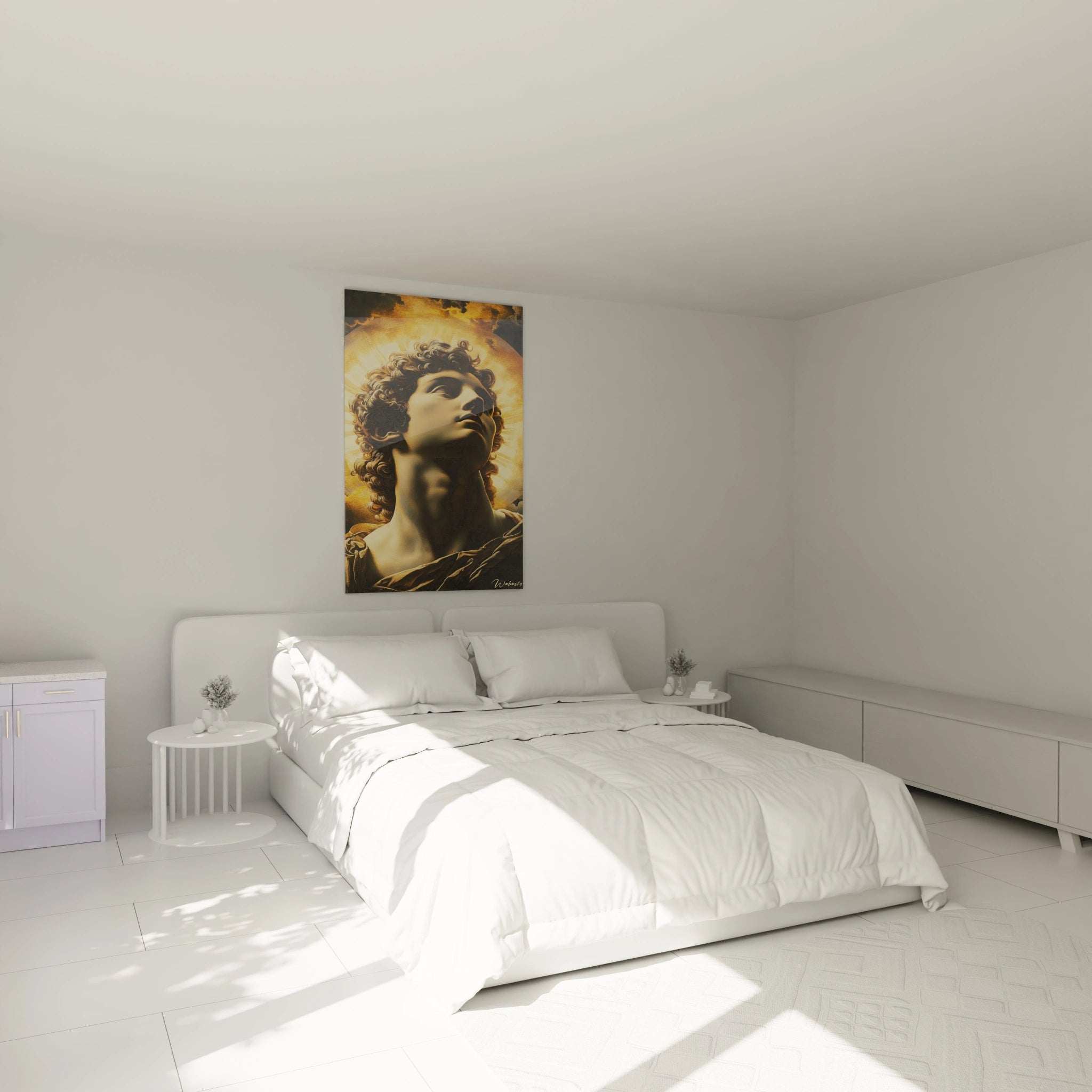
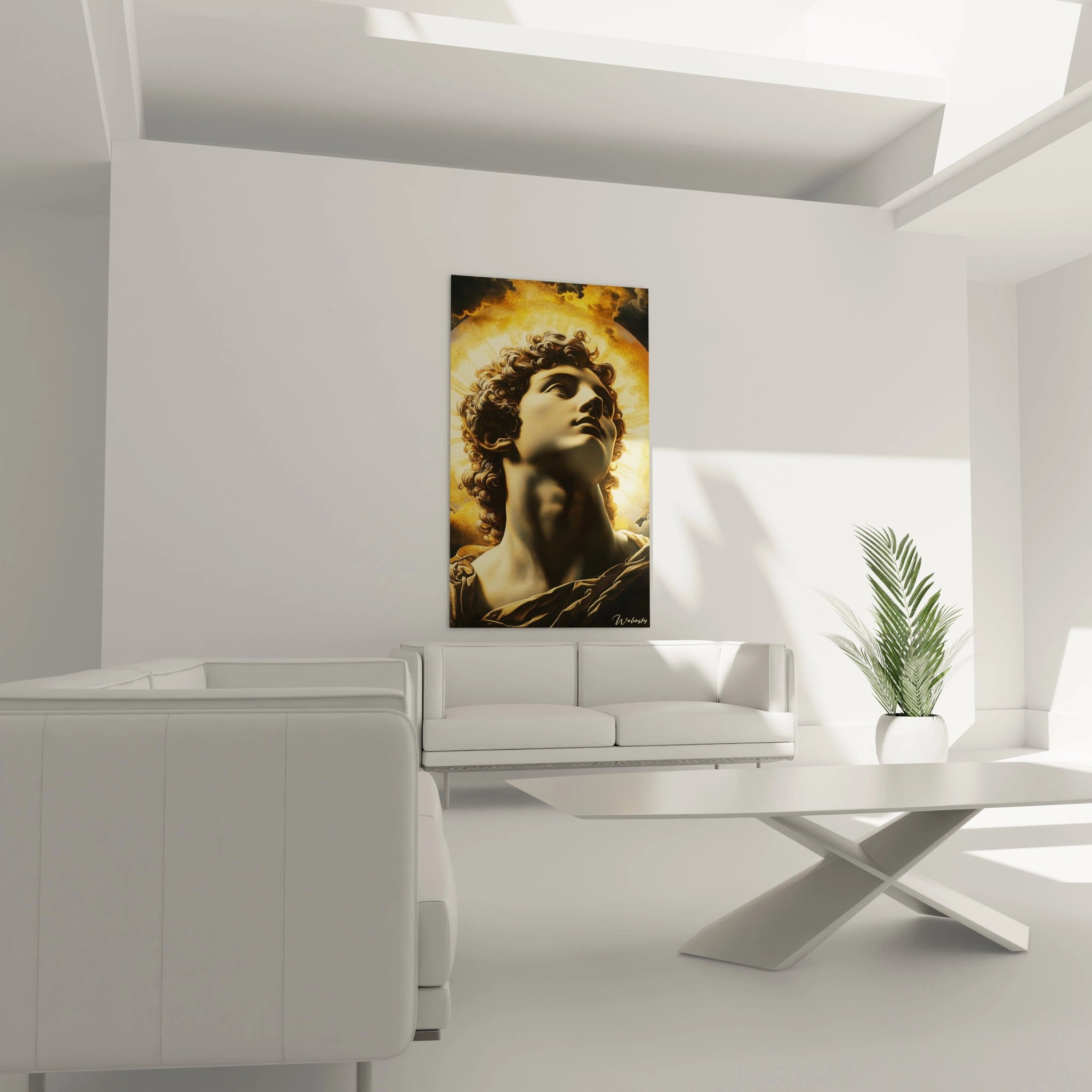
To sublimate this classical style Apollo painting, favor a location where it can benefit from directional lighting that will accentuate the intrinsic shadow and light interplay within the work. A wall of dark color - midnight blue, deep burgundy or anthracite gray - will amplify the golden halo's luminous effect.
In a contemporary interior, this work will bring a touch of classical grandeur and timeless elegance. It will accord perfectly with decorative elements in golden metal or bronze, creating chromatic cohesion. For perfectly showcased Apollo wall art, avoid overloading its immediate environment, thus allowing its majestic presence to fully express itself.