Mountain Sunset Painting: Its Unique Characteristics
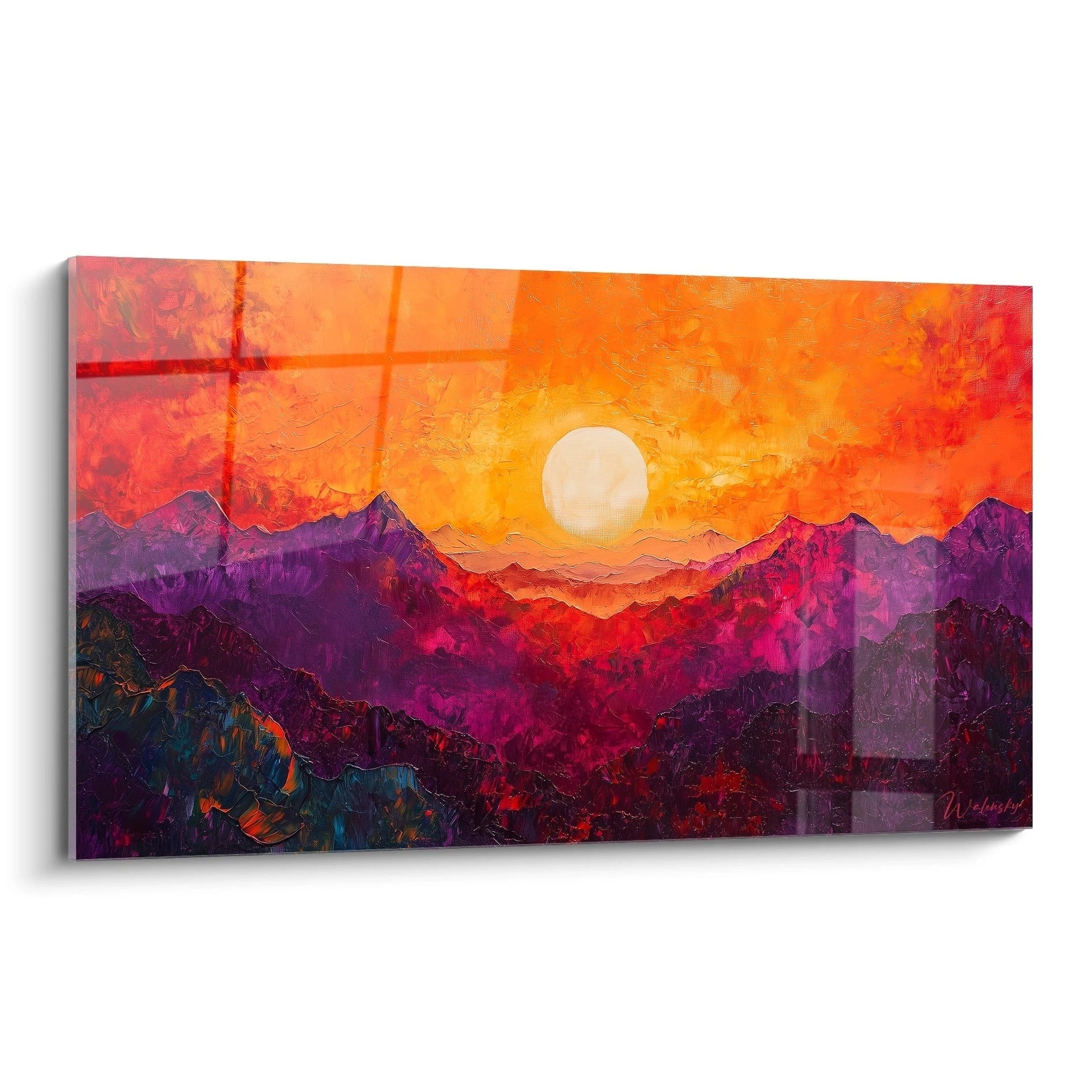
This mountain painting represents a spectacular alpine landscape captured when the sun disappears behind the summits. The work immediately distinguishes itself through its intense chromatic explosion, where a luminous and pale solar disk reigns at composition's center. The flaming mountain painting presents horizontal stepped structure, creating striking depth that attracts the gaze toward the incandescent horizon. The most striking element undoubtedly remains the harmony between warm sky hues and cooler mountain nuances.
This work transcends simple landscape representation to offer immersive visual experience. The violet and orange mountain painting creates striking contrast between luminous and shadowed zones. The artist captured this ephemeral moment where nature deploys its most spectacular palette, transforming a simple mountain landscape into vibrant visual symphony. The visible texture across the entire surface suggests impasto technique that reinforces the dramatic aspect of the scene.
How This Panoramic Twilight Mountain Painting Is Structured
This mountain painting's composition follows horizontal band organization that naturally guides the viewer's gaze. The sun, positioned slightly above center, acts as dominant focal point, creating perfect balance between ablaze sky and majestic mountains. The directrix lines subtly converge toward this luminous point, reinforcing the impression of depth and immensity. The artist subtly employed the rule of thirds, placing key elements at strategic intersections to create optimal visual harmony.
Aerial perspective is masterfully employed in this orange-hued mountain painting. Successive mountain planes create remarkable depth effect, each range progressively fading toward the horizon. The proportions between the sky, occupying approximately two-thirds of the composition, and the mountains, forming the lower third, create a feeling of infinite space. This stepped structure allows the eye to travel naturally through different planes, from detailed foreground reliefs to distant summits that blend into twilight colors.
The Colors of the Mountain Painting and Their Harmony
This mountain painting's color palette reveals exceptional mastery of warm and cool colors. The dominant tones revolve around an incandescent orange that literally bathes the sky, creating an almost supernatural atmosphere. This main color is beautifully contrasted by deep purples and intense magentas adorning the mountain flanks. Transitions between these hues are worked with remarkable subtlety, creating gradients that seem to vibrate under light effect.
The chromatic harmony of this red and violet mountain painting rests on sophisticated complementary color play. Specific nuances include:
- Luminous oranges ranging from saffron to mandarin in the sky
- Deep reds, almost crimson, marking transition zones
- Violets from lavender to royal purple in the reliefs
- Dark blue touches appearing in deep valleys
- Creamy white for the solar disk radiating throughout the composition
The emotional impact of these chromatic choices is undeniable, creating dynamic tension between the welcoming warmth of orange tones and the mysterious depth of violet hues.
Textures and Technical Details of the Modern Impressionist Mountain Painting
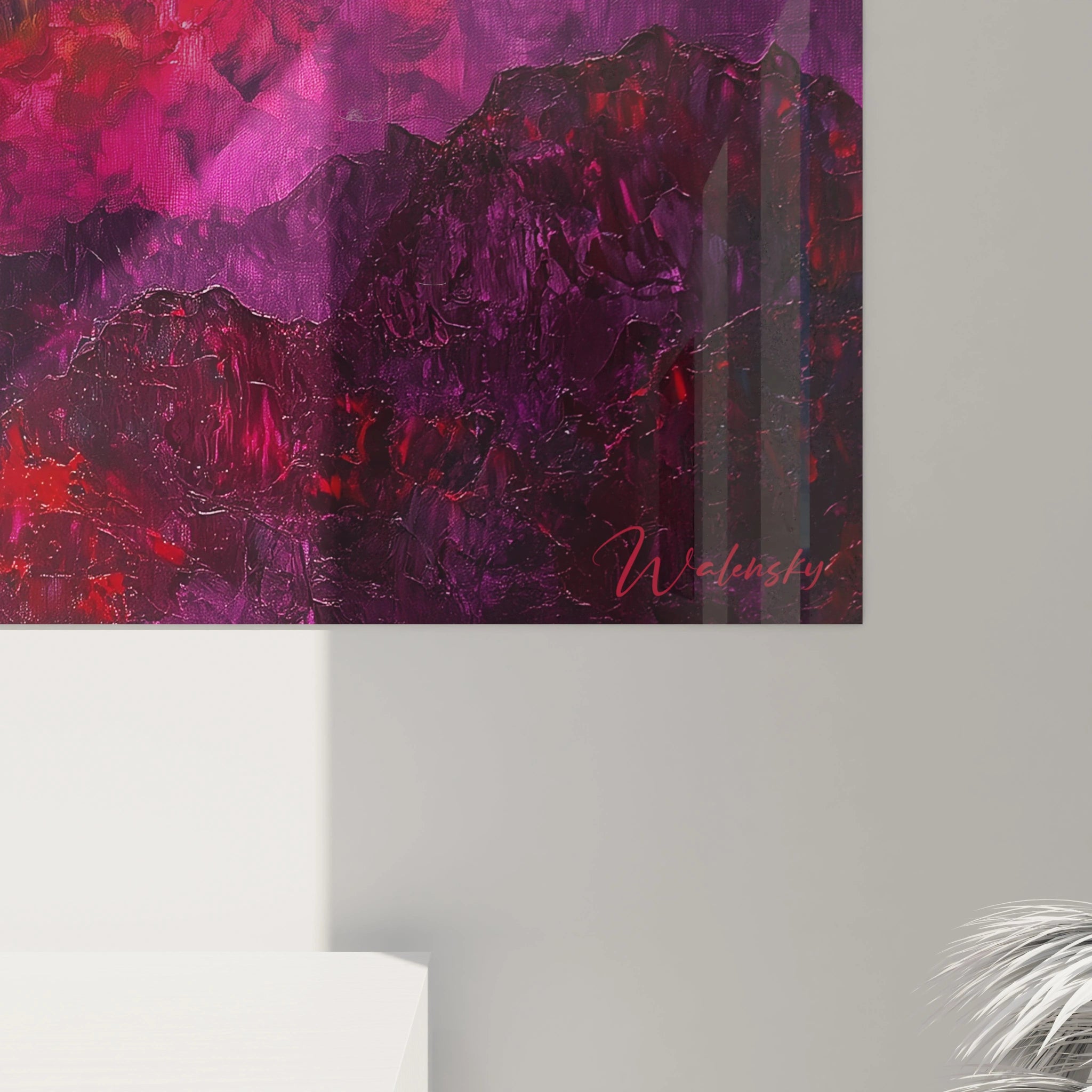
This mountain painting's surface reveals pronounced impasto technique conferring fascinating tactile dimension to the work. Brushstrokes and knife strokes are visible, creating reliefs that accentuate the landscape's dramatic aspect. In mountain zones, material is applied generously, forming miniature ridges and valleys that capture and reflect light uniquely. This three-dimensional texture reinforces depth illusion and invites the viewer to detailed visual exploration.
The light effects in this orange sunset mountain painting are particularly remarkable. The artist used transparent glazes in the sky to create this diffuse luminosity characteristic of day's end. Mountain shadow zones are worked with more opaque colors, creating striking contrast with the sky's luminous transparency. The visible technique suggests a mixed approach, combining direct spatula application for mountain reliefs and finer brushes for sky's subtle transitions. This technical diversity contributes to the ensemble's visual richness.
What Makes This Contemporary Abstract Mountain Painting Unique
This mountain painting's uniqueness lies in its ability to transcend simple figurative representation to reach an almost abstract dimension. The mountain forms, while recognizable, are simplified and stylized, creating perfect balance between realism and expressionism. The particularly worked texture of certain zones creates patterns that evoke as much fractured rock as fluid organic forms. This duality between geological structure and atmospheric fluidity gives the work distinct personality.
Details differentiating this mountain wall decoration include the way the artist treated transitions between different planes. Rather than creating sharp separations, the mountains seem to blend into each other, creating an effect of petrified waves. The texture variations between the sky's smooth zones and the mountains' rough surfaces create captivating visual dialogue. The bold use of non-naturalistic colors, particularly the intense violets of the mountains, transforms this familiar landscape into a dreamlike vision that cannot be reproduced.
Depth and Details of the Mountain Painting
This mountain painting's visual experience evolves considerably depending on observation distance. From afar, the work impresses through its overall chromatic harmony and composition strength. The viewer is first struck by the sky's luminous intensity and dramatic contrast with the mountains. As one approaches, new details emerge: complex relief textures, subtle sky gradient nuances, and material variations creating micro-landscapes within the main landscape.
Close examination of this neon mountain painting reveals unsuspected detail richness. The knife strokes in mountain zones create sharp edges that catch light, while the more fluid passages in the sky reveal color superpositions creating transparency effects. Certain zones present scrapes and revisions adding to surface complexity. From distance, these details blend to create the illusion of a vast and majestic landscape, demonstrating the artist's technical mastery in creating works that function at multiple reading levels.
Where and How to Display Your Modern Interior Mountain Painting
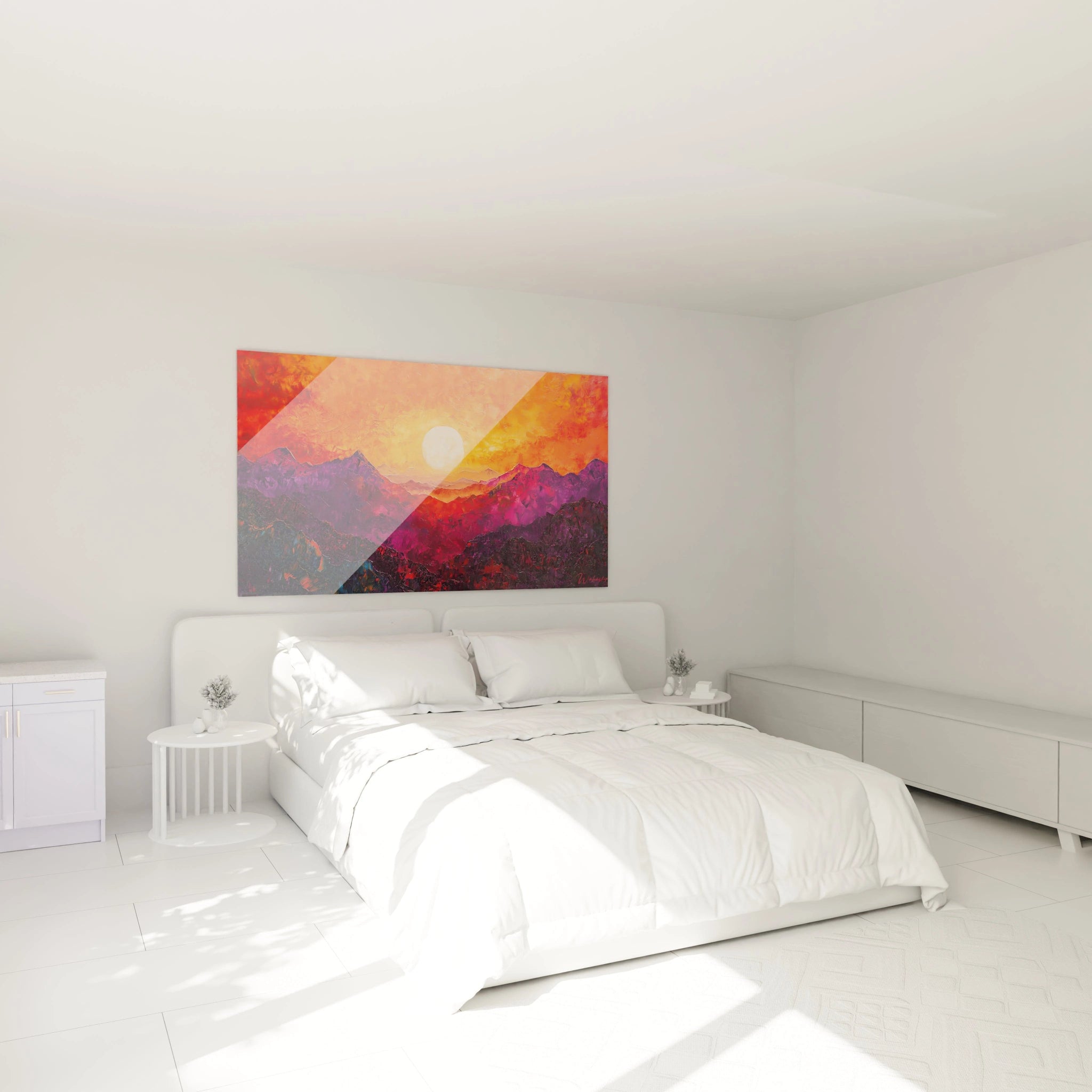
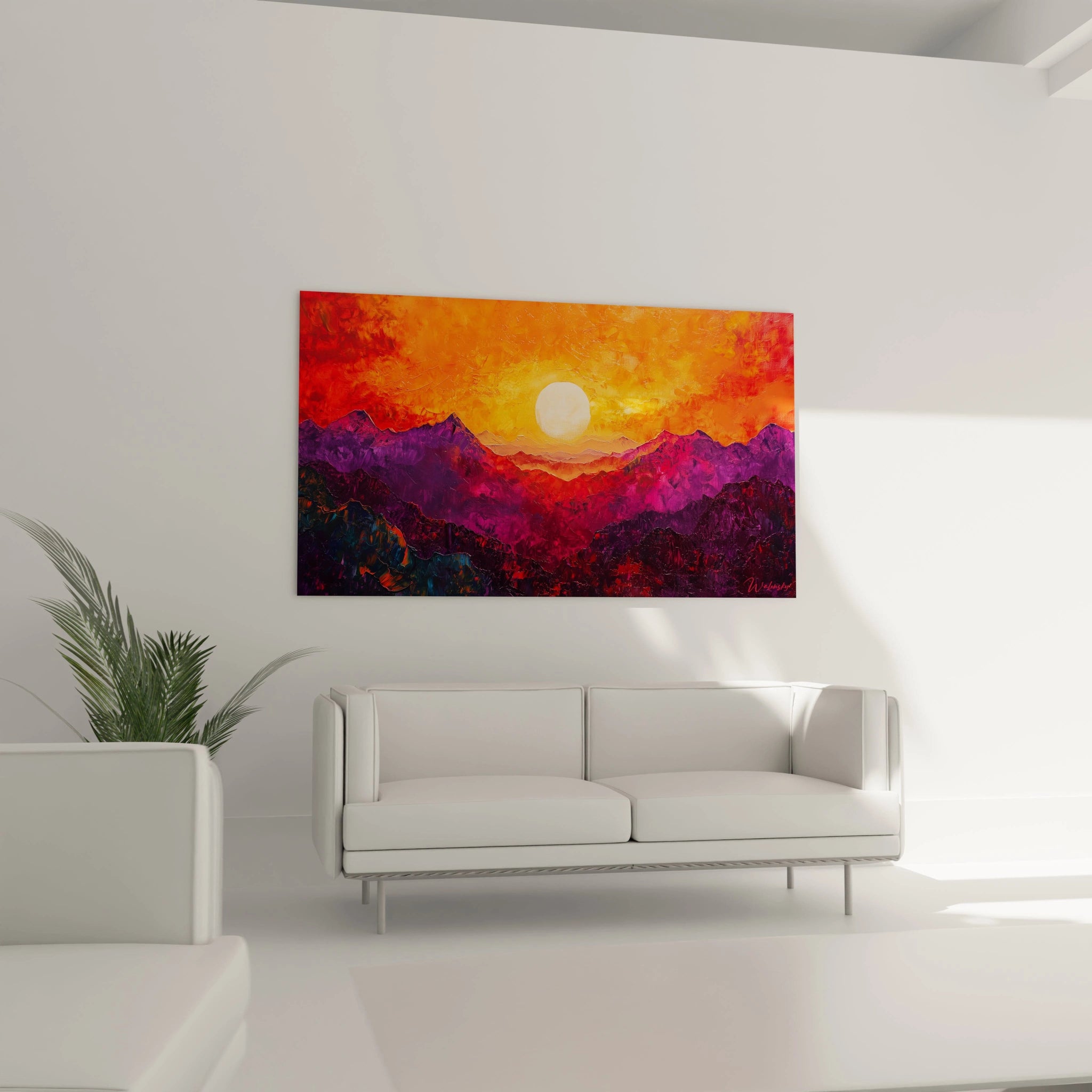
This large format mountain painting requires an environment that can accommodate its visual intensity without being overwhelmed. Ideal spaces include rooms with high ceilings and neutral walls that will allow vibrant colors to express themselves fully. A contemporary salon with gray or beige tones will constitute perfect setting, allowing the work to become the room's dominant focal point. The optimal location would be a main wall, visible upon room entry, thus creating immediate impact.
Lighting plays a crucial role in enhancing this mountain painting. Indirect lighting with adjustable spots will allow you to reveal the work's textures and reliefs according to different angles. It is recommended to avoid direct sunlight that could alter colors over time. To harmonize the ensemble, decorative elements in complementary tones can be added: cushions in soft orange hues, rugs with geometric patterns repeating the painting's violets, or natural wood furniture echoing the mountains' organic aspect. The objective is to create dialogue between the work and its environment, allowing the mountain painting to shine while harmoniously integrating into your living space.