Architectural ruins painting: its unique characteristics
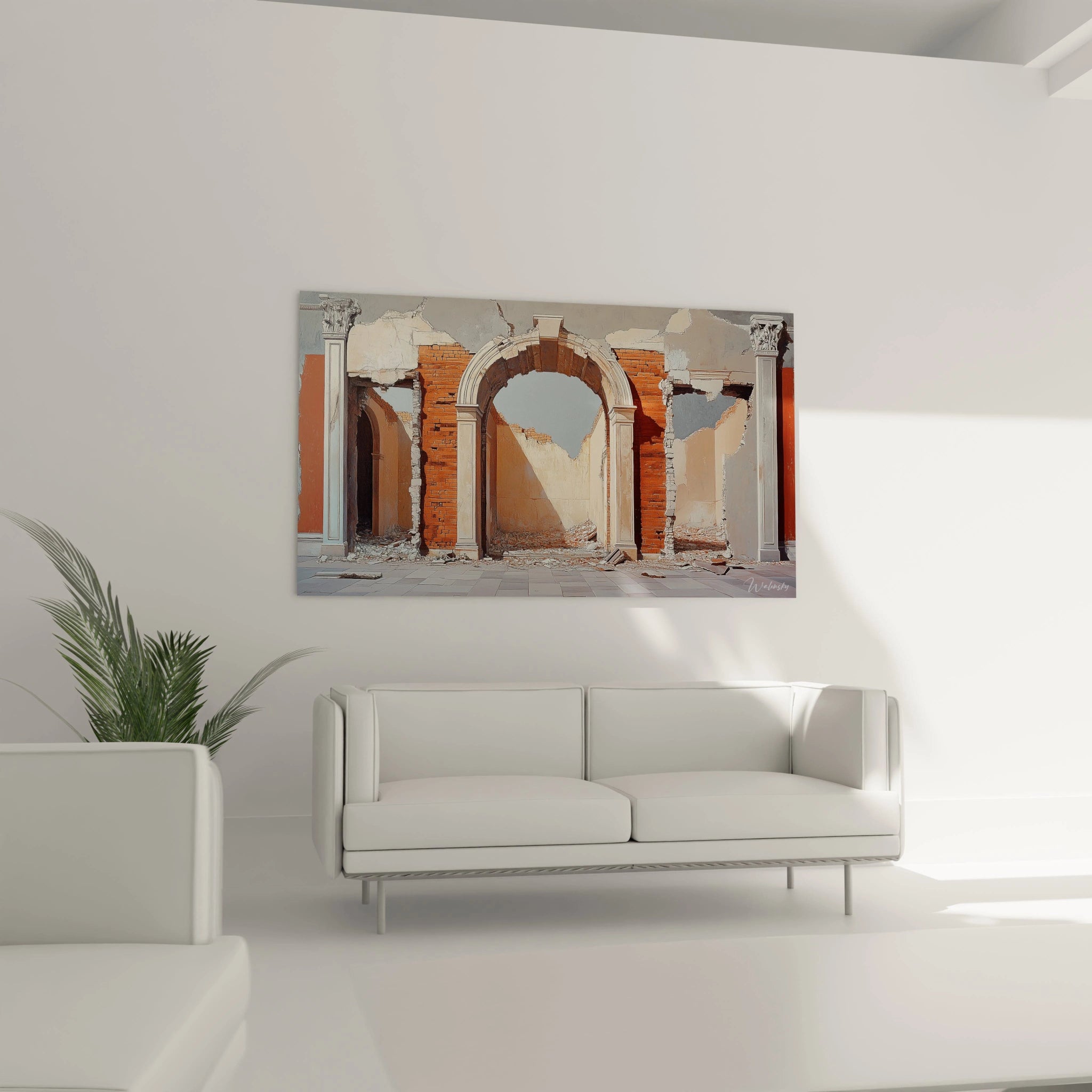
This architectural ruins painting captures the very essence of the passage of time on built heritage. The work presents a monumental arch in red brick partially collapsed, framed by classical columns on a background of decaying walls. The balanced composition highlights the striking contrast between architectural elements still standing and collapsed portions, creating captivating visual tension. Natural light passing through the central opening brings a spiritual dimension to this representation of urban decay.
How this fragmented ancient ruins painting is structured
The structure of this fragmented ancient ruins painting is articulated around a composition centered on the majestic arch that dominates the space. The Corinthian columns frame the scene perfectly, creating an architectural frame within the pictorial frame. The vertical lines of the pillars harmoniously contrast with the gentle curve of the arch, establishing classical balance despite the state of disrepair.
The frontal perspective places the viewer directly facing this symbolic opening, inviting visual passage through it. Space is skillfully divided between collapsed sections and those still intact, using the classical proportions of Roman architecture as the fundamental skeleton of the work. Depth is suggested by shadow play and light filtering through the arch.
The colors of the architectural ruins painting and their harmony
The chromatic palette of this architectural ruins painting is articulated around an earthy and mineral harmony perfectly controlled. Subtle contrasts between different chromatic values create a sensation of depth and authenticity remarkable. Transitions between shadow and light zones are rendered with finesse that magnifies architectural textures.
- Terracotta - The dominant color of the bricks brings warmth and historical anchoring
- Beige - The light tones of columns and plaster create luminous focal points
- Gray - Gray hues of the floor and walls establish a neutral balancing base
- Brown touches - Warm shadows add depth and dimension
Textures and technical details of the realistic urban ruins painting
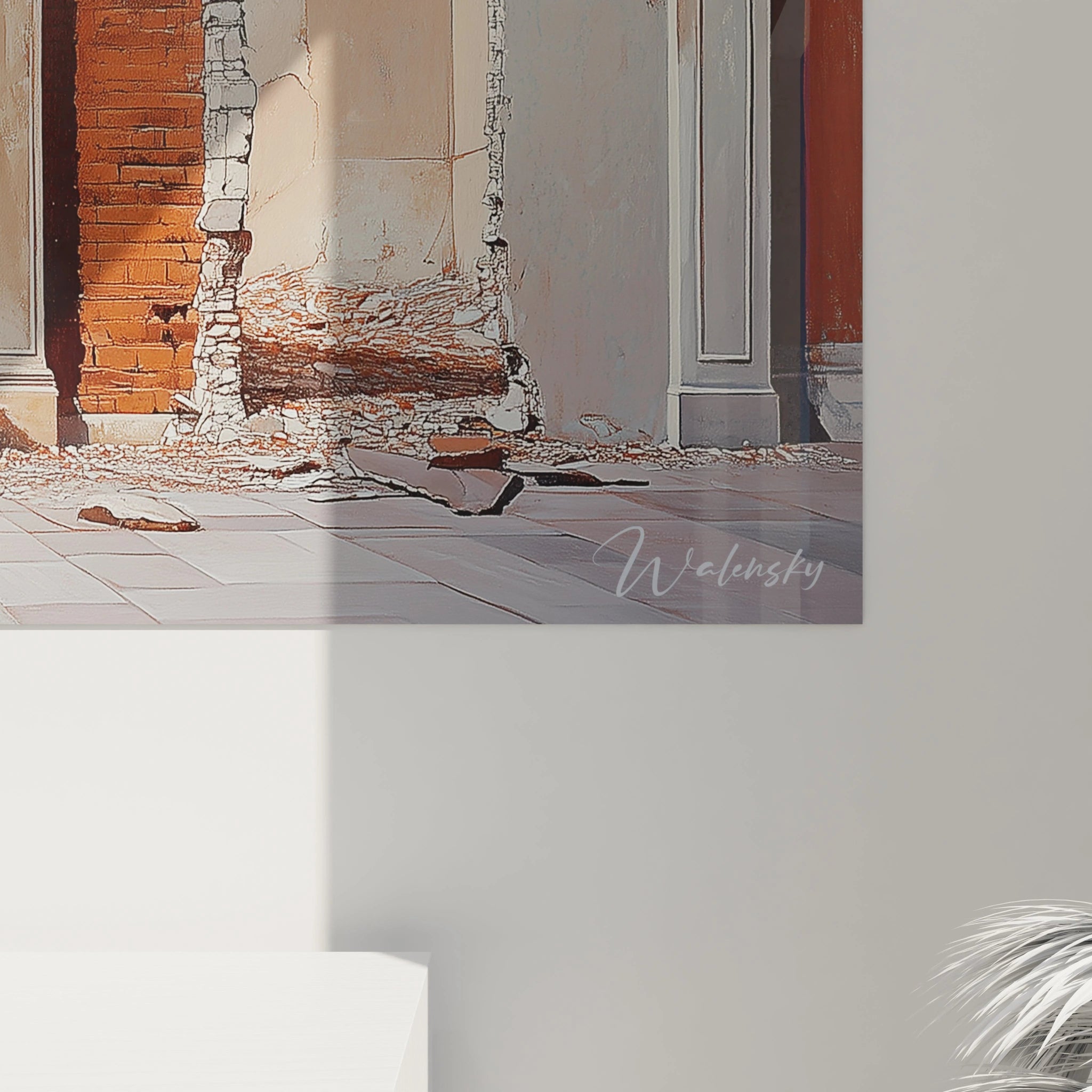
This realistic urban ruins painting reveals exceptional mastery of architectural textures. The rough surface of exposed bricks is rendered with striking tactile precision, every joint and irregularity meticulously reproduced. The marble columns present a smooth texture that contrasts with the roughness of collapsed walls, creating a tactile dialogue between different elements.
Shadow and light play accentuates the dimensionality of the work, particularly in the way light caresses the debris on the floor. One notices the use of a painting technique that superimposes fine layers to create the patina effect of time, with subtle variations of matter that reproduce the natural erosion of abandoned structures. Cracks and fissures in the plaster are rendered with meticulous attention to detail.
What makes this architectural vestiges painting unique
The uniqueness of this architectural vestiges painting lies in its ability to transcend simple representation to become a visual meditation on time and permanence. The way the central arch remains dignified despite the collapse surrounding it creates a powerful metaphor for resilience. The almost photographic precision of the rendering contrasts with the emotion it evokes, creating remarkable artistic tension.
Authentic architectural details testify to deep knowledge of classical construction techniques, each Corinthian capital being represented with accuracy. This architectural wall decoration captures a precise moment of transition between solidity and collapse, as if the artist had frozen the exact instant when beauty emerges from destruction, thus creating a work impossible to duplicate.
Depth and details of the architectural ruins painting
Viewed from afar, this work emanates an impression of melancholic serenity, the large architectural masses and composition balance dominate perception. It is approaching that the extraordinary richness of detail is fully revealed to the attentive viewer. Micro-cracks in the plaster, brick flakes, and the granular texture of the floor testify to meticulous observation work.
The architectural passage painting in ruins progressively reveals its technical complexity as you examine it up close. Shadow zones harbor subtle nuances and almost hidden architectural details. The light filtering through the central opening creates different effects depending on viewing distance, transforming this static representation into a dynamic visual experience that evolves with your gaze.
Where and how to highlight your abandoned ancient arch painting
To enhance this abandoned ancient arch painting, choose a wall of neutral color that will allow the earthy tones of the work to express themselves fully. Soft directional lighting, ideally oriented at 45 degrees, will accentuate the reliefs and textures without creating annoying reflections on the picture surface. In a contemporary interior, this wall decoration will bring historical depth and a striking contemplative dimension.
The work will flourish particularly in spaces with raw materials like polished concrete, natural wood or weathered metal, creating coherent material dialogue. Avoid visual overload around the painting – let it breathe and deploy its presence. A minimalist frame in bronzed or aged gold could subtly reinforce the dominant earthy tones while elegantly delimiting this window onto architectural past.