Indian Goddess Stained Glass Artwork: Its Unique Characteristics
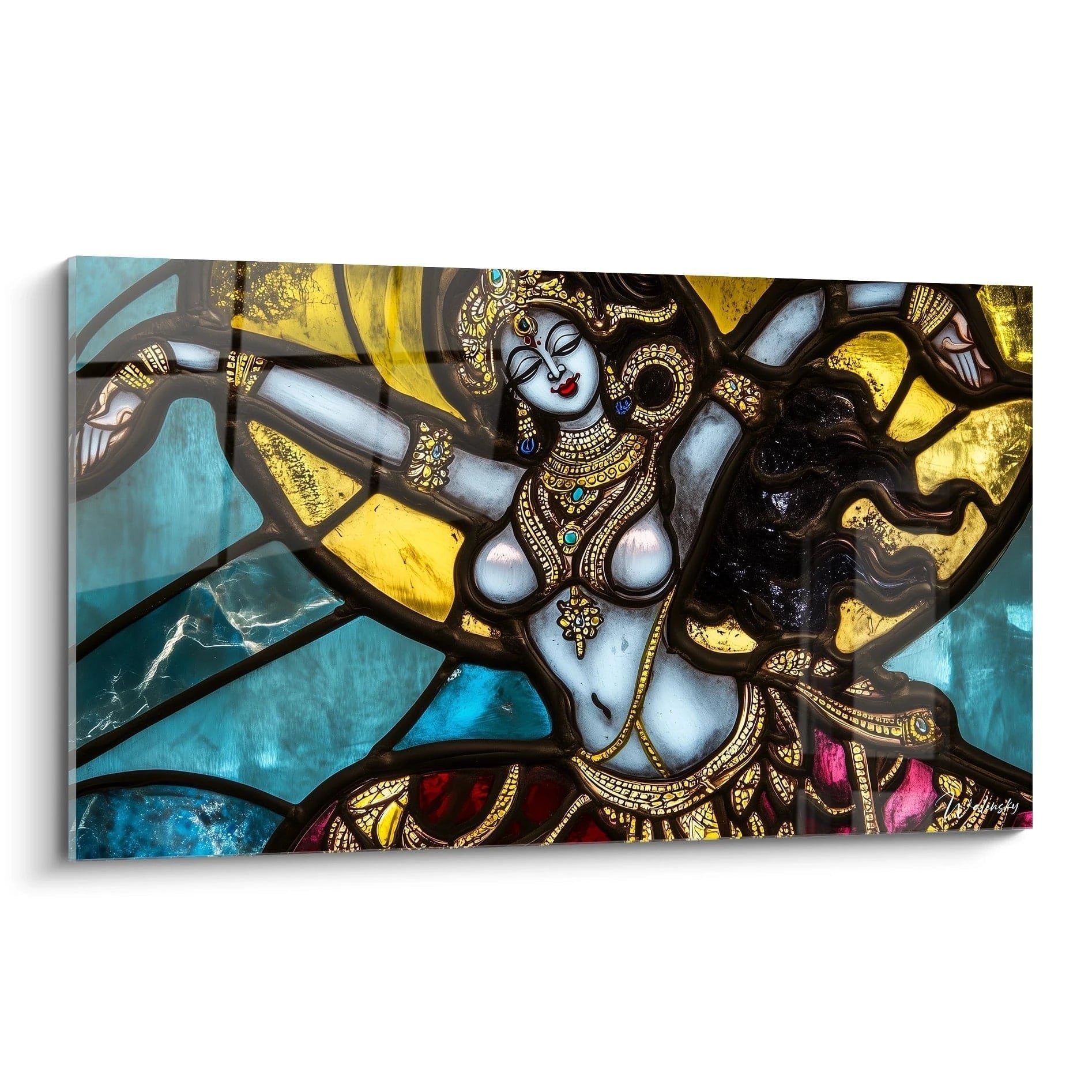
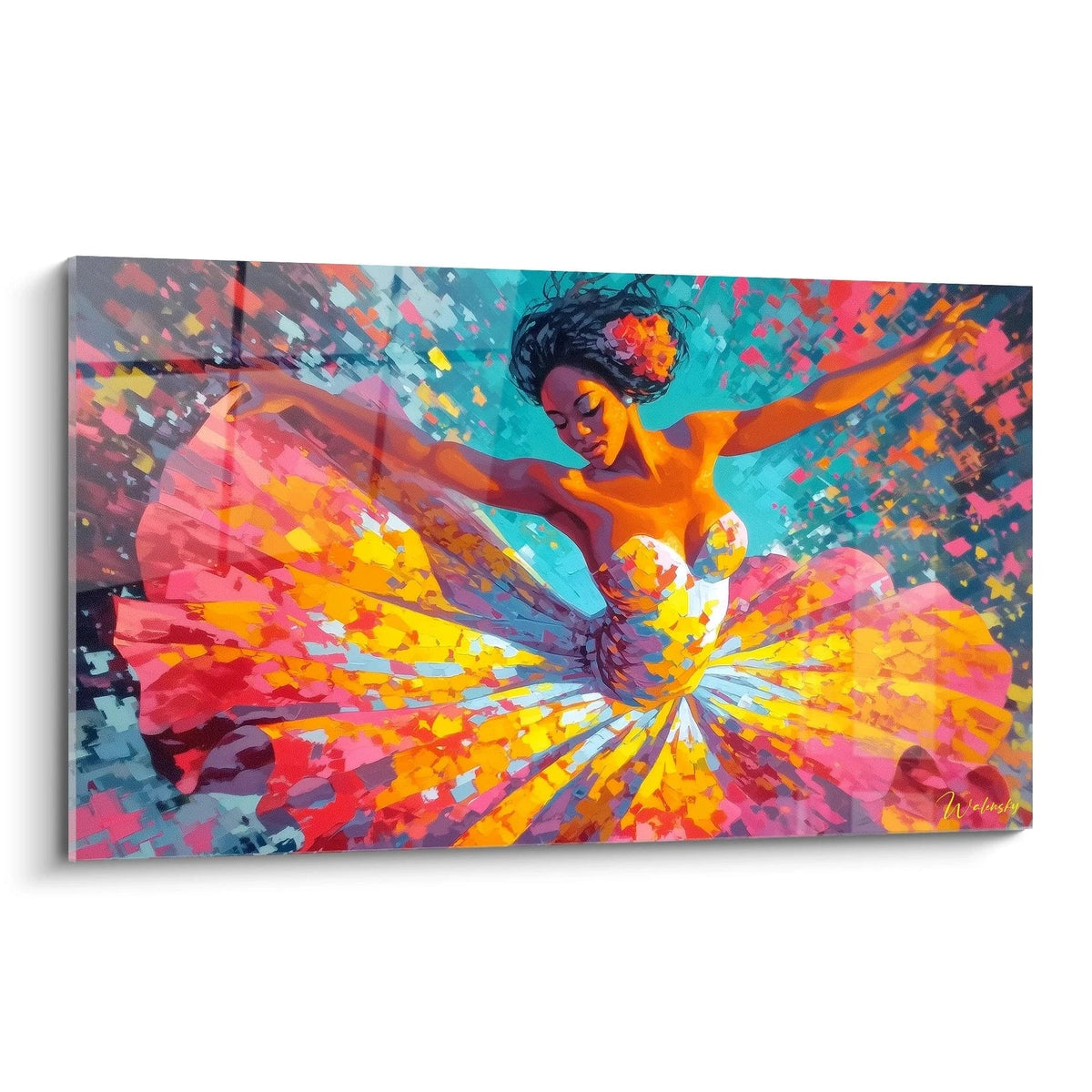
This Indian goddess stained glass artwork distinguishes itself through its extraordinary luminosity and technique inspired by tradition. The divine female figure, represented in a graceful pose, constitutes the immediate focal point of this remarkable work. The geometric sections of the stained glass harmoniously fragment the image while creating perfect visual cohesion. The golden ornamental details contrast magnificently with the pale blue skin of the divinity, creating an impression of spiritual richness.
How This Dancing Divinity Stained Glass Artwork Is Structured
The composition of this dancing divinity stained glass artwork reveals exceptional mastery of visual balance. The goddess's central figure occupies strategically the upper two-thirds of the work, her elegantly curved body following a dynamic diagonal line. The stained glass segments are organized around this central figure, with larger sections for important areas like the face and torso, and finer cuts for ornamental details.
The black lines separating each glass segment create a structural network that guides the viewer's eye through the work. The position of the deity's extended arms generates a sense of expansion and movement, while the background in shades of blue and gold frames her silhouette perfectly, creating a perspective that places the goddess in a transcendent sacred space.
The Colors of the Indian Goddess Stained Glass Artwork and Their Harmony
The chromatic palette of this Indian goddess stained glass artwork is dominated by three distinct chromatic regions that complement each other perfectly. Exceptional luminosity is obtained through the stained glass technique itself which allows light to pass through the different colored sections.
- Turquoise blue: present in the background and on the goddess's skin, bringing serenity and spiritual dimension
- Gold and yellow: used for ornaments, jewelry, and certain background sections, symbolizing divine opulence
- Red and pink: strategically employed in lower garments, creating terrestrial anchoring and vivifying contrast
The color harmony is reinforced by subtle transitions between different shades of blue, ranging from deep turquoise to lighter, nacreous tones. The golden tones add a sacred dimension, while touches of red create dynamic focal points. This tricolor combination evokes both Indian iconographic traditions and the unique visual properties of artistic stained glass.
Textures and Technical Details of Spiritual Indian Stained Glass Artwork
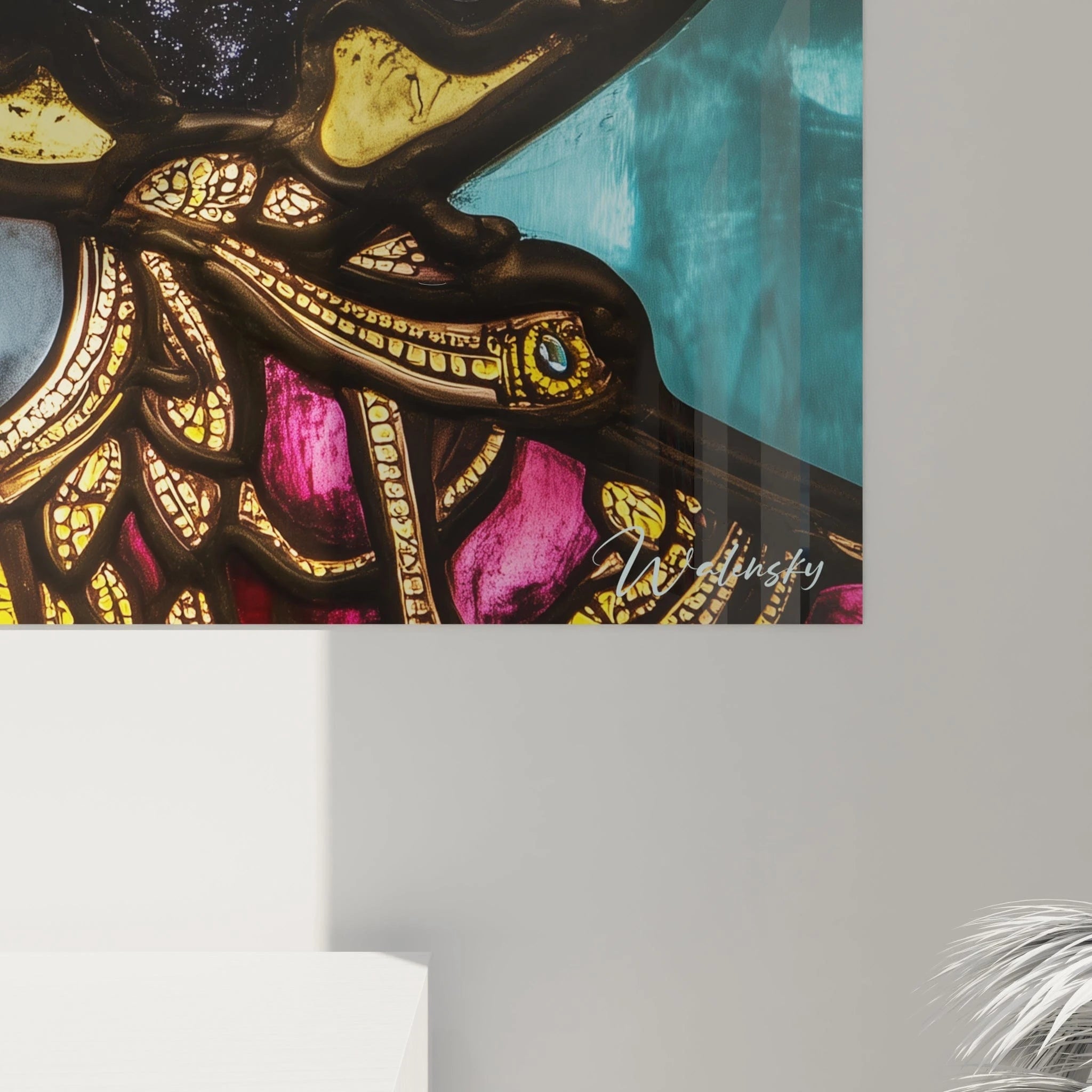
The visual textures of this spiritual Indian stained glass artwork reveal exceptional richness of technical details. The sections representing the goddess's skin present an opalescent quality characteristic of hand-blown glass, creating nacreous reflections that evoke divine transcendence. The golden parts show minutely crafted granular texture that imitates the appearance of precious metal perfectly framing the contours of each ornament.
The black lead joints create a striking contrast that defines each glass segment while serving as graphic contours. The manufacturing technique visibly involves glasses of different thicknesses and textures – some transparent, others opaque or iridescent – producing extraordinary visual depth. The sections representing jewelry incorporate details that imitate precious stones, with points of intense dark blue and red coloring that magnificently capture the sparkling effect of gems.
What Makes This Ornate Goddess Stained Glass Artwork Unique
The uniqueness of this ornate goddess stained glass artwork lies in its perfect fusion between traditional Indian iconography and Western stained glass technique. Unlike conventional representations of Hindu deities, this work transforms the divine figure into a fragmented composition that paradoxically amplifies her spiritual presence. The slightly elongated proportions of the figure and the serene expressivity of the face are particularly remarkable, with half-closed eyes evoking a state of meditative bliss.
The stained glass wall decoration admirably represents the complex details of traditional jewelry and ornaments – elaborate necklaces, arm bracelets, ornamental headdress, and earrings – each element rendered with extraordinary precision despite the technical constraints of the medium. The variable translucency effect through different sections creates a visual experience that changes depending on the observation angle and lighting, literally bringing this divine representation to life when light passes through it.
Depth and Details of the Indian Goddess Stained Glass Artwork
The visual depth of this Indian goddess stained glass artwork fully reveals itself when observed from different angles and distances. From afar, the overall composition presents striking chromatic harmony and an immediately recognizable figure. Upon closer approach, the progressive discovery of the work's structural complexity unfolds – each glass segment possesses its own shade, texture, and translucency that contribute to the overall effect.
Close examination reveals fascinating details impossible to perceive from a distance: the micro-color variations in the blue glass forming the goddess's skin, the tiny golden inclusions imitating precious stones in the ornaments, and even subtle variations in glass thickness that create additional depth effects. This wealth of technical details of the traditional Indian divinity stained glass artwork makes each observation a renewed discovery, the work progressively revealing its secrets as the viewer invests in its contemplation.
Where and How to Showcase Your Dancing Goddess Stained Glass Artwork
To maximize the visual impact of this dancing goddess stained glass artwork, strategic placement near a natural light source is ideal. Installation before a window oriented east or west will allow sunlight to pass through the work at different times of day, creating a changing light show. For spaces without access to natural light, a specifically designed backlighting system will reveal the full splendor of the colors and textures.
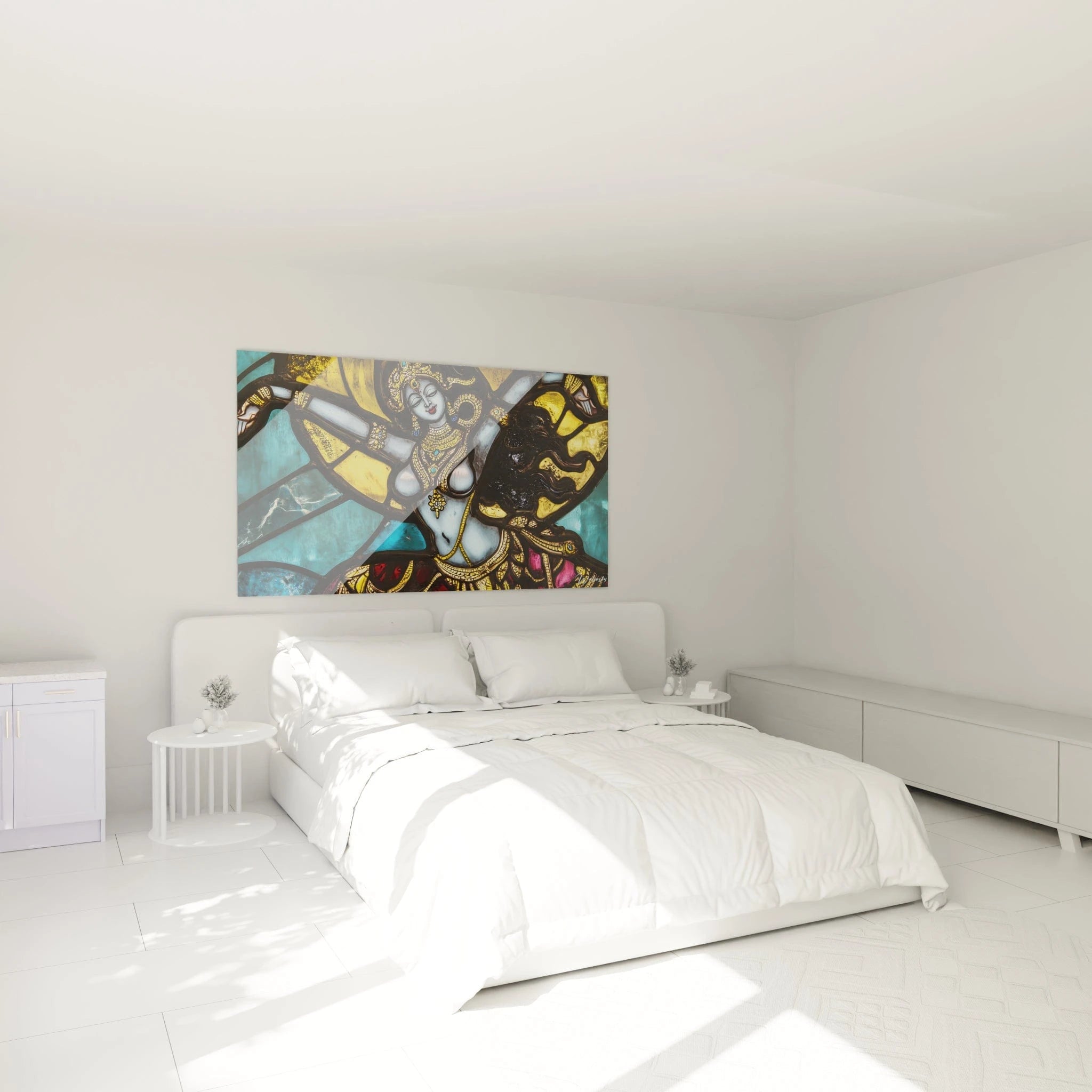
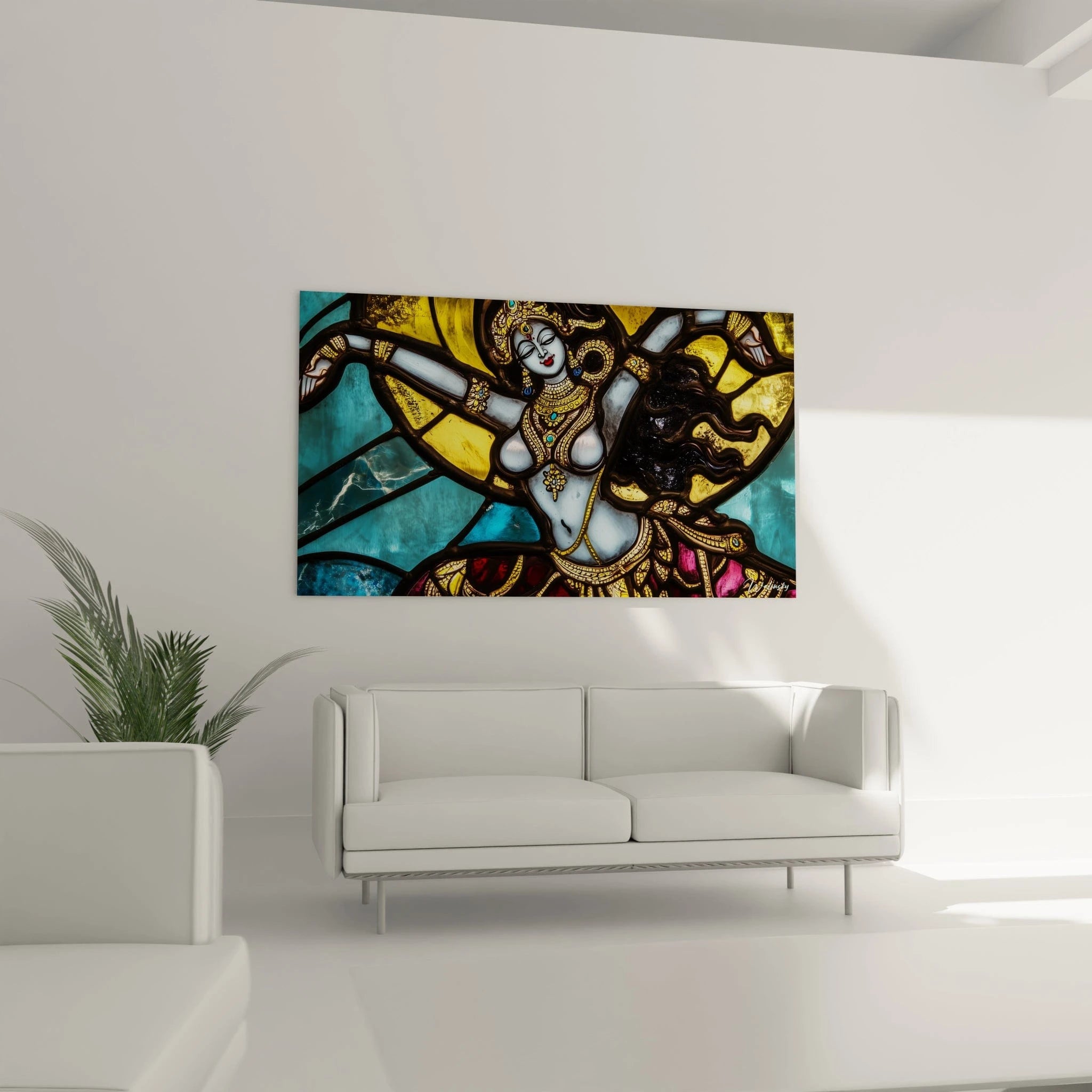
The divine wall art stained glass harmonizes particularly well with interiors in neutral tones where it can become the focal point of a room. Contemporary minimalist settings offer striking contrast with the ornamental richness of the work, while décors inspired by India or containing golden elements will create elegant thematic continuity. For optimal showcasing, avoid placements exposed to direct and harsh artificial light that could flatten the subtle nuances of the stained glass.