Black and white Anubis painting: its unique characteristics
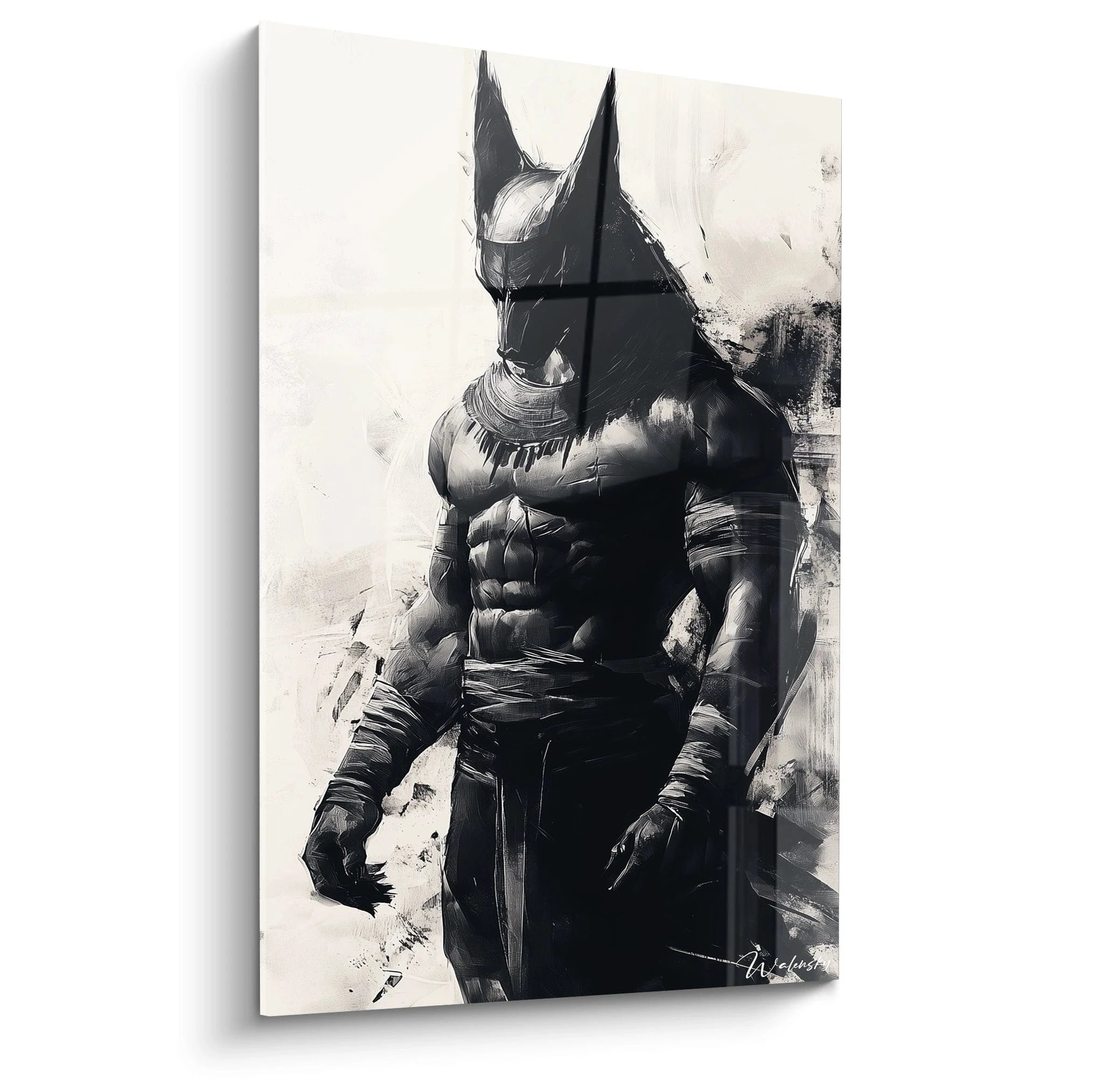
This black and white Anubis painting captures the essence of the Egyptian divinity in a gripping composition dominated by dramatic contrast. The imposing silhouette of the jackal-headed god stands out against a textured background in grey and white hues, creating an atmosphere both mysterious and powerful. The expressive and dynamic features bring to life this mystical Anubis painting that perfectly embodies the duality between animal and divine.
The work presents a contemporary and artistic interpretation of the guardian of the afterlife, with a pictorial treatment that evokes movement and force. The technique used highlights anatomical details while maintaining an almost phantasmagorical dimension, reinforcing the legendary character of this expressionist Anubis painting with fluid and energetic lines.
How this black and white graphic style Anubis painting is structured
The composition of this black and white graphic style Anubis painting is dominated by a central figure slightly off-center that majestically occupies the vertical space. The Egyptian god is represented in a three-quarter posture, creating a dynamic visual tension that guides the viewer's gaze from top to bottom. The characteristic ears of the jackal create ascending directrix lines that contrast with the muscular curves of the torso.
Visual balance is maintained by a subtle interplay between dense zones and lighter background spaces. The chosen perspective accentuates the imposing and divine aspect of the subject. The powerful anatomical proportions reinforce the symbolism of this monochrome Anubis painting that skillfully plays with negative space to create depth and dimension.
The colors of the Anubis painting and their harmony
The chromatic palette of the Anubis painting distinguishes itself through its deliberate restriction to monochromatic hues, creating a powerful and timeless aesthetic. The main chromatic values present are:
- Deep and dense black defining the silhouette and details of the jackal head
- Silver greys that model muscular volumes and body details
- Off-white background creating striking contrast with the main figure
- Intermediate hues created by dynamic brushstrokes
This restricted harmony reinforces the emotional impact of the monochrome Anubis painting. Subtle transitions between different values of black and grey create an impression of volume without resorting to color, a technique that evokes classical representations of Egyptian art while bringing contemporary artistic sensitivity.
Textures and technical details of the expressionist Anubis painting
The expressionist Anubis painting reveals a wealth of textures that add depth and character to the work. Energetic and visible brush traces create a continuous movement effect, particularly around the shoulders and neck. Controlled splashes and dynamic marks on the background suggest a mystical and supernatural atmosphere characteristic of the Egyptian realm of the dead.
Scratching and blending effects create transitions between dark and light areas, particularly visible on the muscular torso and forearms. The technique employed plays with contrasts to create dramatic shadow zones that sculpt the silhouette. The details of the muzzle and eyes benefit from more precise treatment that attracts the gaze, while the extremities slightly dissolve into the background, creating a sensation of being between two worlds, characteristic of this mixed-technique Anubis painting.
What makes this Egyptian god Anubis painting unique
The uniqueness of this Egyptian god Anubis painting lies in its ability to simultaneously capture the animal and divine aspects of the character. The artistic interpretation goes beyond simple representation to reach powerful symbolic dimension. The tension between anatomical realism and abstract expressionism creates a work that resonates emotionally with the viewer.
Distinctive details include the particular treatment of the jackal head that seems to merge with the human body, suggesting the duality between animal and divine. Visible bandages at the wrists evoke the mummification rituals presided over by this divinity. This black Anubis wall decor that emerges partially from the shadows evokes the mysterious nature of the character, guardian of the frontier between life and death.
Depth and details of the Anubis painting
The visual experience of this Anubis painting varies considerably depending on viewing distance. From afar, the work presents an immediately recognizable iconic silhouette with an imposing presence that dominates the space. The overall effect creates an impression of a vigilant guardian, perfectly aligned with the essence of the mythological character.
Moving closer, numerous subtle details reveal themselves: energetic brush traces suggesting movement, varied textures evoking both animal fur and ritual bandages, and delicate nuances in transitions between shadows and lights. The complexity of the technique in this black and white technical Anubis painting is discovered in the muzzle details and muscular definition that testify to precise anatomical mastery. This wealth of detail transforms the visual experience into a progressive exploration that rewards attentive observation.
Where and how to showcase your contemporary Anubis wall decor
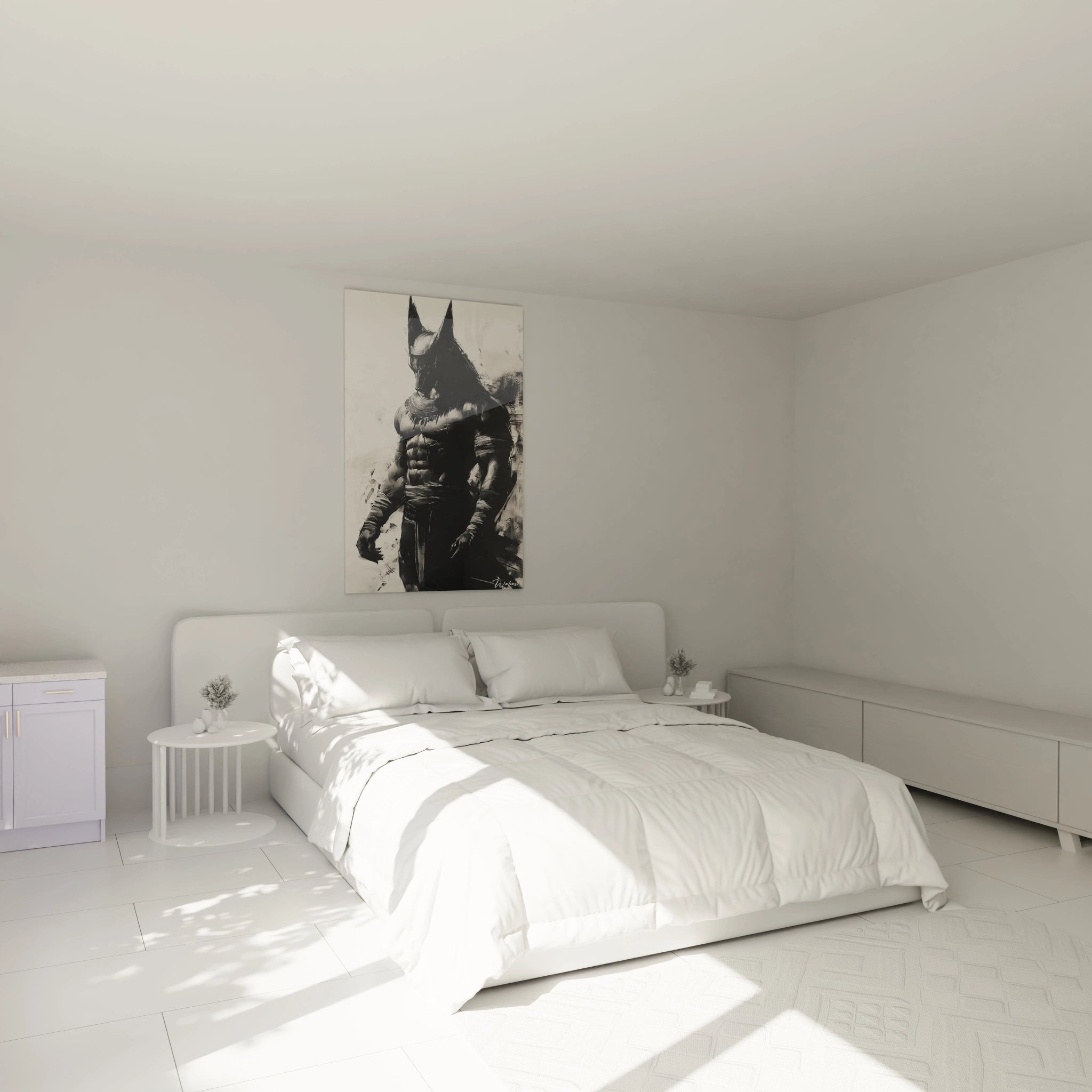
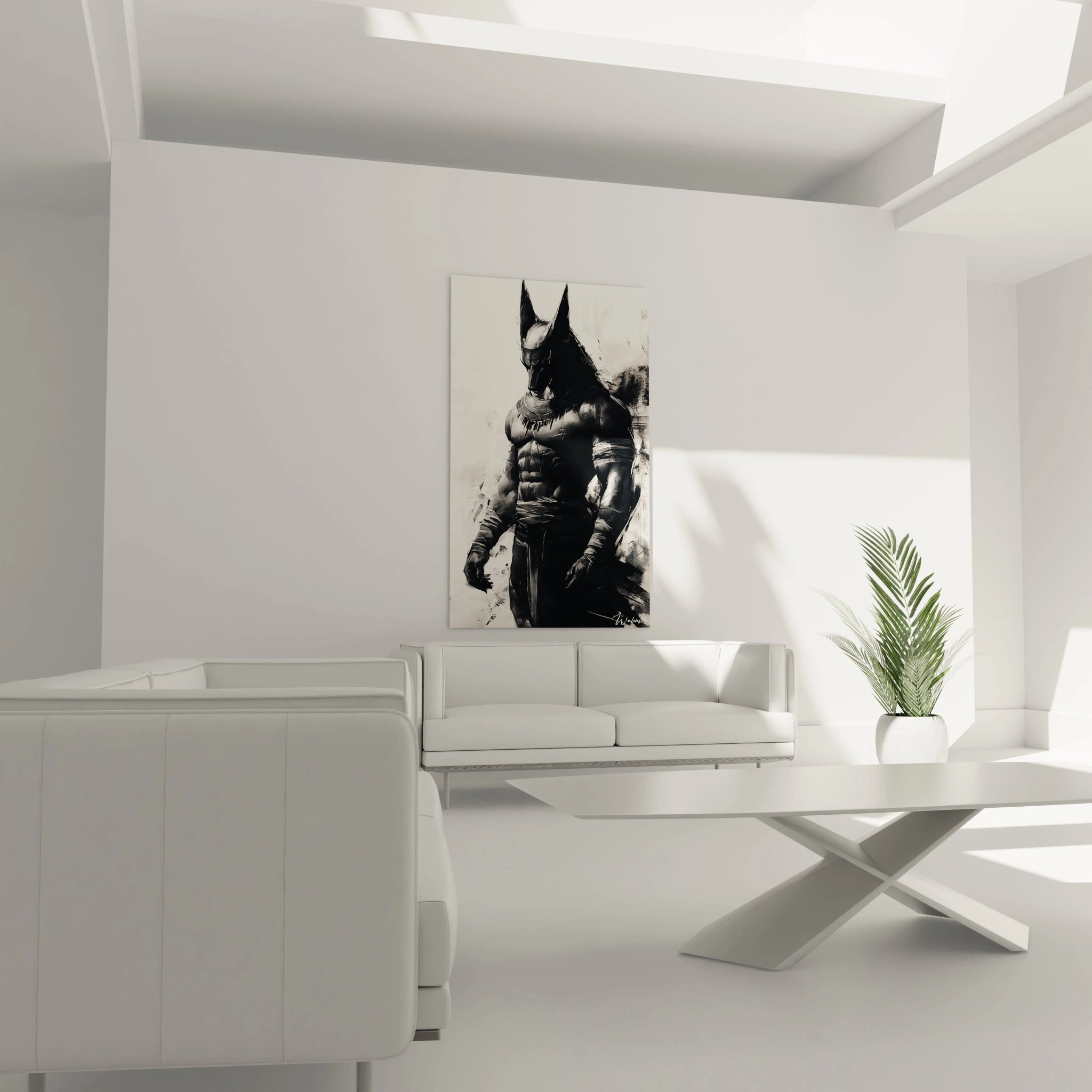
To enhance your contemporary Anubis wall decor, several environments and display conditions prove particularly suited. A space with light or light grey walls will maximize contrast with the dominant dark tones of the work. Directional but non-aggressive lighting will enhance textures and reliefs without creating annoying reflections.
This Anubis wall decor integrates perfectly into an interior with ethnic chic, minimalist or contemporary style. Ideal color combinations include:
- Golden or copper accents that will echo Egyptian aesthetics while contrasting with the monochrome
- Matte black furniture that will extend the dark aesthetic of the painting
- Navy blue or terracotta textiles for harmony evoking traditional Egyptian colors
- Touches of sand or ochre to recall Egyptian deserts and create a coherent environment