Icarus painting: its unique characteristics
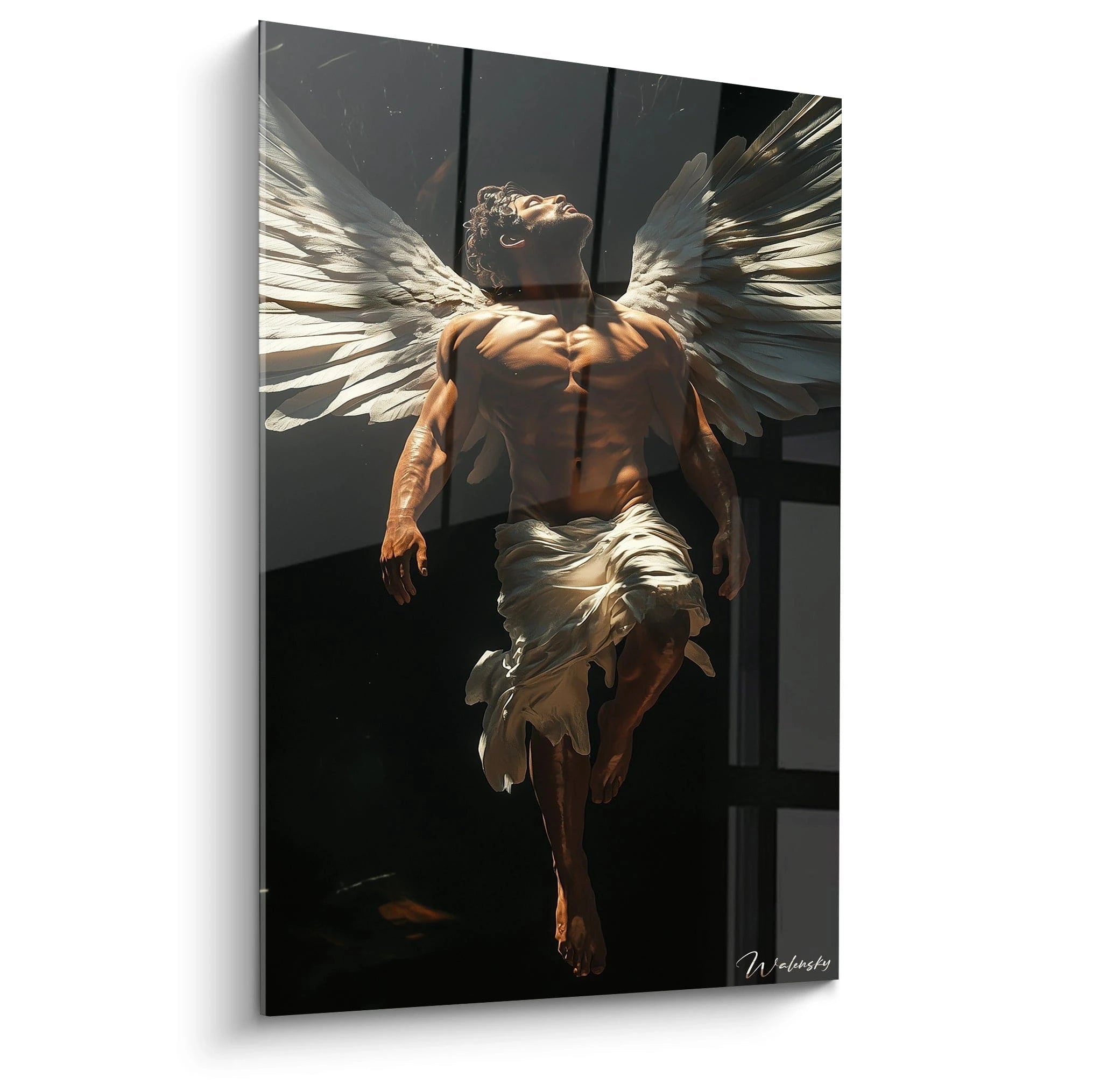
This Icarus painting instantly captivates with its dramatic composition centered on a winged man. The male figure rises in a dark space, face turned upward in an expression of ecstasy or transcendence. The striking contrast between the golden skin of the character, his immaculate white wings and the deep black background creates immediate visual tension. What immediately distinguishes this work is the hyperrealistic rendering of the body and wings, combined with sculptural lighting that models every muscle and feather with remarkable precision.
How this mythological Icarus painting is structured
The vertical composition of this mythological Icarus painting naturally guides the gaze upward, mimicking the subject's upward movement. The character occupies the central space of the work, his majestic wings extending symmetrically on either side. The dynamic lines formed by the arms and legs create a sense of upward movement, while the head tilted backward forms the culmination of this diagonal. Visual balance is maintained by the symmetry of the deployed wings, while the white drapery that partially envelops the lower body adds a fluid movement element that contrasts with the defined musculature of the torso.
The colors of the Icarus painting and their harmony
The color palette of the Icarus painting is based on a powerful trilogy:
- The luminous gold of the skin, subtly modeled by amber shadows
- The pure and radiant white of the wings and drapery, enhanced with ivory and cream nuances
- The deep and enveloping black of the background, punctuated with subtle dark tone variations
This chromatic triad creates a contrasted harmony that amplifies the visual impact of the work. Directional lighting generates smooth transitions between light and shadow, particularly on the golden musculature that seems illuminated from within. This mastered management of values gives the painting an almost spiritual dimension, where light symbolizes elevation and transcendence.
Textures and technical details of the Baroque Icarus painting
The textures of the Baroque Icarus painting reveal meticulous work on each element of the composition. The wing feathers present finely detailed texture, with subtle variations in their structure that suggest their lightness and softness. The character's skin offers a velvety rendering with satiny highlights that accentuate muscular modeling. The white drapery presents supple and dynamic folds that admirably capture fabric fluidity in movement. The chiaroscuro technique employed recalls Baroque masters, creating a sophisticated interplay of shadows that sculpts volumes with precision while preserving the legibility of each anatomical detail.
What makes this Neoclassical Icarus painting unique
The uniqueness of this Neoclassical Icarus painting lies in its ability to fuse anatomical realism and mythological interpretation with exceptional mastery. The emotional tension captured in the expression of the face turned toward the sky conveys an intensity rarely achieved in contemporary representations of this mythological figure. The almost photographic quality of the rendering, particularly in the treatment of wings, creates striking contrast with the allegorical dimension of the subject. This winged wall decoration also distinguishes itself through its ability to simultaneously evoke vulnerability and power, perfectly translating the essence of the Icarus myth into a contemporary visual interpretation with classical roots.
Depth and details of the Icarus painting
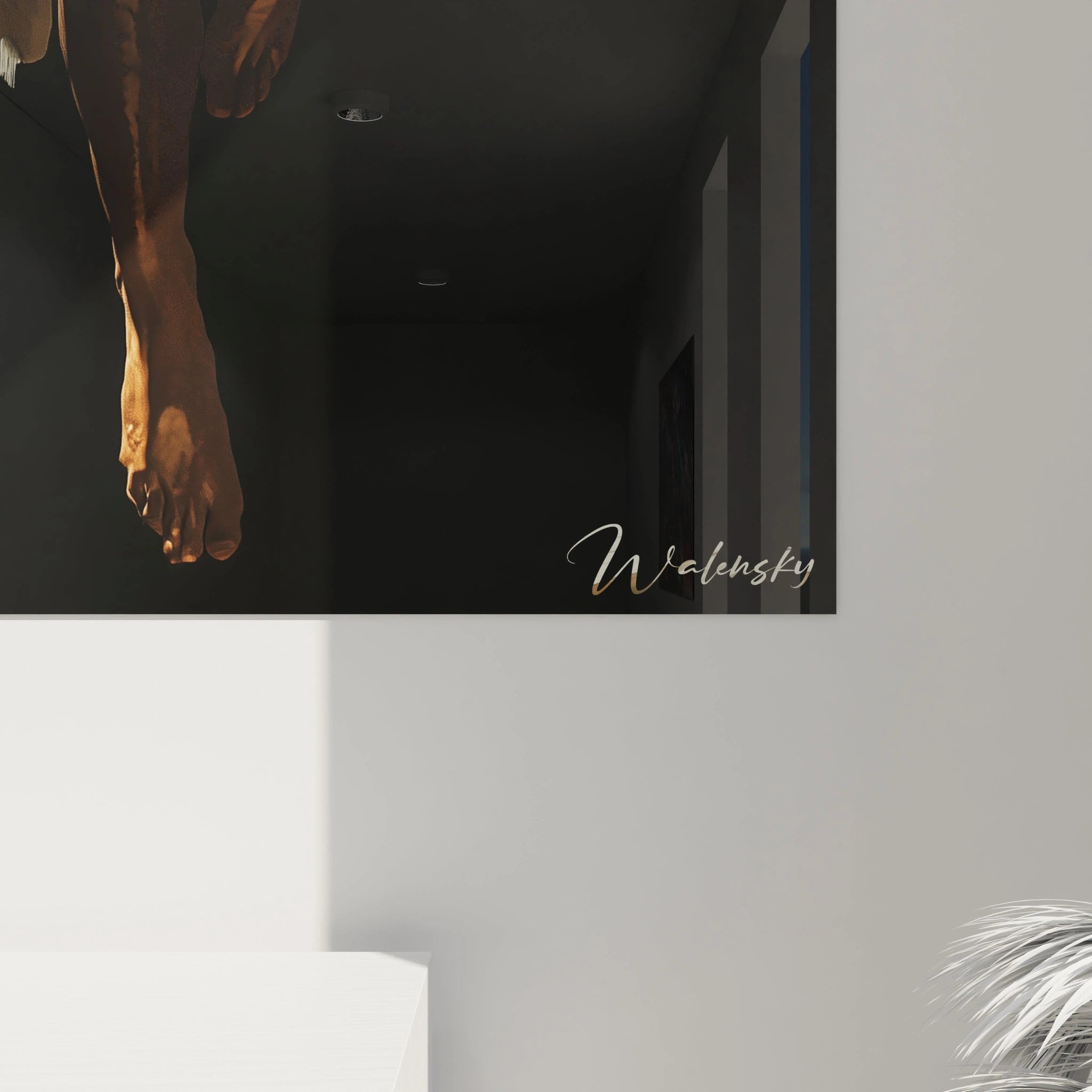
The visual experience of this Icarus painting transforms according to observation distance. From afar, the work impresses with its dramatic composition and perfect balance between luminous masses and shadow areas. Moving closer, one discovers the stunning fineness of details: the texture of each individual feather, subtle tonal variations on the skin, delicately suggested veins beneath the epidermis, and even tiny droplets of water or perspiration that seem to bead on the body. This richness of microscopic details contrasts with the power of the overall effect, creating a mythological wall artwork that rewards careful observation while maintaining its emotional power from a distance.
Where and how to enhance your luminous Icarus painting
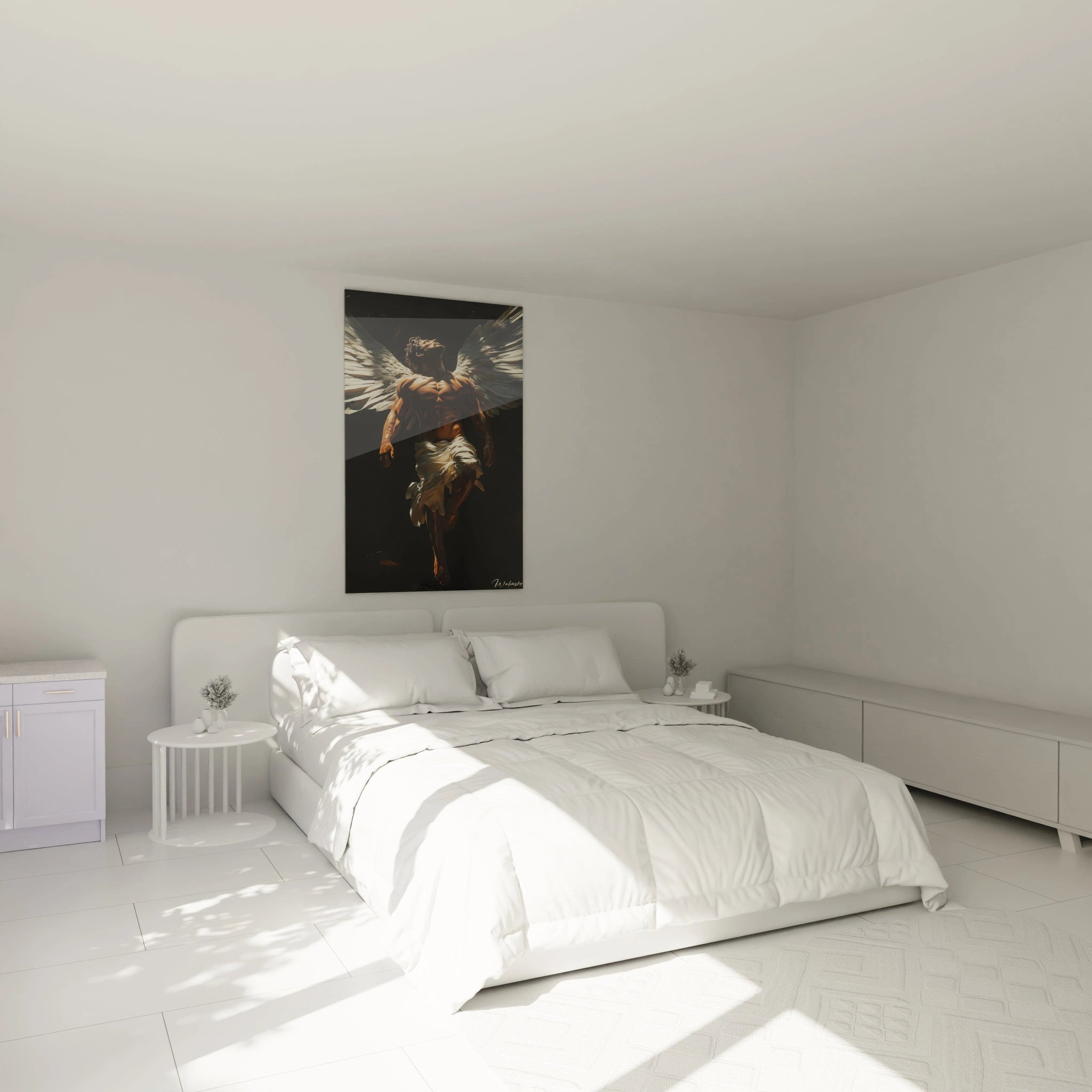
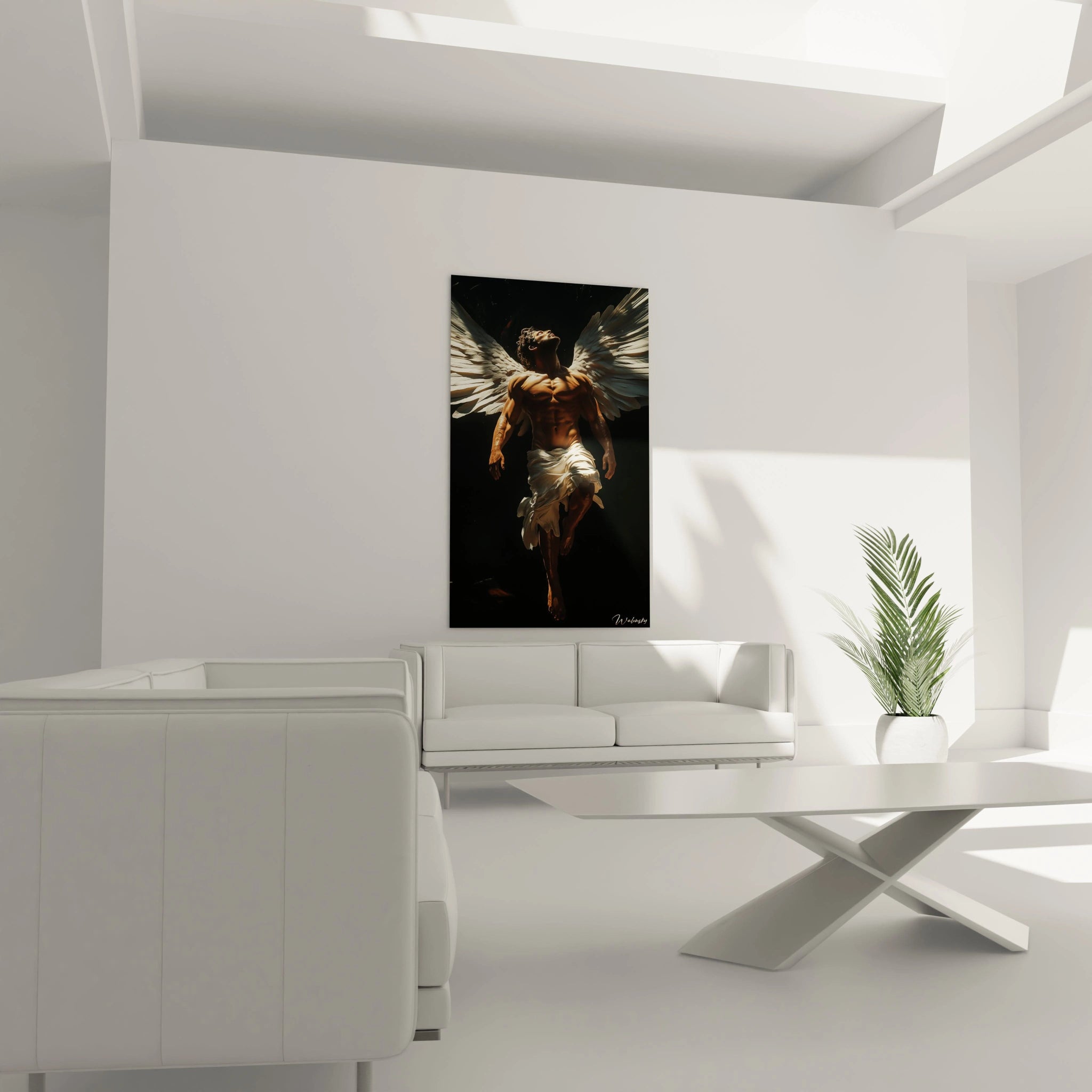
This luminous Icarus painting deserves a location that fully values its visual impact and symbolic dimension. A dark or neutral-colored wall is the ideal background to make the dominant gold and white tones of the work stand out. Directional lighting, ideally oriented top to bottom, will reproduce the dramatic effect of light in the painting itself, accentuating the relief of the wings and muscular definition. This work integrates perfectly into spaces with purified architectural lines, where it can become the focal point of a room. Minimalist environments in terms of furniture and decoration will allow this angelic wall decoration to fully deploy its presence without competing visual interference.