Organic cells artwork: its unique characteristics
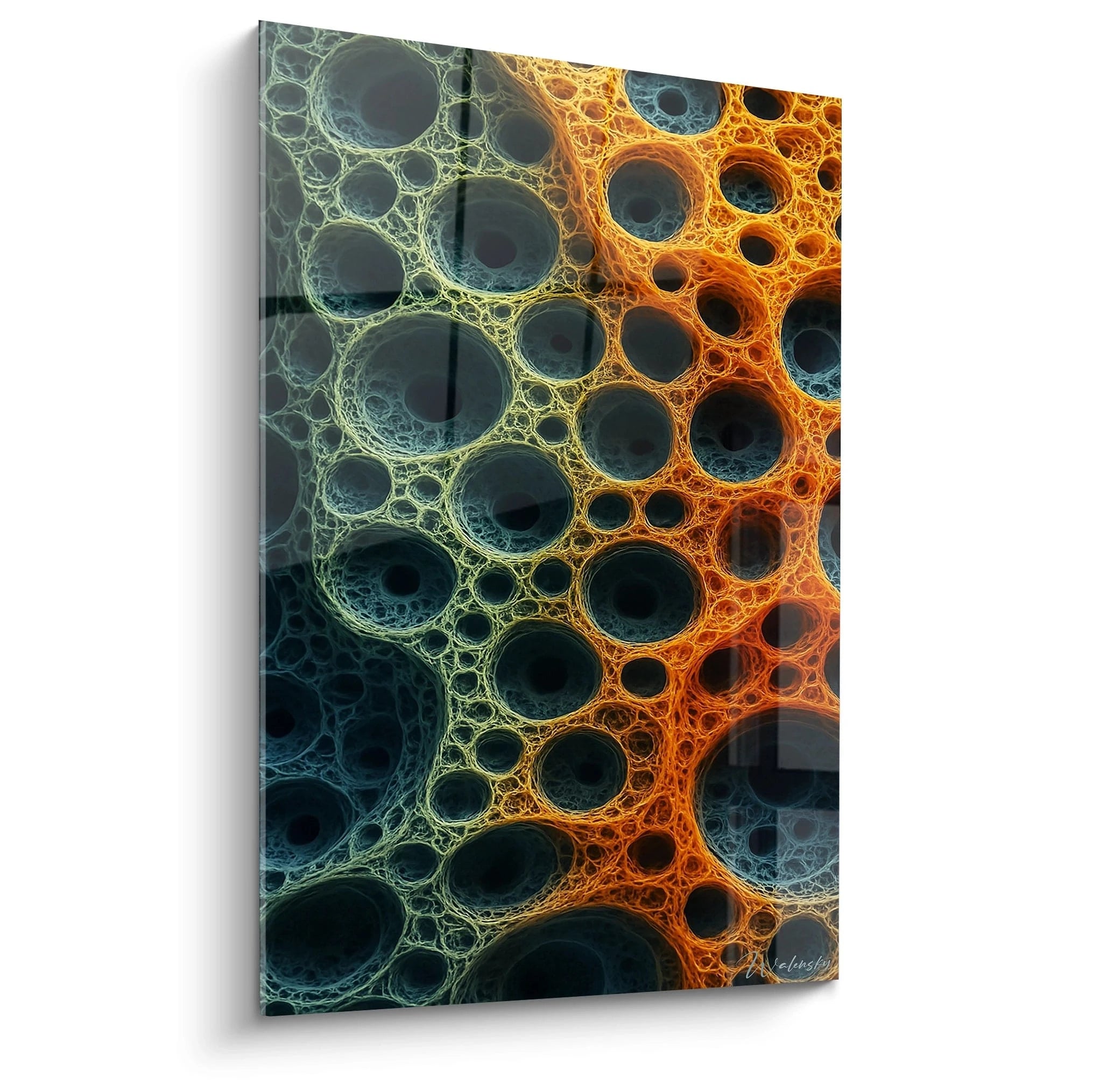
The organic cells artwork that presents itself to us is a fascinating work that immediately captures the eye with its striking composition of alveolar structures. At first glance, you are struck by the extraordinary contrast between deep blue zones and vibrant orange sections, separated by a luminous yellow transition. This creation reveals an enlarged microscopic world, where each bubble and cavity seems to pulse with its own life, creating an organic cells artwork of remarkable visual complexity. The three-dimensional effect is particularly striking, giving the impression of looking through a powerful electron microscope.
How this textured organic cells artwork is structured
The composition of this textured organic cells artwork reveals meticulous organization despite its organic appearance. The cellular structures are arranged to create fluid movement across the canvas, with the largest cavities strategically placed to guide the viewer's eye. The alveolar formations on the right, dominated by warm orange tones, contrast perfectly with the cooler blue-green sections on the left. The interconnected membranes that delimit each cell create a complex network traversing the entire work, offering exceptional visual depth to this textured organic cells artwork that seems almost alive before our eyes.
The colors of organic cells artwork and their harmony
The color harmony of organic cells artwork rests on a striking contrast between three dominant hues that complement each other perfectly:
- Deep blue with turquoise nuances evoking marine depths or cosmic mystery
- Luminous yellow-green serving as a delicate transition between warm and cool zones
- Flaming orange with amber tones bringing warmth and dynamism to the whole
This color play in luminous organic cells artwork creates captivating visual tension, where each hue seems to emanate from within the structures themselves, as if illuminated from inside. This intrinsic luminosity gives the work an almost phosphorescent quality that immediately catches the eye.
Textures and technical details of three-dimensional organic cells artwork
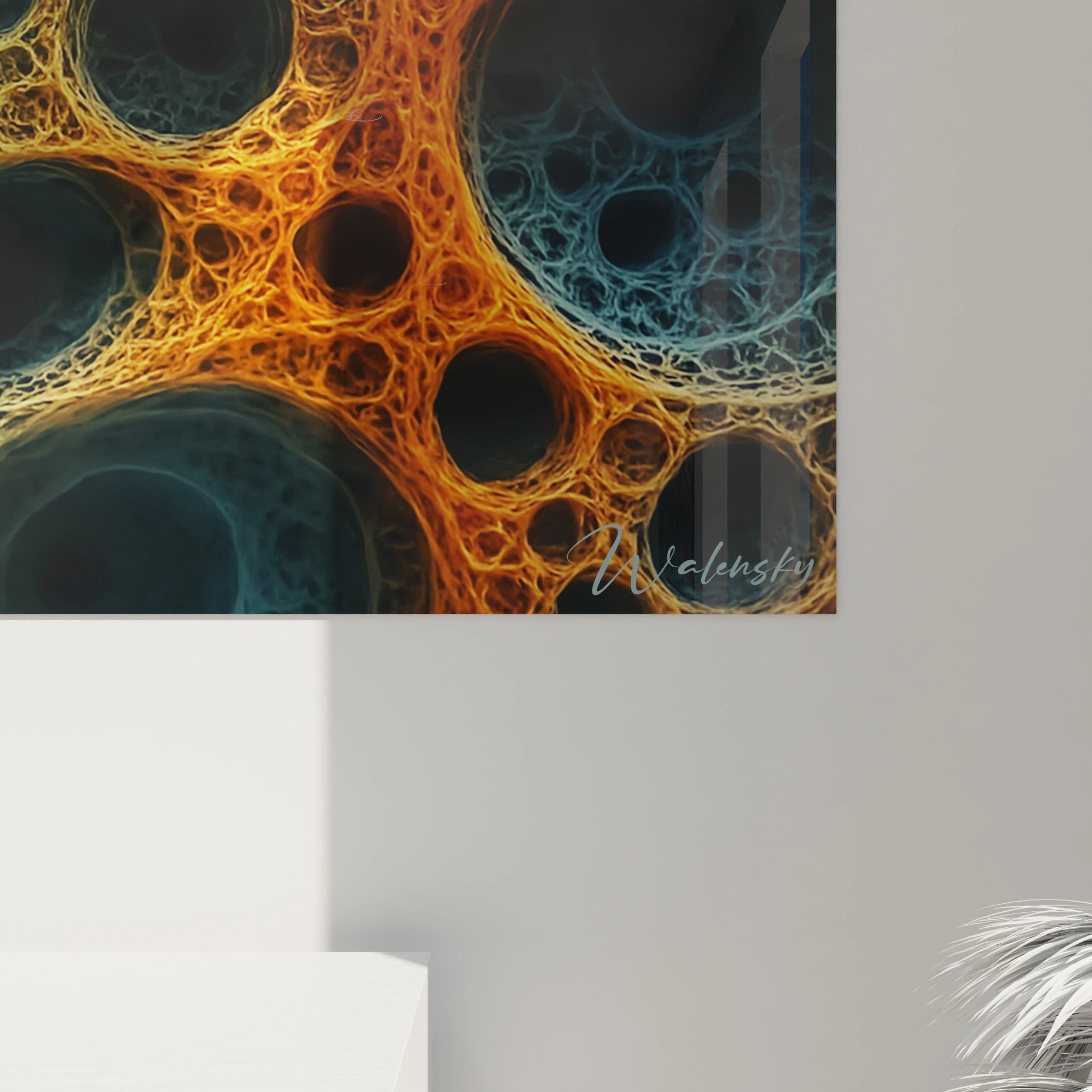
The three-dimensional organic cells artwork distinguishes itself through its wealth of textures suggesting both fragility and resilience. The cavity walls display remarkable fineness, similar to translucent membranes allowing light to filter through. The technique employed creates striking relief where each bubble seems to have been formed by a natural process rather than created by human hand. The surfaces show subtle variation in thickness and density, particularly visible in transitions between different colored zones. The depth of the cavities and fineness of the connector filaments testify to exceptional mastery in executing this three-dimensional organic cells artwork.
What makes this luminous organic cells artwork unique
What truly distinguishes this luminous organic cells artwork from any other similar work is how it captures the very essence of cellular structures while transforming them into a transcendent artistic vision. The illusion of observing a living biological sample is stunning, yet this is a deliberate artistic creation. The way light seems to emanate from within the structures gives this cellular wall decoration an almost supernatural quality. The subtle transitions between different color zones create visual movement animating the whole, giving the impression that these organic formations are frozen in a moment of perpetual metamorphosis.
Depth and details of organic cells artwork
Observing this organic cells artwork up close reveals a stunning level of detail that escapes at first glance. Each alveolar structure possesses its own internal texture, with subtle variations in membrane opacity and density. Approaching closer, you discover micro-structures within the largest cavities themselves, like worlds nested within each other. From afar, the work appears as a harmonious ensemble of colors and shapes; up close, it becomes a complex universe to explore, offering a visual experience that constantly renews itself. This microscopic organic cells artwork transforms the infinitesimally small into a monumental visual experience.
Where and how to showcase your contrasted organic cells artwork
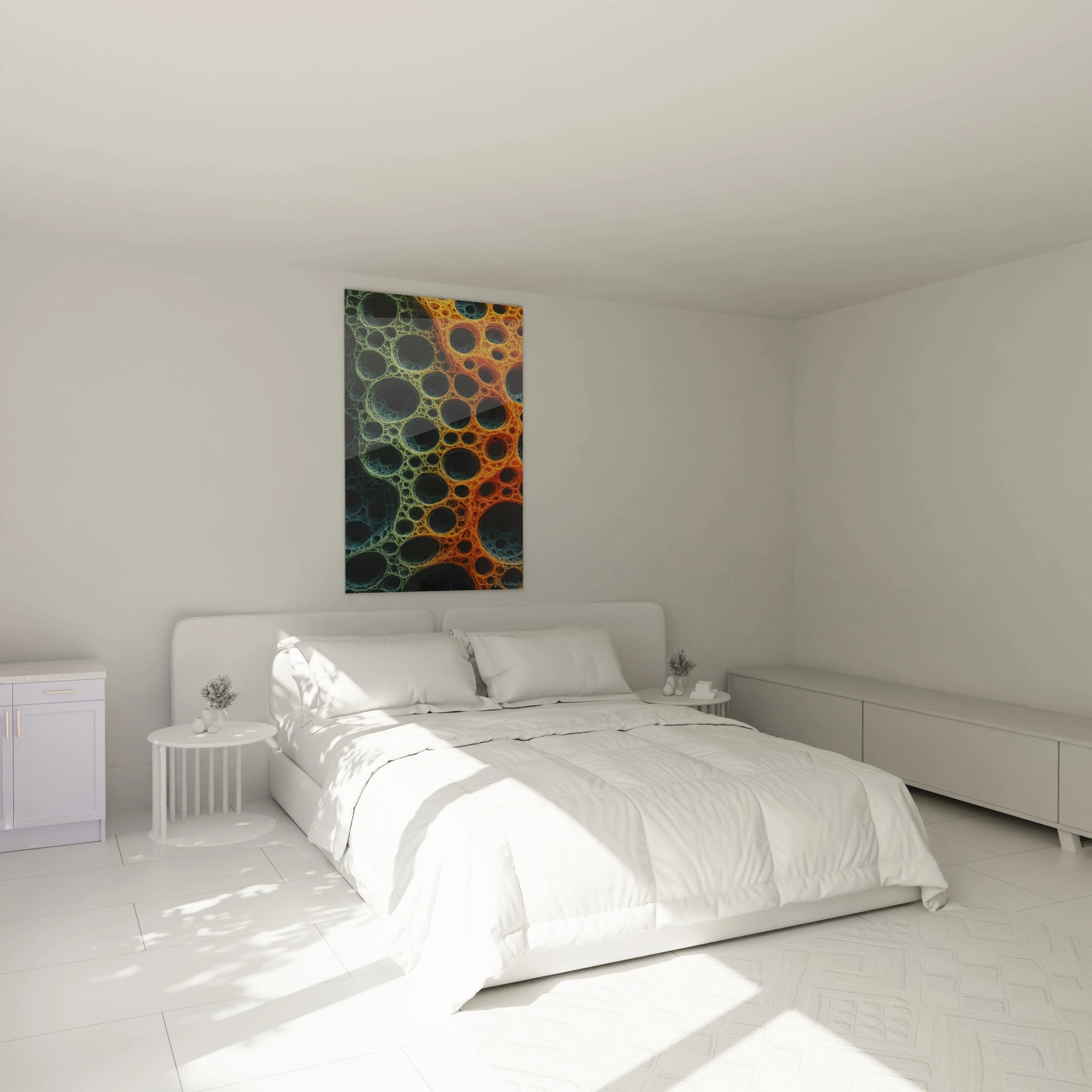
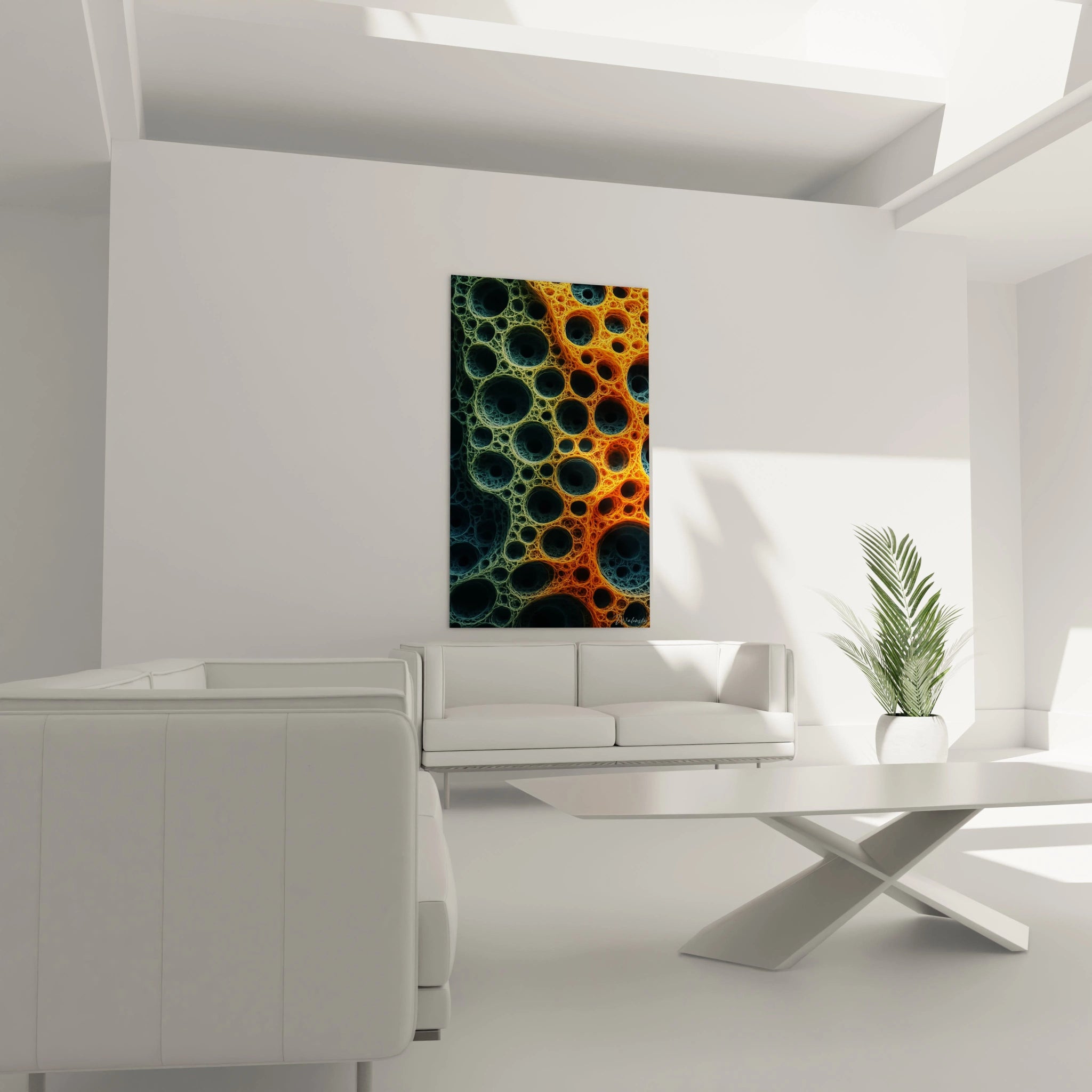
To enhance your contrasted organic cells artwork, favor a neutral wall color that allows the work's vibrant colors to fully express themselves. Directional, slightly lateral lighting will highlight the reliefs and textures of the alveolar structures, creating shadows that strengthen the impression of depth. In a contemporary interior with clean lines, this cellular wall art naturally becomes the space's focal point. Particularly suitable spaces include a modern medical office, a design laboratory, or an innovative corporate reception room. The variable natural light throughout the day will reveal different nuances of the work, offering a visual experience that constantly evolves.