Rose face painting: its unique characteristics
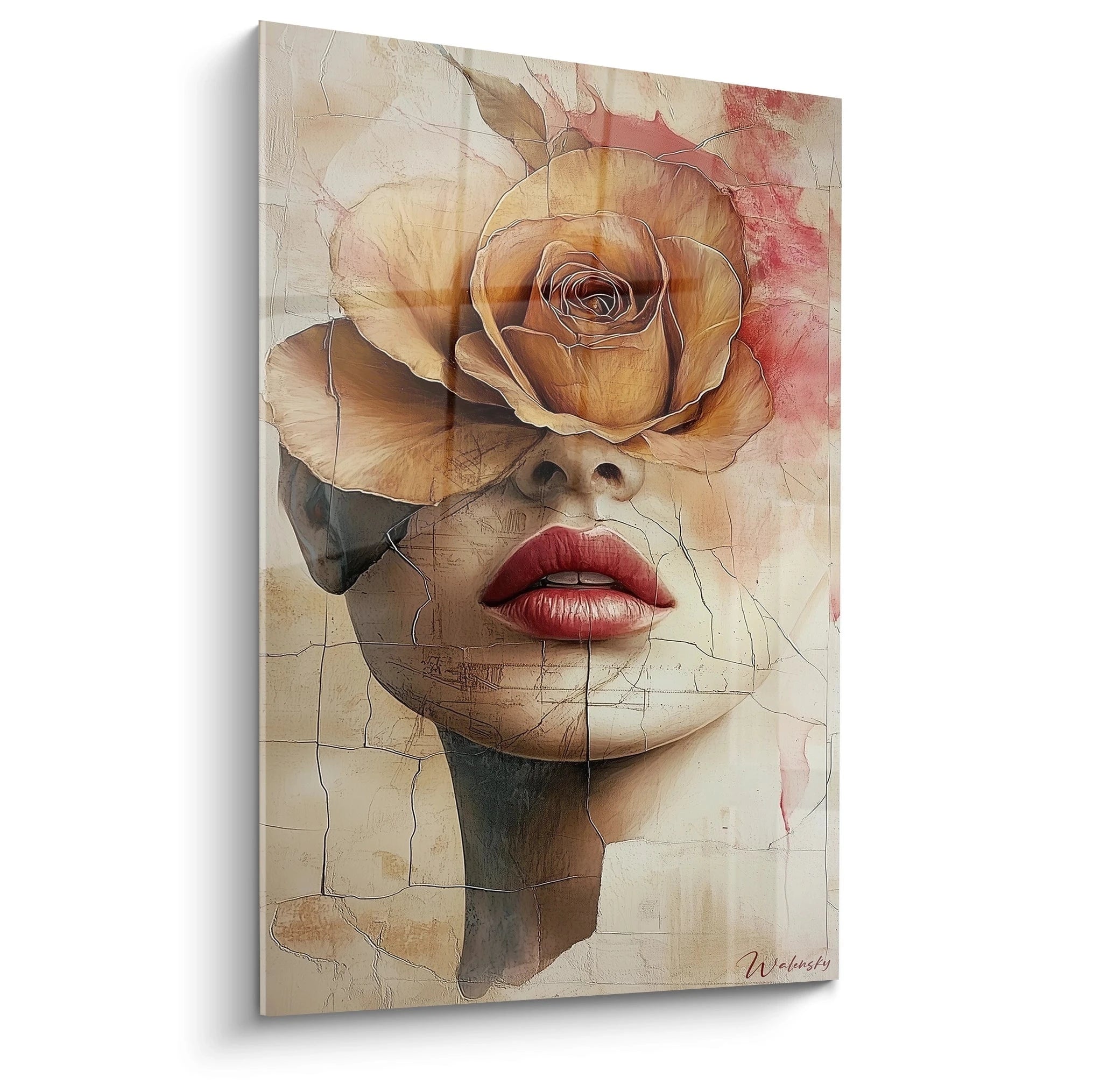
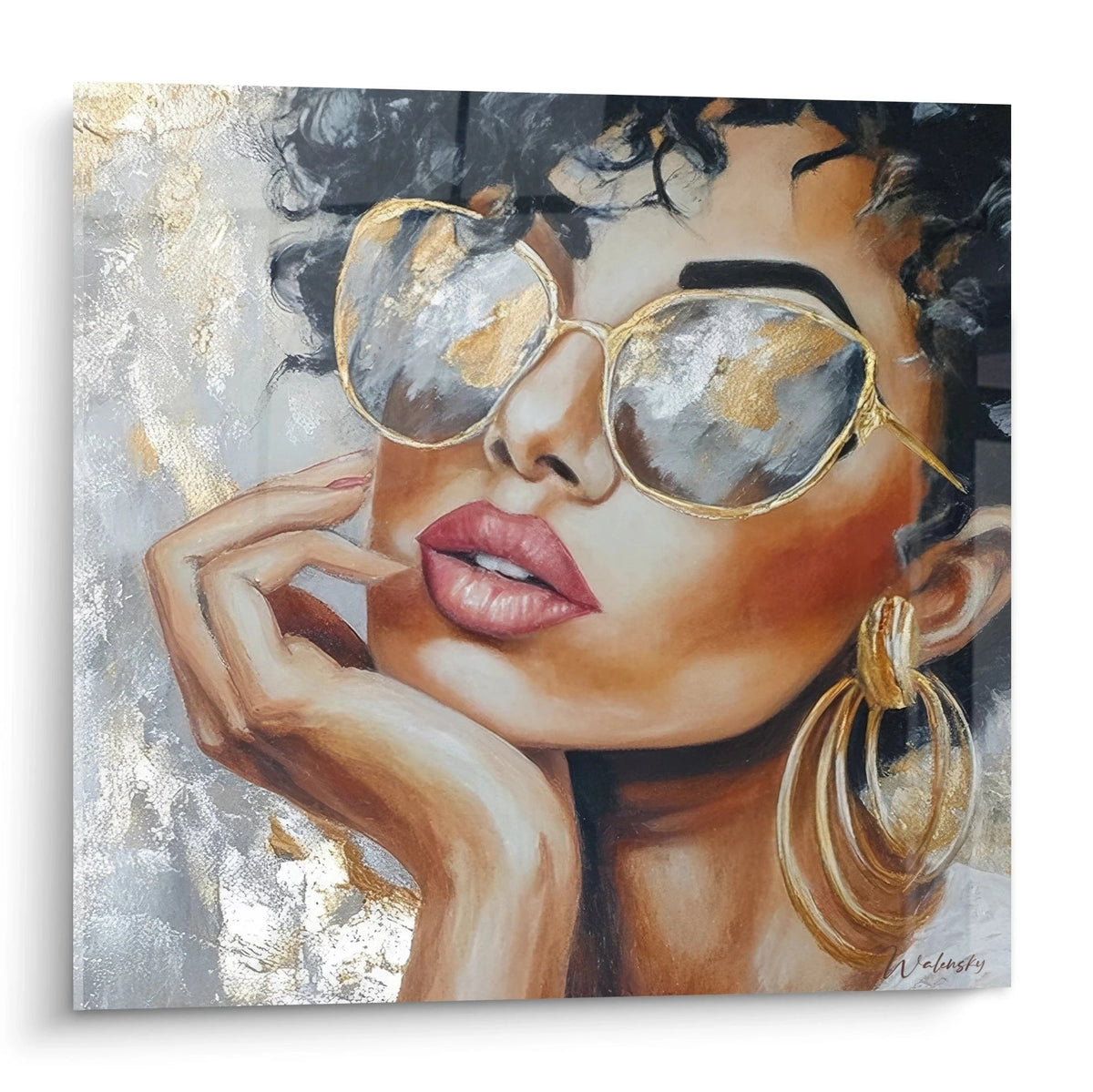
This rose face painting captivates immediately through its striking composition, fusing a partially visible feminine portrait with a magnificent golden rose that masks the upper part of the face. The work presents a fascinating duality between realism and abstraction, creating immediate visual tension. What distinguishes this rose face painting is the crackled texture effect that traverses the entire composition, evoking an ancient fresco or aged parchment.
The intense red lips constitute the lower focal point of the work, instinctively attracting the gaze through their striking realism and meticulous execution. The golden rose replacing the eyes creates a powerful visual metaphor, transforming this rose face painting into a symbolic exploration of beauty, identity, and perception.
How this feminine face painting with rose is structured
The composition of this feminine face painting with rose rests on a delicate balance between verticals and organic curves. The face occupies the central majority of the work, with the rose strategically positioned at the location of the eyes, thus creating a dominant focal point. The fissure lines traverse the entire composition, creating a complex network that subtly guides the gaze among different elements.
The tight framing of the feminine face painting with rose eliminates superfluous elements to concentrate solely on the essential: the lips, nose, face contours, and dominant rose. This visual economy strengthens the emotional impact of the work. The slightly offset perspective creates an impression of subtle movement, as if the subject were about to reveal itself further or, conversely, disappear behind its floral metaphor.
The colors of the rose face painting and their harmony
The color palette of the rose face painting articulates around a sophisticated harmony of warm and neutral hues that complement each other perfectly:
- Beige and cream tones forming the base of the face and textured background
- A rich range of golden browns and ochres composing the rose and creating subtle transitions
- A deep and vibrant red for the lips, creating dramatic contrast
- Pale pink and salmon touches that gently warm the peripheral areas
- Dark gray and black accents that define certain contours and create depth
This chromatic combination of the rose face painting creates an atmosphere that is both timeless and contemporary. The subtle transitions between warm tones evoke soft luminosity, as if the work were illuminated by golden end-of-afternoon light, reinforcing its romantic and mysterious character.
Textures and technical details of the floral artistic face painting
This floral artistic face painting presents exceptional richness in textures that greatly contributes to its visual impact. The entire surface is worked with a deliberately crackled technique, creating a complex network of fissures that evokes both an ancient fresco and delicate skin. These cracks are not uniform but vary in width and depth, creating zones of dynamic visual tension.
The rose petals in this floral artistic face painting are rendered with remarkable precision, each layer defined by subtle variations in texture and color. The transitions between different face areas are treated with a technique of fades and superpositions that create an impression of depth despite the flatness of the support. The artist has evidently employed a mixed technique combining the smooth and realistic aspect of the lips with the rougher and more expressive texture of peripheral areas.
What makes this surrealist feminine face painting unique
The uniqueness of this surrealist feminine face painting lies in its ability to fuse disparate elements into a harmonious and symbolically rich composition. The substitution of eyes with a golden rose creates a powerful visual metaphor that completely transforms the reading of the portrait. This audacious artistic decision establishes a tension between perception and identity that characterizes the best surrealist works.
The crackled texture unifying this feminine face wall decoration adds a temporal dimension to the work, suggesting simultaneously the ancient and contemporary. The contrast between the apparent fragility of the surface and the emotional force of the expression creates particular resonance. The composition manages to be both classical in structure and resolutely modern in execution, transcending conventional artistic categories.
Depth and details of the rose face painting
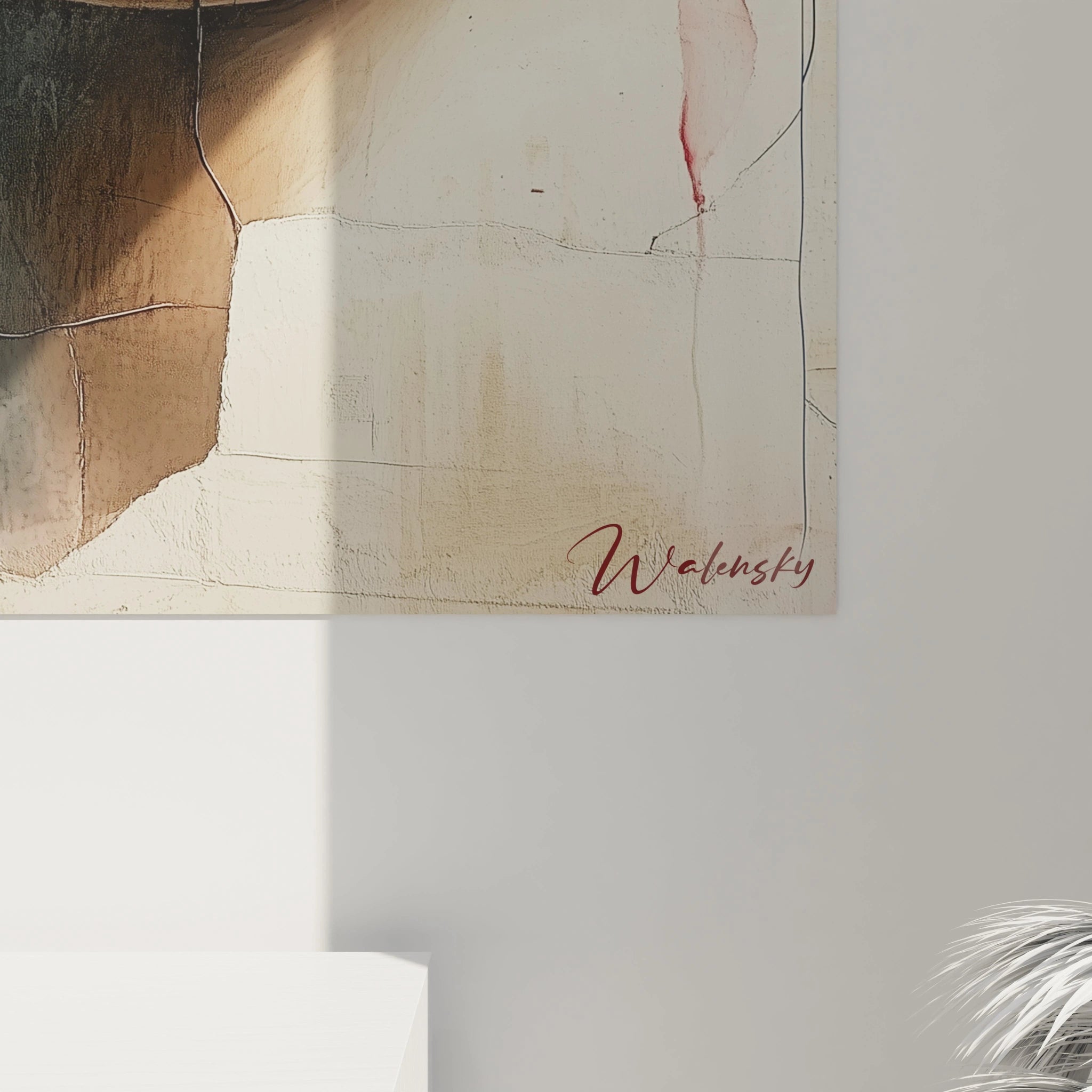
Close observation of the rose face painting reveals a multitude of fascinating details invisible from a distance. The rose petals present subtle variations in texture and tone, each curve meticulously defined. The cracks that traverse the entire composition are not random but seem to follow the natural contours of the face, reinforcing the organic impression of the whole.
From a distance, this feminine face painting floral metamorphosis takes on a more unified dimension, details fading to allow the overall emotional impact of the composition to dominate. This duality of visual experience is one of the major strengths of the work - it rewards prolonged observation while maintaining powerful immediate impact. The shadow areas around the neck and face contours create a visual anchor that perfectly balances the more expressive and colorful elements.
Where and how to showcase your feminine face painting with flower
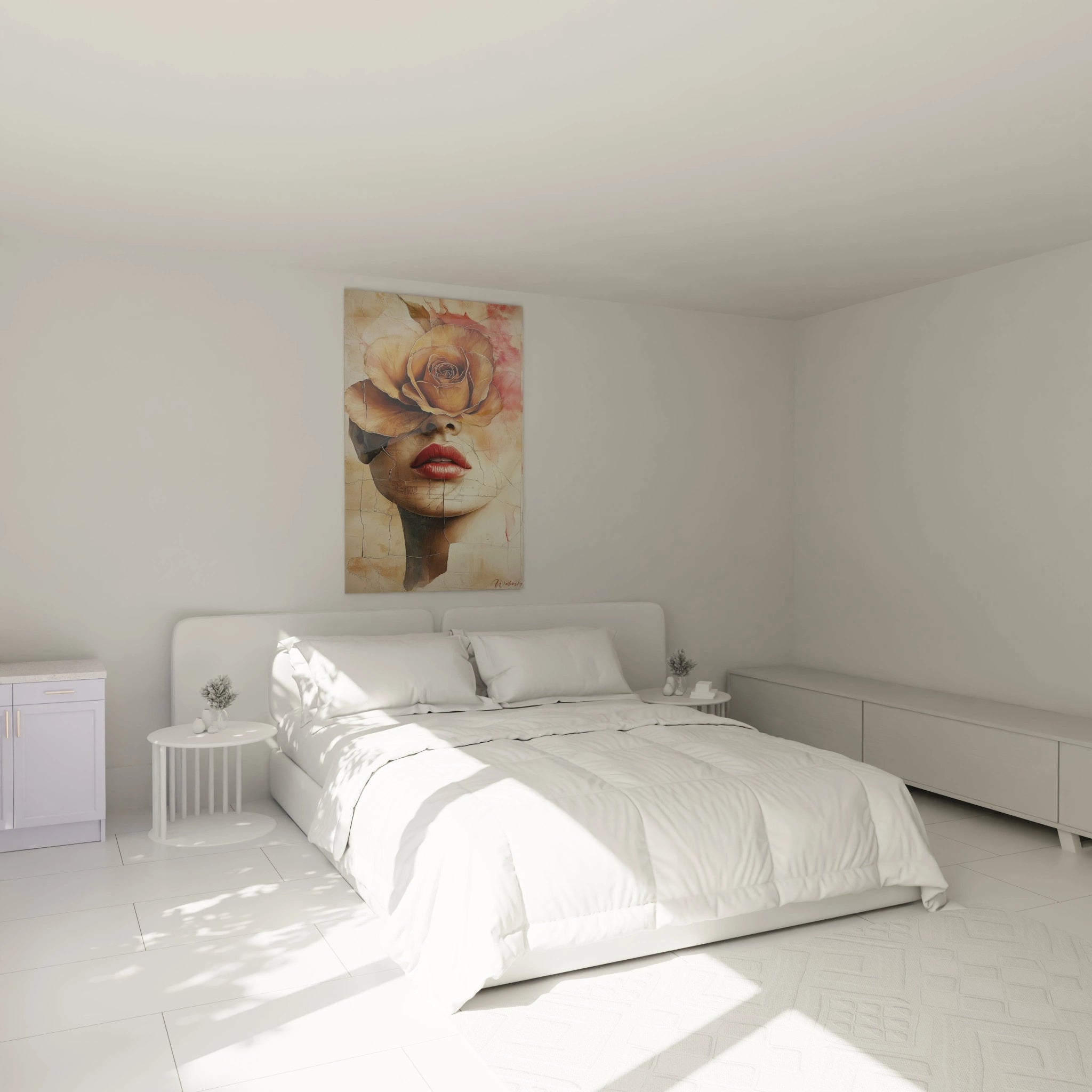
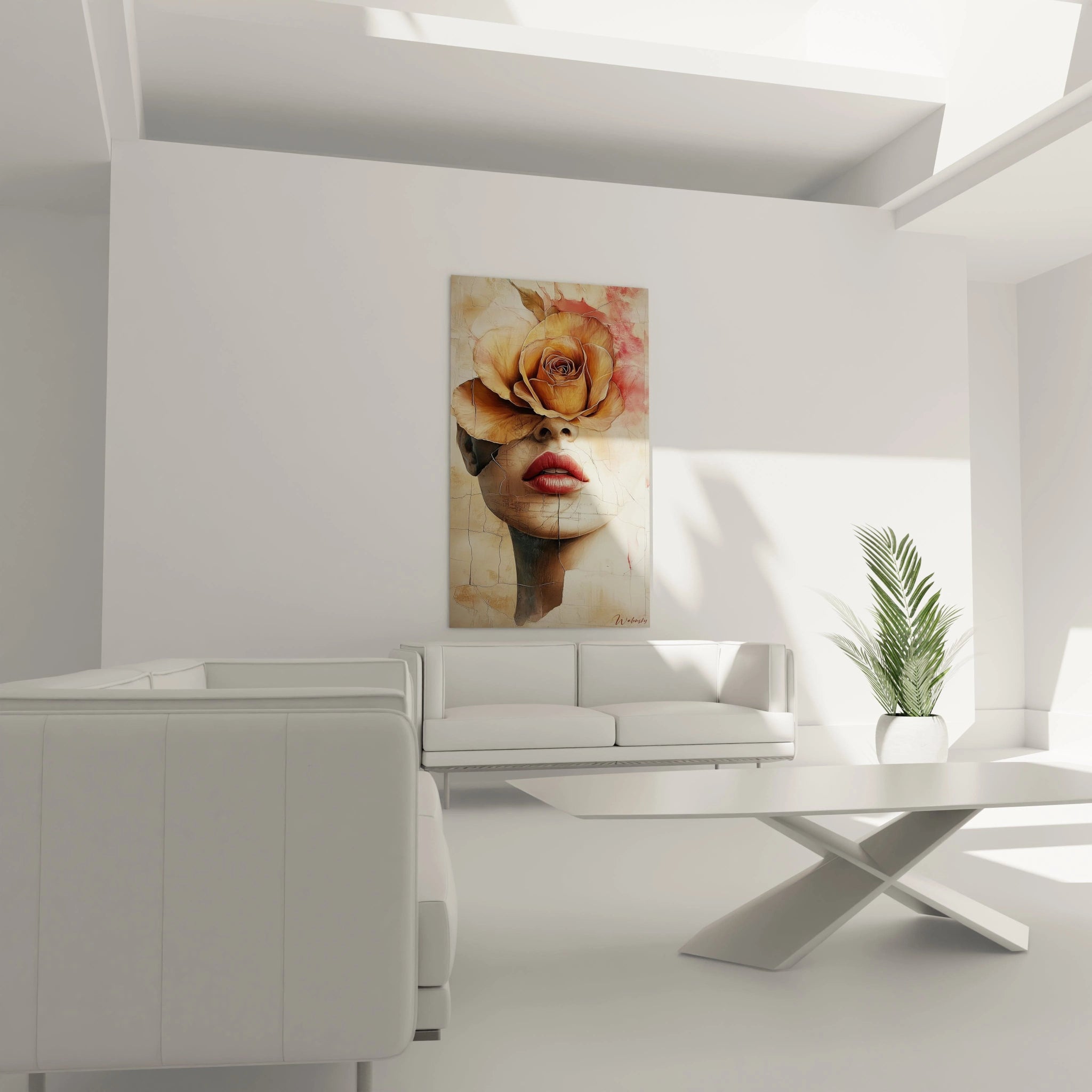
This feminine face painting with flower will particularly flourish in an environment where its chromatic richness and emotional depth can be fully appreciated. A wall of neutral color - off-white, pale gray, or light beige - will offer the ideal contrast to showcase the warm tones and complex texture of the work. Lighting is crucial: favor a soft directional light source, ideally LED with warm temperature (2700-3000K), which will reveal subtle nuances without creating troublesome reflections.
In a contemporary living space, this rose face wall art will naturally become the focal point of the room. Associate it with furniture featuring clean lines and natural textures like wood, linen, or velvet in complementary tones - caramel, terracotta, or peacock blue. Avoid visually overloading the surrounding space with competing artworks; this piece expresses itself better when it has "breathing room" that allows the gaze to linger and appreciate all its complexity.