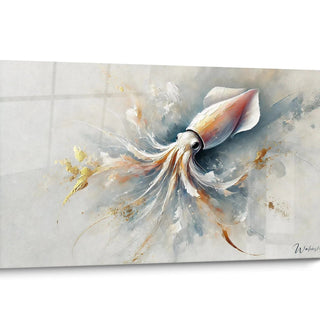
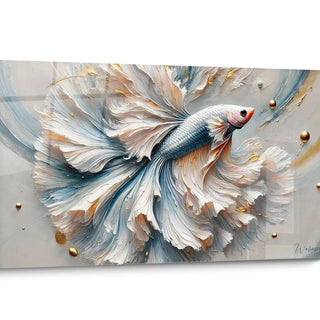
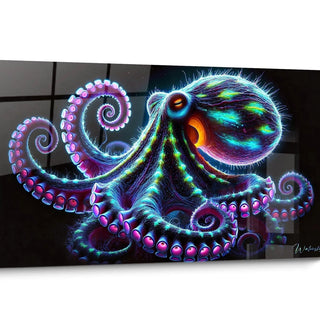
- Jellyfish Wall Art Presentation
- Jellyfish Wall Art with Phosphorescent Illumination
- Jellyfish Wall Art for Soothing Ambiance
- Jellyfish Wall Art Marine Decoration
Jellyfish wall art radically transforms your interior space by bringing the mysterious elegance of the ocean depths. These captivating artworks offer far more than simple decoration - they create an enchanting atmosphere that invariably fascinates visitors.
Jellyfish, ancestral creatures with graceful and vaporous forms, appear on these tableaux in all their bioluminescent splendor. Their translucent silhouettes seem to float on the walls, creating an impression of perpetual movement and weightlessness that visually lightens the space.
Unlike conventional marine fauna representations, animal wall art featuring jellyfish possesses this unique quality of combining contemporary aesthetics and natural fascination. Their bluish, violet, or opalescent hues add an exceptional chromatic dimension to your interior.
Perfect for contemporary spaces seeking to create a relaxing yet sophisticated ambiance, these artworks bring unparalleled originality. Art enthusiasts and interior design professionals increasingly recognize the aesthetic value of these abyssal creatures in modern decoration.
Discover in the following sections how these unique works can transform your interior through their particular properties, their influence on the ambiance of your rooms, and their seamless integration into different decorative styles.
Jellyfish Wall Art: The Art of Phosphorescent Illumination in Your Home
Jellyfish artworks bring an exceptional luminous dimension to your interior decoration through their natural phosphorescent qualities. These abyssal creatures, known for their bioluminescence in the ocean depths, retain this visual magic when captured artistically on these large-format works.
How do jellyfish wall artworks transform the nighttime atmosphere of your space?
The fascinating particularity of jellyfish wall art lies in its ability to completely metamorphose a room depending on the lighting. During the day, they display subtle shades of blues, violets, and turquoises. But it is truly in the evening, when light fades, that their decorative potential reaches its peak.
Artists specializing in these representations often use light-reactive pigments, creating an effect of abyssal depth that seems to emanate directly from the artwork. This characteristic exclusive to jellyfish illustrations produces works that visually evolve throughout the hours.
To maximize this phosphorescent effect, the installation of a specific directional lighting system is recommended. A cold-temperature LED spotlight (5000-6500K) directed at the artwork will enhance the luminescent pigments, bringing out the translucent details of jellyfish bells and tentacles.
The unique properties of pigments used in jellyfish wall art
High-end jellyfish artworks incorporate advanced pictorial technologies. Some use photoluminescent pigments that absorb light during the day to release it gradually in darkness, creating a characteristic blue halo of bioluminescent jellyfish.
This property exclusive to jellyfish representations enables creating an evolving visual experience throughout the day. A single artwork can thus present different aspects depending on the time, offering a dynamic piece of art that never ceases to surprise.
The most sophisticated artistic creations combine several types of reactive pigments, some sensitive to ultraviolet light, others to heat or ambient humidity. This technical complexity is specific to jellyfish artworks and is not found in other marine representations.
Which spaces particularly benefit from phosphorescent jellyfish wall art?
Relaxation areas such as minimalist living rooms or meditation spaces are ideal for hosting these large-format works. The soft and rhythmic luminosity they emit naturally promotes relaxation and contemplation.
Modern bedrooms with neutral tones can be magnificently transformed by these artworks that diffuse a soothing glow conducive to sleep. This decorative and practical functionality is unique to jellyfish representations.
Contemporary entrance halls with high ceilings constitute an equally strategic location. The striking visual effect of these works creates an immediate strong and memorable impression for your visitors, establishing from the outset the aesthetic identity of your interior.
Professional spaces such as waiting rooms in wellness or aquatherapy clinics particularly benefit from these artworks. They establish an ideal preparatory atmosphere for upcoming treatments while affirming the visual identity of the establishment.
• Poorly lit hallways transform into immersive galleries thanks to the phosphorescent effect
• Home cinemas gain in ambiance thanks to subtle luminosity during screenings
• Modern creativity-focused offices stimulate inspiration through these evolving works
Investing in a
phosphorescent jellyfish artwork represents far more than a simple decorative purchase - it is the acquisition of a complete visual experience that entirely redefines your relationship with interior space.
Jellyfish Wall Art: Creators of Soothing Ambiance for Contemporary Spaces
Jellyfish artworks exercise a unique neurological influence on our spatial perception and emotional state. Unlike conventional artistic representations, these large-format works specifically activate brain areas associated with relaxation and meditative contemplation.
The exclusive psychological impact of jellyfish wall art on spatial perception
The undulating movements and organic forms of jellyfish reproduced on these artworks create a hypnotic focal point that naturally slows brain waves. Neuroaesthetics studies show that contemplating these fluid and symmetrical forms promotes the production of alpha waves, associated with deep relaxation states.
This characteristic exclusive to jellyfish representations explains why these artworks are increasingly sought after for environments dedicated to mental decompression. Professional relaxation spaces, such as rest areas in companies or relaxation zones in specialized clinics, increasingly incorporate these large-format works for their soothing properties.
The dominant colors of jellyfish wall art - primarily in the blue-violet spectrum with opalescent touches - also contribute to this soothing effect. These hues activate specific retinal receptors that slow the activity of the sympathetic nervous system, thus reducing heart rate and blood pressure.
How do jellyfish artworks transform the acoustics of a room?
A little-known but scientifically proven aspect concerns the influence of jellyfish wall art on the acoustic perception of a space. The large decorative surfaces depicting these marine creatures create a fascinating psychoacoustic illusion: they seem to visually absorb ambient sounds, creating a subjective impression of sonic calm.
This unique phenomenon is explained by the concordance between the visualization of these silent abyss creatures and our integrated sensory experience. Our brain unconsciously associates the image of these organisms floating peacefully with the silence of ocean depths, thus influencing our auditory perception of the immediate environment.
To maximize this effect, avant-garde meditation spaces strategically place these large-format artworks facing practice areas. This configuration optimizes sensory immersion and reinforces the impression of absolute quietude during sessions.
• Sound therapy rooms incorporate these artworks to amplify the immersive experience
• Contemporary yoga studios use them as focal points during practices
• Silent reading spaces benefit from this modified acoustic perception
Which spatial arrangements maximize the soothing effect of jellyfish wall art?
The optimal placement of a
large-format jellyfish artwork requires a scientific approach to space. Unlike conventional works that simply follow traditional hanging rules, these representations require calculated spatial integration to fully deploy their soothing potential.
The ideal viewing angle is slightly below eye level, thus reproducing the natural perspective of observing these creatures in their habitat. This specific configuration more effectively activates retinal receptors associated with relaxation and passive contemplation.
Minimalist spaces with clean lines constitute the perfect setting for these works. The contrast between contemporary architectural rigor and the organic fluidity of jellyfish creates a harmonious visual tension that enhances the soothing effect. This stylistic juxtaposition is particularly sought after in Scandinavian and Japanese-inspired interiors.
For a complete immersive experience, installing multiple jellyfish artworks creating a narrative visual sequence transforms a simple hallway into a meditative journey. Each artwork depicting different species or stages of movement naturally guides the gaze and body through the space, creating a soothing passage ritual between different functional zones of the home.
Jellyfish Wall Art: Abyssal Art as Central Element of Marine Decoration
Jellyfish wall art occupies a unique position in the universe of contemporary marine decoration. Unlike conventional ocean representations, these works transcend mere decorative aspects to become true visual portals to the abyssal depths, radically transforming the spatial and chromatic perception of an interior.
How to harmoniously integrate jellyfish wall art into a contemporary interior?
The successful integration of a large-format jellyfish artwork requires a specific architectural approach. These imposing works function particularly well on neutral background walls with mineral tones - stone gray, pale sand, or off-white - that subtly evoke the marine environment without falling into decorative cliché.
The fundamental rule consists of creating a zone of visual breathing around the work, a clear space of at least 60 centimeters allowing the translucent jellyfish forms to visually "breathe". This specific arrangement amplifies the effect of depth and the impression of movement characteristic of these representations.
Japanese minimalist interiors constitute an ideal setting for these artworks. The aesthetic philosophy of "ma" (間) - the negative space bearing meaning - resonates perfectly with the ethereal presence of jellyfish, creating a visual dialogue between architectural emptiness and floating organic forms.
For contemporary spaces with strict geometric lines, these works bring essential organic counterpoint. The opposition between the structural rigor of modern architecture and the fluidity of jellyfish creates a dynamic visual tension that enlivens the entire spatial composition.
The exclusive chromatic palettes of jellyfish wall art
The unique chromatic range of jellyfish artworks constitutes their incomparable visual signature. These works exploit a specific palette inaccessible to other marine representations, centered on deep blues crossed by violet glows, electric turquoise, and opalescent touches.
This particular palette enables establishing subtle chromatic connections with other decorative elements - not in a literal way, but through sophisticated tonal references. For example, a textile presenting a discrete violet note can visually dialogue with similar hues present in the artwork, creating an invisible yet perceptible chromatic coherence.
Avan-garde interior designers exploit this specificity to elaborate evolving color schemes. The dominant tones of the jellyfish artwork are extracted and diluted in decreasing concentration as one moves away from the work, creating a spatial gradient that intuitively guides the gaze and body through the space.
Professional ambient lighting creators recommend accompanying these artworks with adjustable LED lighting in the blue-violet spectrum (color temperature between 8000K and 10000K), thus reproducing the lighting conditions of ocean depths and maximizing the immersive effect.
Which specific decorative accessories enhance jellyfish wall art?
Contrary to popular belief, the accessories that ideally accompany jellyfish wall art are not necessarily directly marine-inspired. Decorative elements in blown glass with abstract organic forms create a formal echo with jellyfish silhouettes without falling into explicit maritime theming.
Strategically placed reflective surfaces - smoked mirrors, polished metal trays, enameled ceramic objects - visually multiply the presence of jellyfish in the space through subtle interplay of partial reflections. This visual amplification technique is particularly effective in contemporary interiors with modest dimensions.
Lighting plays a crucial role in highlighting these works. A variable-intensity directional lighting system allows modulating the artwork's perception according to different times of day, revealing different layers of detail and transforming the same work into several distinct visual experiences.
• Blown glass objects with similar opalescent tones create subtle formal dialogue
• Textiles with varied textures (velvet, silk, gauze) evoke the gelatinous consistency of jellyfish
• Metallic elements with iridescent finish capture and reflect the artwork's nuances
FAQ on jellyfish wall art
What is the ideal size for jellyfish wall art in a contemporary living room?
For optimal visual impact in a contemporary living room, choose a large jellyfish artwork, ideally between 120 and 150 cm in width. This amplitude allows fully capturing the translucent details and movement effect characteristic of these abyssal creatures, truly transforming the atmosphere of your space.
Are jellyfish artworks suitable for family interiors with children?
Absolutely, jellyfish wall art exercises particular fascination on children by stimulating their imagination and curiosity about the marine world. Moreover, environmental psychology research indicates that these representations with fluid movements and soothing colors contribute to reducing hyperactivity and promoting concentration in younger ones.
How to effectively maintain jellyfish wall art to preserve its visual qualities?
Maintaining jellyfish wall art requires specific precautions to preserve its exceptional chromatic qualities. Avoid direct exposure to UV rays that could alter the phosphorescent pigments. Monthly dusting with a soft brush is recommended, avoiding any liquid products that could damage the special finishes that create the characteristic depth effect of these works.


 Aquatic Ballet Wall Art - Jellyfish Animals Edition233,90 €
 Dance of the Depths Wall Art - Jellyfish Animals Edition233,90 €
 Ink of the Depths Wall Art - Jellyfish Animals Edition233,90 €
 Ocean Eruption Wall Art - Jellyfish Animals Edition233,90 €
 Woman Serpent Mythical Painting - Modern Medusa - Black and White Characters Edition233,90 €
 Dark Fluid Wall Art - Jellyfish Animals Edition233,90 €
 Marine Gravity Artwork - Jellyfish Animals Edition233,90 €
 Translucent Jellyfish Dance Canvas - jellyfish edition213,90 €
 Jellyfish marine echo wall art - jellyfish edition213,90 €
 Opaline Jellyfish Grace Canvas - jellyfish edition233,90 €
 Medusa Serpents Painting - Ancient Mythology - Black and White Characters Edition233,90 €
 Translucent Jellyfish Painting - Aquatic Grace - Black and White Animals Edition233,90 €
 Translucent Jellyfish Artwork - Aquatic Grace - Black and White Animals Edition213,90 €
 Underwater Cloud Wall Art - Jellyfish Animals Edition233,90 €
 Luminous Wave Canvas - Jellyfish Animals Edition233,90 €
 Abyssal Dream Canvas - Jellyfish Animals Edition233,90 €