


Black and White Face Canvas
Our collection of black and white face art explores the depth of the human soul through portraits of rare intensity. By focusing on the face, these artworks reveal the most subtle emotions, capturing the essence of each subject in a moment of pure authenticity. The black and white technique magnifies every detail—expression lines, sparkle of the gaze, skin texture—creating an intimate dialogue between the artwork and the observer. These contemporary portraits transcend mere representation to achieve a universal emotional dimension, making each piece a window onto humanity in its most genuine and touching form.
 Painting White Hat and Black Pearl Necklace - Crossed Bare Shoulders Edition Black and White Face273,90 €
 Painting Black Sunglasses and Dark Lips Raised Finger - Diamond Earrings - Black and White Face Edition273,90 €
 Butterfly Glasses Black and White Painting - Finger Raised - Diamond Earrings - Black and White Face Edition273,90 €
 Black and White Afro Portrait Stripes - Confident Attitude - Black and White Face Edition273,90 €
 Large Black and White Hat Painting - Draped Dress - Dangling Earrings - Face Edition in Black and White273,90 €
 Cracked Face with White Dragonflies Painting - Fragmented Sleep - Black and White Face Edition273,90 €
 Painting Woman with Black and Grey Veil - Veil of Mystery - Black and White Face Edition273,90 €
 Soft Hat Black and White Pearl Necklace - Satin Bare Shoulder - Black and White Face Edition273,90 €
 Straw Hat Painting Black and Beige Zebra-Striped Dress Crossed - Cross Shadow - Black and White Face Edition273,90 €
 Painting Hat with Wide Brown and White Stripes on Bare Shoulder - Diagonal Striped Dress - Black and White Face Edition273,90 €
 Woman with Black Sunglasses Silent Gesture Painting - Silence Kept - Black and White Face Edition273,90 €
 Painting Woman with Hat and Pearl Necklace - Refined Mystery - Black and White Face Edition273,90 €
 Black and White Woman with Pearl Necklace - Silent Majesty - Black and White Face Edition273,90 €
 Portrait Painting Woman Flowered Dress Terracotta - Flowered Grace - Black and White Face Edition273,90 €
 Red-haired Woman with Turquoise Glasses Painting - Retrofuturistic Attitude - Black and White Face Edition273,90 €
 Painting Woman with Blue Wig and White Coat - Icy Attitude - Black and White Face Edition273,90 €
 Gilded Portrait Painting with Stacked Books - Veiled Thought - Black and White Face Edition273,90 €
 Orange and Black Portrait - Suspended Gaze - Black and White Face Edition273,90 €
 Artwork Yellow Jacket Vinyl and Round Black Glasses - Purple Hair Square - Black and White Face Edition273,90 €
 Turquoise Face with Orange Glasses Artwork - Electric Flair - Black and White Face Edition273,90 €
 Painting Brown Woman and White Peacock - Silent Tenderness - Black and White Face Edition273,90 €
 Painting Two African Women with Electric Blue Motifs - Royal Complicity - Black and White Face Edition273,90 €
 Orange Silhouette with Blue Futuristic Lips Artwork - Futuristic Icon - Black and White Face Edition273,90 €
 Graphic Face artwork with orange blocks - Sculpted allure - Black and white Face Edition273,90 €


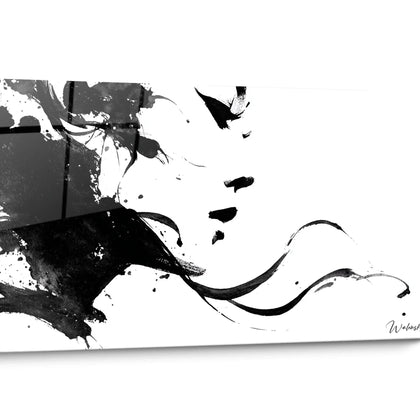
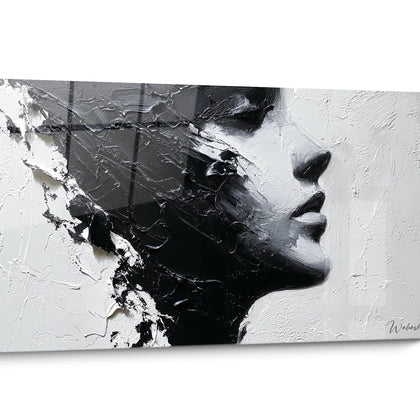

In the same family
Also explore the theme Fashion
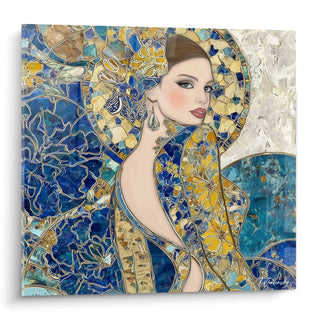

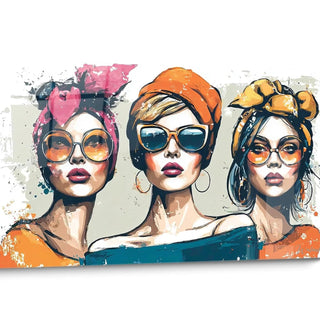

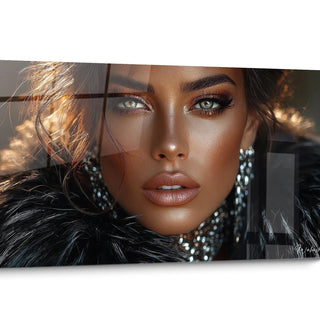
All about Black and White Face Canvas
- Black and White Face Art Presentation
- Emotional Impact of Monochrome Facial Art
- Contrast Techniques Black Portraits and White
- Artistic Positioning of Monochrome Faces
Black and white face art represents far more than simple wall decoration. It is an artwork that captures the very essence of human expression through the minimalism of monochrome. In this refined facial art, each line, each shadow and each light tells a story, conveys an emotion with an intensity that color could sometimes dilute.
These black and white facial representations possess a timeless quality that transcends fleeting trends. The absence of color allows complete focus on the expressions, contours and emotions captured. This is why these artworks often become the focal point of a space, naturally attracting the eye and inspiring reflection.
Monochrome facial art integrates into virtually every interior design style, from Scandinavian minimalism to contemporary industrial, through to elegant classicism. This exceptional versatility, combined with the emotional depth it brings, makes it a privileged choice for those seeking to create spaces that are both aesthetic and evocative.
Discover how these black and white face artworks can transform your interior, create unique atmospheres and establish powerful visual connections with all who enter your space. Explore our different sections to understand the emotional impact, artistic techniques and positioning strategies that will make your acquisition much more than a simple decorative element.
Whether you are an art enthusiast, interior decoration passionate or simply looking for a piece that will give character to your space, you will discover why black and white face art has become essential in contemporary wall art.
The Emotional Impact of Face Artworks in Black and White in Interior Design
Black and white face art possesses a unique capacity to transform the emotional atmosphere of a space. Unlike colored works that disperse visual attention, the monochrome representation of a face channels emotional energy with remarkable intensity. This expressive power is one of the main reasons why these works have become transformative elements in contemporary decoration.
How do black and white facial expressions modify our spatial perception?
Neuroscience teaches us that our brain is particularly receptive to human faces, dedicating a specific zone to them called the "fusiform gyrus". When black and white face art is installed in a space, this zone activates instantly, creating an immediate neurological connection that transcends simple aesthetic appreciation. This neurological response explains why we often feel an almost tangible presence emanating from these works.
The striking contrast between deep black and luminous white in the representation of a face creates what psychologists call an "emotional anchor point" in the space. A recent study on the psychological impact of wall art revealed that monochrome portraits elicit more intense and more lasting emotional responses than their colored counterparts, particularly in everyday living spaces.
- Amplification of perceived emotional depth in a space
- Creation of a visual anchor point that stabilizes the environment
- Establishment of a presence that balances material elements
- Intensification of moments of contemplation and personal connection
The emotional resonance of monochrome portraits in different spaces
The emotional versatility of black and white face art manifests differently depending on the space in which it is integrated. In a living room, these works often become catalysts for conversation, inviting exchange and shared interpretation. The expressions captured in monochrome contrast offer multiple possible readings, making each interaction unique.
In workspaces, the presence of a monochrome facial portrait can paradoxically increase concentration while offering moments of contemplative pause. The gaze captured in these works establishes what interior designers call a "silent dialogue" with the occupant, creating a spatial dynamic that breaks monotony without introducing color distraction.
Bedrooms particularly benefit from the serenity that black and white face art brings. Chromatic reduction promotes the visual calm necessary in these rest-dedicated spaces. The facial expression, frozen in black and white duality, accompanies the transition between wakefulness and sleep, offering a focal point for mental decompression.
The transformative power of large formats in monochrome facial art
Large-scale face artworks in black and white possess a quality that art specialists call "architectural presence". Unlike small works that integrate into a space, these large formats actively redefine the environment surrounding them. A large black and white facial portrait does not simply inhabit a wall – it transforms the perception of the room itself.
The monumental scale of black and white face art generates what interior architects call a "field of presence" that extends far beyond the physical boundaries of the work. In contemporary spaces with high ceilings, this characteristic becomes particularly valuable, creating vertical cohesion that visually unites the different levels of the space.
The strength of a large monochrome portrait lies also in its capacity to create dynamic visual balance. The shadow and light areas on a black and white face establish points of visual tension and resolution that animate the space without overloading it. This quality is particularly sought in minimalist interiors where each element must contribute to overall harmony while retaining its expressive singularity.
The intimate connection created by black and white gazes
Among all elements of black and white face art, the eyes represent the most powerful point of emotional connection. Art psychology specialists speak of "empathetic resonance" to describe the phenomenon by which we enter into relationship with a portrait subject through their gaze. This connection is significantly amplified in monochrome representations where the absence of color distraction intensifies the power of the gaze.
Portraits in black and white where the subject's gaze is directed toward the observer create what emotional design experts call a "space of shared intimacy". This unique characteristic makes black and white face art a particularly precious element in contemporary interiors often marked by a certain technological coldness. The work then becomes an essential humanizing counterpoint.
The expressive depth of a gaze captured in black and white varies considerably depending on ambient lighting. This dynamic interaction between the work and natural or artificial light subtly transforms the perceived expression throughout the day, creating an evolving visual experience that continuously enriches the inhabited space.
Contrast Techniques and Composition in Black and White Face Artworks
Black and white face art represents the pinnacle of artistic expression through chromatic duality. The absence of color reveals an artistic dimension where contrast techniques become the very essence of the work. This section explores the sophisticated approaches that bring monochrome portraits to life and give them this masterful presence on our walls.
Chiaroscuro techniques specific to facial portraits
The representation of a face in black and white fundamentally relies on the mastery of chiaroscuro, an artistic technique that transcends simple contrast to create what experts call the "emotional topography" of the face. Unlike other monochrome subjects, faces require a deep understanding of how light interacts with facial planes to preserve their expressivity.
Artists specializing in black and white face art employ a technique called "microstructural tonal gradation" which consists of creating subtle transitions between values to reproduce the complexity of facial expressions. This approach differs radically from techniques used for other monochrome subjects that may be satisfied with simpler contrasts.
- Tonal modulation to define facial bone structures
- Gradual transitions for skin and flesh areas
- Accentuated contrasts for expressive elements like eyes and mouth
- Specific treatment of reflective areas like forehead and cheekbones
How does texture influence the perception of monochrome faces?
In black and white face art, texture plays a crucial role that art critics define as "the tactile architecture of emotion". Unlike colored representations where chromatic quality can dominate, monochrome works rely heavily on textural variations to communicate emotional complexity and the physical presence of the subject.
Contemporary artists specializing in monochrome portraits use varied techniques to create different textural qualities that directly influence our emotional perception of the subject. Smooth, uniform textures often evoke a certain idealization or emotional distance, while textured surfaces with visible brushstrokes or mixed techniques create an impression of immediacy and emotional intensity.
The interaction between texture and lighting becomes particularly significant in large formats. A large black and white face artwork presents what specialists call "textural micro-landscapes" that reveal themselves differently depending on viewing distance and lighting angle, offering a visual experience that constantly evolves with the ambient conditions of the room.
Asymmetrical composition in monochrome portraits
The strength of black and white face art often lies in what art theorists call "asymmetrical dynamic balance". Unlike traditional centered compositions, contemporary monochrome facial portraits deliberately exploit compositional imbalances to create visual tension that animates the space and actively engages the viewer.
Artists employ various compositional strategies specific to black and white faces to maximize their visual impact. The off-center positioning of the gaze, tight framings that deliberately fragment certain face parts, or the use of asymmetrical negative spaces around the facial figure are techniques that distinguish these works from other types of monochrome artworks.
This asymmetrical approach proves particularly effective in contemporary architectural spaces characterized by clean lines and minimalist surfaces. Black and white face art composed asymmetrically introduces what interior designers call an "organic counterpoint" that humanizes and energizes these environments without compromising their aesthetic coherence.
The art of suggestion in incomplete portraits
A particularly powerful trend in contemporary black and white face artworks is what art critics call "the fragmentary aesthetic". This approach deliberately leaves certain face parts unfinished or suggested, creating visual tension that actively engages the viewer's imagination.
This partial suggestion technique exploits a neurological phenomenon called "perceptual completion" - our brain naturally completes the missing elements of a face based on our innate knowledge of facial anatomy. In a monochrome context, this effect is considerably amplified, creating a dynamic visual experience where the viewer becomes co-creator of the work.
Large formats particularly accentuate this quality of interactive monochrome facial portraits. From a distance, the black and white face artwork may appear complete, but as you approach, the viewer discovers deliberately undefined areas that reveal the materiality of the work and invite deeper visual exploration. This dual perception creates what contemporary art theorists call a "dialogical space" between work and observer.
The visual impact of extreme framing in monochrome portraits
Black and white face artworks that adopt very tight or unconventional framings create what visual perception experts call an "intensified presence effect". By isolating certain face parts or presenting non-conventional viewing angles, these works transcend simple representation to become profound psychological explorations.
These extreme framings function particularly well in large formats where they create what contemporary art historians define as "monumental intimacy" - an almost unsettling closeness to the subject, amplified by the imposing scale of the work. This tension between intimacy and distance radically transforms the spatial dynamic of the environment in which the artwork is installed.
Positioning Strategies and Integration of Black and White Face Artworks
Black and white face art transcends simple wall decoration to become a transformative architectural element in interior space. Its strategic placement can completely redefine the spatial and emotional dynamics of a room. This section explores sophisticated approaches to maximize the impact of these expressive works in different spatial contexts.
Strategic positioning based on facial characteristics represented
The direction of the gaze in black and white face art profoundly influences what interior architects call the "spatial force lines" of a room. A portrait whose gaze is oriented in a specific direction naturally creates a visual axis that unconsciously guides movement and attention in the space. This unique characteristic of facial representations allows for subtly directing circulation flows and points of interest in an interior.
The facial expression captured in the monochrome work also determines its optimal positioning. Contemplative or introspective expressions create what specialists name "psychological decompression zones" - ideal in transition spaces like hallways or landings. Conversely, more intense or engaging expressions generate "visual confrontation points" that function particularly well in social spaces.
- Portraits with direct gaze: prioritize reception spaces to create immediate connection
- Faces in profile: ideal for circulation zones to suggest movement
- Serene expressions: perfect for rest and meditation spaces
- Fragmented portraits: effective in creative spaces to stimulate imagination
How does lighting transform the perception of black and white face artworks?
The interaction between light and black and white face art creates what lighting design experts call a "dynamic visual ecosystem". Unlike colored works that maintain certain perceptual consistency, monochrome portraits transform substantially depending on lighting, revealing different expressive dimensions throughout the day and seasons.
Large-scale monochrome facial works particularly benefit from directional lighting that accentuates textural reliefs and contrasts. A particularly effective technique consists of installing what designers call "asymmetrical dramatic lighting" - a light source oriented at approximately 45 degrees to the artwork surface, creating a play of shadows that amplifies the expressivity of the represented face.
The evolution of natural light through seasons creates what interior scenographers call an "expressive calendar" for black and white face art. In winter, raking light accentuates dramatic contrasts, while diffuse summer light reveals more subtle nuances and tonal transitions. This seasonal interaction transforms the work into a living element that breathes with the environment.
Integration into minimalist spaces: the power of juxtaposition
In minimalist interiors, black and white face art functions as what design theorists call a "humanizing organic counterpoint". The juxtaposition between the clean geometric lines of contemporary architecture and the complex organic forms of a face creates visual tension that enriches spatial experience without compromising aesthetic coherence.
Large formats are particularly effective in this contrastive approach, creating what interior architects name a "dynamic asymmetrical balance". A monumental black and white face artwork in a minimalist space instantly establishes a visual hierarchy that structures the entire spatial experience, transforming even surrounding functional elements into components of a global composition centered on the work.
This integration strategy through contrast functions particularly well in spaces characterized by cold materials like concrete, glass or steel. The human face, even represented in black and white, introduces what space psychologists call an "element of empathetic recognition" that tempers the austerity of these environments without compromising their formal purity.
Creating contemplative spaces around monochrome portraits
A large-scale black and white face artwork naturally generates what interior architects define as a "field of presence" that extends far beyond the physical boundaries of the work. This invisible but perceptible radiation space subtly influences furniture positioning, circulation and even behaviors in the surrounding area.
To maximize this quality, interior designers recommend creating what they call a "contemplative buffer space" - a cleared area of approximately 1.5 to 2 meters in front of the work that allows complete appreciation and facilitates the establishment of this unique emotional connection to facial representations. This approach transforms the artwork from a simple decorative element into a genuine spatial experience generator.
In double-height or mezzanine interiors, a large-scale black and white face artwork can function as what space scenographers call a "vertical visual pivot" - an element that visually unites different levels and creates overall spatial coherence. This strategy is particularly effective with portraits whose gaze is oriented upward, creating a directional visual line that naturally accompanies upward movement.
The subtle chromatic associations with monochrome facial art
Although fundamentally black and white, these artworks subtly interact with surrounding tonalities, creating what interior colorists call "chromatic harmonies through absence". The monochrome neutrality of the represented face functions as a powerful revealer of chromatic nuances present in the space, amplifying even the most subtle tonal variations in surrounding furniture or textiles.
Designers recommend exploring what they name "micro-tonal contrasts" - the introduction of textiles or accessories presenting very subtle variations of gray, cream or ivory near the work. This approach creates a sophisticated visual dialogue that enriches the perception of both the artwork and surrounding space without resorting to obvious chromatic contrasts.
FAQ: Black and White Face Artworks
What distance should be maintained between two black and white face artworks in the same space?
To preserve the emotional impact of each work, maintain a minimum distance of 1.5 to 2 meters between two black and white face artworks. This separation allows avoidance of what experts call "attention dilution" and ensures that each portrait can establish its own visual dialogue with the observer. In large spaces, you can create distinct "zones of influence" by using lighting to visually isolate each work.
How should a black and white face artwork be cleaned without damage?
The maintenance of a quality black and white face artwork requires particular attention to preserve its subtle nuances. Use only a soft duster or natural bristle brush to remove surface dust in light movements in a single direction. Absolutely avoid any contact with liquids, even for more stubborn marks. For optimal conservation, consult a specialist in monochrome art restoration once every five years.
Can black and white face art be placed in a room already rich in visual contrasts?
In a visually complex space, black and white face art can function as what designers call a "perceptual anchor" - an element that visually stabilizes the whole. The key lies in creating a "visual decompression zone" around the work, simplifying immediately adjacent elements. This strategy allows the portrait to breathe while enriching the global dynamics of the space through its distinctive emotional presence.
Further reading


