


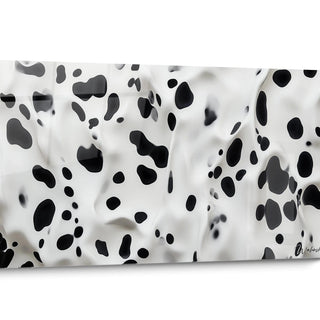
Dalmatian-style black and white spotted wall art
Dive into the captivating world of our spotted black and white collection that revolutionizes contemporary wall art. These artistic creations draw inspiration from the iconic dalmatian pattern to create a striking graphic aesthetic. Each work in this dalmatian style series transforms your space with its elegant contrast and organic forms. The perfect blend of modernity and timelessness, these artworks bring a sophisticated touch to your interior decoration. A bold collection that complements all design styles.
 Delicate Floral Serenity Wall Art Gray - speckled black and white edition242,90 €
 Burst Branches Wall Art - speckled black and white edition273,90 €
 Dancing Smoke Gray Wall Art - Speckled Black and White Edition273,90 €
 Ancestral Primitive Traces Wall Art - Black and White Speckled Edition273,90 €
 Dancing Ink Drops Black Painting - black and white speckled edition273,90 €
 Mystery Speckled Painting Enigmatic Spots - black and white speckled edition273,90 €
 Broken Dreams Floating Wall Art Gray - Speckled Black & White Edition273,90 €
 Floating Stones Black Painting - speckled black and white edition273,90 €
 Natural Effervescence White Painting - speckled black and white edition273,90 €
 Cosmic Ocean Black Wall Art - Black and White Speckled Edition273,90 €
 Urban Chaos Dispersed Wall Art - Black and White Speckled Edition273,90 €
 Lost Stars Dark Wall Art - Speckled Black and White Edition273,90 €
 Scattered Dramatic Clouds Wall Art - Black and White Speckled Edition273,90 €
 Passion Unleashed Ink Wall Art - Black and White Speckled Edition273,90 €
 Cellular Universe Mystical White Artwork - speckled black and white edition273,90 €
 Pure Transcendent Essence Black Artwork - speckled black and white edition273,90 €
 Modern Primitive Vitality Wall Art - Speckled Black and White Edition273,90 €
 Black Organic Flow Wall Art - Speckled Black and White Edition273,90 €
 Organic Rhythm Contrasted Wall Art - speckled black and white edition273,90 €
 Broken Poetic Dream Painting - black and white speckled edition273,90 €
 Scattered Soul Black Canvas - Black and White Speckled Edition273,90 €
 Spatial Echo Contemplative Gray Wall Art - speckled black and white edition273,90 €
 Poetic Deluge Bicolor Painting - Speckled Black and White Edition273,90 €
 Burst Emotion Dark Painting - Speckled Black and White Edition242,90 €
Explore further
In Dalmatian-style black and white spotted wall art
-
 Black and White Speckled Dalmatian Style Abstract Wall Art24
artworks
Black and White Speckled Dalmatian Style Abstract Wall Art24
artworks
-
 Minimalist Dalmatian Style Black and White Speckled Wall Art24
artworks
Minimalist Dalmatian Style Black and White Speckled Wall Art24
artworks
-
 Dalmatian Style Speckled Black and White Geometric Wall Art24
artworks
Dalmatian Style Speckled Black and White Geometric Wall Art24
artworks
-
 Speckled Black and White Dalmatian Style Nature Wall Art21
artworks
Speckled Black and White Dalmatian Style Nature Wall Art21
artworks
-
 Speckled Black and White Dalmatian Style Urban Wall Art13
artworks
Speckled Black and White Dalmatian Style Urban Wall Art13
artworks
-
 Speckled Black and White Dalmatian Style Cosmic Wall Art14
artworks
Speckled Black and White Dalmatian Style Cosmic Wall Art14
artworks
-
 Spotted Black and White Dalmatian Style Fluid Wall Art14
artworks
Spotted Black and White Dalmatian Style Fluid Wall Art14
artworks




All about Dalmatian-style black and white spotted wall art
- Overview Spotted Wall Art
- Architectural Integration of Spotted Designs
- Psychology of Organic Patterns
- Visual Characteristics of Marbled Surfaces
The spotted wall art represents a form of contemporary artistic expression where punctuated and marbled patterns create unique visual compositions. These mural works distinguish themselves through their ability to transform space thanks to organic patterns that evoke natural textures. The specificity of spotted wall art lies in its ability to create a visual balance between order and chaos, offering sophisticated decoration that adapts to modern interiors while preserving a timeless dimension.
Architectural Integration of Spotted Wall Art in Modern Space
The integration of spotted wall art into contemporary architecture requires a thorough understanding of the interactions between organic patterns and geometric structures. Spotted patterns possess this remarkable ability to create smooth visual transitions between different architectural elements, allowing natural harmonization with the streamlined lines of modern spaces.
How do spotted patterns transform the perception of space?
Marbled compositions generate a depth effect that modifies the volumetric perception of rooms. On large wall surfaces, an imposing spotted wall art creates visual anchor points that structure the space without weighing it down. This characteristic proves particularly valuable in lofts and open spaces where zone delimitation must remain subtle.
The architectural adaptability of spotted wall art manifests itself also in its ability to dialogue with different materials. Punctuated patterns establish visual correspondences with natural textures present in architecture: raw concrete, natural stone, or patinated metallic coverings. This material synergy reinforces the aesthetic unity of the overall decorative ensemble.
Optimizing lighting for spotted surfaces
Lighting artwork with spotted patterns requires a specific approach that highlights the richness of the motifs without creating unwanted shadows. The chromatic variations of the spots necessitate uniform lighting that reveals all the subtlety of the nuances. Indirect lateral lighting allows you to emphasize the visual texture of the marbling while preserving the overall balance of the composition.
Key points for successful architectural integration:
- Strategic positioning facing natural light sources
- Respecting proportions with surrounding structural elements
- Coordination with the existing color palette of the space
- Consideration of circulation flows to optimize viewing angle
The architectural dimension of spotted wall art is also expressed in its function as a transition between spaces. Placed in a hallway or foyer, it accompanies movement while creating rhythmic visual sequences. Organic patterns facilitate this linking function by avoiding the rigidity of strictly geometric compositions.
The evolution of contemporary architectural styles favors the integration of works with natural motifs. Spotted wall art fits perfectly into this trend by bringing an organic dimension that counterbalances the technicality of industrial materials. This complementarity creates balanced atmospheres where nature reclaims its place in the urban universe.
Psychology of Organic Patterns and Impact of Spotted Wall Art
The psychological perception of spotted patterns draws its roots in our instinctive relationship with natural patterns. Spotted wall art activates neurological mechanisms related to organic form recognition, generating a sensation of calm and familiarity. This unconscious reaction explains the universal appeal for marbled compositions and their ability to create serene atmospheres.
Why do spotted patterns influence our well-being?
Research in neuropsychology demonstrates that observing organic patterns stimulates endorphin production and reduces cortisol levels. Spotted wall art, through its rhythmic variations and soothing repetitions, reproduces the visual characteristics that our brain associates with beneficial natural environments. This decorative biophilia contributes significantly to improving indoor atmosphere.
The psychological impact of spotted compositions varies according to their density and contrast. Subtle patterns promote concentration and meditation, while more pronounced variations stimulate creativity and energy. This psychological modularity allows you to adapt the choice of spotted wall art depending on the destination of the space: office, living room, bedroom or relaxation area.
The therapeutic dimension of organic patterns is particularly observable in stressful environments. Spotted wall art with soft nuances can transform an office into a visual recovery space, offering contemplative pauses that regenerate attention. This restorative function proves essential in our urban lifestyles.
Influence of spotted colors on mood
The color psychology of spotted works presents specificities linked to color fragmentation. Unlike uniform paint, punctuated patterns create optical blends that modulate the emotional impact of hues. A blue spotted wall art generates a sensation of freshness modulated by the presence of micro-variations that enrich the sensory experience.
Psychological effects of different types of spotted patterns:
- Fine and regular spots: promote serenity and mental order
- Fluid marbling: stimulate imagination and reverie
- Contrasted motifs: energize the space and encourage activity
- Subtle patterns: soothe and facilitate relaxation
Behavioral adaptation to spotted patterns occurs progressively. The eye learns to navigate visual complexity, developing a familiarity that enriches daily experience. This perceptual evolution explains why spotted wall art retains its aesthetic interest over time, unlike simpler patterns that may become tiresome.
The social psychology of spaces decorated with spotted works also reveals interesting dynamics. These patterns facilitate conversations by creating points of visual convergence that ease the atmosphere. Spotted wall art becomes thus a discreet social catalyst that enriches human interactions in the shared space.
Visual Characteristics and Optical Specificities of Spotted Wall Art
The optical properties of spotted wall art rest on complex visual perception principles that distinguish this artistic form from other decorative approaches. Chromatic fragmentation creates moiré and vibration effects that transform the work depending on the observation angle and lighting conditions, offering an evolving and dynamic visual experience.
How does visual fragmentation create depth?
The technique of spotted patterns exploits binocular vision mechanisms to generate impressions of relief and texture. The variations in size and intensity of the spots create multiple visual planes that the eye interprets as depth. This optical illusion gives spotted wall art a sculptural dimension that enriches the space without physical clutter.
Variable pattern density directly influences the perception of distance and volume. Spotted wall art presenting dense motifs at the bottom and more spaced motifs at the top simulates an atmospheric perspective effect, creating a sensation of distance and spatial openness. This perceptual manipulation proves particularly effective in constrained spaces.
The light interaction with spotted surfaces generates specific optical phenomena. The micro-reliefs created by chromatic variations capture and diffuse light differently depending on their orientation, producing shimmering effects that animate the work throughout the day. This visual variability maintains aesthetic interest and prevents perceptual habituation.
Visual resistance properties against soiling
A remarkable practical advantage of spotted wall art lies in its ability to naturally mask traces and dust. Punctuated patterns create visual camouflage that conceals minor surface imperfections, preserving the aesthetics of the work without intensive maintenance. This characteristic proves valuable in high-traffic environments or public spaces.
Technical specificities of spotted compositions:
- Resistance to yellowing thanks to chromatic fragmentation
- Natural concealment of micro-scratches and handling traces
- Maintenance of visual brilliance despite fine dust accumulation
- Adaptation to lighting variations without loss of coherence
The perception of movement in spotted works is explained by retinal persistence and eye scanning phenomena. The eye, while exploring the surface, mentally creates connections between different pattern elements, generating an impression of fluidity and dynamism. This virtual animation gives spotted wall art a vitality that distinguishes it from static compositions.
The visual evolution of spotted wall art according to natural lighting constitutes a daily renewed spectacle. Color temperature variations of solar light successively reveal different aspects of the patterns, creating chromatic atmospheres that evolve from morning to evening. This continuous transformation enriches the decorative experience and justifies the investment in a quality work.
What are the quality criteria of spotted wall art?
The quality of spotted wall art is measured by the fineness of the motif execution, the coherence of the overall composition and the richness of chromatic variations. Higher-quality works present subtle transitions between different spotted areas, avoiding abrupt visual breaks that betray rough execution.
How to choose the appropriate dimensions for spotted wall art?
The optimal sizing of spotted wall art depends on the observation distance and the complexity of the patterns. For large wall surfaces, imposing formats allow complete visual immersion, while more intimate spaces benefit from more modest dimensions that preserve the legibility of details.
Why do spotted patterns resist time better?
The visual fragmentation of spotted patterns offers remarkable aesthetic resilience in the face of aging. Unlike uniform compositions that immediately reveal any alteration, organic patterns naturally integrate micro-surface evolutions, preserving their decorative appeal over time. To deepen your exploration, we invite you to browse our collections which offers a complementary perspective on this artistic universe.
Are spotted wall artworks suitable for professional spaces?
The adaptability of spotted works to professional environments depends on their chromatic sobriety and the subtlety of the patterns. Compositions with neutral tones and discreet patterns integrate perfectly into offices and reception areas, bringing decorative sophistication without excessive distraction.
Further reading
Our articles on this topic
- Dalmatian Print Painting: The Complete Guide to Decorating with Black and White Spots
- Large Dalmatian Painting: How to Structure Your Living Room Wall with Impact
- How to choose a pop art Dalmatian painting based on your wall color
- Speckled black and white painting: which wall, which size?
- Black and white speckled painting for a trendy entrance: the format and layout guide
- Adult bedroom decor with black and white dalmatian print: the harmony guide
L'art qui suscite l'envie
Maison belge d'art mural grand format
14 jourspour changer d'avis*
Protection Walenskyincluse
Fabriquéen Italie
FormatXXL
Kit de fixationtoujours fourni
* Hors tableaux personnalisés et tailles personnalisées


