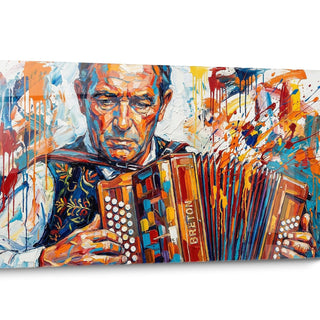
- Presentation Music Painting Abstract
- Painting abstract music and sensory synesthesia
- Abstract music painting and visual acoustics
- Abstract music painting and emotional resonance
Discover how an abstract music painting transforms your space into a visual symphony. These unique artworks capture the essence of melodies and rhythms through abstract forms and vibrant colors, creating a multisensory experience in your interior. Explore our collection of abstract paintings to find the piece that will resonate with your space.
Abstract Music Painting: The Art of Visualizing Sound
The abstract music painting represents a fascinating bridge between the auditory and visual worlds, transforming notes and harmonies into dynamic pictorial expressions. This unique art form offers a multisensory experience, where musical elements come to life through forms, colors, and textures.
How does an abstract music painting transform sonic compositions into visual art?
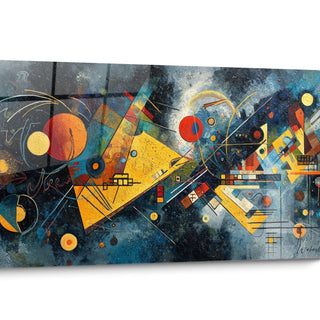
Unlike traditional artistic representations, an abstract music painting translates intangible musical elements into concrete visual components. Rhythm becomes pattern, melody transforms into fluid line, and harmony expresses itself through chromatic combinations. This sensory translation creates a synesthetic experience where the boundaries between hearing and sight blur.
Artists specialized in this form of expression often use specific techniques to represent different musical qualities:
- Undulating and dynamic lines to illustrate melodic movements
- Marked contrasts to symbolize intensity variations
- Layer superimpositions to evoke orchestral depth
- Chromatic transitions to represent harmonic progressions
Synesthesia as artistic inspiration
Synesthesia, a neurological phenomenon where sensory stimulation in one sense triggers an experience in another, often forms the conceptual basis of abstract music painting. Artists like Wassily Kandinsky, themselves synesthetes, literally perceived colors while listening to music and developed an entire pictorial language based on this cross-sensory perception.
A contemporary abstract music painting draws inspiration from this approach by creating visual correspondences to auditory experiences. These artworks do not literally represent instruments or musicians, but rather capture the emotional and structural essence of music itself.
What are the distinctive characteristics of a quality abstract music painting?
A superior quality abstract music painting distinguishes itself through several essential characteristics:
1. Visual dynamics that reflect musical movement
2. A harmoniously orchestrated chromatic palette
3. Compositions evoking rhythm and cadence
4. Varied textures suggesting different sonorities
5. Global coherence reminiscent of musical composition structure
These artworks succeed in capturing not only the technical aspect of music, but also its emotional impact, creating profound resonance in the observer who can "see" the music without hearing it.
Musical styles and their visual expressions
Each musical genre inspires distinct visual interpretations in abstract art. A painting evoking jazz will typically present improvised forms and asymmetric rhythms, while a work inspired by
classical music might show more ordered structures and repetitive patterns.
Contemporary music such as electronic music is often translated through more angular graphic elements and sharp contrasts, reflecting their distinctive sonic characteristics. These stylistic variations allow collectors to choose an abstract music painting that corresponds not only to their visual aesthetic, but also to their musical preferences.
An abstract music painting thus becomes not merely a decorative piece, but a true visual witness to the sonic world that resonates with the cultural identity and personal tastes of its owner.
The Visual Acoustics of Abstract Music Painting
The abstract music painting creates true visual acoustics in the space where it is displayed, transforming walls into resonators of emotions and silent harmonies. This unique art form acts as an ambiance amplifier, capable of profoundly modifying the sensory perception of a room.
How does an abstract music painting influence the perceived acoustics of a space?
Unlike other artistic styles, the abstract music painting establishes a particular dialogue with the real sonic environment. Studies in psychoacoustics have demonstrated that the presence of visual elements evoking music can modify the auditory perception of a space. A fascinating phenomenon occurs: the rhythmic patterns and dynamic compositions of the painting seem to "resonate" visually with ambient sounds.
This interaction creates what interior designers call "visual acoustics" - a quality that subtly influences our overall sensory experience of a space. In acoustically sensitive environments such as recording studios or audiophile listening rooms, a carefully selected abstract music painting can complement physical acoustic treatment by adding a psychoacoustic dimension.
- Zones of visual calm that balance dynamic passages
- Visual structures that complement the sonic architecture of the space
- Colored elements that amplify certain emotional frequencies
- Compositions that suggest air and sound movements
Creating spaces dedicated to visual musical experience
Discerning collectors often create specific spaces where the abstract music painting becomes the focal point of an immersive experience. These "visual listening corners" strategically combine the artwork with a quality audio system, adaptive lighting, and optimized spatial arrangement.
This synesthetic approach transforms the act of listening to music into a complete multisensory experience. The strategic placement of an abstract music painting relative to the main sound source can create spatial correspondences that reinforce the audiophile experience.
For musicians and composers, these spaces often become sources of creative inspiration, where visual stimuli fuel new musical ideas, thus creating a circular loop of influence between visual and sonic art.
What modern technologies amplify the experience of an abstract music painting?
Technological evolution has opened new dimensions for the experience of abstract music painting. Recent innovations allow amplifying the interaction between the visual artwork and the sonic environment:
1. Adaptive lighting systems that modulate their intensity based on the music being played
2. Augmented reality applications that subtly animate the painting's elements in response to ambient sounds
3. Sensors that detect dominant frequencies and adjust lighting to highlight corresponding painting elements
4. Haptic devices that translate certain frequencies into subtle vibrations, adding a tactile dimension
These technologies transform the static abstract music painting into a reactive artwork, establishing ongoing dialogue between visual art, the sonic environment, and the observer.
The importance of spatial arrangement
The spatial relationship between the abstract music painting and the acoustic elements of a room deserves careful attention. Interior design experts recommend several optimal configurations depending on space usage:
For a dedicated listening room, the painting should face the primary listening position, creating a visual focal point that complements the sonic scene. In a music creation studio, several smaller artworks placed strategically can stimulate different zones of creative thinking.
Sonic meditation spaces benefit particularly from a large abstract music painting placed in the peripheral field of vision, where it can subtly influence consciousness without dominating attention.
This spatial orchestration transforms the entire environment into a multisensory composition where the abstract music painting plays a central role in the overall harmony of the experience.
The Emotional Resonance of Abstract Music Painting
The abstract music painting possesses a unique ability to evoke profound emotional responses, similar to those stirred by musical compositions themselves. This psychological dimension distinguishes these artworks from other forms of abstract art, creating a particularly intimate connection with the observer.
How does an abstract music painting influence the emotional state of a space?
Research in neuroscience has revealed that our brain processes rhythmic and harmonic visual stimuli on neural circuits similar to those used for musical processing. A well-composed abstract music painting activates these networks, generating an "emotional reverberation" that transforms the atmosphere of a room.
This subtle yet powerful influence explains why these artworks are particularly sought for specific spaces:
- Relaxation spaces where fluid compositions induce a state of calm
- Creative environments where visual dynamics stimulate divergent thinking
- Reception areas where rhythmic elements create positive social energy
- Therapeutic spaces where visual harmonies support the healing process
The unique temporality of abstract music painting
Unlike other visual artworks, an abstract music painting integrates an implicit temporal dimension. The eye traverses the composition as the ear follows a melody, creating an experience that unfolds over time. This distinctive characteristic transforms the act of contemplation into a form of visual listening.
Experienced collectors often report that their perception of an abstract music painting evolves over time, revealing new "visual melodies" and hidden harmonies, similar to the experience of repeatedly listening to a complex musical composition.
This perceptual evolution gives these artworks exceptional emotional longevity, maintaining their capacity to engage and move the observer well beyond the initial impact.
What therapeutic effects can an abstract music painting have on a home's ambiance?
Music therapy and art therapy have long recognized the beneficial effects of their respective disciplines. The abstract music painting, at the intersection of these two approaches, combines their therapeutic potentials:
1. Measurable stress reduction through exposure to harmonious visual compositions
2. Improved concentration thanks to rhythmic structures that organize thought
3. Stimulation of creativity through simultaneous activation of the brain's visual and auditory centers
4. Facilitation of emotional communication in shared spaces
Health professionals increasingly integrate these artworks into clinical environments for their beneficial effects on patients and healthcare staff.
The impact of seasons and light
The experience of an abstract music painting varies considerably depending on lighting conditions and seasons. This visual metamorphosis creates a perpetually renewed dialogue between the artwork and its environment.
Morning light often reveals technical subtleties and chromatic nuances, while evening lighting amplifies the artwork's emotional dimension and depth. Discerning collectors exploit these variations by installing adaptable lighting systems that allow "re-tuning" the painting according to the desired ambiance.
This adaptive capacity makes the abstract music painting a living element of the space, resonating differently depending on the time of day and seasons of the year.
FAQ on abstract music paintings
How do I choose an abstract music painting that matches my musical tastes?
Seek artworks whose visual elements (rhythm, composition, colors) evoke the characteristics of your favorite musical genres. Jazz compositions translate into improvised forms, classical music into ordered structures, and
electronic music into sharp contrasts and geometric elements.
Can an abstract music painting influence the actual acoustics of a room?
While it does not affect the physical acoustic properties, an abstract music painting considerably influences the psychoacoustic perception of the space. Visual elements can create an impression of resonance or sonic amplitude, thus enriching the overall auditory experience.
Is it recommended to place an abstract music painting near an audio system?
Absolutely. Placing an abstract music painting near an audio system creates sensory synergy, where visual and sonic elements reinforce each other. This arrangement optimizes the immersive experience and strengthens the emotional impact of both mediums.


 Torn Chords Painting - Abstract Music Edition233,90 €
 Drums Painting No.1 - Abstract Music Edition233,90 €
 Drums Wall Art No. 2 - Abstract Music Edition233,90 €
 Rhythm of Colors Canvas - Abstract Music Edition233,90 €
 Clarinet Painting No.1 - Abstract Music Edition233,90 €
 Clarinet Painting N°2 - Abstract Music Edition233,90 €
 Treble Clef Painting No. 1 - Abstract Music Edition233,90 €
 Keys of Silence Wall Art - Abstract Music Edition233,90 €
 Sound Keys Canvas - Abstract Music Edition233,90 €
 Crescendo Spontaneous Vanilla Wall Art - black and white music edition213,90 €
 Echo in Silence Wall Art - Abstract Music Edition233,90 €
 Violin Echoes Painting - Abstract Music Edition233,90 €
 Contemporary Jazz Monochrome Wall Art - black and white music edition233,90 €
 Jazz Painting in Gold - Abstract Music Edition233,90 €
 Jazz Painting No.1 - Abstract Music Edition233,90 €
 Jazz Painting No.2 - Abstract Music Edition233,90 €
 Jazz Wall Art N°3 - Abstract Music Edition233,90 €
 The Soul of the Saxophone Wall Art - Abstract Music Edition233,90 €
 Shadow Melody Wall Art - Black & White Edition233,90 €
 Melody in Gold Wall Art - Abstract Music Edition233,90 €
 Musician Painting No. 1 - Abstract Music Edition233,90 €
 Musician Artwork N°2 - Abstract Music Edition233,90 €
 Breton Musicians Painting - Bagpipe and Biniou Players - Brittany Edition233,90 €
 Tableau Musique acajou et blanc violon fleuri - Note de silence - Edition Musique213,90 €