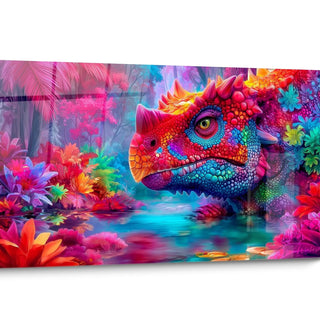
Discover our exclusive collection dedicated to Argentavis magnificens, the most imposing flying raptor ever to exist. Each representation of this prehistoric bird captures the unparalleled majesty of a creature whose wingspan reached 7 meters. Our large-format creations transport the power of the Upper Miocene directly into your living or professional space, offering far more than simple wall decoration.
The Monumental Wingspan of the Argentavis in Large Architectural Volumes
A large-scale Argentavis wall artwork dramatically transforms the spatial perception of vast environments. Unlike classical animal representations, this giant Miocene raptor demands particular staging that fully exploits its legendary 7-meter wingspan. The visual impact generated by this flying megafauna creates unique upward dynamism, particularly suited to high-ceilinged spaces where verticality dialogues with the aerial power of this creature that vanished 6 million years ago.
How does an Argentavis wingspan modify the dynamics of a large space?
The wall representation of this South American flying predator generates exceptional spatial tension. Its deployed wings naturally create sight lines that guide the viewer's gaze toward peripheral zones, visually amplifying available width. This characteristic becomes particularly strategic in industrial lofts, corporate halls, or reception spaces where the objective is to magnify existing architectural amplitude without visually overwhelming the environment.
Strategic positioning to maximize the soaring effect
Argentavis magnificens practiced thermal soaring, an aerial displacement technique that today inspires optimal positioning of its wall representation. Installing this prehistoric decoration in a slightly off-center position relative to the center creates an implicit trajectory, suggesting the movement characteristic of this Patagonian air giant. This calculated asymmetry generates kinetic energy absent from traditional centered compositions, particularly effective in circulation spaces or architectural transition zones.
Panoramic corporate corridors, private galleries, and mezzanines exceptionally benefit from this approach. The gaze intuitively follows the suggested flight direction, creating a visual journey that naturally animates human movement. This synchronization between represented movement and actual circulation significantly amplifies the sense of immersion.
Chromatic dialogue between Miocene ochres and contemporary palettes
The earthy hues associated with the natural environment of this prehistoric bird offer remarkable compatibility with current biophilic design trends. The ochres, sands, and stony grays evoking the Miocene Argentine plateaus integrate harmoniously with neutral palettes favored in modern architecture. This chromatic convergence allows introducing powerful animal presence without brutal aesthetic rupture, unlike dinosaur representations with often saturated speculative colorations.
Actual proportions versus decorative scale: creating paleontological fascination
An Argentavis wall artwork 2 to 3 meters wide establishes a fascinating scale relationship with viewers. This dimension, though smaller than the creature's actual 7-meter wingspan, suffices to communicate monumentality while remaining architecturally integrable. This calculated proportional compression paradoxically intensifies the impression of grandeur: the human brain automatically extrapolates complete dimensions from the visible section, generating mental amplification exceeding the impact of conventional reduced-scale representation.
This dimensional suggestion technique proves particularly pertinent for professional spaces seeking inspiration without intimidation. Power is present yet controlled, evoking natural domination without aggression.
Which commercial spaces benefit most from an Argentavis representation?
Establishments positioned on performance, achievement, and strategic vision themes find in this prehistoric raptor a coherent visual ambassador. Transformation consulting firms, premium coworking spaces, leadership training centers, and innovative company headquarters leverage the natural metaphor offered by this aerial superprédator. Its ability to soar for hours effortlessly, surveying its territory from heights, resonates with values of panoramic vision and strategic efficiency sought by these organizations.
High-end hospitality establishments in nature zones or near remarkable geological sites also capitalize on this paleontological connection to create distinctive territorial identity.
Exploiting temporal contrasts in minimalist interiors
Introducing an Upper Miocene creature into a contemporary refined environment generates productive aesthetic tension. The pure lines and monochrome surfaces of current minimalism serve as neutral canvas magnifying the anatomical complexity of Argentavis. Its powerful talons, hooked beak of a giant scavenger, and suggested musculature of its wings bring organic texture and narrative depth often absent from overly refined spaces. This contrast avoids the pitfall of sterile coldness without compromising desired restraint.
- Perceptual amplification of volumes through wingspan lines
- Creation of visual trajectories following natural soaring flight
- Chromatic integration facilitated by geological hues
- Scale ratio generating immediate paleontological fascination
- Visual metaphor of performance for strategic professional spaces
Symbolism of Domination and Elevation: Argentavis as Inspirational Catalyst
Installing an Argentavis wall artwork in an executive office or strategic decision space far exceeds simple decorative approach. This prehistoric raptor embodies a powerful metaphor of panoramic vision and predatory efficiency that deeply resonates with performance-driven professional environments. Unlike contemporary eagles often portrayed, Argentavis magnificens possesses an additional dimension: the species' extinction implicitly reminds of constant adaptation necessity, a message particularly relevant for organizations evolving in volatile markets.
Why does Argentavis surpass representations of current raptors?
The symbolic superiority of this prehistoric giant rests on several distinctive factors. First, its status as the largest known flying bird eliminates all competition: no winged creature ever attained its proportions. This absolute supremacy communicates an excellence message impossible to achieve with contemporary species, however impressive. Second, its belonging to geological past places it beyond current geopolitical contexts: unlike the American eagle or Asian dragon, Argentavis transcends partisan cultural associations.
This geographic neutrality renders it universally acceptable in international contexts, avoiding potential symbolic awkwardness when welcoming multicultural partners. Its South American origin remains sufficiently unknown to not activate strong regional connotations.
Predatory anatomy and visual leadership
Physical characteristics of this giant scavenger offer a rich visual repertoire for professional environments. Its massive beak, capable of shredding prehistoric mammal carcasses, evokes the capacity to seize opportunities with determination. Its proportionally less developed talons than current hunting raptors recall the importance of strategic intelligence over brute force: Argentavis excelled in exploiting thermal currents and opportunistic resource detection, competencies transposable to modern business strategies.
How to position an Argentavis wall artwork in an executive office?
The optimal location lies in the executive's peripheral vision zone while seated, typically on the left or right lateral wall rather than facing. This configuration allows regular contemplative glances without creating permanent direct distraction. The prehistoric raptor then functions as punctual psychological anchor, mentally reactivating themes of elevated perspective and strategic efficiency during crucial decision-making moments. Positioned facing entering visitors, it immediately establishes the space's symbolic tone: ambition, elevated perspective, and reference to historical excellence.
Boardrooms benefit from placement at the table's head, visible to all participants. This shared visual centrality creates an implicit common reference during strategic deliberations.
Monumental size and affirmation of natural authority
An Argentavis wall artwork of generous dimensions (minimum 1.5 meters width) establishes indisputable presence without resorting to loud ostentation. Its mere physical existence in space communicates capacity to assume bold aesthetic choices, a quality often correlated with decision-making leadership. Unlike traditional status symbols (framed diplomas, trophies, etc.), this paleontological decoration avoids conventional hierarchical codes while maintaining clear affirmation of distinctive personality.
Which professional sectors particularly resonate with this symbolism?
Venture capital and strategic investment industries naturally exploit the opportunistic predator metaphor soaring over its territory. Technology firms in scale-up phase appreciate the reference to a creature having dominated its ecosystem for millions of years. Law firms specialized in mergers and acquisitions find predatory imagery coherent with their professional positioning. Academic institutions in paleontology, geology, or natural sciences obviously benefit from the authentic educational dimension.
Association with other decorative elements evoking the Miocene era
To deepen thematic coherence, certain professional spaces complement the Argentavis artwork with mineral elements suggesting prehistoric South American landscapes. Polished volcanic rocks, fossilized wood, or fossil imprint reproductions create subtle immersive environment. This multi-sensory approach reinforces narrative anchoring without tilting into excessive museum recreation. The objective remains professional inspiration, enriched by distinguished paleontological cultural dimension.
- Metaphor of universally readable panoramic strategic vision
- Geocultural neutrality suited to international contexts
- Predatory anatomy symbolizing efficiency and intelligent opportunism
- Lateral positioning optimal for punctual psychological anchoring
- Monumental dimensions affirming leadership without ostentation
- Sector coherence with strategic and scientific industries
Dialogue Between Miocene Paleontology and Contemporary Aesthetics
Integrating an Argentavis wall artwork into modern interior creates a fascinating temporal conversation between two epochs separated by millions of years. This juxtaposition is not merely aesthetic: it visually translates our contemporary fascination with origins, evolution, and extinct ecosystems. While current design often privileges refinement and functionality, introducing this flying megafauna reinjests organic, narrative, and scientifically documented dimensions often absent from overly sanitized spaces.
Paleontological authenticity versus artistic interpretations
Argentavis magnificens representations oscillate between scientific rigor and artistic freedom. Versions faithful to fossil data privilege validated anatomical proportions: massive 45-centimeter skull, 7-meter wingspan, estimated mass between 60 and 72 kilograms. These precise characteristics particularly interest collectors sensitive to paleontological accuracy or educational spaces seeking instructional dimension. Conversely, certain artistic interpretations dramatically accentuate specific traits to maximize visual impact: hypothetical plumage more contrasted, exaggerated flying postures, reconstructed environments with creative freedom.
The choice between approaches depends on installation context. Serious professional environments generally privilege scientific accuracy, while residential spaces permit greater interpretive freedom.
Which chromatic palettes respect the ecology of the Upper Miocene?
Environmental reconstructions of Upper Miocene Argentina reveal landscapes of open grasslands, semi-arid zones, and gallery forests. These ecosystems suggest palettes dominated by ochres, burnt earth, dried greens, and stony grays. An Argentavis wall artwork chromatically coherent with these geological data facilitates integration into contemporary interiors privileging natural tones and raw materials. This fortuitous convergence between paleoenvironment and current trends (terracotta, beige, taupe) partially explains the growing success of this decorative theme.
Implicit educational dimension in family spaces
Installing an Argentavis representation in a family living room or library subtly transforms the space into informal learning environment. Unlike omnipresent dinosaurs in children's culture, this giant raptor remains unknown to the general public, naturally sparking questions and research. This progressive discovery creates opportunities for organic cultural and scientific transmission, particularly valued by educated families. The artwork becomes recurring conversation starting point, enriching daily life with distinctive paleontological narrative layer.
How to integrate Argentavis into contemporary industrial decoration?
Industrial-style interiors, characterized by exposed brick, metal structures, and open volumes, remarkably welcome this prehistoric theme. The mineral roughness of industrial environments resonates with rocky Miocene Argentine landscapes. Generous ceiling heights allow fully exploiting the verticality suggested by this giant's flight. The contrast between manufactured precision of modern architectural elements and organicity of the ancient creature generates productive aesthetic tension, avoiding monotony of overly uniform ambiances.
Loft-type spaces particularly benefit from this approach, where the Argentavis artwork articulates visual zones while maintaining spatial continuity characteristic of these open configurations.
Evoking extinct biodiversity and ecological consciousness
Beyond its decorative dimension, a wall artwork representing this extinct raptor implicitly conveys a message about ecosystem fragility. Argentavis magnificens disappeared approximately 6 million years ago, probably due to climate changes affecting its food sources and optimal flying conditions. This pre-human natural extinction recalls that environmental upheavals have always existed, contextualizing current ecological concerns within an enlarged temporal perspective. Certain collectors sensitive to environmental issues appreciate this dual reading: celebration of natural magnificence and reminder of its intrinsic vulnerability.
What furniture effectively complements an Argentavis representation?
Furniture with refined lines and natural materials creates the optimal frame for this decoration type. Solid wood with light essences (oak, ash), naturally aged leathers, rough stone, and patinated metals establish material continuity with evoked paleontological universe. Avoid shiny plastics and polished chrome that would create temporal dissonance. Open bookshelves allow subtly integrating paleontology volumes and minerals, reinforcing thematic coherence without forced museum effect.
- Creative tension between scientific rigor and artistic freedom
- Miocene palettes naturally compatible with contemporary design
- Transformation of spaces into informal learning environments
- Aesthetic synergy with industrial architectures and generous volumes
- Dual decorative and ecological reading on ecosystem fragility
- Natural materials and raw materials as optimal contextual frame
Frequently Asked Questions About Argentavis Wall Representations
Is an Argentavis decoration suitable for spaces receiving international clientele?
Absolutely. This prehistoric species transcends regional cultural associations, offering geographic neutrality appreciated in multicultural professional contexts.
Are large dimensions essential for successful visual impact with this prehistoric raptor?
Generous formats (minimum 1.5 meters) optimally exploit this creature's legendary wingspan, but more compact versions function in constrained spaces by privileging vertical compositions or close-up raptor views.
Does this paleontological theme age well aesthetically or risk seeming dated quickly?
The scientific and historical dimension of Argentavis protects it from ephemeral fashion effects. Unlike contemporary decorative trends, paleontological references possess intrinsic permanence linked to their factual and educational anchoring.
Can one associate Argentavis decoration with other prehistoric creatures without creating chronological confusion?
Technically possible, but discouraged to maintain paleontological coherence. Argentavis belongs to the Upper Miocene (6-8 million years ago), a period distinct from the Cretaceous dinosaur era. Rather privilege other Miocene megafauna to preserve temporal accuracy.


 Multicolor Argentavis Wall Art - Pop Art Fusion - Argentavis Edition233,90 €
 Prehistoric Bird Wall Art in Flight - Majestic Argentavis - Argentavis Edition233,90 €
 Prehistoric Bird Wall Art - Piercing Gaze - Argentavis Edition213,90 €
 Futuristic Argentavis Wall Art - Crystalline Vision - Argentavis Edition233,90 €
 Stylized Argentavis Wall Art - Solar Majesty - Argentavis Edition233,90 €
 Argentavis Magnificens Wall Art - The Prehistoric Giant Bird - Argentavis Edition213,90 €
 Crowned Argentavis Painting - Royal Flight - Argentavis Edition233,90 €
 Colorful Vulture Painting - Psychedelic Pop Art - Argentavis Edition233,90 €
 Multicolor Flying Bird Painting - Prismatic Flight - Argentavis Edition233,90 €