








Wall Art Inspired by Leonardo da Vinci
The inspired paintings Leonardo da Vinci celebrate the legacy of a Renaissance genius. This collection reveals works full of elegance and innovation, blending portraiture, perspective, and symbolism. Immerse yourself in a universe where science and art merge to create timeless beauty, inspired by the masterful creations of Leonardo da Vinci.
 Painting Inspired by Saint John the Baptist by Leonardo da Vinci N°2 – Tribute to Famous Artist273,90 €
 Painting Inspired by Saint John the Baptist by Leonardo da Vinci N°1 – Tribute to Famous Artist273,90 €
 Painting Inspired by Leonardo da Vinci's The Last Supper No.2 – Tribute to Celebrated Artist273,90 €
 Painting Inspired by Leonardo da Vinci's The Last Supper No. 1 – Tribute to Celebrated Artist273,90 €
 Painting Inspired by The Vitruvian Man by Leonardo da Vinci No.1 – Homage to Celebrated Artist273,90 €
In the same family
Also explore the theme Famous Artists ( inspirations )
-
 View all265
artworks
View all265
artworks
-
 Alfred Sisley10
artworks
Alfred Sisley10
artworks
-
 Amedeo Modigliani12
artworks
Amedeo Modigliani12
artworks
-
 Camille Pissarro7
artworks
Camille Pissarro7
artworks
-
 Caspar David Friedrich11
artworks
Caspar David Friedrich11
artworks
-
 Claude Joseph Vernet3
artworks
Claude Joseph Vernet3
artworks
-
 Claude Monet10
artworks
Claude Monet10
artworks
-
 Edgar Degas8
artworks
Edgar Degas8
artworks
-
 Edvard Munch11
artworks
Edvard Munch11
artworks
-
 Edward Hopper8
artworks
Edward Hopper8
artworks
-
 Frida Kahlo6
artworks
Frida Kahlo6
artworks
-
 George Braque5
artworks
George Braque5
artworks
-
 Giuseppe Arcimboldo9
artworks
Giuseppe Arcimboldo9
artworks
-
 Goya8
artworks
Goya8
artworks
-
 Gustav Klimt8
artworks
Gustav Klimt8
artworks
-
 Gustave Courbet8
artworks
Gustave Courbet8
artworks
-
 Henri Matisse4
artworks
Henri Matisse4
artworks
-
 Hieronymus Bosch2
artworks
Hieronymus Bosch2
artworks
-
 Jean Baptiste Camille Corot9
artworks
Jean Baptiste Camille Corot9
artworks
-
 Jean François Millet7
artworks
Jean François Millet7
artworks
-
 Jean-Auguste-Dominique Ingres10
artworks
Jean-Auguste-Dominique Ingres10
artworks
-
 JMW Turner6
artworks
JMW Turner6
artworks
-
 Johannes Vermeer10
artworks
Johannes Vermeer10
artworks
-
 Michelangelo6
artworks
Michelangelo6
artworks
-
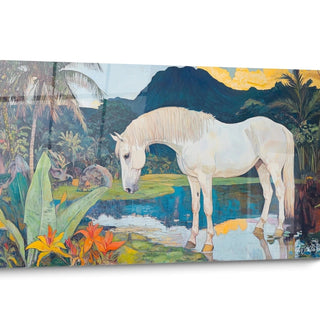 Paul Gauguin6
artworks
Paul Gauguin6
artworks
-
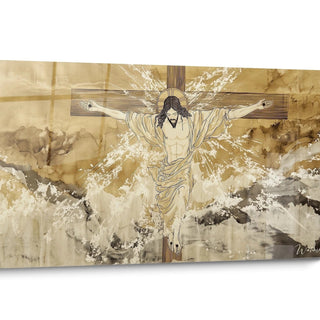 Peter Paul Rubens6
artworks
Peter Paul Rubens6
artworks
-
 Pierre-Auguste Renoir6
artworks
Pierre-Auguste Renoir6
artworks
-
 Piet Mondrian11
artworks
Piet Mondrian11
artworks
-
 Pieter Bruegel the Elder6
artworks
Pieter Bruegel the Elder6
artworks
-
 Rembrandt van Rijn4
artworks
Rembrandt van Rijn4
artworks
-
 Sandro Botticelli9
artworks
Sandro Botticelli9
artworks
-
 Sonia Delaunay6
artworks
Sonia Delaunay6
artworks
-
 Théodore Géricault7
artworks
Théodore Géricault7
artworks
-
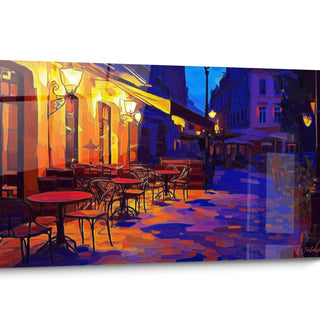 Vincent Van Gogh11
artworks
Vincent Van Gogh11
artworks
-
 Wassily Kandinsky10
artworks
Wassily Kandinsky10
artworks


All about Wall Art Inspired by Leonardo da Vinci
- Leonardo da Vinci Paintings Presentation
- Hidden Symbolism in Leonardo da Vinci Paintings
- Revolutionary Techniques of Leonardo da Vinci
- Cultural Impact of Leonardo da Vinci Paintings
Leonardo da Vinci's paintings represent the pinnacle of Italian Renaissance art. An undisputed master of sfumato and human anatomy, his works transcend mere images to become scientific, philosophical, and artistic studies. From the Mona Lisa to The Last Supper, through The Vitruvian Man, each painting reveals the polymathic spirit of a genius who was simultaneously a painter, inventor, anatomist, and visionary. Exploring a Leonardo da Vinci painting means diving into a world where art and science merge, where microscopic details tell complex stories, and where five centuries later, we continue to uncover new secrets hidden in the layers of paint. Discover how these famous paintings revolutionized art and continue to inspire and fascinate the entire world.
Hidden Symbolism in Leonardo da Vinci Paintings: Deciphering the Master's Visual Language
Leonardo da Vinci's paintings are not mere visual representations but authentic pictorial enigmas where each element tells a story. The Florentine genius developed a sophisticated symbolic language that continues to fascinate art historians and enthusiasts five centuries after their creation.
What secrets are hidden in the landscapes of Leonardo da Vinci paintings?
The backgrounds of Leonardo da Vinci paintings are far more than simple scenery. In the Mona Lisa, the winding landscape represents the meanders of time and the complexity of human nature. Particular rock formations evoke the artist's geological studies and suggest a connection between the human figure and the natural environment. These atmospheric perspectives are not random but encode messages about humanity's relationship with the universe according to Neoplatonic theories of the era.
Meandering waterways in the backgrounds symbolize the flow of life and alchemical knowledge, while distant bridges represent transitions between different states of consciousness, reflecting Leonardo's interest in spirituality and inner transformation.
Sacred geometry in Vincentian compositions
Leonardo da Vinci meticulously integrated sacred geometry principles into his paintings. The golden ratio (φ ≈ 1.618) structures the composition of numerous works such as The Vitruvian Man and The Last Supper. This mathematical harmony is not accidental but reflects Leonardo's conviction that mathematics constitutes the language of the universe.
In The Virgin of the Rocks, the arrangement of figures follows a hidden pentagonal pattern, symbolizing divine harmony according to Pythagorean principles. These invisible geometric structures create a subconscious resonance in the observer, generating a sensation of perfect balance that transcends conscious appreciation.
Symbolism of gestures and hands in portraits
The hands in Leonardo da Vinci paintings often reveal more than the faces of the subjects. The position of Mona Lisa's fingers suggests calculated serenity and emotional control, while the hands of the apostles in The Last Supper individually tell their reaction to the announcement of betrayal.
Leonardo had studied human anatomy in detail, dissecting cadavers to understand how tendons and muscles function. This in-depth knowledge enabled him to encode complex emotions in subtle finger movements or wrist positions, creating a gestural subtext that only attentive observers can decipher.
The significance of colors and specific pigments
The choice of colors in Leonardo's paintings was never arbitrary. The use of ultramarine blue, a pigment more expensive than gold at the time, for the garments of the Virgin Mary in his religious works signaled not only her spiritual importance but also the patron's wealth.
Leonardo experimented with unique pigment formulations, creating nuances that subtly evolve depending on the viewing angle and ambient light. This changing dimension adds temporality to his paintings, transforming them into dynamic visual experiences rather than static images.
Botanical and zoological codes concealed
The plants and animals represented in Leonardo's paintings are selected with scientific and symbolic precision. The ermine in Lady with an Ermine symbolizes purity but also references the nickname of Ludovico Sforza, Leonardo's patron and presumed lover of the model.
Each plant species in his compositions possesses significance in medieval pharmacopeias or Renaissance cultural imagination. The microscopic attention to leaf and flower details testifies not only to Leonardo's naturalism but also encodes messages about virtues, vices, or spiritual qualities associated with the main subject.
Astronomical and cosmological references
Passionate about astronomy, Leonardo subtly integrated references to celestial configurations in his paintings. The positions of characters in the Adoration of the Magi reflect constellations visible during specific astronomical events, creating a correspondence between the terrestrial microcosm and the celestial macrocosm.
This astronomical dimension adds temporal depth to the depicted scenes, inscribing them in a cosmic continuum that transcends the captured instant. For the initiated of the era, these celestial clues enriched the interpretation of works with an additional metaphysical dimension.
Why do Leonardo da Vinci paintings continue to reveal new secrets?
The complexity of Leonardo da Vinci paintings is such that new discoveries are regularly made thanks to modern technologies. Multispectral imaging has revealed preparatory drawings and modifications hidden beneath layers of paint, witnessing the artist's meticulous creative process.
X-ray analysis has unveiled entirely covered elements that modify our understanding of the artist's original intentions. This pictorial archaeology demonstrates that Leonardo paintings are truly visual palimpsests, where multiple levels of meaning overlap and interact.
The symbolic density of these works ensures their cultural permanence, as each generation finds resonances with its contemporary concerns, whether scientific, spiritual, or philosophical. Leonardo da Vinci paintings are not simply historical artifacts but visual organisms that continue to evolve in our collective perception.
Revolutionary Techniques of Leonardo da Vinci: Artistic Innovations That Transformed Painting
Leonardo da Vinci paintings distinguish themselves through technical innovations that redefined Renaissance pictorial art. His experimental approach and quest for representational perfection established new standards that still influence contemporary artists.
Sfumato: the unmistakable signature of Leonardo da Vinci paintings
Sfumato, Leonardo's emblematic technique, consists of layering microscopic transparent paint layers to create imperceptible transitions between colors and tones. Unlike the more contrasted chiaroscuro of his contemporaries, sfumato produces a vaporous effect that softens contours and imitates the peripheral perception of the human eye.
Leonardo applied up to fifty extremely diluted glaze layers, each requiring several days of drying. This extraordinary patience explains why he completed so few works despite his long career. The resulting effect gives his paintings an almost photographic quality, with unequaled atmospheric depth that makes visible brushstrokes disappear.
How did Leonardo da Vinci paintings revolutionize pictorial anatomy?
Before Leonardo, representations of the human body often followed stylized conventions rather than direct observation. His clandestine dissections allowed him to understand not only external appearance but also the underlying structure of muscles, tendons, and bones that determine movement and expression.
In his paintings, this knowledge manifests through precise representation of subtle muscle tensions accompanying each position. The enigmatic smile of the Mona Lisa results from his profound understanding of facial muscles and their interaction with human emotions. This fusion of science and art fundamentally differentiates his portraits from those of his contemporaries.
Innovative pigment and binder formulations
Leonardo constantly experimented with paint chemistry, creating personalized formulations that contributed to the unique visual effect of his paintings. He modified traditional linseed oil recipes by adding resins and essential oils to slow drying and allow subtler blending.
These technical innovations partly explain why some of his paintings have retained exceptional luminosity after five centuries, while others have unfortunately suffered deterioration due to unstable experiments. His constant search for new visual effects sometimes pushed him to sacrifice permanence for immediate impact.
The atmospheric perspective in Vincentian landscapes
While linear perspective was already mastered by his predecessors, Leonardo perfected atmospheric perspective in his paintings, reproducing with scientific precision the way air modifies the colors and contours of distant objects. His meticulous meteorological observations had convinced him that the atmosphere contains microscopic particles affecting light propagation.
In The Virgin of the Rocks, distant geological formations gradually lose saturation and sharpness, creating an impression of infinite spatial depth. This understanding of atmospheric optics gives his paintings an almost three-dimensional quality that transcends the limitations of the two-dimensional medium.
Techniques for modeling light on different surfaces
Leonardo da Vinci paintings distinguish themselves through sophisticated treatment of light reflection on various materials. He understood that each surface – skin, hair, fabric, metal, water – interacts differently with light, creating specific visual signatures.
To represent textiles, he developed a technique allowing visual distinction between silk, velvet, or linen, not only through their characteristic folds but also through their unique light interaction. This attention to optical properties of materials established a new realism standard that surpassed mere visual imitation to achieve physical truth of represented objects.
The experimental approach to pictorial supports
Leonardo was not satisfied with traditional supports for his paintings. He experimented with different wood panel preparations, modifying gesso formulas and exploring alternatives to standard support. This constant search for material innovation testifies to his conviction that technical excellence must accompany artistic vision.
These experimentations included attempts to create particularly smooth surfaces facilitating the application of his microscopic glazes, sometimes at the expense of long-term stability. His constant desire for innovation reveals a scientific spirit applied to artistic practice, making each painting a visual laboratory as much as a work of art.
The choreography of multi-figurative compositions
Paintings featuring multiple characters, such as The Last Supper or the Adoration of the Magi, demonstrate exceptional mastery of spatial and psychological organization of figures. Leonardo conceived these compositions as dynamic systems where each figure exists in organic relationship with the whole.
Before final execution, he produced countless preparatory studies exploring possible variations in positioning and expression. This methodical approach allowed him to create scenes where each character contributes to coherent visual narrative while maintaining distinct psychological individuality.
Conservation and restoration techniques specific to Leonardo paintings
The technical complexity of Leonardo da Vinci paintings requires highly specialized conservation approaches. Contemporary restorers must understand not only traditional Renaissance materials but also innovations specific to Leonardo.
The particular fragility of sfumato, with its numerous microscopic layers, requires minimal and extremely precise interventions. Cutting-edge technologies such as hyperspectral imaging now allow paintings to be analyzed layer by layer without physical contact, revealing the master's creative process with unprecedented precision and guiding preservation efforts for these invaluable cultural treasures.
Cultural Impact of Leonardo da Vinci Paintings: Heritage and Influence Through the Centuries
Leonardo da Vinci paintings have transcended their status as artworks to become global cultural icons that continue to exercise considerable influence on our perception of art, beauty, and human genius.
How did Leonardo da Vinci paintings influence the evolution of museum practices?
The presentation of Leonardo da Vinci paintings revolutionized modern museum practices. The Mona Lisa at the Louvre, protected by a bulletproof case and maintained under strictly controlled environmental conditions, established new standards for conservation and exhibition of world masterpieces.
The massive influx of visitors coming specifically to view these paintings forced museums to completely rethink their visitor flow management strategies and spatial organization of galleries. The Louvre's "Salle des États," remodeled multiple times to accommodate up to 30,000 daily visitors coming to see the Mona Lisa, illustrates how a single painting can transform museum architecture itself.
The influence of Leonardo da Vinci paintings on contemporary visual culture
Leonardo da Vinci paintings are among the most reproduced and reinterpreted images in history. From the enigmatic smile of the Mona Lisa becoming a universal symbol of mystery to countless commercial and artistic parodies of the Last Supper, these images have penetrated global consciousness.
This omnipresence has paradoxically created a familiarity effect that can diminish the impact of direct contact with the original work. Yet this massive diffusion has also democratized access to these masterpieces, allowing populations who would never have the opportunity to visit the Louvre or other museums housing these paintings to establish a connection with Leonardo's artistic heritage.
The diplomatic dimension of Vincentian paintings
Leonardo da Vinci paintings have become instruments of soft power and cultural diplomacy between nations. Rare international loans of these works constitute major diplomatic events, often requiring negotiations at the highest state level and astronomical insurance guarantees.
When "La Belle Ferronnière" was loaned to the Louvre Abu Dhabi for its inauguration, or when "Lady with an Ermine" travels for exceptional exhibitions, these moves symbolize far more than artistic exchanges: they materialize strategic alliances between countries and cultural institutions, underlining the unique diplomatic capital these paintings represent.
The measurable economic impact of Leonardo paintings
The attraction exercised by Leonardo da Vinci paintings generates considerable economic impact. The 500th anniversary exhibition at the Louvre in 2019, bringing together an unprecedented number of his paintings, attracted more than 1.1 million visitors and generated economic returns estimated at over 100 million euros for the Parisian economy.
Beyond tourism, the economy of reproductions, publications, and derivative products inspired by these paintings represents a considerable global market. The insurable value of these works, often estimated in billions rather than millions, reflects their status as irreplaceable cultural assets whose possession confers unequaled institutional prestige.
Leonardo paintings as a reference in scientific history
The scientific approach Leonardo applied to his paintings makes them valuable documents for the history of science. His anatomical, botanical, and geological representations of remarkable precision testify to the state of knowledge during the Renaissance and illustrate the proto-scientific method he was developing.
Contemporary neuroscientists study his techniques for representing gaze and facial expression to understand our visual perception of emotions. Optics specialists analyze his mastery of atmospheric perspective to illuminate the history of our understanding of light phenomena. Thus, these paintings continue to actively contribute to the dialogue between art and science.
Why do Leonardo paintings exercise a unique psychological fascination?
Neurological studies have demonstrated that Leonardo da Vinci paintings activate distinct brain regions from those stimulated by other artworks. Sfumato in particular engages complex perceptual mechanisms related to our peripheral vision and processing of ambiguous facial expressions.
This deliberate perceptual ambiguity keeps the spectator's brain in a state of active engagement, constantly seeking resolution. This phenomenon partly explains why direct experience of these paintings often provokes intense emotional reactions, sometimes even "Stendhal syndrome" in particularly sensitive visitors.
The pedagogical heritage of Vincentian paintings
Leonardo da Vinci paintings constitute fundamental pedagogical tools in artistic education worldwide. Their study allows simultaneous exploration of multiple dimensions: pictorial technique, composition, portrait psychology, historical context, and interdisciplinarity between art and science.
Art academies continue to organize study copies of these paintings as essential training exercises, while their analysis constitutes required content in art history curricula. This pedagogical function ensures intergenerational transmission not only of techniques but also of humanistic values and the integrative vision these paintings embody.
FAQ on Leonardo da Vinci Paintings
How many Leonardo da Vinci paintings did he actually paint?
Leonardo da Vinci completed relatively few paintings compared to other Renaissance masters. Specialists generally agree on approximately 15 to 20 authenticated works, though new attributions may occasionally emerge. This limited production is explained by his extremely meticulous method, his perfectionism, and the diversity of his other scientific and engineering activities.
Which Leonardo da Vinci painting has the highest estimated value?
"Salvator Mundi," sold at auction in 2017 for 450.3 million dollars, holds the record for the most expensive painting ever sold. Although its attribution to Leonardo still generates debate among some experts, this sale testifies to the exceptional value associated with the master's works. The Mona Lisa, meanwhile, is considered priceless and insured for several billion euros.
Why do Leonardo da Vinci paintings often present cracks?
The visible cracks on several Leonardo paintings result from his technical experiments. Contrary to the established practice of applying thin layers over thicker ones, Leonardo sometimes reversed this process or used experimental binders. These innovations, though aesthetically revolutionary in the short term, created physical tensions in the pictorial structure that manifest as these characteristic crack networks after several centuries.


