


Collection · 1
artwork
Lilith Wall Art
by
Our Lilith Wall Art collection celebrates this enigmatic figure from mythology with captivating artworks. These pieces explore themes of primordial femininity, fierce independence, and ancestral mystery that this entity embodies. First woman according to certain traditions, mythical rebel according to others, Lilith is represented in all her complexity and power. Each artistic creation captures the essence of this figure who defies conventions, bringing bold symbolic dimension and narrative depth to your interior space.
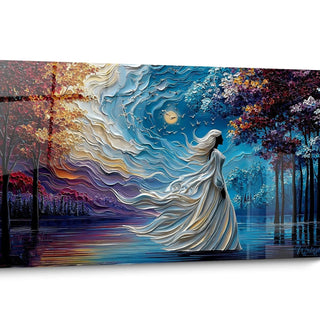
 Lilith Painting No. 1 - Myths and Legends Edition273,90 €
In the same family
Also explore the theme Myth and Legends
-
 View all332
artworks
View all332
artworks
-
 Apollo2
artworks
Apollo2
artworks
-
 Other Myths and Legends14
artworks
Other Myths and Legends14
artworks
-
 Banshee2
artworks
Banshee2
artworks
-
 Bigfoot2
artworks
Bigfoot2
artworks
-
 Chupacabra2
artworks
Chupacabra2
artworks
-
 White Lady2
artworks
White Lady2
artworks
-
 Dragon142
artworks
Dragon142
artworks
-
 Icarus1
artwork
Icarus1
artwork
-
 Kraken3
artworks
Kraken3
artworks
-
 Mokele-Mbembe3
artworks
Mokele-Mbembe3
artworks
-
 Narcissus5
artworks
Narcissus5
artworks
-
 Pégase27
artworks
Pégase27
artworks
-
 Shiva62
artworks
Shiva62
artworks
-
 Ulysses1
artwork
Ulysses1
artwork
-
 Wendigo1
artwork
Wendigo1
artwork
-
 Yeti2
artworks
Yeti2
artworks
-
 Zeus1
artwork
Zeus1
artwork


All about Lilith Wall Art
- Lilith Wall Art Presentation
- Lilith Wall Art Symbolism
- Lilith Wall Art Feminine Energy
- Lilith Wall Art Decoration
Complete Guide to Lilith Wall Art: Symbolism, Power and Decoration
The Lilith wall art represents far more than a simple mural artwork — it is a powerful mythological symbol that transforms your interior space. An incarnation of rebellious femininity and primordial power, Lilith appears in numerous traditions as Adam's first wife, refusing submission and choosing independence.
These artworks inspired by myths and legends capture the very essence of this emblematic figure, bringing incomparable symbolic depth to your interior decoration. Unlike conventional decorative representations, a Lilith wall art introduces a mythological and spiritual dimension into your living space.
Lilith's imagery stands out through its rich iconography: often depicted with serpents, nocturnal birds, or surrounded by lunar elements, each Lilith wall art tells an ancestral story while creating a striking focal point in your interior.
Whether you are drawn to its feminist dimension, its spiritual depth, or simply the aesthetic power of these representations, discover how a Lilith wall art can radically transform the atmosphere of your space and manifest unique energy in your daily life.
Explore our complete guide to understand the deep symbolism of these artworks, their energetic impact on your space, and the best ways to integrate these mythological representations into your interior decoration.
Lilith Wall Art: Ancestral Symbolism and Transformative Power
The Lilith wall art embodies a rare symbolic depth in contemporary mural art. Unlike ordinary decorative representations, these artworks draw from a rich mythological heritage spanning several millennia.
What are the traditional symbols associated with Lilith in mural art?
Lilith representations are characterized by a distinctive set of iconographic elements. The serpent, symbol of primordial wisdom and rebirth, frequently appears in these works, evoking forbidden knowledge and personal transformation. The owl, a nocturnal creature linked to clairvoyance, often accompanies Lilith, underlining her connection with the mysteries of night and deep intuition.
Lunar phases, particularly the black or new moon, constitute another recurring motif in Lilith imagery. This lunar symbolism reinforces the cyclical and mysterious nature of this mythic figure, creating powerful visual resonance in any space where a Lilith wall art is displayed.
The energetic impact of a Lilith wall art in your space
Introducing a Lilith wall art into an interior goes far beyond purely aesthetic considerations. These artworks are renowned for their ability to transform the energetic atmosphere of a room. The visual presence of Lilith can activate energies of emancipation, autonomy, and reconnection with wild and untamed femininity.
Placed in an office or creative workspace, a Lilith wall art stimulates authentic expression and unconventional thinking. In a bedroom, it can foster deep dream exploration and access to the collective unconscious. This unique energetic dimension fundamentally differentiates these artworks from standard decorative pieces.
The mythological origins represented in Lilith art
The richness of a Lilith wall art lies in its ability to fuse various mythological traditions. While the figure of Lilith is primarily known through ancient Hebrew texts such as the Zohar and the Alphabet of Ben Sira, her roots also extend to Mesopotamian mythologies, where she appears under the name "Lilitu".
Contemporary artists creating Lilith wall art draw from these multiple traditions, offering visual interpretations that transcend cultural boundaries. These artworks may include references to the Sumerian goddesses Inanna and Ereshkigal, establishing rich visual parallels between different expressions of primordial feminine power.
How a Lilith wall art dialogues with your existing decoration
Integrating a Lilith wall art into contemporary interiors creates a striking contrast with modern decorative elements. The symbolic depth of these artworks establishes a visual anchor point that naturally attracts attention and sparks reflection.
In minimalist spaces dominated by clean lines and neutral colors, a Lilith wall art featuring deep hues such as garnet red, obsidian black, or midnight blue introduces a dimension of mystery and depth. This juxtaposition between modern simplicity and ancestral symbolism generates dynamic visual tension that considerably enriches the overall aesthetic experience.
Large-format Lilith wall art pieces, particularly suited to accent walls, create an immersive effect that transforms spatial experience. Unlike conventional mural artworks, a large-scale Lilith wall art does not merely occupy space — it completely redefines the room's atmosphere, creating a visual gateway to mythological realms.
The artistic techniques favored for capturing Lilith's essence
Contemporary Lilith wall art distinguishes itself through specific artistic techniques. Artists often favor marked contrasts between shadow and light, a technique known as chiaroscuro, to evoke Lilith's dual nature, both creative and destructive.
Mixed techniques incorporating metallic elements such as gold or silver leaf are frequently employed to represent Lilith's transcendent and spiritual aspect. These metallic applications react dynamically to ambient light, creating a changing effect that symbolizes the elusive and transformative nature of this mythic figure.
The use of special pigments such as carmine red extracted from cochineal or deep blues derived from lapis lazuli gives Lilith wall art a distinctive visual presence that radically sets it apart from ordinary artistic reproductions, offering a unique visual experience that evolves depending on viewing angle and lighting conditions.
Lilith Wall Art: Catalyst for Ancestral Feminine Energy
The Lilith wall art distinguishes itself fundamentally from other mural art representations through its ability to channel and manifest archetypal feminine energy. Far more than a simple decorative element, these artworks function as true energetic portals in your living space.
How does a Lilith wall art activate sacred feminine energy?
The specific iconography of a Lilith wall art is designed to resonate with the deepest aspects of sacred femininity. Artists working on these representations deliberately use activating patterns such as the spiral, a universal symbol of feminine energy in perpetual evolution and transformation. These visual elements function as symbolic codes that communicate directly with the collective unconscious.
The dominant colors in these artworks — such as deep red evoking menstrual blood, source of creation, or black representing the fertile void from which all manifestation emerges — are chosen for their vibrational resonance with feminine natural cycles. This distinctive color palette immediately sets a Lilith wall art apart from conventional decorative works.
Artists specializing in these creations often incorporate sacred geometry techniques, notably the Vesica Piscis, a universal symbol of feminine creation, thereby generating artworks that function simultaneously on aesthetic and energetic levels.
The lunar cycles represented in Lilith art
The profound connection between Lilith and lunar cycles constitutes a central aspect of these artworks. Unlike classical lunar representations, Lilith wall art particularly emphasizes the phase of the new moon or "black moon", traditionally associated with Lilith's energy in esoteric astrology.
These artworks often represent the complete lunar cycle, from new moon to full moon and its waning, creating a cyclical visual narrative that evokes different manifestations of feminine energy. This complete representation of the lunar cycle transforms a Lilith wall art into a constant visual reminder of natural rhythms and the cyclical nature of all existence.
In contemporary creations, one frequently observes the use of phosphorescent or photoluminescent pigments to represent lunar phases, allowing the artwork to literally transform according to lighting, thus visually manifesting the principle of transformation at the heart of the Lilith myth.
The ideal spaces for a Lilith wall art in your interior
The placement of a Lilith wall art directly influences its energetic impact on your space. Unlike generic decorative works whose placement is primarily dictated by aesthetic considerations, positioning a Lilith wall art involves a more intentional and spiritual approach.
In a bedroom, positioned facing the bed, a large-format Lilith wall art can stimulate exploration of sacred sexuality and facilitate access to intuitive realms during sleep. The constant visual influence of this artwork before falling asleep programs the unconscious for deeper spiritual explorations during the dream phase.
For creative spaces such as artist studios or innovation-focused offices, a Lilith wall art positioned to the east — a direction associated with dawn and new beginnings — amplifies energies of inspiration and creative manifestation. This specific orientation harmonizes the artwork's energy with solar cycles, creating optimal energetic synergy.
The transformative effect of a Lilith wall art on self-perception
Daily engagement with the powerful imagery of a Lilith wall art provokes subtle yet profound transformation of consciousness. Testimonies from people living with these artworks reveal significant modifications in their relationship to personal power and authentic expression.
The constant visual presence of Lilith, a figure of emancipation and autonomy, acts as a subliminal reminder of qualities of independence and authenticity. This repeated visual influence can catalyze a Jungian individuation process, facilitating integration of repressed or neglected aspects of the psyche, particularly those related to expression of personal power.
For people undergoing personal or professional transitions, a Lilith wall art acts as a visual anchor during periods of inner metamorphosis, offering a tangible representation of the transformation process they are experiencing. This function of visually accompanying inner transitions fundamentally distinguishes these artworks from purely decorative paintings.
The relationship between Lilith wall art and contemporary spiritual practices
Within the context of contemporary feminine spiritualities' renewal, Lilith wall art occupies a central place as focal points for various ritual practices. These artworks frequently serve as supports for guided meditation, creative visualization, or women's circles exploring their connection with ancestral feminine wisdom.
The presence of a Lilith wall art transforms an ordinary space into a ceremonial place, establishing a visual demarcation between everyday profane space and sacred dimension. This function as a threshold between different states of consciousness constitutes one of the most unique and precious characteristics of these specific artworks.
Lilith Wall Art: Radically Transform Your Interior Space
The Lilith wall art transcends the traditional concept of mural decoration to become a true catalyst for atmospheric transformation. Unlike conventional decorative works, these representations exert a palpable influence on the psychological and energetic ambiance of a space.
Interior spaces metamorphosed by the presence of a Lilith wall art
Integrating a large-format Lilith wall art in a contemporary living room instantly creates a magnetic focal point that completely redefines spatial dynamics. The visual intensity characteristic of these artworks, with their marked contrasts and symbolic charge, generates a subtle gravitational effect that naturally reorients circulation through the room.
In transition spaces such as hallways or stairwell landings, these artworks transform typically overlooked zones into symbolic portals. A strategically placed Lilith wall art in these liminal spaces creates a conscious threshold experience, visually marking passage between different functional areas of your home.
For rooms naturally lacking architectural character, such as certain modern apartments with standardized volumes, introducing a large-format Lilith wall art immediately compensates for this structural personality absence by bringing imposing visual presence and narrative depth.
Why does a Lilith wall art create such a distinctive atmosphere?
The unique atmospheric impact of a Lilith wall art stems from its ability to summon simultaneously multiple levels of perception. Lilith's specific iconography, charged with ancient mythological references, activates deep archetypal associations firmly rooted in the collective unconscious, generating immediate psychological resonance even among observers unfamiliar with the myth.
The artistic techniques privileged in these representations, notably the use of successive glaze layers to create inner luminosity, produce a visual effect of strange familiarity. This particular quality of "presence" radically distinguishes these artworks from standard artistic reproductions, creating the subtle impression that the artwork observes the space as much as it is observed.
Unlike conventional feminine representations in decorative art, Lilith's imagery deliberately evokes the untamed and wild aspect of femininity. This transgressive quality generates creative tension in the space, producing dynamic atmosphere rather than merely soothing or decorative effect.
The unique interaction between natural light and a Lilith wall art
The relationship between ambient lighting and a Lilith wall art reveals an additional dimension of these artworks. Unlike standard artistic prints, these artworks are often created with light-reactive materials such as iridescent pigments or metallic leaf applications, which transform the artwork's appearance depending on viewing angle and light intensity.
Positioned in a space benefiting from changing natural light, these artworks become living works whose appearance subtly evolves throughout the day. This kinetic quality creates an ever-evolving visual experience that maintains constant perceptual engagement, unlike static works whose perception dulls through habituation.
Artists specializing in Lilith wall art deliberately exploit this interactive dimension by incorporating elements that reveal differently depending on lighting conditions — certain details appearing only at specific times of day or from particular viewing angles, thus creating continuous discovery experience.
Creating visual dialogue between your Lilith wall art and furniture
Harmoniously integrating a Lilith wall art requires a conscious approach to surrounding spatial arrangement. Unlike decorative works that simply complement existing furniture, a Lilith wall art establishes a dialogical relationship with surrounding elements.
Interior designers specializing in this field recommend creating visual breathing space around these artworks, avoiding surrounding them with objects that might dilute their impact. Asymmetrical furniture arrangement, with deliberately cleared space facing the artwork, reinforces its presence effect and invites contemplation.
The choice of surrounding textiles and materials considerably influences a Lilith wall art's impact. Natural textures such as raw linen, undyed wool, or solid wood with visible grain create organic counterpoint that amplifies these representations' primordial dimension, while reflective surfaces such as polished metal or glass can create interesting reflection interplays that multiply the artwork's visual presence in the space.
FAQ on Lilith Wall Art
What is the spiritual significance of a Lilith wall art in a meditation space?
A Lilith wall art in a meditation space acts as an introspection amplifier, facilitating access to the intuitive and unconscious dimensions of the mind. Its visual presence particularly stimulates exploration of repressed or neglected aspects of the psyche, encouraging deeper and more transformative meditative experience.
How do you choose the ideal dimensions of a Lilith wall art to maximize its energetic impact?
Large formats exceeding 100 cm in width are particularly recommended for Lilith wall art intended to transform an entire space's energy. For more targeted and personal influence, medium formats between 60 and 80 cm create intimate presence without visually dominating the room. Optimal energetic impact is generally obtained when the artwork occupies approximately one third of available wall surface.
Can a Lilith wall art coexist harmoniously with other mythological representations in the same space?
Associating a Lilith wall art with representations of other powerful mythological feminine figures, such as Kali, Sekhmet, or the Morrigan, creates thematic synergy that amplifies their collective impact. To maintain energetic coherence, favor figures belonging to different pantheons but sharing similar archetypal attributes of transformation and primordial power.
What is the durability of pigments used in superior quality Lilith wall art?
High-quality Lilith wall art is created with stabilized mineral pigments offering exceptional resistance to fading, even with constant exposure to indirect light. Premium artworks preserve their chromatic intensity for several decades, deep colors such as carmine reds and ultramarine blues undergoing maturation rather than degradation, gaining depth and subtlety over time.


