


Capbreton Painting
Born facing the Landes ocean, the Capbreton Painting collection brings together surfers, fishermen, and boats in an Atlantic coastal light. Each canvas captures this suspended moment between maritime labor and gliding on the swell, between deep blues and golden dawns. These Capbreton paintings tell the story of a fishing port that has become a surfing land, where ancestral gestures meet the call of the open sea. A collection for those who love interiors inhabited by the breath of the sea and the vibrant texture of palette knife painting.
 Tableau Pêcheur sur ponton doré et ocre - Silence de l'aube - Edition Capbreton273,90 €
 Tableau Maisons basques blanches aux volets rouges - Sieste sur la place - Edition Capbreton273,90 €
 Tableau Chalutiers dorés au port de pêche - Aube des pêcheurs - Edition Capbreton273,90 €
 Tableau Bateau solitaire sur mer bleu marine et dorée - Cap vers le large - Edition Capbreton273,90 €
 Tableau Enfant cerf-volant plage ocre blanche - Envol sur la dune - Edition Capbreton273,90 €
 Tableau Port de pêche bleu et jaune sable - Amarrage matinal - Edition Capbreton273,90 €
 Tableau Pêcheur sur jetée géométrique vert émeraude - Silence portuaire - Edition Capbreton273,90 €
 Tableau Surfeur silhouette grise vagues écumantes - Face à la houle - Edition Capbreton273,90 €
 Tableau Pêcheur sous un pont bleu doré - Aube silencieuse - Edition Capbreton273,90 €
 Tableau Héron bleu turquoise sur quai doré - Silence matinal - Edition Capbreton273,90 €
 Tableau Poissonnière du port aux caisses orange et vertes - Scène de marché - Edition Capbreton273,90 €
 Tableau Pêcheur repeignant sa barque turquoise et corail - Rituel du matin - Edition Capbreton273,90 €
 Tableau Marin d'eau tirant amarre au port - Veille nocturne - Edition Capbreton273,90 €
 Tableau Port de pêche doré aux filets - Retour de pêche - Edition Capbreton273,90 €
 Tableau Port de pêche au coucher violet et orange - Retour du large - Edition Capbreton273,90 €
 Tableau Pêcheur doré et rose sur un quai - Aube sur le port - Edition Capbreton273,90 €
 Tableau Surfeur allongé sur planche vert sombre - Veille avant l'assaut - Edition Capbreton273,90 €
 Tableau Surfeur assis planche grise dorée - Attente face à l'océan - Edition Capbreton273,90 €
 Tableau Surfeurs silhouettés sous pleine lune - Marche vers l'océan - Edition Capbreton273,90 €
 Tableau Surfeurs pagayant vers la houle bleue - Attente avant la vague - Edition Capbreton273,90 €
In the same family
Also explore the theme Around the World
-
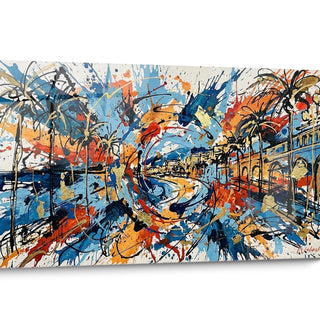 View all3979
artworks
View all3979
artworks
-
 Alsace32
artworks
Alsace32
artworks
-
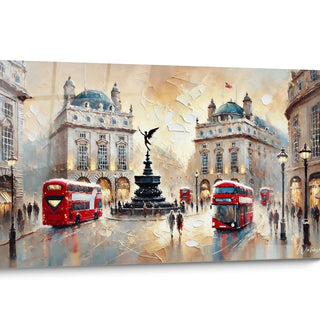 England6
artworks
England6
artworks
-
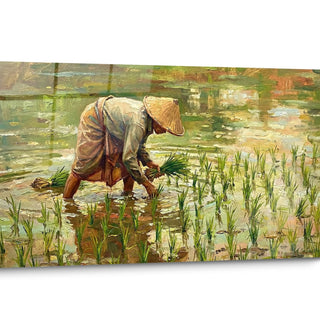 Bali38
artworks
Bali38
artworks
-
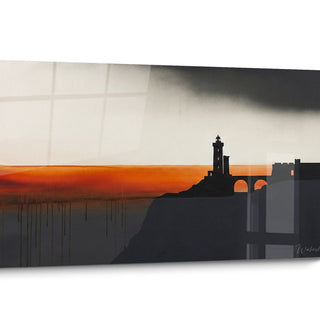 Brittany32
artworks
Brittany32
artworks
-
 Camargue34
artworks
Camargue34
artworks
-
 World Map6
artworks
World Map6
artworks
-
 Corsica26
artworks
Corsica26
artworks
-
 Côte d'Azur19
artworks
Côte d'Azur19
artworks
-
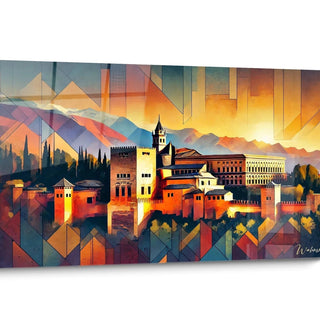 Spain66
artworks
Spain66
artworks
-
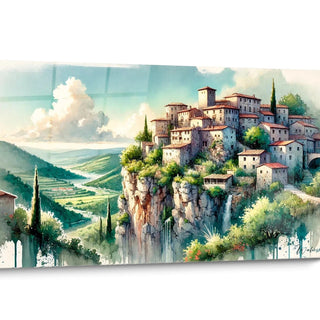 France2932
artworks
France2932
artworks
-
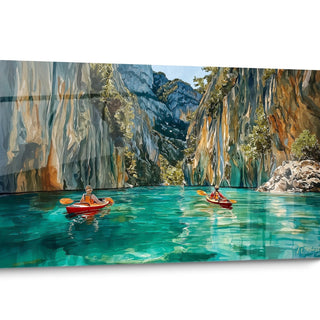 Verdon Gorges14
artworks
Verdon Gorges14
artworks
-
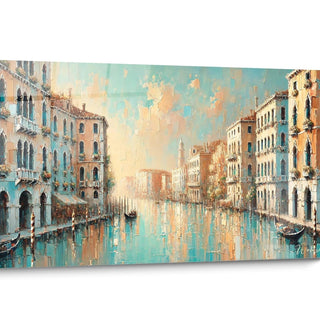 Italy8
artworks
Italy8
artworks
-
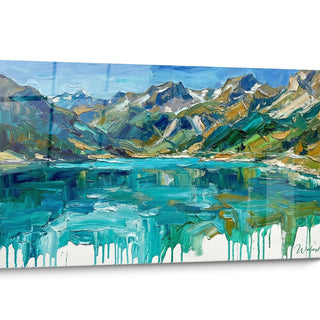 Savoy18
artworks
Savoy18
artworks
-
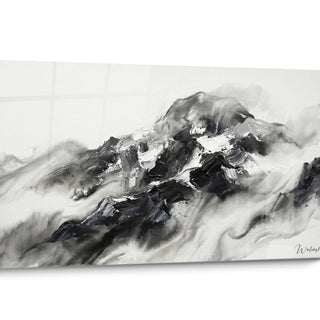 Mont Blanc15
artworks
Mont Blanc15
artworks
-
 The Alps21
artworks
The Alps21
artworks
-
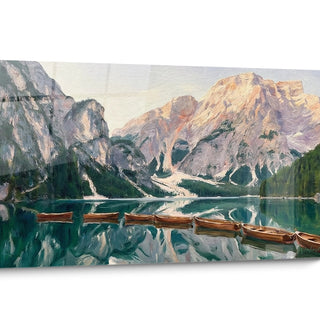 The Dolomites24
artworks
The Dolomites24
artworks
-
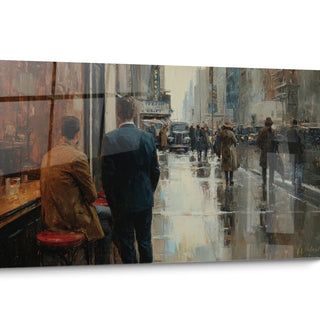 New York125
artworks
New York125
artworks
-
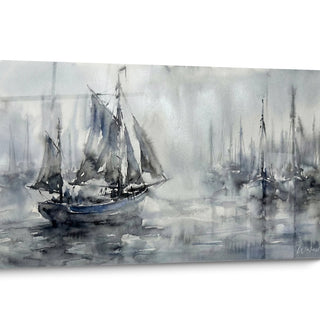 Normandy32
artworks
Normandy32
artworks
-
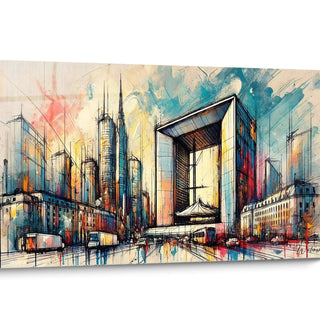 Paris32
artworks
Paris32
artworks
-
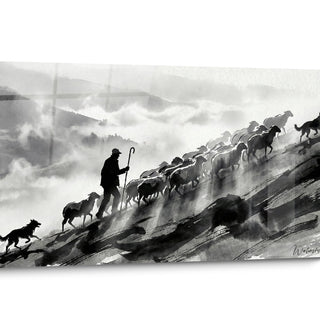 Basque Country5
artworks
Basque Country5
artworks
-
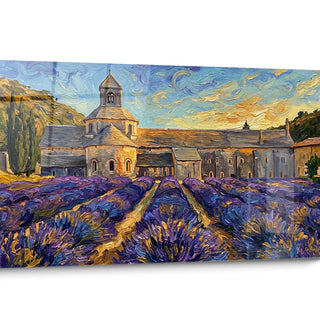 Provence24
artworks
Provence24
artworks
-
 Pyrenees20
artworks
Pyrenees20
artworks
-
 Saint-Tropez34
artworks
Saint-Tropez34
artworks
-
 Vosges21
artworks
Vosges21
artworks
All about Capbreton Painting
- Presentation of Capbreton Paintings
- The Blue of a Coast
- Gestures of the Coast
- Material and Relief
The Capbreton Paintings collection brings together scenes drawn from the identity of a small maritime town in the Landes region, where the rhythm of the tides still shapes daily life. You can see surfers paddling towards the swell, fishermen bent over their nets or busy repainting their boats, and solitary boats sailing towards the horizon. Each painting captures a fragment of this life turned towards the ocean, between silent labor and sporting glide.
What unites these Capbreton paintings is this constant tension between two times of the sea: that of waiting, almost meditative, and that of movement, almost brutal in its force. The human silhouettes, often reduced to shadows or outlines, leave all the space to the light and the pictorial matter, applied in wide impasto that gives relief to the water, the sky and the sand.
This collection is aimed at those who retain a deep attachment to the Atlantic coast and its rituals, whether they were born there or simply carried by the nostalgia of seaside vacations. It naturally finds its place in a living room, an entrance or an office seeking a wide breath, capable of visually opening a room onto a marine horizon.
Beyond the simple landscape, the Capbreton paintings offer an almost narrative reading: each scene evokes a gesture, a trade, a wait. It is this human dimension, rooted in a specific territory, that distinguishes the collection from a simple decorative evocation of the sea.
Where does this deep blue that runs through the Capbreton Paintings come from?
Why does this marine hue dominate so much in these paintings?
The marine blue that structures a large part of the Capbreton Paintings is not an arbitrary choice: it reproduces the particular color of the Landes Atlantic, darker and denser than the Mediterranean, loaded with sediments and cold currents rising from the open sea. This deep hue, applied in thick touches with a palette knife, captures the light according to the angle of view and changes in intensity throughout the day, a phenomenon that the inhabitants of the coast know intimately and that these works reproduce with an almost photographic fidelity despite their very free pictorial treatment.
What effect does this palette have on the atmosphere of a room?
Hanging such a dense blue on the wall is inviting a form of inhabited calm rather than coldness: the gaze sinks into the material, follows the movement of the sculpted waves, and finds that feeling of expanse typical of the great seas. In a north-facing living room or an office without a view, this chromatic depth acts as a window open onto a changing horizon, without ever falling into melancholy thanks to the white splashes of foam that rhythm each composition.
Does the gold of the mornings contradict this dominant blue?
Some paintings in the collection shift towards saffron yellows and powdery pinks, moments of dawn where the grazing light transforms the port into an almost unreal scene. This contrast is not decorative: it translates the double life of Capbreton, a town of morning fishermen and a playground for surfers in full daylight. The Capbreton Paintings thus play on two luminous registers that can respond in the same interior, one bringing the serenity of the evening, the other the warmth of a seaside awakening.
What the silhouettes of the Capbreton Paintings tell us about a territory
Why are these characters almost always silhouettes?
On most Capbreton Paintings, the fishermen and surfers appear in silhouette, without distinct features, almost anonymous facing the immensity that surrounds them. This pictorial choice is not a lazy simplification: it refers to a tradition of representing the seaman's work where the individual disappears before the gesture and the element. This convention can be found in marine painting for a long time, but applied here to a specific place, it anchors each scene in a collective ritual rather than a particular portrait.
What role do boats and beach huts play in these compositions?
The hand-painted boats and pastel beach huts that appear in some artworks reflect a coastal economy where maintaining equipment is an important part of daily life. It's not an accessory backdrop but an activity in its own right, as suggested by the crouching and concentrated posture of some characters. These elements give the collection a documentary-like dimension on the gestures that still rhythm the life of a Landes port, between artisanal fishing and seasonal maintenance of installations.
Do these scenes of labor coexist with the energy of surfing?
Yes, and that's precisely what distinguishes this collection from a simple evocation of a fishing village: the silhouettes paddling towards the swell introduce a faster, more physical rhythm, which contrasts with the slowness of the gestures of repairing or weaving nets. This coexistence reflects the recent history of Capbreton, which has become over the decades a recognized meeting place for surfers while retaining its identity as an active port, two temporalities that the Capbreton paintings manage to coexist on the same artwork.
Why does the paint relief seem almost sculpted?
The impasto technique using a palette knife, widely present in the collection, gives the waves a tactile relief that physically captures the light depending on the angle from which the painting is viewed. This approach, inherited from a pictorial tradition that favors matter over the precision of detail, transforms water into an almost geological surface, made of strata and crests. The result evokes more a coast sculpted by storms than a smooth postcard, which explains the feeling of continuous movement that emanates from each composition.
How does this visible material change the way it is hung at home?
A painting with a textured surface is not viewed in the same way depending on the time of day or the artificial lighting chosen: the paint reliefs project micro-shadows that subtly evolve the artwork throughout the day. Placed near a window or under directional lighting, a canvas from this collection reveals details invisible in full flat light, a quality particularly sought after by those who like a painting to continue to reveal itself after several weeks of hanging.
Does this rough grain dialogue with the marine subject depicted?
The roughness of the pictorial material resonates directly with the agitation of the water represented: the denser the swell on the canvas, the more layers of paint accumulate, as if the painter's gesture physically followed the movement of the waves. This consistency between technique and subject gives the Capbreton paintings a almost physical force, different from a marine treated in smooth flats, and explains why these artworks particularly attract a gaze that likes to guess the hand behind the image.
FAQ on Capbreton paintings
Why so many surfing scenes in a collection dedicated to Capbreton?
Capbreton has become over the decades a benchmark for surfing on the Landes coast, while remaining an active fishing port. The collection reflects this double identity: silhouettes paddling towards the swell coexist with scenes of nets and boats, two faces of the same territory that the Capbreton paintings choose to make dialogue rather than oppose.
Are these paintings suitable for someone who has never set foot in Capbreton?
Yes, the strength of these compositions lies in their ability to evoke a coastal atmosphere recognizable even without knowing the exact location: the grazing light, the silhouettes of fishermen, the textured swell speak first to an imaginary of the Atlantic coast shared by many, before referring to a particular port.
What to prefer between a scene of fishermen and a scene of surfers for an office?
The scenes of fishermen, more serene and bathed in golden light, are suitable for a space where one seeks calm and concentration. The scenes of surfers, more dynamic with their contrasting swell, inject more visual energy and are suitable for passageways or creative places, like a lively living room rather than a quiet office.
L'art qui suscite l'envie
Maison belge d'art mural grand format
14 jourspour changer d'avis*
Protection Walenskyincluse
Fabriquéen Italie
FormatXXL
Kit de fixationtoujours fourni
* Hors tableaux personnalisés et tailles personnalisées


