


Striped Black and White Wall Art
Our collection of striped wall art in black and white embodies minimalist elegance at its finest. These graphic artworks play with the striking contrast of black and white to create visually powerful compositions that structure your space with character. The rhythmic alternation of lines, sometimes parallel, sometimes intersecting, evokes both modernity and timelessness. These wall pieces integrate perfectly into contemporary interiors seeking refined sophistication. Ideal for creating a strong visual focal point, these graphic art pieces bring depth and dimension to your décor while maintaining an elegant and refined aesthetic.
 Inner Light Artwork - Black and White Edition228,90 €
 Inner Wave Wall Art - Black and White Edition273,90 €
 Ink Trail Canvas - Black and White Edition273,90 €
 Natural Twist Canvas - Black and White Edition273,90 €
 Soft Twist Painting - Black and White Edition273,90 €
 Breath Black Painting - Black and White Edition273,90 €
 Conscious Ribbon Wall Art - Black and White Edition273,90 €
 Tribal Gaze Wall Art - Black and White Edition273,90 €
 Nocturnal Wave Wall Art - Black and White Edition273,90 €
 Slender Shadow Artwork - Black and White Edition273,90 €
 Binary Tide Painting - Black and White Edition273,90 €
 Human Harmony Painting - Black and White Edition273,90 €
 Human Fusion Wall Art - Black and White Edition273,90 €
 Graphic Fluidity Wall Art - Black and White Edition273,90 €
 Raw Interlaces Artwork - Black and White Edition273,90 €
 Imprint Painting - Black and White Edition273,90 €
 Intertwined Mist Canvas - Black and White Edition273,90 €
 Ascension Canvas - Black and White Edition273,90 €
 Abyss Vibrant Wall Art - Black and White Edition273,90 €
 Shadow Fabric Wall Art - Black and White Edition228,90 €
 Floating Tension Wall Art - Black and White Edition228,90 €
 Calm Flame Painting - Black and White Edition228,90 €
 Black Foam Painting - Black and White Edition228,90 €
 Aura of Shadow Artwork - Black and White Edition228,90 €
Explore further
In Striped Black and White Wall Art


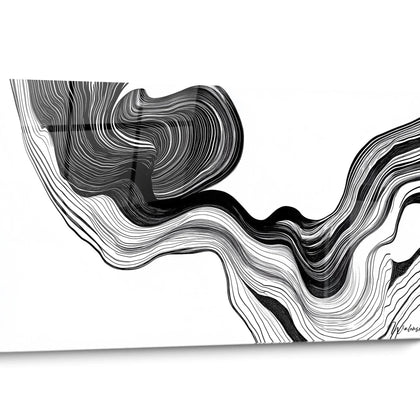

In the same family
Also explore the theme Black and white
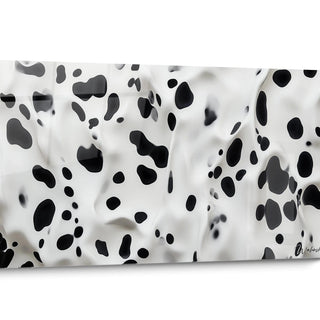


All about Striped Black and White Wall Art
- Presentation Striped Wall Art Black and White
- Visual Impact of black stripes and white
- Optical Illusions in Striped Wall Art
- Decorative Integration of Striped Patterns
Black and white striped wall art represents a wall decoration element with unique characteristics. These graphic works stand out through their contrasting linear pattern that creates immediate visual impact in any space. The apparent simplicity of monochromatic stripes actually conceals artistic sophistication that radically transforms a room's atmosphere.
Black and white striped artworks are perfect for contemporary design enthusiasts, minimalists, and optical art lovers. Their strength lies in their ability to visually structure space while delivering powerful visual dynamics without overwhelming existing decor.
These large-format wall pieces create a striking focal point and work particularly well in modern spaces, lofts, and minimalist interiors where contrast becomes the primary decorative element. If you're seeking a decorative piece that combines visual impact with timeless elegance, graphic style artworks represent a particularly judicious choice.
Discover in the following tabs the specific characteristics that make black and white striped wall art such a sought-after decorative element, the optical illusion techniques it employs, and advice for integrating it perfectly into your interior.
Visual Impact of Black and White Stripes in Wall Art
Black and white striped wall art is far more than a simple decorative element – it's a genuine artistic statement that instantly transforms a room's atmosphere. The power of contrast between absolute black and pure white creates an incomparable visual intensity that few other artistic styles can match.
How do black and white stripes modify our spatial perception?
One of the most fascinating characteristics of black and white striped wall art is its ability to alter our space perception. Unlike figurative or abstract works with varied colors, monochromatic striped patterns have a direct effect on our dimensional perception:
• Horizontal stripes tend to visually widen a narrow wall, creating a sense of more generous space
• Vertical stripes increase the impression of ceiling height, perfect for rooms with low ceilings
• Diagonal stripes bring dynamism and movement that animate neutral spaces
These large-format artworks thus become genuine architectural tools that visually restructure space without any structural modification.
The phenomenon of maximum contrast and its psychological impact
Black and white striped wall art exploits the most powerful contrast possible in the visual spectrum. This sharp opposition between the two extremes of luminosity produces several notable psychological effects:
• Immediate visual stimulation that naturally attracts the gaze
• An anchoring effect that stabilizes and structures the visual environment
• A reduction in surrounding visual noise through the establishment of a dominant focal point
Neuroscientists have demonstrated that our brain reacts more intensely to strong contrasts, which explains why black and white striped wall art captivates attention immediately even in a visually cluttered environment.
What are the different artistic expressions of black and white stripes?
The black and white striped motif, while appearing simple at first glance, actually offers a wealth of artistic expressions:
• Regular and uniform stripes evoke order, precision, and mathematical rigor
• Unequal or irregular stripes introduce visual tension and organic dynamism
• Stripes with soft or gradient edges create subtle optical vibration
• Cross-striped patterns generate complex structures that evolve according to viewing angle
These different artistic approaches transform an apparently simple motif into a sophisticated visual exploration that maintains its relevance over time.
Visual durability: why black and white stripes never go out of style
In a world where decorative trends evolve rapidly, black and white striped wall art possesses a rare quality: timelessness. This aesthetic permanence is explained by several factors:
• The absence of trendy colors that could date the work
• The universality of black/white contrast that transcends fleeting fashions
• The versatility of integration with virtually all decorative styles
• The permanent reference to graphic design fundamentals
Investing in large-format black and white striped wall art is therefore a judicious choice for those seeking a decorative element with powerful visual impact without fearing aesthetic obsolescence.
The great masters of optical art in black and white
The contemporary appeal for black and white striped wall art is part of a rich artistic tradition carried forward by visionary artists who explored the limits of visual perception:
• Victor Vasarely, pioneer of optical art, whose works play with illusions created by black and white contrasts
• Bridget Riley, famous for compositions that seem to vibrate and move before our eyes
• François Morellet, whose rigorous geometric structures create complex visual spaces
These artists demonstrated that the restriction to two non-colors (black and white) was not a limitation but rather an opportunity for intense perceptual exploration.
Contemporary black and white striped wall art inherits this rich tradition while adapting it to modern spaces and current aesthetic sensibilities, thus creating a bridge between art history and contemporary interior design.
Optical Illusions of Black and White Striped Wall Art
Black and white striped wall art possesses a fascinating characteristic that distinguishes it radically from other wall art styles: its ability to generate striking optical illusions. This unique perceptual dimension transforms a static work into a dynamic visual experience that evolves according to viewing angle and observation distance.
The visual vibration phenomenon specific to alternating stripes
When the human eye observes black and white striped wall art, particularly when lines are fine and regularly spaced, a remarkable phenomenon occurs: a flickering or visual vibration effect. This phenomenon is explained by how our visual system processes extreme contrasts:
• Retinal photoreceptors are alternately overexposed (white areas) and underexposed (black areas)
• This alternating stimulation creates localized neural fatigue that produces a perception of movement
• The effect intensifies with stripe fineness and regularity
Unlike traditional paintings that remain static, black and white striped wall art thus appears animated with its own life, creating a kinetic presence in the space.
How does the brain interpret monochromatic striped patterns?
Neuroscientists have extensively studied how our brain processes contrasting striped patterns, revealing several cognitive phenomena specific to black and white striped wall art:
• The "perceptual completion" phenomenon where the brain attempts to complete or extend striped patterns beyond the physical limits of the work
• The "afterimage" effect where prolonged contemplation of a striped pattern produces an inverted residual image when you look away
• Simultaneous stimulation of magnocellular visual pathways (sensitive to movement and contrast) and parvocellular pathways (sensitive to details)
This neurological complexity explains why black and white striped wall art continues to attract visual interest even after prolonged exposure, unlike other works that may become "invisible" through habituation.
The different types of illusions generated by black and white stripes
Black and white striped wall art can produce an astonishing variety of optical illusions depending on the precise configuration of the patterns:
• The depth effect: certain striped compositions create an impression of relief and three-dimensionality on a surface that is perfectly flat
• Curvature illusion: perfectly straight stripes can appear wavy or curved depending on their arrangement
• Spatial distortion effect: stripes may seem to expand or contract in certain areas of the artwork
• Apparent movement: the impression that stripes glide or oscillate when the observer moves before the work
These effects transform black and white striped wall art into an interactive experience that constantly evolves, offering visual richness paradoxical to the apparent simplicity of the motif.
The impact of oversized formats on the immersion effect
Large-format black and white striped wall art creates a particularly powerful perceptual immersion effect. This phenomenon intensifies with artwork size for several reasons:
• Occupation of a larger portion of the visual field increases peripheral stimulation
• The multiplication of black/white transitions reinforces the optical vibration effect
• The creation of a dominant visual environment that can temporarily modify overall space perception
This immersive potential makes oversized black and white striped wall art a particularly effective spatial transformation tool in large minimalist spaces where it can become the primary structuring element.
Accessible kinetic art: when the spectator becomes the actor
Black and white striped wall art transforms the spectator into an active participant in the artistic experience. By moving before the work, the observer constantly discovers new visual configurations:
• Moiré effects appear and disappear according to viewing angle
• Visual tension zones emerge differently depending on observation distance
• Ambient lighting radically modifies contrast perception
This participatory dimension fundamentally distinguishes black and white striped wall art from other more static wall art forms, offering a visual experience never entirely exhausted even after years of daily exposure.
Decorative Integration of Black and White Striped Patterns
Black and white striped wall art possesses an extraordinary structuring power in interior design. Far more than a simple decorative element, it becomes a genuine visual architectural tool capable of radically transforming a space's perception and atmosphere.
What type of space is particularly enhanced by black and white striped wall art?
Certain environments particularly benefit from integrating large-format black and white striped wall art:
• Minimalist spaces with neutral surfaces where graphic contrast brings essential visual dynamics
• Lofts and large volumes where the artwork becomes a visual anchor point that structures open space
• Monochromatic environments (entirely white or gray) that stripes come to punctuate and animate
• Contemporary interiors with clean lines where the striped motif echoes architectural geometry
The impact of black and white striped wall art is particularly striking in transitional spaces like entryways, corridors, or landings, where it naturally guides the gaze and movement.
The spatial magnification effect: exploiting stripes to modify proportions
One of the major assets of black and white striped wall art is its ability to visually transform room proportions:
• In a narrow space, artwork with horizontal stripes placed on the back wall creates a widening illusion
• For low ceilings, vertical stripes generate an impression of additional height
• In a long corridor, diagonal stripes energize perspective and reduce tunnel effect
• An overly spacious room can be visually "rebalanced" by a large striped artwork that creates a structuring focal point
These perceptual effects make black and white striped wall art a genuine optical correction tool for problematic spaces.
Ideal chromatic associations with black and white
The strength of black and white striped wall art also lies in its ability to harmonize with virtually all chromatic environments, but certain associations are particularly successful:
• With vibrant color accents (red, lemon yellow, electric blue) that gain intensity through contrast with black and white neutrality
• In environments with metallic tones (silver, copper, brass) where stripes create a graphic counterpoint to reflections
• With gray shades that create subtle transitions between black and white extremes
• In spaces with natural materials (raw wood, stone, linen) where geometric rigor of stripes balances organic material aspects
Black and white striped wall art acts as an amplifier of surrounding chromatic choices, reinforcing their impact while providing clear visual structure.
How to play with lighting to maximize the striped artwork effect?
The interaction between light and black and white striped wall art creates particularly spectacular effects that transform the work throughout the day:
• Directional lighting emphasizes the visual relief between light and dark areas, reinforcing the optical vibration effect
• Raking light exalts surface texture and creates shadows that visually extend the striped motif
• Adjustable lighting allows varying contrast intensity according to desired moments and moods
• Natural light variations throughout the day constantly animate the work, making it live and changing
A strategically lit black and white striped wall artwork thus becomes a dynamic lighting installation that constantly evolves, offering a renewed visual experience.
The balance between visual statement and decorative harmony
The primary challenge when integrating black and white striped wall art is finding the perfect balance between its powerful visual impact and the overall harmony of the space:
• In an already visually charged interior, favor artwork with wider and more regular stripes to avoid visual overload
• In a minimalist space, dare more complex or irregular striped motifs that become the primary focal point
• Consider the dominant orientation of existing architectural lines to either complement or create dynamic contrast
• Balance the striped artwork's presence with unified and soothing elements in its immediate environment
Mastering this balance transforms black and white striped wall art from a simple decorative element into the central pivot of a coherent spatial composition.
FAQ on Black and White Striped Wall Art
At what ideal distance should black and white striped wall art be placed to optimize its visual effect?
For large formats, a minimum distance of 2 to 3 meters is recommended to fully perceive the optical effects of black and white striped wall art. This allows the eye to embrace the entire composition while distinguishing the detail of the striped patterns.
Can black and white striped wall art work in a classic or traditional interior style?
Absolutely. The contrast between the rigorous geometry of black and white striped wall art and more ornamental elements of classic decor creates particularly interesting visual tension. This juxtaposition of styles transforms the work into a contemporary exclamation point in a traditional environment.
How to maintain black and white striped wall art to preserve contrast intensity?
To maintain optimal visual impact of black and white striped wall art, it's essential to avoid prolonged exposure to direct sunlight which could diminish contrast. Regular dusting with a soft feather duster will prevent particle accumulation that would gradually reduce striped pattern sharpness.


