


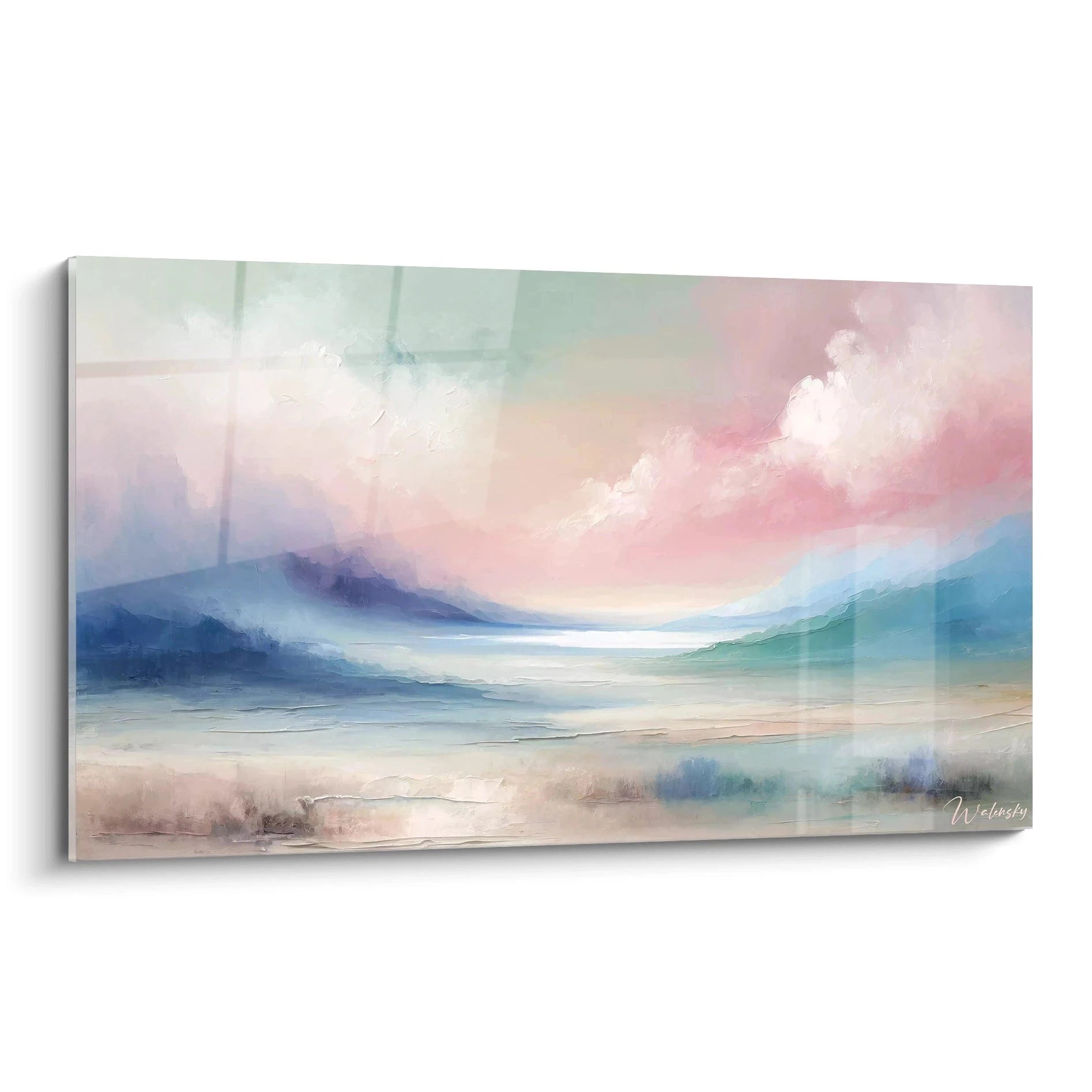


Artworks Inspired by Michelangelo
The paintings inspired by Michelangelo pay homage to the artistic brilliance of the Renaissance. Explore works rich in detail and expressiveness, evoking the grandeur of this timeless master. This unique collection celebrates the beauty of movement, anatomical perfection, and the emotional power of Michelangelo's creations.
 Painting Inspired by Michelangelo's Pietà No.2 – Tribute to a Celebrated Artist273,90 €
 Painting Inspired by Michelangelo's Pietà No.1 – Tribute to a Celebrated Artist273,90 €
 Painting Inspired by David of Michel Ange No.4 – Homage to a Celebrated Artist273,90 €
 Painting Inspired by Michelangelo's David No.3 – Tribute to a Celebrated Artist273,90 €
 Painting Inspired by Michelangelo's David N°2 – Tribute to a Celebrated Artist273,90 €
 Painting Inspired by Michelangelo's David N°1 – Tribute to a Celebrated Artist273,90 €
In the same family
Also explore the theme Famous Artists ( inspirations )
-
 View all265
artworks
View all265
artworks
-
 Alfred Sisley10
artworks
Alfred Sisley10
artworks
-
 Amedeo Modigliani12
artworks
Amedeo Modigliani12
artworks
-
 Camille Pissarro7
artworks
Camille Pissarro7
artworks
-
 Caspar David Friedrich11
artworks
Caspar David Friedrich11
artworks
-
 Claude Joseph Vernet3
artworks
Claude Joseph Vernet3
artworks
-
 Claude Monet10
artworks
Claude Monet10
artworks
-
 Edgar Degas8
artworks
Edgar Degas8
artworks
-
 Edvard Munch11
artworks
Edvard Munch11
artworks
-
 Edward Hopper8
artworks
Edward Hopper8
artworks
-
 Frida Kahlo6
artworks
Frida Kahlo6
artworks
-
 George Braque5
artworks
George Braque5
artworks
-
 Giuseppe Arcimboldo9
artworks
Giuseppe Arcimboldo9
artworks
-
 Goya8
artworks
Goya8
artworks
-
 Gustav Klimt8
artworks
Gustav Klimt8
artworks
-
 Gustave Courbet8
artworks
Gustave Courbet8
artworks
-
 Henri Matisse4
artworks
Henri Matisse4
artworks
-
 Hieronymus Bosch2
artworks
Hieronymus Bosch2
artworks
-
 Jean Baptiste Camille Corot9
artworks
Jean Baptiste Camille Corot9
artworks
-
 Jean François Millet7
artworks
Jean François Millet7
artworks
-
 Jean-Auguste-Dominique Ingres10
artworks
Jean-Auguste-Dominique Ingres10
artworks
-
 JMW Turner6
artworks
JMW Turner6
artworks
-
 Johannes Vermeer10
artworks
Johannes Vermeer10
artworks
-
 Leonardo da Vinci5
artworks
Leonardo da Vinci5
artworks
-
 Paul Gauguin6
artworks
Paul Gauguin6
artworks
-
 Peter Paul Rubens6
artworks
Peter Paul Rubens6
artworks
-
 Pierre-Auguste Renoir6
artworks
Pierre-Auguste Renoir6
artworks
-
 Piet Mondrian11
artworks
Piet Mondrian11
artworks
-
 Pieter Bruegel the Elder6
artworks
Pieter Bruegel the Elder6
artworks
-
 Rembrandt van Rijn4
artworks
Rembrandt van Rijn4
artworks
-
 Sandro Botticelli9
artworks
Sandro Botticelli9
artworks
-
 Sonia Delaunay6
artworks
Sonia Delaunay6
artworks
-
 Théodore Géricault7
artworks
Théodore Géricault7
artworks
-
 Vincent Van Gogh11
artworks
Vincent Van Gogh11
artworks
-
 Wassily Kandinsky10
artworks
Wassily Kandinsky10
artworks


All about Artworks Inspired by Michelangelo
- Presentation of Michelangelo Paintings
- Michelangelo Painting Legacy of the Renaissance
- Michelangelo Painting Artistic Techniques
- Michelangelo Painting Cultural Impact
Michelangelo's paintings represent a rare but extraordinarily valuable part of the artistic heritage of the Italian Renaissance. Unlike his monumental works such as the Sistine Chapel fresco, Michelangelo's panel paintings are few but of considerable influence on the history of art. These masterpieces reflect the exceptional anatomical mastery and spiritual depth that characterize the Florentine genius.
Michelangelo Buonarroti (1475-1564), primarily known as a sculptor and fresco painter, created a few famous paintings that testify to his revolutionary approach to the representation of the human body and the expression of emotions. Each painted work reveals his profound understanding of human anatomy, acquired during his dissection studies, as well as his Neoplatonic vision uniting physical beauty and spiritual elevation.
Collectors and art enthusiasts seek these paintings for their exceptional rarity, their unique historical context, and their ability to transform a space into a place of intellectual contemplation. A Michelangelo painting is not simply a wall decoration, but a window into the creative genius of the Italian Renaissance at its peak.
In the following sections, we will explore three fundamental aspects of Michelangelo's paintings: their Renaissance heritage and historical influence, the revolutionary artistic techniques they embody, and their lasting cultural impact to this day. These analyses will allow you to fully appreciate the artistic and historical value of a Michelangelo reproduction in your interior.
The Renaissance Legacy of Michelangelo's Paintings: Timeless Artistic Treasures
Michelangelo's paintings occupy a unique position in art history, representing the apogee of artistic expression of the High Renaissance. Unlike many painters of his time, Michelangelo considered himself primarily a sculptor, which makes his pictorial works particularly valuable for discerning collectors and art enthusiasts.
Why are Michelangelo's paintings considered jewels of the Renaissance?
The rarity of Michelangelo's panel paintings makes them exceptional pieces in the world of art. It is estimated that he created only about ten independent paintings throughout his career, preferring to express himself through marble and monumental frescoes. This rarity confers a particular value on each faithful reproduction for prestigious residential spaces.
The "Doni Tondo" (1506), the only universally recognized panel painting entirely attributed to his hand, perfectly illustrates the transition between the harmonious balance of the Quattrocento and the emerging dynamism of Mannerism. Its revolutionary circular composition creates a spiral movement that guides the gaze towards the spiritual center of the work.
The unique spiritual dimension of Michelangelo's paintings
Michelangelo's paintings transcend simple figurative representation to reach a profound spiritual dimension, imbued with Florentine Neoplatonism. His figures, with idealized but anatomically accurate proportions, embody the tension between earthly existence and divine aspiration, a recurring theme in Renaissance thought.
In the contemporary residential context, these works bring an unparalleled intellectual and spiritual depth. A Michelangelo painting in a living room or library transforms the space into a place of contemplation and reflection, inviting meditation on the fundamental questions of human existence that preoccupied Renaissance humanists.
The decisive influence on historical collectors
Historically, Michel-Ange's paintings were eagerly sought after by aristocratic families such as the Medici and grand ecclesiastical patrons. Their possession signaled not only wealth, but above all the intellectual refinement and artistic sensibility of the owner.
This tradition of enlightened collecting continues today. Acquiring a reproduction of a Michel-Ange painting is a testament to a sophisticated appreciation of art and a conscious connection with the humanist heritage of the Renaissance. These works become focal points in exceptional interiors, initiating conversations and cultural reflections.
Revolutionary compositions that redefine the pictorial space
Michel-Ange introduced radical compositional innovations in his paintings, abandoning traditional static arrangements in favor of dynamic structures that seem to defy the limits of the frame. His pictorially sculpted figures create an energetic tension that visually activates any space in which they are displayed.
In modern interiors with clean lines, this compositional energy provides a welcome dynamic counterpoint. A Michel-Ange painting creates a natural architectural focal point that structures the entire surrounding space, particularly effective in spacious rooms with high ceilings that recall the proportions of Renaissance palaces.
- The characteristic serpentine curves (figura serpentinata) create a unique visual dynamism in any exhibition space
- Terracotta, lapis-lazuli blue, and golden ochre hues bring a sophisticated color palette that harmonizes with contemporary interiors
- The interplay of light and shadow (chiaroscuro) transforms the lighting ambiance of the room where the painting is displayed
Contemporary collectors particularly appreciate how these monumental works can transform residential spaces into veritable private galleries, creating an atmosphere of intellectual grandeur and unparalleled aesthetic elevation compared to other forms of wall art.
Revolutionary Artistic Techniques of Michel-Ange's Paintings
Michel-Ange's paintings are distinguished by revolutionary pictorial techniques that testify to his unique training as a sculptor. This "sculptural" approach to painting confers an extraordinary three-dimensional dimension to his works, radically transforming any exhibition space.
Exceptional anatomical modeling that redefines the representation of the human figure
Michel-Ange developed an unprecedented approach to anatomical modeling in his paintings, the result of his anatomical dissections and his profound understanding of human musculature. Unlike the flatter representations of his contemporaries, his figures literally emerge from the pictorial surface with an almost sculptural presence.
This three-dimensional quality creates a striking effect in contemporary interiors, particularly in minimalist spaces where the contrast between modern architecture and the visual depth of the painting generates a captivating aesthetic tension. The twisted muscles and complex postures of his figures create dynamic focal points that visually animate any wall where they are displayed.
How does Michel-Ange's "non-finito" technique influence the ambiance of a room?
The "non-finito" (deliberately unfinished) characteristic of some of Michel-Ange's paintings creates a mysterious and evocative quality that particularly resonates with contemporary aesthetic sensibilities. This technique, where some areas remain deliberately sketched while others are finely detailed, generates a visual tension that activates the viewer's imagination.
In a residential space, this quality of apparent incompleteness stimulates intellectual engagement, transforming the painting into a constant visual conversation that evolves according to the viewing angle and lighting conditions. Sophisticated collectors particularly appreciate this interpretative depth that keeps the work perpetually new and stimulating.
- The subtle transition between finite and non-finite areas creates dynamic shadow plays that interact with the ambient lighting of the room
- Textured surfaces evoking marble bring a tactile dimension that contrasts with the smooth surfaces of modern interiors
- Different levels of finish direct the gaze through the pictorial space, creating visual pathways that activate the surrounding space
The distinctive color palette and its interaction with domestic lighting
Michelangelo's palette, characterized by striking contrasts between deep earthy colors and vibrant celestial hues, possesses a dramatic intensity that transforms the luminous atmosphere of a room. Unlike Raphael's softer palettes or Titian's warm Venetian tones, Michelangelo's paintings create a powerful visual presence that structures the spatial experience.
This chromatic intensity interacts remarkably with different types of residential lighting. Under indirect natural light, the subtleties of tonal transitions emerge, revealing the depth of modeling. In the evening, directional lighting highlights the pictorial reliefs, amplifying the unique sculptural quality of these works.
Discerning collectors strategically position their Michelangelo paintings to maximize these light interactions, creating spaces that dynamically transform throughout the day, offering a constantly renewed visual experience.
The transformative monumentality adapted to the domestic space
Even adapted to residential dimensions, Michelangelo's compositions retain their intrinsic monumental quality, creating a sense of "window" onto a transcendent space that visually expands the room in which they are displayed. This monumentality is not simply a matter of scale, but of structural design that transforms the spatial experience.
In contemporary residences with open spaces, this expansive quality of Michelangelo's paintings creates an architectural anchor that naturally organizes circulation and visual attention. Homeowners invariably notice how these works "enlarge" the space perceptually, creating a sense of elevation and amplitude.
For more intimate residential spaces, reproductions of Michelangelo paintings in adapted sizes retain this transformative quality, functioning as "metaphysical windows" that transcend the physical limits of the room, bringing a dimension of grandeur without compromising livability.
The Persistent Cultural Impact of Michelangelo's Paintings in Contemporary Space
Michelangelo's paintings exert a profound cultural influence that transcends their historical context, creating a particular resonance in contemporary residential spaces. This cultural persistence transforms these works into veritable portals through time that intellectually and aesthetically enrich any environment in which they are presented.
The silent conversation between contemporary architecture and Renaissance aesthetics
The clean lines and minimalist materials of contemporary architecture create a fascinating dialogue with the structural complexity and emotional richness of Michelangelo's paintings. This juxtaposition between modern simplicity and Renaissance complexity generates an aesthetic tension that intellectually activates the residential space.
Renowned architects such as Tadao Ando and Peter Zumthor have explicitly recognized Michelangelo's influence on their design of light and volume. In private residences, a strategically placed Michelangelo painting can amplify architectural intentions, highlighting the spatial and luminous qualities of the design.
The unique psychological effect of Michelangelo's figures in private space
The powerful and expressive figures characteristic of Michelangelo's paintings exert a distinct psychological influence on the emotional atmosphere of a residential space. Unlike other more decorative classical works, these representations evoke an almost physical presence that transforms the energetic dynamics of the room.
Environmental psychology studies suggest that regular contemplation of works with high emotional and intellectual charge, such as those by Michelangelo, significantly stimulates cognitive activity and existential reflection. Owners report that these paintings become "intellectual companions" that enrich the daily experience of the living space.
- The muscle tension of Michelangelo's figures creates an energetic charge that energizes living spaces
- The intense gazes of the characters establish an emotional connection that deeply personalizes the space
- The compositional complexity stimulates daily intellectual engagement with the domestic environment
How do Michelangelo's paintings transform the social perception of a space?
The introduction of a Michelangelo painting into a residential space substantially alters its social perception, signaling an appreciation for Western cultural heritage and a refined aesthetic sensibility. These works naturally become catalysts for conversation, enriching social interactions beyond superficial exchanges.
Hosts invariably notice how these paintings elevate the level of discussions, inspiring conversations about history, philosophy, and aesthetics that transcend mundane topics. This cultural dimension transforms the experience of visitors, creating distinctive memories associated with the space and its owners.
For contemporary collectors, this ability to qualitatively transform social interactions represents a significant value beyond purely aesthetic considerations, making Michelangelo's paintings investments in shared cultural experience.
The intellectual humanist legacy in the residential context
Michelangelo's paintings embody the humanist ideal of the Renaissance, fusing art, science, and philosophy in a unified visual expression. This intellectual synthesis brings exceptional cultural depth to residential spaces, establishing a tangible connection with the philosophical foundations of modern Western civilization.
In our digital age marked by the ephemeral, these works offer an anchor in historical and intellectual continuity, daily reminding us of fundamental humanist values: the importance of knowledge, human dignity, and the pursuit of excellence. This philosophical dimension transforms the act of interior decoration into a significant cultural statement.
FAQ about Michelangelo's paintings
What is the difference between a Michelangelo painting and his more famous frescoes?
Michelangelo's paintings are movable works painted on panel or other transportable support, while his frescoes are integrated directly into the architecture. Technically, his paintings often feature a more detailed finish and a different color palette, as pigments for paintings allow effects impossible in frescoes. The compositions of the paintings are generally more intimate but retain the characteristic monumentality of his style.
How to ideally position a Michelangelo painting in a contemporary interior?
A Michelangelo painting is best expressed on a clear wall benefiting from indirect natural light, ideally facing north or east. Allow for a contemplation space of at least 2.5 meters in front of the work. Avoid proximity to direct heat or humidity sources. For artificial lighting, prioritize LED spotlights with neutral color temperature (4000K) with high color rendering index (IRC>90), positioned at 30° relative to the vertical.
Which Michelangelo paintings are best suited for large living rooms?
For spacious residential spaces, reproductions of the "Tondo Doni" or the "Last Judgment" (although the latter is technically a fresco) offer maximum visual impact thanks to their circular or multidirectional compositions that activate the surrounding space. These complex works maintain their visual coherence even when viewed from different angles, a quality essential for large, free-flowing rooms. Their compositional richness allows for both a global and detailed appreciation, suitable for viewing at varying distances.


