


Enso Wall Art
The Enso Artwork embodies the quintessence of Zen philosophy through the sacred Japanese circle. This collection celebrates the art of the Zen circle in its purest form, where every brushstroke expresses enlightenment and wholeness. Inspired by Buddhist meditation, our selection of minimalist Enso artworks brings serenity and harmony to your interior. The unique brushstroke symbolizes the beauty of imperfection and the present moment. Perfect for creating a contemplative atmosphere, this collection transforms your space into a sanctuary of peace.
 Black Circle Brush Stroke on Beige - Zen Spirituality - Enso Edition228,90 €
 Abstract Black Circle Painting on Beige - Zen Purity - Enso Edition228,90 €
 Black Circle Brushwork with Green Bamboos Wall Art - Zen Serenity - Enso Edition228,90 €
 Black and Grey Ink Circle Wall Art - Zen Meditation - Enso Edition228,90 €
 Expressive Red Circle Wall Art with Dynamic Brushstrokes - Zen Meditation - Enso Edition228,90 €
 Black Shattered Circle Painting with Fluid Gold Accents - Golden Meditation - Enso Edition228,90 €
 Expressionist Circle Painting Turquoise Blue and Black - Perpetual Movement - Enso Edition228,90 €
 Interlocking Circles Painting Ochre and Black - Harmonious Spirals - Enso Edition228,90 €
 Midnight Blue and Gold Circle on Gray Background Painting - Golden Light - Enso Edition228,90 €
 Golden Circle with White Veins and Green Patina Painting - Mineral Harmony - Enso Edition228,90 €
 Red and Black Expressive Circle Painting - Contrasted Energy - Enso Edition228,90 €
 Two Black Circles Brushstroke Painting on Cream Background - Zen Minimalism - Enso Edition228,90 €
 Black and Gray Circle Wall Art with Ink and Drips - Liquid Meditation - Enso Edition228,90 €
In the same family
Also explore the theme Zen
-
 View all2161
artworks
View all2161
artworks
-
 Bonsai25
artworks
Bonsai25
artworks
-
 Buddha311
artworks
Buddha311
artworks
-
 Candle64
artworks
Candle64
artworks
-
 Koi Fish130
artworks
Koi Fish130
artworks
-
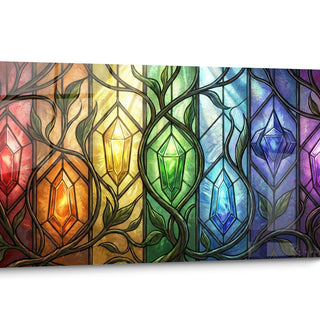 Chakras11
artworks
Chakras11
artworks
-
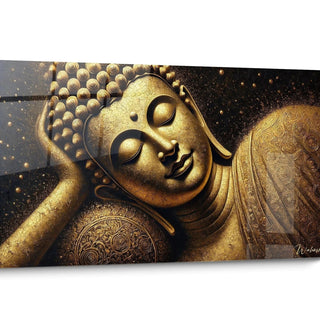 Zen Miscellaneous11
artworks
Zen Miscellaneous11
artworks
-
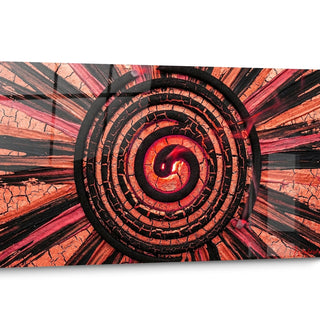 Incense7
artworks
Incense7
artworks
-
 Feng Shui904
artworks
Feng Shui904
artworks
-
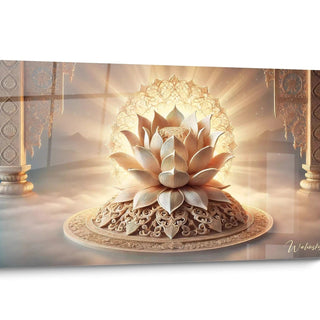 Lotus Flower20
artworks
Lotus Flower20
artworks
-
 Ganesh56
artworks
Ganesh56
artworks
-
 Grasses100
artworks
Grasses100
artworks
-
 Ikebana93
artworks
Ikebana93
artworks
-
 Kintsugi5
artworks
Kintsugi5
artworks
-
 Lantern51
artworks
Lantern51
artworks
-
 Mandala18
artworks
Mandala18
artworks
-
 Meditation18
artworks
Meditation18
artworks
-
 Pagoda79
artworks
Pagoda79
artworks
-
 Feather60
artworks
Feather60
artworks
-
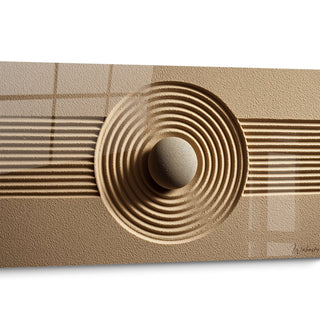 Sand60
artworks
Sand60
artworks
-
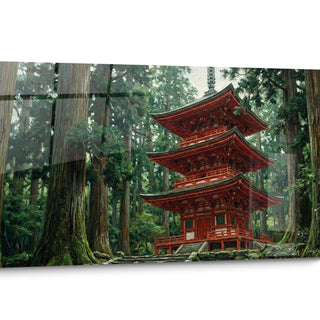 Buddhist Temple17
artworks
Buddhist Temple17
artworks
-
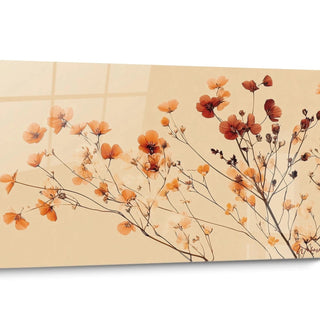 Terracotta436
artworks
Terracotta436
artworks
-
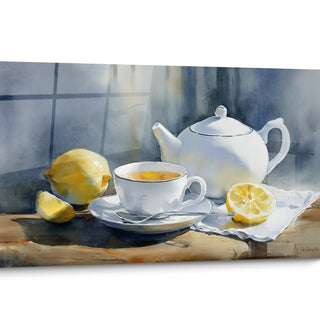 Japanese Teapot40
artworks
Japanese Teapot40
artworks
-
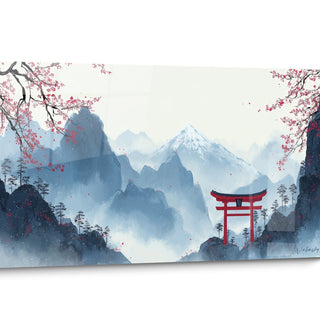 Torii77
artworks
Torii77
artworks
-
 Yin Yang99
artworks
Yin Yang99
artworks


All about Enso Wall Art
- Enso Wall Art Presentation
- Symbolism and Spirituality
- Visual Impact and Meditation
- Decorative Integration
The Enso wall art embodies the essence of Zen Buddhism through a circle traced in a single brush gesture. This monumental pictorial representation transforms living spaces into sanctuaries of contemplation, where the power of emptiness expresses itself in all its fullness. Designed to adorn large-scale walls, this millennia-old Japanese symbol brings an immediate spiritual dimension to your interior, inviting letting go and conscious presence in every moment of daily life.
The Zen Circle: Symbol of Illumination and Perfection in Imperfection
The Enso wall art represents one of the most powerful symbols of the Japanese Zen tradition. Unlike perfect geometric representations, this incomplete or irregular circle expresses the beauty of wabi-sabi, a philosophy celebrating impermanence and imperfection. Each variation in the line reveals the artist's state of mind at the moment of creation, capturing the present instant in its raw authenticity.
Why does the Enso circle have an opening?
The characteristic opening of many Enso artworks is not an error, but symbolizes the imperfection inherent in all existence. This gap in the circle reminds us that absolute perfection does not exist in the material world and that true wisdom lies in accepting this reality. For meditation practitioners and contemplative art enthusiasts, this opening becomes a gateway to deep understanding of Buddhist emptiness.
Gestural calligraphy in service of spiritual awakening
Traditionally traced in a single brush movement, the large-scale Enso wall art captures the vital energy of the calligrapher in its most direct manifestation. This instantaneous execution, with no possibility of correction, requires a state of absolute concentration and mental liberation. Acquiring such a piece for your meditation space or Zen living room creates a focal point for mindfulness training, constantly reminding you of the importance of right action and spontaneous movement.
From Buddhist temple to contemporary home
Historically reserved for Zen monasteries and spiritual practice spaces, Enso wall art now integrates into modern interiors seeking authenticity. The monumental formats available today allow you to recreate the contemplative atmosphere of temples in urban lofts, yoga studios, or therapy spaces. This cultural transposition respects the spiritual essence of the symbol while adapting it to Western aesthetic needs. To deepen your Zen decorative approach, explore also our collection of Zen wall art that will harmoniously complement your meditative environment.
The Enso wall art transcends mere decoration to become a support for inner transformation, a daily reminder of fertile emptiness and the fundamental unity of all things.
The Monumental Enso: Power of Minimalism in Large Formats
How does a black circle transform spatial perception?
A large-scale Enso wall art exerts a magnetic influence on the surrounding space. Its radical minimalism creates a visual void that paradoxically fills the room with a palpable presence. Generous dimensions amplify the meditative effect of the circle, allowing subtle variations in the line to become fully perceptible even from a distance. This monumentality transforms a simple symbol into an immersive experience, where the eye can lose itself in ink nuances and the textures of calligraphic gesture.
Contemporary spaces with generous volumes find in the XXL Enso wall art a perfect balance between formal simplicity and visual impact. Unlike busy compositions that fragment attention, this single circle unifies the gaze and instantly soothes the visual environment. The imposing scale necessary to adorn large-height walls finds here an elegant solution that never overwhelms the space.
Black contrast on light background as visual anchor
The chromatic duality inherent in Enso wall art creates a visual anchor point of rare intensity. The deep black of the circle on a neutral background generates optimal contrast that naturally captures the eye without aggression. This binary opposition evokes the principle of yin and yang, recalling the interdependence of opposites and the dynamic balance of universal forces. In minimalist Scandinavian interiors or Japandi spaces, this contrast becomes the structuring element of the entire decorative composition.
What psychological effects does daily contemplation of an Enso produce?
Regular exposure to an Enso wall art promotes informal visual meditation practice. The circle acts as a natural mandala, a concentration support that facilitates return to the present moment during daily transitions. Contemplative neuroscience confirms that simple circular forms reduce activity in the brain's default mode network, the constant mental chatter that is a source of stress and anxiety.
For practitioners of zazen, vipassana, or mindfulness, installing this symbol in their living space extends the benefits of formal practice. Simply letting your gaze pass over the circle throughout the day reactivates states of consciousness cultivated in meditation, thus creating micro-moments of presence that accumulate to gradually transform the quality of daily attention.
Enso as antidote to modern visual saturation
In a hyperstimulating world where screens and information constantly solicit our attention, Enso wall art offers a visual refuge, a zone of graphic silence. Its radical simplicity contrasts with surrounding complexity and creates a space for cognitive breathing. Large formats amplify this effect by establishing a visual buffer zone that mentally protects from the aesthetic aggressions of the contemporary world.
Harmonizing Enso with Contemporary Living Spaces
In which environments does Enso wall art express its full potential?
The Enso wall art finds its privileged place in spaces dedicated to introspection and mental regeneration. Yoga and meditation studios naturally adopt it as a focal point for seated practices. Psychotherapy offices and wellness centers integrate it to create an atmosphere conducive to letting go. In private homes, bedrooms, reading spaces, and meditation corners benefit particularly from its soothing presence.
The streamlined architectures of minimalist style or Japandi interiors provide the ideal setting to welcome this symbol. Immaculate white walls, natural materials like light wood, and organic textures create a perfect setting for the Zen circle. Open volumes and high ceilings showcase monumental formats, allowing Enso wall art to deploy its full contemplative power without being visually compressed.
Creating a wall composition around the sacred circle
Unlike complex wall galleries, Enso wall art requires specific treatment respecting its minimalist essence. The optimal approach consists of granting it wall solitude, avoiding any visual competition that would dilute its meditative impact. If space allows, a slightly off-center asymmetrical arrangement creates subtle visual tension that paradoxically reinforces the circle's balancing effect.
For collectors wishing to create visual dialogue, association with three-dimensional natural elements works harmoniously: a piece of driftwood placed on a minimalist console, a streamlined ikebana arrangement, or Zen pebbles intentionally arranged. These organic complements respect the wabi-sabi philosophy of Enso wall art without creating visual saturation.
What viewing distance to optimize for a monumental Enso?
Imposing formats require sufficient distance to grasp the circle in its entirety. A minimum distance of three to four meters allows the eye to embrace the entire line without ocular movement, thereby facilitating entry into meditative state. This spatial consideration influences placement choice: walls facing a room's entrance or visible from circulation spaces offer this ideal depth of field.
Contemporary open spaces, where kitchen, living room, and dining area interpenetrate, allow positioning the piece as a unifying element visible from multiple zones. This gentle omnipresence of the Zen circle transforms the entire home into an environment conducive to mindfulness, without ever imposing its presence intrusively.
Is Enso wall art suitable for professional spaces?
Absolutely. Conscious enterprises increasingly integrate Enso wall art into their reflection spaces and strategic meeting rooms. Its presence promotes mental clarity and balanced decision-making, while signaling a corporate culture valuing consciousness and authenticity.
How to clean and maintain a large-scale Enso wall art?
Minimal maintenance reflects the philosophy of the symbol: gentle and regular dusting suffices. Avoid direct sun exposure which could alter the deep black pigments. The simplicity of maintenance corresponds to the Zen spirit of non-attachment and respect for the natural impermanence of things.
Can multiple Enso artworks be associated in the same space?
This approach is inadvisable as it dilutes the meditative power of the unique symbol. The very essence of Enso resides in its uniqueness, reflecting the present moment in its absolute singularity. Multiplying circles would create a conceptual repetition contradictory to the Zen philosophy of the uniqueness of each instant.
Further reading
Our articles on this topic
L'art qui suscite l'envie
Maison belge d'art mural grand format
14 jourspour changer d'avis*
Protection Walenskyincluse
Fabriquéen Italie
FormatXXL
Kit de fixationtoujours fourni
* Hors tableaux personnalisés et tailles personnalisées


