


Abstract Futurism Wall Art
Our abstract futurism wall art pieces celebrate dynamism and innovation. Inspired by the futurist movement, these artworks explore speed and modern forms through fluid lines and bold perspectives. Perfect for contemporary interiors, they add an avant-garde touch to your walls. Discover technology, movement and artistic energy.
 Quantum technology painting - Cybernetic Lights - abstract futurism edition273,90 €
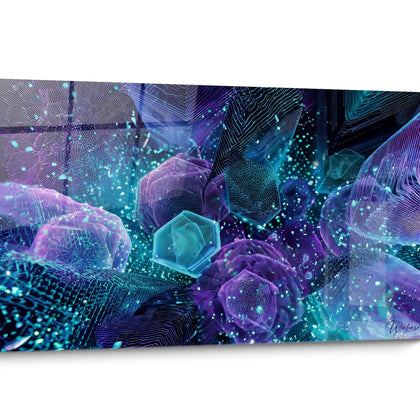
 Crystalline iridescent shapes painting - Luminous Fragments - abstract futurism edition273,90 €
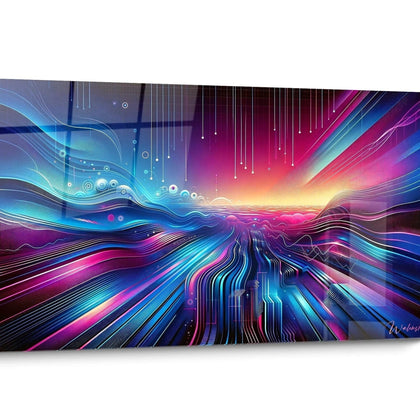
 Holographic metallic flux painting - Chromed Vortex - abstract futurism edition273,90 €
 Abstract geometric shapes painting - Cosmic Symphony - abstract futurism edition273,90 €
 Cyberpunk Futuristic City Painting - Neon City - Abstract Futurism Edition273,90 €
 Geometric Crystals Painting - Fragmented Cosmos - Abstract Futurism Edition273,90 €
 Colored Energy Flows Painting - Cosmic Symphony - Abstract Futurism Edition273,90 €
 Energy Waves Painting - Cosmic Flow - Abstract Futurism Edition273,90 €
 Cosmic Window Painting - Purple Dimension - Abstract Futurism Edition273,90 €
 Futuristic Crystal Painting - Digital Constellation - Abstract Futurism Edition273,90 €
 Human Digital Profile Painting - Quantum Emergence - abstract futurism edition273,90 €
 Abstract Geometric Forms Painting - Cosmic Symphony - abstract futurism edition273,90 €
 Iridescent Crystals Painting - Light Prism - abstract futurism edition242,90 €
 Cosmic Wave Painting - Galactic Spiral - abstract futurism edition242,90 €
 Iridescent Feathers Painting - Cosmic Flight - abstract futurism edition242,90 €
 Holographic Architecture Painting - Digital Cosmos - abstract futurism edition242,90 €
 Futuristic architecture painting - Cybernetic city - abstract futurism edition228,90 €
 Cosmic crystalline cubes painting - Galaxy Mirror - abstract futurism edition228,90 €
 Golden Architectural Radiance Wall Art - Abstract Futurism Edition242,90 €
 Convergence Painting Spiritual Element Orange - abstract futurism edition242,90 €
 Whirlwind Wall Art - Abstract Futurism Edition273,90 €
 Scarlet Sphere Wall Art - Abstract Futurism Edition273,90 €
 Mask of Knowledge Wall Art - Abstract Futurism Edition273,90 €
 Lines of Light Wall Art - Abstract Futurism Edition273,90 €
Explore further
In Abstract Futurism Wall Art
In the same family
Also explore the theme Artistic Movements
-
 View all793
artworks
View all793
artworks
-
 Acrylic (style)10
artworks
Acrylic (style)10
artworks
-
 Art Deco164
artworks
Art Deco164
artworks
-
 Islamic Art9
artworks
Islamic Art9
artworks
-
 Art Nouveau39
artworks
Art Nouveau39
artworks
-
 Comic Strip16
artworks
Comic Strip16
artworks
-
 Baroque22
artworks
Baroque22
artworks
-
 Bauhaus31
artworks
Bauhaus31
artworks
-
 Billiards19
artworks
Billiards19
artworks
-
 Classicism16
artworks
Classicism16
artworks
-
 Collage14
artworks
Collage14
artworks
-
 Constructivism31
artworks
Constructivism31
artworks
-
 Cubism91
artworks
Cubism91
artworks
-
 Dadaism33
artworks
Dadaism33
artworks
-
 Drawing20
artworks
Drawing20
artworks
-
 Expressionist95
artworks
Expressionist95
artworks
-
 Abstract Fauvism10
artworks
Abstract Fauvism10
artworks
-
 Gothic29
artworks
Gothic29
artworks
-
 Hyperrealism28
artworks
Hyperrealism28
artworks
-
 Impressionism23
artworks
Impressionism23
artworks
-
 Japandi13
artworks
Japandi13
artworks
-
 Light painting3
artworks
Light painting3
artworks
-
 Minimalist35
artworks
Minimalist35
artworks
-
 Neo-classical15
artworks
Neo-classical15
artworks
-
 Op Art20
artworks
Op Art20
artworks
-
 Abstract Contemporary Painting48
artworks
Abstract Contemporary Painting48
artworks
-
 Pointillism59
artworks
Pointillism59
artworks
-
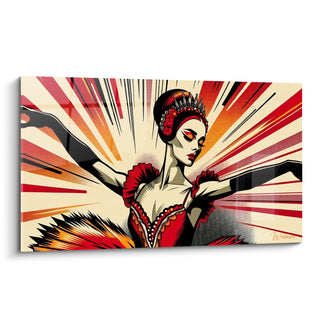 Abstract Pop Art18
artworks
Abstract Pop Art18
artworks
-
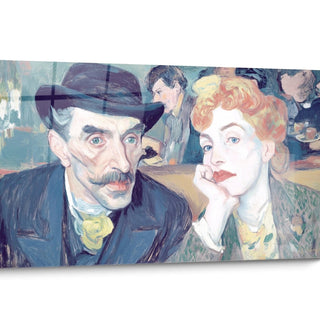 Post-Impressionism15
artworks
Post-Impressionism15
artworks
-
 Pre-Raphaelitism11
artworks
Pre-Raphaelitism11
artworks
-
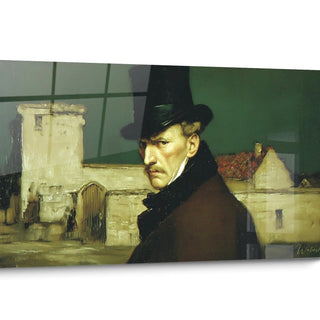 Realism10
artworks
Realism10
artworks
-
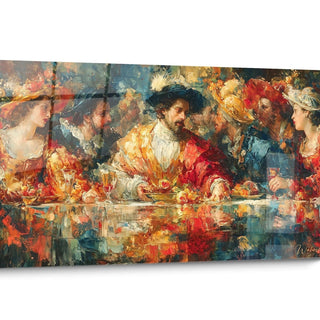 Renaissance13
artworks
Renaissance13
artworks
-
 Italian Renaissance12
artworks
Italian Renaissance12
artworks
-
 Rococo5
artworks
Rococo5
artworks
-
 Romantic12
artworks
Romantic12
artworks
-
 Romanticism17
artworks
Romanticism17
artworks
-
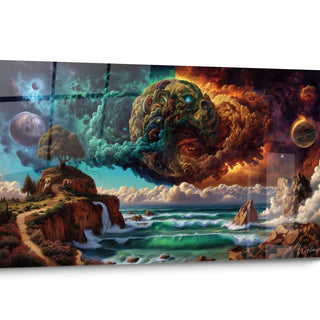 Abstract Surrealism34
artworks
Abstract Surrealism34
artworks
-
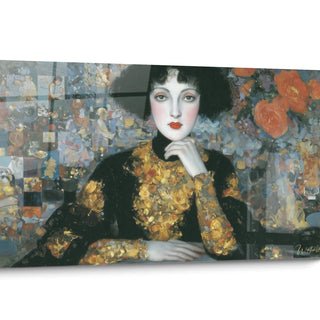 Symbolist26
artworks
Symbolist26
artworks
-
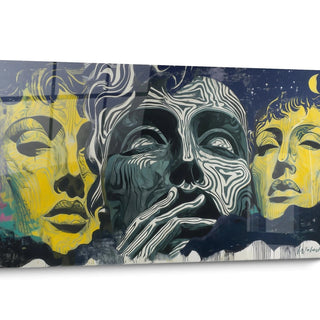 Vanity21
artworks
Vanity21
artworks
All about Abstract Futurism Wall Art
- Presentation Abstract Futurism Abstract Futurism
- Abstract Futurism Dynamic Sensory Paintings
- Abstract Futurism Contemporary Technology Paintings
- Abstract Futurism Architectural Spaces Paintings
Abstract futurism paintings represent an innovative fusion between the historical futurist movement and contemporary abstraction. These captivating artworks radically transform modern spaces through their visionary representation of movement, speed, and technology. Unlike simple wall decorations, these abstract paintings create dimensional portals that project your environment into an alternative reality where time and space converge.
Abstract futurism distinguishes itself through its unique ability to capture the essence of our constantly evolving digital era. These artistic creations become windows into a technological future, merging complex geometric elements with dynamic compositions that seem almost in perpetual motion even on a static surface.
Abstract futuristic pieces are particularly sought after for minimalist contemporary spaces, innovative corporate offices, and avant-garde architectural interiors. Their presence instantly transforms an ordinary space into a visually stimulating environment that evokes innovation and forward-thinking vision.
These paintings distinguish themselves through their bold chromatic palette, often composed of striking contrasts between vibrant primary colors and futuristic metallic hues. Complex geometric compositions create a dimensional depth sensation that defies the physical limitations of wall space.
Abstract futuristic art transcends mere decoration – it represents a visual philosophy that celebrates technological progress, innovation, and the constant evolution of our contemporary world. It is an investment in an artistic vision that doesn't become outdated, but rather anticipates future aesthetic trends.
Exploring the Sensory Dimension of Abstract Futurism Paintings
Abstract futurism paintings transcend the traditional concept of wall art by offering a unique multisensory experience. These artworks are not simply observed - they are felt, experienced, and integrated into daily life in a revolutionary way. The perpetual movement captured in these artistic pieces creates a sensation of kinetic energy that animates the entire space.
These futuristic artistic creations fundamentally transform the spatial perception of a room. Unlike traditional artworks that remain confined within their frames, abstract futuristic art pushes visual boundaries, creating an illusion of spatial expansion particularly effective in contemporary urban environments with limited dimensions.
Why do abstract futurism paintings create a unique sensory immersion?
The neurological impact of abstract futuristic compositions is fascinating. Research in neuroesthetics demonstrates that these artworks simultaneously stimulate multiple brain regions, particularly those linked to motion perception and anticipation. This multiple activation generates a deeper and more memorable emotional response than conventional static art.
Light play constitutes a fundamental element of the abstract futuristic experience. These paintings are designed with deep understanding of light reflectivity and absorption, creating changing effects depending on the time of day and lighting sources. At sunrise, a work may reveal unsuspected warm tones, while in the evening, metallic nuances may take over.
The immersive quality of large-format abstract futuristic pieces transforms a simple wall into a dimensional portal. Strategically placed in a contemporary living space, such a work becomes a focal point that redefines the entire ambiance and subtly influences the mood of the inhabitants. Environmental therapists now recognize the potential of these artworks to reduce stress in high-tech professional spaces.
How to select an abstract futurism painting suited to your neurosensory environment?
The acoustics of a room influence the perception of abstract futurism paintings - a concept rarely considered when choosing an artwork. Spaces with reflective surfaces amplify the visual impact of complex geometric compositions, while acoustically damped environments create a more contemplative and intimate experience with the work.
Futuristic kinetic compositions can be strategically positioned to influence circulation flows in an architectural space. A work with directional lines placed in a corridor can unconsciously guide movement, while a centripetal composition in a meeting space encourages concentration and convergence of ideas.
For interior design professionals, abstract futurism paintings become tools for spatial transition. Placed at the junction between different functional zones of an open space, they create subtle visual demarcation without requiring physical separation, thus maintaining architectural fluidity while clearly defining different activity areas.
The temporal dimension of these artworks constitutes their most distinctive characteristic. Unlike fixed art, an abstract futurism painting evolves visually over time, progressively revealing new dimensions and interpretations. This evolving quality makes them particularly durable artistic investments, as they continue to stimulate visual and intellectual interest year after year.
Avant-garde collectors now seek abstract futurism paintings incorporating subtle reactive elements - thermosensitive pigments, variable reflectivity surfaces, or compositions optimized for augmented reality. These innovations transform the work into a quasi-living entity that reacts to its environment, perfectly embodying the futuristic vision of art in constant technological evolution.
Abstract Futurism Paintings in the Era of Technological Convergence
Abstract futurism paintings represent far more than a simple decorative trend - they embody the fascinating convergence between artistic expression and contemporary technological innovation. In a world where the boundary between real and virtual progressively blurs, these visual artworks become conceptual interfaces between our tangible present and an emerging technological future.
The digital revolution has profoundly influenced abstract futuristic aesthetics, creating a visual dialogue with our daily technological interfaces. The complex geometric compositions and algorithmic structures present in these paintings echo the digital architectures surrounding us, establishing immediate cognitive resonance with the contemporary observer.
How do abstract futurism paintings reflect our relationship with artificial intelligence?
Contemporary abstract futuristic works often integrate patterns that subtly evoke data visualizations and neuromorphic representations. In technology-focused work environments, these paintings create visual continuity with digital screens and interfaces, transforming the professional space into a cohesive visual ecosystem where art and technology converge.
For innovative technology companies, the acquisition of abstract futurism paintings represents a strategic alignment between their corporate identity and physical environment. These artworks instantly communicate to visitors and collaborators values of innovation, non-linear thinking, and technological avant-gardism without requiring explicit verbal communication.
Perceptual interactivity represents a unique dimension of the abstract futuristic experience. Though physically static, these artworks create an illusion of reactivity through compositions that seem to reconfigure their visual organization based on observation angle and ambient light conditions, thus mimicking the adaptability of modern digital interfaces.
Fractal and algorithmic compositions frequently incorporated in abstract futurism paintings stimulate brain regions associated with pattern recognition and problem-solving. This subtle cognitive stimulation can potentially improve systems thinking and innovation capabilities in creative and analytical workspaces.
Why integrate an abstract futurism painting into a high-technology environment?
Aesthetic bioresonance constitutes an emerging phenomenon in optimized workplace environments research. Abstract futurism paintings with balanced dynamic compositions can counterbalance visual fatigue induced by screens, offering an alternative focal point that realigns attentional patterns and reduces cognitive overload linked to hyperconnectivity.
In emerging mixed reality spaces where AR/VR technologies overlay our physical environment, abstract futurism paintings serve as ideal visual anchors for augmented experiences. Their geometric complexity and distinctive patterns make them excellent reference points for spatial tracking systems, while maintaining aesthetic coherence between real and virtual layers.
High-tech biophilic environments represent a growing architectural trend, integrating natural elements and advanced technologies. In these contexts, abstract futurism paintings incorporating stylized biomimetic patterns create a harmonious visual transition between natural components and technological infrastructure, conceptually unifying the space.
For discerning investors, the acquisition of abstract futurism paintings represents a remarkable diversification strategy. These artworks, situated at the intersection of contemporary art and technological innovation, historically demonstrate significant value appreciation, particularly when they anticipate aesthetic trends subsequently adopted by mainstream digital design.
Abstract Futurism Paintings in Contemporary Architectural Spaces
Abstract futurism paintings radically transform the perception of contemporary architectural spaces, creating a unique symbiosis between built structure and visionary artistic expression. Beyond simple decorative elements, these artworks become conceptual extensions of the architecture itself, extending its lines of force and amplifying its spatial intentions.
In minimalist environments characterized by refined lines and monochromatic surfaces, the introduction of an abstract futurism painting creates a calculated point of visual tension. This juxtaposition between architectural restraint and futuristic exuberance generates a dynamic balance that animates the space without compromising its fundamental aesthetic coherence.
How do abstract futurism paintings transform the spatial perception of a contemporary interior?
The visual Venturi effect represents a fascinating perceptual phenomenon observed in spaces integrating large-format abstract futurism paintings. Dynamic compositions with pronounced lines of flight create visual acceleration that subtly modifies the perception of spatial proportions, making corridors appear longer, ceilings higher, or perspectives more dramatic.
Avant-garde interior architects strategically use abstract futurism paintings as instruments of perspectival correction in spaces with challenging proportions. A horizontal composition with expansive motifs can visually widen a narrow space, while a vertical artwork with ascending lines amplifies the perceived height of a low ceiling.
Chromatic resonance between an abstract futurism painting and the surrounding architecture creates sophisticated visual continuity. The metallic and reflective hues present in these artworks often establish a subtle dialogue with structural elements in steel, aluminum, or glass, thus unifying the overall aesthetic experience of the space.
In contemporary offices privileging open spaces, abstract futurism paintings fulfill a crucial acoustic and psychological function. Their textured surfaces and visually complex compositions help break the monotony of large flat surfaces while offering focal points that structure the work environment visually without resorting to physical partitions.
What criteria should be considered for optimal integration of an abstract futurism painting in contemporary architecture?
Lighting designers specializing in the field recommend precisely adapting lighting systems to the specific characteristics of abstract futurism paintings. Artworks incorporating metallic or reflective elements particularly benefit from directional lighting with variable temperature, revealing different dimensions of the work according to settings, thus transforming a static piece into an evolving visual experience.
Circulation flow analysis reveals that abstract futurism paintings subtly influence movements and behaviors in public and commercial spaces. Strategically positioned, these artworks can redirect attention, create contemplative pauses, or accelerate transit in certain zones, becoming organizational tools for space rather than mere ornaments.
For loft owners and converted industrial spaces, abstract futurism paintings offer an elegant solution for humanizing structures that are sometimes austere without compromising their raw architectural character. The juxtaposition between concrete, exposed metal, and futuristic compositions creates sophisticated visual tension that elevates the space beyond simple industrial rehabilitation.
Advanced home automation integrators are beginning to incorporate abstract futurism paintings into residential technology ecosystems. In smart homes, certain contemporary artworks are now designed with reactive pigments or subtle interactive elements that respond to environmental changes or system commands, transforming wall art into aesthetic interfaces for connected living spaces.
Frequently Asked Questions about Abstract Futurism Paintings
What is the difference between an abstract futurism painting and a printed digital artwork?
Unlike digital prints, authentic abstract futurism paintings present a tactile dimensionality and material depth impossible to reproduce in printing. This materiality creates unique light interactions and physical presence that fundamentally transforms a space, beyond the purely visual impact of a printed image.
How do abstract futurism paintings complement spaces dominated by parametric architecture?
In environments characterized by parametric architecture with complex organic forms, abstract futurism paintings establish a natural conceptual dialogue. The visual algorithms and non-Euclidean geometries present in these artworks echo the mathematical principles underlying parametric design, creating coherent intellectual and aesthetic continuity.
Do abstract futurism paintings retain their visual impact in spaces characterized by strong natural light?
Contemporary abstract futuristic artworks are specifically designed to evolve with natural light variations. In spaces bathed in light, their multi-layered compositions progressively reveal different chromatic dimensions throughout the day, offering a dynamic visual experience that continually enriches the architectural environment.
Further reading


