- Climbing Wall Art Overview
- Climbing Wall Art: Inspiration and Motivation
- Climbing Wall Art: Culture and Climber Identity
- Climbing Wall Art: Progression and Technique
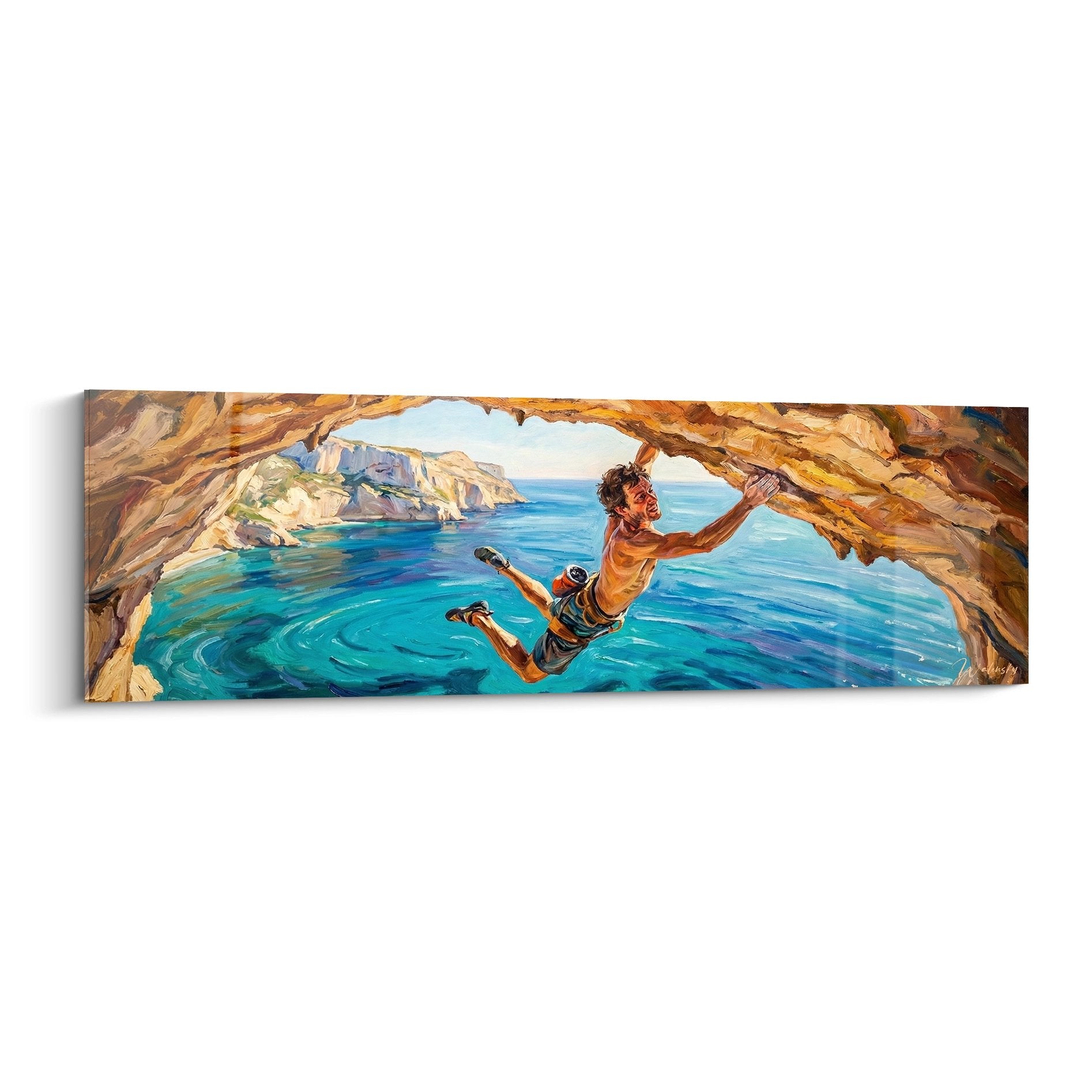
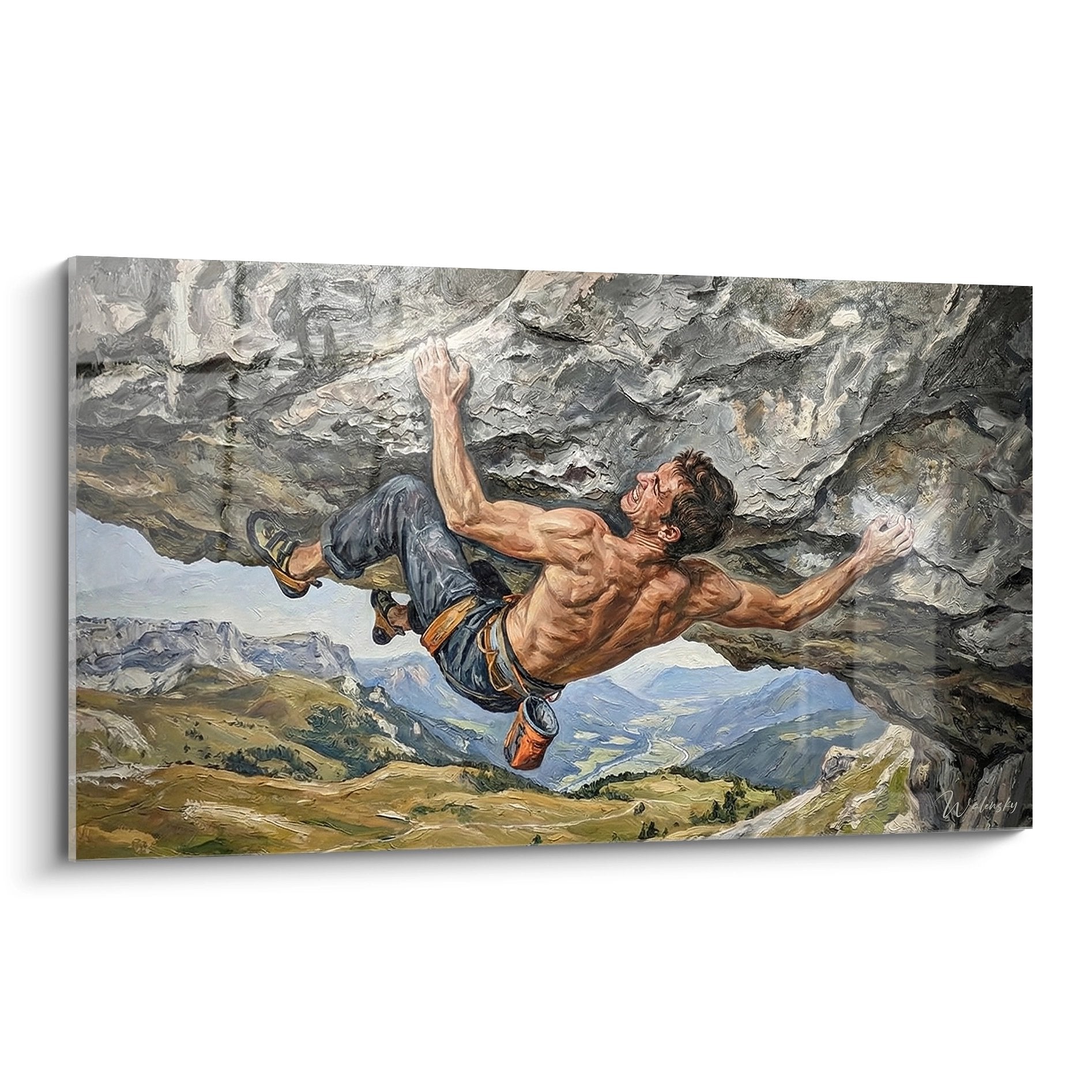
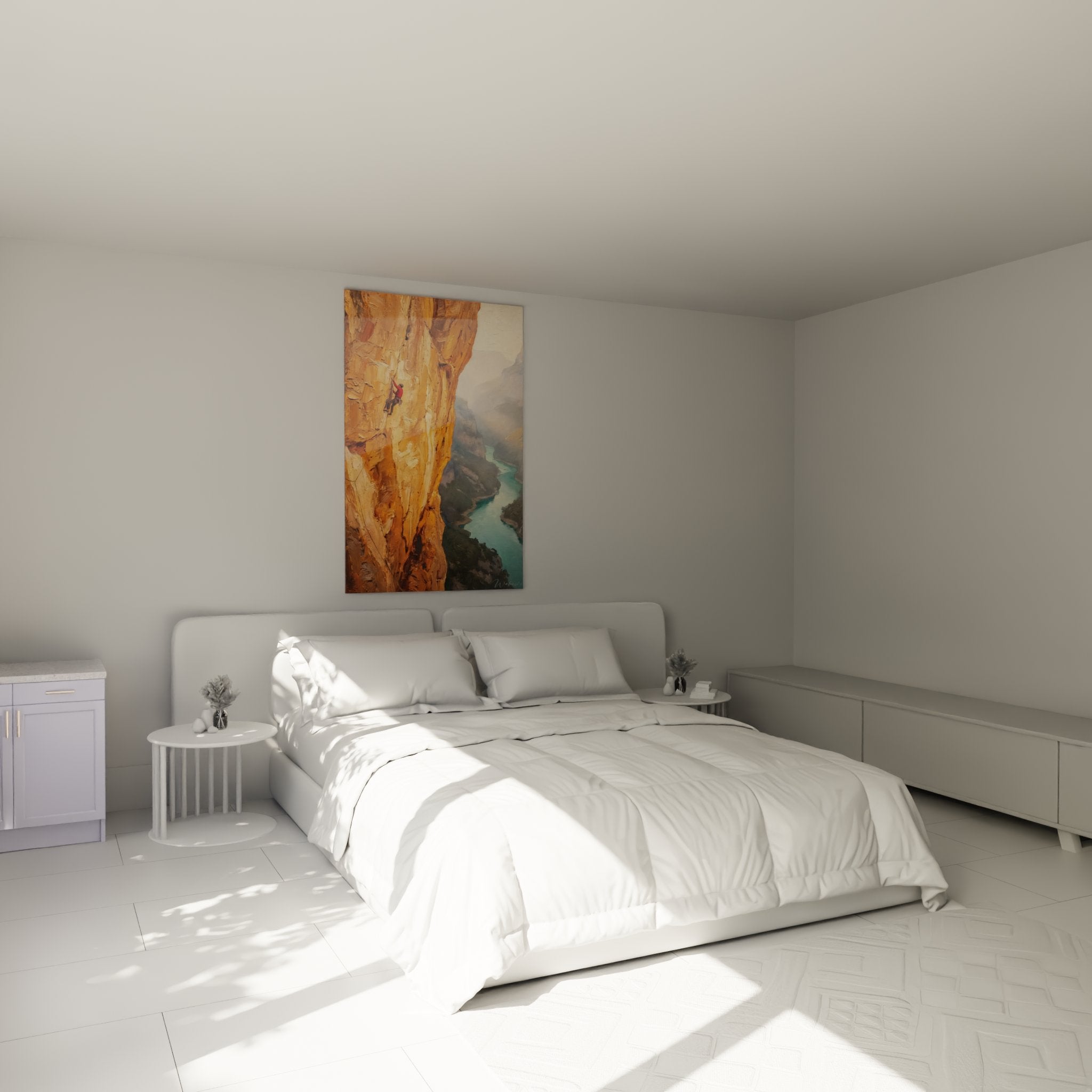
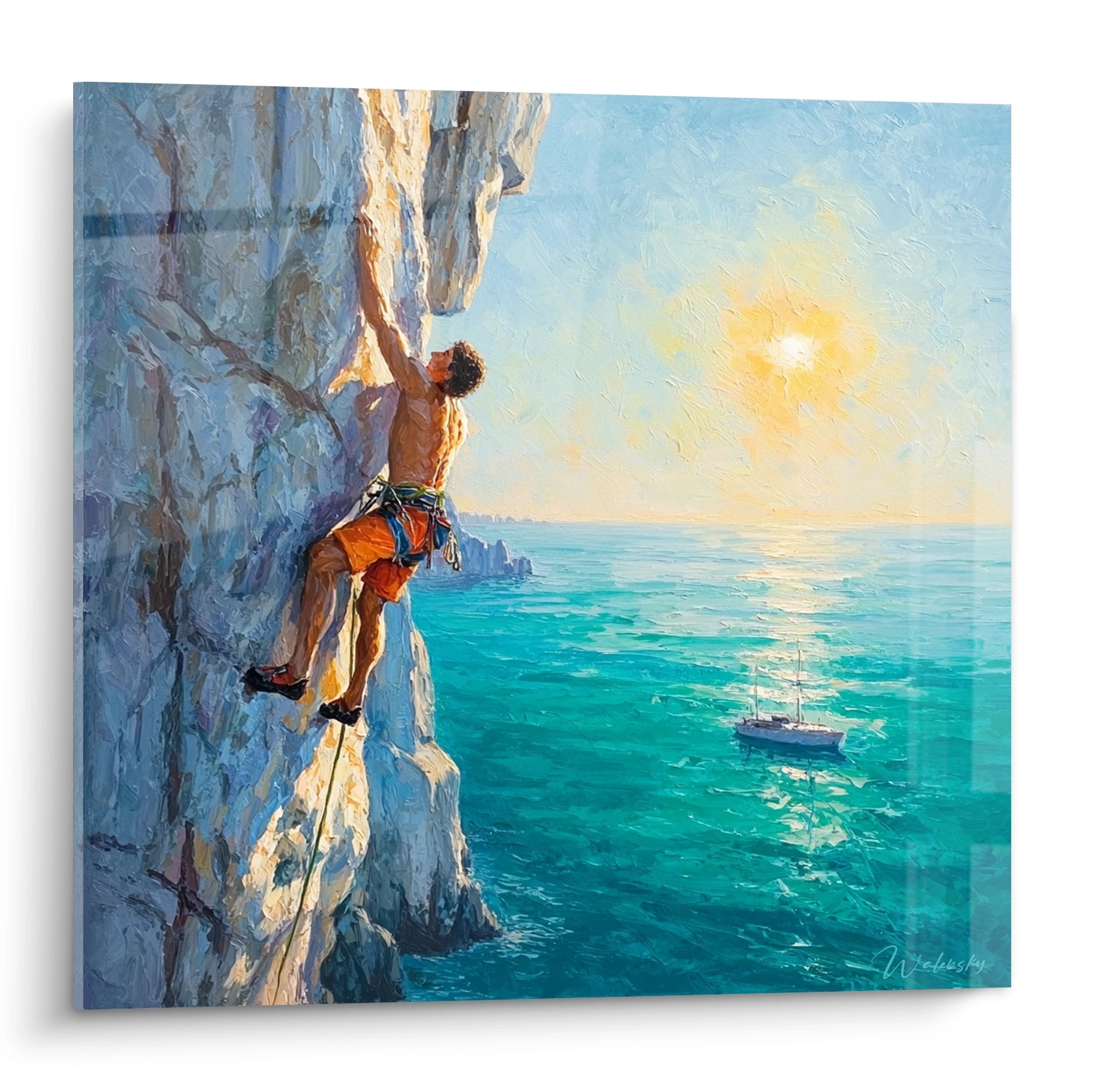
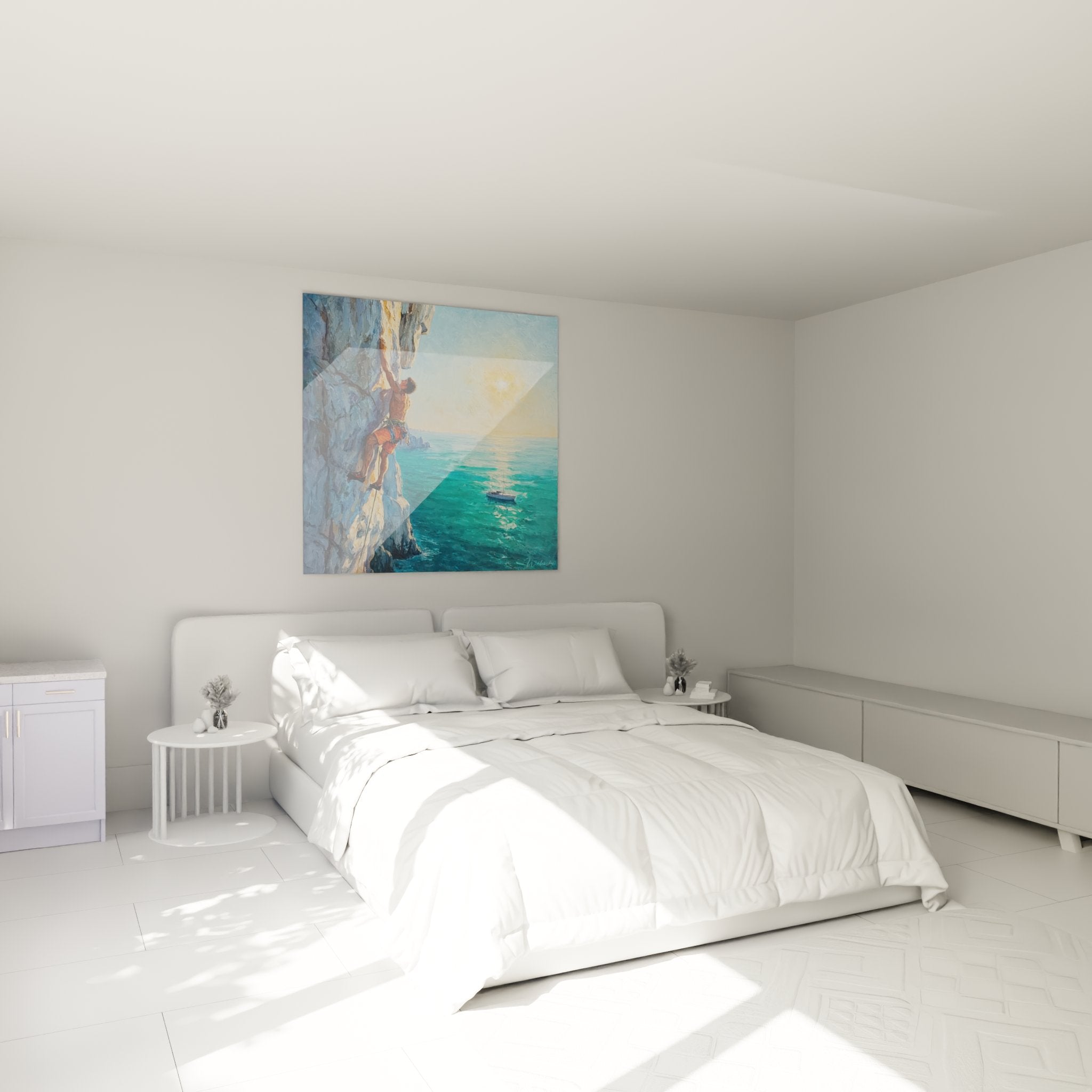
Discover our exclusive collection of climbing wall art designed for climbing enthusiasts and lovers of vertical adventures. These large-format mural creations celebrate the authentic world of climbers, capturing the intensity of movements, the beauty of rock faces, and the spirit of achievement that drives this discipline. Whether you're an experienced climber or an admirer of this spectacular sport, our wall decorations transform your space into a true sanctuary dedicated to the passion of ascension. Each visual tells a story of rope teams, vertical challenges, and harmony with stone, bringing an inspiring dimension to your interior.
Climbing Wall Art: Visual Fuel for Your Climber's Motivation
The climbing wall art pieces are far more than simple decoration for climbing enthusiasts. They represent a daily reminder of your vertical objectives, a visual anchor that keeps the flame of your personal progression alive. When you're experiencing a plateau on a difficult project or when weather conditions keep you away from your favorite cliffs, these mural representations act as a powerful psychological stimulus.
How does a wall mural stimulate a climber's determination?
Mental visualization is a recognized technique in the preparation of elite climbers. A mural decoration showing a complex movement sequence, a demanding overhang passage, or a spectacular roof exit activates the same neural circuits as actual practice. Your brain encodes visual information and strengthens your muscle memory even during rest periods. This daily visual immersion unconsciously prepares your body and mind for future challenges you'll face on the rock.
Doubt is an integral part of every climber's journey. Facing a crux that has resisted for weeks, giving up can seem tempting. It's precisely in these moments that your visual environment plays a determining role. A mural visual showing a climber engaged in a difficult section, fingers gripping a microscopic edge, body in maximum tension, reminds you that every progression requires patience and perseverance. This visual confrontation with authentic effort reactivates your commitment to your personal projects.
Representation of different climbing styles in wall decoration
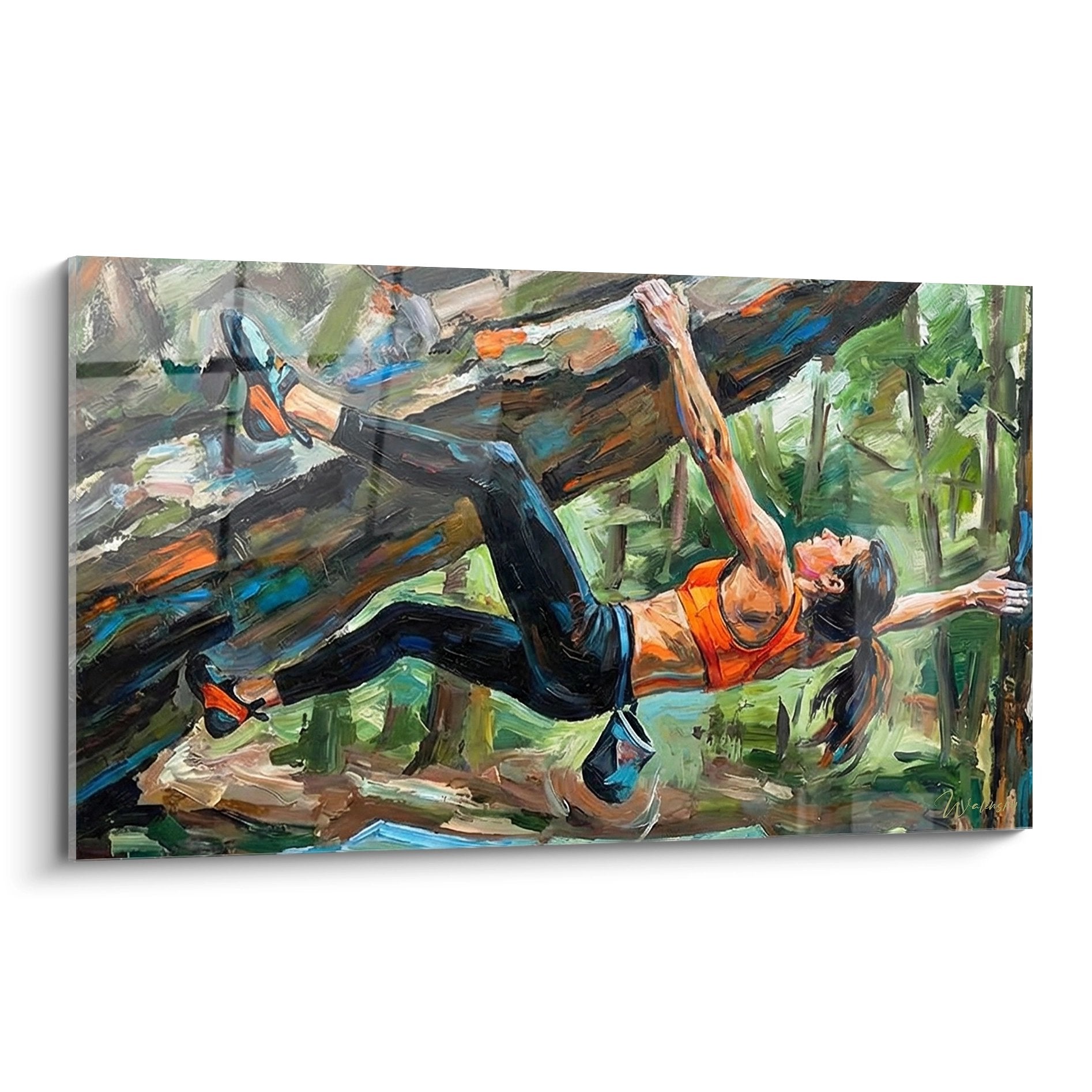
The climbing universe encompasses multiple disciplines, each possessing its own aesthetics and specific visual codes. Bouldering representations capture the explosiveness of short but intense movements, where every hold counts and where falling is part of the learning process. These visuals often show climbers close to the ground in extreme dynamic positions, reflecting the powerful and athletic nature of this practice. For enthusiasts of this discipline, these images instantly evoke the smell of climbing chalk, the rough texture of Fontainebleau sandstone, and the adrenaline of desperate lunges toward distant holds.
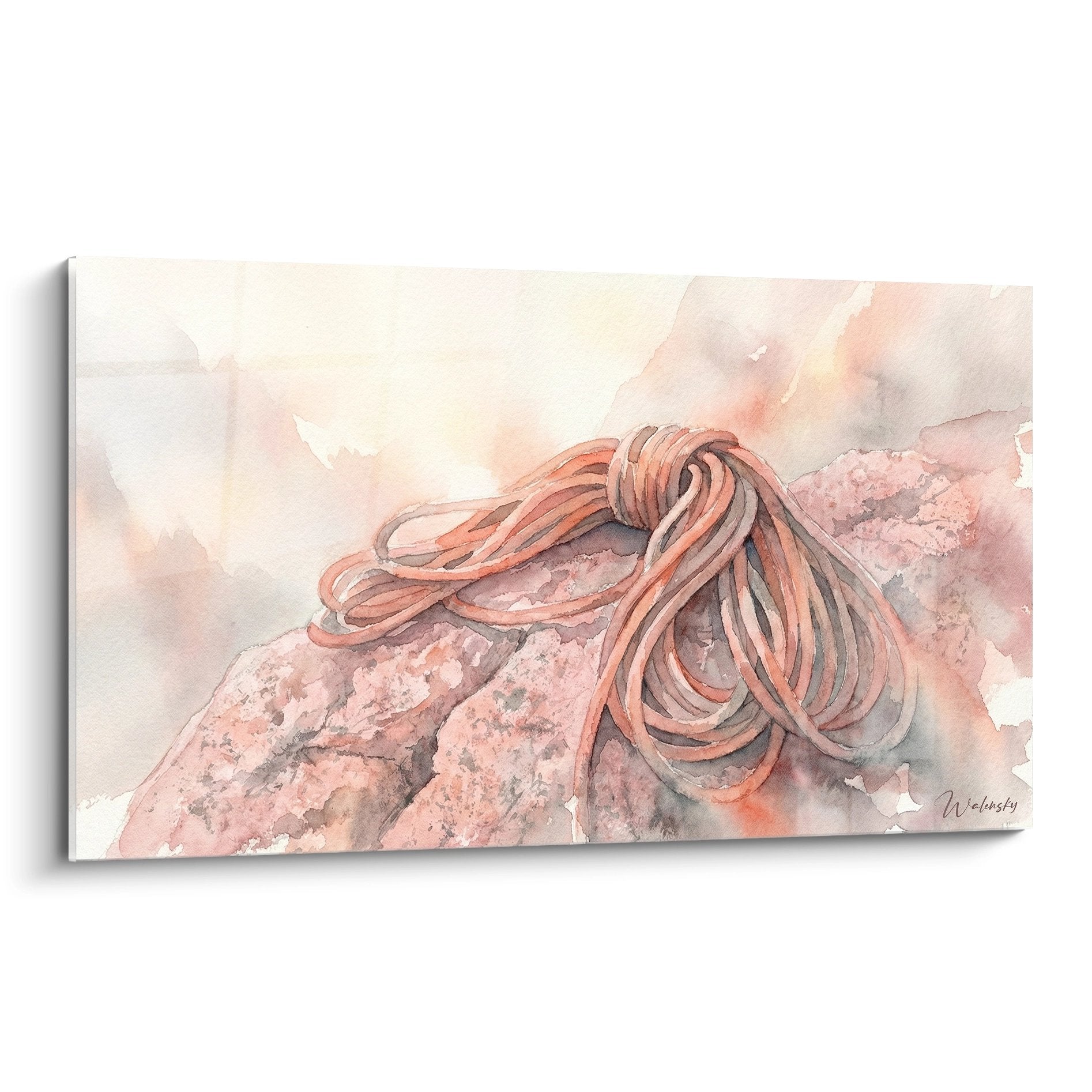
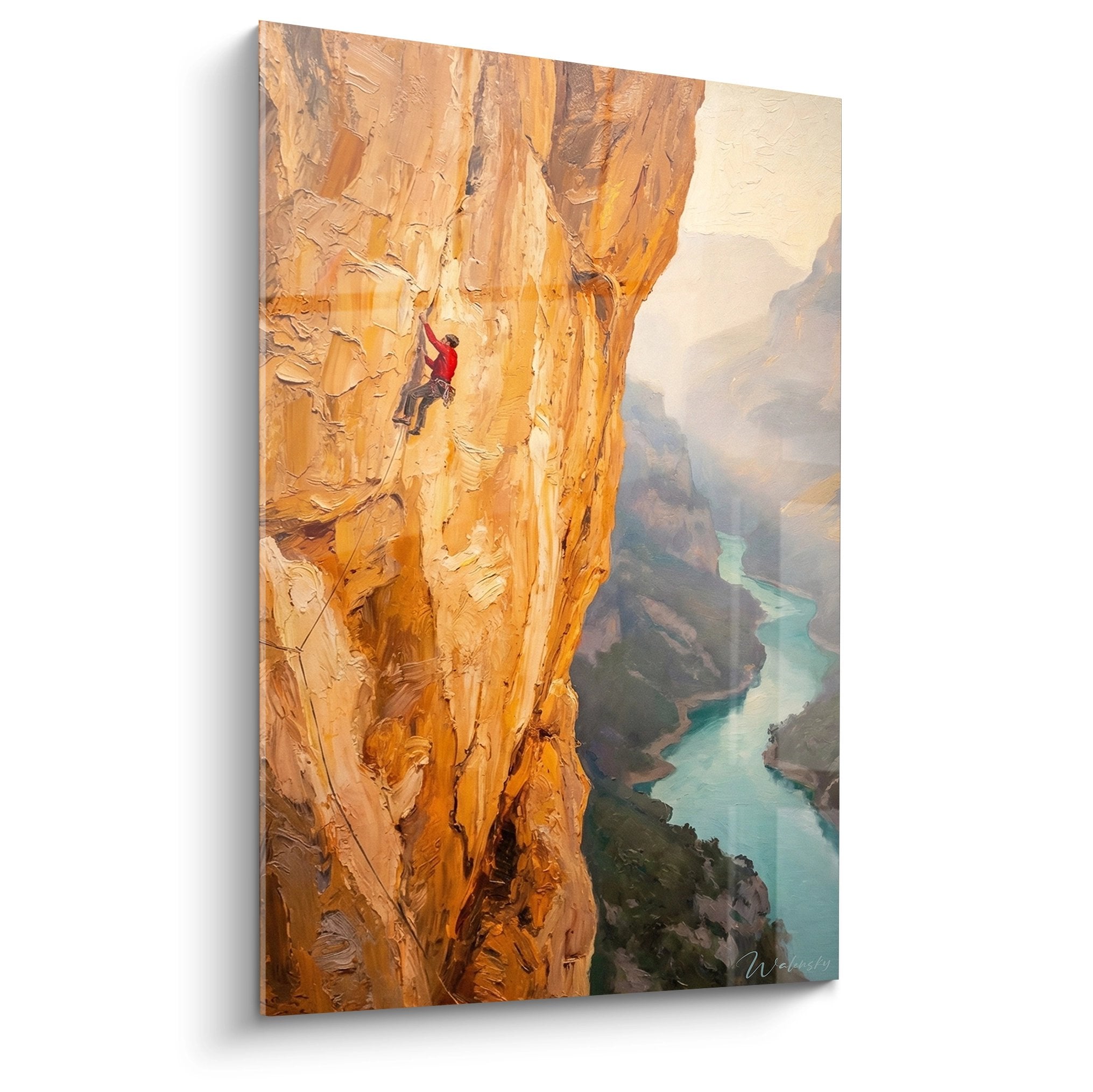
Multi-pitch climbing offers a radically different visual dimension. These monumental vertical scenes, where the climber appears tiny against the immensity of the wall, convey a sense of adventure and total commitment. The presence of safety equipment—colored quickdraws, dynamic rope, harness—adds a narrative dimension that speaks directly to climbers engaged in this practice. Exploring our collection of sports decorations will help you find the representation that resonates with your personal climbing style.
The psychological impact of vertical achievement visuals
Fear is a constant companion for climbers, particularly during exposed passages where the potential fall intensely engages the nervous system. A mural decoration illustrating a climber mastering this fear, focused on the next movement despite the void beneath their feet, conveys a powerful subliminal message. Your subconscious registers this image of emotional control and absolute concentration. Over time, this repeated exposure reinforces your own ability to manage anxiety during your climbing sessions.
Long-term projects define the experience of many passionate climbers. These routes or boulders that demand weeks or even months of repeated work test mental determination as much as physical capabilities. Having before your eyes the representation of a climber in full effort, muscles bulging, face expressing fierce determination, creates an emotional connection with your own journey. This visual identification transforms your living space into a permanent mental preparation zone.
Mythical climbing spots immortalized in your decoration
Certain climbing locations possess a particular aura in the collective imagination of climbers. The cliffs of Céüse with their athletic overhangs, the legendary boulders of the Fontainebleau forest, the vertiginous walls of Verdon, or the exceptional limestone formations of Kalymnos represent far more than simple practice sites. These destinations embody pilgrimages for passionate climbers, places where climbing history was written. A wall visual capturing the unique atmosphere of these spots fills your interior with an almost mystical dimension.
The low-angle morning light on a limestone wall, the orange tones of sandstone at sunset, the immaculate whiteness of granite in high mountains—each rock type possesses its distinctive visual signature. These chromatic and textural elements, faithfully transcribed in an imposing mural format, mentally transport the climber to these exceptional environments. Between training sessions at the gym, this visual journey maintains a living connection with outdoor practice and nourishes the desire to explore new vertical challenges.
Pre-session rituals and motivating visual environment
Many climbers develop specific routines before their important sessions. Physical warm-up is often accompanied by equally essential mental preparation. Your domestic visual environment actively participates in this psychological conditioning. Contemplating for a moment a striking climbing visual before heading to the cliff or gym activates your climber mindset, instantly reconnecting you to your objectives and sporting identity.
Injury periods represent the most difficult times for any dedicated climber. The inability to practice creates a frustrating void, a disconnection from an essential part of your identity. During these delicate phases, maintaining a strong visual link with climbing through your wall decoration preserves the motivation necessary to respect the recovery process. These images remind you what awaits once you're healed, transforming forced patience into constructive anticipation rather than bitter resignation.
Climbing Wall Decoration: Affirm Your Belonging to the Vertical Community
Climbing transcends far beyond a simple sporting activity to constitute a genuine subculture with its codes, values, and distinct collective identity. Choosing climbing wall art to personalize your space immediately reveals your belonging to this particular community. This decorative approach functions as a visible identity marker, a signal to visitors who share this passion or discover it through your environment.
Visual codes that resonate with the experienced climber
Certain details present in climbing wall representations resonate only with experienced practitioners. The precise finger positioning on a crimp hold, the hip angle for optimizing balance on an overhang, the characteristic foot placement gesture using inner edge—these technical elements escape the novice but create instant connection with the informed climber. This visual recognition of authentic details radically differentiates a generic climbing representation from a true capture of the discipline's essence.
The equipment visible in climbing scenes also carries important semantic weight. Climbing shoes with their characteristic shapes, recognizable by their aggressive camber and colored adhesive rubber, constitute a strong identity element. The chalk bag hanging from the harness, the brush tucked into a loop, the quickdraws lined up—each accessory tells a story familiar to climbers and enriches the narrative dimension of the wall visual.
Why does climbing attract such a tight-knit community?
Unlike many individual sports, climbing paradoxically cultivates an exceptional collective spirit. The spotting system in bouldering, where companions secure the climber's landing in case of a fall, creates direct physical interdependence. In multi-pitch climbing, absolute trust in your belayer is a vital prerequisite—you literally entrust them with your life. This shared vulnerability forges human bonds of a depth rarely achieved in other sporting disciplines. A wall visual capturing this relational dimension—an outstretched hand helping through a difficult passage, a knowing glance between rope partners—powerfully evokes these values of solidarity.
Modern climbing gyms have become genuine social gathering places where physical effort, technical learning, and conviviality blend. After an intense session, discussions animate around route reading, sharing betas (movement sequences), analyzing unsuccessful attempts. This culture of exchange and transmission is reflected in indoor climbing visuals, where the colorful background of artificial holds and the specific architecture of training walls create a recognizable urban aesthetic. For climbers whose practice concentrates in the gym, these representations resonate with their training daily life.
The environmental ethics of the responsible climber
The climbing community has developed an acute environmental consciousness for several decades, born from regular practice in fragile natural spaces. Respect for the rock, the principle of leaving no trace, preserving climbing sites against erosion—these concerns define modern climber ethics. Large-format wall visuals showing respectful interaction between the practitioner and their natural environment convey these fundamental values. Scenes where the climber appears in harmony with the rocky landscape, integrated rather than dominant, reflect this ecological philosophy.
Certain representations showcase the raw beauty of geological formations, celebrating the rock itself as much as the act of climbing. The striations in limestone sculpted by millennial erosion, granite crystals sparkling in sunlight, fascinating sandstone concretions—these geological details captivate the educated eye of climbers who have developed an intimate relationship with mineral matter. This attention to rock texture and structure fundamentally distinguishes the climber's gaze from that of the casual hiker.
Personal space and climber identity
Your home inevitably reflects your existential priorities and sources of personal satisfaction. For the passionate climber, climbing is not simply a hobby practiced occasionally on weekends, but a central component of identity. Integrating wall decoration elements related to this practice transforms your living space into an extension of your sporting world. This coherence between domestic environment and personal passion creates a sense of completeness rarely achieved by conventional decoration disconnected from your true interests.
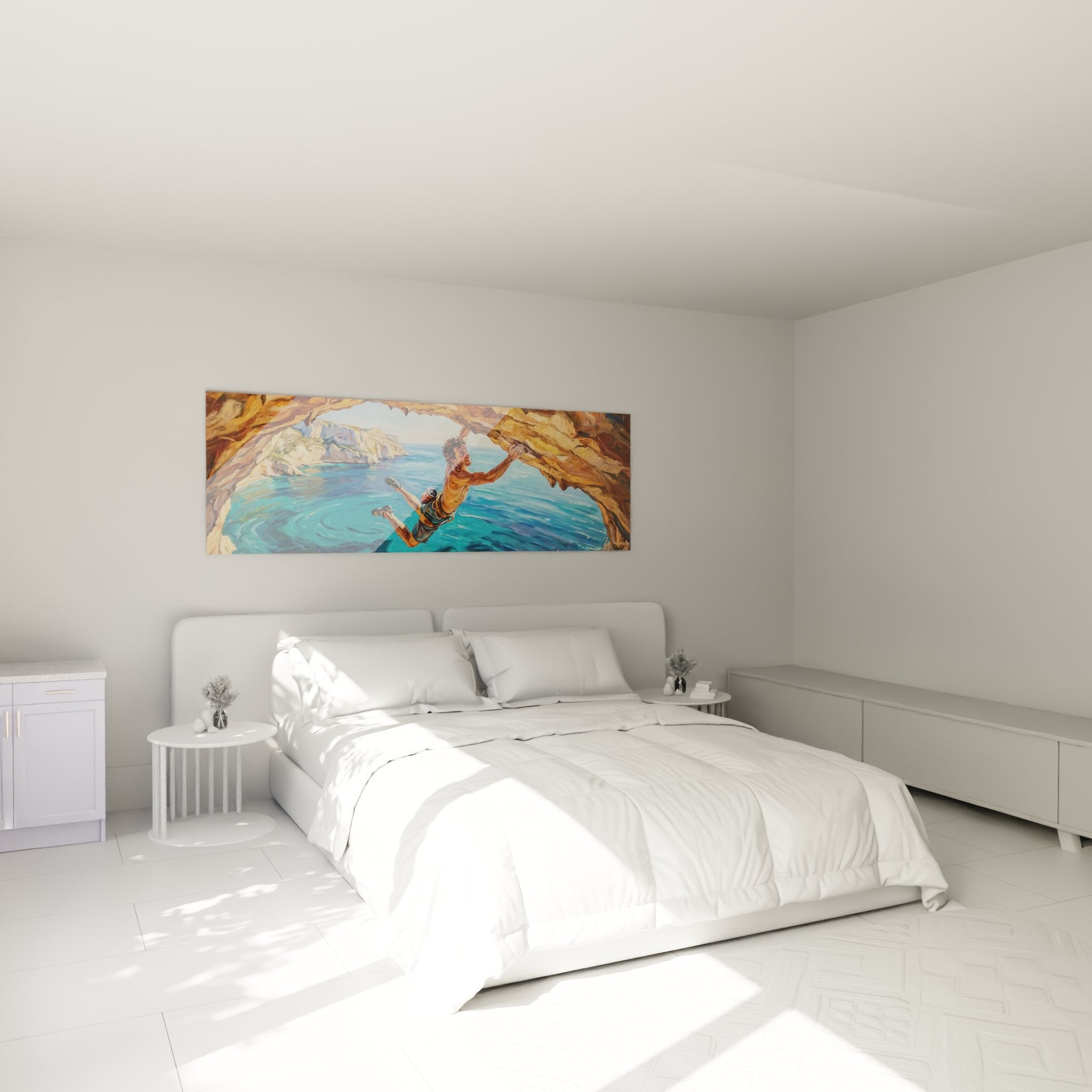
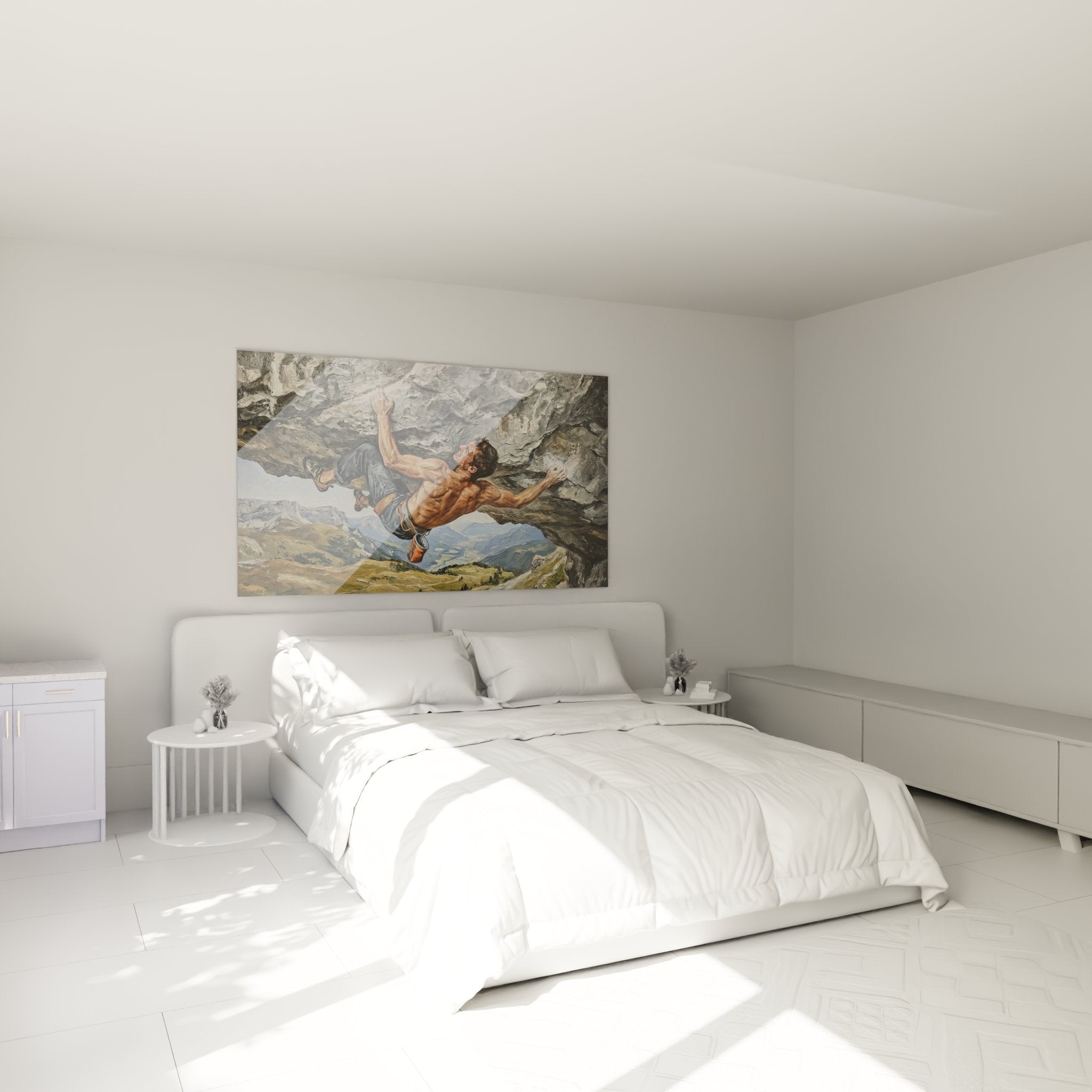
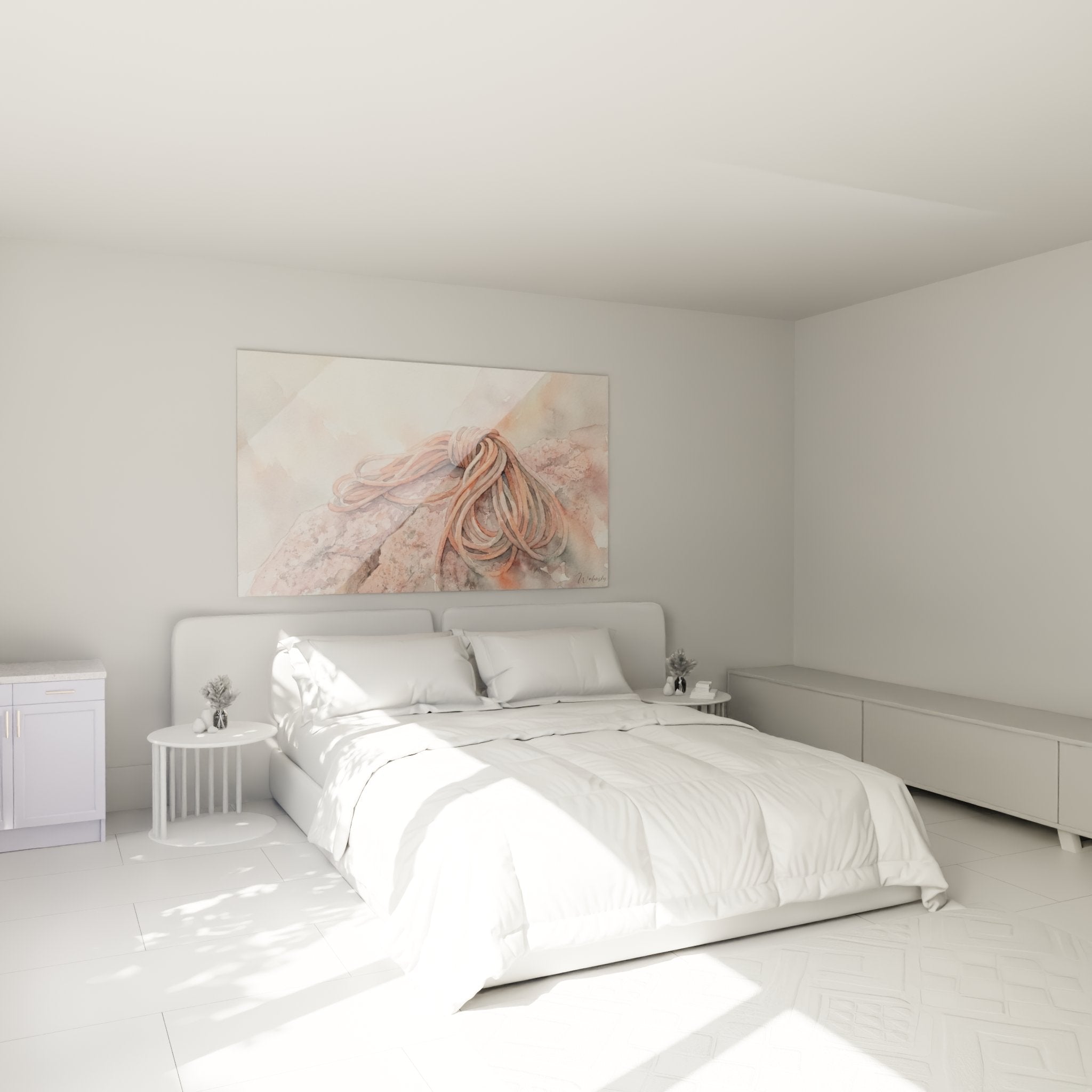
The imposing mural formats available today enable total visual immersion in the climbing universe. A visual occupying an entire wall panel immediately captures attention and defines the room's atmosphere. This dominant visual presence makes your passion a structuring element of your space rather than an accessory detail. For climbers wholly invested in their progression, this visual affirmation corresponds to the real place climbing occupies in their daily life.
Conversation starter and passion transmission
A spectacular climbing wall decoration inevitably generates reactions and questions from visitors. These exchanges offer excellent opportunities to share your passion, explain the subtleties of the discipline, and potentially introduce new people to climbing. The striking visual dimension of a climber in action—incredible suspension on a tiny edge, body position defying gravity—naturally fascinates even those who practice no sport. This spontaneous curiosity opens the door to enriching conversations about the physical, mental, and philosophical aspects of climbing.
For families where climbing is a shared activity, these decorative elements reinforce the sense of collective identity around this common passion. Children growing up in an environment visually immersed in the climbing world naturally develop a profound connection with this practice. Memories of family cliff outings, first successful ascents, challenges overcome together—all these moments find an echo in the mural representations adorning the shared spaces of your home.
Climbing Wall Visuals: Analyze Movements and Progress Technically
Beyond their decorative and motivational function, climbing wall art pieces constitute excellent pedagogical tools for refining your technical understanding of the discipline. A frozen representation of a complex movement offers the opportunity to analyze in detail the biomechanical subtleties that rapid observation in real situations doesn't always allow you to grasp. This analytical dimension transforms your wall decoration into a permanent learning support.
Movement reading and visual sequencing
Each climbing route or boulder decomposes into a succession of interconnected body positions. The ability to mentally visualize this sequence before even touching the first hold distinguishes experienced climbers from beginners. A wall visual capturing a key moment in a sequence—the precarious balance point before a dynamic move, the hip rotation allowing you to reach a distant hold—helps develop this essential line-reading skill. Your eye trains unconsciously to identify pertinent visual cues: wall angle, distance between holds, optimal body orientation.
Intermediate-level climbers often plateau not from lack of strength but from deficiency in movement efficiency. Carefully observing postural details in a static representation reveals precious technical nuances. Hip position close to the wall to conserve arm energy, shoulders low to preserve tendons, bent legs to engage lower limb power—these millimeter adjustments make all the difference between fluid progression and exhausting struggle. A large-format mural allows appreciation of these anatomical subtleties often invisible on smaller supports.
How to recognize different hold types on a visual?
Climbing develops specialized technical vocabulary to describe hold morphology. Crimps, these thin edges intensely stressing finger strength, are visually recognizable by the characteristic hand position with fingers extended gripping a slight thickness. Jugs, conversely, allow comfortable multi-phalanx grip and appear in images as reassuring anchor zones where the climber can rest. Pockets, requiring thumb-finger opposition, create a distinctive hand silhouette easily identifiable. This ability to read hold morphology from a visual support sharpens your anticipation during actual sessions.
Footholds, often neglected by beginner climbers, play an absolutely crucial role in climbing efficiency. Precise shoe placement on tiny edges can transform an impossible movement into fluid climbing. Detailed wall visuals showing millimeter-precise foot placement, the attack angle of the shoe on the rock, weight distribution between upper and lower limbs—this visual information enriches your technical repertoire. You begin perceiving climbing not as an arm-pulling exercise but as sophisticated vertical dance involving your entire body.
Body morphologies and technical adaptation
Modern climbing recognizes that different body types excel in distinct climbing styles. Long, slender climbers with significant wingspan naturally dominate reach movements where touching distant holds is the challenge. More compact, muscular profiles shine on athletic passages requiring explosive power and locking strength. Observing the morphological diversity represented in different wall visuals helps identify your own profile and develop technical strategies adapted to your personal physical characteristics.
This morphological awareness liberates unnecessary frustration when certain movements resist despite serious training. Understanding that a sequence designed for tall climbers will require alternative approach for someone of different stature transforms the obstacle into a creative challenge. Representations showing various solutions for overcoming the same passage encourage this mental flexibility and technical inventiveness characterizing accomplished climbers.
Balance management and applied physics
Climbing fundamentally constitutes practical application of physics principles—gravity, friction, leverage, center of gravity. A static visual allows analysis of these concepts in action. Hip position determines body center-of-gravity location; positioning it close to the wall reduces the moment force exerted on arms. Attack angle of shoes on holds directly influences available friction, particularly crucial on low-angle slabs where rubber-rock adhesion becomes the primary limiting factor. These abstract technical notions come alive and gain meaning when observed concretely in a detailed representation.
Overhang and roof passages engage muscle groups and movement patterns radically different from standard vertical climbing. The necessity of maintaining foot contact with the wall despite gravity pulling the body outward requires constant abdominal tension and permanent hip flexor activation. Regularly contemplating representations of roof climbing imprints these specific postural patterns mentally, preparing your nervous system to efficiently recruit these muscle chains during your own attempts on similar terrain.
What lessons can you draw from professional climber representations?
Competition climbing athletes and extreme route developers achieve a level of technical excellence rarely matched. Observing their body positions, hold choices, movement sequences provides valuable lessons even for amateur climbers. The fluidity characteristic of elite climbers results from perfect anticipation and maximum movement economy. Each movement logically chains to the next without hesitation or correction. This efficiency becomes a mental model to target during your own sessions.
Imposing wall formats capturing the intensity of international competition—the absolute concentration visible on faces, extreme muscular tension, total engagement in the present moment—convey the excellence toward which to progress. These images remind you that behind every spectacular performance lies thousands of hours of methodical training, specific strength work, patient technical refinement. This long-term perspective combats natural impatience and encourages consistency in practice.
Goal visualization and mental projections
Elite athletes across all disciplines abundantly use mental visualization as a preparation tool. Daily contemplation of a climbing visual representing the difficulty type you aspire to achieve progressively programs your brain for that future success. Your nervous system records visual patterns, integrates them into your mental repertoire, and facilitates their reproduction during actual practice. This psychological technique, validated by decades of sports neuroscience research, transforms your wall decoration into a silent partner in your progression.
Preparation periods for ambitious projects—that route rated well above your current level, that boulder obsessing you for months—benefit enormously from daily visual anchoring. Maintaining motivation over several weeks of repeated work requires constant goal reminder. A mural support evoking visually the difficulty type targeted nourishes this long-term determination essential for overcoming significant progression milestones.
What benefits do climbing wall art pieces bring to a home training space?
Installing climbing wall representations in your personal training area creates a psychologically optimized environment for performance. Visual immersion in the climbing world facilitates entry into concentration state and reinforces mental association between this space and your sporting objectives. These stimulating visual elements also combat monotony of repetitive strengthening exercises, maintaining mental engagement during physical preparation sessions.
How to choose a climbing representation adapted to your technical level?
Beginning climbers will benefit from selecting visuals illustrating correctly executed fundamental techniques—foot placement, body balance, economical movement. These educational representations serve as constant visual reference during initial learning. Advanced practitioners will prefer scenes capturing complex movement sophistication or extreme passage intensity, reflecting their own discipline engagement level. The essential point is choosing a representation resonating with your current climbing reality while inspiring your future progression.
Is climbing wall art suitable for professional spaces like offices?
Absolutely, particularly in professional environments valuing innovation, calculated risk-taking, and pushing limits. Climbing conveys values—problem-solving, stress management, perseverance facing obstacles—perfectly aligned with competencies sought in many modern professional sectors. Quality climbing visual in an office or meeting room subtly communicates these attributes while creating a visually captivating focal point distinguishing the space from conventional corporate environment.
What importance should be given to technical authenticity in a decorative climbing wall art piece?
Technical authenticity fundamentally differentiates a representation intended for enthusiasts from a generic climbing image. Details matter enormously: anatomically coherent body positioning, presence of equipment appropriate to the represented situation, rock type corresponding to illustrated climbing style. An experienced climber immediately detects technical inconsistencies betraying artificial staging. Favoring visuals capturing genuine climbing situations guarantees credibility that will authentically resonate with your own discipline experience.