









Artistic Movements Pointillism Wall Art
The Painting Artistic Movements Pointillism celebrates the revolutionary technique of juxtaposed color touches. Inspired by Seurat and Signac, this collection captures the essence of divisionist pointillist art where each point creates a unique visual harmony. The works reveal the light and chromatic vibration characteristic of this avant-garde movement. Perfect for lovers of neo-impressionist impressionist art, these creations bring sophistication and refinement to your space.
 Explosion Primordial Breath Painting - pointillism edition273,90 €
 Cathedral Eternity Dotted Painting - Pointillism Edition273,90 €
 Sunset Painting Fire Dots - Pointillism Edition273,90 €
 Woman with Hat Pure Touches Painting - Pointillism Edition273,90 €
 Cathedral Turquoise Shimmer Painting - Pointillism Edition273,90 €
 Urban Sunset Painting Flaming Pixels - pointillism edition273,90 €
 Spectral Circles Painting Energetic - pointillism edition228,90 €
 Sunset Painting Undulating Reflections - Pointillism Edition228,90 €
Explore further
In Artistic Movements Pointillism Wall Art
-
 Artistic Movements Wall Art793
artworks
-
 Abstract Artistic Movements Wall Art24
artworks
-
 Artistic Movements Geometric Wall Art22
artworks
-
 Artistic Movements Painting Art Deco24
artworks
-
 Golden Artistic Movements Wall Art24
artworks
-
 Artistic Movements Portrait Wall Art24
artworks
-
 Expressionist Artistic Movements Wall Art14
artworks
-
 Art Nouveau Artistic Movements Wall Art14
artworks
-
 Black and White Art Movements Wall Art12
artworks
-
 Artwork Artistic Movements Hyperrealism8
artworks
-
 Artistic Movements Wall Art Gothic9
artworks
-
 Renaissance Artistic Movements Wall Art8
artworks
-
 Symbolist Artistic Movements Wall Art6
artworks
-
 Surrealism Artistic Movements Wall Art5
artworks
-
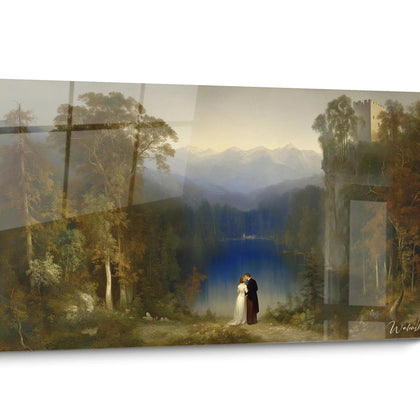 Artistic Movements Painting Romanticism5
artworks
-
 Baroque Artistic Movements Wall Art8
artworks


All about Artistic Movements Pointillism Wall Art
- Presentation Painting Pointillism
- Divisionist Technique
- Light and Optical Perception
- Neo-Impressionist Heritage
Pointillism Movements artistic paintings embody a scientific revolution in painting where each touch of pure color dialogues with its neighbors to create vibrant compositions. This divisionist technique transforms your space into a perceptive laboratory where juxtaposed pigments visually merge at a distance, offering a unique contemplative experience that evolves according to your positioning. Perfect for large-scale wall formats, these neo-impressionist works bring unparalleled luminous depth to contemporary interiors seeking sophistication and artistic innovation.
The Divisionist Revolution of Pointillism in Your Interior
A Painting Movements artistic Pointillism radically transforms spatial perception thanks to its chromatic juxtaposition technique. Unlike conventional approaches, this divisionist method relies on the meticulous application of colored touches distinct which optically fuse in the viewer's eye. This particularity creates a shimmering light effect impossible to reproduce with other pictorial techniques, ideal for energizing generous spaces requiring a monumental wall artwork.
How does the optical fusion of juxtaposed pigments work?
The scientific principle behind pointillism lies in optical mixing rather than pigment mixing. When you observe your pointillist painting from an appropriate distance, the points of primary and complementary colors combine retinically to generate secondary hues of greater intensity than traditional mixtures. This chromatic vibration gives large wall compositions exceptional brightness, particularly effective in spacious rooms where the viewing distance allows this perceptive alchemy. Large-format works amplify this hypnotic effect.
The impact of touch density on visual intensity
The concentration of colored points directly determines the luminous saturation of your pointillist painting. Densely worked areas create striking depth effects while more airy sections generate transparency and atmospheric lightness. This tactile modulation offers a unique textural richness, captivating from different viewing angles. For collectors seeking an alternative to Painting Movements artistic Abstract, pointillism offers a methodical structuring while retaining a fascinating experimental dimension.
Bucolic scenes and monumental divisionist landscapes
Pointillist compositions traditionally favor natural panoramas where changing light finds its most authentic expression. Mediterranean shores, flower gardens, and rural scenes particularly benefit from this technique which captures atmospheric vibration with scientific precision. These themes bring contemplative serenity to contemporary interiors while affirming a marked artistic sophistication. Generous formats allow total immersion in these luminous universes where each point contributes to the overall harmony of the landscape representation.
Fragmented Light and Pointillist Visual Architecture
Why does pointillism intensify ambient brightness?
A painting Artistic Movements Pointillism acts as a natural light amplifier thanks to its fragmented chromatic structure. The touches of pure colors reflect light differently from uniform surfaces, creating micro-variations that energize the visual environment. This technical particularity makes these works particularly suitable for spaces requiring vibrancy without aggression, such as spacious living rooms or generous entrance halls. The multiplication of colored points generates a subtle reverberation that naturally evolves according to the ambient light intensity throughout the day.
Optimal viewing distance for large-format pointillist paintings
The monumental dimensions of contemporary pointillist paintings require a significant distance to fully activate the optical mixing. Ideally, a distance equivalent to 2.5 times the diagonal of the work allows complete chromatic fusion while preserving the perception of the divisionist texture. This spatial requirement makes pointillism a preferred choice for enhancing generous architectural volumes. As the viewer gradually approaches, they discover the structural complexity hidden, transforming each contemplation into a renewed sensory exploration, perfect for collectors who appreciate conceptual depth.
Chromatic complementarity and tonal balances
The theory of color finds its most rigorous application in pointillism where juxtaposed complementary hues create striking simultaneous contrasts. Blues are next to oranges, violets dialogue with yellows, generating a controlled visual tension that maintains attention without eye fatigue. This scientific chromatic orchestration is particularly suitable for sophisticated environments seeking balance and dynamism. Large-format compositions allow exploring these color interactions with amplitude, offering a lasting contemplative experience that transcends ephemeral decorative trends to be part of a timeless artistic approach.
Optical texture versus physical texture in divisionist art
Unlike impasto techniques, pointillism favors a relatively flat surface where texture emerges exclusively from the arrangement of colored touches. This physical flatness contrasts with the visually perceived textural richness, creating a captivating sensory paradox. For minimalist interiors valuing clean surfaces, this characteristic offers visual complexity without material clutter. Monumental works exploit this duality to transform walls into vibrant surfaces that enrich architecture without competing with it, establishing a subtle dialogue between built space and divisionist artistic intervention.
Neo-Impressionist Heritage and Pointillist Decorative Modernity
From Seurat's laboratory to contemporary interiors
The painting Artistic Movements Pointillism is part of the revolutionary legacy of Georges Seurat and Paul Signac who transformed spontaneous Impressionism into a rigorous scientific method. This systematic approach, based on the optical discoveries of the 19th century, particularly resonates with contemporary sensibilities valuing rationality and experimentation. Current reinterpretations in large format perpetuate this pioneering spirit while adapting it to modern aesthetic requirements. Acquiring a monumental pointillist work is therefore appropriating a page of artistic history while asserting a conscious modernity in one's decorative choices.
What are the differences between pointillism and classical Impressionism?
While Impressionism captured the moment through spontaneous, gestural touches, Pointillism systematizes this intuition into a methodical chromatic doctrine. This divisionist rigor produces more structured compositions where each point occupies a calculated position according to scientific principles. For collectors appreciating both spontaneity and control, Pointillism offers this unique synthesis. Generous contemporary formats amplify this creative tension between system and sensitivity, transforming each work into a visual manifesto where science and art harmoniously fuse to offer a contemplative experience intellectually stimulating.
The lasting influence on subsequent artistic movements
Pointillist Divisionism foreshadowed the coloristic research of Fauvism and profoundly influenced the geometric abstraction of the 20th century. This historical lineage confers on Pointillist paintings a patrimonial legitimacy while preserving their aesthetic relevance. Current neo-divisionist compositions dialogue with this heritage while integrating contemporary sensibilities and technical innovations. Investing in a monumental Pointillist artwork therefore means joining a prestigious artistic continuity, establishing bridges between avant-garde tradition and modern expression, particularly relevant for culturally conscious spaces seeking historical depth and current relevance.
Mediterranean atmospheres and southern colorism
Landscapes bathed in Mediterranean light are the favored ground of Pointillism, which masterfully restores the solar intensity and atmospheric clarity of the South. These luminous compositions bring warmth and vitality to Nordic interiors while evoking escape and serene contemplation. The typical azure, ochre, and violet tones create soothing atmospheres particularly appreciated in generous reception areas. A large-format Pointillist painting thus transforms your wall into a virtual window opening onto these sunny horizons, offering a daily visual escape to luminous lands where time seems suspended in the eternal chromatic vibration.
How to maintain a large-format Mouvements artistiques Pointillism painting?
The maintenance of monumental Pointillist artworks simply requires delicate regular dusting with a dry microfiber cloth to preserve the brilliance of the juxtaposed colors. Avoid direct exposure to sunlight, which could gradually alter the pigments, and prefer indirect lighting that enhances the optical vibration without attacking the surface. An annual check of the wall fixing guarantees stability and safety for these generously sized pieces.
Is Pointillism suitable for contemporary minimalist interiors?
Absolutely, the rigorous structure and characteristic flatness of Pointillism harmonize perfectly with minimalist austerity while bringing the necessary visual richness to animate the stripped spaces. The perceptual complexity of the divisionist technique compensates for the surrounding sobriety without creating a stylistic break, establishing a sophisticated balance between architectural simplicity and artistic density.
What patrimonial value does a Mouvements artistiques Pointillism painting represent?
High-quality contemporary neo-Pointillist artworks constitute lasting artistic investments due to their inscription in a prestigious historical tradition and their enduring aesthetic relevance. The demanding technique and the scarcity of creators authentically mastering this divisionist approach confer on monumental pieces a growing patrimonial legitimacy, particularly sought after by informed collectors valuing both modernist heritage and technical excellence.
Further reading
Our articles on this topic
L'art qui suscite l'envie
Maison belge d'art mural grand format
14 jourspour changer d'avis*
Protection Walenskyincluse
Fabriquéen Italie
FormatXXL
Kit de fixationtoujours fourni
* Hors tableaux personnalisés et tailles personnalisées


