


Black and White Art Movements Wall Art
Our painting Artistic Movements Black and White collection celebrates the pure essence of art through the ages. From Cubism to Minimalism, each creation captures the soul of great artistic movements in monochrome. These timeless works bring sophistication and character to your interior. The absence of color reveals the strength of shapes, lines, and contrasts. Perfect for lovers of contemporary black and white art, these compositions transform your walls into true galleries of artistic expression.
 Art Deco Swans Painting - Romantic Dance Black and White - Art Deco Edition273,90 €
 Woman with White Birds Painting - Art Deco Meditation - Art Deco Edition273,90 €
 Swan Painting - Elegant Black and White Duo - Art Deco Edition273,90 €
 Woman with Doves Painting - Art Deco Serenity - Art Deco Edition228,90 €
 Abstract Black and White Wall Art - Urban Emotion - Minimalist Edition242,90 €
 Abstract Fluid Movement Wall Art - Elegant Swirl - Minimalist Edition242,90 €
 Dynamic Abstract Painting - Circular Movement - Minimalist Edition273,90 €
 Skull Time Weeping Wall Art - Vanity Edition273,90 €
 Woman with Sacred Bowl Painting - Realism Edition273,90 €
 Dove Communion Silent - Hyperrealism Edition Wall Art273,90 €
 Chromatic Intersection Geometric Composition Wall Art - Constructivism Edition273,90 €
 Geometric Composition Wall Art Utopian Vision - Constructivism Edition273,90 €
Explore further
In Black and White Art Movements Wall Art
-
 Artistic Movements Wall Art793
artworks
Artistic Movements Wall Art793
artworks
-
 Abstract Artistic Movements Wall Art24
artworks
Abstract Artistic Movements Wall Art24
artworks
-
 Artistic Movements Geometric Wall Art22
artworks
Artistic Movements Geometric Wall Art22
artworks
-
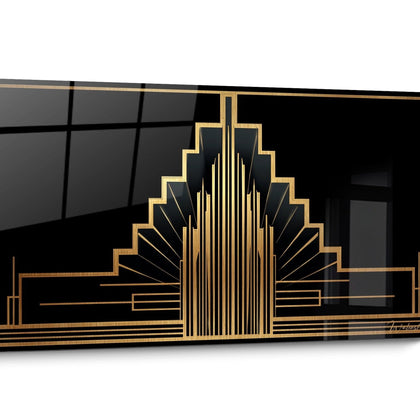 Artistic Movements Painting Art Deco24
artworks
Artistic Movements Painting Art Deco24
artworks
-
 Golden Artistic Movements Wall Art24
artworks
Golden Artistic Movements Wall Art24
artworks
-
 Artistic Movements Portrait Wall Art24
artworks
Artistic Movements Portrait Wall Art24
artworks
-
 Expressionist Artistic Movements Wall Art14
artworks
Expressionist Artistic Movements Wall Art14
artworks
-
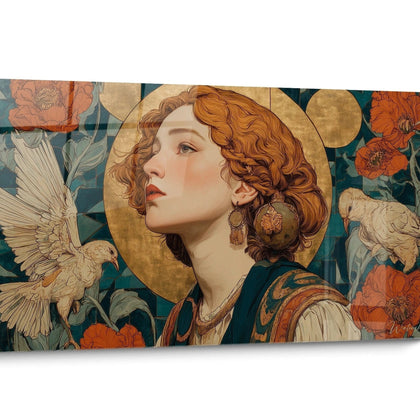 Art Nouveau Artistic Movements Wall Art14
artworks
Art Nouveau Artistic Movements Wall Art14
artworks
-
 Artwork Artistic Movements Hyperrealism8
artworks
Artwork Artistic Movements Hyperrealism8
artworks
-
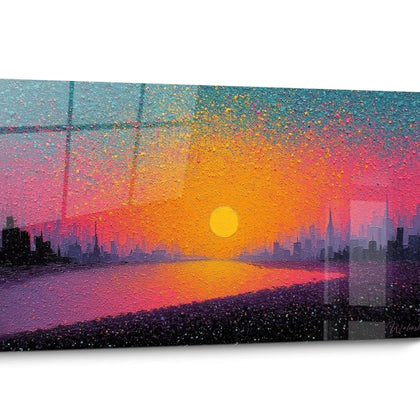 Artistic Movements Pointillism Wall Art8
artworks
Artistic Movements Pointillism Wall Art8
artworks
-
 Artistic Movements Wall Art Gothic9
artworks
Artistic Movements Wall Art Gothic9
artworks
-
 Renaissance Artistic Movements Wall Art8
artworks
Renaissance Artistic Movements Wall Art8
artworks
-
 Symbolist Artistic Movements Wall Art6
artworks
Symbolist Artistic Movements Wall Art6
artworks
-
 Surrealism Artistic Movements Wall Art5
artworks
Surrealism Artistic Movements Wall Art5
artworks
-
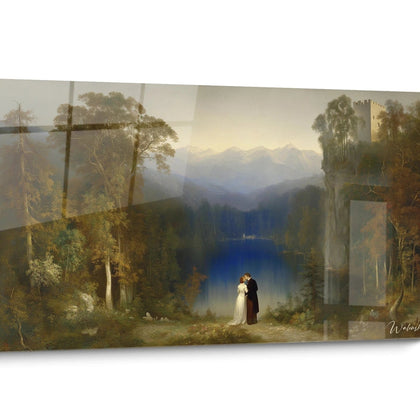 Artistic Movements Painting Romanticism5
artworks
Artistic Movements Painting Romanticism5
artworks
-
 Baroque Artistic Movements Wall Art8
artworks
Baroque Artistic Movements Wall Art8
artworks


All about Black and White Art Movements Wall Art
- Presentation Artistic Movements Paintings
- Monochrome Aesthetics
- Currents & Schools
- Interior Architecture
Black and white artistic movements paintings embody a radical aesthetic approach where the removal of color amplifies the very essence of each movement. This wall collection celebrates the major visual revolutions of the 20th century, from Cubism to Minimalism, via Expressionism and Constructivism, all revisited in a monochrome palette that exalts their fundamental structures. Each large-format creation captures the philosophy of a historical movement while benefiting from the timeless power of binary contrast, thus offering an immersion in the history of contemporary art adapted to modern interiors and demanding professional spaces.
The Contrasting Power of Major Visual Revolutions
A black and white artistic movements painting transposes the major innovations in the history of art into a chromatic dialectic that reveals the intrinsic structure of each movement. The geometric blocks of Malevich’s Suprematism, the Cubist fragmentations or the Expressionist gestures acquire a multiplied force when stripped of any color reference. This monochrome approach acts as a chemical developer, exposing the guiding lines, compositional tensions and formal ruptures that marked each aesthetic revolution.
How does black and white reveal the DNA of each movement?
Chromatic reduction allows to isolate the fundamental characteristics of each artistic school. The verticals and horizontals of Mondrian’s Neoplasticism, usually associated with primary colors, reveal their pure structural balance in a binary translation. The organic forms of Surrealism or the compositions of Optical Art gain in conceptual readability, transforming each wall work into a visual manifesto accessible. This formal distillation is particularly suitable for compositions where geometric abstraction dialogues with monochrome, creating a coherent visual genealogy.
The impact of large formats on historical perception
Monumental dimensions amplify the didactic and emotional scope of each artistic reference. A large-scale black and white artistic movements painting transforms a wall into a living archive, where visitors can physically measure the extent of aesthetic upheavals. Pollock’s drippings, minimalist grids or Futurist perspectives acquire a spatial presence that goes beyond simple evocation to offer a immersive experience in the history of forms. This monumentality is suitable for institutional spaces, private galleries and industrial lofts where art dialogues with architecture.
Formal vocabulary and instant recognition
Each artistic current possesses a repertoire of distinctive signs that black and white makes immediately identifiable. The acute angles of German Expressionism, the organic curves ofArt Nouveau, the analytical fractioning of Cézanne’s Cubism become autonomous visual signatures. This conceptual readability transforms each acquisition into a cultural mediation tool, allowing both novices and experts to decipher aesthetic lineages. Recurring motifs – Constructivist spirals, modular grids, gestural splashes – create a universal language beyond linguistic barriers.
From Bauhaus to Minimalism: Monochrome Mapping of the Avant-Gardes
The universe of black and white artistic movement paintings offers a chronological journey through major aesthetic ruptures, from the first geometric abstractions to the radical conceptualizations of the post-war period. Each movement finds in bichromy a faithful translation of its theoretical ambitions, whether it is the social utopia of Russian constructivism, the geometric spirituality of suprematism or the material purification of American minimalism. This historical continuity allows for the composition of coherent wall ensembles that visually tell the evolution of plastic ideas.
Which movements benefit most from monochrome treatment?
Some schools find their optimal expression in black and white. Constructivism with its typographic compositions and diagonal structures, kinetic art with its optical illusions based on contrast, or even gestural abstract expressionism which favors the energy of the line over chromatic seduction. Conceptual movements such as Fluxus or arte povera, which question the materiality of the work, gain in radicality in a reduced palette. Conversely, movements such as Fauvism or Orphism, founded on colored vibration, lose their essence during a monochrome transposition.
Stylistic associations for cultural spaces
Museum institutions and contemporary art centers favor thematic sequences where several movements dialogue. A Bauhaus-De Stijl-Ulm trilogy creates a genealogy of functionalist design, while a Dada-Surrealism-New Realism ensemble traces the lineages of creative irrationality. These visual constellations allow for a comparative reading of formal strategies, each black and white artistic movement painting acting as a milestone in a global history. Imposing formats allow for a museum installation where each piece occupies a distinct spatial territory while participating in a coherent narrative.
Visual hierarchies and overall composition
The arrangement of several artistic references obeys logics of contrast and complementarity. A rigid geometric composition of suprematism balances a lyrical gesture of lyrical abstraction, while a minimalist grid offers a counterpoint to the organized chaos of tachism. These formal dialogues transform a simple hanging into a demonstration of the tensions that animated modern art: rationality versus intuition, structure versus accident, purification versus accumulation. Chromatic neutrality unifies these oppositions in a visually accessible harmony.
Architectural Integration of Historical Visual Manifestos
The installation of a black and white artistic movement painting responds to specific imperatives related to the referential and theoretical nature of these creations. Unlike purely ornamental decorations, these pieces establish a dialogue with the cultural history of the place, whether it is an architectural firm, a design studio, a creative coworking space or a private residence of an informed enthusiast. Their function goes beyond beautification to affirm an intellectual lineage, an assumed aesthetic positioning that reflects the values of the place.
Why choose a historical reference rather than an anonymous contemporary creation?
Anchoring in an identifiable movement provides immediate cultural legitimacy. A visitor recognizing the codes of Italian futurism or the Russian school instantly perceives the owner's visual culture. This semiotic stratification transforms each space into a cabinet of intellectual curiosities where references multiply. For creators – graphic designers, interior architects, art directors – these paintings function as a permanent visual library, a source of daily inspiration rooted in the great formal innovations of the past century.
Impact zones and gaze circulation
Monumental formats require strategic locations where visual distance allows for a global understanding of the composition. The main walls of entrance halls, meeting room display panels, mezzanine walls, or vertical circulation spaces offer the optimal conditions. The monumentality of these pieces creates focal points that structure the spatial experience, transforming a simple crossing into an initiation journey through the milestones of aesthetic modernity. The absence of color guarantees a harmonious integration with surrounding color palettes, from raw concrete to noble woodwork.
Temporalities and perceptual evolution
A black and white artistic movements painting gradually reveals its conceptual strata. The first visual encounter identifies the general style, then prolonged observation deciphers the structural details, tonal variations, subtle balances that distinguish each school. This interpretative depth justifies the acquisition of major pieces that durably accompany a place, escaping ephemeral decorative trends. Variations in natural lighting throughout the hours modify contrasts, revealing different facets of the work in turn, like a sculpture would change appearance according to the position of the sun.
Does a black and white artistic movements painting suit all interior styles?
These creations particularly integrate into industrial, minimalist Scandinavian, mid-century modernist, and refined contemporary aesthetics. Classic or baroque interiors can create a stimulating anachronistic contrast, provided that this temporal collision is fully assumed as a curatorial choice.
How to visually differentiate several movements in the same space?
The variation of compositional densities creates a visual breathing space: alternate a minimalist sparse grid with a gestural expressionist accumulation, or juxtapose rigid constructivist geometries with surreal organic forms. This museographic strategy avoids monotony while maintaining monochrome coherence.
What is the historical relevance of monochrome reproductions of colored movements?
The transposition to black and white constitutes a legitimate interpretation that highlights the formal structure at the expense of the chromatic sensation. This analytical operation, comparable to archival photographs that disseminated modern works before color reproduction, offers an alternative reading centered on spatial composition and tonal relationships rather than color harmonies.
Further reading


