


Abstract Artistic Movements Wall Art
Our collection Abstract Artistic Movements Wall Art celebrates the essence of contemporary art through bold visual compositions. Each creation explores major currents of modern artistic abstraction, combining geometric forms, vibrant colors and free expression. These works embody the richness of contemporary abstract movements, from cubism to suprematism, offering a unique perspective on the evolution of non-figurative art. Perfect for enhancing your interior decoration.
 Dynamic Abstract Painting - Modern Spiral - Minimalist Edition273,90 €
 Abstract Black and Red Painting - Ardent Symphony - Expressionist Edition273,90 €
 Abstract Geometric Painting - Expressionist Symphony - Expressionist Edition273,90 €
 Abstract Red Explosion Painting - Passion Burst - Expressionist Edition273,90 €
 Abstract Oceanic Painting - Blue Symphony - Expressionist Edition273,90 €
 Expressionist Abstract Painting - Energy in Motion - Expressionist Edition273,90 €
 Dynamic Abstract Painting - Expressionist Symphony - Expressionist Edition273,90 €
 Abstract Painting Blue Turquoise Colors - Ocean Symphony - Expressionist Edition242,90 €
 Blue and Yellow Abstract Painting - Ocean Symphony - Expressionist Edition228,90 €
 Expressionist Abstract Painting - Blue Ocean Symphony - Expressionist Edition273,90 €
 Expressionist Abstract Painting - Ardent Energy - Expressionist Edition242,90 €
 Dynamic Abstract Painting - Solar Energy - Expressionist Edition228,90 €
 Expressionist Abstract Canvas - Creative Explosion - Expressionist Edition242,90 €
 Abstract Black and White Wall Art - Urban Emotion - Minimalist Edition242,90 €
 Abstract Explosion of Colors Painting - Urban Dynamism - Minimalist Edition242,90 €
 Abstract Movement Painting - Dynamic Spiral - Minimalist Edition273,90 €
 Dynamic Abstract Painting - Energy Explosion - Minimalist Edition273,90 €
 Dynamic Abstract Painting - Circular Movement - Minimalist Edition273,90 €
 Dynamic Abstract Painting - Creative Explosion - Minimalist Edition273,90 €
 Abstract painting Insurgent Blocks - Dadaism edition273,90 €
 Abstract geometric painting Absolute Chaotic Order - Dadaism edition273,90 €
 Abstract Suspended Blocks Escape Painting - Dadaism Edition273,90 €
 Undulating Abstract Painting Dynamic Illusion - Op Art Edition273,90 €
 Colorful Abstraction Painting Progressive Movement - Constructivism Edition273,90 €
Explore further
In Abstract Artistic Movements Wall Art
-
 Artistic Movements Wall Art793
artworks
Artistic Movements Wall Art793
artworks
-
 Artistic Movements Geometric Wall Art22
artworks
Artistic Movements Geometric Wall Art22
artworks
-
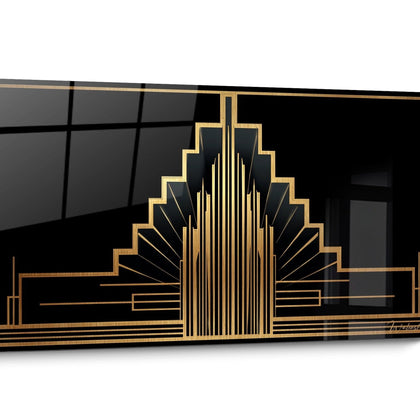 Artistic Movements Painting Art Deco24
artworks
Artistic Movements Painting Art Deco24
artworks
-
 Golden Artistic Movements Wall Art24
artworks
Golden Artistic Movements Wall Art24
artworks
-
 Artistic Movements Portrait Wall Art24
artworks
Artistic Movements Portrait Wall Art24
artworks
-
 Expressionist Artistic Movements Wall Art14
artworks
Expressionist Artistic Movements Wall Art14
artworks
-
 Art Nouveau Artistic Movements Wall Art14
artworks
Art Nouveau Artistic Movements Wall Art14
artworks
-
 Black and White Art Movements Wall Art12
artworks
Black and White Art Movements Wall Art12
artworks
-
 Artwork Artistic Movements Hyperrealism8
artworks
Artwork Artistic Movements Hyperrealism8
artworks
-
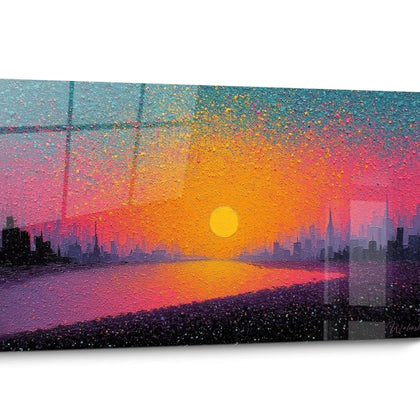 Artistic Movements Pointillism Wall Art8
artworks
Artistic Movements Pointillism Wall Art8
artworks
-
 Artistic Movements Wall Art Gothic9
artworks
Artistic Movements Wall Art Gothic9
artworks
-
 Renaissance Artistic Movements Wall Art8
artworks
Renaissance Artistic Movements Wall Art8
artworks
-
 Symbolist Artistic Movements Wall Art6
artworks
Symbolist Artistic Movements Wall Art6
artworks
-
 Surrealism Artistic Movements Wall Art5
artworks
Surrealism Artistic Movements Wall Art5
artworks
-
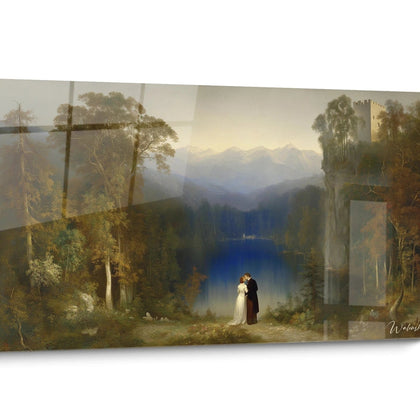 Artistic Movements Painting Romanticism5
artworks
Artistic Movements Painting Romanticism5
artworks
-
 Baroque Artistic Movements Wall Art8
artworks
Baroque Artistic Movements Wall Art8
artworks


All about Abstract Artistic Movements Wall Art
- Abstract Painting Presentation
- Historical Abstract Movements
- Expression Techniques
- Architectural Impact
Acquiring an abstract artistic movements painting represents far more than a simple decorative choice: it is the integration of a fragment of artistic history within your space. These monumental creations embody the visual revolutions of the twentieth century, where pure form and liberated color redefined the codes of representation. Each abstract current, from gestural expressionism to geometric suprematism, develops its own plastic vocabulary designed to radically transform spatial perception in contemporary large-scale environments.
The imposing formats of these works allow for complete immersion in the artistic philosophies that revolutionized the approach to visual creation. Large-scale abstract compositions exploit dynamic tensions, chromatic balances and visual rhythms to generate lasting contemplative experiences. This monumentality becomes essential in modern architectures with generous volumes, where the physical presence of the work dialogues with streamlined structures and open perspectives.
The integration of these artistic manifestations in high-end professional or residential contexts requires a thorough understanding of different abstract schools. From gestural lyricism to suprematist constructions, each movement offers specific visual solutions to enrich the architectural space semantically. Discerning collectors seek these pieces for their ability to visually structure circulation areas, energize reception spaces or create meditative focal points in minimalist environments.
Evolution of Abstract Currents and Their Visual Transcription
The abstract artistic movements painting draws its roots from the conceptual upheavals initiated by Kandinsky, Mondrian and Malevitch at the beginning of the twentieth century. American abstract expressionism subsequently transformed this approach into monumental gestural manifestations, where the pictorial action itself becomes subject. These generous formats allow us to capture the raw energy of Pollock-esque drippings, the controlled violence of De Kooning's brushstrokes, or the chromatic meditation of Rothko's color fields.
Suprematist compositions, for their part, privilege elementary geometric forms floating in space, creating visual tensions through their asymmetrical disposition. This radical approach eliminates all reference to the objective world to focus exclusively on pure formal relationships. In contemporary architectural spaces, these geometric configurations resonate with the orthogonal structures of buildings, establishing a visual dialogue between the work and its constructed environment.
European lyrical abstraction develops a different sensitivity, favoring atmospheric nuances and organic textures. These realizations evoke interior landscapes, emotional states crystallized in fluid forms and subtle chromatic gradations. For refined residential spaces or corporate relaxation zones, these more contemplative approaches generate a soothing atmosphere while maintaining sophisticated visual presence.
How do historical abstract movements influence contemporary creations?
Current artists constantly reinterpret the innovations of abstract pioneers, merging the achievements of different schools to create unprecedented syntheses. The use of imposing formats allows one to accentuate the emotional impact sought by these currents, transforming simple observation into immersive experience. Collectors of large-scale abstract artistic movements paintings appreciate this historical filiation that confers cultural legitimacy on works while asserting a resolutely contemporary presence.
Distinctions between geometric abstraction and gestural abstraction
The former privileges planning, mathematical structures and rational order, creating balanced compositions ideal for professional environments requiring visual clarity. The latter celebrates improvisation, bodily movement and spontaneous emotion, generating dynamic works particularly suited to creative spaces or residences seeking expressive vitality. This fundamental duality offers acquirers stylistic options responding to radically different architectural atmospheres, similar to the decorative precision found in abstract artistic movements Art Deco paintings with their refined geometry.
Plastic Processes and Materiality of Abstract Creations
The techniques employed in the creation of abstract artistic movements paintings directly determine their visual impact and interaction with ambient light. Layered glazes generate changing light depths depending on natural lighting conditions, transforming the work into a living element that evolves throughout the day. This visual variability becomes particularly fascinating in residential spaces benefiting from diverse light sources, where the composition progressively reveals its chromatic subtleties.
Generous impasto creates tactile reliefs that project their own shadows, adding sculptural dimension to pictorial surfaces. This pronounced materiality captures light in a fragmented manner, generating plays of shadows and reflections that amplify the physical presence of the work. In minimalist architectural environments, this textural richness provides an essential sensory counterpoint to the dominant smooth and reflective surfaces.
Which abstract techniques suit large open spaces?
All-over compositions, without a unique focal point, distribute visual energy uniformly across the entire surface, creating a field of spatial activation particularly effective in generous volumes. This democratic approach to pictorial space eliminates traditional hierarchy, inviting the eye to freely explore the totality of the composition. Monumental formats amplify this immersion effect, transforming the load-bearing wall into a vibrating membrane between inhabited space and the deployed abstract universe.
Interactions between pictorial texture and spatial acoustics
The highly textured surfaces of contemporary abstract artistic movements paintings possess non-negligible acoustic properties in spaces with controlled resonance. Irregular reliefs diffract sound waves, helping to attenuate excessive reverberations characteristic of streamlined architectural volumes. This secondary acoustic functionality adds to aesthetic qualities, making these acquisitions multidimensional solutions for demanding living or working spaces.
Controlled projection and splashing techniques generate complex linear networks that create upward or downward visual movement depending on their orientation. This directional dynamic can be strategically exploited to accentuate the verticality of spaces with high ceilings or to visually expand horizontal compositions in generous hallways. The mastery of these virtual kinetic effects distinguishes sophisticated creations from superficial decorative productions.
Spatial Resonances and Transformation of Built Environments
Installing a large-scale abstract artistic movements painting fundamentally reconfigures the volumetric perception of architectural spaces. Intense chromatic compositions modify the global light atmosphere through color reflection and diffusion, subtly tinting adjacent surfaces. This chromatic contamination phenomenon creates a unified visual envelope that far exceeds the physical frame of the work, establishing an overall environmental presence.
Visual rhythms generated by formal repetitions or chromatic progressions establish a specific contemplative temporality within the space. These visual cadences slow perception, encouraging attentive presence rather than rapid transit. In information-overloaded professional environments, this meditative function becomes a valuable asset for creating cognitive decompression zones essential to occupant wellbeing.
Strategic positioning in contemporary architectures
Double-height ceilings call for vertically developed compositions that fully exploit these generous volumes without creating visual emptiness. Monumental staircases particularly benefit from these imposing installations that accompany upward movement while offering renewed perspectives at each landing. Corporate reception spaces use these pieces as identity markers expressing cultural sophistication and aesthetic audacity.
How do abstractions modify spatial circulation?
Dynamic compositions unconsciously orient movement trajectories, drawing the eye toward certain areas while creating contemplative stopping points. This subtle directional function improves circulation fluidity in commercial spaces or residences with complex open plans. Imposing formats create powerful visual landmarks facilitating intuitive spatial orientation while enriching the sensory experience of movement.
Violent chromatic contrasts generate sustained retinal activation that psychologically energizes occupants, making these solutions particularly suited to creativity or brainstorming spaces. Conversely, subtle tonal harmonies induce serenity conducive to prolonged concentration, ideal for private libraries or executive offices. This functional polarity offers acquirers precise psychosensory tools for modulating the ambiance of different inhabited zones.
What impact does a monumental abstract painting have on real estate value?
The permanent integration of museum-quality abstract works into high-end residential architecture significantly increases property desirability. These acquisitions testify to a level of cultural sophistication appreciated by demanding international clientele, transforming residential space into a private gallery. Specialized real estate agents recognize this valorization as a decisive differentiating factor in competitive markets.
Do abstract paintings suit luxury commercial spaces?
Premium boutiques, five-star hotel halls and creative company headquarters massively use these realizations to communicate their exclusive positioning. Abstraction avoids overly specific cultural references while asserting distinctive and memorable visual identity. This semantic universality combined with powerful aesthetic impact makes these pieces strategic investments for brands wishing to project innovation and refinement.
How to maintain a large-scale abstract painting?
Textured surfaces require gentle dusting with specialized soft brushes to preserve relief integrity. Hygroscopic variations must be controlled in installation spaces to avoid structural tensions on large formats. Direct UV radiation exposure requires filtering glazing or adapted lighting systems preserving chromatic stability over the long term, guaranteeing the longevity of artistic investment.


