


Artistic Movements Wall Art Gothic
The Painting Artistic Movements Gothic transports you to the fascinating world of European medieval art. This collection celebrates the aesthetics of Gothic cathedrals and sacred stained glass windows, characterized by its pointed arches, slender lines, and mystical atmosphere. Each creation evokes the spirituality and architectural grandeur of this major artistic period. Perfect for a wall decoration inspired by medieval art, these works bring depth and character to your interior spaces.
 Woman Macabre Elegance Wall Art - Vanity Edition273,90 €
 Woman Painting Enchanting Charm - Gothic Edition273,90 €
 Woman Cursed Beauty Painting - Gothic Edition273,90 €
 Woman Tragic Beauty Painting - Gothic Edition273,90 €
 Elegant Woman Artwork Refined Black - Gothic Edition273,90 €
 Woman Dark Grace Wall Art - Gothic edition273,90 €
 Woman Artwork Forbidden Sweetness - Gothic Edition273,90 €
 Woman Flamboyant Mourning Painting - Gothic Edition273,90 €
 Woman Grace in Darkness Wall Art - Gothic Edition273,90 €
Explore further
In Artistic Movements Wall Art Gothic
-
 Artistic Movements Wall Art793
artworks
-
 Abstract Artistic Movements Wall Art24
artworks
-
 Artistic Movements Geometric Wall Art22
artworks
-
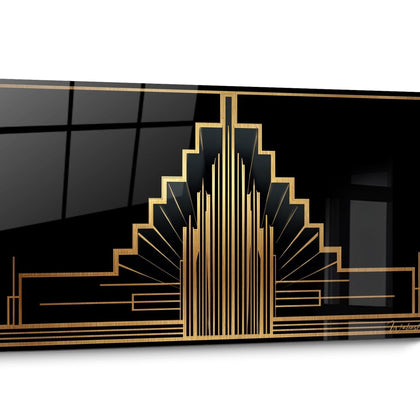 Artistic Movements Painting Art Deco24
artworks
-
 Golden Artistic Movements Wall Art24
artworks
-
 Artistic Movements Portrait Wall Art24
artworks
-
 Expressionist Artistic Movements Wall Art14
artworks
-
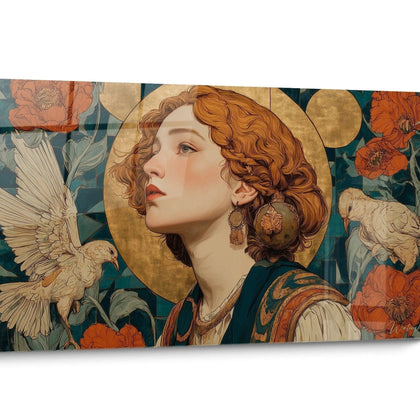 Art Nouveau Artistic Movements Wall Art14
artworks
-
 Black and White Art Movements Wall Art12
artworks
-
 Artwork Artistic Movements Hyperrealism8
artworks
-
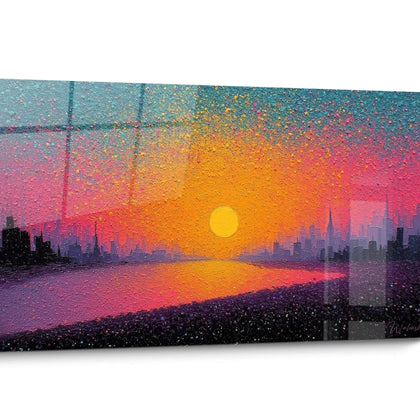 Artistic Movements Pointillism Wall Art8
artworks
-
 Renaissance Artistic Movements Wall Art8
artworks
-
 Symbolist Artistic Movements Wall Art6
artworks
-
 Surrealism Artistic Movements Wall Art5
artworks
-
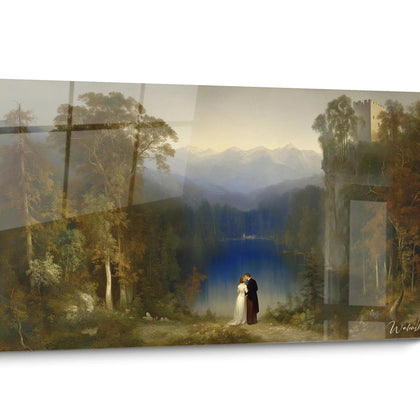 Artistic Movements Painting Romanticism5
artworks
-
 Baroque Artistic Movements Wall Art8
artworks


All about Artistic Movements Wall Art Gothic
- Gothic Paintings Presentation
- Dark Medieval Aesthetic
- Architectural Symbolism
- Cathedral Atmospheres
Paintings representing Gothic artistic movements capture the mystical and spiritual essence of a fascinating period in art history. These monumental works reproduce the emblematic characteristics of medieval Gothic art: pointed arches, luminous rose windows, stained glass and majestic verticality. Perfect for generous spaces seeking historical depth and a contemplative atmosphere, these wall creations radically transform the ambiance of a room by evoking the grandeur of European cathedrals and the iconographic richness of the 12th to 15th centuries.
The Visual Legacy of Medieval Cathedrals in Contemporary Decoration
A Gothic artistic movement painting of large size transposes the characteristic spiritual elevation of medieval religious buildings into the modern residential space. These architectural representations capture the bold verticality of ribbed vaults, creating an ascending dynamic that visually amplifies the height of ceilings. Typical iconographic elements - flying buttresses, sculpted pinnacles, expressive gargoyles - structure the composition with a rigorous geometry inspired by medieval faith and engineering.
How do pointed arch motifs transform spatial perception?
The pointed arches characteristic of Gothic architecture create vertical lines of perspective that substantially modify the volumetric perception of a room. In a living room with high walls, a Gothic monumental painting exploits this pointed geometry to guide the gaze upwards, generating an impression of accentuated height. This vertical structuring advantageously contrasts with the dominant horizontality of contemporary furniture, establishing a sophisticated visual balance between medieval tradition and modern design.
The color palette of medieval stained glass reproduced in large format
Authentic Gothic paintings reproduce the transcendent luminosity of stained glass windows that flooded the naves with polychrome light. The deep cobalt blues, incandescent ruby reds, and saturated emerald greens recreate the sensory experience of legendary rose windows. For collectors seeking authentic Gothic artistic movement paintings, this intense color becomes a magnetic focal point in minimalist contemporary spaces, where the ambient sobriety amplifies the impact of medieval colors. Unlike modern non-figurative compositions, these works preserve a rich iconographic narrative of religious and secular symbols.
The integration of sculpted details into the two-dimensional composition
The stone lace typical of flamboyant Gothic - trilobes, quadrilobes, interlaced networks - translates into fascinating graphic complexity in large-format mural reproductions. These meticulous architectural elements, when rendered on a monumental scale, reveal a technical sophistication comparable to manuscript illuminations. In executive offices or private libraries valuing historical erudition, these ornamental details stimulate intellectual contemplation while asserting a distinct cultural positioning.
Religious and Narrative Symbolism in Gothic Wall Art Gothic Wall Art
Why do Gothic biblical scenes reinforce the domestic spiritual dimension?
Gothic art movement paintings frequently incorporate narrative cycles inspired by sculpted portals and cathedral tympanums. These iconographic sequences - Last Judgment, lives of saints, testamentary scenes - carry a multi-layered symbolic depth that enriches the visual environment beyond mere decoration. For meditation rooms or philosophical salons, these narrative compositions offer renewable contemplative supports, where each observation reveals new allegorical details hidden in the painted architecture.
Medieval visual hierarchy, with hieratic figures with symbolic proportions rather than naturalistic ones, establishes a distinctive aesthetic grammar. Elongated figures, exaggerated expressive hands, and golden halos create an immediately recognizable formal language. In private galleries or themed collections, a monumental gothic painting asserts a strong stylistic coherence with neo-gothic furniture or recovered historical architectural elements.
Fantastic bestiaries and their contemporary apotropaic function
The chimeric creatures populating the gothic imagination - winged dragons, basilisks, guardian griffins - transcend their medieval function of spiritual protection to become powerfully evocative decorative elements. These hybrid figures, positioned at the compositional margins as on Roman modillions, inject a theatrical fantastic dimension into contemporary interiors. Buyers of gothic art movement paintings in large format particularly appreciate these zoomorphic motifs for their ability to generate conversations and memorably mark the space.
Gold leaf and gold backgrounds: transcendent luminosity
The use of gold backgrounds in primitive gothic paintings reflected a metaphysical conception of divine light. Museum-quality contemporary reproductions preserve this characteristic luminous effect, where the gold surface vibrates differently depending on the viewing angle and ambient lighting. In prestigious entrance halls or monumental staircases, this changing reflection transforms the work into a dynamic element interacting with the circadian cycle and nocturnal artificial lighting variations, creating a renewed visual experience daily.
Sacred Atmospheres and Luminous Architecture in Mural Format
Large-scale gothic art movement paintings excel at recreating the numinous atmosphere of medieval sacred spaces. This ability relies on the faithful reproduction of the effects of filtered light characteristic of religious buildings, where sunlight passing through stained glass generates changing chromatic atmospheres. For residences seeking a contemplative quality without explicit religious connotation, these architectural evocations offer a secular aesthetic transcendence.
How to reproduce the visual acoustics of cathedral naves?
The vertiginous spatial depth of gothic perspectives, with their repetitive bays receding into distant luminous choirs, creates a sensation of architectural infinity. A monumental painting exploiting this perspective recession transforms a full wall into an illusionistic opening, particularly effective in narrow corridors or confined spaces requiring visual expansion. This painted architectural depth subtly dialogues with the actual acoustics of the room, the represented volumes implicitly evoking the sound resonance of vast stone buildings.
The seasonal cycles of light in gothic imagery
Gothic masters designed their compositions according to the solar orientation of buildings, orchestrating specific seasonal light effects. Sophisticated wall reproductions of Gothic movement paintings can incorporate this temporal dimension, where certain details emerge depending on the time of day or season. In south-facing rooms with generous natural light, these subtle variations transform the artwork into an artistic sundial, poetically marking the passage of time.
Integration into contemporary neo-Gothic residential spaces
For owners of Victorian neo-Gothic architecture or renovations incorporating historical elements - exposed beams, monumental fireplaces, mullioned windows - these paintings establish a consistent stylistic continuity. The correspondence between real architecture and represented architecture generates a powerful thematic amplification, where the living space becomes an extension of the pictorial universe. This stylistic resonance is particularly sought after in restored manor houses or residences with a strong heritage character.
Which spaces benefit most from a monumental Gothic movement painting?
Private libraries, music rooms, and executive offices are the preferred locations for these artworks, where the studious and contemplative atmosphere naturally harmonizes with medieval gravity. High ceilings (minimum 3 meters) allow for full exploitation of the characteristic Gothic verticality.
How can artificial lighting enhance a large-format Gothic painting?
Side grazing light simulates the effects of natural light passing through the high windows of naves, while indirect light sources reproduce the soft diffusion of stained glass. Variable color temperature systems allow alternating between warm tones (candlelight simulation) and cool tones (daylight) depending on the moments.
Are Gothic paintings suitable for contemporary minimalist interiors?
Absolutely, the contrast between modern purity and Gothic ornamentation creates a sophisticated aesthetic tension. In a minimalist space, a single monumental Gothic painting becomes the absolute focal point, concentrating all the visual energy of the room with maximum impact.
Further reading
Our articles on this topic
- Composing a Gothic wall with a medieval cathedral painting in a dark living room
- Colorful Gothic stained glass painting: sacred light in your adult bedroom
- Gothic haunted castle painting, large format wall art: elevate a wall with a spectral scene
- Gothic painting and minimalist interior: the single focal point method
- How to Choose a Gothic Painting to Decorate Your Bedroom
- Medieval or Victorian Gothic portrait: how to recognize the right style in painting
L'art qui suscite l'envie
Maison belge d'art mural grand format
14 jourspour changer d'avis*
Protection Walenskyincluse
Fabriquéen Italie
FormatXXL
Kit de fixationtoujours fourni
* Hors tableaux personnalisés et tailles personnalisées


