


Renaissance Artistic Movements Wall Art
The painting Artistic Movements Renaissance collection celebrates the golden age of Italian and European art. Explore compositions inspired by the masterpieces of this fascinating period, where harmony, perspective, and classical beauty meet. Each creation pays homage to the masters of Italian Renaissance and captures the essence of a movement that revolutionized the history of art. Ideal for lovers of Renaissance classic art, these works bring elegance and refinement to your interior decoration.
 Woman White Collar Wall Art - Pre-Raphaelite Edition273,90 €
 Couple Perfect Model Painting - Italian Renaissance Edition273,90 €
 Tuscan Goddess Woman Painting - Italian Renaissance Edition228,90 €
 Courtesan Grace Contemplative Painting - Italian Renaissance Edition228,90 €
 Woman Beauty Introspective Painting - Renaissance Edition273,90 €
 Banquet Feast Opulent Painting - renaissance edition273,90 €
 Banquet Warm Conviviality Painting - Renaissance Edition273,90 €
 Woman with Flowers Passion Incarnate Painting - renaissance edition273,90 €
Explore further
In Renaissance Artistic Movements Wall Art
-
 Artistic Movements Wall Art793
artworks
Artistic Movements Wall Art793
artworks
-
 Abstract Artistic Movements Wall Art24
artworks
Abstract Artistic Movements Wall Art24
artworks
-
 Artistic Movements Geometric Wall Art22
artworks
Artistic Movements Geometric Wall Art22
artworks
-
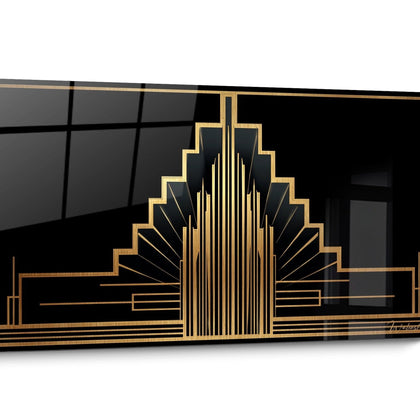 Artistic Movements Painting Art Deco24
artworks
Artistic Movements Painting Art Deco24
artworks
-
 Golden Artistic Movements Wall Art24
artworks
Golden Artistic Movements Wall Art24
artworks
-
 Artistic Movements Portrait Wall Art24
artworks
Artistic Movements Portrait Wall Art24
artworks
-
 Expressionist Artistic Movements Wall Art14
artworks
Expressionist Artistic Movements Wall Art14
artworks
-
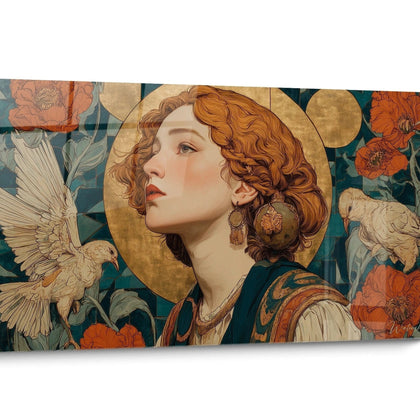 Art Nouveau Artistic Movements Wall Art14
artworks
Art Nouveau Artistic Movements Wall Art14
artworks
-
 Black and White Art Movements Wall Art12
artworks
Black and White Art Movements Wall Art12
artworks
-
 Artwork Artistic Movements Hyperrealism8
artworks
Artwork Artistic Movements Hyperrealism8
artworks
-
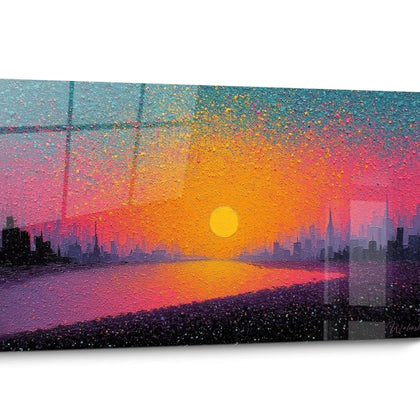 Artistic Movements Pointillism Wall Art8
artworks
Artistic Movements Pointillism Wall Art8
artworks
-
 Artistic Movements Wall Art Gothic9
artworks
Artistic Movements Wall Art Gothic9
artworks
-
 Symbolist Artistic Movements Wall Art6
artworks
Symbolist Artistic Movements Wall Art6
artworks
-
 Surrealism Artistic Movements Wall Art5
artworks
Surrealism Artistic Movements Wall Art5
artworks
-
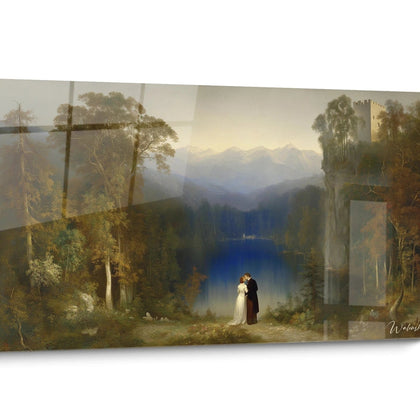 Artistic Movements Painting Romanticism5
artworks
Artistic Movements Painting Romanticism5
artworks
-
 Baroque Artistic Movements Wall Art8
artworks
Baroque Artistic Movements Wall Art8
artworks


All about Renaissance Artistic Movements Wall Art
- Renaissance Paintings Overview
- Renaissance Periods and Schools
- Visual Codes and Symbolism
- Renaissance Decorative Integration
Renaissance artistic movement paintings represent the golden age of European painting between the 14th and 16th centuries, a period when humanism and perspective revolutionized visual representation. These monumental reproductions capture the essence of Italian, Flemish and German masters who redefined Western aesthetic canons. Unlike abstract artistic movement paintings that deconstruct form, Renaissance works celebrate anatomy, architecture and mythological narrative with scientific precision. Our large-scale formats magnify every detail of the frescoes, portraits and biblical scenes that characterize this pivotal era in art history.
The Different Schools of the Renaissance and Their Visual Characteristics
The Renaissance artistic movement painting unfolds according to three major geographical schools with distinct characteristics. Italian Renaissance, the birthplace of the movement, subdivides between Early Florentine Renaissance dominated by Masaccio and Botticelli, and High Renaissance Rome embodied by Raphael and Michelangelo. These works favor architectural symmetry, mathematical perspectives and references to Greco-Roman Antiquity.
Why does Northern Renaissance painting distinguish itself visually from the Italian school?
Northern Renaissance develops a radically different approach centered on meticulous observation of reality. Flemish primitives such as Jan Van Eyck and Rogier van der Weyden exploit the oil painting technique to create microscopic details impossible with Italian tempera. Their compositions integrate detailed urban landscapes, bourgeois interiors and Christian symbolism concealed in everyday objects. These large-scale paintings reveal textures of velvet, fur and metal executed with near-photographic precision.
Chromatic specificities according to Renaissance periods
The palette of Renaissance artistic movement paintings evolves drastically between the Quattrocento and Cinquecento. Early Renaissance favors pure mineral pigments: ultramarine blue for the Virgin's cloaks, vermillion red for princely drapery, beaten gold for halos. High Renaissance introduces Leonardian sfumato with vaporous transitions between shadows and light, while the Venetian school of Titian and Veronese exploits saturated warm tonalities impossible to reproduce before the invention of new binders. Our large-scale reproductions restore these chromatic subtleties that define each period.
The importance of commission in Renaissance iconography
Unlike later artistic movements, each Renaissance work responds to a precise commission determining its subject and composition. Altarpieces intended for private chapels follow complex iconographic programs negotiated with ecclesiastical patrons. Court portraits integrate coded political attributes revealing the model's status. Palace frescoes narrate mythological cycles glorifying patrician families. This narrative dimension makes Renaissance artistic movement paintings a vehicle for historical reading, where each visual element transmits a precise political, religious or philosophical message.
Decoding Renaissance Symbolism and Visual Codes
The Renaissance artistic movement painting functions as a complex semiotic system where every visual element conveys coded meaning. The gesturing of figures follows ancient body language rediscovered in Roman sculptures: index finger pointing skyward signifying divine transcendence, hand on heart expressing sincerity, open palm symbolizing welcome or gift-giving. These gestural conventions transform each composition into silent narration accessible to the educated of the era.
How to interpret iconographic attributes in religious scenes?
Each saint is recognized by their specific attributes forming a standardized visual alphabet. Saint Peter carries the keys to paradise, Saint Catherine the wheel of her martyrdom, Saint Jerome accompanied by the lion and skull evoking penance. The Renaissance artistic movement painting transforms these conventions into monumental decorative elements: a large-scale format allows appreciation of the details of Saint Mark's illuminated book, the preciousness of Saint Barbara's jewelry or the fineness of Saint Augustine's episcopal vestments. This iconographic legibility requires generous dimensions to reveal every symbol.
Linear perspective as rational language
The major innovation of Italian Renaissance lies in the mathematization of pictorial space. Brunelleschi codifies perspective with a single vanishing point creating geometric illusion of depth. Piero della Francesca pushes this rationalization to calculating his figures' proportions according to precise numerical ratios. These architectural compositions transform the Renaissance artistic movement painting into scientific demonstration as much as aesthetic object. Monumental formats amplify this perspective effect, creating an illusionistic window onto ancient architectures or Tuscan landscapes that seem to extend real space.
Heroic Nudity and anatomical idealization
Unlike medieval modest representations, the Renaissance rehabilitates nudity as expression of incarnate divine perfection. Michelangelo sculpts and paints superhuman anatomies inspired by the Laocoön and Apollo Belvedere. These idealized bodies follow mathematical canons: eight heads for total height, upper third for torso, golden proportions for limbs. The large-scale Renaissance artistic movement painting magnifies these anatomical studies, revealing the protruding musculature of the Sistine ignudi or the androgynous grace of Botticellian Venuses, creating sculptural presence on contemporary walls.
Showcasing a Renaissance Painting in Contemporary Interiors
Integrating a Renaissance artistic movement painting into modern space creates a fascinating aesthetic tension between classicism and minimalism. These large-scale reproductions function as cultural focal points in refined environments, introducing chromatic richness and narrative density absent from contemporary decorations. The opposition between Renaissance illusionistic perspective and geometric volumes of current architecture generates unique visual dynamics.
Which spaces particularly showcase monumental Renaissance compositions?
Private libraries and executive offices constitute the ideal setting for these works laden with humanist references. A Renaissance artistic movement painting depicting a Platonic academy or princely studiolo naturally dialogues with bound volumes and solid wood furniture. Entry halls with cathedral ceilings accommodate fresco reproductions like the Last Judgment or School of Athens, creating monumentality impression at the threshold. Formal dining rooms welcome the Wedding at Cana or mythological feasts, establishing thematic continuity with the space's convivial function.
Decorative associations amplifying stylistic coherence
The environment of Renaissance artistic movement painting must balance historical respect and contemporary legibility. Neutral stone-gray or warm beige walls evoke Italian palazzos without mimicking museum reconstruction. Furniture with clean lines inspired by Scandinavian design brings sobriety that values the work's visual complexity without style competition. Directional lighting with warm temperature (2700-3000K) restores original golden tonalities while sculpting composition reliefs. Simple dark wood or black lacquer frames create subtle transition between historical work and modern wall.
Creating narrative sequences with multiple Renaissance paintings
Discerning collectors compose thematic sequences by associating multiple large-scale reproductions. A corridor can accommodate a series of princely portraits creating a fictional ancestral gallery. A spacious living room allows juxtaposing Annunciation, Nativity and Adoration of the Magi forming a narrative triptych. This serial approach, inherited from original fresco cycles, transforms the home into immersive cultural space where each piece develops a chapter of Renaissance art history.
What impact does a Renaissance artistic movement painting bring to minimalist décor?
Introducing a monumental Renaissance reproduction into refined interior creates calculated maximal contrast. The work's narrative and chromatic density becomes the sole substantial decorative element, transforming surrounding minimalism into enhancing setting. This strategy avoids visual saturation while asserting strong cultural identity.
How to choose between Italian and Flemish Renaissance according to desired atmosphere?
Italian compositions with architectural perspectives and heroic figures suit formal representative spaces requiring solemn dimension. Intimate Flemish scenes with domestic details naturally integrate into libraries, offices and bedrooms favoring contemplative atmosphere. Warm Venetian palette warms north-facing rooms, while cool Flemish tonalities balance light-filled spaces.
Why prioritize large-scale formats for Renaissance works?
Renaissance artistic movement paintings were originally conceived for monumental church and palace walls. Reducing these compositions to modest formats betrays their architectural intention and renders symbolic details illegible. Large-scale reproductions restore original visual impact, allowing appreciation of overall composition from distance and technical mastery of old masters up close.
Further reading


