



Art Nouveau Artistic Movements Wall Art
Our Paintings Movements artistic Art Nouveau collection celebrates the refined aesthetics of this iconic movement. Inspired by organic curves, floral motifs and the harmony between art and nature, each artwork captures the essence of this style Art Nouveau decorative. Compositions with sinuous lines and delicate ornaments bring a touch of timeless elegance to your interior. Perfect for lovers of fin de siècle decorative art, these creations transform your spaces into true art galleries.
 Art Nouveau Woman Canvas - Golden Poppy Lady - Art Deco Edition273,90 €
 Art Nouveau Woman Painting - Goddess with Golden Spirals - Art Deco Edition273,90 €
 Art Nouveau Woman Painting - Golden Elegance - Art Deco Edition273,90 €
 Woman Golden Meditation Painting - Art Nouveau Edition273,90 €
 Crowned Woman Precious Grace Wall Art - Art nouveau Edition228,90 €
 Woman Emerald and Amber Wall Art - Art Nouveau Edition273,90 €
 Woman Painting Solar Elixir - Art Nouveau Edition273,90 €
 Woman Cobalt Graceful Painting - Art Nouveau Edition273,90 €
 Woman Ecstasy Marine Painting - Art Nouveau Edition273,90 €
 Woman Painting Celestial Doves - Art Nouveau Edition273,90 €
 Woman Wall Art Copper Meanders - Art nouveau edition228,90 €
 Woman with golden hair painting Copper glow - Art Nouveau edition228,90 €
 Woman Painting Woven Elegance - Art Nouveau Edition228,90 €
 Woman Byzantine Grace Wall Art - Art nouveau edition228,90 €
Explore further
In Art Nouveau Artistic Movements Wall Art
-
 Artistic Movements Wall Art793
artworks
Artistic Movements Wall Art793
artworks
-
 Abstract Artistic Movements Wall Art24
artworks
Abstract Artistic Movements Wall Art24
artworks
-
 Artistic Movements Geometric Wall Art22
artworks
Artistic Movements Geometric Wall Art22
artworks
-
 Artistic Movements Painting Art Deco24
artworks
Artistic Movements Painting Art Deco24
artworks
-
 Golden Artistic Movements Wall Art24
artworks
Golden Artistic Movements Wall Art24
artworks
-
 Artistic Movements Portrait Wall Art24
artworks
Artistic Movements Portrait Wall Art24
artworks
-
 Expressionist Artistic Movements Wall Art14
artworks
Expressionist Artistic Movements Wall Art14
artworks
-
 Black and White Art Movements Wall Art12
artworks
Black and White Art Movements Wall Art12
artworks
-
 Artwork Artistic Movements Hyperrealism8
artworks
Artwork Artistic Movements Hyperrealism8
artworks
-
 Artistic Movements Pointillism Wall Art8
artworks
Artistic Movements Pointillism Wall Art8
artworks
-
 Artistic Movements Wall Art Gothic9
artworks
Artistic Movements Wall Art Gothic9
artworks
-
 Renaissance Artistic Movements Wall Art8
artworks
Renaissance Artistic Movements Wall Art8
artworks
-
 Symbolist Artistic Movements Wall Art6
artworks
Symbolist Artistic Movements Wall Art6
artworks
-
 Surrealism Artistic Movements Wall Art5
artworks
Surrealism Artistic Movements Wall Art5
artworks
-
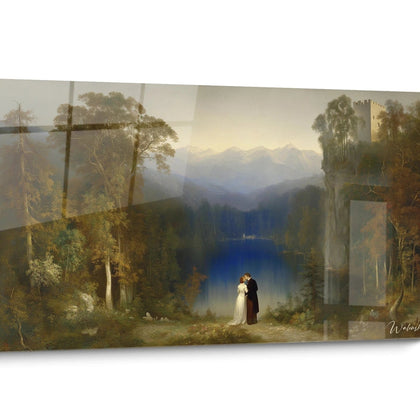 Artistic Movements Painting Romanticism5
artworks
Artistic Movements Painting Romanticism5
artworks
-
 Baroque Artistic Movements Wall Art8
artworks
Baroque Artistic Movements Wall Art8
artworks


All about Art Nouveau Artistic Movements Wall Art
- Art Nouveau Paintings Presentation
- Art Nouveau Aesthetic Codes
- Masters and Iconography
- Decorative Integration
Art Nouveau artistic movement paintings embody a major aesthetic revolution that marked the transition between the 19th and 20th centuries. This movement, also known as Modern Style or Jugendstil depending on the region, is distinguished by its radically new approach to decoration and ornamentation. Unlike previous academic movements, Art Nouveau draws its inspiration directly from the organic forms of nature, creating a unique visual language based on sinuous curves, stylized floral patterns and dynamic asymmetry. These large-scale wall artworks instantly transform any space into a genuine Belle Époque gallery, bringing that refined elegance characteristic of Viennese cafés, Parisian salons and Brussels villas of the era. For collectors seeking decoration that dialogues with art history while maintaining timeless modernity, these creations represent a major aesthetic investment.
Ornamental Aesthetics and Visual Codes of Art Nouveau
Art Nouveau artistic movement paintings are immediately recognizable by their distinctive visual vocabulary that breaks with academic conventions. Whiplash lines, those serpentine curves evoking plant stems, constitute the fundamental graphic signature of this movement. These organic undulations create a sensation of perpetual fluidity, as if the artwork itself breathed and grew before the viewer's eyes.
What are the specific ornamental characteristics of Art Nouveau paintings?
Art Nouveau ornamentation favors stylized rather than naturalistic botanical motifs: irises, water lilies, poppies, wisterias and thistles become abstract decorative elements. Artists of the movement transform these floral references into sophisticated arabesques where line takes precedence over volume. Color plays an essential role with refined palettes dominated by muted tones, olive greens, delicate mauves and pale golds that contrast with punctual bursts of saturated colors.
The feminine symbolism in Art Nouveau iconography
The representation of the female figure occupies a central place in Art Nouveau paintings, simultaneously embodying ideal beauty, personified nature and modernity. These women with opulent hair forming ornamental cascades, with fluid drapery hugging body curves, reflect the emancipatory spirit of the Belle Époque. Alphonse Mucha, with his monumental decorative series, crystallized this aesthetic by creating vertical compositions where the woman literally merges into the surrounding ornamental architecture.
Typographic integration and overall composition
Unlike previous periods that strictly separated text and image, Art Nouveau fuses typography and illustration into a unified composition. Letters become decorative elements, intertwine with plant motifs and participate in overall balance. This totalizing approach transforms each painting into a complete artwork where every detail contributes to overall harmony, creating wall pieces particularly suited to large architectural spaces requiring strong and coherent visual presence.
Masters of Art Nouveau and Their Decorative Legacy
Alphonse Mucha and monumental decorative panels
Art Nouveau artistic movement paintings find their most accomplished expression in Mucha's decorative panels, particularly his thematic series such as The Seasons, The Hours of the Day or The Precious Stones. These large vertical compositions were specifically designed to adorn the walls of bourgeois apartments and public spaces. Their slender format and composition structured around a central figure surrounded by peripheral ornamentation create powerful visual impact while maintaining refined elegance.
How to recognize the different national schools of Art Nouveau?
Each European nation developed its own interpretation of the Art Nouveau movement. The Viennese Secession school, with Gustav Klimt, favors gilded surfaces, stylized geometric motifs and sophisticated decorative sensuality. The Belgian style, embodied by Victor Horta and Henry van de Velde, favors dynamic linear structures and bold asymmetry. The Nancy school, with Émile Gallé and the Daum brothers, develops an approach deeply rooted in regional botanical observation. These stylistic variations offer collectors remarkable diversity to compose nuanced decorative ensembles.
The influence of Japanese prints on composition
Japonisme profoundly marked the aesthetics of Art Nouveau paintings, particularly in spatial treatment and form simplification. Artists adopted flat color areas, flat perspectives, asymmetrical framing and stylized natural elements characteristic of ukiyo-e. This East-West fusion gives artworks a modernity that harmoniously dialogues with contemporary interiors, creating aesthetic bridges between historical heritage and current sensibility.
Thematic series and their decorative coherence
Art Nouveau artists favored creating thematic series allowing them to decline a concept through multiple complementary compositions. This serial approach offers today's enthusiasts the opportunity to build coordinated wall ensembles creating continuous visual narrative. Unlike the approach of Artistic Movements Abstract Painting which favors the autonomy of each piece, Art Nouveau encourages dialogue between multiple artworks sharing common aesthetic vocabulary to amplify overall decorative impact.
Integrating Art Nouveau Paintings into Contemporary Spaces
Art Nouveau in current architectural environments
Large-scale Art Nouveau artistic movement paintings find their optimal expression in spaces with generous volumes: entrance halls, staircases, double-height living rooms or gable walls. Their often-slender vertical composition particularly enhances narrow and tall walls that other formats struggle to valorize. In industrial lofts, the contrast between Belle Époque ornamentation and raw structure creates a fascinating aesthetic tension, while in Haussmann interiors, these artworks restore the original spirit of the spaces.
How to associate Art Nouveau with contemporary furniture?
Contrary to popular belief, Art Nouveau aesthetics do not require period interiors to reveal their potential. The organic curves of these paintings create a remarkable counterpoint with contemporary furniture with clean lines. A large Mucha decorative panel brings the ornamental warmth necessary to humanize a minimalist interior, while the muted tones characteristic of the movement harmonize naturally with current neutral palettes. The essential lies in respecting proportions: favor monumental formats that assert their presence without hesitation.
Chromatic and material associations
Art Nouveau palettes, dominated by emerald greens, peacock blues, misty mauves and tarnished golds, harmoniously dialogue with contemporary natural materials: light wood, natural linens, artisanal ceramics and indoor plants. To maximize visual impact, avoid peripheral decorative overload: a large Art Nouveau painting is itself the main decorative event and poorly tolerates competition from other complex ornamental elements in its immediate perimeter. Instead favor calming surfaces that allow the artwork to fully deploy its visual richness.
Creating a revisited Belle Époque atmosphere
For enthusiasts wishing to recreate the atmosphere of 1900 salons while maintaining modern comfort, Art Nouveau paintings serve as stylistic anchors around which to organize everything. Pair them with luminaires featuring organic shapes, textiles with stylized floral patterns and a few curved furniture pieces. Indirect lighting sublimating ornamental details without creating aggressive reflections constitutes a crucial element for revealing the chromatic subtlety of these artworks. In prestigious professional spaces, these paintings instantly bring cultural dimension and historical refinement valorizing brand image.
What type of lighting works best to highlight a large Art Nouveau painting?
Favor diffuse indirect lighting with warm-temperature LED sources (2700-3000K) positioned to avoid direct reflections. Integrated ceiling architectural lighting rails or adjustable track spotlights allow creating uniform light bath revealing chromatic richness without altering delicate tones.
Do Art Nouveau artistic movement paintings suit professional spaces?
Absolutely. These artworks bring cultural sophistication particularly appreciated in law offices, executive offices, boutique hotels, gourmet restaurants and reception spaces. Their immediately identifiable historical reference conveys values of refinement, expertise and tradition of excellence.
Can you combine multiple artistic movement styles with Art Nouveau?
Art Nouveau paintings dialogue remarkably well with Art Deco that succeeds it chronologically, creating coherent historical narrative. Associations with aesthetically distant movements require more pointed decorative expertise to avoid visual cacophony. When in doubt, favor stylistic concentration over eclecticism.
Further reading


