


Artwork Artistic Movements Hyperrealism
Our Paintings Artistic Movements Hyperrealism collection celebrates technical excellence and artistic precision. Explore contemporary hyperrealistic art with stunning photographic details, where each creation transcends reality. These modern ultra-realistic paintings capture the essence of this demanding artistic movement with exceptional mastery. Dive into a universe where painting rivals photography and discover fascinating compositions that push the limits of visual perception.
 Woman Connection Marine Painting - hyperrealism edition273,90 €
 Elegant Woman Painting - Pure Elegance Edition Hyperrealism273,90 €
 Flowering Branch Contemplation Red Wall Art - hyperrealism edition273,90 €
 Couple Tenderness Intimate Wall Art - hyperrealism edition273,90 €
 Fawn Fragile Innocence - Hyperrealism Edition273,90 €
 Cherry Blossoms with Pink Reflections - Hyperrealism Edition273,90 €
 Woman with tea painting Precious moment - hyperrealism edition273,90 €
 Dove Communion Silent - Hyperrealism Edition Wall Art273,90 €
Explore further
In Artwork Artistic Movements Hyperrealism
-
 Artistic Movements Wall Art793
artworks
Artistic Movements Wall Art793
artworks
-
 Abstract Artistic Movements Wall Art24
artworks
Abstract Artistic Movements Wall Art24
artworks
-
 Artistic Movements Geometric Wall Art22
artworks
Artistic Movements Geometric Wall Art22
artworks
-
 Artistic Movements Painting Art Deco24
artworks
Artistic Movements Painting Art Deco24
artworks
-
 Golden Artistic Movements Wall Art24
artworks
Golden Artistic Movements Wall Art24
artworks
-
 Artistic Movements Portrait Wall Art24
artworks
Artistic Movements Portrait Wall Art24
artworks
-
 Expressionist Artistic Movements Wall Art14
artworks
Expressionist Artistic Movements Wall Art14
artworks
-
 Art Nouveau Artistic Movements Wall Art14
artworks
Art Nouveau Artistic Movements Wall Art14
artworks
-
 Black and White Art Movements Wall Art12
artworks
Black and White Art Movements Wall Art12
artworks
-
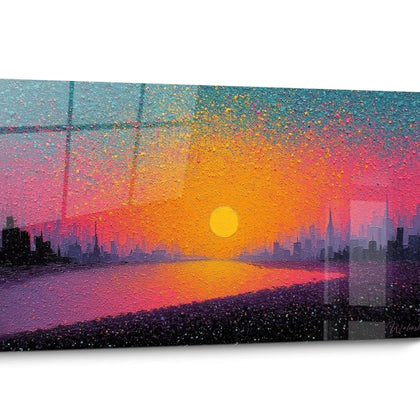 Artistic Movements Pointillism Wall Art8
artworks
Artistic Movements Pointillism Wall Art8
artworks
-
 Artistic Movements Wall Art Gothic9
artworks
Artistic Movements Wall Art Gothic9
artworks
-
 Renaissance Artistic Movements Wall Art8
artworks
Renaissance Artistic Movements Wall Art8
artworks
-
 Symbolist Artistic Movements Wall Art6
artworks
Symbolist Artistic Movements Wall Art6
artworks
-
 Surrealism Artistic Movements Wall Art5
artworks
Surrealism Artistic Movements Wall Art5
artworks
-
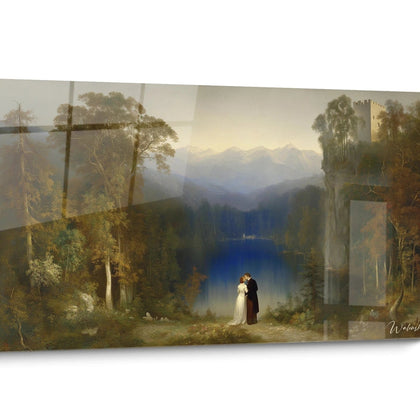 Artistic Movements Painting Romanticism5
artworks
Artistic Movements Painting Romanticism5
artworks
-
 Baroque Artistic Movements Wall Art8
artworks
Baroque Artistic Movements Wall Art8
artworks


All about Artwork Artistic Movements Hyperrealism
- Hyperrealism Presentation
- Photographic Wall Art Aesthetic
- Hyperrealistic Visual Impact
- Acquiring Hyperrealistic Artworks
Hyperrealism represents a contemporary artistic movement that transcends simple representation to create wall compositions of unsettling precision. These monumental creations capture every detail with microscopic accuracy, transforming residential and commercial spaces into veritable galleries of visual illusions. Investing in a painting of large dimension is a bold decorative choice for collectors seeking a uncompromising aesthetic statement.
The technical excellence of the hyperrealistic movement in wall decor
The painting artistic movements hyperrealism is distinguished by a methodical approach where every square millimeter reveals a density of visual information comparable to high-resolution photographic sensors. This technical mastery allows for the reproduction of skin textures with visible pores, watery reflections with their light distortions, or metallic surfaces with their infinitesimal chromatic gradations. Monumental formats amplify this feat by multiplying the surface of microscopic details while maintaining a stunning overall coherence.
Why does hyperrealism create an immediate fascination in the viewer?
The effect of astonishment comes from the cognitive conflict generated when the brain simultaneously identifies the pictorial nature of the support and the photographic precision of the rendering. This perceptual tension maintains the viewer's attention who instinctively seeks to detect the clues revealing the manual technique. Large-format hyperrealistic artworks exploit this dynamic by allowing a progressive visual exploration, each area scrutinized revealing new levels of detail imperceptible at a distance.
The emblematic subjects favored in contemporary hyperrealistic production
Contemporary hyperrealistic artists favor urban themes with glassy reflections on metallic architectures, monumental still lifes magnifying the irregularities of organic surfaces, or psychological portraits capturing eye moisture and micro facial expressions. These iconographic choices exploit the movement's ability to transform the ordinary into the extraordinary by intensifying the gaze. Unlike painting artistic movements abstract which suggest and evoke, hyperrealism affirms and documents with a clinical objectivity.
The spatial integration of monumental hyperrealistic compositions
A large-format hyperrealistic painting requires sufficient visual distance to allow the optical fusion of details into a coherent image. Contemporary spaces with generous volumes - industrial lofts, corporate reception halls, cathedral-like living rooms - offer this critical distance transforming fragmented reading into an immersive experience. Directed lighting accentuates the illusory three-dimensionality by creating micro-shadows revealing the surface texture while highlighting the simulated depth effects in the composition itself.
The communicative power of hyperrealistic representations in a professional environment
How does a hyperrealistic painting strengthen a premium brand's identity?
In sectors such as luxury, cutting-edge technology, or high-end architecture, a painting movements artistic hyperrealism instantly communicates values of technical excellence and meticulous attention to detail. This symbolic association works through direct analogy: the millimeter-perfect precision observable in the artwork implicitly reflects the rigor applied to the company's products or services. Clients and partners interpret this artistic requirement as an indicator of generalized high standards.
Intellectual property law firms, cosmetic surgery clinics, and watch manufacturers particularly exploit this semantic synergy. Hyperrealism then becomes a non-verbal communication element reinforcing the high-end positioning without resorting to explicit commercial signage. The monumentality of the available formats transforms these pieces into architectural focal points structuring the flow of views and movements.
The psychological effects of confronting pictorial accuracy,
Research in perceptual psychology demonstrates that hyperrealism simultaneously activates the neural circuits for recognizing real objects and analyzing cultural artifacts. This dual activation generates a state of sustained attention and investigative curiosity, a mental state particularly favorable to professional interactions requiring concentration and discernment. Waiting areas equipped with large hyperrealistic compositions record significantly reduced perceived durations compared to environments lacking complex visual stimulation.
The saturated color palette characteristic of the movement,
Contrary to preconceived notions associating realism and neutral tones, contemporary hyperrealism often favors intensified color saturations exceeding standard photographic reality. This controlled hypersaturation creates dynamic visual atmospheres capable of energizing minimalist spaces or dialoguing with bold decorative palettes. Works representing aquatic elements, translucent confectionery, or iridescent plumage particularly exploit this possibility of colorimetric amplification while maintaining structural credibility.
Acquisition and heritage valuation strategies for hyperrealistic artworks,
What criteria differentiate exceptional hyperrealistic production?
The qualitative evaluation of a painting movements artistic hyperrealism rests on several observable technical parameters: the luminous consistency between illuminated and shaded areas, the absence of discontinuities in tonal gradients, the anatomical or architectural accuracy of the represented elements, and above all, the ability to maintain visual definition even when viewed from a short distance. Large-format creations add the additional constraint of qualitative homogeneity across the entire surface, peripheral areas potentially revealing simplifications betraying less rigorous work.
Documented provenance and traceability of the artwork also constitute valuation factors, particularly for pieces from limited series or produced by artists who participated in the movement's foundational exhibitions in the 1970s-1980s. Certificates of authenticity detailing the techniques used and the materials used guarantee the chromatic permanence essential for a long-term decorative investment.
The evolution of prices in the contemporary hyperrealistic art market
The hyperrealistic segment has seen consistent appreciation for two decades, driven by the growing demand from Asian and Middle Eastern collectors who value technical virtuosity. Monumental formats benefit from a substantial premium related to their relative scarcity - the production of a piece of several square meters requiring several thousand hours of meticulous work. This simple economic equation explains why large hyperrealistic compositions constitute relatively stable heritage assets compared to the fluctuations affecting other contemporary art segments.
Optimal conservation and preservation of visual qualities
The pigments used in contemporary hyperrealism generally exhibit excellent resistance to ultraviolet light when protected by appropriate varnishes; nevertheless, direct exposure to sunlight remains prohibited to guarantee chromatic stability over several decades. Climate-controlled environments with controlled humidity between 45-55% prevent dimensional distortions that may affect the rigid supports of large formats. Gentle monthly dusting with antistatic microfiber is generally sufficient to maintain visual clarity without restorative intervention for several years.
What budget should be allocated for an authentic large-scale hyperrealistic painting?
Prices generally start around €3000-€5000 for formats exceeding 1.5 meters, and can reach several tens of thousands of euros for pieces by established artists in exceptional wall formats. This range directly reflects the production time invested and the creator's reputation.
How to verify the authenticity of a painting in the hyperrealism art movement offered online?
Systematically request high-resolution photographs allowing examination of the surface texture and signature, as well as a certificate of authenticity mentioning the exact techniques used. Specialized platforms offering traceability guarantees and secure return policies secure remote acquisition.
What is the difference between hyperrealism and photorealism in the context of wall decor?
Although technically related, hyperrealism adds an interpretative dimension and often an intensification of details or colors exceeding the strict photographic reproduction of photorealism. This distinction influences the final visual impact, hyperrealism frequently generating a more dramatic and captivating presence.
Further reading
Our articles on this topic
L'art qui suscite l'envie
Maison belge d'art mural grand format
14 jourspour changer d'avis*
Protection Walenskyincluse
Fabriquéen Italie
FormatXXL
Kit de fixationtoujours fourni
* Hors tableaux personnalisés et tailles personnalisées


