


Artistic Movements Geometric Wall Art
The Painting Artistic Movements Geometric celebrates the harmony of abstract forms and the mathematical rigor of modern art. This exclusive collection pays homage to the great currents of the 20th century by offering abstract geometric compositions with clean lines and structured patterns. Ideal for enhancing your contemporary spaces, it embodies the balance between creativity and symmetry. Each work evokes constructivism, suprematism and minimalist geometric art, bringing sophistication and character to your interior.
 Abstract Geometric Painting - Expressionist Symphony - Expressionist Edition273,90 €
 Circles Multiple Identities Wall Art - Vanity Edition273,90 €
 Abstract painting Insurgent Blocks - Dadaism edition273,90 €
 Abstract geometric painting Absolute Chaotic Order - Dadaism edition273,90 €
 Abstract Suspended Blocks Escape Painting - Dadaism Edition273,90 €
 Puzzle Composition Existential - Dadaism Edition273,90 €
 Chromatic Intersection Geometric Composition Wall Art - Constructivism Edition273,90 €
 Geometric Composition Artwork Creative Tension - Constructivism Edition273,90 €
 Geometric Composition Wall Art Utopian Vision - Constructivism Edition273,90 €
 Geometric Composition Wall Art Rational Order - Constructivism Edition273,90 €
 Geometric Composition Painting Contrasting Textures - Constructivism Edition273,90 €
 Colorful Abstraction Painting Progressive Movement - Constructivism Edition273,90 €
 Geometric Composition Social Architecture Painting - Constructivism Edition228,90 €
 Geometric Architecture Wall Art Interlaced Volumes - Bauhaus Edition273,90 €
 Geometric Composition Wall Art Overlapping Circles - Bauhaus Edition273,90 €
 Geometric Composition Shapes Play Artwork - Bauhaus Edition273,90 €
 Geometric Mosaic Composition Wall Art Modern - Bauhaus Edition273,90 €
 Geometric Composition Wall Art Pure Modernity - Bauhaus edition273,90 €
 Geometric Architecture Painting Exploded Perspective - Bauhaus Edition273,90 €
 Geometric Composition Wall Art Constructive Rhythm - Bauhaus Edition273,90 €
 Geometric Composition Wall Painting Formal Dialogue - Bauhaus Edition273,90 €
 Geometric Composition Floating Architecture Wall Art - Bauhaus Edition228,90 €
Explore further
In Artistic Movements Geometric Wall Art
-
 Artistic Movements Wall Art793
artworks
Artistic Movements Wall Art793
artworks
-
 Abstract Artistic Movements Wall Art24
artworks
Abstract Artistic Movements Wall Art24
artworks
-
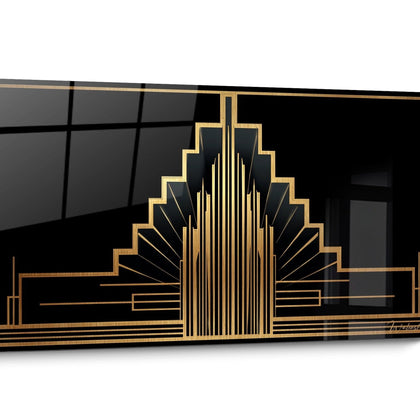 Artistic Movements Painting Art Deco24
artworks
Artistic Movements Painting Art Deco24
artworks
-
 Golden Artistic Movements Wall Art24
artworks
Golden Artistic Movements Wall Art24
artworks
-
 Artistic Movements Portrait Wall Art24
artworks
Artistic Movements Portrait Wall Art24
artworks
-
 Expressionist Artistic Movements Wall Art14
artworks
Expressionist Artistic Movements Wall Art14
artworks
-
 Art Nouveau Artistic Movements Wall Art14
artworks
Art Nouveau Artistic Movements Wall Art14
artworks
-
 Black and White Art Movements Wall Art12
artworks
Black and White Art Movements Wall Art12
artworks
-
 Artwork Artistic Movements Hyperrealism8
artworks
Artwork Artistic Movements Hyperrealism8
artworks
-
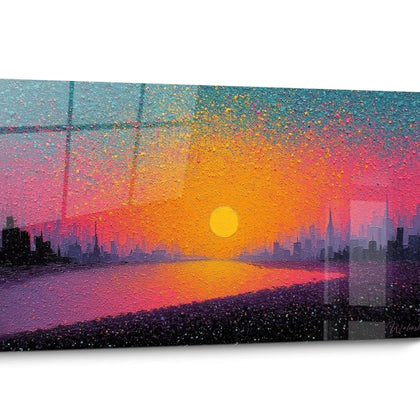 Artistic Movements Pointillism Wall Art8
artworks
Artistic Movements Pointillism Wall Art8
artworks
-
 Artistic Movements Wall Art Gothic9
artworks
Artistic Movements Wall Art Gothic9
artworks
-
 Renaissance Artistic Movements Wall Art8
artworks
Renaissance Artistic Movements Wall Art8
artworks
-
 Symbolist Artistic Movements Wall Art6
artworks
Symbolist Artistic Movements Wall Art6
artworks
-
 Surrealism Artistic Movements Wall Art5
artworks
Surrealism Artistic Movements Wall Art5
artworks
-
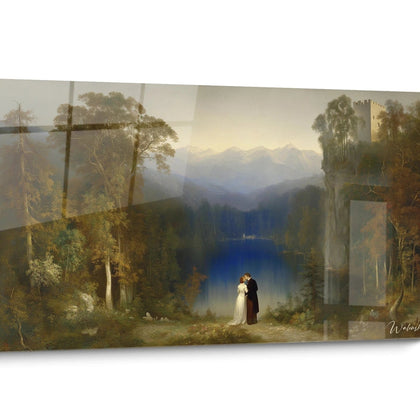 Artistic Movements Painting Romanticism5
artworks
Artistic Movements Painting Romanticism5
artworks
-
 Baroque Artistic Movements Wall Art8
artworks
Baroque Artistic Movements Wall Art8
artworks


All about Artistic Movements Geometric Wall Art
- Geometric Artworks Presentation
- Geometric Visual Architecture
- Structural Artistic Movements
- Spatial and Aesthetic Impact
Geometric artistic movement paintings embody the quintessence of formal rigor and spatial experimentation that have marked the history of modern art. These monumental compositions translate the essence of suprematism, constructivism and neoplasticism through pure forms, precise angles and sophisticated mathematical relationships. Each creation represents a visual exploration of fundamental principles of spatial perception, transforming contemporary spaces into veritable aesthetic laboratories where symmetry dialogues with calculated asymmetry.
The Visual Architecture of Geometric Forms in Structural Art
A large-scale geometric artistic movement painting redefines interior architecture by creating visual guidelines that structure inhabited space. These monumental works establish dominant visual axes through their orthogonal compositions, modular grids and rhythmic subdivisions that generate unique spatial dynamics. The placement of such a piece within contemporary architectural volume amplifies perspectives, accentuates verticality in double-height spaces and creates focal points that organize visual circulation.
How do monumental geometric compositions transform volumetric perception?
The imposing formats of geometric paintings generate fascinating optical phenomena when observed from different distances. At close range, linear segments, angular intersections and modular subdivisions reveal themselves in their mathematical complexity. Moving away, the artwork metamorphoses into a unified structure where proportional relationships create sophisticated visual balance. This dual spatial reading is particularly suited to large-scale professional spaces, generous entrance halls or open living areas exceeding forty square meters.
The structural principles of neoplasticism at large scale
The legacy of De Stijl manifests itself in these creations through the use of asymmetrical rectangles, black lines delimiting colored surfaces and balanced compositions without symmetry. On formats exceeding one hundred fifty centimeters, these principles generate controlled visual tension between full and empty surfaces, between horizontality and verticality. Abstract artistic movement paintings share this search for formal purity, but geometric compositions distinguish themselves through their absolute mathematical rigor and total rejection of gestural expression.
The impact of modular grids on residential environments
The grid systems characterizing the geometric artistic movement painting create visual resonances with modern architecture. Large-format tiles, modular shelving, glazed facades with muntins harmonize naturally with these structured compositions. This formal coherence amplifies the sensation of spatial order while avoiding monotony through chromatic variations, rhythmic offsets and calculated interruptions in geometric sequences. Minimalist Scandinavian spaces or industrial interiors particularly value this rationalized aesthetic.
- Reinforcement of architectural axes through alignment with load-bearing structures
- Creation of visual rhythms corresponding to window-partition intervals
- Amplification of depth through superposition of geometric planes
- Balancing of asymmetrical volumes through structured visual compensation
The Founding Movements of Monumental Geometric Expression
Suprematism and the supremacy of pure form
Kasimir Malevich revolutionized artistic perception by proposing compositions where the square, circle and cross assert themselves as autonomous entities freed from any figurative reference. A geometric artistic movement painting inspired by suprematism presents forms floating on neutral backgrounds, creating ambiguous spatial relationships where depth becomes conceptual rather than perspectival. These compositions encourage prolonged visual meditation, gradually revealing their subtleties in slight angular offsets, imperceptible tonal variations and tensions between static and dynamic elements.
What specificities distinguish monumental geometric constructivism?
Russian constructivism introduced a utilitarian and social dimension to geometric art, favoring dynamic compositions evoking machinery, industry and technological progress. Paintings inspired by this movement integrate energetic diagonals, fragmented forms suggesting mechanical movement and intensified chromatic contrasts. On monumental formats, these compositions generate spatial vitality particularly suited to collaborative work spaces, corporate reception areas or urban lofts where industrial aesthetics dialogue with contemporary refinement.
Hard-edge geometric abstraction and its chromatic fields
Developed in the 1960s, the hard-edge approach privileges sharp transitions between colored zones, eliminating any trace of brushwork or gradual shading. A large-scale hard-edge geometric artistic movement painting creates saturated chromatic fields whose abrupt boundaries produce intense optical vibrations. These works require sufficient visual distance to fully appreciate interactions between adjacent surfaces, simultaneous contrast phenomena and luminous radiation effects generated by certain chromatic combinations.
- Maximum chromatic saturation amplifying spatial presence
- Sharp contours creating precise spatial delimitations
- Complete absence of texture favoring optical purity
- Expansive compositions suggesting continuation beyond the frame
Op art research and programmed perceptual phenomena
Victor Vasarely and Bridget Riley explored the possibilities of creating systematic optical illusions through rigorous manipulation of repetitive geometric patterns. These compositions generate sensations of movement, illusory depth or retinal vibration purely through mathematical organization of static elements. On imposing formats, these effects multiply, transforming the geometric artistic movement painting into an immersive experience where the spectator becomes an actor in perception. Spaces dedicated to contemplation, exhibitions or transit zones particularly benefit from this self-generated visual dynamics.
Spatial Integration and Environmental Impact of Geometric Compositions
Which architectural environments enhance monumental geometric paintings?
Spaces characterized by architectural sobriety, refined lines and restricted chromatic palette constitute the ideal context for a large-scale geometric artistic movement painting. Immaculate white walls, raw concrete surfaces, black metal joinery and monochrome finishes create a neutral setting allowing compositional rigor to express itself fully. Generous volumes with ceiling heights exceeding three meters offer the necessary distance to apprehend the entire composition without excessive perspective distortion.
The interaction between natural light and geometric structures
Variations in natural lighting throughout the day continuously transform the perception of a monumental geometric painting. Raking morning light accentuates contrasts between light and dark segments, while zenith light softens certain delimitations to reveal others. This permanent metamorphosis enriches daily visual experience, offering an artwork in constant evolution without physical modification. Spaces oriented east or west, benefiting from marked directional lighting, amplify these perceptual transformation phenomena.
Decorative associations strengthening geometric coherence
The furniture and decorative environment accompanying a geometric artistic movement painting must respect similar formal discipline to avoid visual cacophony. Furniture with cubic lines, architectural lighting fixtures, minimal geometric patterned rugs and accessories with elementary forms create global stylistic harmony. This coherence does not mean uniformity: scale variations between the painting's monumentality and everyday object functionality generate enriching visual hierarchy. Contemporary materials such as glass, brushed steel or technical composites resonate with the modernist aesthetic of these compositions.
- Geometric consoles with mathematically calculated proportions
- Linear lighting following the painting's compositional axes
- Modular shelving reprising grid principles
- Textiles with complementary but distinct geometric patterns
Perceptual evolution according to observation positions
A monumental-format geometric artistic movement painting offers radically different visual experiences depending on the observer's location. From a room entrance, the composition reveals itself in its structural totality. Approaching laterally, proportional relationships modify, certain elements gaining importance while others diminish. This multiplicity of spatial readings justifies placement in circulation spaces or multipurpose zones where natural movements progressively reveal compositional richness.
How to choose the dimensions of a geometric artistic movement painting for a specific space?
Dimensional selection rests on the relationship between available wall surface and average observation distance. For a four-meter distance, choose formats between 120 and 180 centimeters in width. Complex geometric compositions require more distance than refined structures to avoid visual saturation. Ceiling height also determines optimal vertical format: in a 2.70-meter space, limit painting height to 150 centimeters to maintain sufficient visual breathing room.
What differences exist between cold and organic geometry in wall art?
Cold geometry privileges right angles, strict parallels and forms derived from compass and ruler, creating absolute visual rationality. Organic geometry integrates curves, controlled undulations and biomorphic forms while maintaining rigorous compositional structure. A cold-type geometric artistic movement painting suits refined contemporary architectural environments, while organic approaches harmonize with interiors integrating vegetation, natural materials and architectural curves.
Do monumental geometric paintings suit compact residential spaces?
Paradoxically, a monumental geometric composition can visually amplify restricted space by creating illusory depth through its vanishing lines, plane superpositions and perspective games. In a twenty-square-meter living room, a 140-centimeter painting becomes the absolute focal point, structuring the entire room visually. The essential lies in choosing an open rather than dense composition, favoring breathing surfaces and expansive structures suggesting spatial continuation beyond the frame's physical limits.


