


Abstract Wall Art for Schools
Our Painting for school Abstract collection transforms educational spaces into places of artistic inspiration. Specially designed to stimulate students' creativity, this selection of abstract art for schools combines harmonious shapes and balanced color palettes. Each educational abstract wall decoration encourages imagination and promotes a modern and dynamic learning environment, perfect for classrooms, libraries and common areas.
 Heart of the Breeze Canvas - Abstract Boat Edition233,90 €
 Wall Art Close to the Skin - Abstract Face Edition233,90 €
 Fluid Golden Trees Abstract Painting - Abstract Edition233,90 €
 Abstract colorful painting - Creative tempest - abstract painting style edition233,90 €
 Abstract movement painting - Color explosion - abstract painting style edition233,90 €
 Abstract Color Explosion Painting - Creative Chaos - abstract painting style edition233,90 €
 Dynamic Abstract Painting - Luminous Convergence - abstract painting style edition233,90 €
 Expressionist Abstract Painting - Colorful Symphony - abstract painting style edition233,90 €
 Stylized colorful tree painting - Mosaic of life - multicolor abstract edition233,90 €
 Holographic Architecture Painting - Digital Cosmos - abstract futurism edition232,90 €
 Futuristic architecture painting - Cybernetic city - abstract futurism edition213,90 €
 Dynamic Abstract Geometric Painting - Explosion of Colors - geometric abstract edition232,90 €
 Abstract Geometric Wall Art - Mondrian Jackson Pollock Fusion - Abstract Geometric Edition232,90 €
 Colored geometric abstraction table - Mondrian fusion - geometric abstract edition213,90 €
 Colorful Abstract Painting - Dynamic Composition - Abstract Geometric Edition233,90 €
 Stratified Abyss Earth Canvas - Abstract Expressionism Edition233,90 €
 Silent Arch Teal Wall Art - geometric abstract edition233,90 €
 Luminous Oxidized Abyss Wall Art - abstract geometric edition233,90 €
 Meditative Arches Incandescent Orange Wall Art - Abstract Geometric Edition213,90 €
 Red Marine Apocalypse Canvas - Abstract Expressionist Edition213,90 €
 Atlas of the Depths Canvas - Abstract Relief Edition233,90 €
 Beyond the Gaze Wall Art - Abstract Face Edition233,90 €
 Floral Dawn Wall Art - Abstract Edition233,90 €
 Fire Tree Artwork - Abstract Colorful Edition233,90 €
Explore further
In Abstract Wall Art for Schools
-
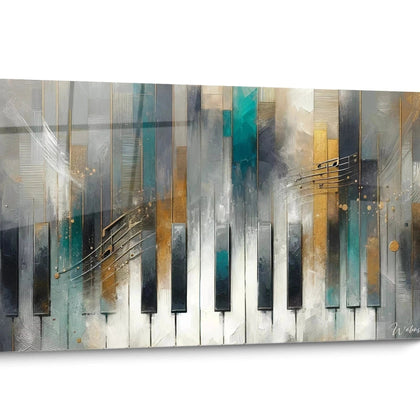 School Wall Art874
artworks
School Wall Art874
artworks
-
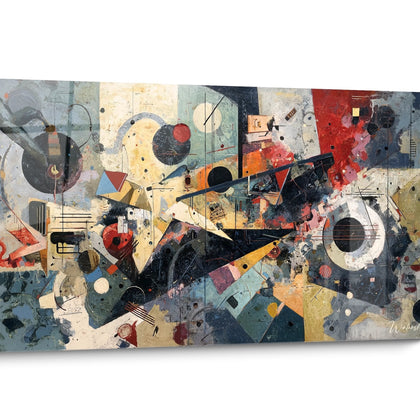 Geometric Educational Wall Art for Schools24
artworks
Geometric Educational Wall Art for Schools24
artworks
-
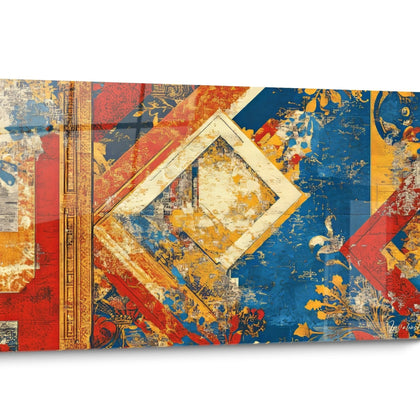 Colorful School Wall Art24
artworks
Colorful School Wall Art24
artworks
-
 Wall Art for Children's School24
artworks
Wall Art for Children's School24
artworks
-
 Pop Art Wall Art for Schools6
artworks
Pop Art Wall Art for Schools6
artworks
-
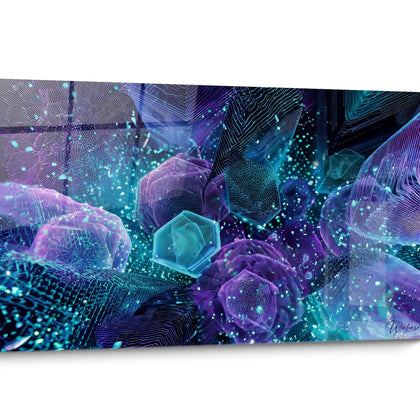 Futuristic School Wall Art10
artworks
Futuristic School Wall Art10
artworks
-
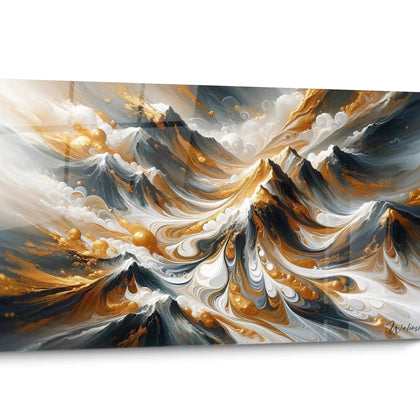 Golden School Wall Art14
artworks
Golden School Wall Art14
artworks
-
 Black and White School Wall Art11
artworks
Black and White School Wall Art11
artworks
-
 School Watercolor Art Canvas10
artworks
School Watercolor Art Canvas10
artworks
-
 School Wall Art Animals24
artworks
School Wall Art Animals24
artworks
-
 Wall Art for Music School12
artworks
Wall Art for Music School12
artworks
-
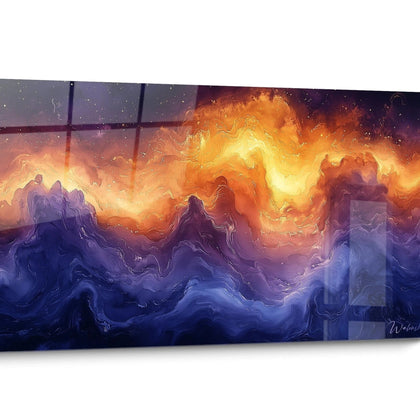 Expressionist School Wall Art8
artworks
Expressionist School Wall Art8
artworks
-
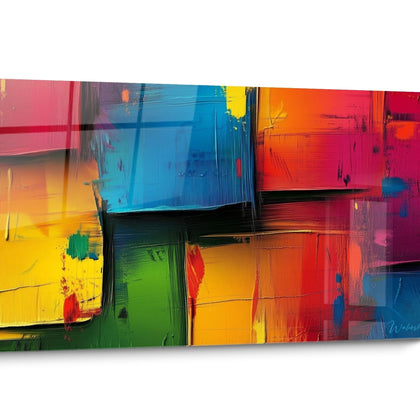 Painting School Wall Art13
artworks
Painting School Wall Art13
artworks
All about Abstract Wall Art for Schools
- Abstract School Wall Art Presentation
- Pedagogical Geometries and Forms
- Cognitive Stimulation and Creativity
- School Ambiances and Color Therapy
The abstract school wall art radically transforms the educational environment by introducing non-figurative visual compositions adapted to learning spaces. These large-scale wall installations exploit geometric forms, chromatic play and spatial dynamics to enrich classrooms, school corridors, libraries and covered recreation areas. Unlike classical narrative representations, abstract art stimulates imagination without imposing a single interpretation, thereby promoting cognitive development and divergent thinking in students of all ages. These visual installations meet the specific needs of educational institutions seeking durable, inspiring decorative solutions that comply with contemporary pedagogical requirements valuing creativity, visual reflection and open-mindedness.
The Impact of Geometric Compositions in the School Environment
The abstract school wall art exploiting structured geometric forms offer exceptional visual supports for cross-disciplinary teaching. These compositions integrating circles, triangles, polygons and complex figures become spontaneous pedagogical tools allowing teachers to illustrate mathematical concepts, spatial proportions and compositional principles directly in students' daily environment. Permanent exposure to these visual structures naturally reinforces shape recognition, develops spatial intelligence and promotes mathematical abstraction in learners.
How do abstract forms facilitate visual learning?
In educational spaces welcoming different school levels, geometric abstract wall art functions as a constant visual reference accessible without verbal mediation. Students progressively develop their formal vocabulary by daily observing intersections, overlaps, repetitions and rhythmic variations. These large-format wall compositions become particularly relevant in high-traffic corridors connecting different classrooms, where they create memorable visual landmarks facilitating spatial orientation and appropriation of the establishment by new students.
Chromatic palette and cross-disciplinary teaching
The color combinations present in abstract school wall art enrich the often limited chromatic environment of standard educational institutions. The use of sharp contrasts, subtle gradients or complementary harmonies introduces sophisticated visual vocabulary exploitable in visual arts, physical sciences and even descriptive literature. Teachers spontaneously reference these wall installations during vocabulary exercises, literary comparisons or perceptual studies, transforming the decorative installation into a permanent pedagogical resource naturally integrated across various disciplines.
Dimensions adapted to collective school spaces
Educational institutions require visual installations proportioned to their specific architectural volumes, particularly spacious entrance halls, cafeterias accommodating hundreds of students simultaneously and multifunctional multipurpose rooms. The impressive format of large-scale abstract school wall art guarantees optimal visibility even in these high-traffic spaces where modest artworks would disappear visually. This affirmed presence creates structuring focal points redistributing spatial perceptions and improving overall aesthetic quality without cluttering circulation zones essential to daily fluidity.
Neurocognitive Stimulation Through Mural Abstract Visuals
The installation of abstract school wall art directly addresses neuroscientific research demonstrating the positive impact of visually enriched environments on child and adolescent cognitive development. Non-figurative compositions actively engage visual cortex, associative centers and creative brain zones, unlike literal images requiring limited cognitive processing. This regular stimulation promotes neuronal plasticity, lateral thinking and interpretive capacities indispensable to contemporary complex learning demanding mental flexibility and multidimensional approaches.
Development of personal interpretation and creative confidence
Facing a mural abstract artwork, each student constructs personal meaning validated by their own perceptual experience, thereby reinforcing confidence in individual aesthetic judgment. This subjective validation proves particularly beneficial for learners struggling with normative learning seeking expression spaces where a single answer doesn't exist. Large-scale abstract wall art becomes a democratic zone where any interpretation retains equal legitimacy, facilitating collective discussions, active listening and respect for perceptual diversity among peers.
What cognitive benefits do mural abstract compositions offer?
Institutions privileging active pedagogies, collaborative learning or Montessori approaches naturally integrate abstract school wall art as environmental components promoting perceptual autonomy. The absence of imposed narrative encourages spontaneous questioning, formulation of visual hypotheses and aesthetic argumentation developing oral skills transferable across all disciplines. These wall installations also function as visual meditation supports during recreational breaks, offering contemplation points reducing school stress and promoting attentional recovery between intensive learning sequences.
Interdisciplinary connections facilitated by abstraction
Unlike figurative themes limiting pedagogical exploitations to specific domains, such as animal school wall art primarily linked to natural sciences, mural abstraction transcends traditional disciplinary boundaries. Mathematics teachers identify symmetries and geometric transformations, physics instructors identify energetic dynamics and wave movements, while philosophy teachers exploit formal symbolism to address metaphysical concepts. This versatility transforms the initial decorative investment into a transversal pedagogical resource used daily by multiple teachers simultaneously.
Chromatic Architecture and Emotional Management of Educational Spaces
The strategic choice of abstract school wall art directly influences the emotional atmosphere and behavioral performance within educational institutions. Selected chromatic palettes impact collective energy levels, sustained concentration capacities and emotional dispositions favorable to learning. Cool tones privileging deep blues, aquatic greens and soothing purples particularly suit school libraries, exam rooms and spaces requiring mental calm, while dynamic compositions integrating vitalizing oranges, stimulating yellows and energizing reds enliven covered recreation zones and creative activity rooms.
Which chromatic palette to choose according to school spaces?
Institutions seeking functional optimization differentiate chromatic selections according to specific spatial vocations. Entrance halls benefit from balanced compositions blending welcoming and structuring tones creating memorable first impressions for visitors, new enrollees and families. High-traffic circulation corridors exploit sharp contrasts facilitating rapid visual identification and intuitive orientation, transforming repetitive daily routes into visually stimulating paths. Multipurpose rooms hosting varied activities privilege chromatically neutral abstractions compatible with multiple uses avoiding decorative monotony while preserving functional flexibility.
Architectural harmonization and overall visual coherence
Successful integration of large-scale abstract school wall art requires careful consideration of existing architectural environment, standardized school furniture and specific regulatory constraints of educational institutions. Abstract compositions offer decisive advantage in naturally harmonizing with minimalist contemporary architecture while also valuing heritage buildings through controlled aesthetic contrast. Their universal visual language transcends architectural styles enabling coherent installations in recent institutions as well as rehabilitated historic structures, guaranteeing lasting decorative investment resisting ephemeral trend evolutions.
Durability and resistance adapted to intensive school context
Educational spaces undergo intensive frequentation, regular cleaning and mechanical solicitations requiring decorative selections privileging exceptional robustness. Large-scale abstract school wall art intended for professional school use integrates technical specifications guaranteeing resistance to accidental impacts, colorimetric stability against prolonged light exposures and maintenance ease compatible with strict hygiene protocols. This operational durability transforms initial investment into long-term cost-effective decorative solution, particularly relevant in constrained public budgets privileging optimal quality-longevity ratio over multiyear cycles.
Where to install abstract school wall art to maximize its visual impact?
Strategic locations include main entrance hall walls creating memorable impressions, corridor end walls generating attractive perspectives and administrative waiting areas transforming passive time into enriching contemplation moments.
How does abstract school wall art stimulate student creativity?
Daily exposure to non-figurative compositions develops divergent thinking, encourages multiple interpretations and normalizes personal aesthetic exploration, skills transferable to creative problem-solving across all disciplines.
What criteria should be considered when purchasing abstract school wall art?
Prioritize dimensions adapted to concerned architectural volumes, chromatic palettes coherent with specific spatial vocations, resistance certifications appropriate to intensive collective contexts and visually stimulating compositions without excessive perceptual aggressiveness.


