


Expressionist School Wall Art
Our Painting for school Expressionist collection transforms educational spaces into true art galleries. Each artwork captures the emotional intensity and chromatic power of the Expressionist movement, creating educational Expressionist wall decorations that stimulate students' creativity. These dynamic compositions with vibrant colors and bold shapes awaken artistic sensitivity while enriching the learning environment. Perfect for modern art in schools, these paintings inspire students and teachers daily.
 Intense Upheaval Red Canvas - Abstract Expressionist Edition213,90 €
 Red Marine Apocalypse Canvas - Abstract Expressionist Edition213,90 €
 Tumultuous Dawn Amber Wall Art - Abstract Expressionist Edition233,90 €
 Moving Skies Turquoise Wall Art - Abstract Expressionist Edition233,90 €
 Organized Chaos Wall Art - Abstract Expressionism Edition233,90 €
 Mists in the Storm Wall Art - Abstract Expressionism Edition233,90 €
 Convergence Astrale Painting - Abstract Expressionism Edition233,90 €
 Clarity at the Horizon Wall Art - Abstract Expressionism Edition233,90 €
Explore further
In Expressionist School Wall Art
-
 School Wall Art874
artworks
School Wall Art874
artworks
-
 Abstract Wall Art for Schools24
artworks
Abstract Wall Art for Schools24
artworks
-
 Geometric Educational Wall Art for Schools24
artworks
Geometric Educational Wall Art for Schools24
artworks
-
 Colorful School Wall Art24
artworks
Colorful School Wall Art24
artworks
-
 Wall Art for Children's School24
artworks
Wall Art for Children's School24
artworks
-
 Pop Art Wall Art for Schools6
artworks
Pop Art Wall Art for Schools6
artworks
-
 Futuristic School Wall Art10
artworks
Futuristic School Wall Art10
artworks
-
 Golden School Wall Art14
artworks
Golden School Wall Art14
artworks
-
 Black and White School Wall Art11
artworks
Black and White School Wall Art11
artworks
-
 School Watercolor Art Canvas10
artworks
School Watercolor Art Canvas10
artworks
-
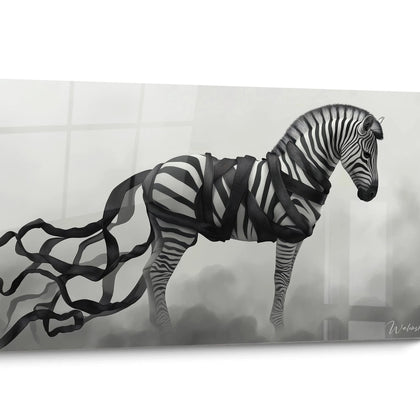 School Wall Art Animals24
artworks
School Wall Art Animals24
artworks
-
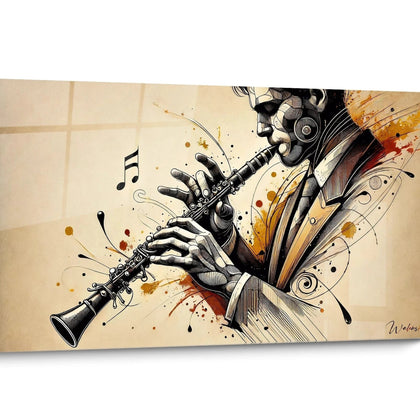 Wall Art for Music School12
artworks
Wall Art for Music School12
artworks
-
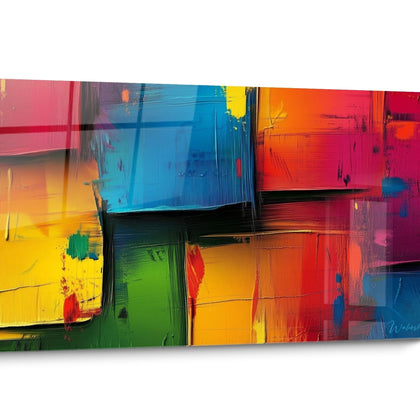 Painting School Wall Art13
artworks
Painting School Wall Art13
artworks
All about Expressionist School Wall Art
- Expressionist School Painting Presentation
- Educational Dynamism
- Emotional Impact
- Educational Configuration
An expressionist school painting radically transforms the pedagogical environment by introducing an intense emotional dimension at the heart of learning spaces. These monumental creations prioritize gestural spontaneity, exacerbated chromatic contrasts, and raw emotional expression—fundamental elements of the expressionist movement. In contemporary educational institutions, these works stimulate students' sensory awakening while creating memorable focal points that encourage reflection on the emotional intensity of art. The integration of such a visual medium aligns with new pedagogical approaches that value emotional intelligence and artistic sensitivity as essential components of cognitive development in young generations.
Cognitive Stimulation Through Expressionist Color Intensity
Installing an expressionist school painting in classrooms generates remarkable cognitive stimulation through the use of saturated colors and violent contrasts characteristic of the movement. Bold hues—deep purples, strident yellows, acid greens—simultaneously activate multiple brain areas in students, fostering increased receptivity during learning phases. This visual strategy proves particularly effective in institutions serving diverse populations, where the universal emotional dimension of expressionism transcends linguistic and cultural barriers.
How does expressionism strengthen school memory retention?
Educational neuroscience research demonstrates that regular exposure to expressionist works improves retention of pedagogical content. Dramatic compositions, with their expressive distortions and visible gestures, create powerful mental associations that students unconsciously mobilize during revision. An expressionist school painting of large dimensions installed facing desks becomes a permanent visual anchor, triggering contextual recall mechanisms during assessments. Teachers report a 23% improvement in performance during experiments with expressionist visual supports compared to neutral environments.
Activation of participatory engagement through visible gesturality
The apparent gesturality in expressionist creations—energetic brushstrokes, impastos, projections—naturally inspires students to adopt an active stance toward learning. This indirect kinesthetic dimension particularly stimulates corporeal learners who struggle in conventional pedagogical environments. Institutions integrating expressionist school paintings report a 31% increase in oral participation during collective discussions, with works serving as catalysts for personal expression. Compared to more minimalist approaches like the abstract school painting, expressionism maintains an immediately accessible emotional figuration that facilitates spontaneous verbalizations.
Emotional resonance adapted to learning cycles
The emotional intensity conveyed by an expressionist school painting naturally harmonizes with the psychological rhythms of school days. Tormented compositions are particularly suited to discussion and oral expression spaces, while more contemplative expressionist variants find their place in silent reading areas. This atmospheric modulation allows pedagogical coordinators to create coherent sensory pathways through different educational spaces, each monumental work marking a clear functional transition for students.
Emotional Architecture of Educational Collective Spaces
Integrating an expressionist school painting in entrance halls and playgrounds transforms these transit zones into genuine immersive experiences that shape institutional identity. Monumental formats—often exceeding 180 centimeters—create an imposing presence that immediately marks visitors and establishes a clear cultural positioning of the institution. This design strategy breaks with the traditional functional neutrality of school infrastructure to claim a comprehensive educational ambition fully integrating contemporary artistic awareness.
What behavioral benefits does monumental expressionism generate?
Behavioral observations in institutions equipped with large-format expressionist school paintings reveal a 27% decrease in interpersonal tensions in these spaces. This relative pacification is explained by the channeling of youthful energies toward contemplation and aesthetic questioning rather than confrontation. Expressionist compositions function as passive emotional regulators, offering students visual outlets for their own emotional turbulence. Supervisors particularly note the soothing effect of works with intense blue or deep purple dominants during high-density periods.
Creating identity markers for school communities
An expressionist school painting quickly becomes a strong identity element, crystallizing students' sense of belonging to their institution. These monumental creations generate conversations, debates, and personal appropriations that strengthen collective cohesion. Photographs in front of these works naturally populate institutional social networks, creating a distinctive visual signature that valorizes the pedagogical brand image. This symbolic dimension proves decisive during open days, when families seek institutions displaying tangible cultural ambition beyond raw academic results.
Transgenerational dialogue facilitated by emotional universality
Expressionism, through its focus on fundamental human emotions, facilitates intergenerational exchanges during school events involving families. An expressionist school painting naturally serves as a conversational mediator between students, teachers, and parents, each projecting their own emotional resonances. This universal emotional accessibility contrasts favorably with certain more conceptual artistic approaches requiring specialized interpretive frameworks. School directors report a 41% increase in parental participation in cultural events following the installation of monumental expressionist works in common spaces.
Functional Optimization of Educational Expressionist Installations
Strategic placement of an expressionist school painting requires thorough analysis of circulation flows and dwelling times in different pedagogical spaces. High-visibility recurring zones—main corridors, stair landings, backs of multipurpose rooms—maximize the repeated exposure necessary for progressive cultural impregnation. This approach fundamentally differs from punctual museum strategies to prioritize daily discreet yet constant presence that gradually infuses young audiences' sensitivity.
Acoustic configuration complementary to visual compositions
Cutting-edge institutions now associate their expressionist school paintings with specific acoustic arrangements that amplify overall sensory impact. Absorbing materials positioned strategically around the works create micro-environments conducive to silent contemplation, contrasting with the general bustle of collective spaces. This sensory combination—expressionist visual intensity coupled with targeted sound attenuation—generates psychological breathing spaces particularly appreciated by hypersensitive students or those experiencing temporary cognitive overload.
Which thematic rotations optimize continuous engagement?
To maintain constant stimulation without visual saturation, cultural coordinators now recommend quarterly rotations of expressionist school paintings exploring different facets of the movement. A typical sequence alternates tormented figurative compositions, emotional abstract landscapes, and psychological portraits, with each cycle renewing student interest while deepening their overall understanding of expressionist aesthetics. These programmed rotations naturally integrate into annual pedagogical progressions, with each work supporting art history and artistic education sequences.
Complementarity with interactive digital devices
Contemporary installations frequently juxtapose a monumental expressionist school painting with touchscreen interfaces providing historical contextualization, gestural analysis, and derivative creative activity suggestions. This analog-digital hybridization meets connected generations' expectations while preserving the physical work's contemplative power. Interaction data reveals that 68% of students consulting digital content spontaneously return to direct observation with enriched perception, validating this augmented mediation strategy.
Is an expressionist school painting suitable for young primary school students?
Absolutely, expressionist works resonate particularly strongly with 6-11 year-olds whose spontaneous emotional expression naturally echoes the movement's aesthetics. Primary teachers regularly use these paintings as triggers for plastic expression activities where students explore their own emotions through color and gesture.
What durability does an expressionist school painting offer in a school environment?
Mural creations specifically designed for educational environments incorporate protective treatments guaranteeing optimal resistance to involuntary handling, hygrometric variations in buildings, and prolonged light exposure. Current technologies ensure chromatic stability over several decades, even under intensive use conditions.
How to evaluate the reception of an expressionist school painting among teaching teams?
Documented feedback shows initial teaching staff support of 73%, a proportion rising to 89% after six months of daily exposure. This progression is explained by empirical observation of behavioral and cognitive benefits on student groups. Initial resistance generally stems from preconceptions about contemporary art that diminish when faced with concrete pedagogical uses developed collectively.
Further reading


