


Black and White School Wall Art
Our Black and White Artwork for Schools collection transforms educational spaces into places of artistic inspiration. These monochrome creations combine pedagogy and minimalist aesthetics, perfect for creating an atmosphere conducive to concentration. Each black and white educational wall decoration stimulates students' creativity while bringing a contemporary touch to classrooms and libraries. Adopt these monochrome artworks for classrooms which enrich the learning environment with elegance and modernity.
 Structural Luminous Momentum Wall Art - Abstract Minimalist Edition242,90 €
 Passionate Momentum Black Canvas - Minimalist Abstract Edition273,90 €
 Contemplative Ivory Dunes Canvas - Abstract Expressionist Edition242,90 €
 Wild Silver Foam Artwork - Abstract Expressionist Edition242,90 €
 Dance of Shadows Wall Art - abstract spiral edition273,90 €
 Two Faces Wall Art - Abstract Surrealism Edition273,90 €
 Ribbon Dance Artwork - Surrealism Abstract Edition273,90 €
 Line Dance Wall Art - Abstract Dancer Edition273,90 €
 Touch of Darkness Artwork - Abstract Face Edition273,90 €
 Silent Duality Painting - Abstract Body Edition273,90 €
 Structured Disorder Abstract Painting - Abstract Edition273,90 €
Explore further
In Black and White School Wall Art
-
 School Wall Art874
artworks
School Wall Art874
artworks
-
 Abstract Wall Art for Schools24
artworks
Abstract Wall Art for Schools24
artworks
-
 Geometric Educational Wall Art for Schools24
artworks
Geometric Educational Wall Art for Schools24
artworks
-
 Colorful School Wall Art24
artworks
Colorful School Wall Art24
artworks
-
 Wall Art for Children's School24
artworks
Wall Art for Children's School24
artworks
-
 Pop Art Wall Art for Schools6
artworks
Pop Art Wall Art for Schools6
artworks
-
 Futuristic School Wall Art10
artworks
Futuristic School Wall Art10
artworks
-
 Golden School Wall Art14
artworks
Golden School Wall Art14
artworks
-
 School Watercolor Art Canvas10
artworks
School Watercolor Art Canvas10
artworks
-
 School Wall Art Animals24
artworks
School Wall Art Animals24
artworks
-
 Wall Art for Music School12
artworks
Wall Art for Music School12
artworks
-
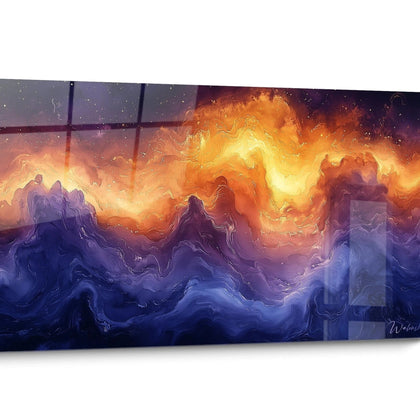 Expressionist School Wall Art8
artworks
Expressionist School Wall Art8
artworks
-
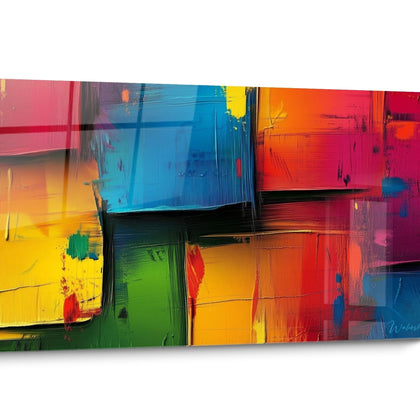 Painting School Wall Art13
artworks
Painting School Wall Art13
artworks
All about Black and White School Wall Art
- School Blackboard Presentation Black and White
- Monochrome Visual Pedagogy
- Cognitive Impact in Classroom
- Timeless School Interior Design
A black and white school wall chart transforms the learning environment by creating a space of optimal concentration. This large-format wall solution combines chromatic neutrality and visual impact to facilitate knowledge absorption by students. Educational institutions now seek visual supports that eliminate distractions while stimulating attention. The monochrome palette offers the clarity sought in modern classrooms where every decorative element must serve a precise pedagogical function.
Optimizing School Attention Through Monochrome Contrast
The black and white school wall chart meets the specific needs of contemporary learning environments where visual overload harms concentration. Neuroscience confirms that marked contrasts facilitate eye tracking and reduce cognitive fatigue in learners exposed to several hours of daily instruction.
Why Choose Monochrome Decoration for Educational Spaces?
Educational institutions are progressively adopting this reduced chromatic approach to create focus zones. A wall chart in shades of grey allows teachers to direct attention toward essential pedagogical content without competition from colorful decorative elements. This visual strategy proves particularly effective in classrooms welcoming students with specific needs or attention disorders.
Large format dimensions enhance this function by creating visual anchoring points that structure classroom space. Chromatic neutrality also promotes adaptability: the same wall support integrates into different pedagogical configurations, whether a science classroom, language laboratory, or multipurpose space.
What Graphic Patterns Suit Classroom Spaces?
Abstract geometric compositions in monochrome stimulate spatial reflection without imposing narrative interpretation that would divert attention. Directional lines, architectural forms, or organic textures create balanced visual presence. For institutions seeking a more pronounced conceptual dimension, exploring abstract school wall charts enriches design possibilities while maintaining this pursuit of visual simplicity.
Teachers particularly appreciate minimalist compositions that let walls breathe without creating emptiness: a delicate balance between stimulation and calm. This approach supports active teaching methods where students must project themselves mentally without being constantly prompted by their visual environment.
Visual Hierarchy and Memory Retention in School Spaces
How Do Black and White Contrasts Influence Information Retention?
Research in cognitive psychology demonstrates that high-contrast environments facilitate memory encoding. A large-format black and white school wall chart functions as a spatial organizer helping students mentally categorize classroom zones: pedagogical display space, collective work area, documentary resource corner.
This implicit visual segmentation reduces cognitive load related to spatial orientation, freeing mental resources for actual learning. Institutions prioritizing this approach observe improved student autonomy in managing their work environment.
Designing Spaces for Examinations and Assessments
Exam rooms require a neutral atmosphere minimizing anxiety while maintaining alertness. The monochrome palette creates the objectivity ambiance sought during formal evaluations. Imposing wall formats structure space without creating oppression, an essential quality in contexts where psychological pressure must be managed.
Pedagogical coordinators select these streamlined wall solutions for their ability to standardize exam conditions across different rooms. This visual standardization contributes to equity perceived by candidates, a non-negligible factor in certification evaluation.
Which Placement to Prioritize in a Multipurpose Room?
Installation facing individual workstations creates a common line of sight that structures collective sessions. For flexible spaces, lateral positioning maintains visual presence without dominating interior architecture. Institutions with multiple functional zones use these monochrome markers to subtly delineate learning territories without resorting to cumbersome physical separations.
Aesthetic Permanence and Architectural Coherence of Institutions
Why Invest in Timeless School Decoration?
Education budgets require durable choices resistant to passing trends. A black and white school wall chart transcends decades without visual obsolescence, a considerable economic advantage for institution managers. This chromatic neutrality harmonizes with successive architectural renovations, avoiding costly stylistic inconsistencies.
Large wall formats contribute to heritage valorization of school buildings by creating memorable visual markers. Former students and staff often associate these distinctive elements with their institutional experience, reinforcing the institution's visual identity long-term.
Coordination with Institutional Graphic Standards
Educational institutions progressively develop coherent visual identities. The black and white palette integrates naturally into these strict graphic systems while allowing subtle variations between departments or levels. This flexibility facilitates visual signage deployment without excessive rigidity.
Interior architects specialized in school design recommend these large-format monochrome solutions to structure circulation and intuitively guide visitors. The immediate visual impact of marked contrasts functions as an effective spatial orientation system in large educational complexes.
How to Maintain Visual Coherence Over Several Years?
Management teams appreciate the aesthetic resilience of monochrome compositions requiring no frequent updating. Unlike colorful themes aging quickly, these installations retain relevance regardless of pedagogical or technological evolutions. This visual stability also reassures educational communities attached to institutional continuity.
Frequently Asked Questions
Is a Black and White School Wall Chart Suitable for Preschool Classrooms?
Absolutely, marked contrasts stimulate early visual development and facilitate learning of fundamental geometric shapes. Young children particularly benefit from these clear visual markers structuring their spatial perception without sensory overload.
Do These Monochrome Compositions Work in Hallways and Common Spaces?
Perfectly suited, they create visual landmarks facilitating student autonomous orientation while valorizing often-neglected zones. Large formats transform these transition spaces into natural extensions of the pedagogical environment.
What Association to Make with Existing Colorful School Furniture?
Monochrome neutrality visually absorbs chromatic disparities in furniture without creating aesthetic conflict. This harmonizing property allows progressive unification of spaces equipped over different periods with heterogeneous color ranges.
Further reading
Our articles on this topic
- Study Room Decor: Choosing Artwork to Promote Concentration
- Why Avoid Distracting Wall Art in a Classroom Requiring Focus?
- Anti-glare matte paint: how important is it for an interactive whiteboard in the classroom?
- What dimensions to avoid visually overwhelming a small classroom?
- Why sophisticated monochrome artworks are suitable for boardrooms?


