


Geometric Educational Wall Art for Schools
Our Geometric School Artwork collection transforms mathematics learning into a captivating visual experience. Each educational geometric artwork combines shapes, colors, and harmonious compositions to stimulate students' intellectual curiosity. These artistic creations promote the understanding of mathematical concepts while decorating classrooms with elegance. Perfect for educational institutions, these geometric educational artworks create an environment conducive to concentration.
 Vertical colored stripes painting - Chromatic rhythm - geometric abstract edition228,90 €
 Translucent Colored Circles Wall Art - Geometric Symphony - geometric abstract edition273,90 €
 Orange and Blue Circles Painting - Geometric Harmony - geometric abstract edition273,90 €
 Concentric Colored Circles Painting - Geometric Harmony - geometric abstract edition273,90 €
 Overlapping Colored Circles Painting - Geometric Harmony - geometric abstract edition242,90 €
 Dynamic Abstract Geometric Painting - Explosion of Colors - geometric abstract edition242,90 €
 Overlapping Colored Circles Painting - Chromatic Harmony - geometric abstract edition242,90 €
 Abstract Geometric Wall Art - Mondrian Jackson Pollock Fusion - Abstract Geometric Edition242,90 €
 Multicolor concentric circles wall art - Geometric symphony - abstract geometric edition228,90 €
 Colorful geometric circles wall art - Modern harmony - abstract geometric edition228,90 €
 Colored geometric abstraction painting - Mondrian fusion - geometric abstract edition228,90 €
 Orange circle and geometric shapes painting - Abstract symphony - geometric abstract edition228,90 €
 Overlapping colored circles wall art - Geometric symphony - abstract geometric edition273,90 €
 Abstract colored composition wall art - Geometric symphony - abstract geometric edition273,90 €
 Transparent colored circles wall art - Chromatic symphony - abstract geometric edition273,90 €
 Colorful Abstract Painting - Dynamic Composition - Abstract Geometric Edition273,90 €
 Dynamic Abstract Composition Painting - Geometric Chaos - Abstract Geometric Edition273,90 €
 Overlapping Colored Circles Painting - Geometric Harmony - Abstract Geometric Edition273,90 €
 Silent Arch Teal Wall Art - geometric abstract edition273,90 €
 Luminous Oxidized Abyss Wall Art - abstract geometric edition273,90 €
 Meditative Arches Incandescent Orange Wall Art - Abstract Geometric Edition228,90 €
 Geometric Crossroads Vibrant Artwork - Cubism Abstract Edition228,90 €
 Chromatic Cascades Wall Art - Limited Edition Multicolor Abstract273,90 €
 Timeless Mechanical Complexity Canvas - Abstract Geometric Edition273,90 €
Explore further
In Geometric Educational Wall Art for Schools
-
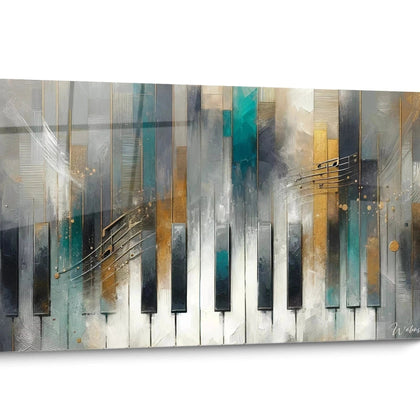 School Wall Art874
artworks
School Wall Art874
artworks
-
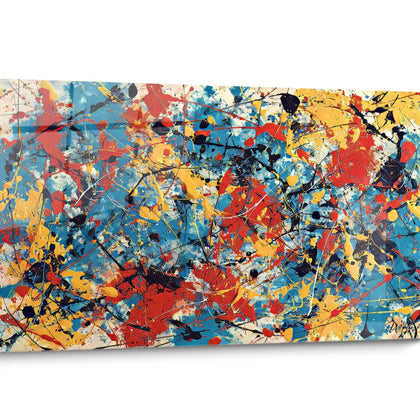 Abstract Wall Art for Schools24
artworks
Abstract Wall Art for Schools24
artworks
-
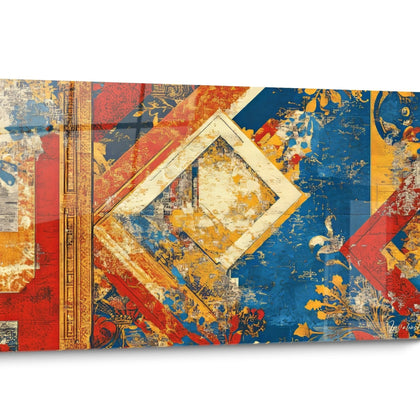 Colorful School Wall Art24
artworks
Colorful School Wall Art24
artworks
-
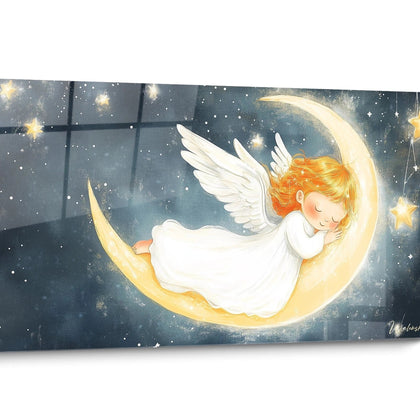 Wall Art for Children's School24
artworks
Wall Art for Children's School24
artworks
-
 Pop Art Wall Art for Schools6
artworks
Pop Art Wall Art for Schools6
artworks
-
 Futuristic School Wall Art10
artworks
Futuristic School Wall Art10
artworks
-
 Golden School Wall Art14
artworks
Golden School Wall Art14
artworks
-
 Black and White School Wall Art11
artworks
Black and White School Wall Art11
artworks
-
 School Watercolor Art Canvas10
artworks
School Watercolor Art Canvas10
artworks
-
 School Wall Art Animals24
artworks
School Wall Art Animals24
artworks
-
 Wall Art for Music School12
artworks
Wall Art for Music School12
artworks
-
 Expressionist School Wall Art8
artworks
Expressionist School Wall Art8
artworks
-
 Painting School Wall Art13
artworks
Painting School Wall Art13
artworks
All about Geometric Educational Wall Art for Schools
- Geometric School Wall Art Presentation
- Geometric Educational Layout
- Spatial Perception and Learning
- Selection and Visual Impact
Geometric school wall art transforms educational spaces into genuine visual laboratories where shapes, lines, and architectural structures stimulate mathematical and spatial thinking. These large-format mural decorations integrate compositions based on triangular, circular, polygonal patterns and symmetrical arrangements that naturally awaken students' geometric curiosity. Unlike conventional decorations, these wall supports create an immersive environment where every angle, every intersection, and every pattern repetition becomes a silent yet powerful pedagogical element, facilitating intuitive understanding of fundamental mathematical concepts in classrooms, school corridors, and common areas.
Integration of Geometric Patterns in School Architecture
Installing a geometric school wall art requires careful consideration of alignment with existing architectural structures. The large wall surfaces in educational institutions offer exceptional opportunities to deploy monumental geometric compositions that interact with rectangular windows, doors, and corridor angles. These imposing mural creations establish visual landmarks that facilitate students' spatial orientation while creating zones for mathematical contemplation.
How do geometric shapes influence the perception of educational spaces?
Large-scale geometric patterns radically alter the perception of educational environments. An arrangement of concentric circles can visually soften an austere corridor, while vertical parallel lines accentuate the ceiling height of common rooms. Compositions based on orthogonal grids reinforce the sensation of order and structure, particularly beneficial in mathematics and science areas. The strategic use of asymmetrical patterns in certain zones can also stimulate creativity and divergent thinking.
Coordination with geometric pedagogical equipment
A large-format geometric school wall art creates visual continuity with daily learning tools: rulers, set squares, compasses, and protractors gain new dimension when used against a background celebrating the same fundamental principles. This coherence unconsciously reinforces the legitimacy and importance of geometric concepts in learners' minds. Teachers can directly reference wall visual elements during demonstrations, transforming decoration into interactive pedagogical support. To complement this structured visual approach, institutions also explore options like abstract school wall art that offers a conceptual alternative favoring free interpretation.
Strategic installation zones in educational facilities
Transition spaces such as entrance halls and corridor intersections constitute privileged locations for these monumental decorations. Their maximum visibility ensures repeated daily exposure that gradually anchors geometric structures in collective visual memory. School libraries particularly benefit from soothing geometric compositions that promote concentration, while multipurpose rooms can accommodate dynamic arrangements stimulating collective energy during gatherings.
Development of Spatial Thinking Through Visual Environment
Prolonged exposure to geometric school wall art develops specific cognitive skills related to spatial visualization and mathematical reasoning. These wall supports function as constant visual stimuli that progressively train the brain to recognize, analyze, and break down complex structures. Research in educational neuroscience demonstrates that environments rich in geometric patterns facilitate the acquisition of problem-solving and logical reasoning skills, competencies transferable to numerous academic fields.
Recognition of visual patterns and sequences
A large-format geometric school wall art exposes students to repetitive sequences and progressive variations that train the eye to identify underlying rules. This ability to detect patterns constitutes an essential foundation for advanced mathematics, computer programming, and scientific analysis. Compositions alternating symmetry and asymmetry implicitly teach that rules admit creative exceptions, thus preparing minds for nuanced critical thinking.
Which geometric patterns best promote mathematical learning?
Tessellations and regular tilings excel at concretely illustrating concepts of surface area, perimeter, and geometric transformation. Logarithmic spirals and constructions based on the golden ratio connect geometry and nature, revealing the universality of mathematical principles. Polyhedra unfolded in two dimensions intuitively prepare for three-dimensional geometry. Simple geometric fractals introduce notions of scale and self-similarity, fundamental in natural sciences and numerical modeling.
Differentiation according to educational levels
Primary schools benefit from geometric compositions with clearly delineated shapes and contrasting colors that facilitate immediate visual identification. Middle schools can accommodate more sophisticated arrangements integrating overlays and transparency effects that question perception. High schools and higher education institutions find relevance in complex abstract compositions requiring thorough analysis to reveal their organizational structure, thus stimulating advanced analytical thinking.
Impact on memorization of mathematical concepts
Spatial anchoring of knowledge represents a powerful mnemonic strategy often underexploited. When a student unconsciously associates a specific geometric concept with the precise location of a visual element in the corridor they travel daily, this environmental association significantly reinforces long-term retention. Large wall formats create stable and recurring memory landmarks that structure the mental space where geometric knowledge organizes itself.
Selection Criteria for Maximum Educational Impact
Choosing a geometric school wall art must simultaneously meet aesthetic, pedagogical, and practical requirements. Institutions should prioritize compositions whose visual complexity corresponds to their audience's cognitive level, while anticipating the evolution of this capacity over the years. Durability becomes paramount in high-traffic areas, requiring materials resistant to impacts and regular cleaning while maintaining their chromatic intensity.
What differentiates educational geometric wall art from ordinary decoration?
Genuine geometric educational support demonstrates obvious mathematical intentionality in its construction, relying on authentic geometric principles rather than purely decorative arrangements. Angles, proportions, and spatial relationships respect verifiable mathematical rules that teachers can exploit pedagogically. Legibility from a distance constitutes a determining criterion: even observed from the end of a fifteen-meter corridor, the main organizational structure must remain perceptible, unlike works requiring close observation.
Chromatic palettes and functional contrasts
Monochromatic combinations with strong tonal variations excel at highlighting geometric structures without excessive chromatic distraction. Complementary palettes create visual vibration that naturally attracts attention and durably marks visual memory. Achromatic arrangements based on black, white, and gray privilege pure form and suit areas dedicated to concentration such as study rooms. The strategic integration of vivid chromatic accents guides the gaze toward key geometric elements of the composition.
Dimensions and proportions for collective spaces
Monumental formats are essential in schools where free wall spaces offer surfaces of several square meters. A small geometric school wall art would be visually lost in these imposing volumes and fail to produce the desired immersive impact. Vertical compositions accentuate architectural nobility of spaces while horizontal panoramic formats suit longitudinal corridor walls. Triptychs and modular arrangements offer installation flexibility while creating visual dialogues between adjacent panels.
Coherence with the institution's visual identity
Harmonious integration into the existing visual ecosystem ensures that geometric wall art enriches rather than competes with other decorative elements. Subtle repetition of hues present in furniture or signage creates reassuring continuity. Conversely, the introduction of a controlled visual break can symbolically delineate distinct functional zones: formal learning spaces versus relaxation areas, for example.
Is geometric wall art suitable for all types of schools?
Absolutely, geometric wall art adapts remarkably from primary through higher education by adjusting visual complexity. Kindergartens favor basic colored shapes, middle schools intermediate arrangements, while high schools and universities can deploy sophisticated geometric compositions. Their universality transcends disciplinary boundaries as well: useful in mathematics obviously, but also in visual arts for studying composition, in physics for illustrating crystal structures, or in technology for evoking architectural principles.
How to evaluate the pedagogical quality of geometric wall art before acquisition?
Verify that the composition relies on authentic and identifiable geometric principles: regular tessellations, isometric transformations, verifiable proportional progressions. Test legibility at different distances by projecting the image at reduced scale. Ideally consult mathematics teachers who can confirm concrete pedagogical exploitability. Favor creations accompanied by documentation explaining underlying geometric concepts, thus transforming decoration into genuine pluriannual learning tool.
What renewal frequency for these educational visual supports?
Unlike temporary pedagogical displays, quality geometric school wall art retains relevance for many years thanks to the universality of mathematical principles it illustrates. Renewal every five to eight years generally suffices, often motivated by architectural renovation rather than content obsolescence. This permanence justifies investment in large formats and durable materials, with cost amortizing largely over usage duration. Rotation can target different institutional zones rather than systematic replacement, thus maintaining overall visual freshness.
Further reading


