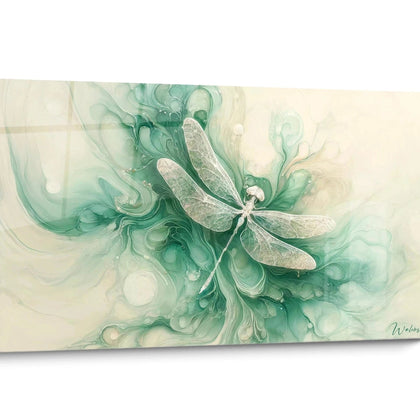
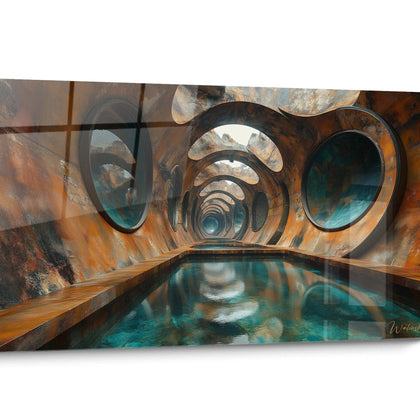
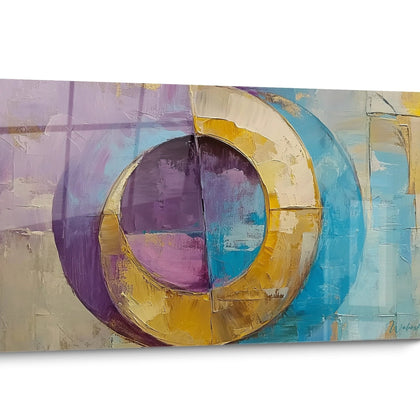
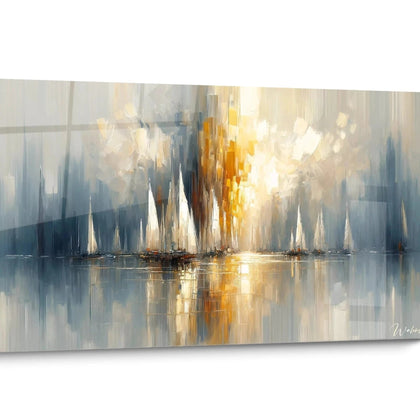
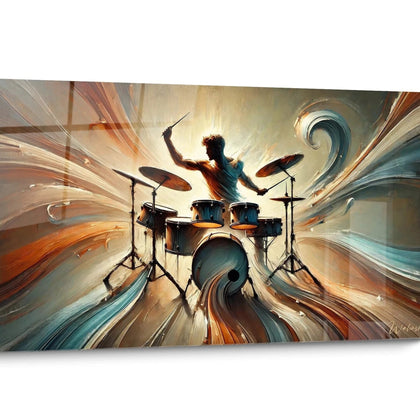
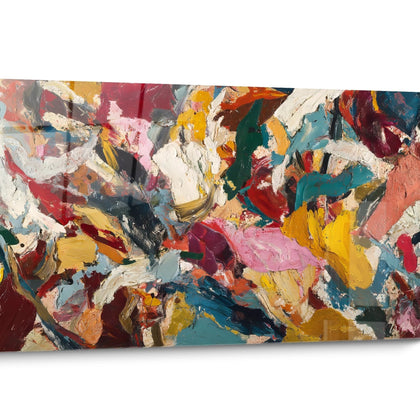
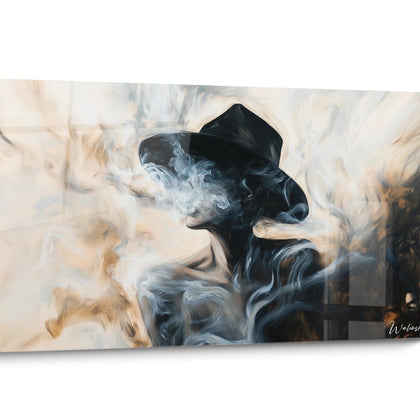
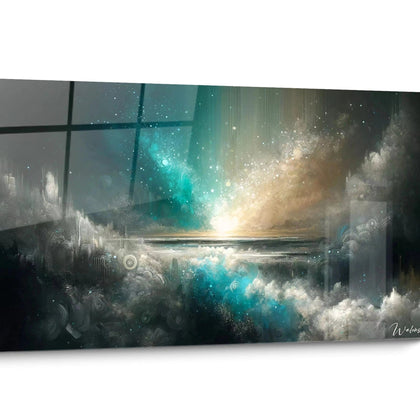
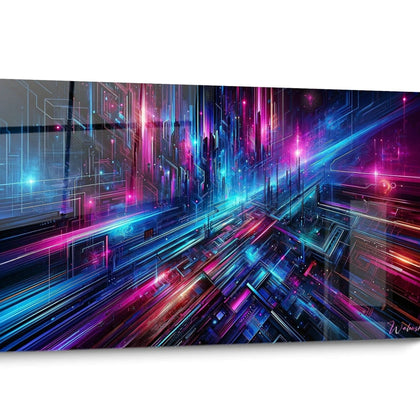
Transforming a hallway into a contemporary art gallery becomes possible with a multicolor hallway wall art piece. This type of wall decoration harnesses the chromatic palette to metamorphose often-neglected circulation spaces. Panoramic and vertical formats specifically designed for narrow passages amplify these transitional zones while creating striking focal points. The strategic use of polychromatic compositions brings visual energy that naturally guides the eye along the path, transforming every movement into a captivating aesthetic experience.
Energize Your Circulation Spaces with Polychromatic Compositions
Installing a multicolor hallway wall art revolutionizes the spatial perception of passage zones. These artistic creations exploit the psychological effect of vibrant hues to visually expand confined spaces. Tall vertical formats create an impression of amplified height, particularly effective in hallways with low ceilings. Chromatic layering generates illusory depth that counterbalances the constraining linearity of parallel walls.
How do saturated hues transform the perception of the passage?
Brilliant shades visually fragment the excessive length of narrow hallways. A strategically positioned large multicolor hallway wall art interrupts architectural monotony by creating major visual breaks. Visitors then perceive a succession of distinct spaces rather than a uniform tunnel. This chromatic segmentation proves particularly relevant for hallways exceeding four meters in length.
The impact of chromatic contrasts on daily circulation
Tonal oppositions present in these artistic compositions generate visual markers that facilitate spatial orientation. Occupants unconsciously develop a mental map based on these colored markers. This approach works perfectly for residences with multiple successive doors along the passage. Variations in natural lighting throughout the day reveal different facets of the pigments, offering a constantly renewed experience.
Create a fluid transition between adjacent rooms
The multicolor hallway wall art acts as a chromatic mediator between the spaces it connects. Its diverse palette subtly echoes tonalities present in adjacent rooms, establishing overall decorative coherence. This connector function proves essential in open apartments where the hallway becomes an element of visual articulation. The color reflections projected onto opposite surfaces amplify this effect of harmonious continuity.
Leverage the Architectural Constraints of Narrow Passages
Hallways present specific challenges that multicolor hallway wall art solves with ingenuity. Restricted width imposes limited viewing distance, requiring compositions legible even from close angles. Slender formats naturally adapt to these atypical proportions, unlike traditional horizontal artworks. This vertical configuration emphasizes architectural verticality while minimizing visual clutter in the circulation axis.
Why prioritize vertical compositions in these linear spaces?
Ascending structures of multicolor hallway paintings naturally accompany eye movement during passage. This orientation captures peripheral attention without forcing prolonged contemplative pause. Visitors absorb visual information progressively during their passage, making the aesthetic experience compatible with the transitional function of the space. Motifs extending across the full available height also maximize decorative impact without reducing usable circulation space.
Compensate for lack of natural light with chromatic vibrancy
Many hallways lack windows, condemned to permanent artificial lighting. A hallway wall art with brilliant hues compensates for this luminous deficiency by introducing perceived brightness through clear and saturated pigments. Yellow, orange, and turquoise tones effectively reflect available light, multiplying its apparent intensity. This chromatic strategy proves particularly wise for dark passages in lower or central levels of dwellings.
Manage multiple doors along the corridor
Hallways dotted with successive openings naturally fragment available wall space. Large multicolor hallway wall art pieces ideally install on continuous panels between doors, creating rhythmic intervals. This alternation between neutral functional zones and polychromatic decorative segments visually structures the entire passage. To discover other aesthetic approaches suited to these linear spaces, explore our selection of abstract hallway wall art offering geometric compositions complementary to chromatic palettes.
Harmonize the Multicolor Palette with Your Existing Environment
Successful integration of multicolor hallway wall art relies on understanding preexisting chromatic balances. These polychromatic compositions must not conflict visually with dominant hues of adjacent rooms. Preliminary analysis of wall colors, flooring, and woodwork guides selection toward complementary or analogous palettes. This strategic approach guarantees fluid visual transition that simultaneously enhances the hallway and the spaces it serves.
Which chromatic associations work in contemporary interiors?
Modern interiors favoring neutral tones ideally welcome multicolor hallway wall art with vibrant accents. Gray, beige, or white bases serve as settings that enhance colorful explosions without creating visual saturation. Conversely, already-colorful environments benefit from multicolor compositions with more muted tonalities, avoiding chromatic cacophony. Optimal balance lies in a proportion where 70% of the environment remains neutral while 30% integrates the vibrant hues of the artwork.
Coordinate with permanent architectural elements
Baseboards, door frames, and radiators present in hallways constitute unavoidable decorative constraints. Judiciously selected multicolor wall art can subtly echo the metallic tones of radiators or the wooden nuances of woodwork. This chromatic coherence creates aesthetic continuity that transforms functional elements into components of a harmonious decorative ensemble. Large formats also allow partial concealment of wall imperfections or deteriorated zones without requiring costly renovation.
Adapt chromatic intensity according to available lighting
Hallways benefiting from generous lighting tolerate saturated palettes with marked contrasts. Conversely, dark passages require compositions favoring clear luminous tones with strategically placed color accents. This modulation ensures the artwork remains visible and impactful regardless of lighting conditions. Seasonal variations in natural light also influence chromatic perception, justifying the choice of balanced palettes functioning throughout the year.
Is multicolor hallway wall art suitable for professional spaces?
Absolutely, these compositions remarkably energize circulation zones in offices, medical practices, and commercial spaces. The visual stimulation generated promotes attention and reduces monotony of repetitive movement. Professional environments will nonetheless favor sophisticated palettes avoiding overly playful tonalities, thereby maintaining institutional credibility while benefiting from aesthetic impact.
What is the minimum hallway width for installing large-format multicolor wall art?
Passages at least 90 centimeters wide comfortably allow large composition installation without hindering circulation. This dimension guarantees sufficient viewing distance to appreciate the entire composition even during passage. Narrower hallways benefit more from medium formats or staggered vertical series maintaining circulation fluidity while offering significant decorative presence.
How to maintain multicolor hallway wall art in a high-traffic passage zone?
Hallways with intense traffic require artworks with resistant finishes and easy-to-clean surfaces. Regular dusting with a dry microfiber cloth preserves pigment brilliance. For areas particularly exposed to accidental contact, prioritize rigid supports and transparent protections that maintain chromatic intensity while facilitating maintenance. Avoid harsh chemicals that would progressively alter the saturation of vibrant hues characteristic of these compositions.


 Enchanted Cosmos Abstract Wall Art - Exclusive Edition233,90 €
 Vivid abstract colors painting - Chromatic explosion - abstract painting style edition233,90 €
 Expressionist Abstract Painting - Colorful Symphony - abstract painting style edition233,90 €
 Geometric Composition Painting - Abstract Symphony - abstract painting style edition233,90 €
 Abstract composition - Explosion of Colors - abstract painting style edition233,90 €
 Colorful abstract composition - Chromatic explosion - abstract painting style edition233,90 €
 Colorful Branches Canvas - Botanical Brilliance - Multicolor Abstract Edition233,90 €
 Stylized colorful tree painting - Mosaic of life - multicolor abstract edition233,90 €
 Explosive skull wall art - Cosmic explosion - multicolor abstract edition233,90 €
 Fantastic creature wall art - Color explosion - multicolor abstract edition233,90 €
 Multicolor geometric composition painting - Abstract symphony - geometric abstract edition233,90 €
 Dynamic abstract composition wall art - Geometric explosion - geometric abstract edition232,90 €
 Abstract dynamic composition painting - Geometric symphony - abstract geometric edition232,90 €
 Abstract musical composition painting - Geometric harmony - Abstract geometric edition232,90 €
 Colorful geometric composition wall art - Urban mosaic - abstract geometric edition213,90 €
 Multicolor concentric circles wall art - Geometric symphony - abstract geometric edition213,90 €
 Orange circle and geometric shapes table - Abstract symphony - geometric abstract edition213,90 €
 Colorful geometric composition painting - Vintage abstract mosaic - abstract geometric edition233,90 €
 Transparent colored circles wall art - Chromatic symphony - abstract geometric edition233,90 €
 Creative Chaos Wall Art - multicolor abstract edition232,90 €
 Chameleon Pop Art Painting - Pop Art Abstract Edition233,90 €
 Ballet of Bubbles Wall Art - Multicolor Abstract Edition233,90 €
 Chromatic Cascades Wall Art - Limited Edition Multicolor Abstract233,90 €
 Cosmic Viscosity Wall Art - Multicolor Abstract Edition233,90 €