


Expressionist Hallway Wall Art
The Painting for Hall Expressionist transforms your hallways into true art galleries brimming with emotion. This collection celebrates the chromatic intensity and expressive power characteristic of this major artistic movement. Each work of expressionist art for hallway captures raw feelings through bold brushstrokes and striking contrasts. Perfect for energizing circulation spaces, these emotional art paintings create a strong visual impact and invite contemplation with each passage.
 Chimera Cubist Painting - Sensual Abstract Edition273,90 €
 Wall Art Close to the Skin - Abstract Face Edition273,90 €
 Sunset Painting - Color Explosion - Abstract Paint Style Edition273,90 €
 Expressionist Abstract Painting - Colorful Symphony - abstract painting style edition273,90 €
 Intense Upheaval Red Canvas - Abstract Expressionist Edition228,90 €
 Red Marine Apocalypse Canvas - Abstract Expressionist Edition228,90 €
 Tumultuous Dawn Amber Wall Art - Abstract Expressionist Edition273,90 €
 Moving Skies Turquoise Wall Art - Abstract Expressionist Edition273,90 €
 Organized Chaos Wall Art - Abstract Expressionism Edition273,90 €
 Mists in the Storm Wall Art - Abstract Expressionism Edition273,90 €
 Convergence Astrale Painting - Abstract Expressionism Edition273,90 €
 Clarity at the Horizon Wall Art - Abstract Expressionism Edition273,90 €
Explore further
In Expressionist Hallway Wall Art
-
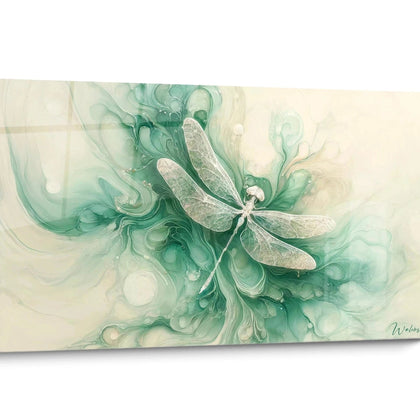 Hallway Wall Art899
artworks
Hallway Wall Art899
artworks
-
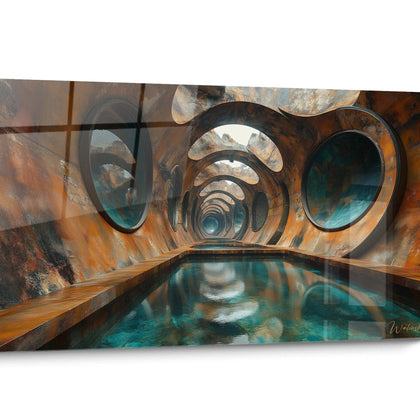 Abstract Hallway Wall Art24
artworks
Abstract Hallway Wall Art24
artworks
-
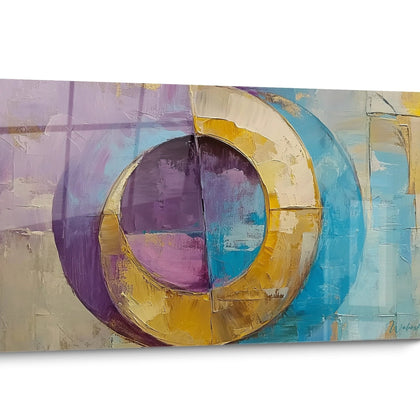 Geometric Hallway Wall Art24
artworks
Geometric Hallway Wall Art24
artworks
-
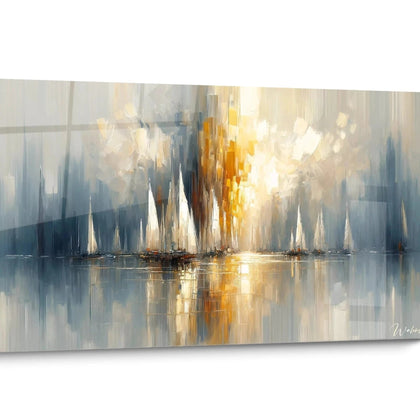 Blue Hallway Wall Art24
artworks
Blue Hallway Wall Art24
artworks
-
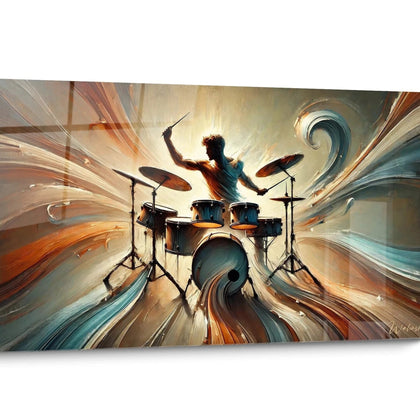 Orange Hallway Wall Art24
artworks
Orange Hallway Wall Art24
artworks
-
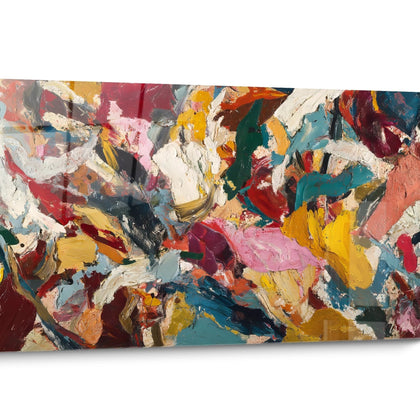 Red Hallway Wall Art24
artworks
Red Hallway Wall Art24
artworks
-
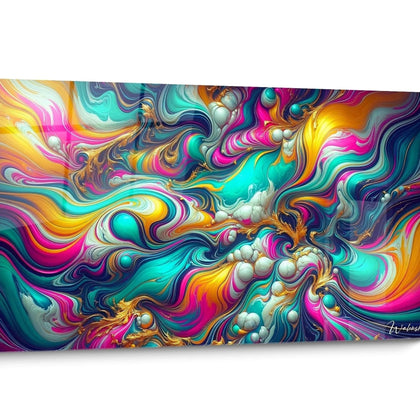 Multicolored Hallway Wall Art24
artworks
Multicolored Hallway Wall Art24
artworks
-
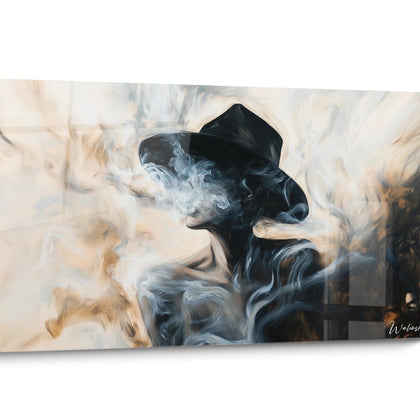 Black and White Hallway Wall Art16
artworks
Black and White Hallway Wall Art16
artworks
-
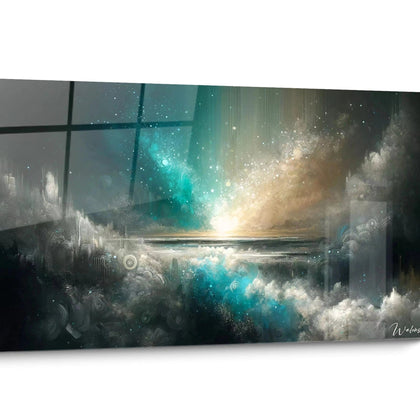 Golden Hallway Wall Art24
artworks
Golden Hallway Wall Art24
artworks
-
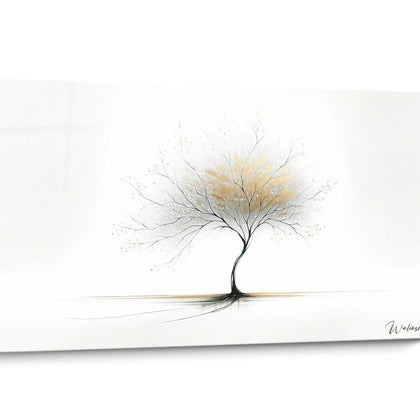 Wall Art for Zen Hallway22
artworks
Wall Art for Zen Hallway22
artworks
-
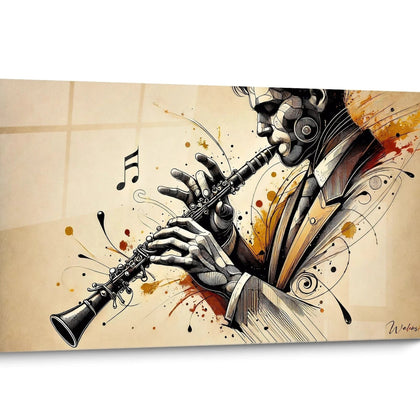 Music Wall Art for Hallway11
artworks
Music Wall Art for Hallway11
artworks
-
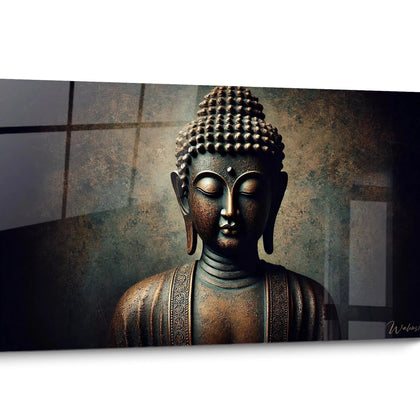 Buddha Hallway Wall Art6
artworks
Buddha Hallway Wall Art6
artworks
-
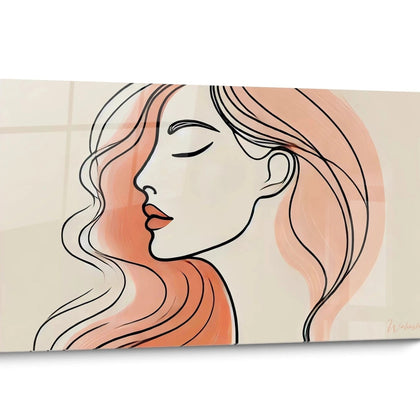 Wall Art for Hallway Face7
artworks
Wall Art for Hallway Face7
artworks
-
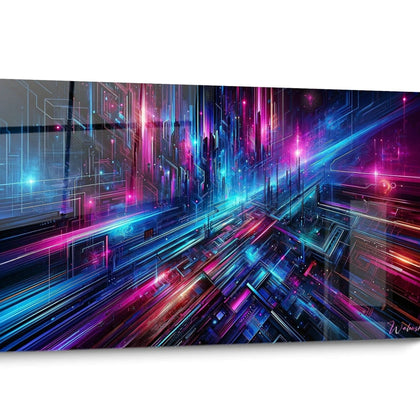 Futuristic Hallway Wall Art7
artworks
Futuristic Hallway Wall Art7
artworks
All about Expressionist Hallway Wall Art
- Presentation Painting Hallway Expressionist
- Emotional Colors and Visual Impact
- Managing Narrowness and Depth
- Expressionist Atmosphere in Everyday Life
Transforming a hallway into an expressionist art gallery reveals a bold approach to interior decoration. An expressionist painting for hallway stands as a decorative solution for these often-neglected transitional spaces, bringing chromatic dynamism and emotional intensity where neutrality generally prevails. These large-format artworks exploit the linear perspective of corridors to create an immediate visual impact upon entering. Expressionism, with its saturated colors and tormented compositions, breaks the monotony of narrow and elongated passages, transforming each daily crossing into an artistic experience. Vertical or panoramic formats naturally adapt to the architectural constraints of modern hallways, while the raw energy of expressionist brushstrokes generates a visual movement that naturally guides circulation. This specialized wall decoration meets the needs of collectors wishing to maximize every available square meter while asserting a defined artistic sensibility, far from traditional decorative conventions.
The Chromatic Intensity of Expressionism Serving Passage Spaces
The use of an expressionist painting for hallway exploits the emotional power of saturated colors to compensate for the frequent lack of natural light in these confined spaces. Vibrant reds, bright yellows, and deep blues characteristic of the expressionist movement generate their own perceived luminosity, creating focal points that attract the eye even in conditions of limited artificial lighting. This chromatic strategy transforms an architectural constraint into a decorative opportunity.
Why do violent contrasts work in narrow corridors?
Aggressive color oppositions typical of expressionism - orange against violet, green against magenta - create a visual tension that psychologically expands the perceived space. In a hallway where parallel walls can generate a feeling of oppression, these contrasts break the monotonous linearity and introduce a visual complexity that diverts attention from the reduced dimensions. Expressionist panoramic formats in particular exploit this dynamic to create an illusory depth.
The emotional temperature of large-format expressionist artworks
Unlike soothing decorative styles, expressionism injects an intentional emotional charge into transitional spaces. A large-scale hallway painting diffuses a passionate atmosphere that subtly influences the mood of the occupants with each passage. Dominant warm tones energize mornings, while compositions with a cool dominance bring a contemplative intensity to evening returns. This daily emotional modulation fundamentally distinguishes expressionism from geometric abstract compositions.
Chromatic saturation and perception of spatial depth
The intensely saturated pigments of expressionist artworks modify the perception of distances in long corridors. Warm colors visually advance while cool colors recede, creating a layered depth effect that spatially enriches even the narrowest passages. This perceptual manipulation is particularly effective for hallways in a row or those with changes in direction, where the expressionist painting becomes a visual beacon naturally guiding circulation.
Architectural Exploitation of Expressionist Compositions in Linear Spaces
How do vertical expressionist formats optimize ceiling heights?
Corridors rarely offer generous widths but frequently have standard or generous ceiling heights. A vertical expressionist painting in an elongated format exploits this neglected dimension, creating a dramatic verticality that amplifies the sense of space. Ascending expressionist compositions—flames, stretched silhouettes, upward gestures—naturally accentuate this vertical dynamic, drawing the eye upwards rather than reinforcing lateral narrowness.
Placement strategies to maximize visual impact in narrow passages
Installing large-format expressionist artworks in corridors requires a specific spatial approach. Positioning them at the end of the perspective transforms the painting into a visual vanishing point, magnetizing attention upon entering the corridor and creating a visual objective that mitigates the perception of excessive length. Alternatively, a lateral arrangement on the longest wall exploits the typical oblique viewing angle of corridor circulation, gradually revealing the composition as one progresses.
Panoramic expressionist formats work particularly well in this lateral configuration, their horizontal development naturally accompanying the movement of the body. The directional brushstrokes characteristic of expressionism can be selected to reinforce or counterbalance the direction of movement, creating either a sensation of visual acceleration or a contemplative resistance that symbolically slows down the passage.
Managing angles and vanishing perspectives through gestural expressionism
Expressionist compositions with oblique lines and deconstructed forms naturally harmonize with the pronounced perspectives of long corridors. Unlike strict geometric patterns that can amplify the tunnel effect, the organic gestures and asymmetrical compositions of expressionism create visual counter-rhythms that break the architectural regularity. This perceptual disruption transforms the expressionist corridor into an experiential space rather than a simple functional transit zone.
Can expressionist paintings work in very narrow corridors?
Absolutely, provided the format and composition are adapted. Large-scale vertical artworks create an impact even when viewed up close, their chromatic and gestural intensity compensating for the impossibility of distance. Expressionism tolerates proximity better than styles requiring an appreciation distance.
Daily Experience and Emotional Appropriation of Expressionist Corridors
The psychological effect of repeated crossings in front of an expressionist artwork
Unlike living rooms where one intentionally contemplates art, an expressionist painting for a corridor is daily imposed in the field of vision during multiple passages between rooms. This repeated exposure creates a progressive familiarity with the artwork, the gestural details and chromatic nuances of which are gradually revealed. The initial emotional intensity evolves into a more intimate relationship, the artwork becoming a visual landmark and emotional anchor in the domestic geography.
Variations in natural lighting throughout the day constantly modify the perception of expressionist colors, the artwork appearing differently depending on the hours. This visual mutability maintains interest and prevents habituation, each passage offering a renewed micro-artistic experience. Changing reflections on the material reliefs typical of expressionist techniques accentuate this perceptual dynamism.
How does expressionism transform circulation areas into destinations?
The installation of powerful expressionist artworks subtly reconfigures traffic patterns. Occupants instinctively slow down in front of intense compositions, transforming functional transit into a moment of contemplative pause. This requalification gradually transforms the neglected residual corridor space into a valued personal gallery, positively modifying the overall perception of the home.
Stylistic consistency and dialogue with adjacent spaces
An expressionist painting for a corridor functions as a visual transition between the different atmospheres of the connected rooms. Its aesthetic intensity can either announce the character of a space it leads to, or deliberately create a surprising contrast. This threshold function adds a narrative dimension to domestic circulation, each crossing becoming a micro-journey between distinct atmospheres.
Collectors developing an expressionist stylistic consistency throughout the home often use the corridor as a connecting element, the chosen artwork establishing a chromatic or thematic dialogue with the paintings in adjacent rooms. This curatorial approach transforms the home into a unified artistic journey where the corridor occupies a central strategic position.
What size of expressionist painting is suitable for a standard corridor?
For a standard width corridor (90-120cm), prioritize vertical formats of 80-100cm wide and 120-180cm high, or panoramic formats of 120-180cm wide. Large dimensions maximize the impact in these transitional spaces while respecting architectural proportions.
Does an expressionist painting work in a dark corridor?
Expressionist artworks with saturated colors excel in poorly lit spaces, their chromatic intensity generating a perceived luminosity even under limited artificial lighting. Select compositions with warm dominant colors (yellows, oranges, reds) that reflect available light and create a luminous warmth impression.
Can multiple expressionist paintings be combined in a long corridor?
A series of expressionist paintings creates a dynamic visual rhythm in long corridors, provided that a chromatic or thematic consistency is maintained. Space them regularly to create a visual cadence that accompanies the progression, transforming the corridor into a veritable personal gallery where each artwork dialogues with the following.
L'art qui suscite l'envie
Maison belge d'art mural grand format
14 jourspour changer d'avis*
Protection Walenskyincluse
Fabriquéen Italie
FormatXXL
Kit de fixationtoujours fourni
* Hors tableaux personnalisés et tailles personnalisées


