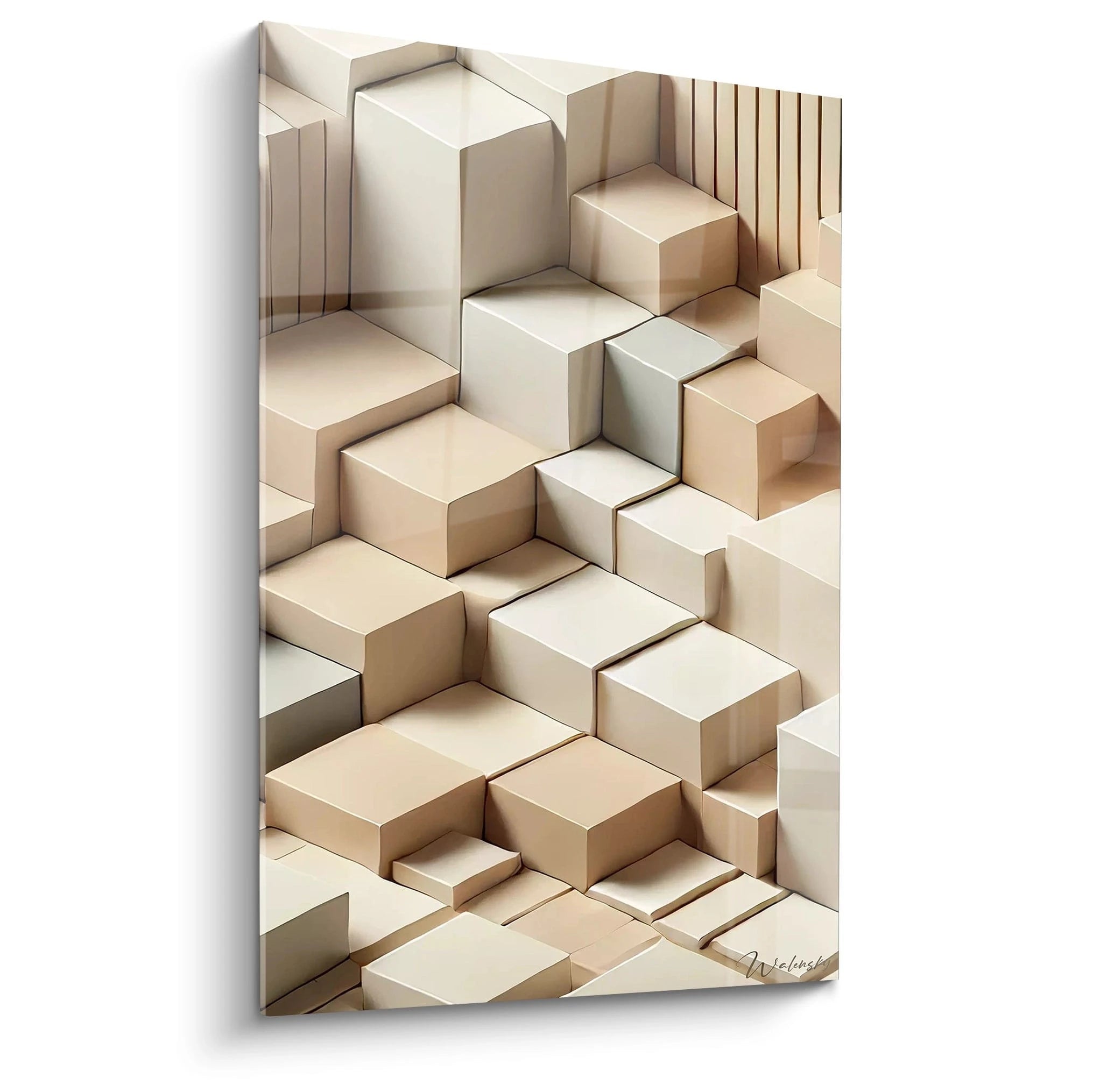
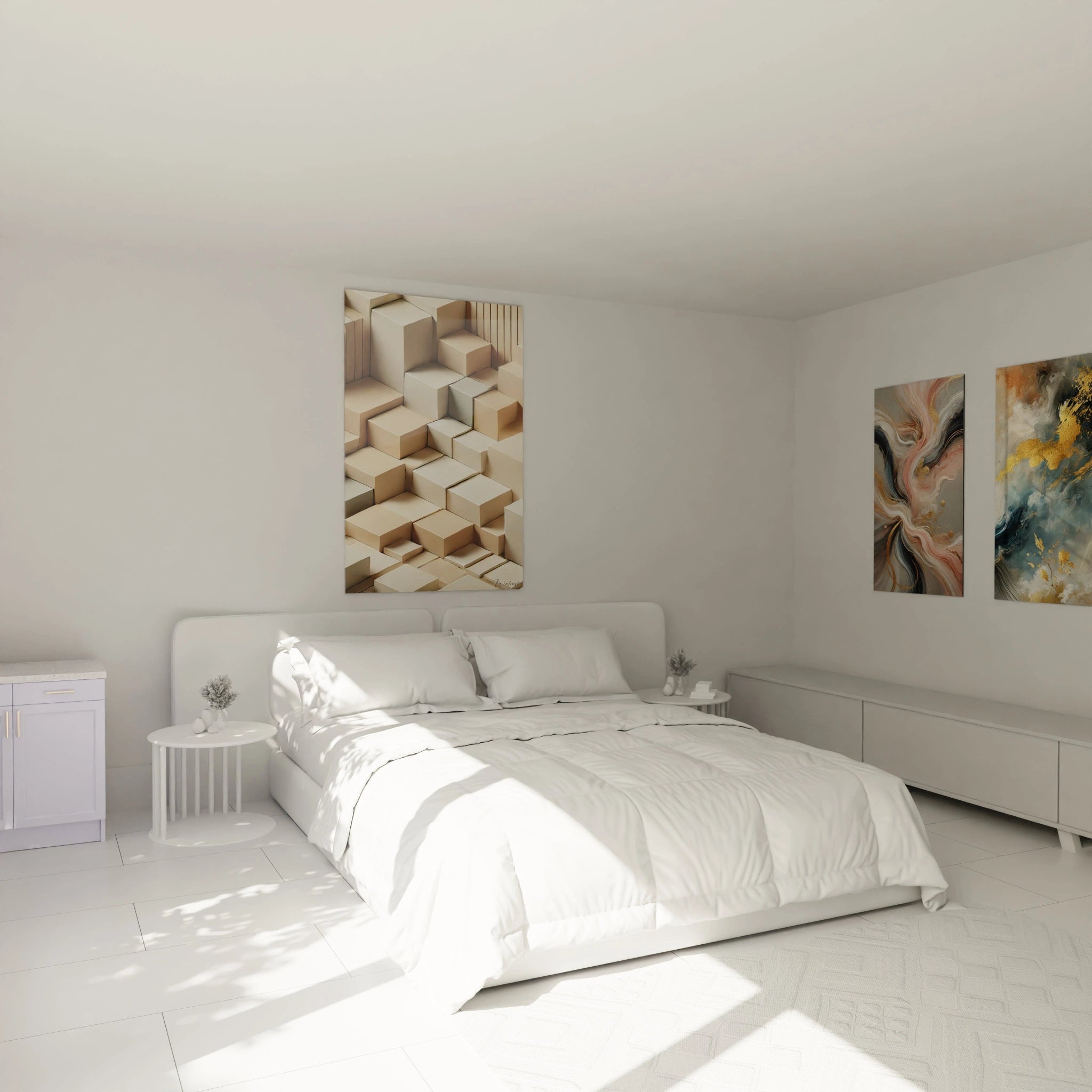
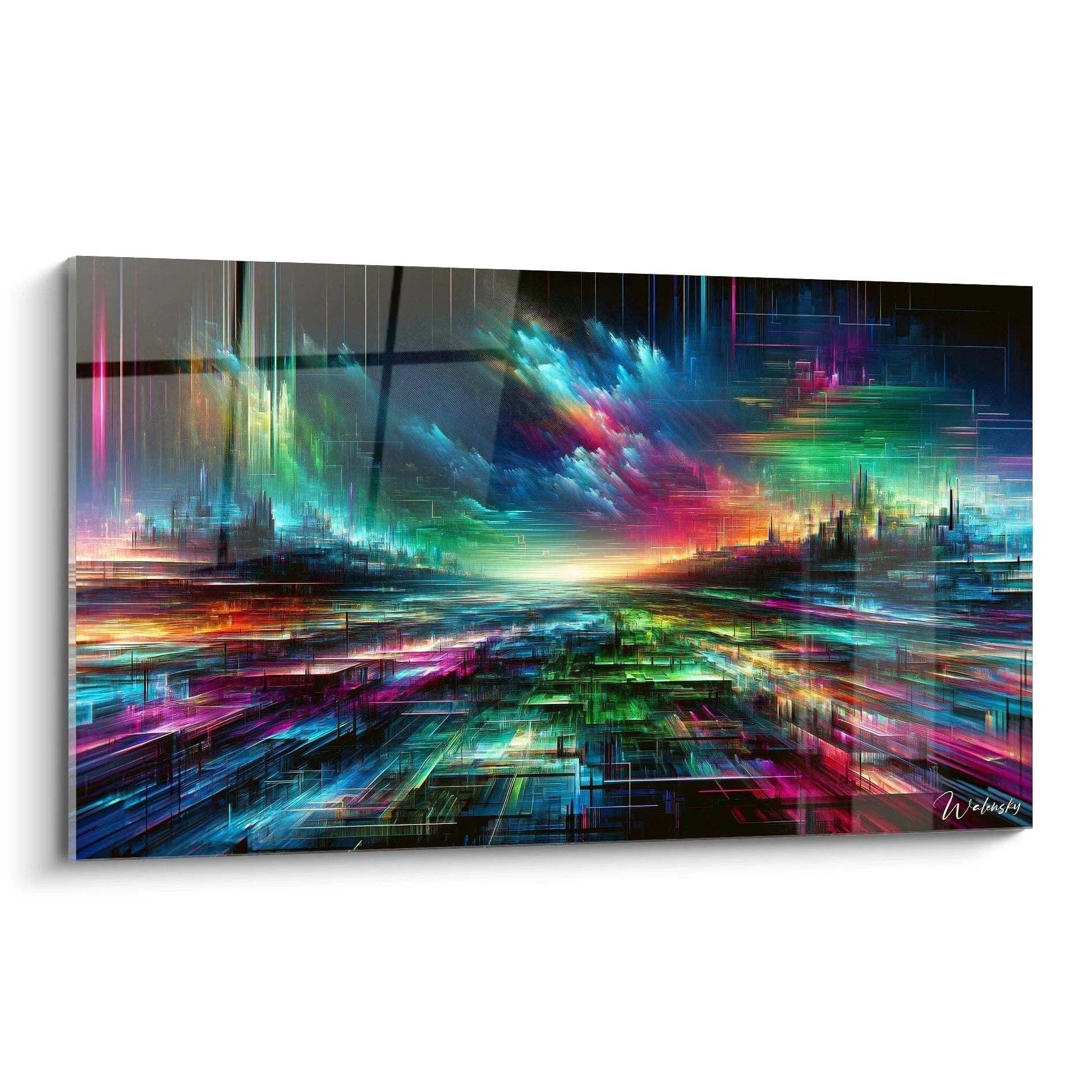
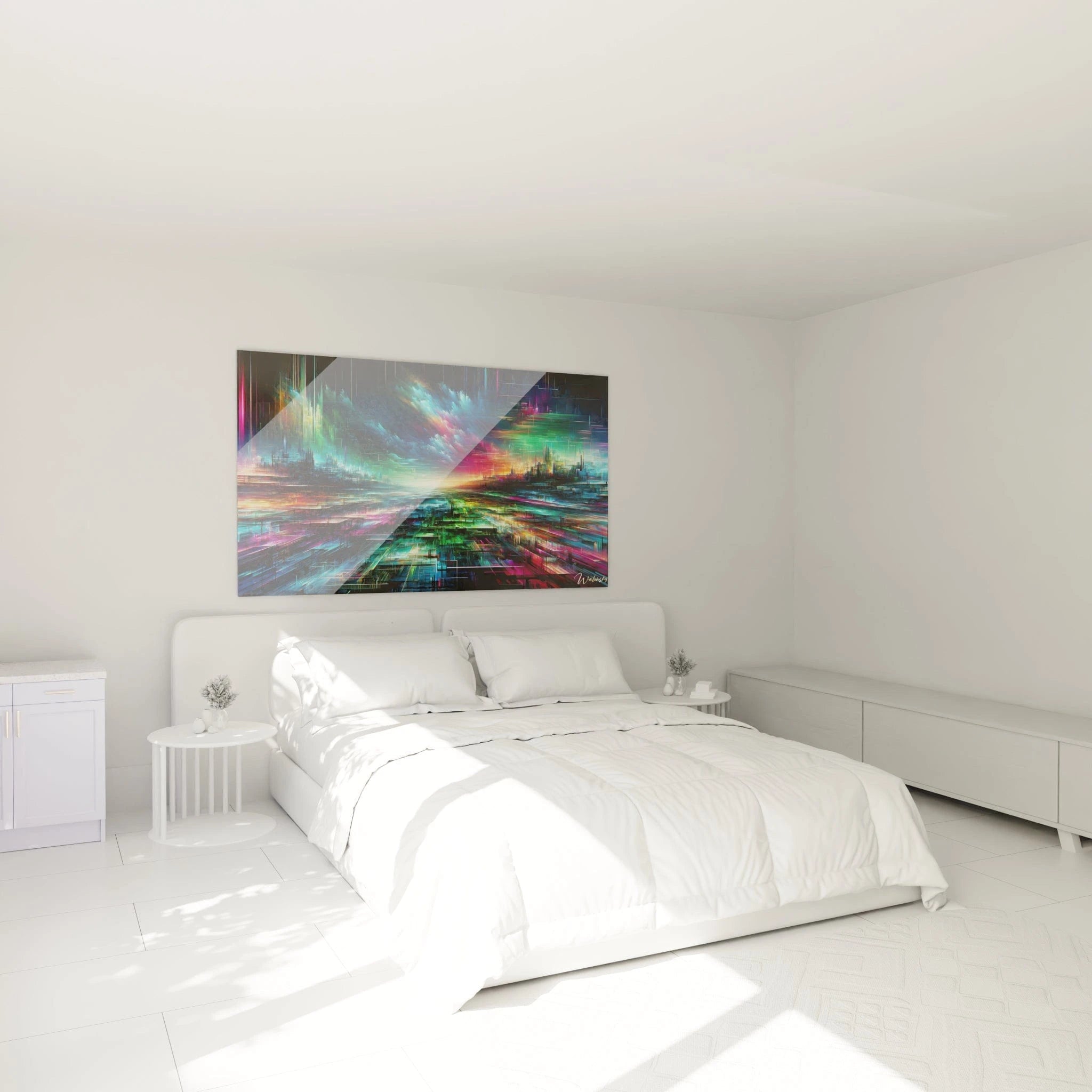
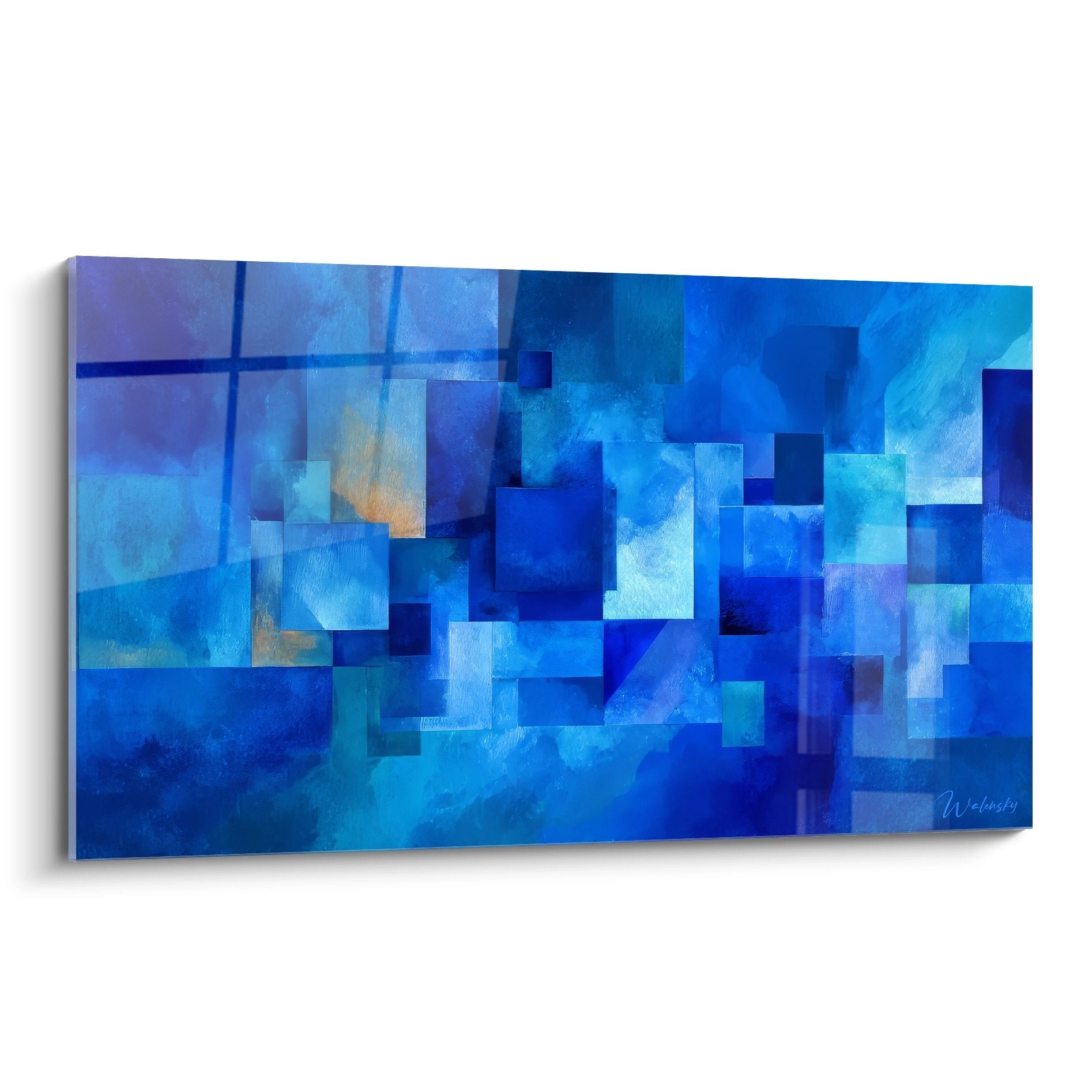
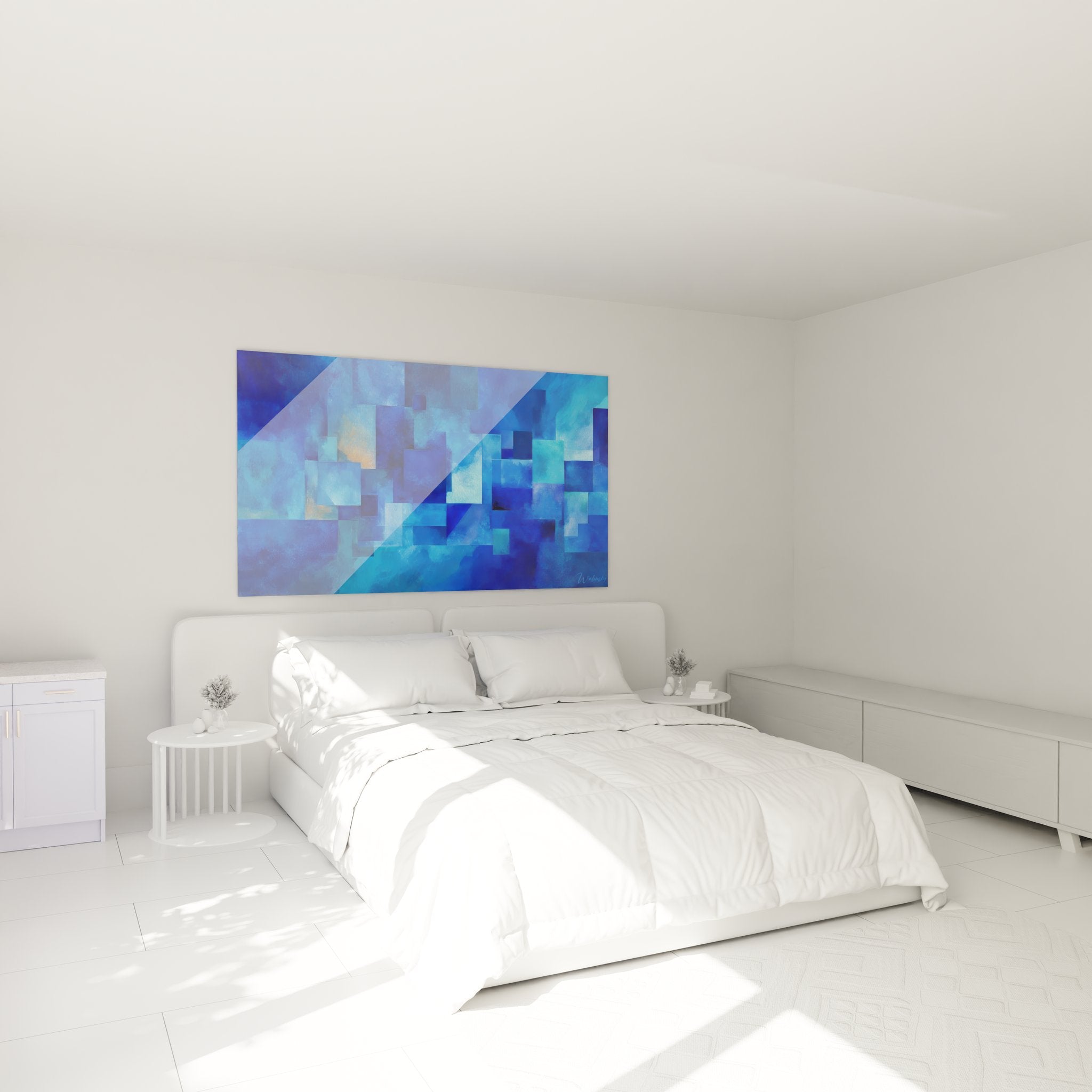
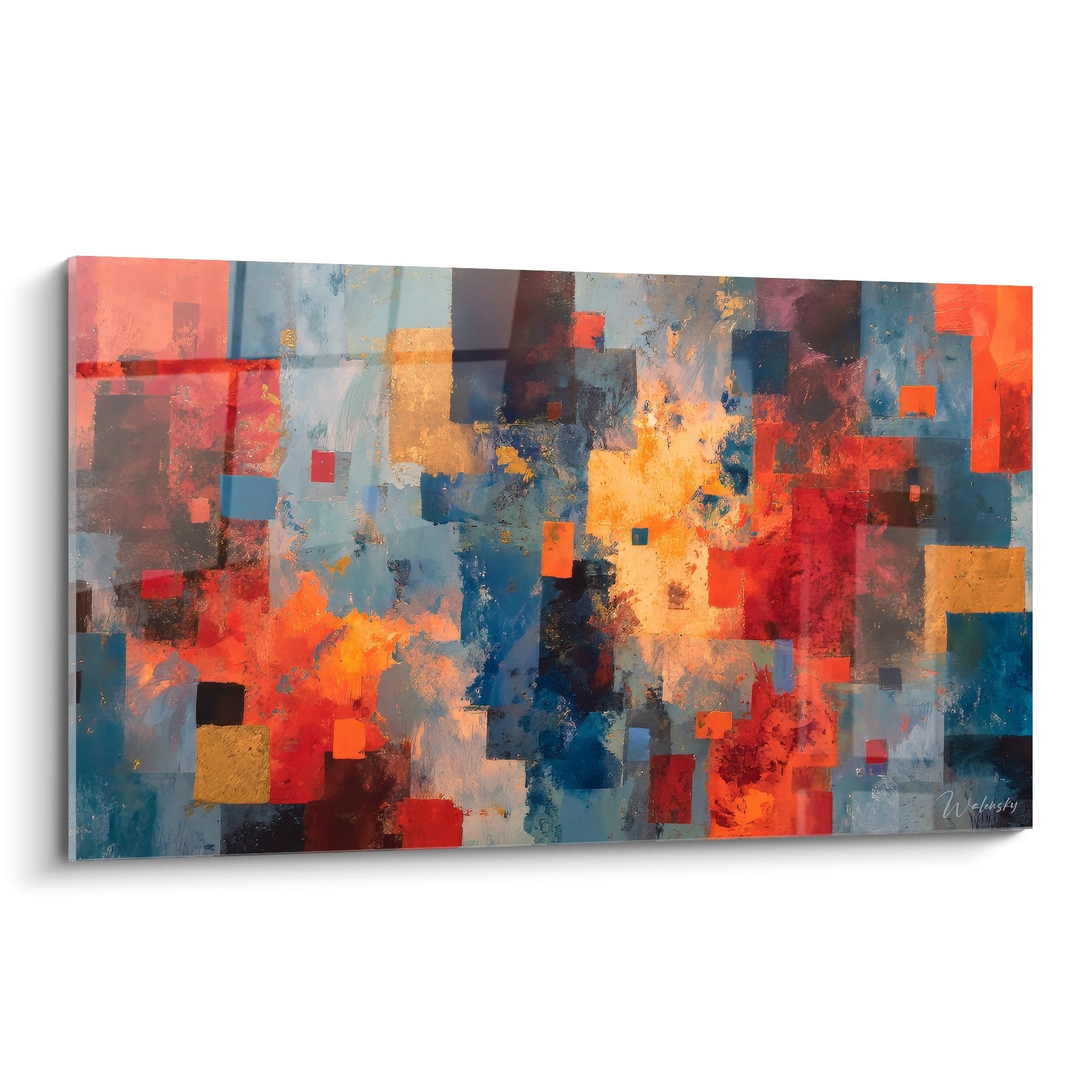
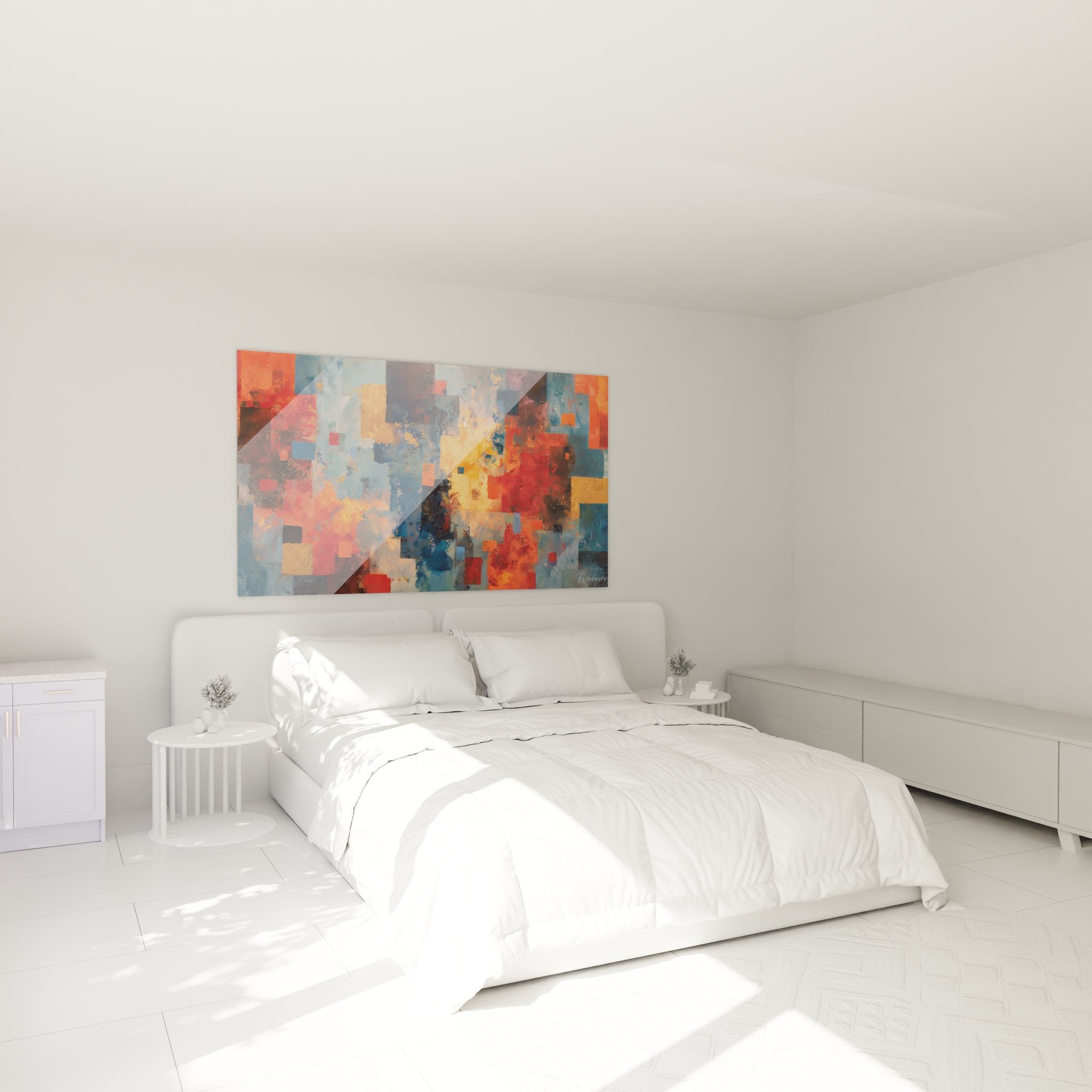
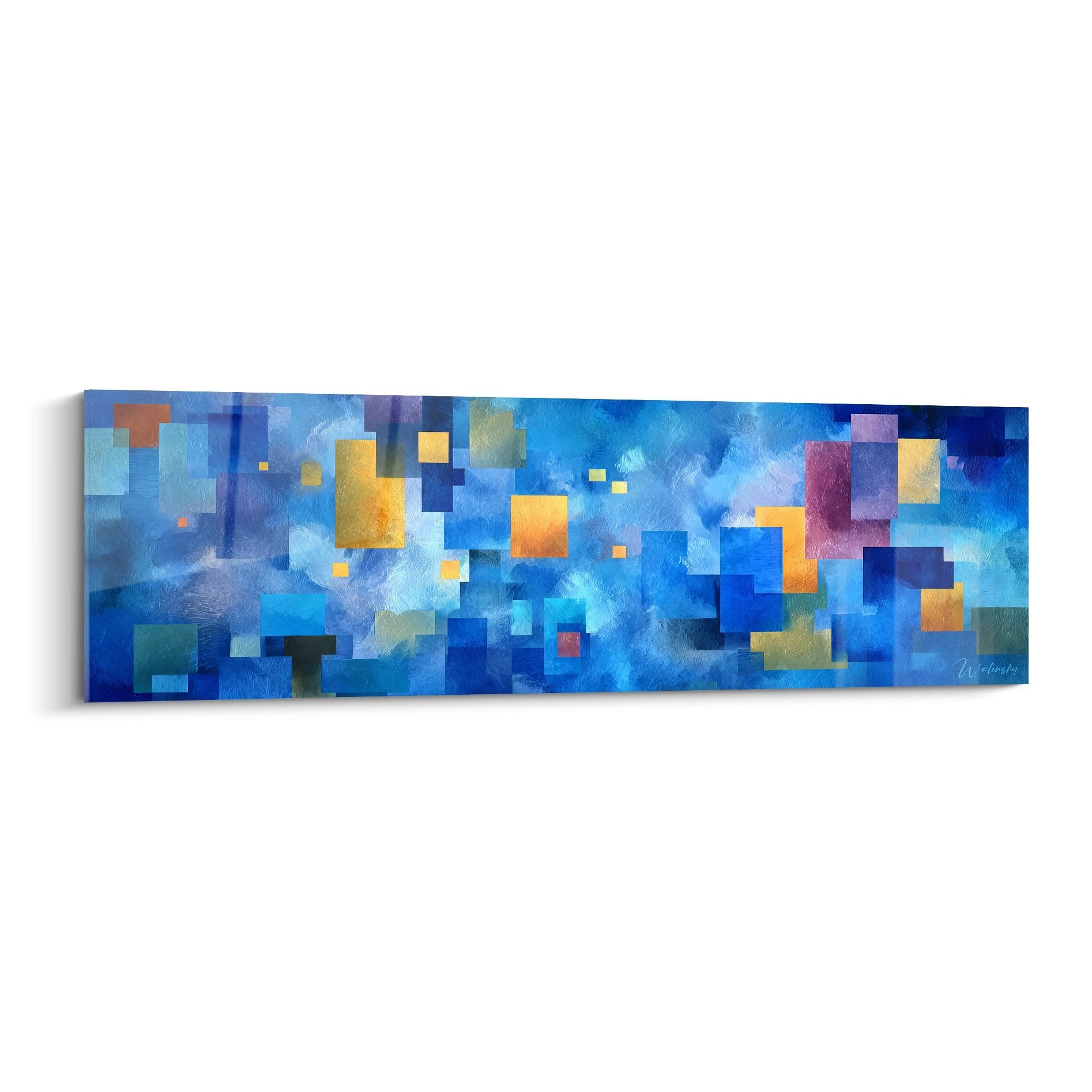
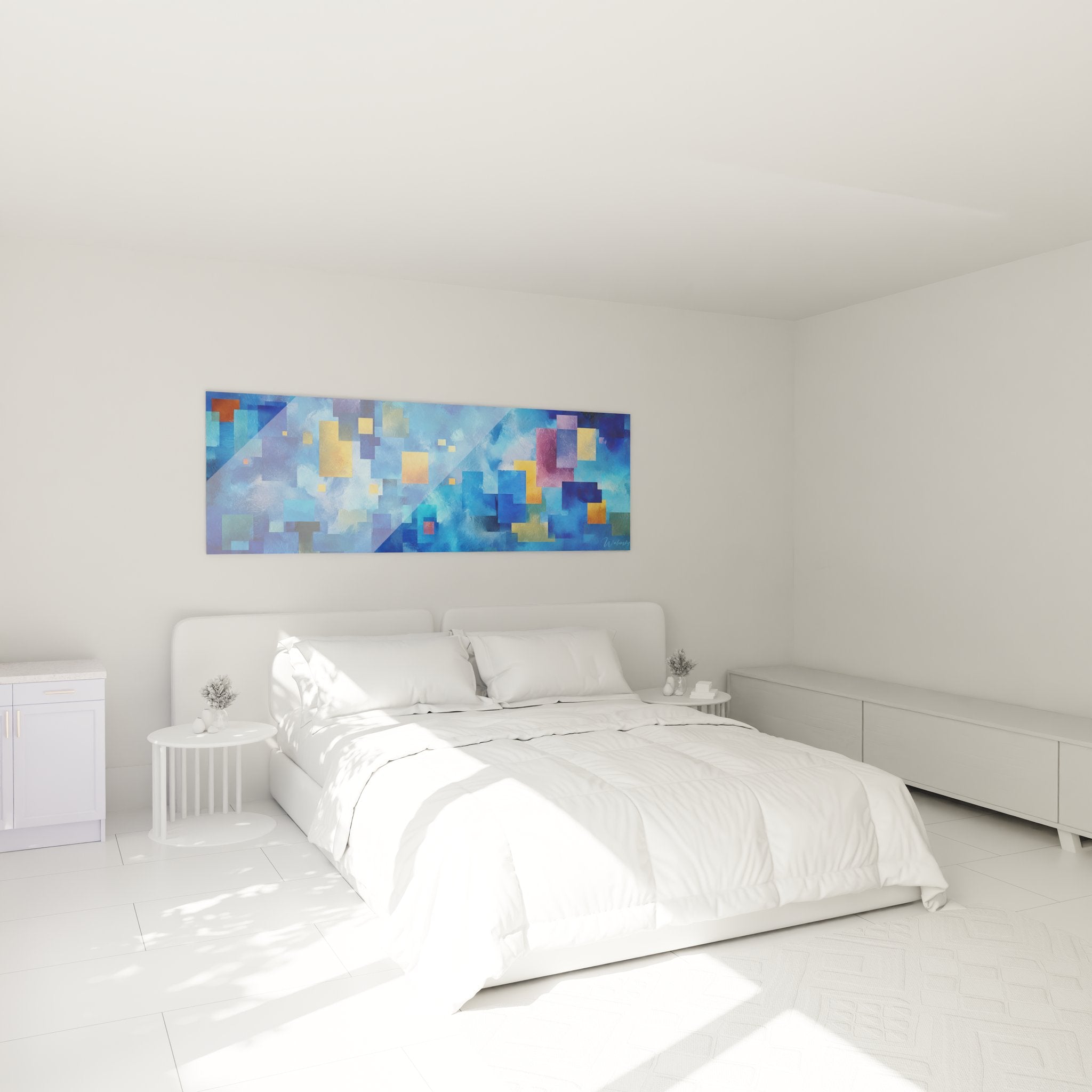
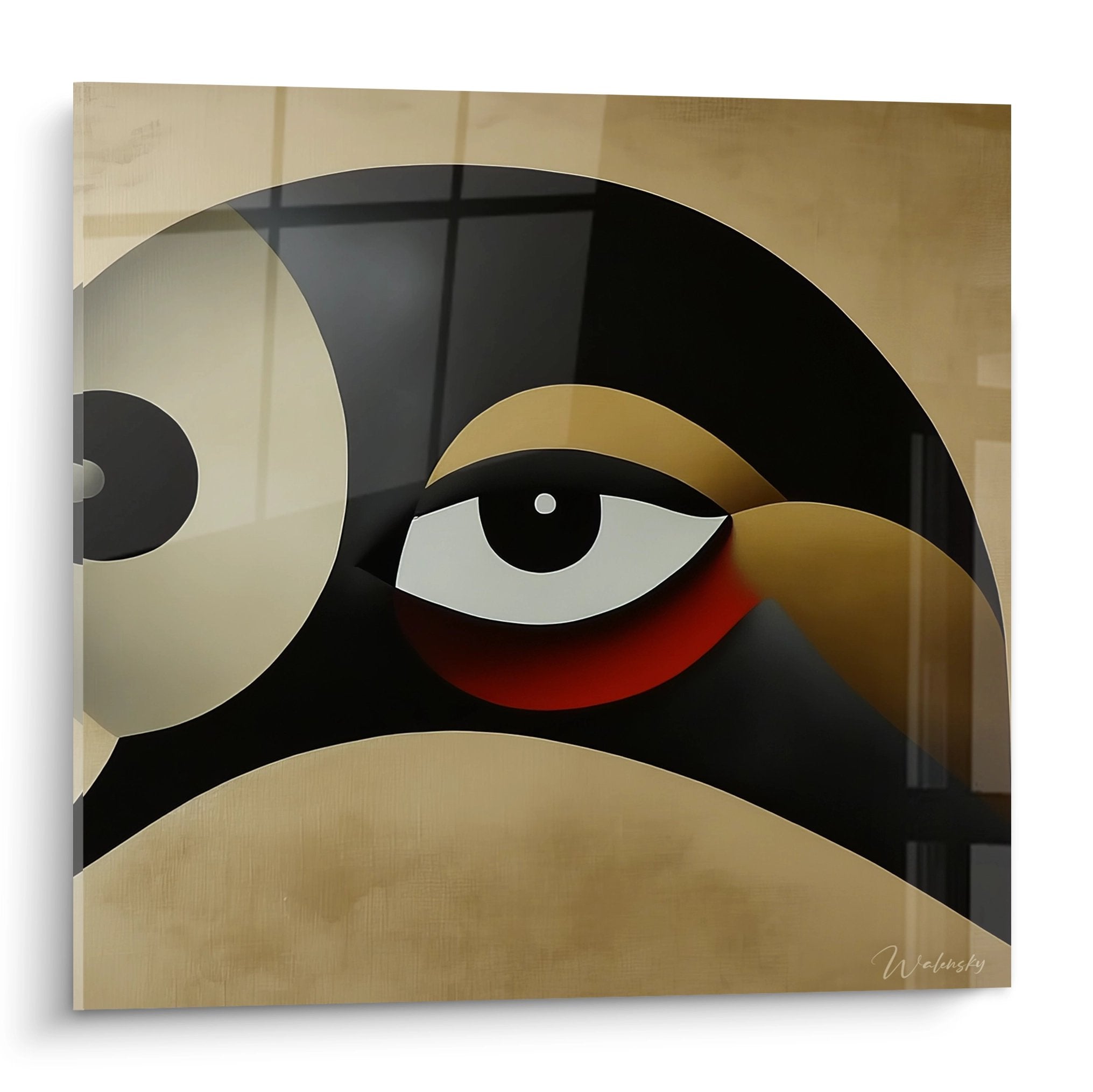
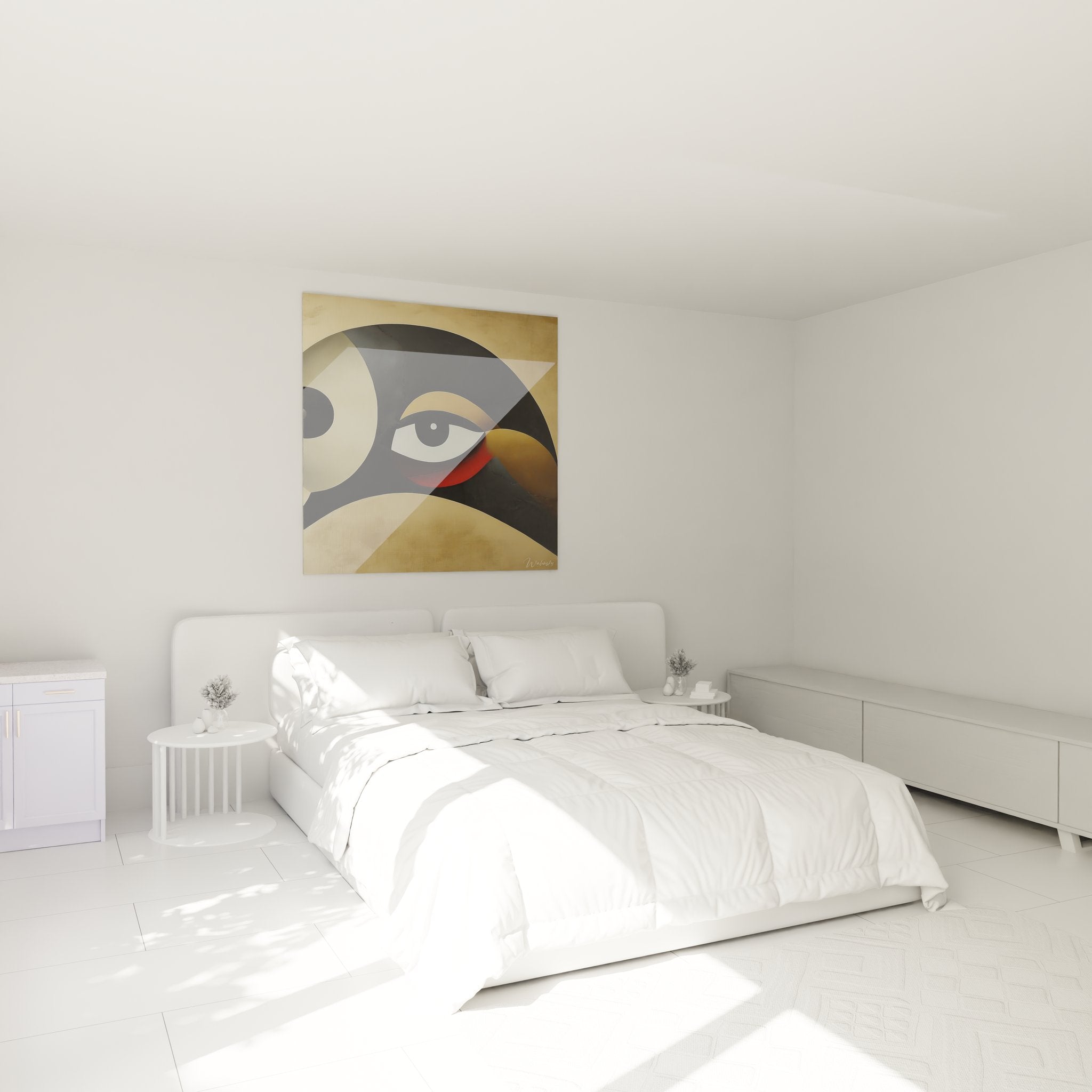
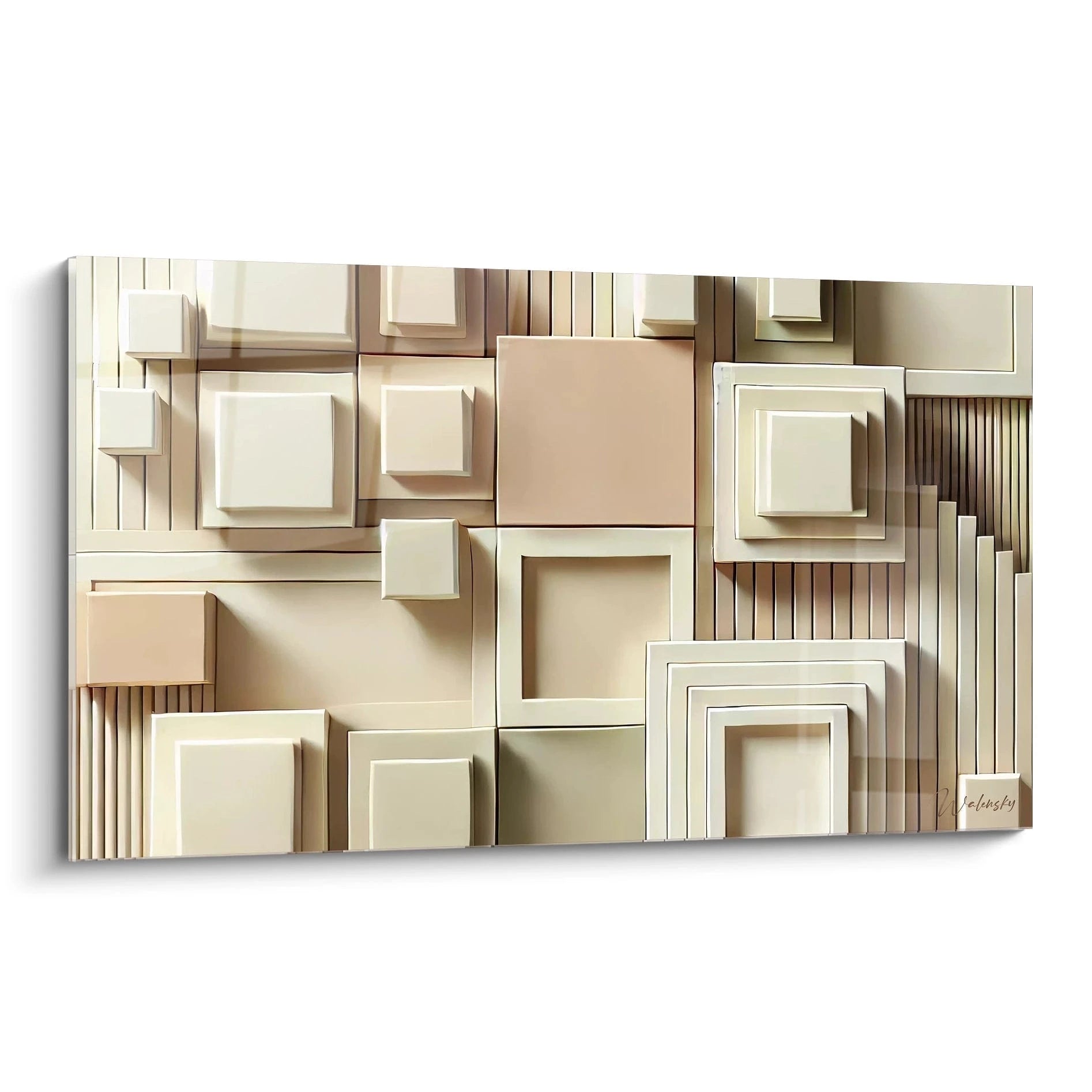
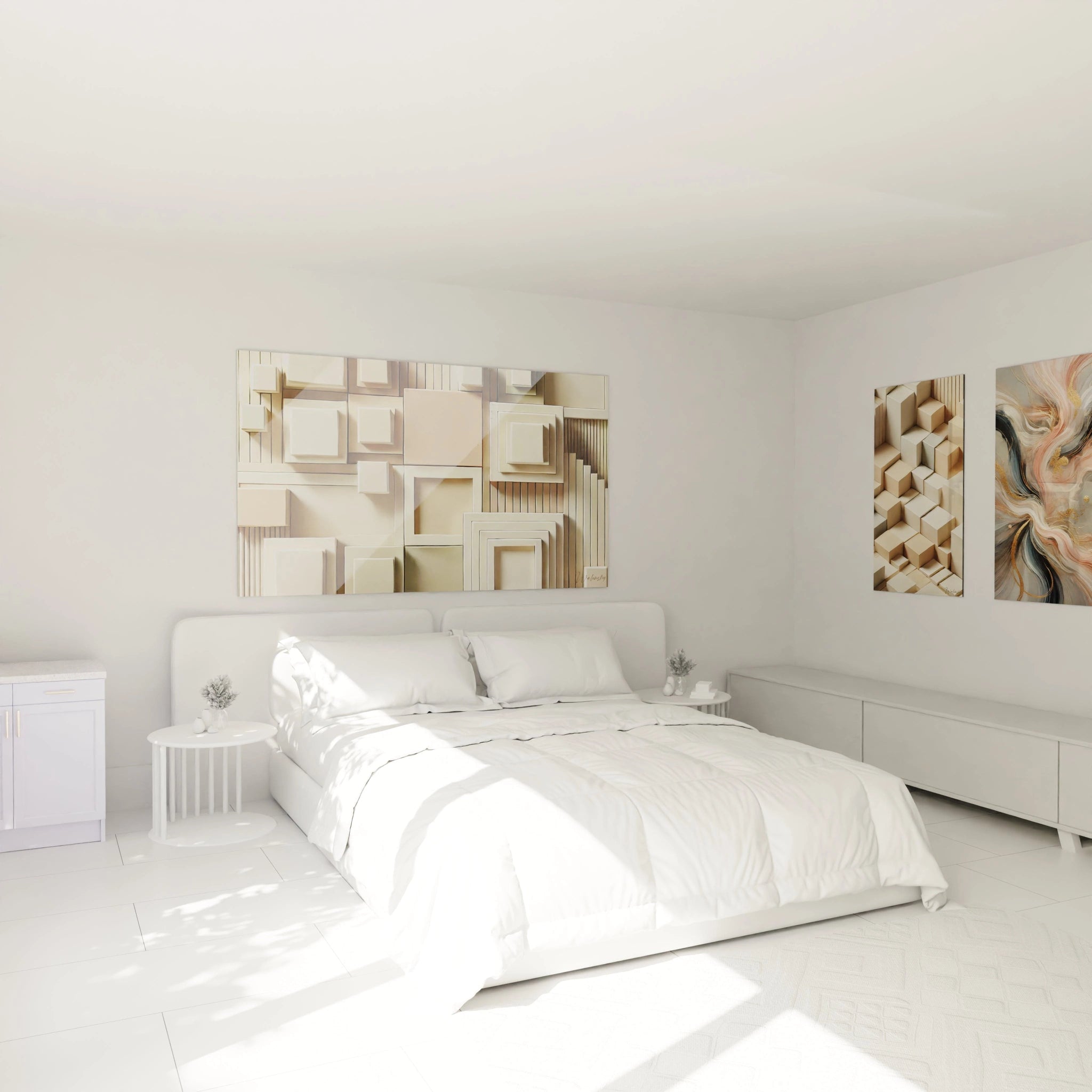
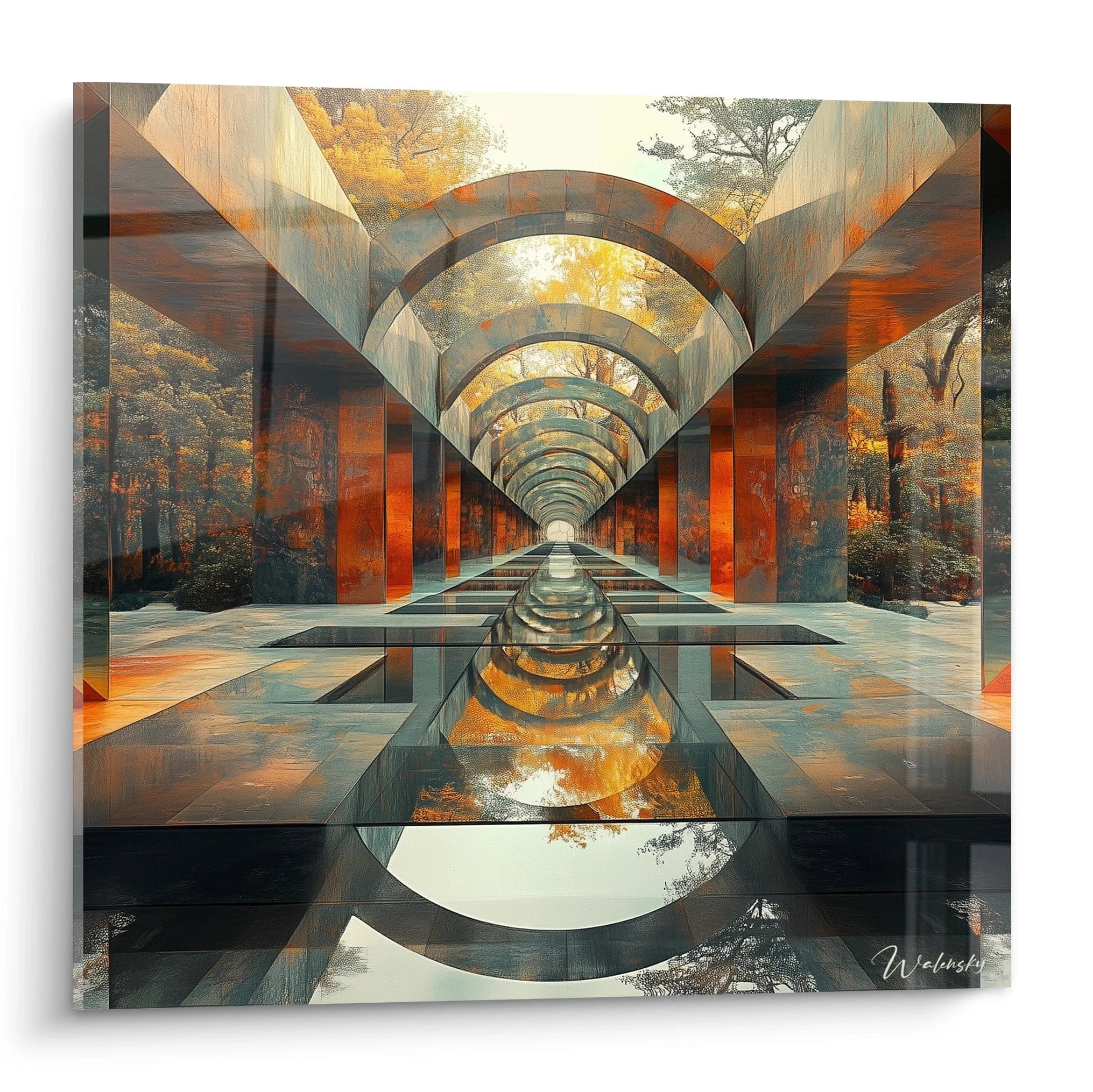
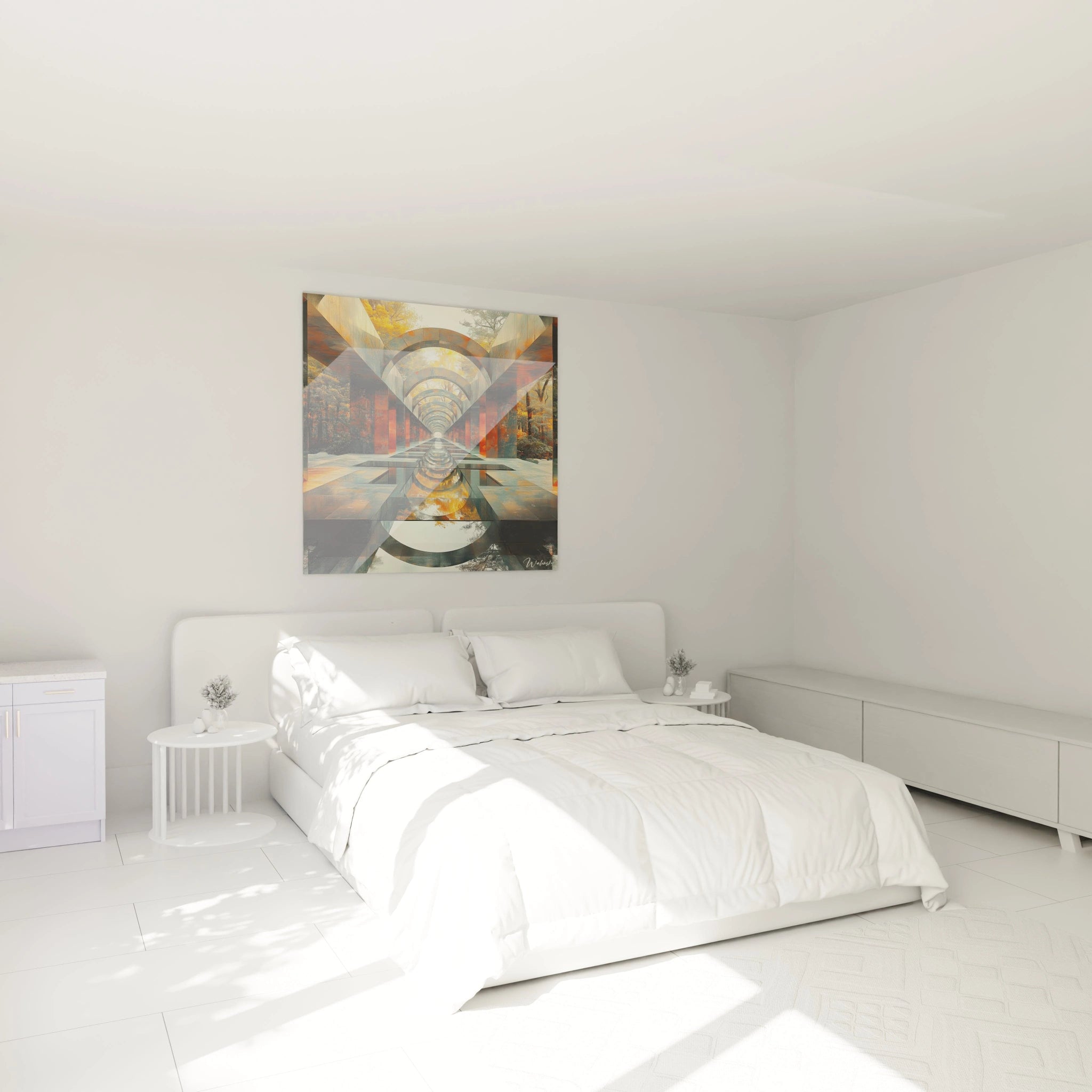
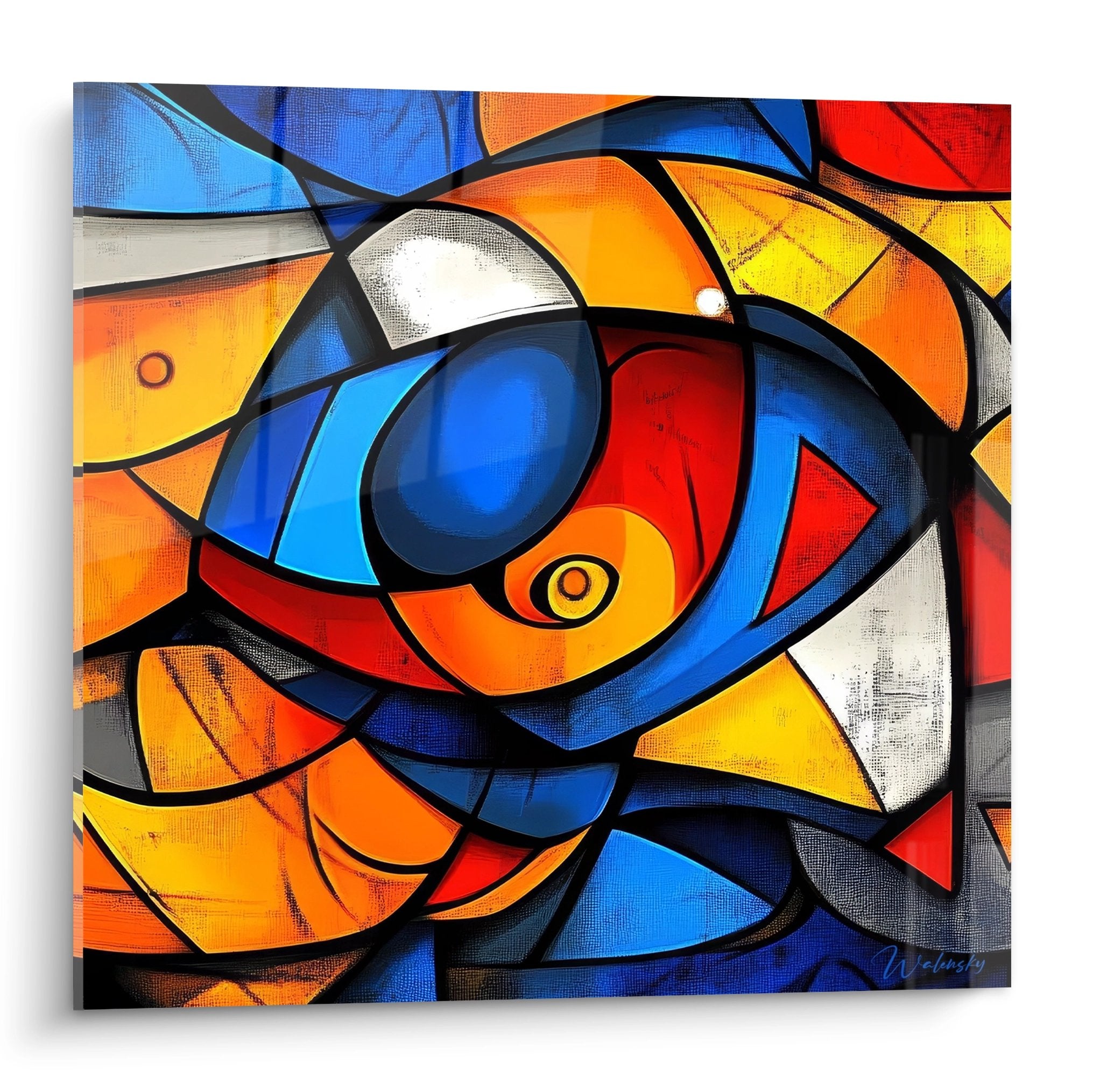
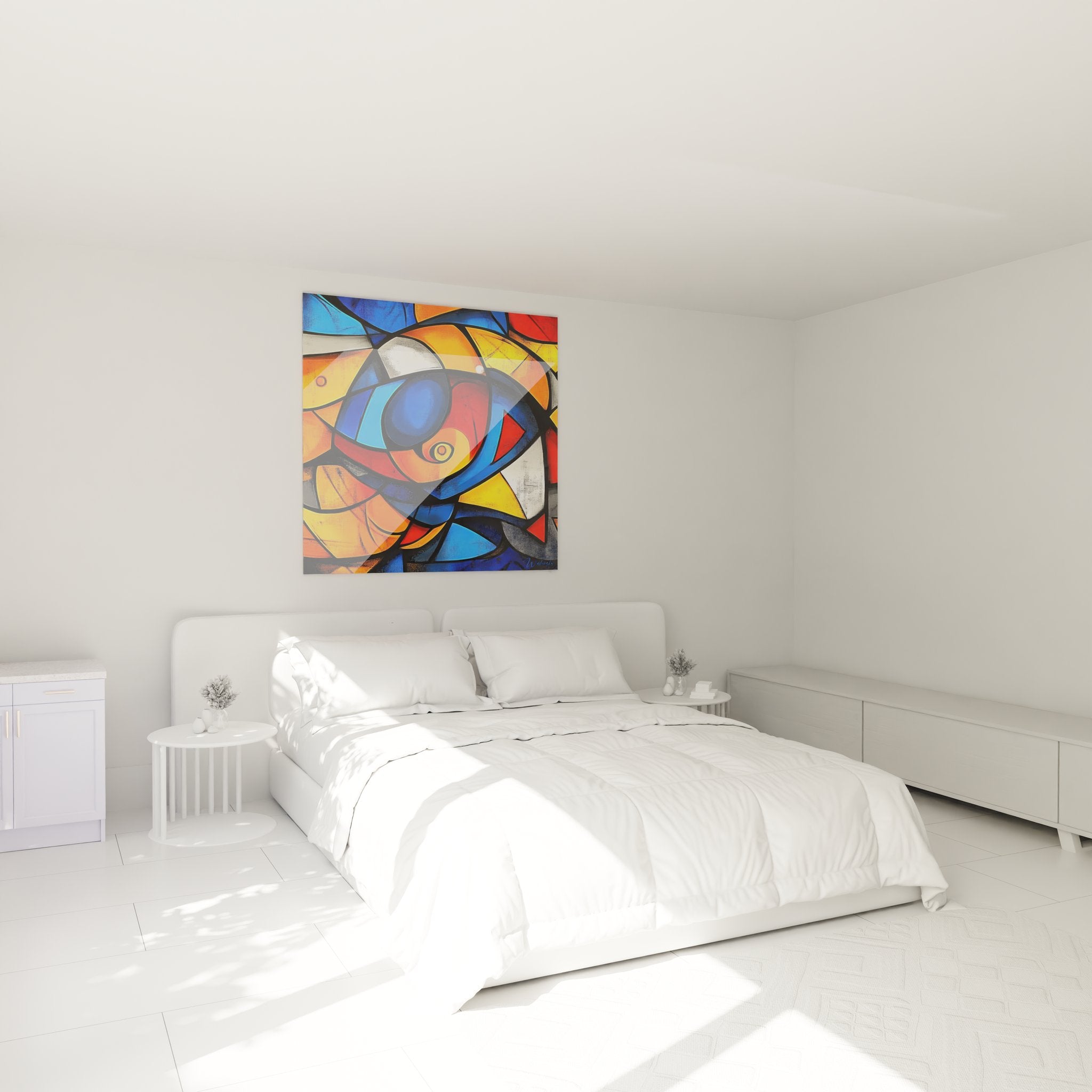
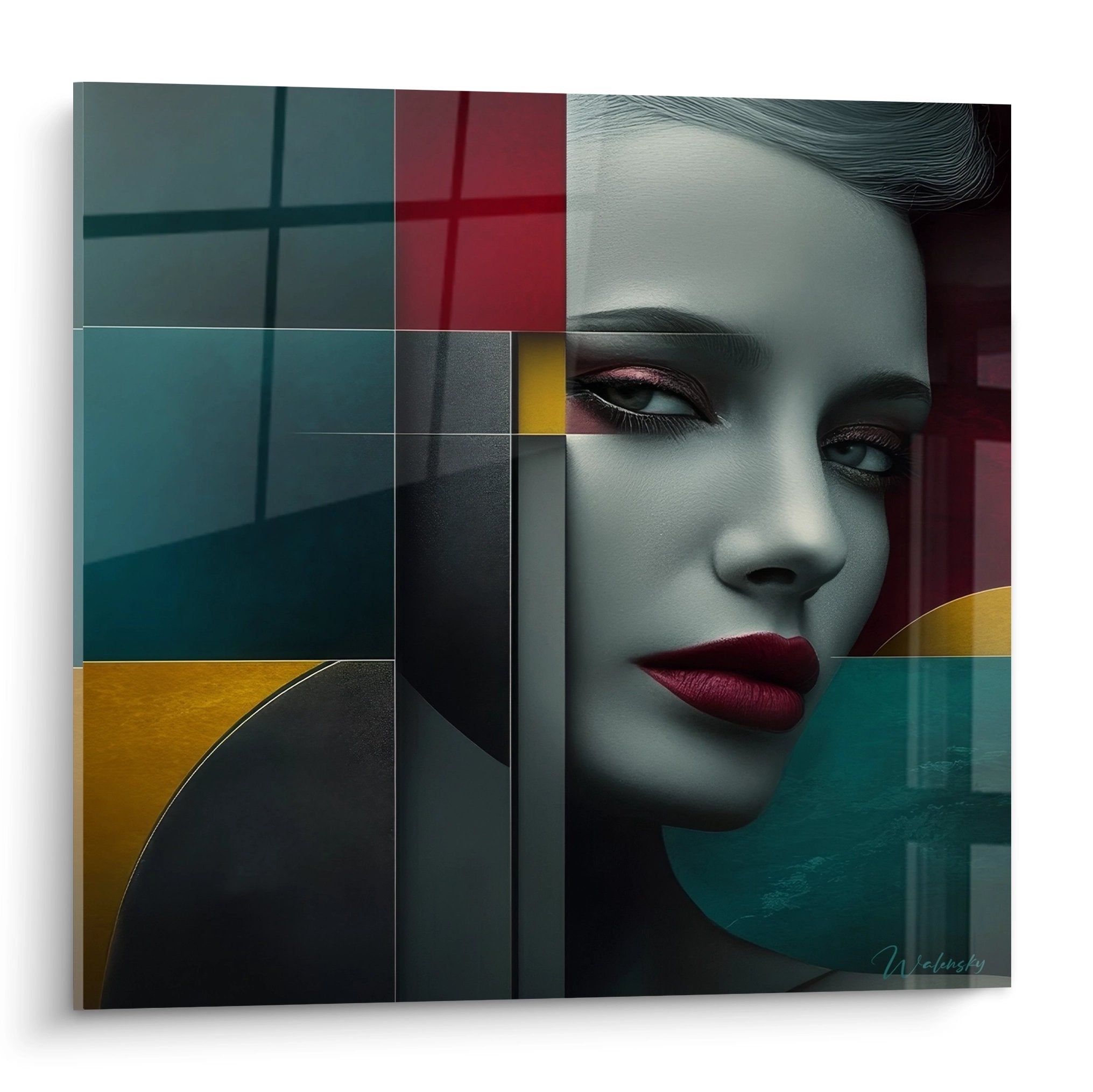
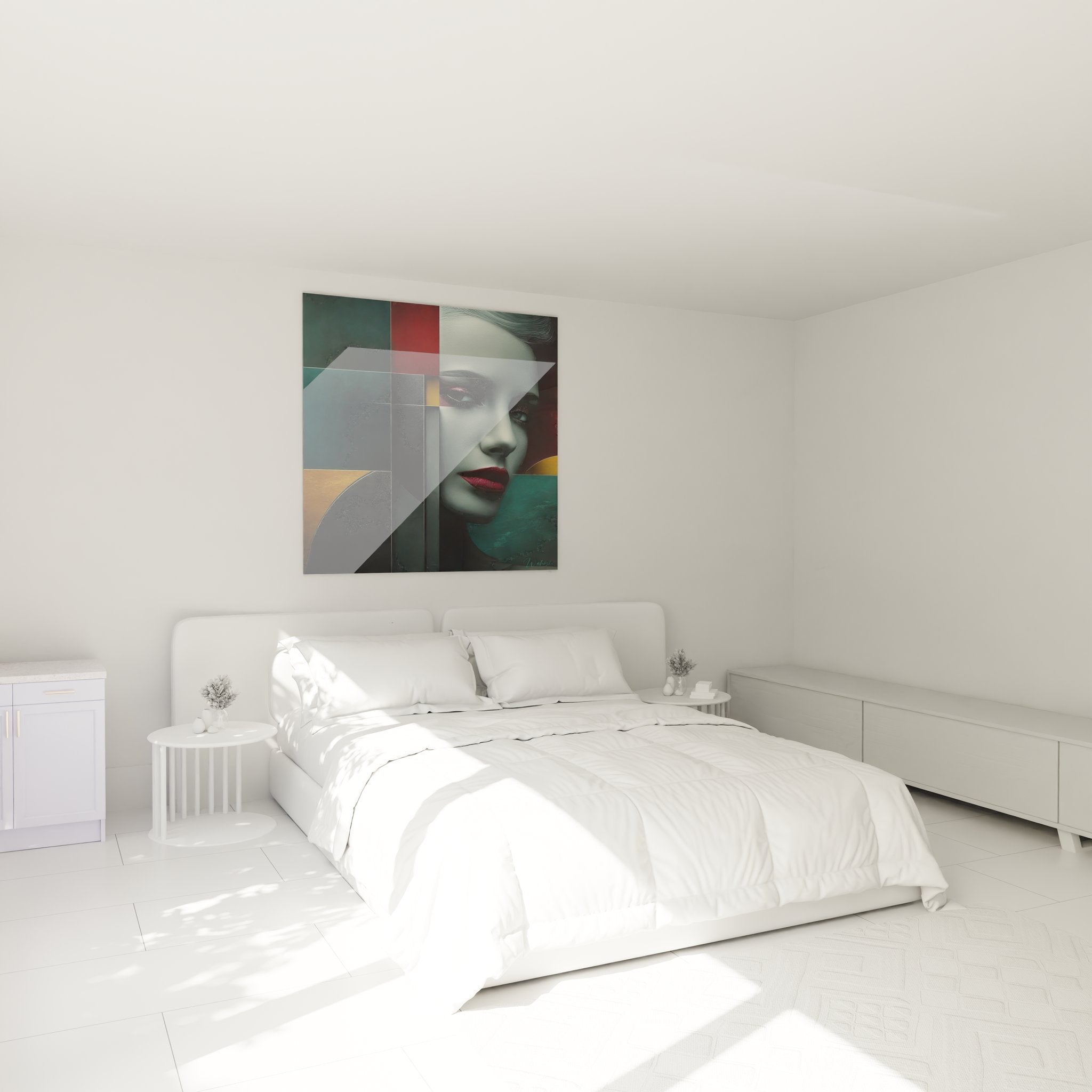
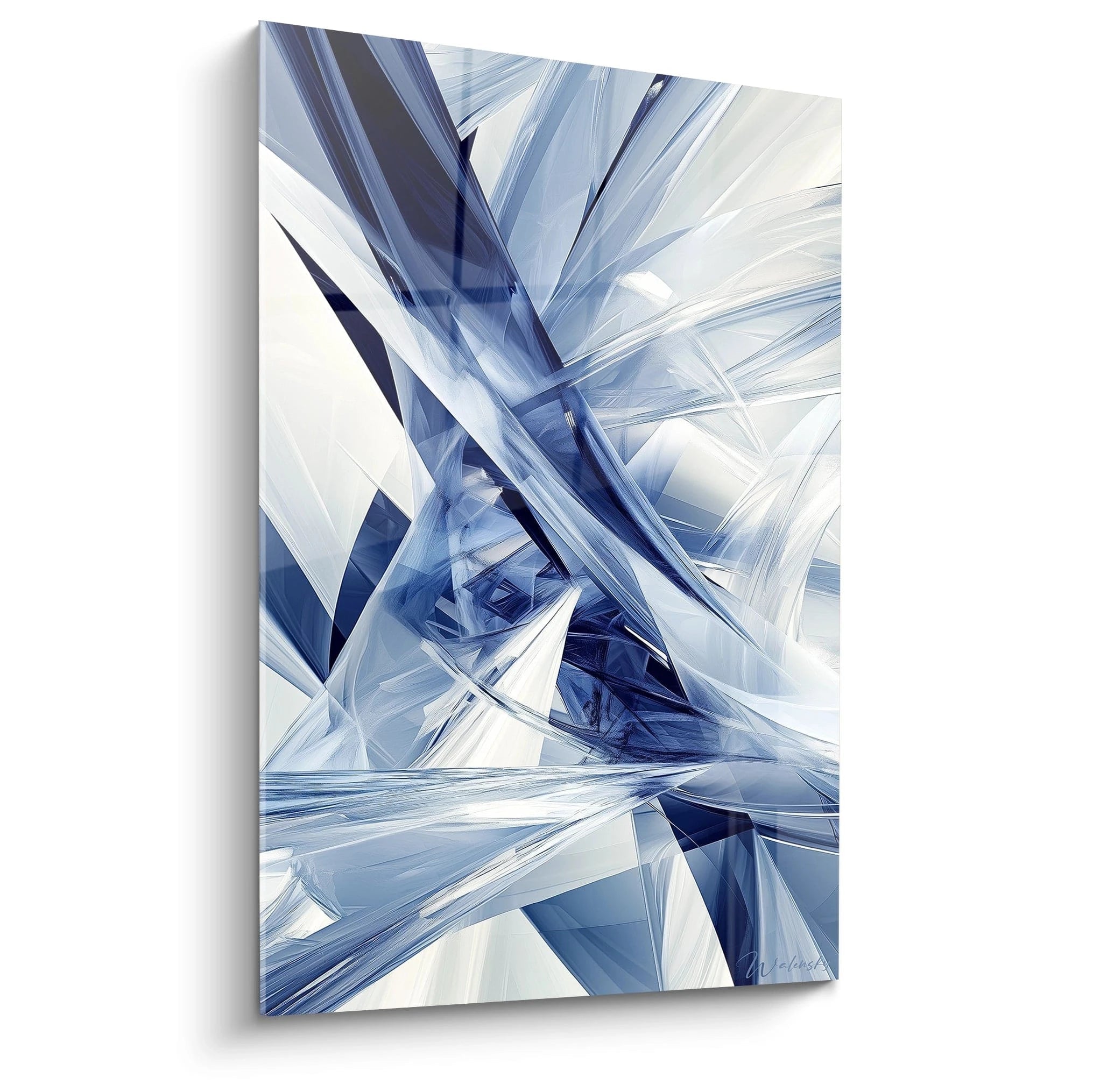
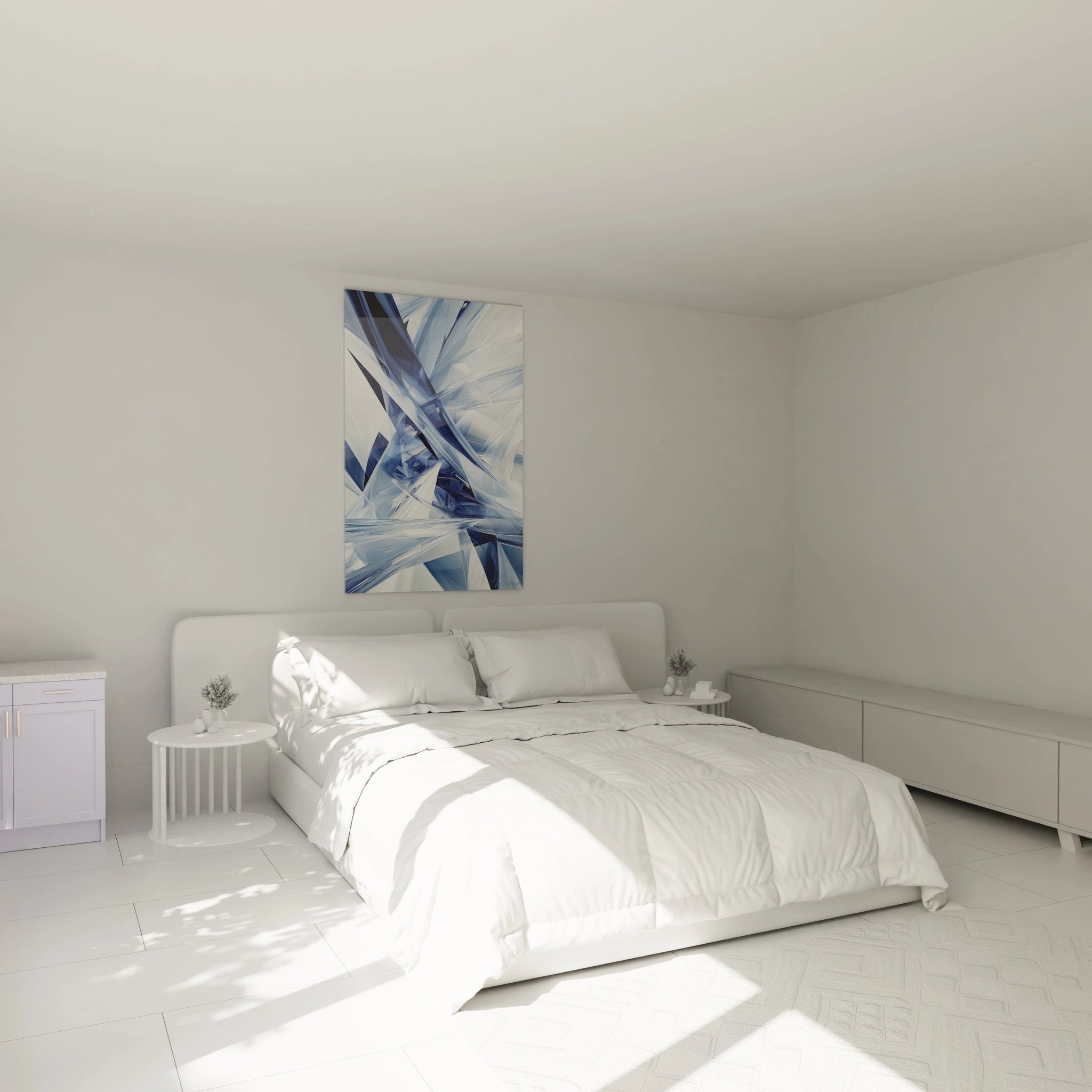
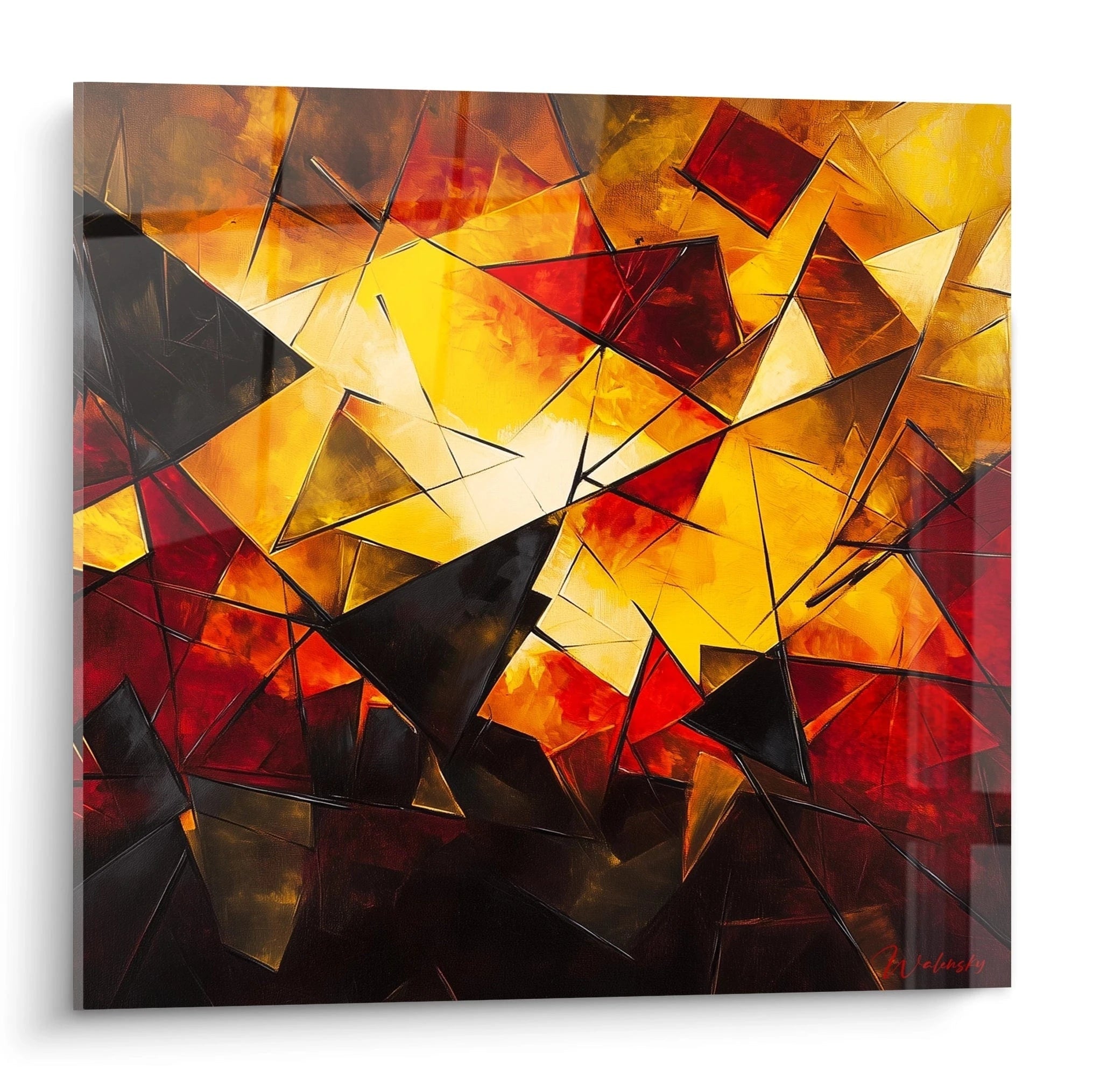
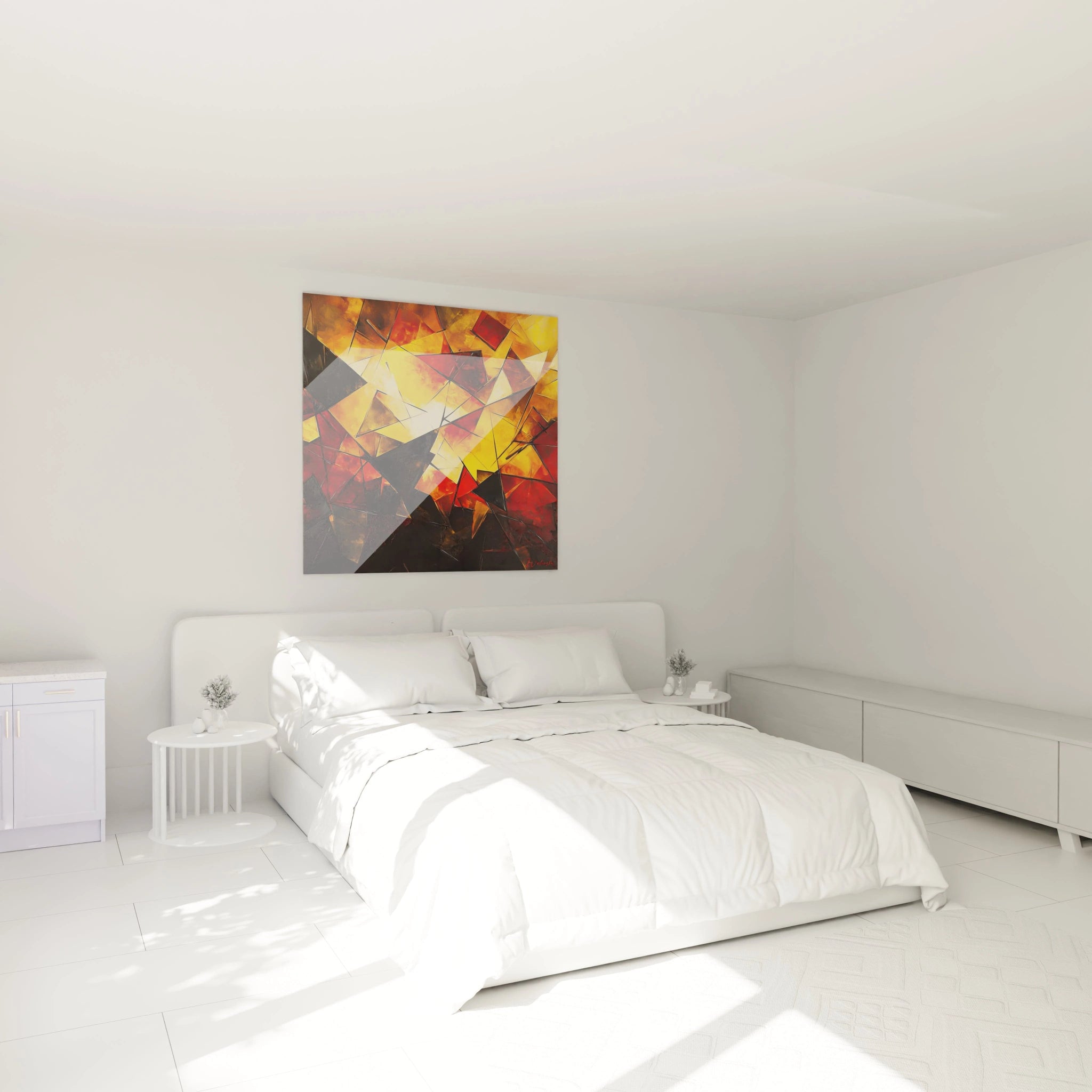
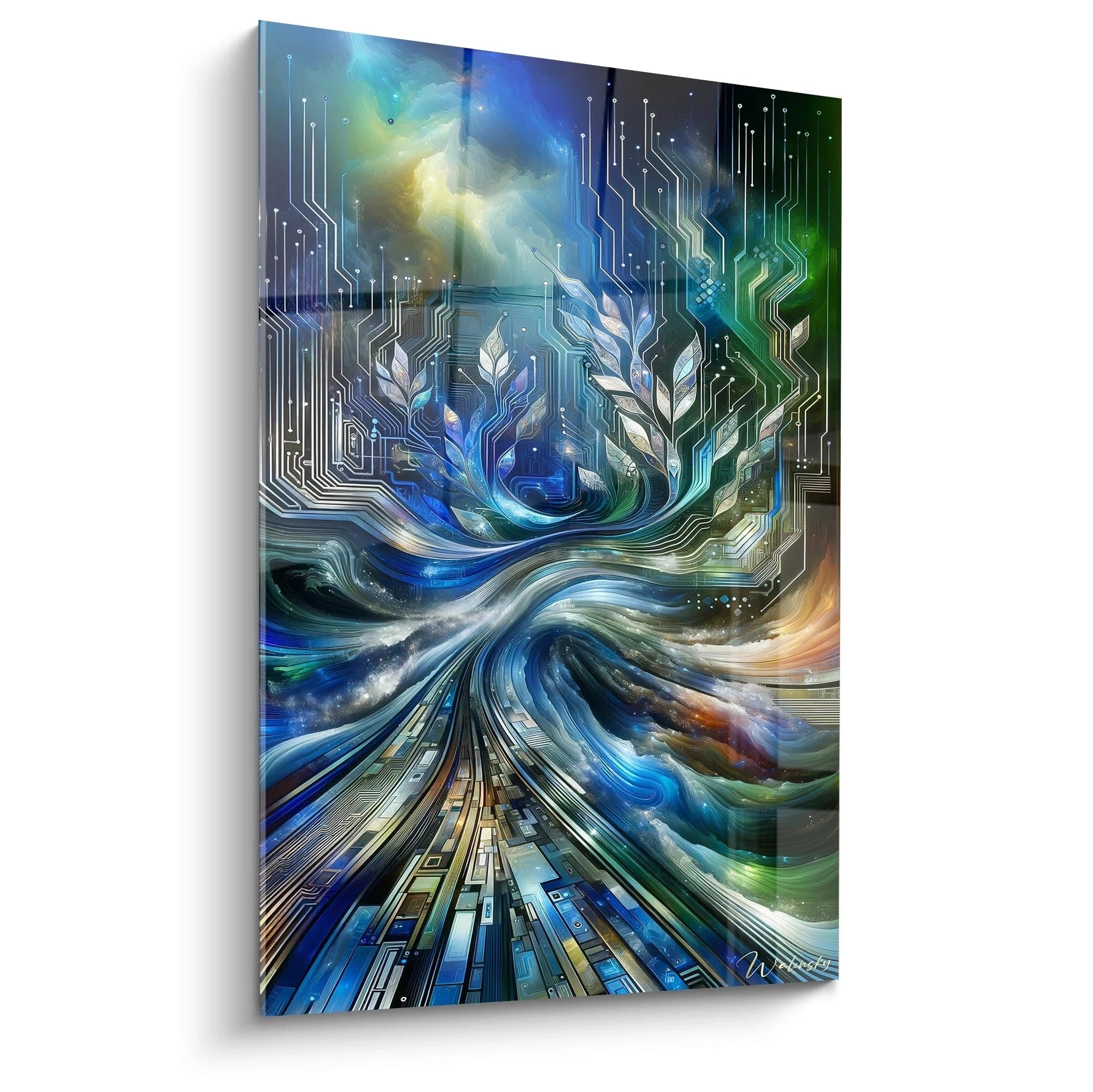
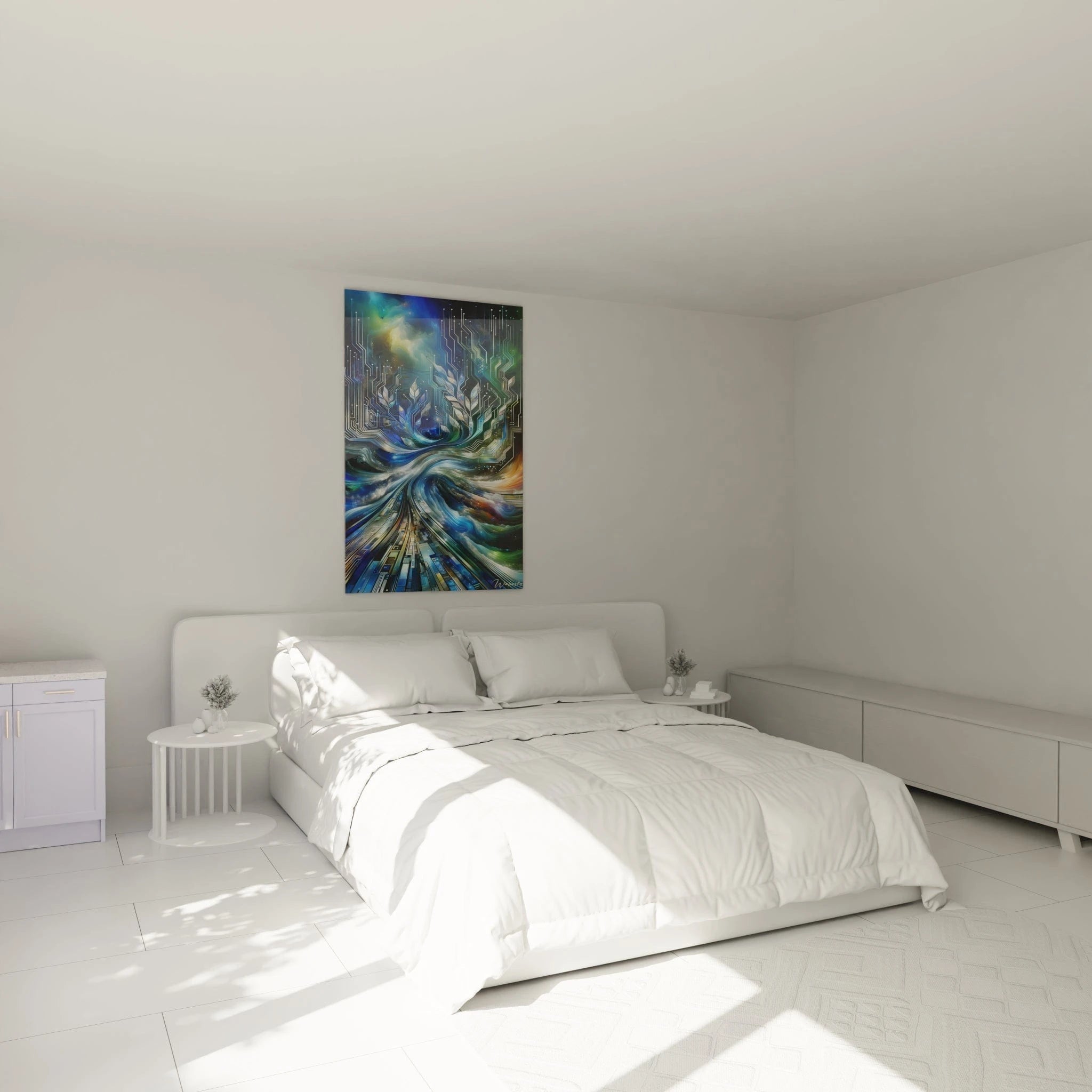
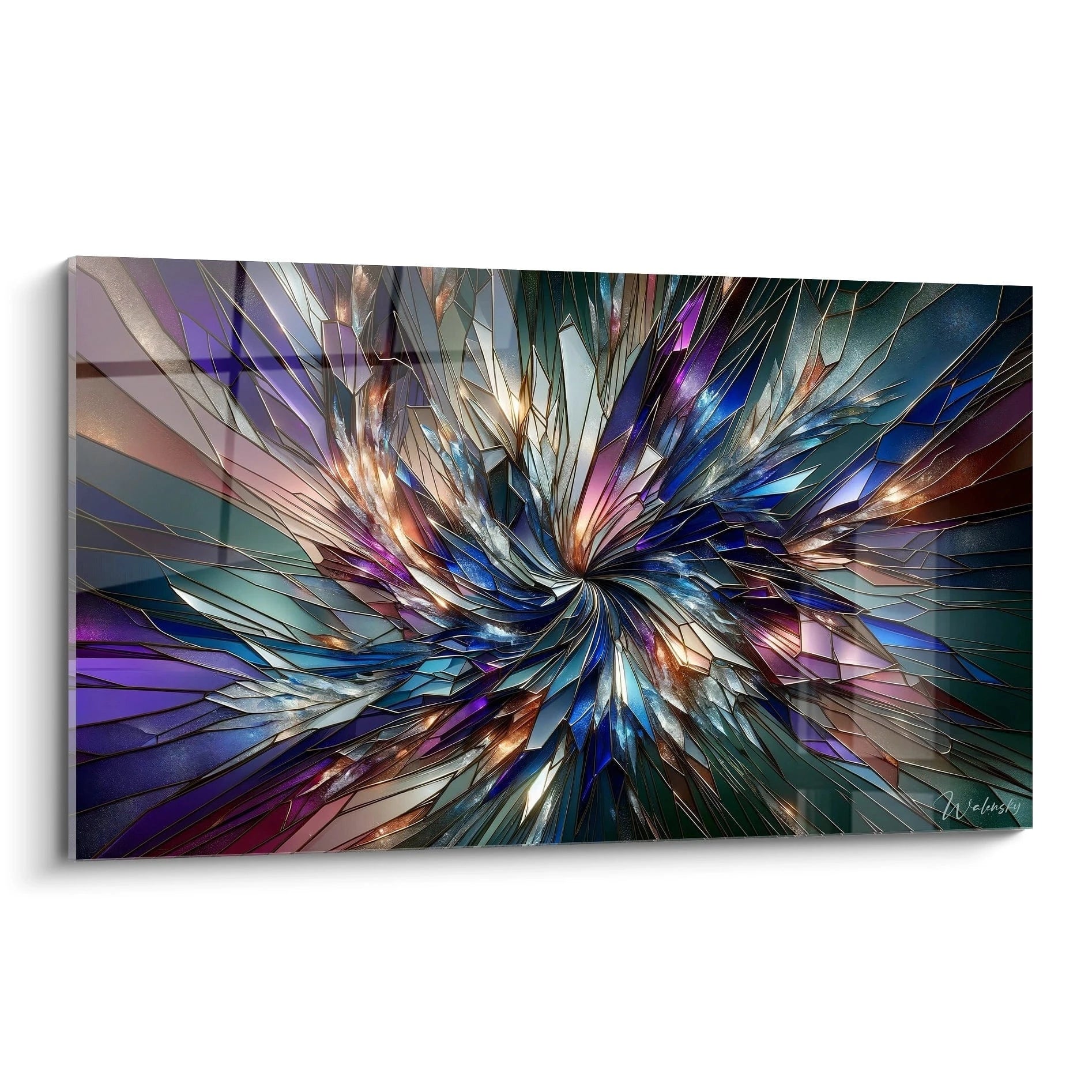
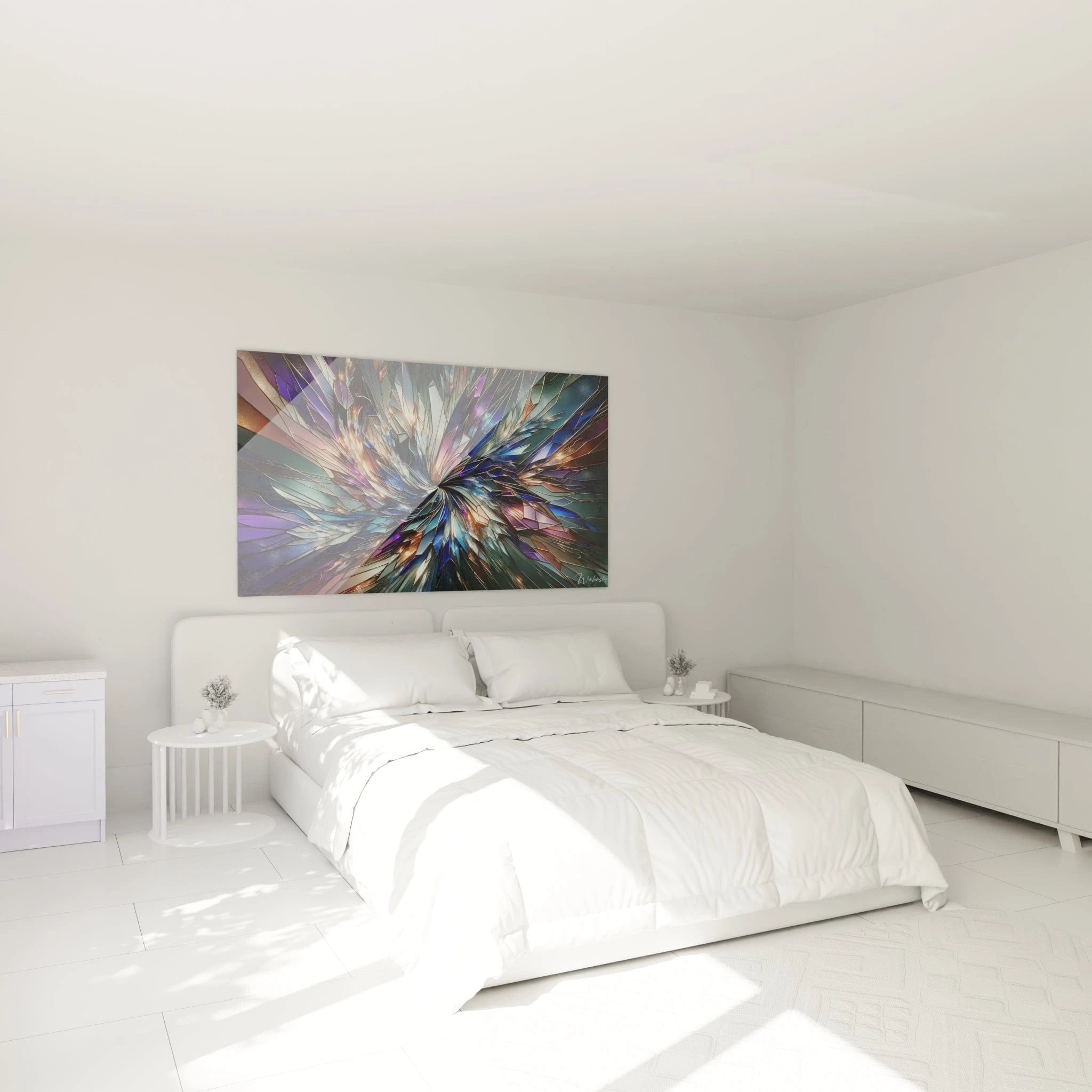
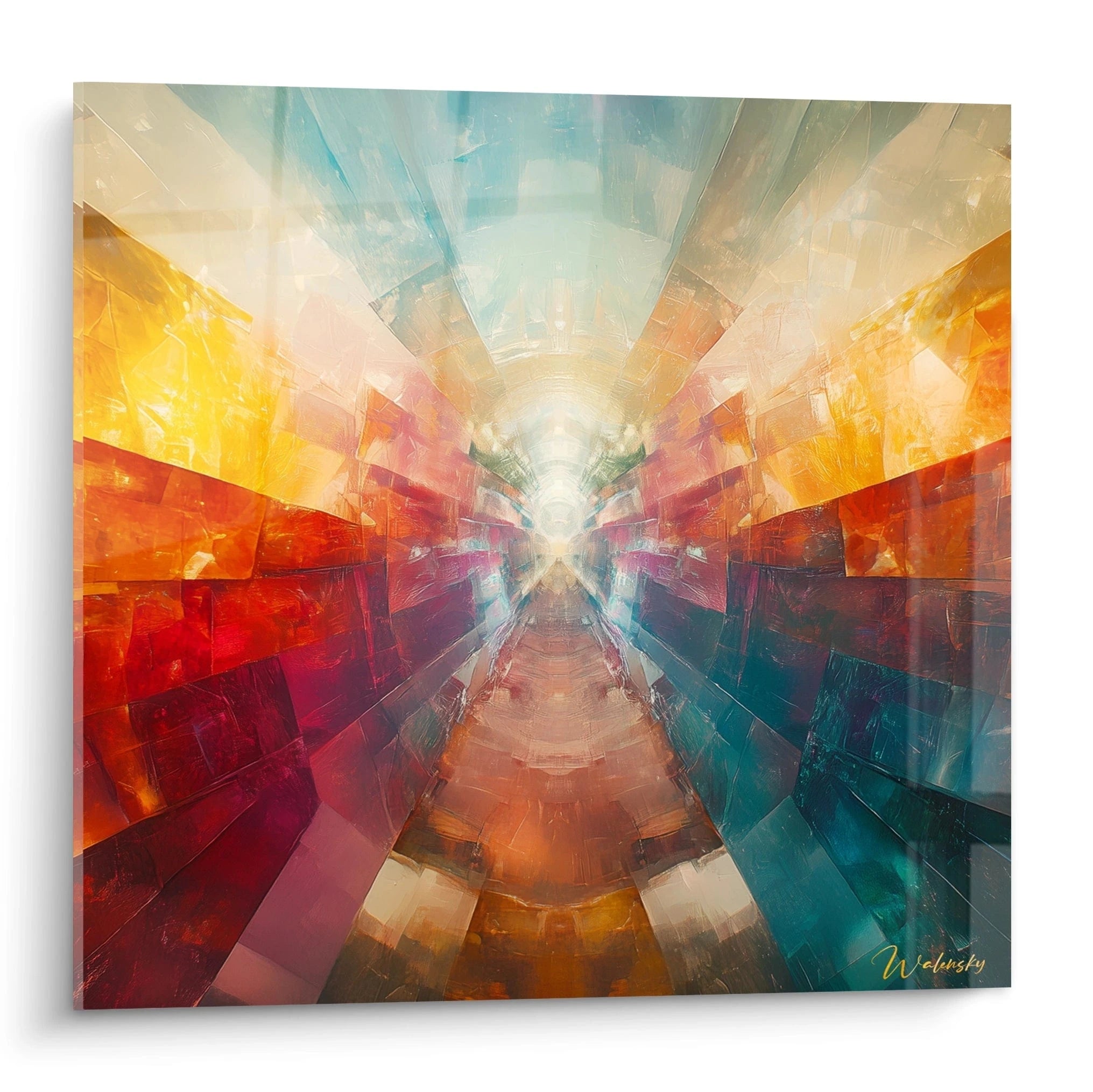
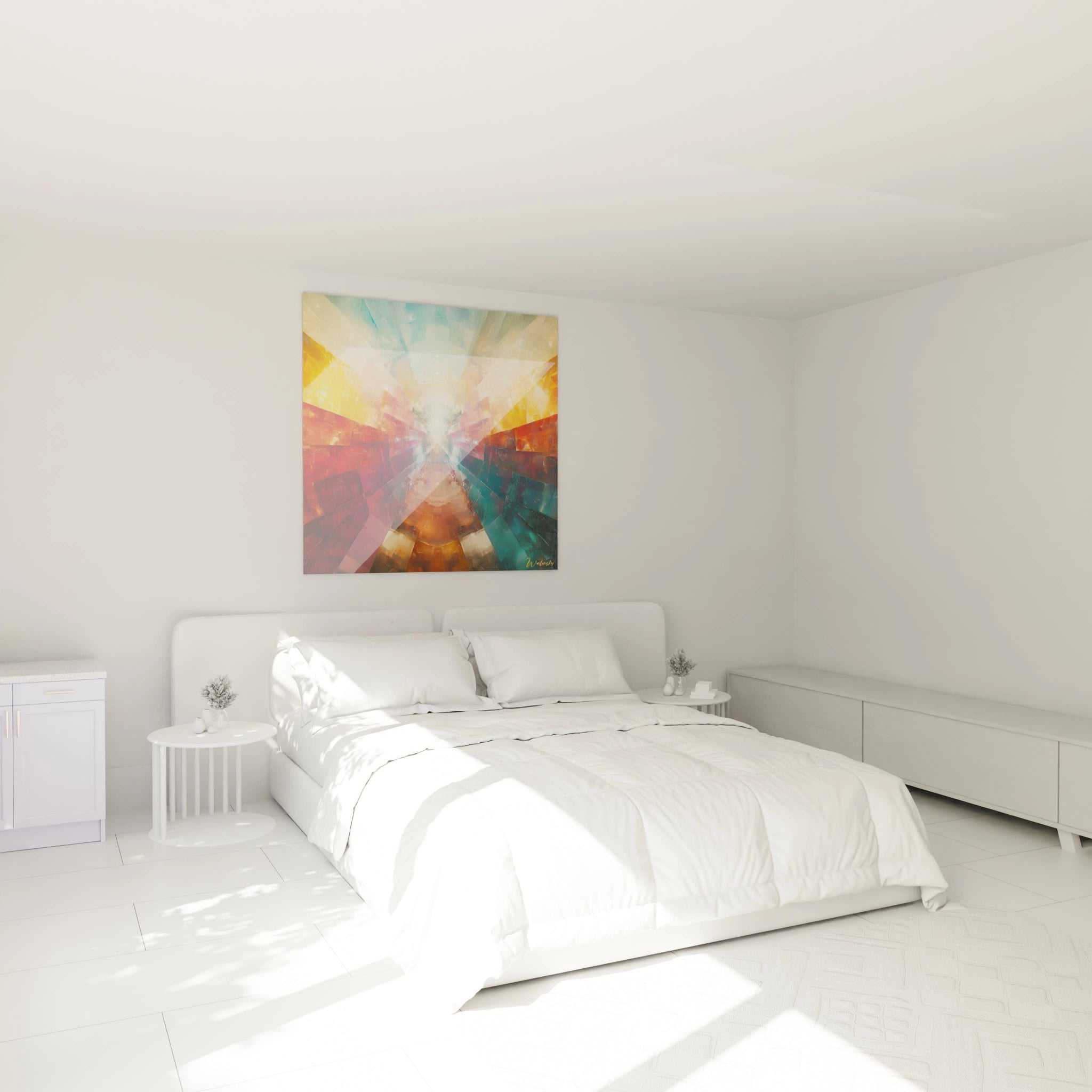
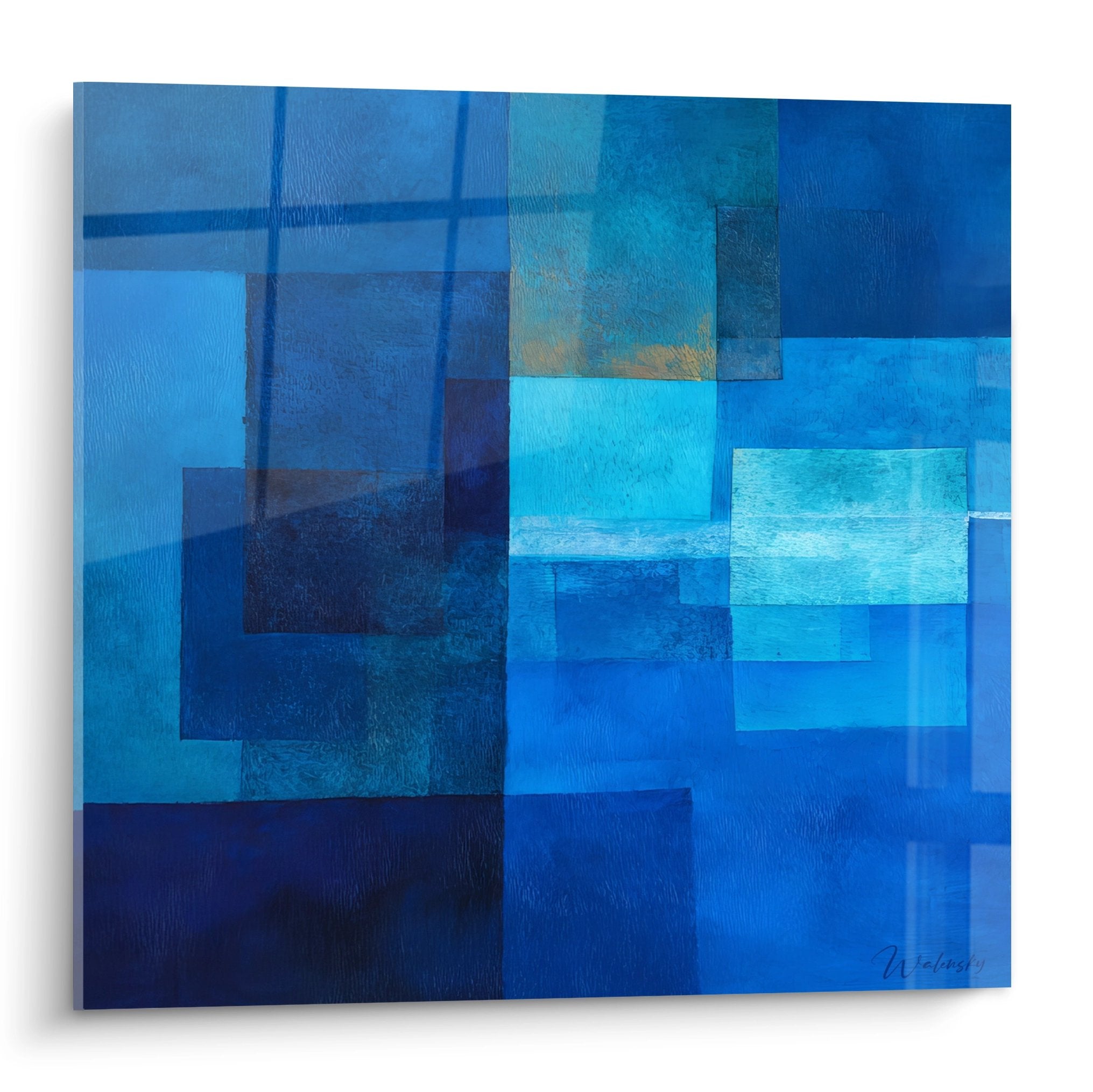
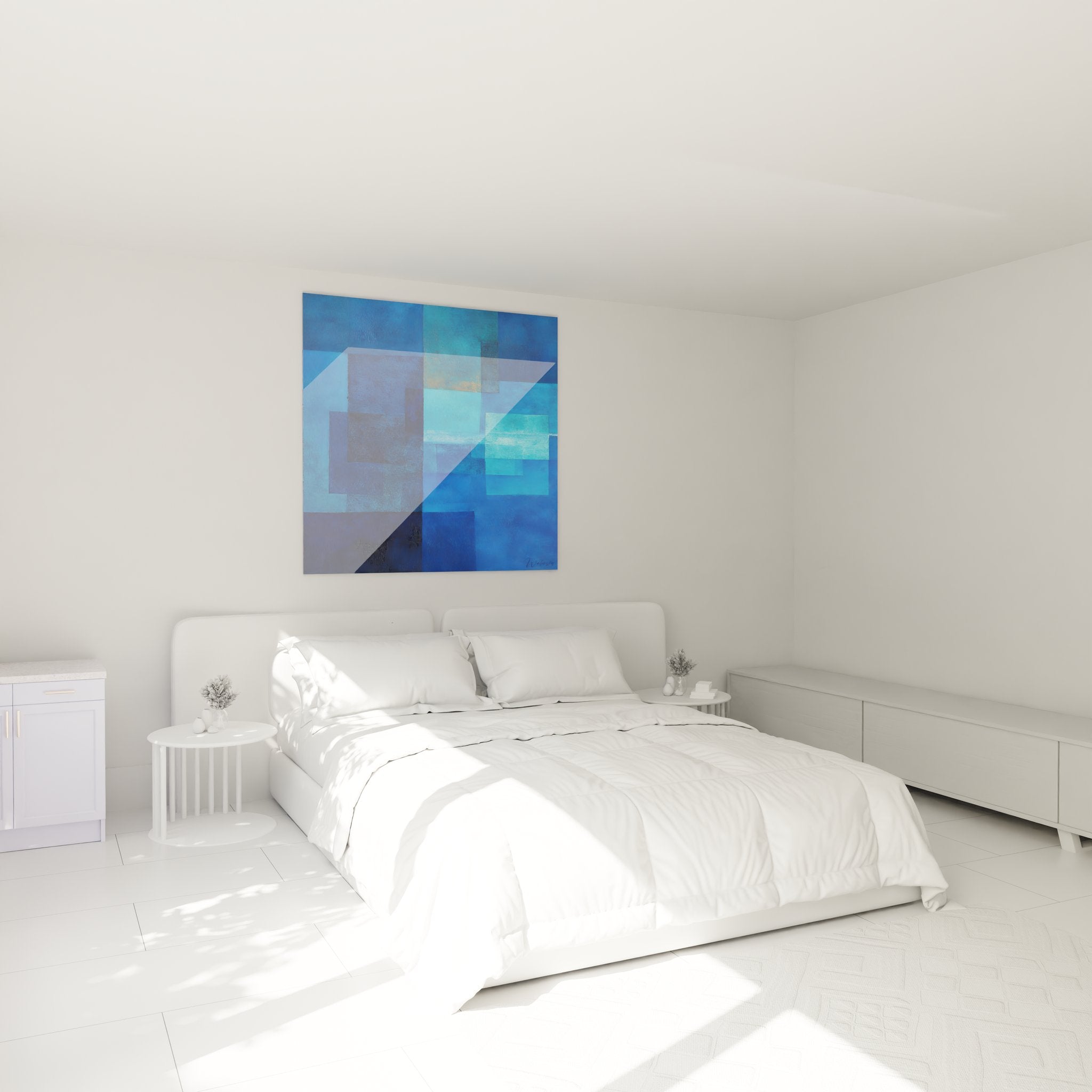
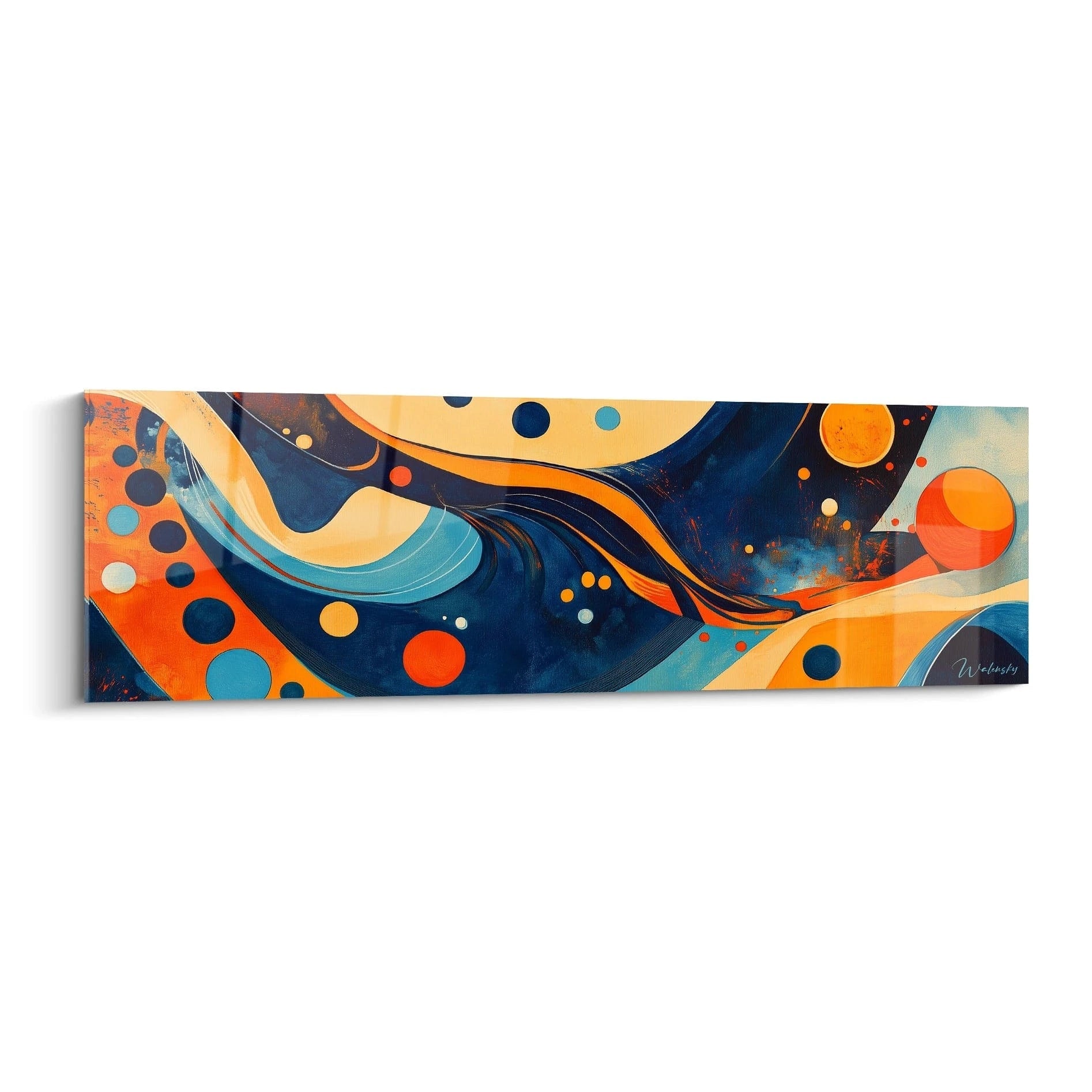
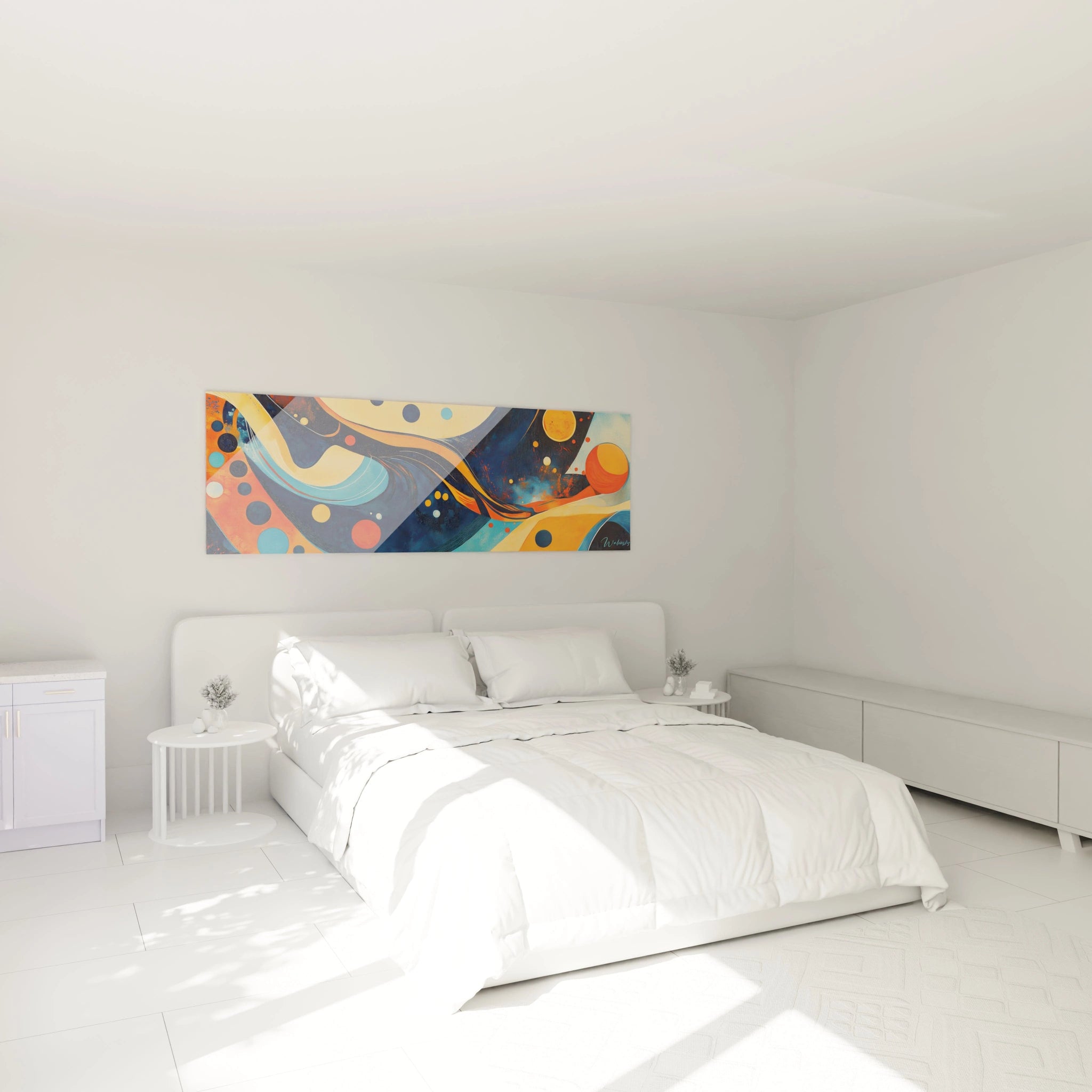
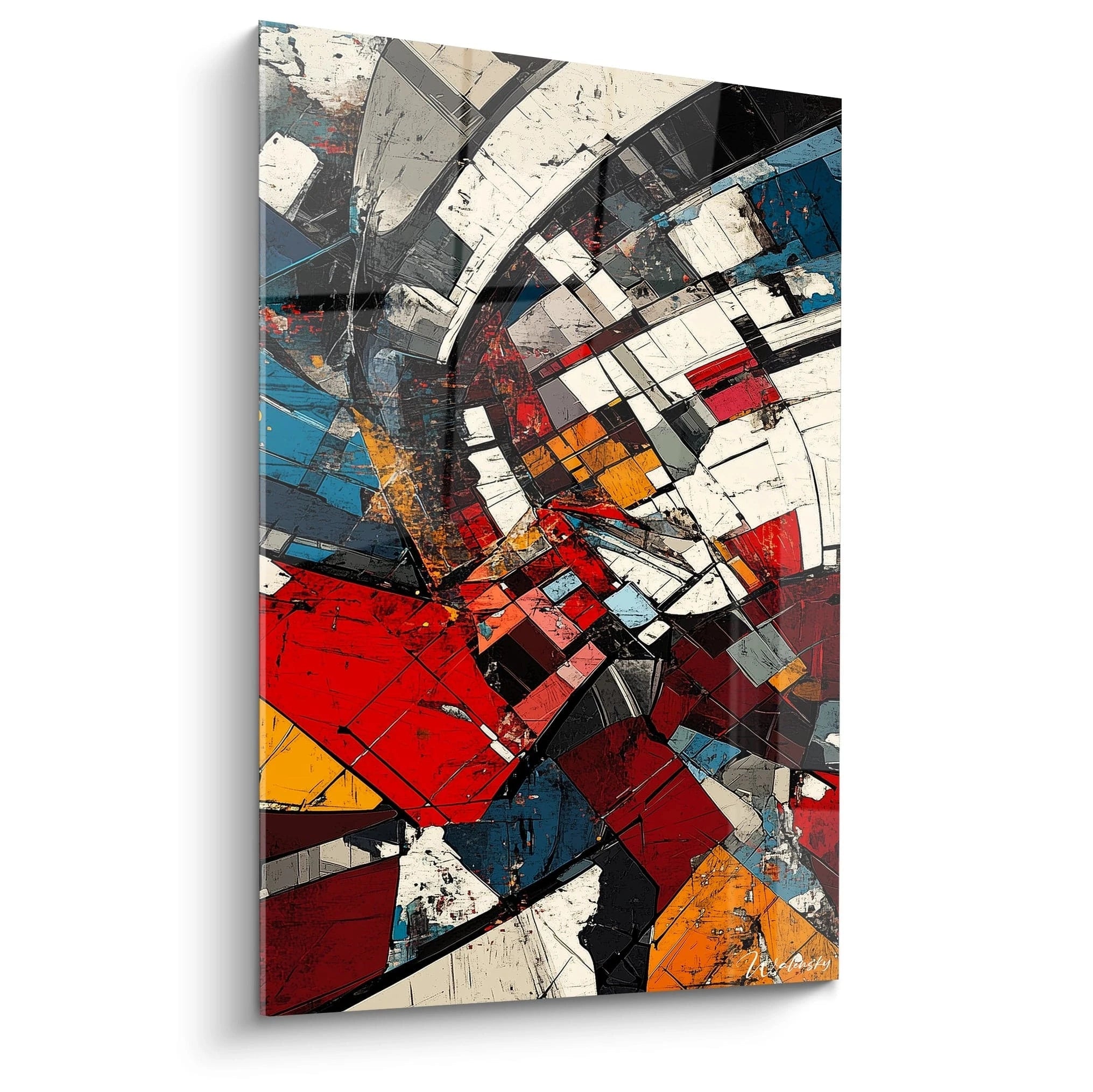
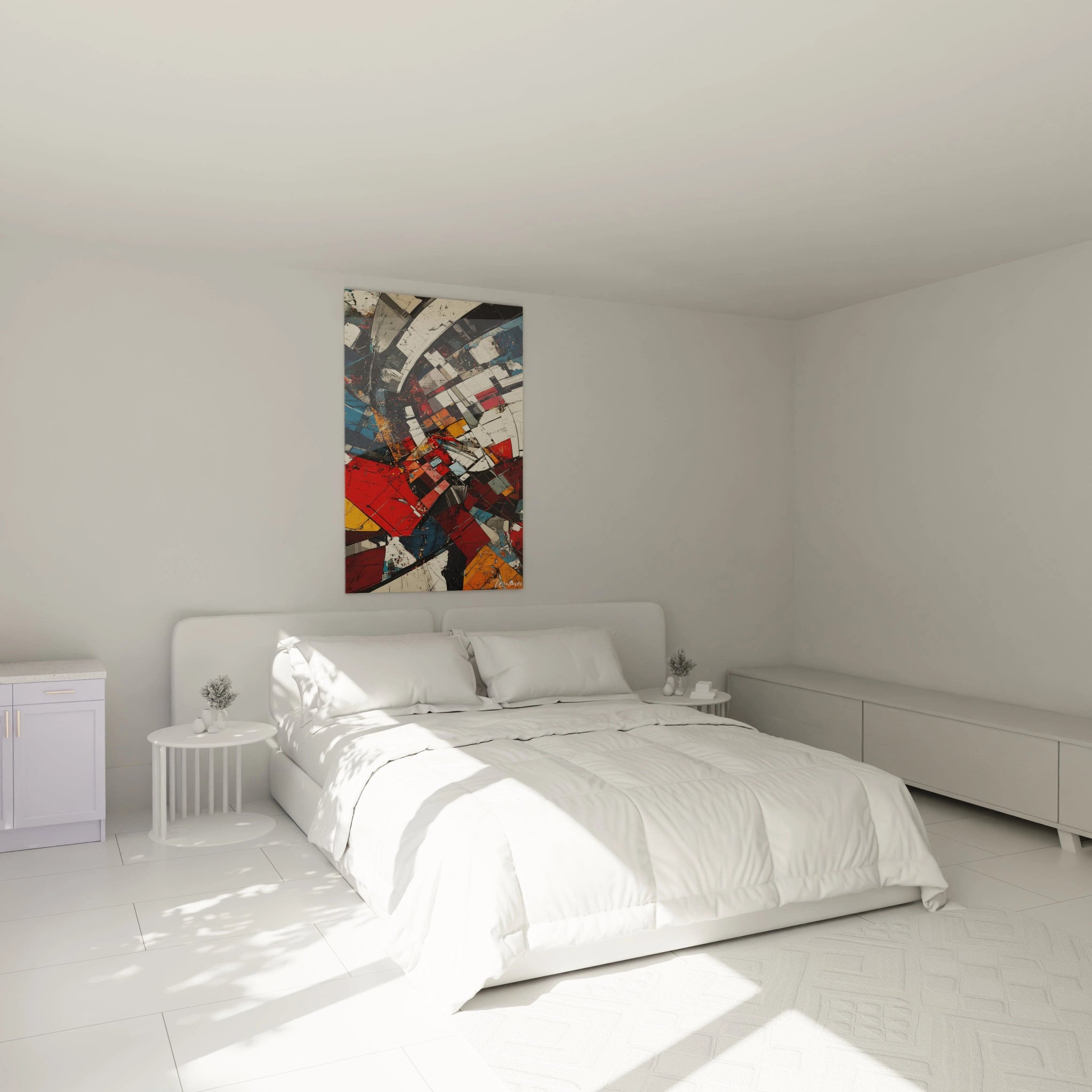
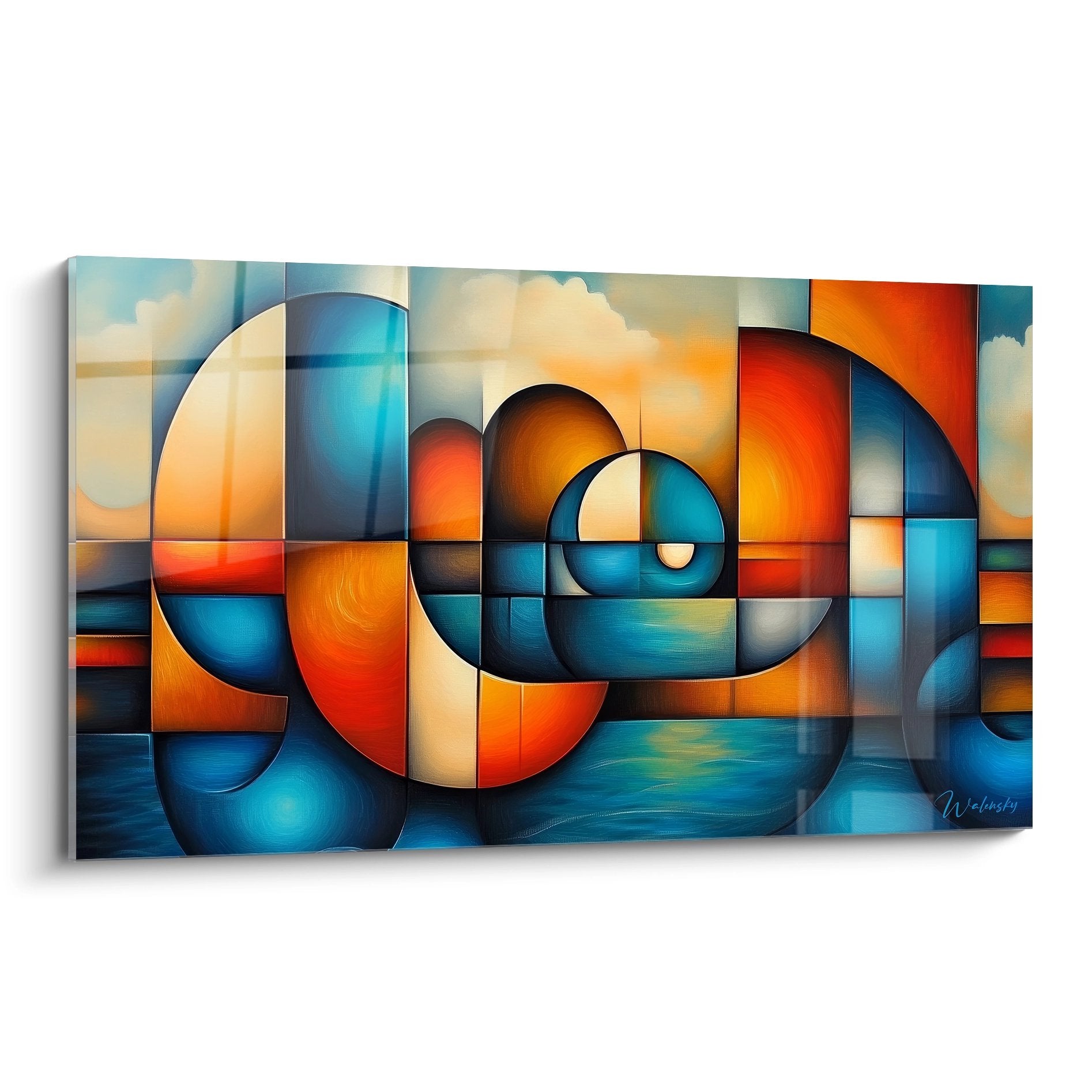
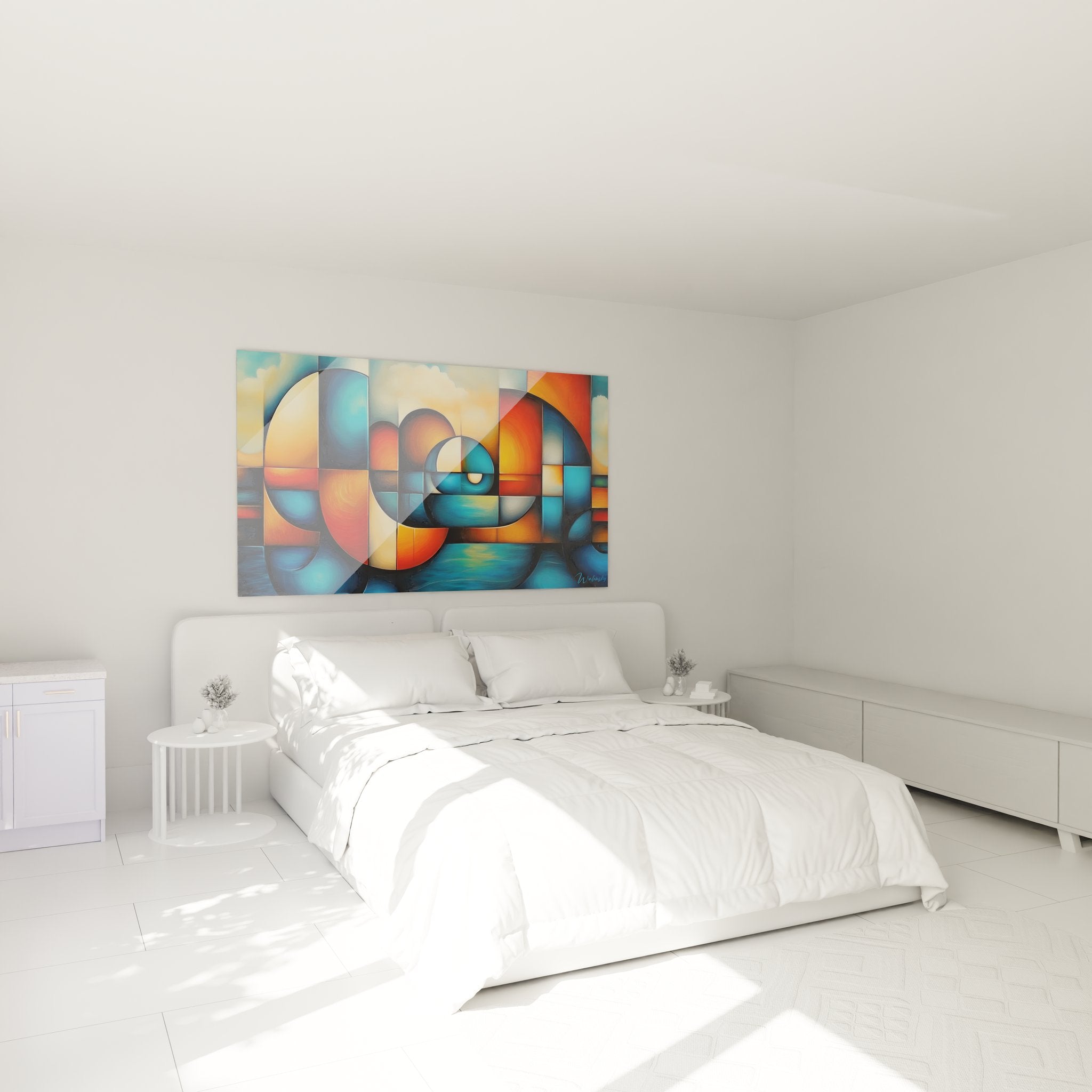
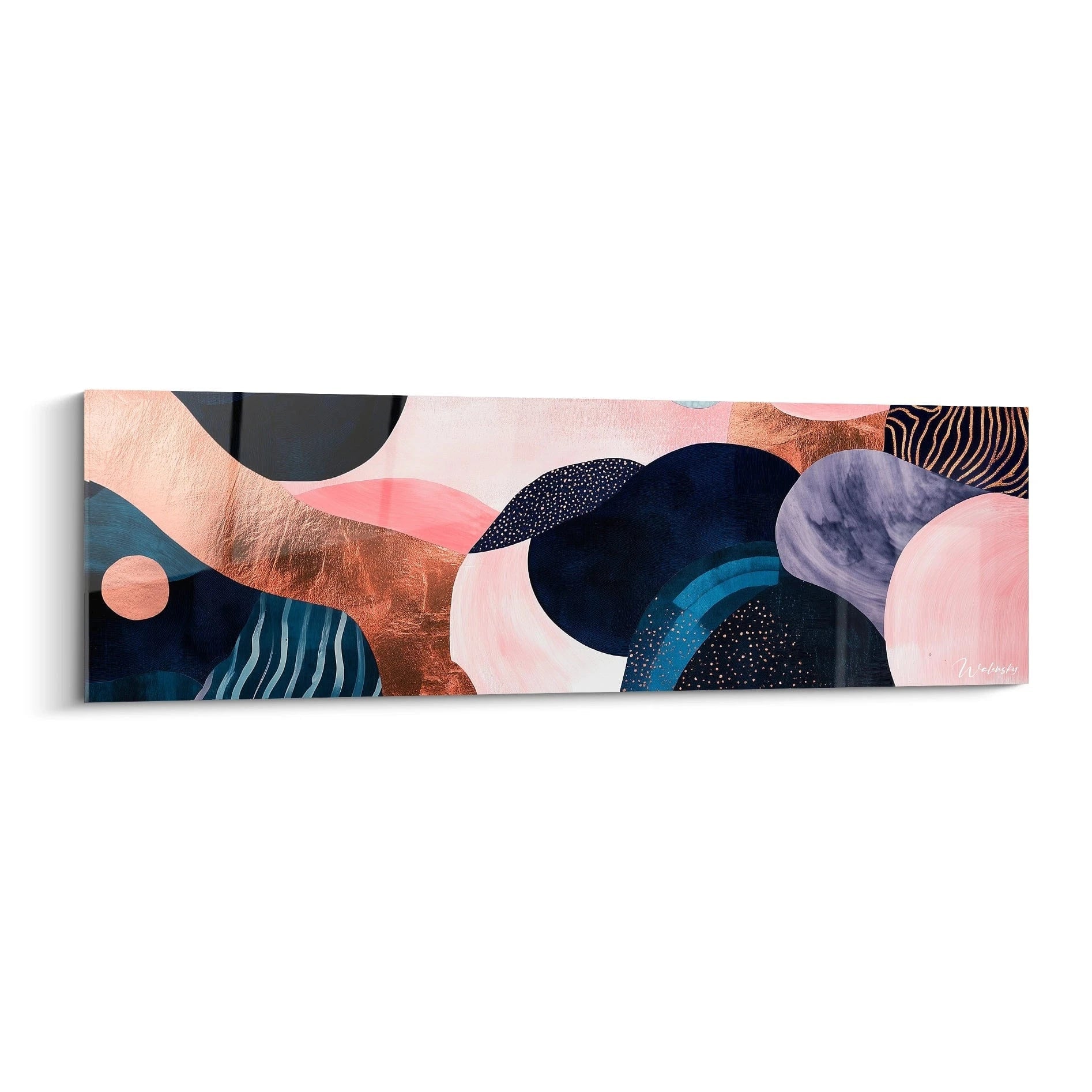
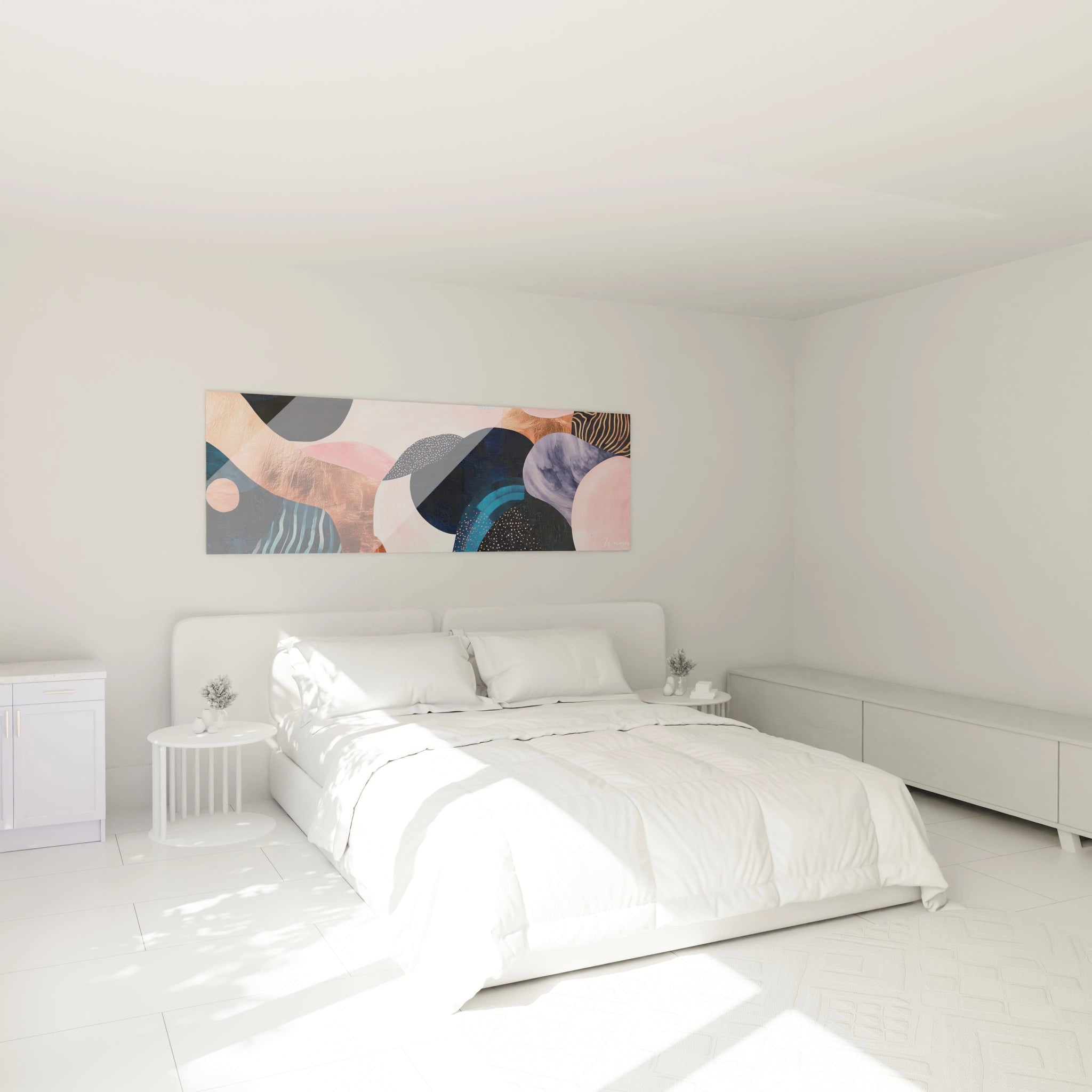
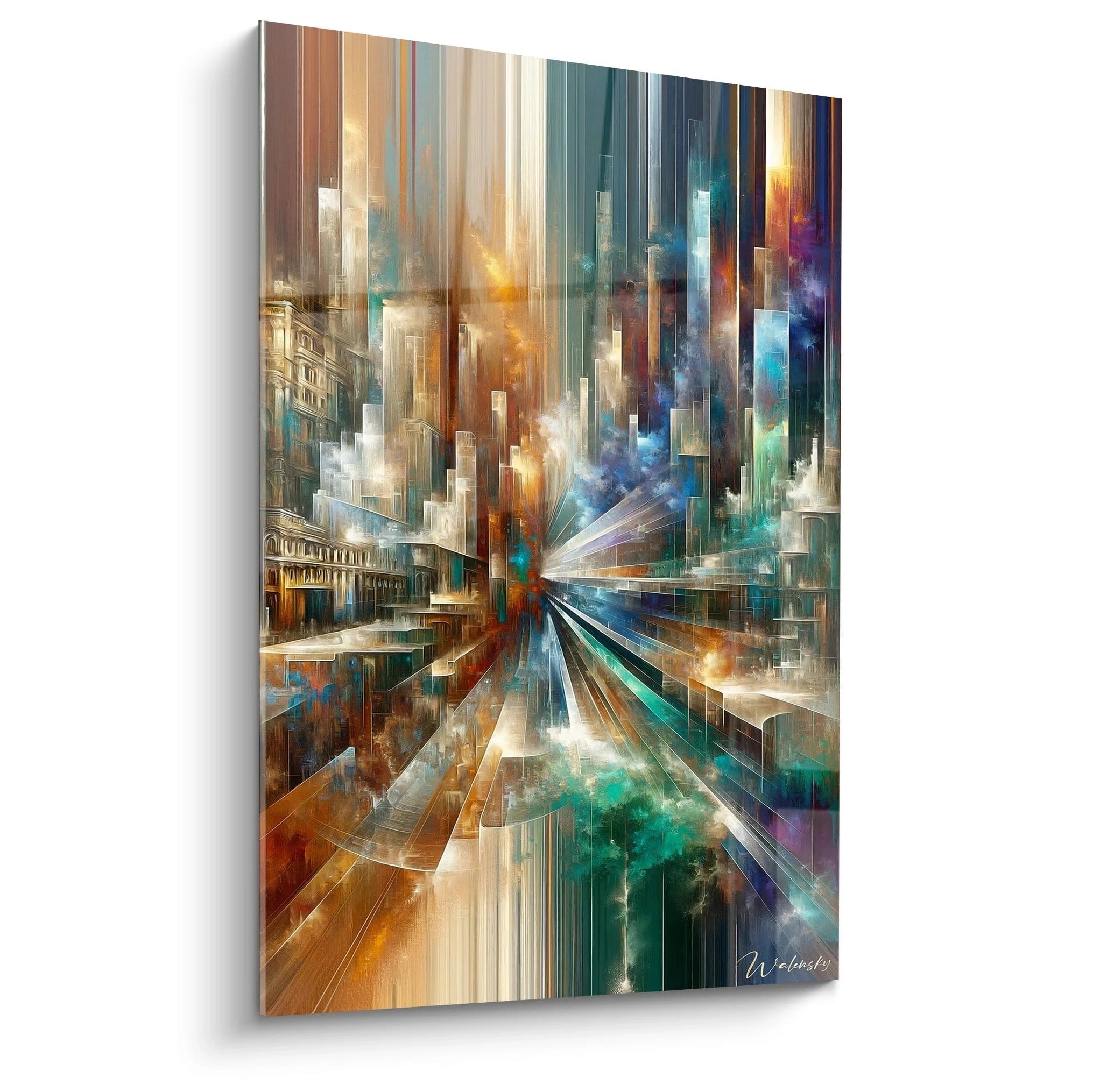
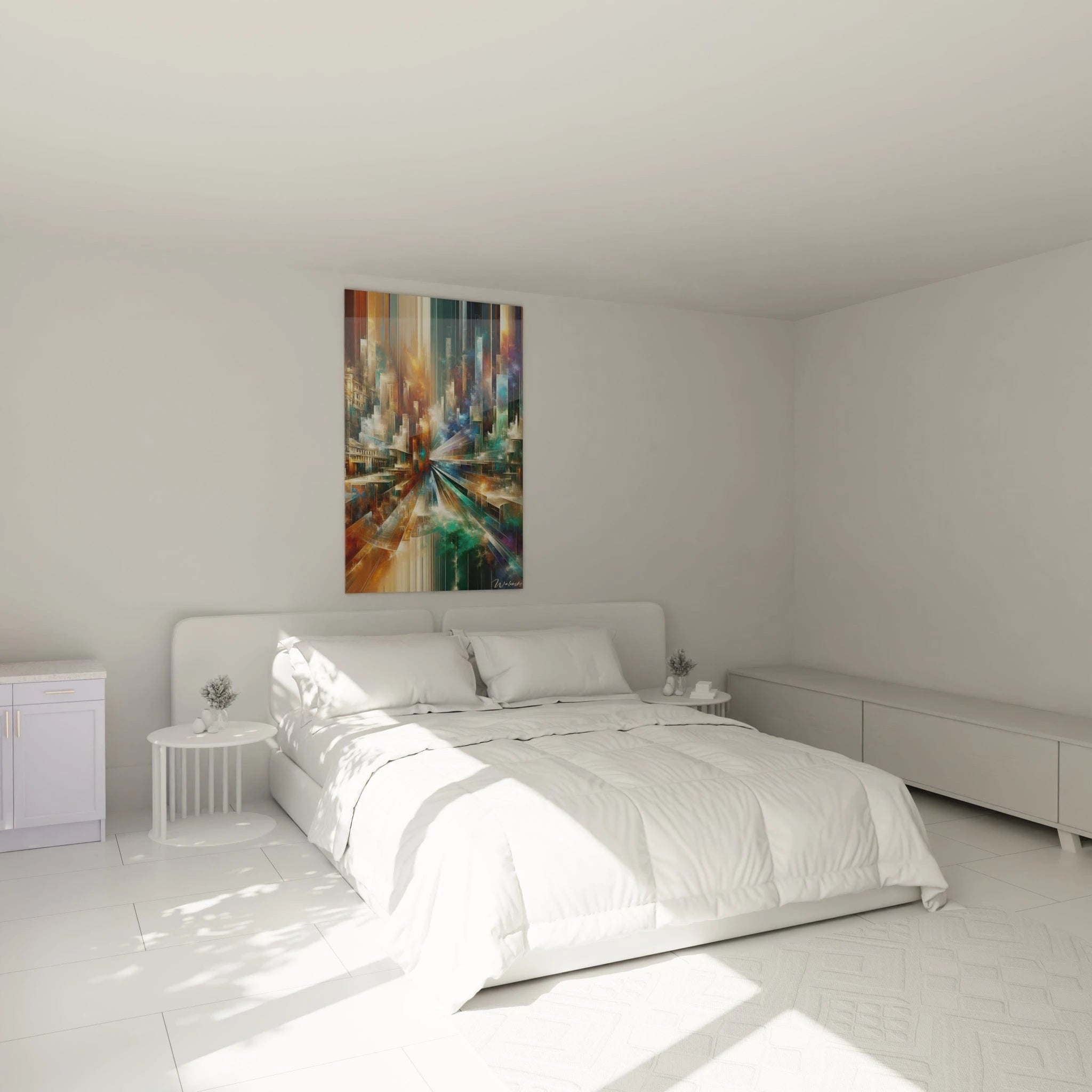
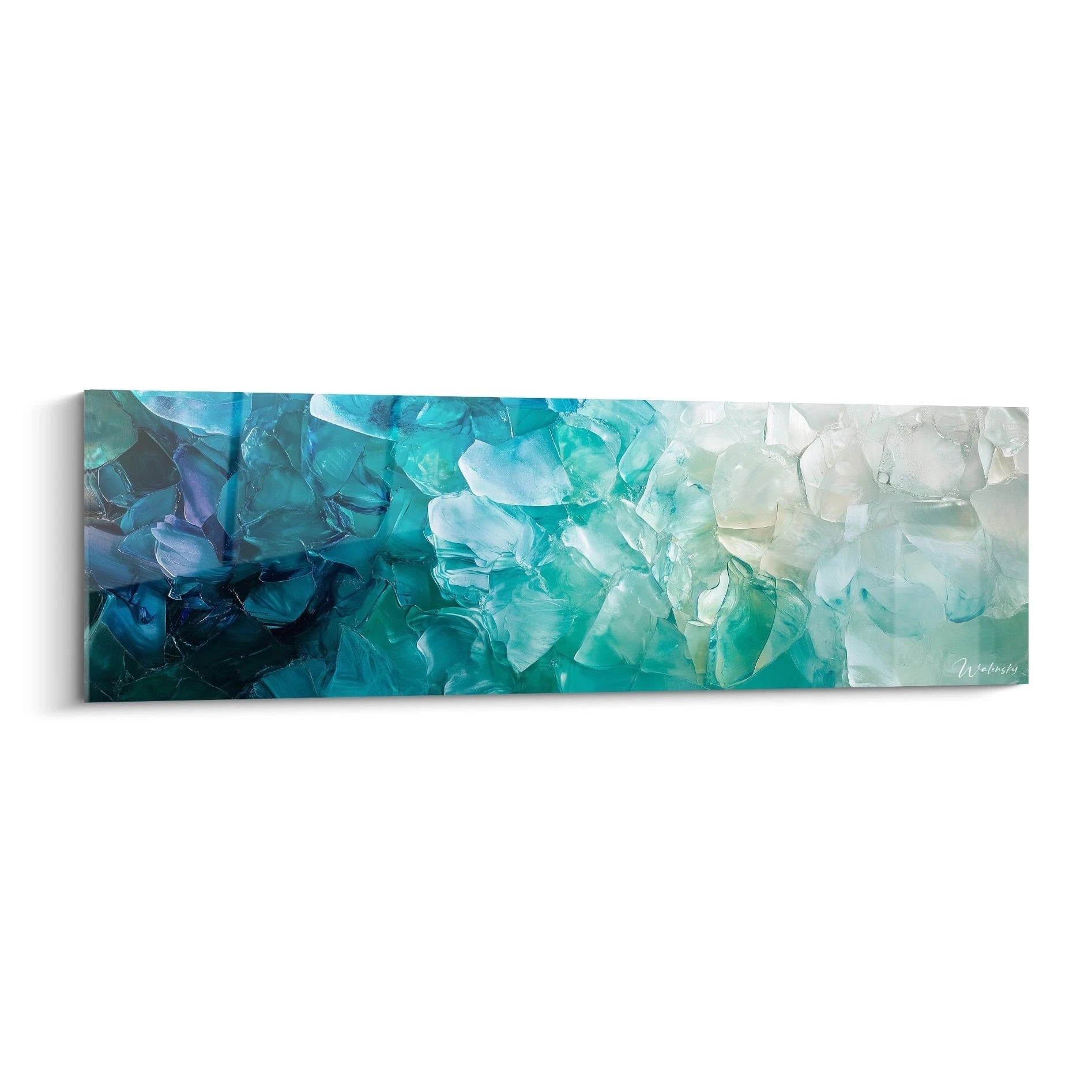
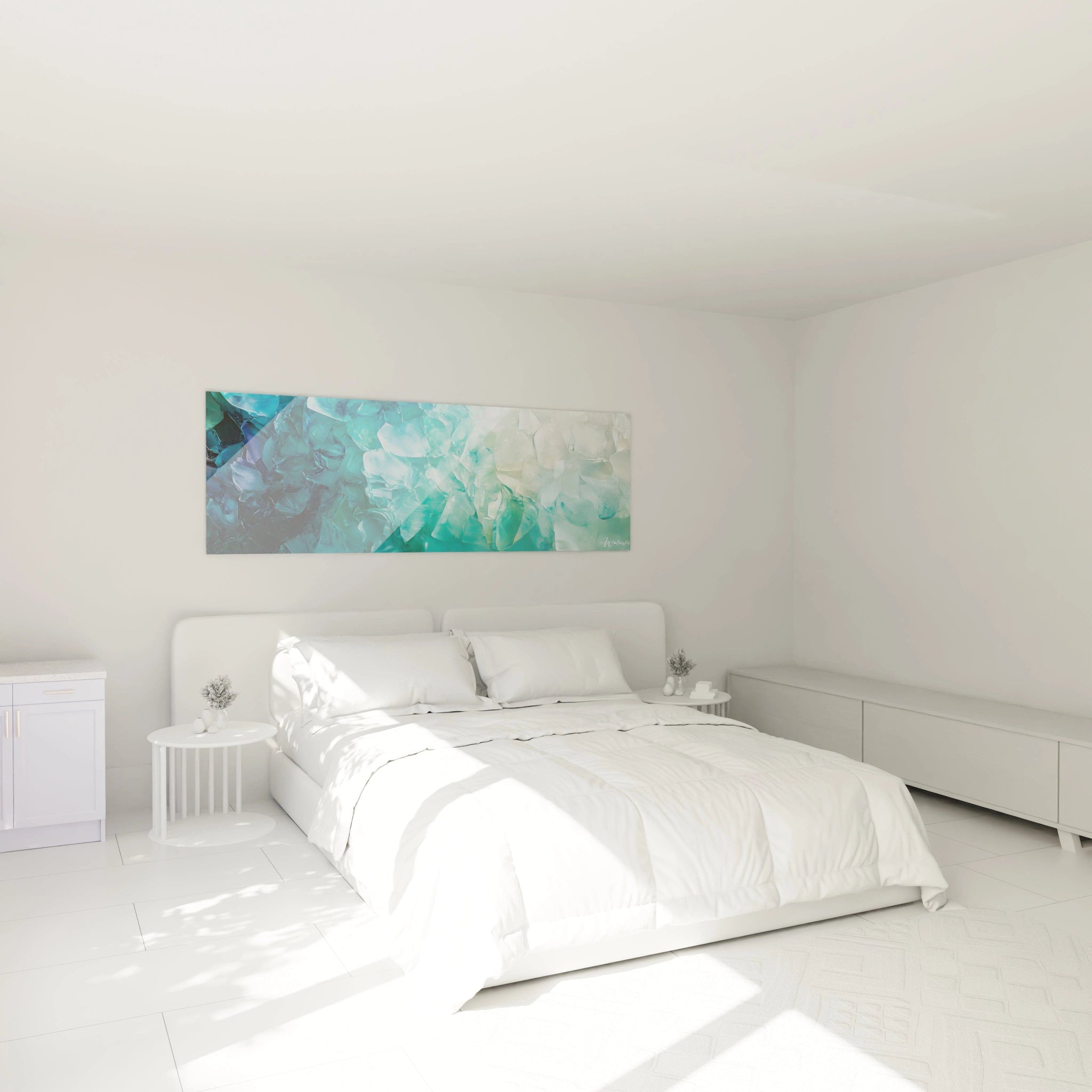
Geometric abstract wall art represents a form of artistic expression where pure geometric forms become the protagonists of a visual composition devoid of figurative reference. These wall art pieces stand out for their ability to transform interior spaces through the mathematical harmony of forms and the precision of angles. Explore our collection of geometric abstract wall art to discover how these creations can metamorphose your interior.
Geometric Abstract Wall Art and Spatial Perception: A Dimensional Exploration
Geometric abstract wall art transcends its two-dimensional nature to become a portal to a fascinating dimensional exploration. These visual compositions play with our perception of space, creating illusions of depth and movement that metamorphose our experience of interior environments.
The illusion of depth in abstract geometric compositions
Creators of geometric abstract wall art master the art of suggesting additional dimensions on a flat surface. Through the skillful use of geometric perspective, overlapping forms, and chromatic gradients, these wall art pieces create fictional depths that seem to extend beyond the physical limits of the wall.
This unique characteristic allows a large-scale geometric abstract wall art piece to radically transform the perception of a restricted space. In urban apartments with limited surfaces, these artworks become dimensional windows that visually expand the lived space.
• Compositions using converging geometric forms create a visual tunnel effect
• Transparent overlays of geometric forms suggest multiple spatial planes
• Precise gradations between adjacent forms simulate three-dimensional lighting variations
• Geometric patterns in trompe-l'oeil generate reliefs perceptible only at the cognitive level
Geometric abstract wall art and visual dynamics
Despite their static nature, geometric abstract wall art pieces induce a perception of movement that energizes interior space. This phenomenon, known as kinetic illusion, stems from the interaction between certain geometric configurations and our perceptual system.
Compositions incorporating repetitive geometric patterns with subtle variations create visual tension that activates our peripheral perception. This phenomenon transforms geometric abstract wall art into a living presence that seems animated by perpetual movement at the periphery of our field of vision.
Transition spaces such as corridors or staircases particularly benefit from these dynamic qualities. Geometric abstract wall art with kinetic properties amplifies the sensation of spatial fluidity and naturally accompanies body movement in these circulation zones.
How does geometric abstract wall art modify the perceived scale of a space?
Geometric abstract wall art possesses the remarkable faculty to recalibrate our perception of spatial proportions. A composition with miniaturized and densely organized geometric patterns can make a room appear larger than it actually is, while oversized geometric forms create unexpected intimacy.
This dimensional manipulation proves particularly valuable in spaces with difficult proportions. A ceiling that is too low seems to rise in the presence of geometric abstract wall art with dominant vertical lines. Conversely, a room that is too tall regains a more comfortable human scale thanks to strategically placed horizontal compositions.
Interior designers exploit these perceptual effects to create spatially balanced environments where geometric abstract wall art becomes an instrument for optically correcting architectural disproportions.
Fragmentation and spatial reconstruction through geometric art
Complex geometric abstract wall art pieces, particularly those inspired by Cubist or Constructivist principles, deconstruct and recombine visual space. This geometric fragmentation offers a perceptual experience that transcends simple observation to become active exploration.
The observer of a multidimensional geometric abstract wall art actively participates, unconsciously, in the mental reconstruction of suggested spaces. This cognitive activation creates a dynamic relationship with the artwork, transforming passive contemplation into perceptual engagement.
In minimalist environments where sensory stimulation is deliberately reduced, these paintings introduce welcome visual complexity that nourishes our innate need for spatial exploration. They become geometric territories to traverse with the gaze, offering an almost architectural experience in their structural organization.
Geometric resonance and unified spatial perception
A carefully selected geometric abstract wall art piece establishes formal resonance with surrounding architectural elements, creating a harmoniously unified spatial perception. This geometric coherence between the artwork and its context amplifies the sensation of spatial balance.
Geometric compositions that subtly echo the architectural proportions of their environment (room height/width ratio, characteristic angles, structural patterns) generate an impression of instinctive rightness, even for the untrained observer.
This dimensional harmonization transforms geometric abstract wall art into a perceptual anchor point that visually stabilizes the entire space. In interiors with multiple visual stimuli, these artworks become organizational poles of perception that clarify the overall spatial experience.