


Geometric Wall Art for Law Office
Artwork for law firm Geometric : our specialized collection transforms your legal spaces into exceptional places. These creations combine the rigor of geometric shapes and sophistication to reflect the professionalism of your firm.Geometric art for lawyers brings structure and visual harmony, creating an atmosphere conducive to concentration. Each modern legal wall decoration enhances your offices with elegance, impresses your clients and inspires confidence.
 Concentric Colored Circles Painting - Geometric Harmony - Abstract Paint Style Edition273,90 €
 Translucent Colored Circles Wall Art - Geometric Symphony - geometric abstract edition273,90 €
 Orange and Blue Circles Painting - Geometric Harmony - geometric abstract edition273,90 €
 Concentric Colored Circles Painting - Geometric Harmony - geometric abstract edition273,90 €
 Overlapping Colored Circles Painting - Geometric Harmony - geometric abstract edition242,90 €
 Dynamic Abstract Geometric Painting - Explosion of Colors - geometric abstract edition242,90 €
 Overlapping Colored Circles Painting - Chromatic Harmony - geometric abstract edition242,90 €
 Abstract Geometric Wall Art - Mondrian Jackson Pollock Fusion - Abstract Geometric Edition242,90 €
 Abstract dynamic composition wall art - Cosmic energy - abstract geometric edition228,90 €
 Multicolor concentric circles wall art - Geometric symphony - abstract geometric edition228,90 €
 Colorful geometric circles wall art - Modern harmony - abstract geometric edition228,90 €
 Colored geometric abstraction painting - Mondrian fusion - geometric abstract edition228,90 €
 Orange circle and geometric shapes painting - Abstract symphony - geometric abstract edition228,90 €
 Overlapping colored circles wall art - Geometric symphony - abstract geometric edition273,90 €
 Abstract colored composition wall art - Geometric symphony - abstract geometric edition273,90 €
 Transparent colored circles wall art - Chromatic symphony - abstract geometric edition273,90 €
 Colorful Abstract Painting - Dynamic Composition - Abstract Geometric Edition273,90 €
 Dynamic Abstract Composition Painting - Geometric Chaos - Abstract Geometric Edition273,90 €
 Overlapping Colored Circles Painting - Geometric Harmony - Abstract Geometric Edition273,90 €
 Silent Arch Teal Wall Art - geometric abstract edition273,90 €
 Luminous Oxidized Abyss Wall Art - abstract geometric edition273,90 €
 Meditative Arches Incandescent Orange Wall Art - Abstract Geometric Edition228,90 €
 Geometric Crossroads Vibrant Artwork - Cubism Abstract Edition228,90 €
 Timeless Mechanical Complexity Canvas - Abstract Geometric Edition273,90 €
Explore further
In Geometric Wall Art for Law Office
-
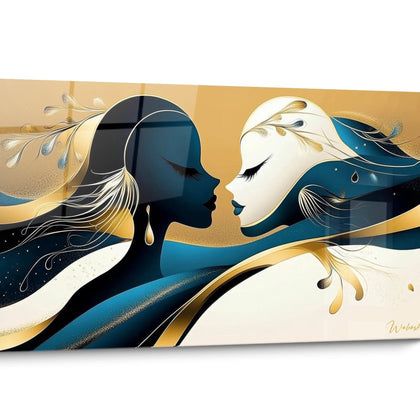 Wall Art for Law Office820
artworks
Wall Art for Law Office820
artworks
-
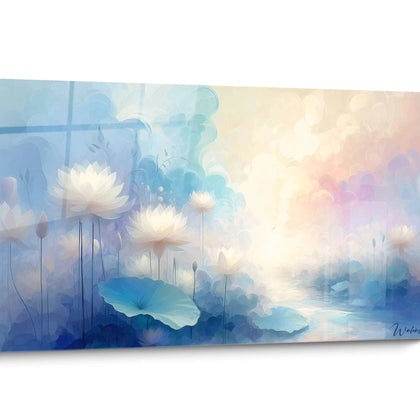 Abstract Art for Lawyer's Office | Professional Wall Art24
artworks
Abstract Art for Lawyer's Office | Professional Wall Art24
artworks
-
 Golden Lawyer Office Wall Art24
artworks
Golden Lawyer Office Wall Art24
artworks
-
 Blue Legal Office Wall Art24
artworks
Blue Legal Office Wall Art24
artworks
-
 Wall Art for Orange Law Office24
artworks
Wall Art for Orange Law Office24
artworks
-
 Multicolor Artwork for Law Office24
artworks
Multicolor Artwork for Law Office24
artworks
-
 Expressionist Law Office Wall Art20
artworks
Expressionist Law Office Wall Art20
artworks
-
 Minimalist Wall Art for Law Office17
artworks
Minimalist Wall Art for Law Office17
artworks
-
 Wall Art for Law Office Music11
artworks
Wall Art for Law Office Music11
artworks
-
 Portrait Painting for Law Office10
artworks
Portrait Painting for Law Office10
artworks
-
 Futuristic Law Office Wall Art7
artworks
Futuristic Law Office Wall Art7
artworks
-
 Spiral Wall Art for Law Office5
artworks
Spiral Wall Art for Law Office5
artworks


All about Geometric Wall Art for Law Office
- Geometric Artwork Presentation
- Geometric Legal Artwork
- Symbolism & Visual Impact
- Selection & Strategic Placement
The legal world demands an aesthetic that reflects rigor, structure, and precision. A geometric artwork for a law firm perfectly embodies these values through visual compositions where lines, angles, and shapes intertwine to create a distinct professional atmosphere. These large-scale wall creations transform legal spaces into environments where mathematical rationality meets artistic expression. Geometric patterns naturally evoke the concepts of justice, balance, and logic that define the practice of law. Unlike conventional wall decorations, these structured compositions immediately establish an impression of methodical professionalism and intellectual organization among clients upon arrival at your offices.
Visual Architecture for Contemporary Legal Spaces
Integrating a geometric artwork for a law firm redefines the spatial perception of modern law offices. Compositions based on hexagonal shapes, complex triangulations, or honeycomb structures create a visual dynamic that stimulates concentration and reinforces professional credibility. These mathematical arrangements generate an impression of rigorous methodology, an essential quality in clients' perception of their legal representation's analytical skills.
How do geometric patterns strengthen the identity of a law firm ?
Geometric structures instantly communicate values of precision and systematization. A law firm specializing in business law particularly benefits from superimposed rectangular compositions evoking corporate organizational charts and contractual structuring. Law firms in criminal law often prefer checkerboard patterns or orthogonal grids suggesting procedural fairness. This correspondence between legal specialization and geometric visual language creates a narrative coherence immediately perceptible by discerning clients.
Color Palette and Geometry in the Professional Environment
Monochromatic geometric configurations in black, slate gray, and off-white establish a sobriety compatible with legal professions' dress codes and etiquette. For law firms seeking a distinctive visual signature, the introduction of Prussian blue, deep burgundy, or emerald green into the geometric segments brings a touch of individuality without compromising the expected seriousness. Large dimensions allow repetitive patterns to create a visual rhythm that naturally guides the eye through reception areas and conference rooms.
Strategic Sizing for Legal Meeting Rooms
In negotiation and mediation spaces, a geometric artwork for a law firm of imposing format functions as a neutralizing visual anchor. Symmetrical compositions psychologically favor the search for balance between opposing parties. Panoramic formats exceeding 150 centimeters create a presence imposing enough to visually balance long conference tables without dominating the conversational space. For those who wish to explore other visual registers, an abstract artwork for a law firm offers a less structured but equally sophisticated alternative.
Symbolic Language of Shapes and Client Perception
Why does geometry particularly resonate in legal environments?
The geometric artwork for law firms functions as a visual metaphor for the legal systems themselves. Lattice structures evoke the interconnectedness of precedents. Logarithmic spiral compositions suggest the increasing complexity of legal arguments. Tessellation arrangements reflect how different articles of law fit together to form a coherent body. This symbolic resonance between artistic form and professional practice is not lost on a clientele often composed of executives, entrepreneurs, and decision-makers accustomed to decoding environmental signals.
Psychological impact of angular versus curved configurations
Geometric patterns with acute angles - triangles, chevrons, irregular polygons - communicate dynamism, assertiveness, and procedural determination. These compositions are particularly suitable for firms specializing in litigation and commercial disputes. Conversely, geometries based on concentric circles, segmented arcs, and oval shapes generate an impression of a collaborative approach, ideal for practices focused on mediation, family law or alternative dispute resolution. The choice between angularity and geometric roundness thus becomes a strategic communication tool for the firm's philosophy.
Geometric gradients and visual hierarchy
Compositions where geometric shapes progress from largest to smallest create a sense of architectural depth in the often constrained spaces of urban law firms. This variable scale technique captures attention without aggression, maintaining visual interest during inevitable waiting periods. Isometric grid arrangements bring an almost architectural dimension that harmoniously dialogues with legal libraries, columns of law compendiums, and the typical vertical structuring of law offices.
Which geometric patterns avoid decorative trivialization?
To distinguish yourself from generic decorative solutions, prioritize multi-layered geometric compositions where multiple systems of shapes overlap with variable transparency. Arrangements based on the golden ratio or the Fibonacci sequence bring a subtle but perceptible mathematical sophistication. Patterns inspired by crystallography or molecular structures create a scientific aesthetic compatible with the analytical approach to law. These choices elevate the geometric artwork for law firms beyond simple ornamentation to make it an intellectual statement.
Acquisition and Optimal Positioning Strategies
Selection criteria for sustainable investment
Acquiring an artwork for law firms represents an investment in the firm’s long-term visual identity. Prioritize compositions whose geometric complexity remains legible even at a distance, ensuring their effectiveness in both vast reception halls and close-ups during meetings. Works combining two-dimensional geometry and three-dimensional relief effects offer a visual richness that maintains interest during repeated exposures. The durability of pigments becomes critical in brightly lit spaces typical of premium office buildings.
Positioning according to professional circulation flows
In reception areas, position geometric compositions facing the main entrance to immediately establish the methodical nature of the firm. Corridors leading to partner offices benefit from geometric sequences creating a visual progression. Waiting rooms require compositions complex enough to visually engage without excessively distracting. Avoid placement behind workstations where repetitive patterns could generate visual fatigue for personnel exposed daily.
Coordination with traditional legal furniture
The geometric artwork for law firms naturally dialogues with dark wood furniture, lacquered finishes, and brushed metal surfaces characteristic of high-end law offices. Clean geometric compositions visually compensate for the density of libraries filled with bound volumes. In contemporary spaces with minimalist furniture, opt for more complex and colorful geometries that bring the necessary visual density without compromising the modernity of the whole.
How to evaluate the return on aesthetic investment?
Beyond immediate aesthetics, consider the geometric artwork ’s contribution to the memorability of the firm. Clients remember visually distinctive environments more readily, indirectly reinforcing brand recall. Professional photographs incorporating these works significantly enrich marketing materials and institutional profiles. For firms regularly receiving international delegations, geometric compositions offer a universal visual language transcending cultural barriers, unlike regional or figurative artistic references.
What size of geometric artwork for law firms is suitable for standard reception areas?
For reception areas measuring between 25 and 40 square meters, prioritize formats between 120 and 180 centimeters wide. This dimension ensures a substantial visual presence without saturating the space, while remaining proportionate to the reception furniture and the firm’s signage.
Do geometric patterns work in classic style law firms?
Absolutely. Geometries in monochrome black and white or sepia palettes blend harmoniously into traditional environments. Patterns inspired by parquet floors, architectural rosettes, or classic ironwork establish a bridge between geometric modernity and aesthetic heritage.
How does a geometric artwork for law firms influence the client’s first impression?
Structured geometric compositions immediately communicate organization, intellectual rigor, and a methodical approach. This initial visual impression reinforces confidence in the firm’s analytical capabilities even before the first verbal interaction, establishing a significant psychological advantage in the advisory relationship.


