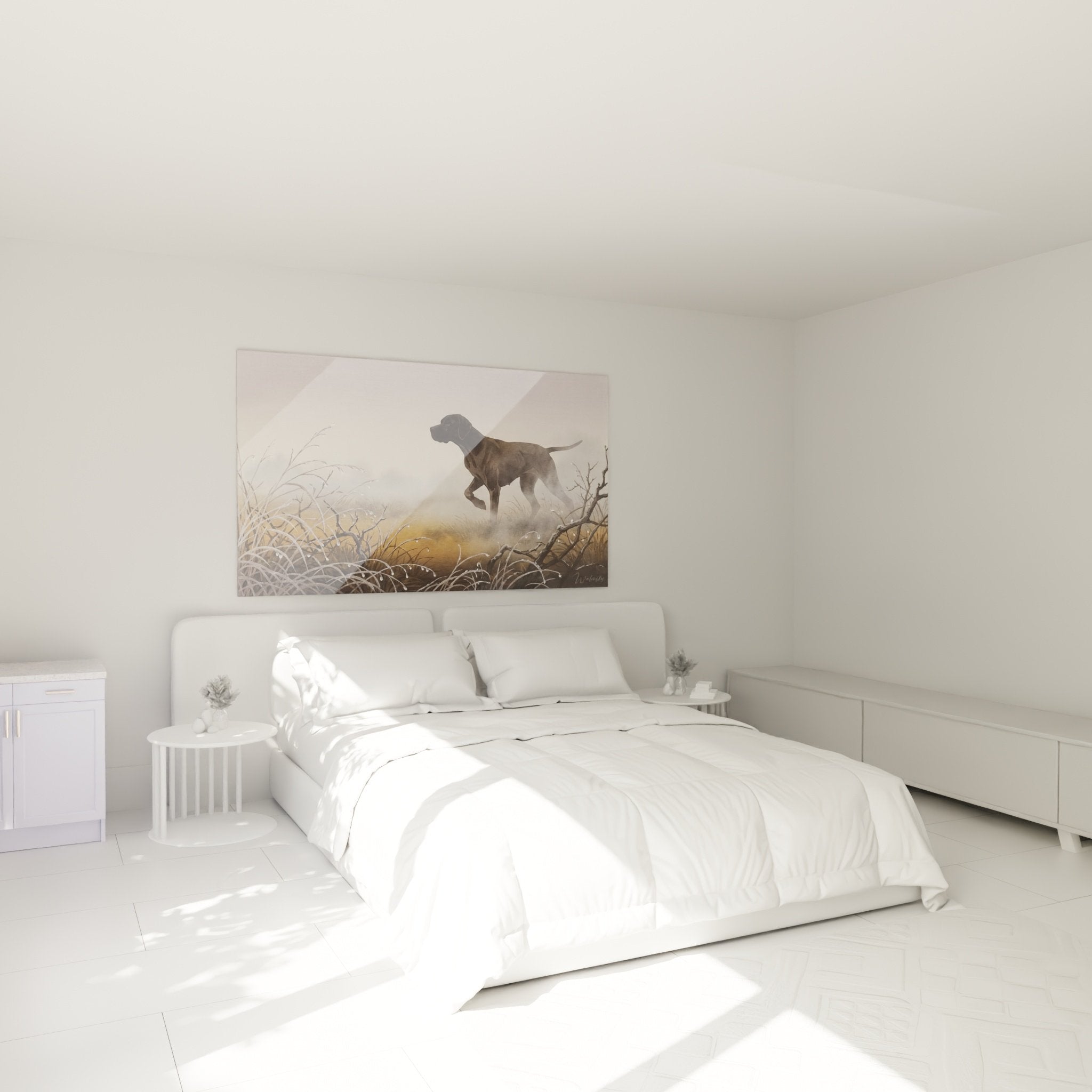
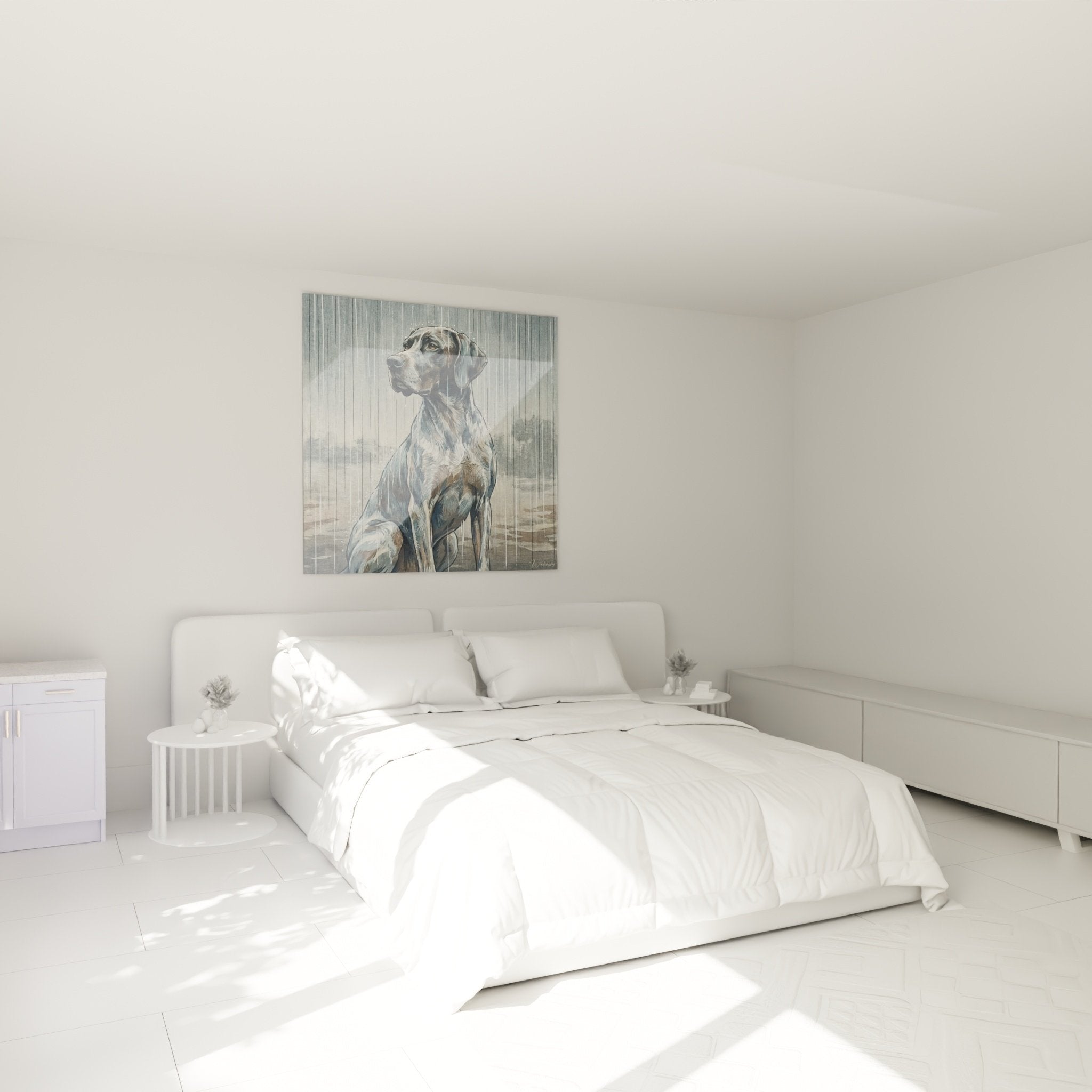
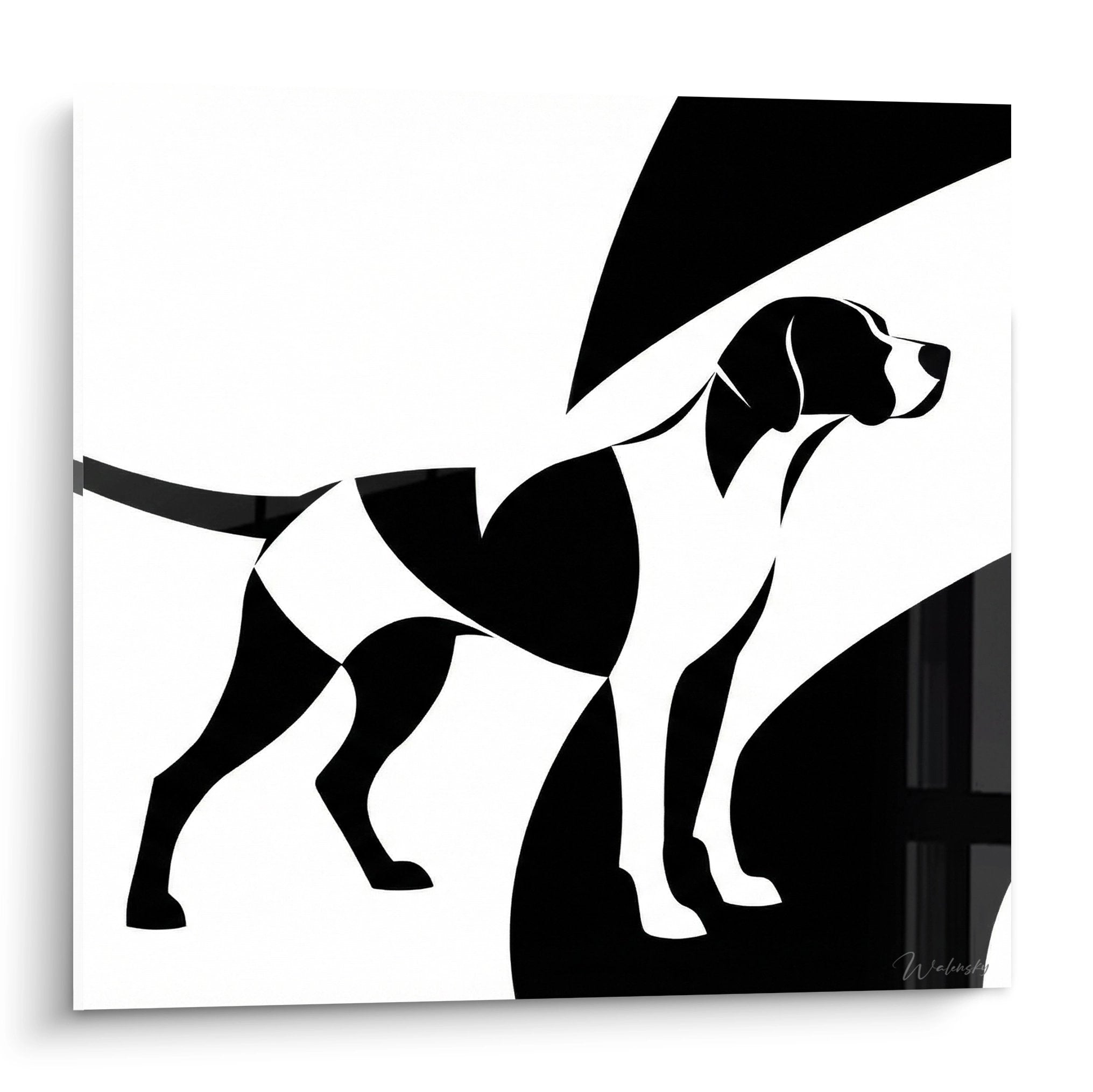
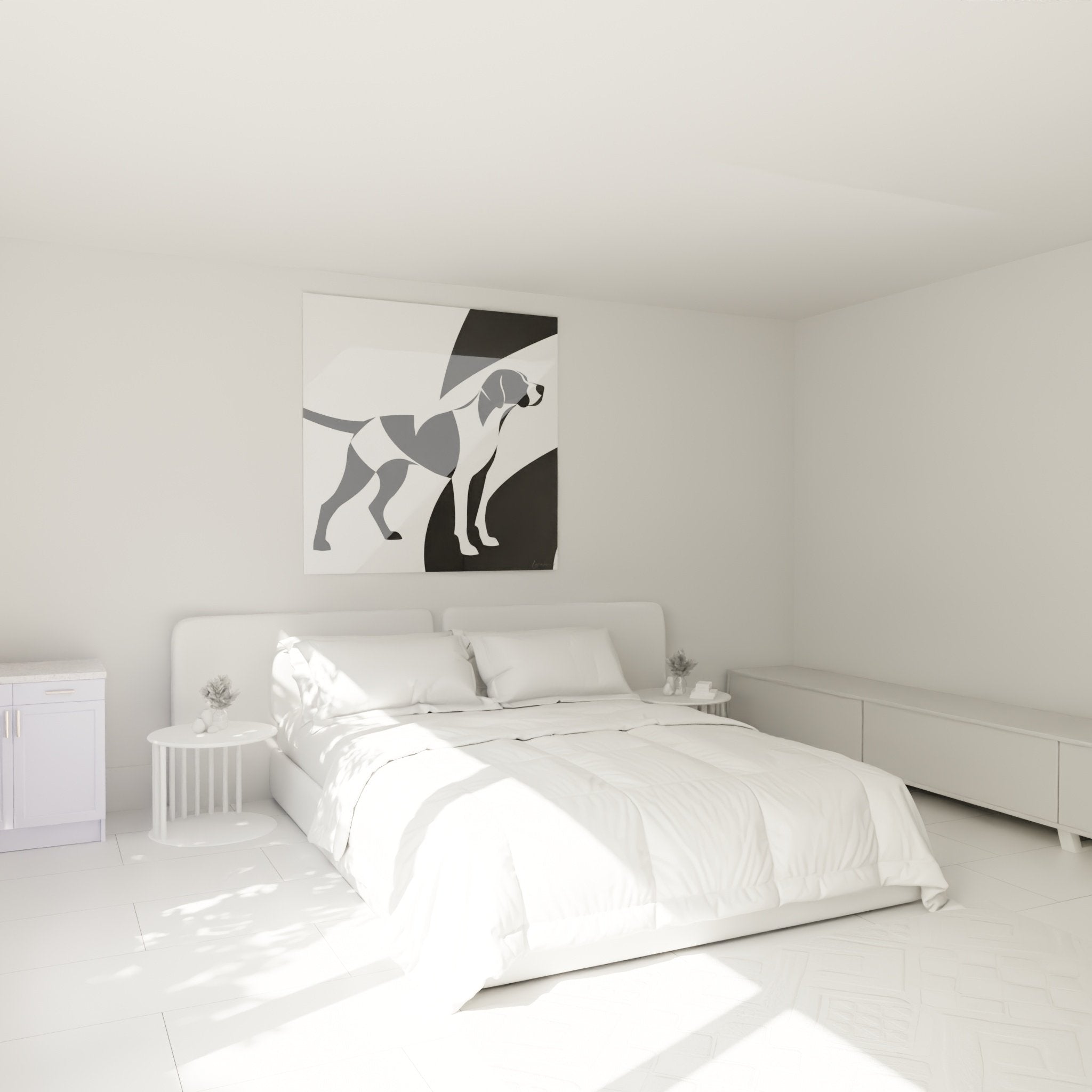
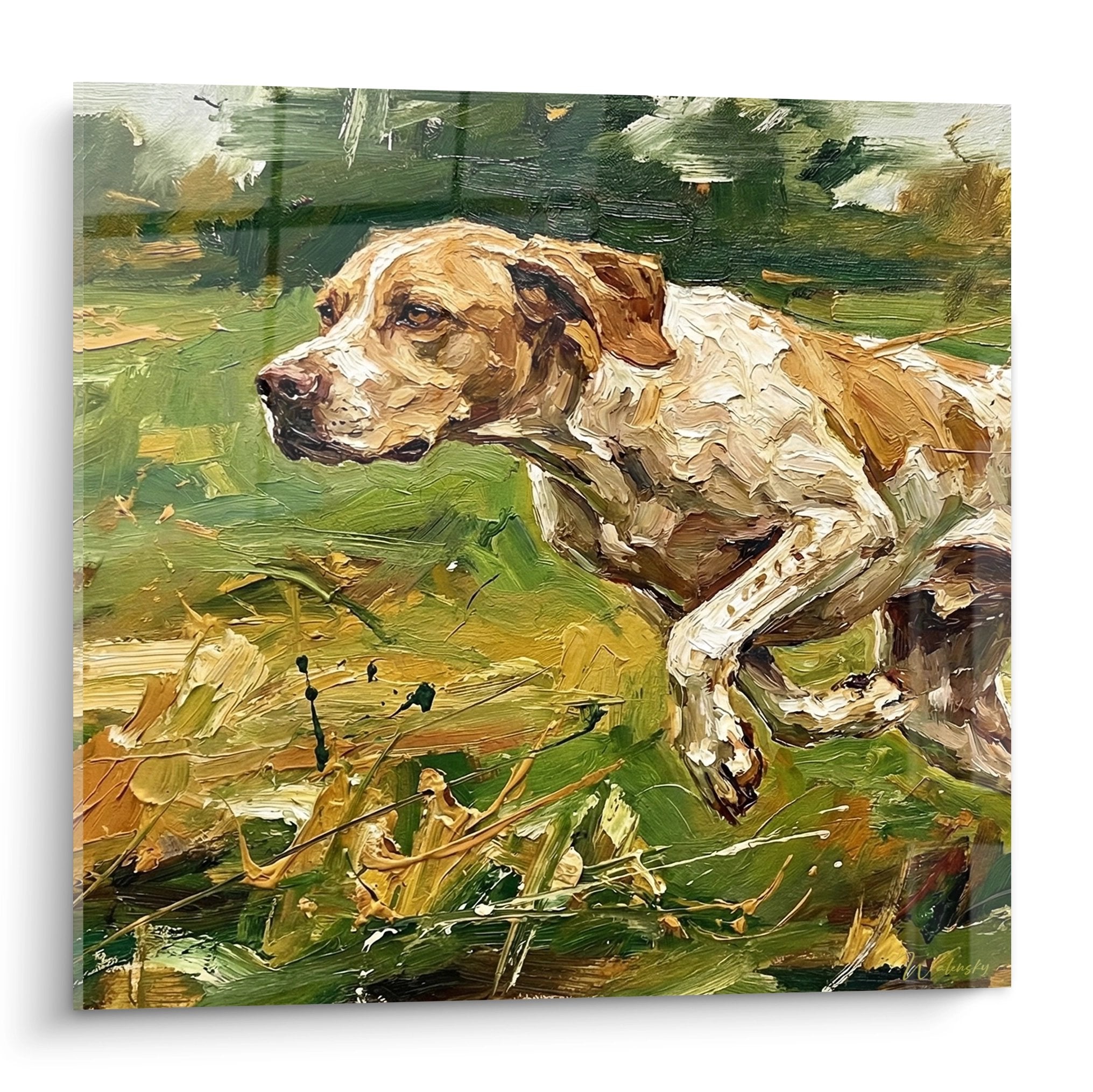
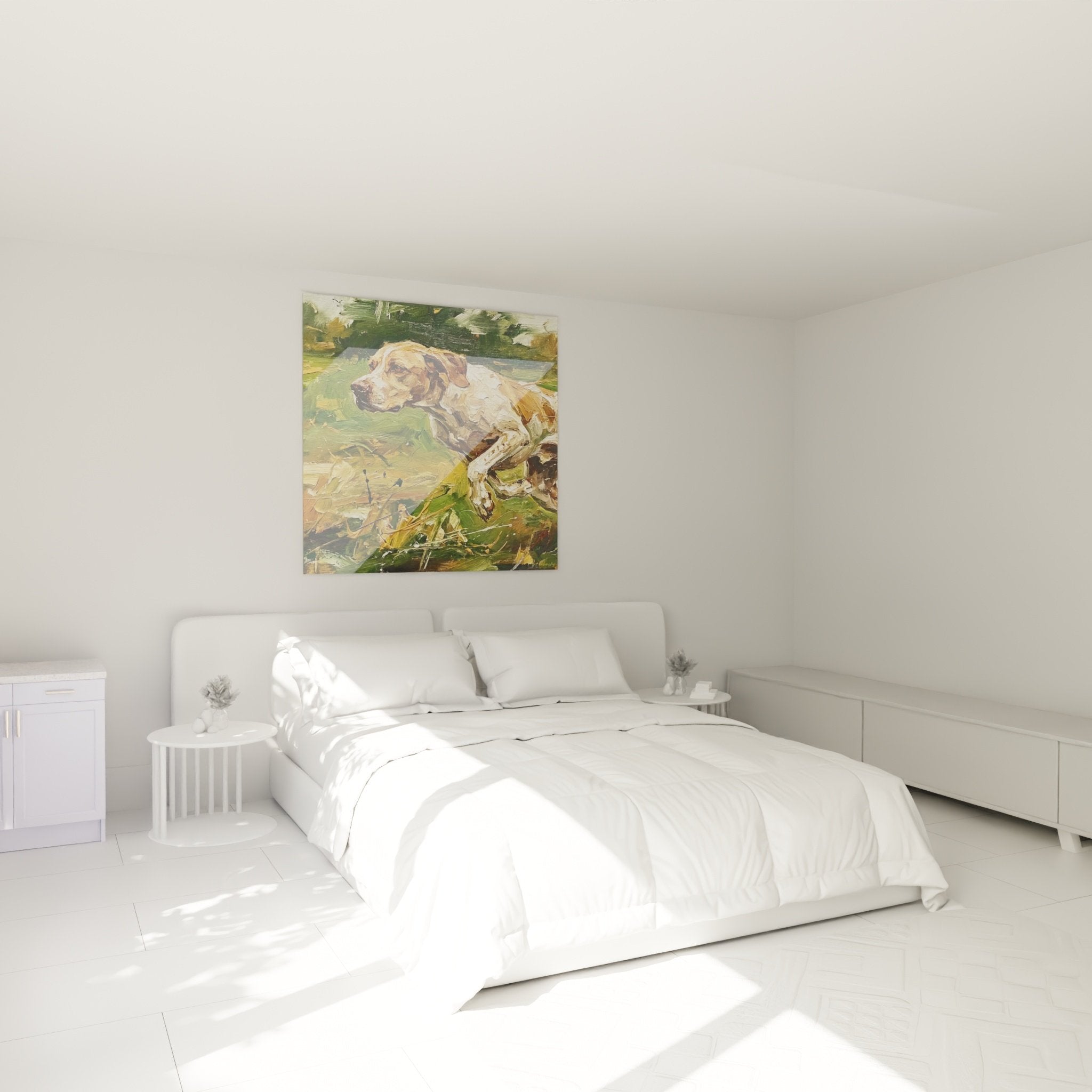
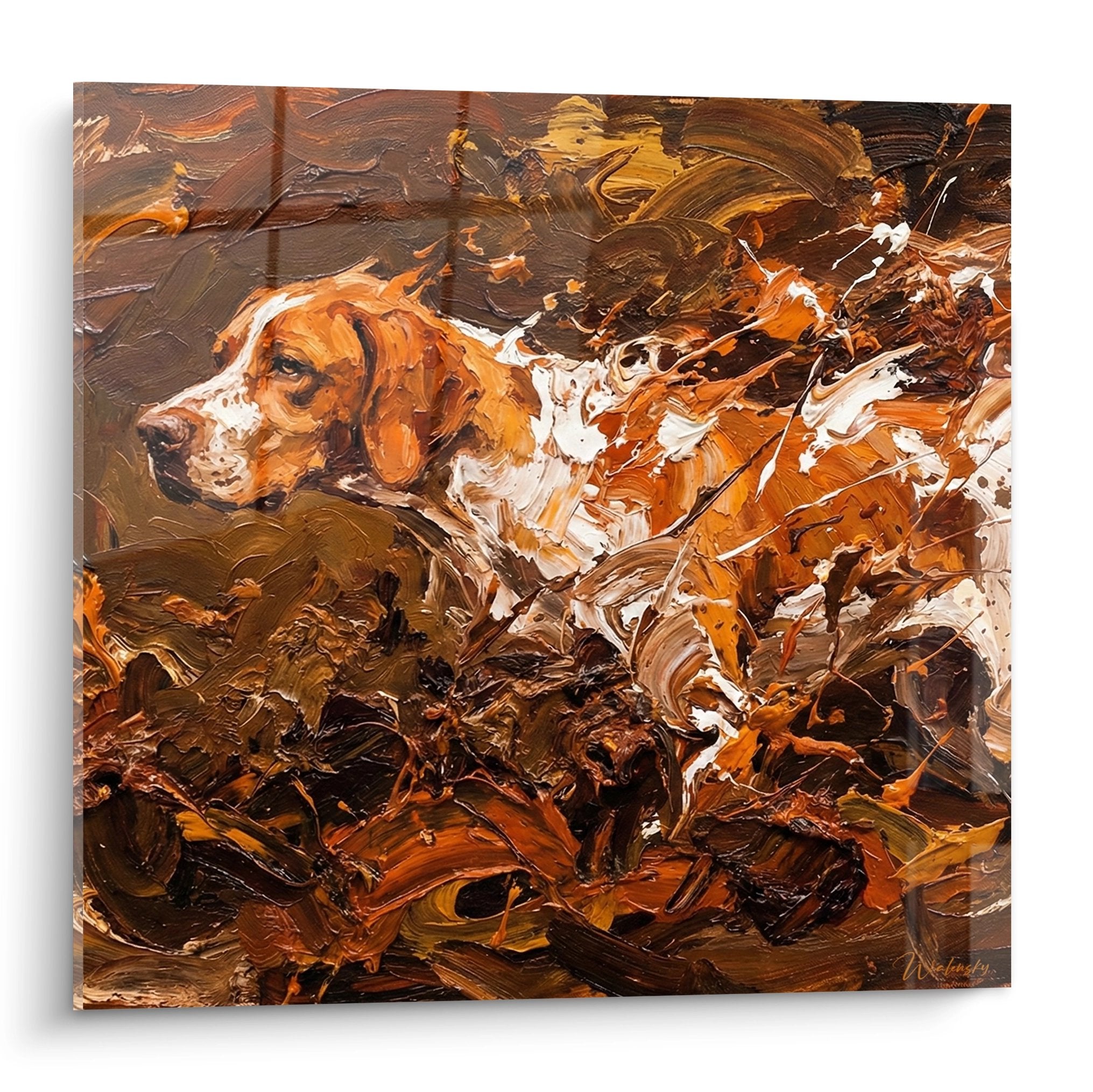
The English pointer painting represents one of the most emblematic dog breeds in the British hunting tradition. This artistic representation captures the very essence of the pointer, the quintessential pointing dog, recognized for its proud head carriage, slender silhouette and legendary hunting instinct. Our large-format wall creations celebrate this aristocratic breed through visual compositions that magnify the characteristic pointing posture, a suspended moment where the animal freezes in absolute concentration. These works dedicated to the English pointer naturally find their place in refined interiors that value European canine heritage, dwellings with British atmospheres or contemporary spaces seeking a distinctive touch of canine elegance.
The Aristocracy of the English Pointer in Wall Decoration
The English pointer painting embodies the quintessence of British canine elegance, a breed developed in the 17th century for hunting game birds. Unlike representations of other breeds, the pointer stands out for its elongated athletic morphology, its characteristic square muzzle and that tail held horizontally in perfect continuation of the dorsal line. Our large-format compositions exploit these unique proportions to create captivating visual dynamics that naturally draw the eye toward the focal point of the room.
Why does the English pointer fascinate so much in wall art?
The iconic pointing posture of the English pointer constitutes a visual element without equivalent in the canine universe. This tense stillness, where the animal points at game with a raised front paw, creates exceptional dramatic tension on a wall surface. Authentic representations capture this precise moment where every muscle contracts, attention crystallizes and energy accumulates before action. This instinctive gesture offers a naturally well-balanced triangular composition.
The distinctive attributes of the pointer in wall compositions
The coat of the English pointer presents specific color variations that considerably influence decorative impact: bicolor patterns of lemon and white, orange and white, liver and white or black and white create powerful visual contrasts. These spotted pigmentations generate graphic richness exploitable in different decorative registers. The short, glossy coat of the pointer reflects light differently from long-haired breeds, producing smooth and silky texture effects that harmonize seamlessly in refined interiors.
British hunting heritage as a decorative element
For enthusiasts of equestrian traditions and British countryside culture, the English pointer painting immediately evokes Scottish highlands, English rural estates and the Victorian gentleman-hunter universe. This cultural symbolism considerably enriches the narrative dimension of the wall artwork. In a library living room with dark woodwork, a professional office seeking a distinguished atmosphere or a dining room with defined character, these representations instantly establish a refined British heritage ambiance. The collection of dog paintings offers various breeds, but the pointer remains the privileged incarnation of English canine aristocracy.
The Technical and Behavioral Dimension of the Pointer in Visual Composition
How do the specific proportions of the pointer structure wall space?
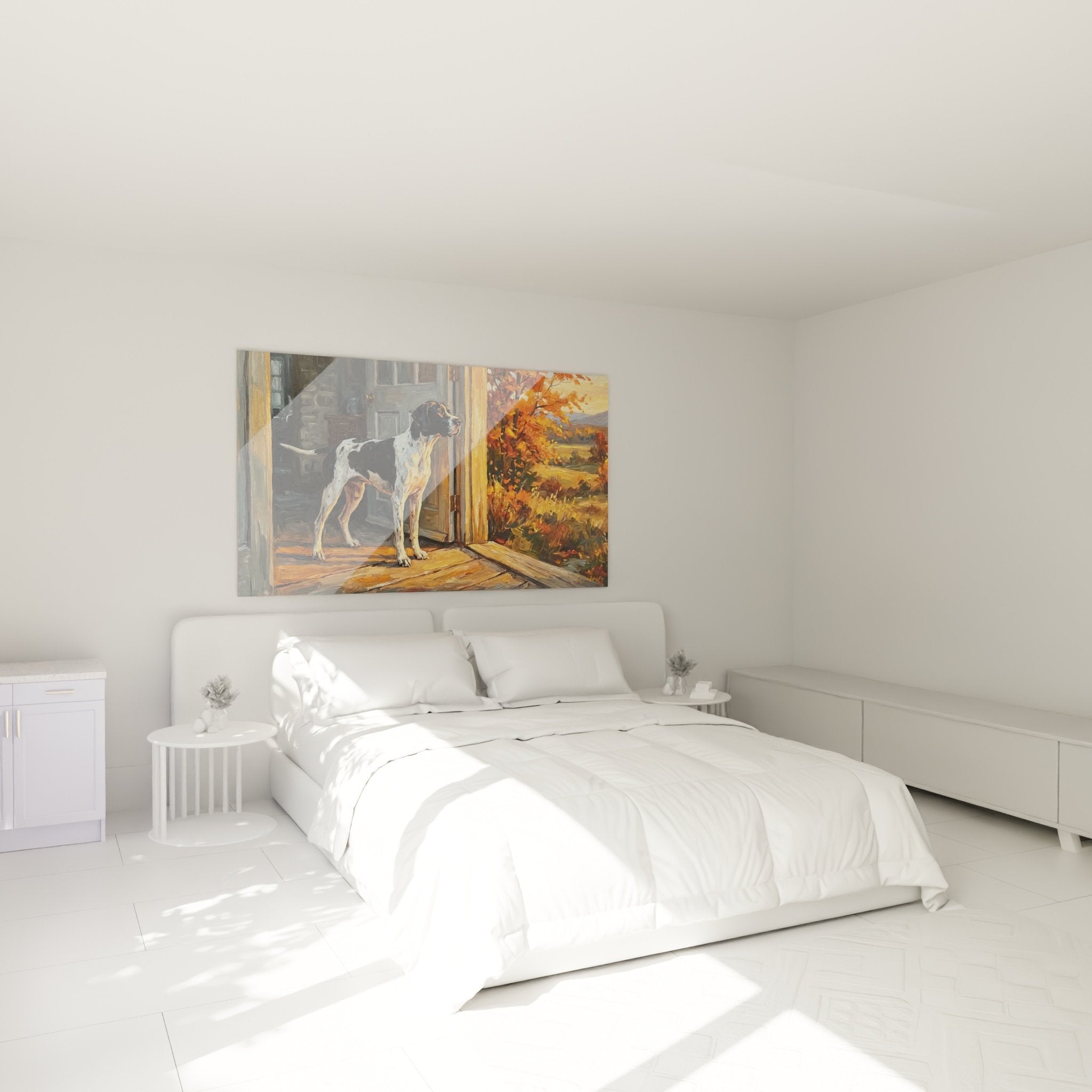
The English pointer painting benefits from a major compositional advantage: the exceptional length-to-height ratio of this breed. With a silhouette that fits naturally into a panoramic rectangle, the pointer is ideally suited to elongated horizontal formats that enhance spaces above sofas, consoles or bed headboards. This slender morphology generates lateral dynamics that guide the eye along the horizontal axis, creating an impression of amplitude particularly sought after in rooms with contained volumes.
The thin, muscular limbs of the pointer, its graceful neck extended by a head carved with pure lines constitute graphic elements that stand out clearly from the background. This clarity of contours facilitates visual reading even from a distance, an essential quality for large-format wall compositions intended to be appreciated from different viewpoints in the room. The absence of voluminous coat avoids the blurred areas that characterize representations of Nordic breeds or long-haired shepherds.
The canine psychology of the pointer translated into decorative emotion
Beyond physical aesthetics, the English pointer is characterized by a balanced temperament combining liveliness and nobility, independence and loyalty. These behavioral nuances transpire in authentic artistic representations that capture the intensity of the gaze, mental concentration and that natural dignity inherent to the breed. A successful painting conveys this lively intelligence without excessive nervousness, this determination without aggression, creating a wall presence that is both dynamic and soothing.
The natural environments of the pointer as narrative backgrounds
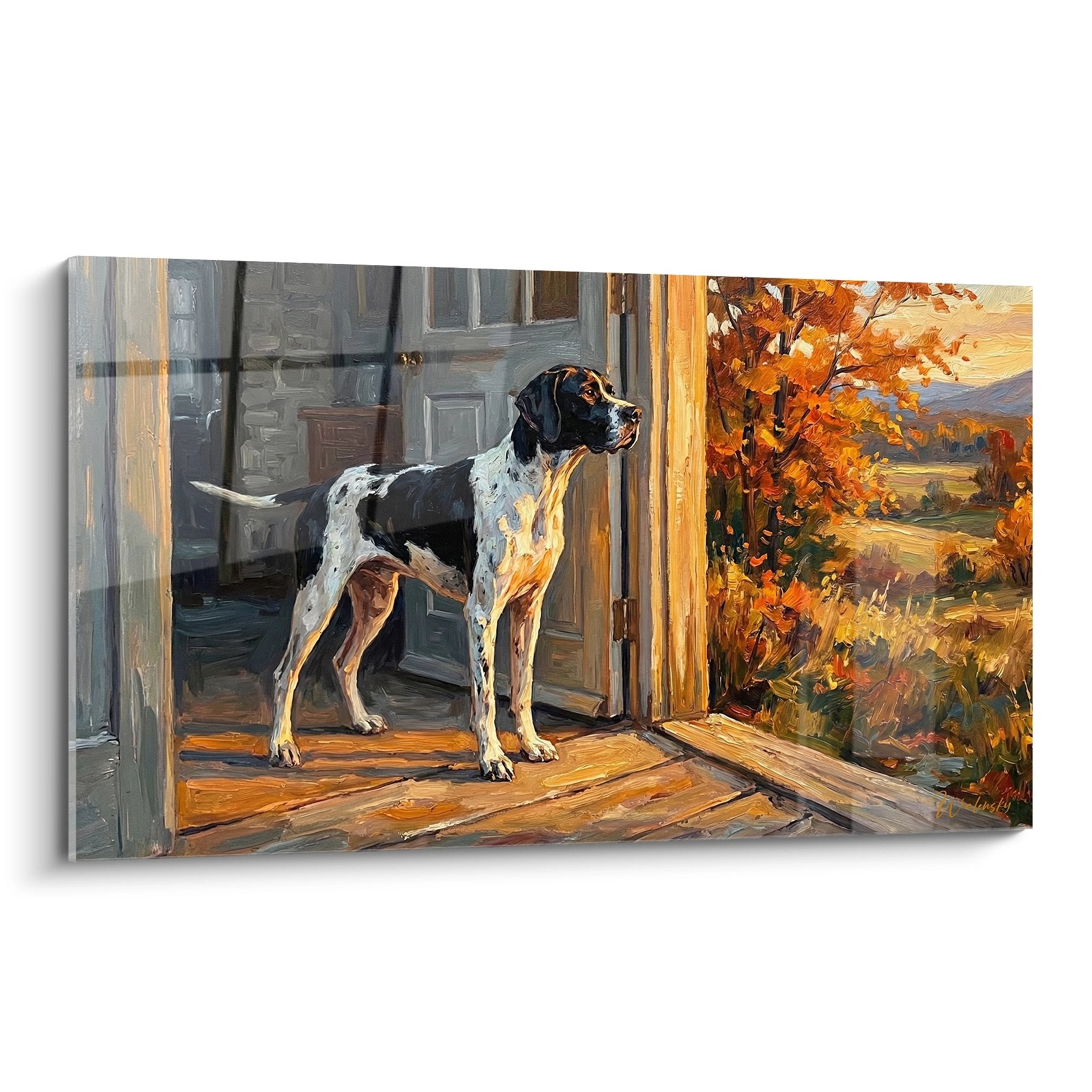
The settings associated with the English pointer offer a specific visual palette: British heathlands in ocher and purple tones, heather fields under cloudy skies, stubble landscapes after harvest in golden tones. These rural backdrops introduce earthy and autumnal color palettes that naturally harmonize with interiors utilizing noble materials such as patined leather, tweed, aged wood or natural stone. This environmental coherence reinforces the authenticity of the composition and facilitates its integration into contemporary rustic decors or neo-classical atmospheres.
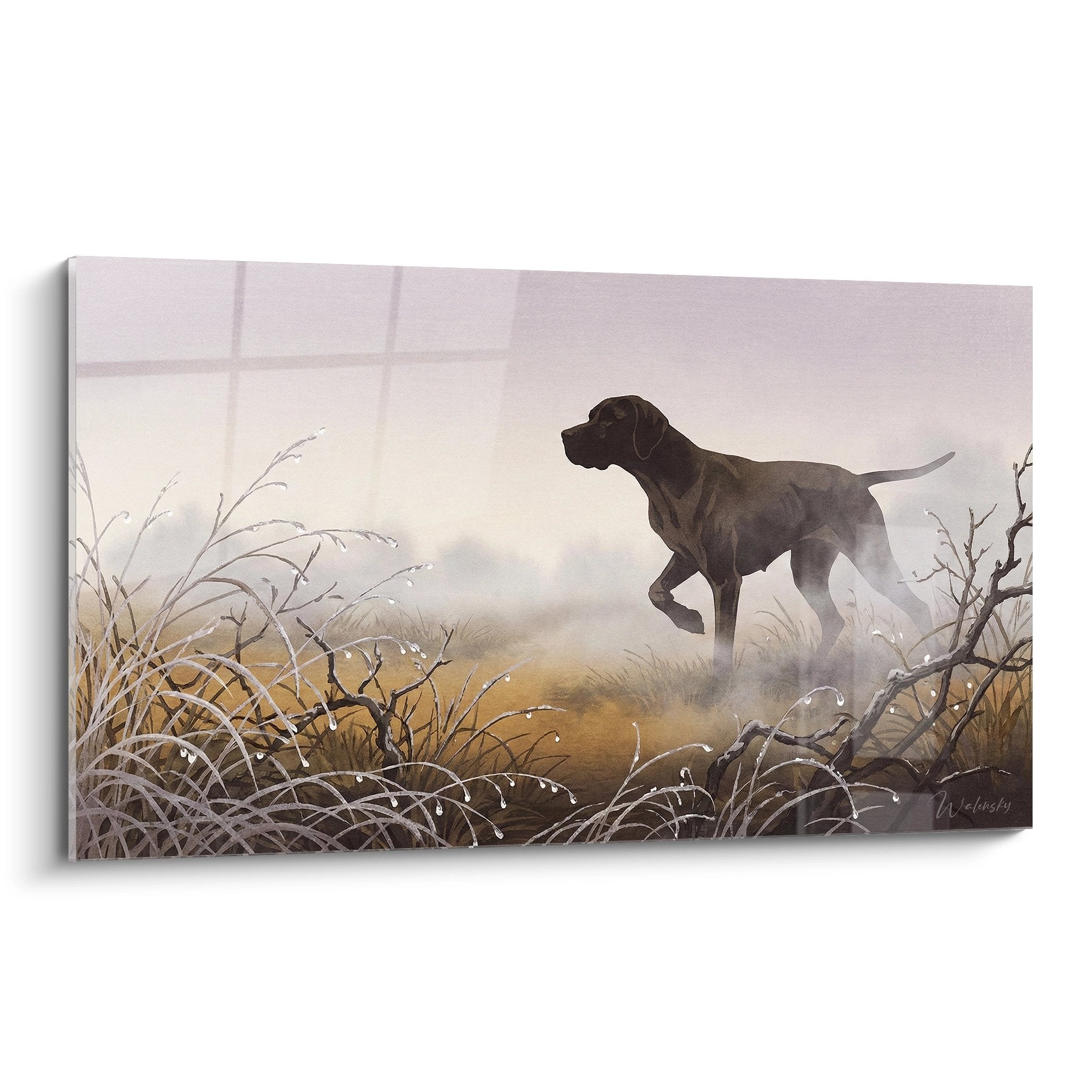
Compositions showing the pointer in action in its natural element generate narrative depth absent from static studio portraits. They evoke movement, the original function of the breed and create a visual window toward romantic British landscapes, transforming the wall into an imaginary portal to these traditional hunting territories.
Strategies for Integrating the English Pointer Painting in Contemporary Spaces
Which decorative universes particularly value the English pointer painting?
The English pointer painting finds its maximum relevance in several specific decorative contexts. Updated English manor-style interiors, where antiques and contemporary design blend, naturally welcome these aristocratic canine representations. Refined masculine spaces – private offices, smoking rooms, personal libraries – particularly benefit from the virile and sporty symbolism associated with the pointer. Renovated rural properties, converted barns or restored farmhouses also create coherent architectural dialogue with British hunting imagery.
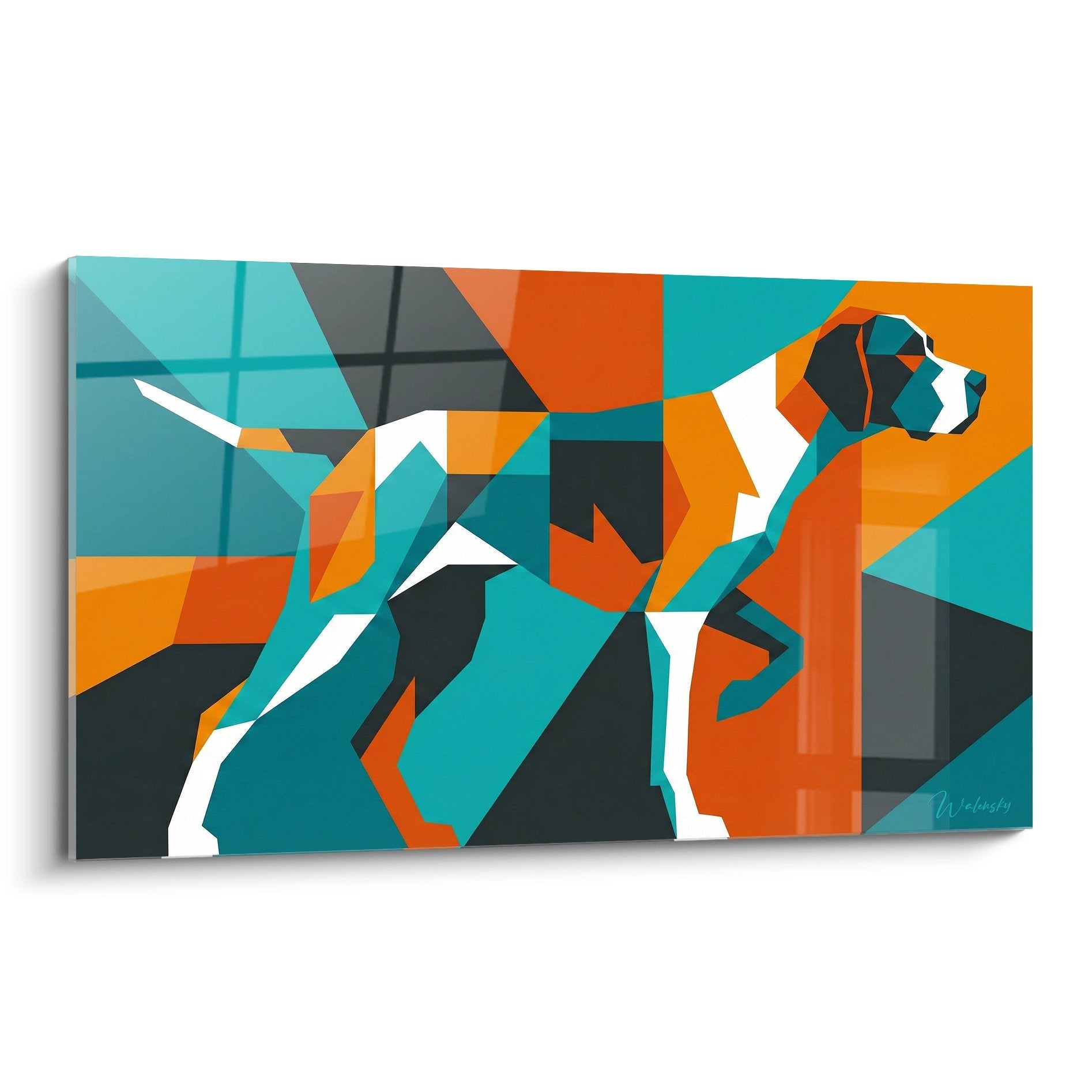
In contemporary registers, the minimalist approach paradoxically values the pointer: its streamlined silhouette, pure lines and graphic allure integrate harmoniously in stripped-down interiors, where the wall artwork becomes the main visual punctuation. Modern stylistic treatments – vector outlines, contrasting color blocks, geometric compositions – modernize traditional iconography while preserving immediate breed recognition.
Complementary decorative associations with the English pointer
The visual universe of the pointer is enriched by connected decorative elements that reinforce thematic coherence. Vintage equestrian accessories (stirrups, antique bits), antique mapping of British hunting regions, natural cervid horns or collections of leather-bound hunting books constitute relevant narrative complements. Textiles with hunting motifs (houndstooth, tartan, tweed) establish chromatic and textural echoes with the natural tones present in pointer representations.
Monumental format as a presence amplifier
Generous dimensions maximize the visual impact of the English pointer by revealing the fine anatomy of the breed – musculature prominent beneath taut coat, veins visible on limbs, expressiveness of the gaze. This monumental scale transforms the representation into a true immersive window, creating an almost physical cohabitation with the animal. In spacious volumes with high ceilings – converted industrial lofts, cathedral-like living rooms, imposing entry halls – these formats affirm a structuring decorative presence that visually anchors the space.
Can you integrate an English pointer painting into modern decoration without rustic references?
Absolutely, thanks to contemporary artistic treatments that extract the subject from its traditional context. Sophisticated monochromatic approaches, abstract geometric backgrounds or digital mixed-media techniques reposition the pointer as a pure graphic element, independent of its hunting connotations. This decontextualization allows appreciation of formal qualities alone – line, proportion, balance – in design interiors with multicultural references.
Which area of the home best suits a large-format English pointer painting?
Formal reception spaces and main living areas constitute privileged locations. The living room represents the classic choice, particularly above the main sofa or facing the entrance to create an immediate focal point. Home offices and libraries benefit from the symbolism of concentration and intelligence associated with the pointer. Spacious vestibules use these compositions to immediately establish the character of the residence.
Is the English pointer painting suitable for owners of other dog breeds?
Aesthetic appreciation transcends actual pointer ownership. These works seduce all lovers of canine elegance, British culture enthusiasts and collectors of refined animal art. The pointer functions as a universal archetype of the noble and athletic dog, well beyond the specific community of breed owners. Its iconic status in the history of hunting art makes it a legitimate subject for any lover of quality animal compositions.
How does the English pointer painting influence the overall atmosphere of a room?
This wall presence instills an atmosphere that is simultaneously dynamic and contemplative. The pointer captured in pointing posture introduces subtle narrative tension, suspended anticipation that energizes the space visually without excessive agitation. This duality between potential movement and active stillness creates an emotional balance particularly suited to spaces for reflection and conversation. The aristocratic elegance of the breed immediately elevates the decorative register, conferring a discrete yet perceptible sophistication to the whole.