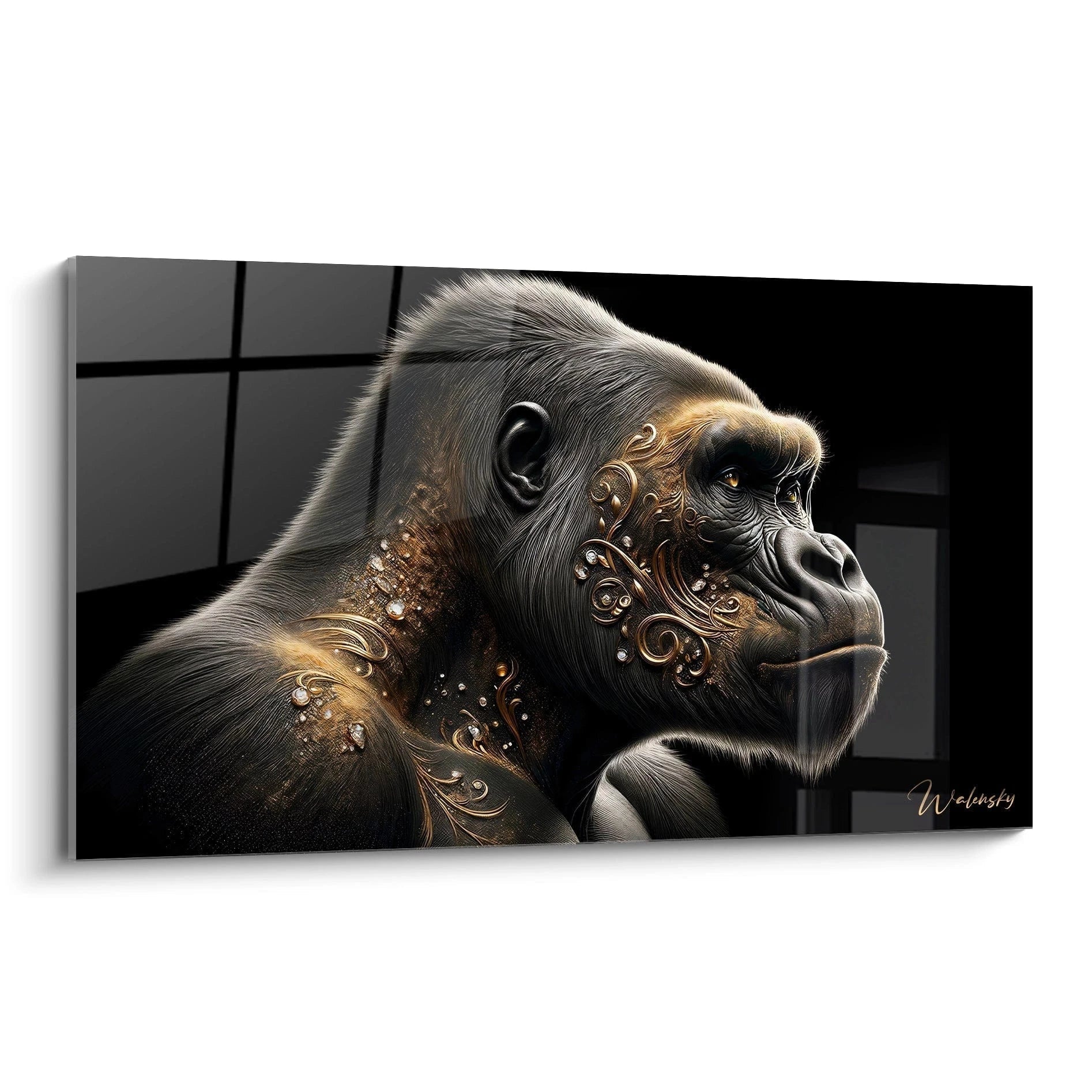
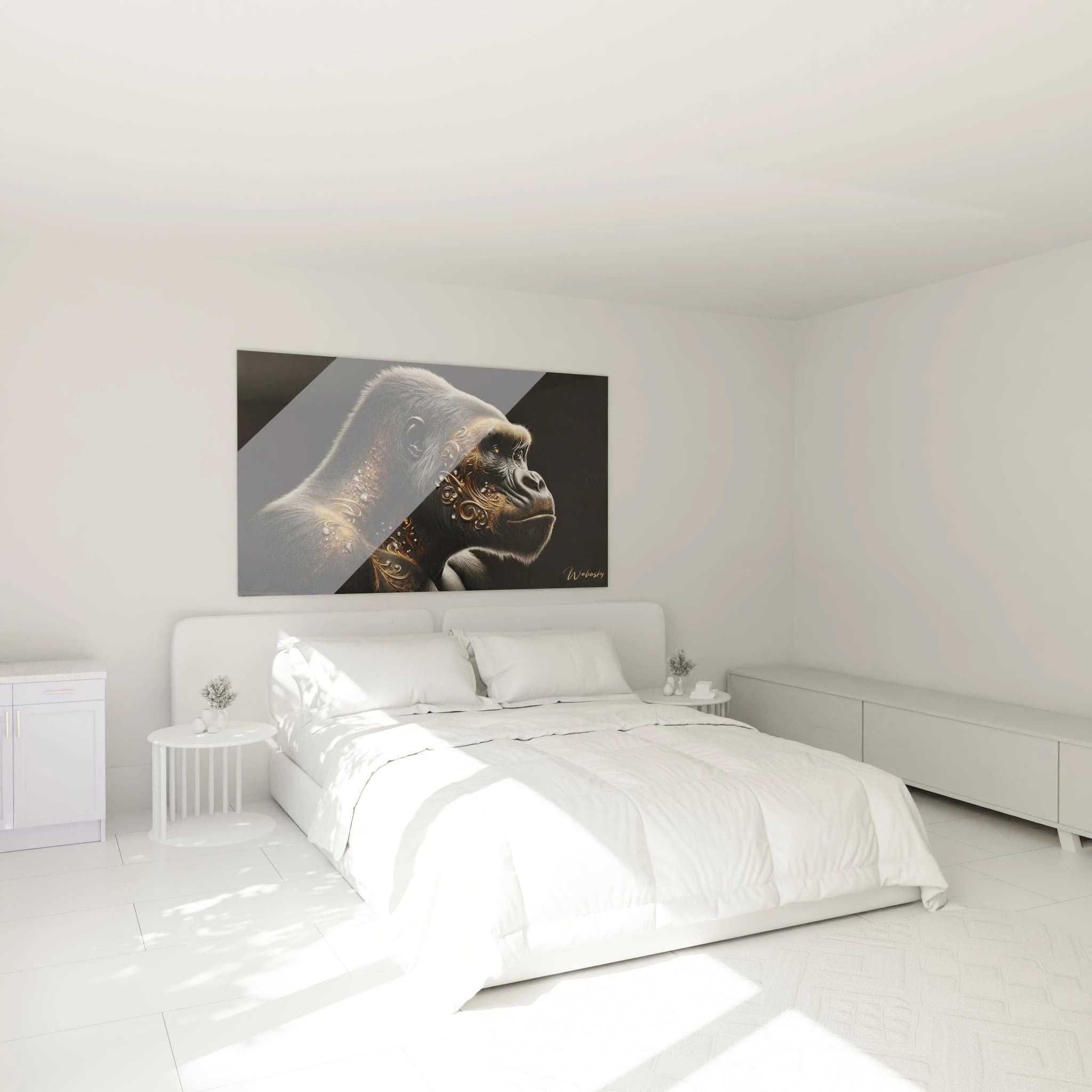
- Animal Wall Art Presentation
- Wild Animal Wall Art
- Aquatic Animal Wall Art
- Savanna Animal Wall Art
Our animal wall art represents far more than simple wall decoration – it embodies the artistic expression of wildlife in all its diversity. These large-format works capture the wild essence of nature, instantly transporting natural atmospheres to the heart of your indoor space.
Whether you're seeking to infuse your living room with a wild spirit or create an impressive focal point in your office, large-format animal representations radically transform the ambiance of your spaces. Between feline majesty, the power of the animal kingdom, and the elegance of wild creatures, these artworks establish a profound connection between your interior and nature.
Animal representations distinguish themselves through their unique ability to evoke strong emotions and create a distinctive atmosphere in each room. The imposing visual presence of a large-format animal wall art completely transforms the spatial dynamics of a room, serving both as a statement decorative element and as an open window to the natural world, perfect for a dining room or bedroom.
Discover in the following sections how different types of animal wall art can transform your space according to the ambiance you seek and the unique characteristics of each animal representation category.
Wild Animal Wall Art: Capturing the Power of Wildlife in Your Interior
Wild animal wall art distinguishes itself through its unique ability to introduce primal energy and majestic presence into contemporary spaces. Unlike floral or abstract representations, these large-format works establish a visual dialogue between the domestic world and the untamed essence of nature.
The distinctive power of a wild predator wall art lies in its ability to instantly transform the atmosphere of a room. The visual impact of a big cat in motion or a wolf with a piercing gaze creates a magnetic focal point that completely reorients the spatial dynamics of your interior.
How does a wild animal wall art transform the spatial perception of a room?
The introduction of a large-sized animal wall art fundamentally modifies our space perception. Environmental psychology research demonstrates that wild life representations create a spatial extension illusion, as if the room opened onto an infinite natural territory. This unique characteristic of animal artworks explains why they are particularly effective in confined urban spaces like a stairwell.
The imposing dimensions of wild animal wall art (generally exceeding 120 cm in width) allow the creation of an immersive effect impossible to achieve with smaller representations. The animal depicted at almost real scale establishes a quasi-tangible presence, creating the impression that a majestic creature truly inhabits the space.
- Large horizontal formats (150×80 cm and beyond) are particularly suited to main living spaces like living rooms
- Vertical compositions accentuate ceiling height and work perfectly for entryways and hallways
- Triptychs depicting a wild life scene in sequence create a striking panoramic effect
What unique psychological reactions do predator animal wall artworks evoke?
Neuroscience reveals that our brain processes predator representations differently from other images. A wall art depicting a lion, tiger, or wolf simultaneously activates the limbic system (seat of emotions) and the prefrontal cortex (seat of aesthetic appreciation), creating a particularly intense and memorable visual experience.
This neurological reaction explains the power of fascination exerted by wild animal wall artworks. The observer experiences a form of controlled adrenaline excitement tempered by the safety of the domestic context – a sensation/safety duality impossible to recreate with other artistic themes.
Professional spaces benefit particularly from this psychological dynamic. A wild animal wall art in a conference room or executive office subtly projects notions of power, strategic instinct, and territorial domination – associations impossible with architectural or abstract representations.
The specific chromatic impact of wild animal wall artworks
The distinctive palette of wild animal wall art constitutes an exclusive decorative asset. The combinations of tawny, ochre, and deep black tones characteristic of big cats or the gray tones of wolves and elephants introduce complex natural nuances usually absent from contemporary interiors.
This chromatic richness allows anchoring sophisticated color schemes impossible to achieve with abstract or geometric works. A lion or tiger wall art can thus serve as the chromatic pivot around which to structure the entire interior design, the secondary tones of the animal representation inspiring the choice of textiles and accessories.
Minimalist spaces with neutral tones are particularly transformed by the introduction of wild animal wall art. The contrast between the streamlined geometry of contemporary furniture and the powerful organicity of the animal representation creates a sophisticated visual tension typical of high-end interiors.
The seasonal evolution of the perception of wild animal wall art
A fascinating phenomenon unique to wild animal representations concerns the variation of their visual impact according to seasons and natural light. Owners of these works testify to an evolving experience impossible with other artistic genres, particularly appreciated in a modern library.
In winter, when light is rarer and often indirect, the deep tones of fur and coats seem to absorb and concentrate available light. The piercing gaze of a wolf or tiger then acquires particular intensity, transforming the wall art into a true luminous focal point in your vacation home.
Conversely, summer light reveals the richness of nuances and details impossible to perceive in winter conditions. Golden reflections in a lion's mane or subtle variations in a leopard's spotted coat emerge, revealing a work in constant visual evolution throughout the seasons.
This unique characteristic of large-format wild animal wall art fundamentally distinguishes them from static works and grants them a quasi-living presence in the domestic space. They thus constitute not simply decoration, but a true evolving visual experience.
Aquatic Animal Wall Art: Visual Immersion and Spatial Depth
Aquatic animal wall art represents an entirely distinct category in animal art, offering visual and spatial properties impossible to reproduce with other themes. These large-format representations of marine world inhabitants radically transform interiors by creating a unique sensation of depth and immersion.
Unlike terrestrial representations, aquatic animal wall art introduces a dimension of fluidity and weightlessness that fundamentally modifies spatial perception. The apparent suspension of marine creatures in their liquid element creates an infinite space illusion particularly valuable in confined urban environments.
The unique influence of marine animal wall art on interior acoustics
A fascinating and little-known phenomenon concerns the impact of large marine representations on the acoustic perception of a space. Psychoacoustics studies reveal that the visual presence of an aquatic environment directly influences our sound perception, creating a subjective impression of ambient noise reduction.
This phenomenon, called "cognitive immersion effect," explains why spaces adorned with large aquatic animal wall artworks are spontaneously perceived as calmer and more soothing. Alpha brain waves, associated with relaxation, are significantly more active in people exposed to these marine representations, ideal for a waiting room.
This property exclusive to aquatic animal wall art makes them preferred choices for work spaces requiring concentration and stress reduction, as well as for therapeutic environments like medical offices and wellness spaces.
- Perceived reduction in ambient noise volume of 15-20% with a large marine wall art
- Measurable increase in alpha brain wave activity (relaxation) of 23%
- Documented decrease in average systolic blood pressure of 5-8 points
How do representations of abyssal creatures transform the perception of depth?
Large-format representations of deep-sea animals such as giant squid, abyssal jellyfish, or hadopelagic fish possess a unique capacity to transform the perceived geometry of a room. The contrast between the darkness of the ocean depths and the natural bioluminescence of these creatures creates a three-dimensional depth effect impossible with other subjects.
In spaces with low ceilings or in rooms without windows, these wall artworks create an illusion of vertical spatial extension, as if the room extended indefinitely into the represented depths. Interior architects specifically use this property to radically transform constrained spaces without costly structural modifications.
Wall art depicting jellyfish in particular, with their translucent forms and elongated filaments, generate a visual effect comparable to a raised ceiling, completely modifying the perception of spatial proportions. This characteristic makes them ideal solutions for urban environments with restricted volumes.
The exclusive temporal evolution of aquatic animal wall art
A fascinating characteristic unique to large marine wall artworks concerns their perceptual evolution throughout the day. The representation of aquatic reflections and underwater light play transforms these works into surfaces reactive to environmental light variations, perfect for a fine dining restaurant.
Unlike terrestrial wall artworks that maintain a relatively stable appearance, marine representations seem literally to animate with changes in natural light. This phenomenon creates the illusion of a living work constantly evolving, offering a perpetually renewed visual experience.
Wall art depicting coral reefs with their multicolored inhabitants perfectly illustrates this property. At dawn, cool tones dominate, then colors intensify progressively until reaching their peak at midday, before transforming again into more soothing nuances at dusk – faithfully recreating the natural cycles of marine ecosystems, perfect for a bright sunroom.
The compensatory climatic effect of polar animal representations
A remarkable perceptual phenomenon occurs with large-format wall artworks depicting animals from polar regions such as arctic whales, narwhals, or penguins. These works exercise a perceived thermal compensation effect, particularly valuable in warm regions or during summer periods.
Environmental psychology studies demonstrate that prolonged visual exposure to these glacial scenes modifies the subjective perception of ambient temperature, creating a sensation of relative coolness in objectively warm environments.
This unique property of cold environment representations explains the growing popularity of large polar marine mammal wall artworks in Mediterranean and tropical regions, where they serve as elements of psychological regulation of perceived thermal comfort, particularly appreciated in luxury hotels.
In contemporary professional spaces with large glass surfaces, particularly vulnerable to summer overheating, these polar representations contribute significantly to the psychological comfort of occupants without increased energy consumption related to air conditioning, ideal for a hotel reception.
Savanna Animal Wall Art: Expanded Horizons and Transformed Perspectives
Savanna animal wall art constitutes a singular category in animal art, offering spatial and visual properties impossible to reproduce with other themes. These panoramic representations of vast African spaces and their emblematic fauna fundamentally transform the perceived dimensions of an interior by creating a visual extension of physical boundaries.
Unlike other artistic genres, large-format savanna wall artworks (generally beyond 150 cm in width) establish a unique relationship between the observer and the represented space, thanks to the specificity of the infinite horizons characteristic of these ecosystems. This particularity makes them tools of spatial transformation of incomparable efficacy.
How do the horizon lines of savanna wall art modify perceived geometry?
The distinctive visual structure of savanna landscapes, characterized by a low, unobstructed horizon line, creates a horizontal spatial extension effect impossible to obtain with forest or mountain representations. This unique composition allows "pushing back" walls visually, creating the illusion of considerably enlarged space.
Neuroarchitecture studies reveal that our brain instinctively interprets these distant horizons as real extensions of physical space. This phenomenon explains why interiors adorned with large savanna wall artworks are systematically perceived as more spacious than their objective dimensions suggest.
This property makes savanna animal wall art particularly valuable solutions for constrained urban spaces. In apartments with limited living areas, installing a panoramic representation of elephants or giraffes against a clear horizon creates a perceived spatial transformation equivalent to a physical enlargement of several square meters.
- Increase in space perception of 15-20% with a savanna panoramic wall art
- Maximum effectiveness with very elongated formats (2:1 or 3:1 ratio)
- Ideal positioning at eye level to maximize the horizontal extension effect
The unique influence of depicted herds on social dynamics
A fascinating characteristic exclusive to representations of large savanna animal herds concerns their influence on social interactions in the concerned space. Behavioral observations demonstrate that rooms adorned with herd scenes (zebras, wildebeest, antelopes) naturally favor collective dynamics and group cohesion.
This phenomenon, documented in professional and educational environments, is explained by the activation of our primitive neurobiological mechanisms related to collective safety. The constant peripheral vision of organized groups unconsciously stimulates our pro-social and cooperative behaviors.
Collaborative work spaces and conference rooms benefit particularly from this unique property. Innovative companies strategically integrate large-format herbivore herd wall artworks in their common spaces to naturally reinforce team cohesion and facilitate collective brainstorming dynamics.
The exclusive circadian regulation of savanna scenes
A remarkable and little-known benefit of large savanna animal wall artworks concerns their impact on the regulation of our internal biological rhythms. The representations of expansive skies characteristic of these ecosystems, particularly those depicting the golden tones of African sunrises and sunsets, exercise a measurable influence on our circadian system.
Chronobiology research reveals that regular exposure to these representations of natural light subtly modulates melatonin production and synchronizes our internal biological clocks. This property makes savanna wall artworks valuable tools in environments lacking adequate access to natural light.
Contemporary professional spaces, often characterized by constant artificial lighting, benefit particularly from this regulatory property. Strategic installation of savanna wall artworks in high-concentration areas and rest spaces contributes significantly to the physiological well-being of occupants.
The unique seasonal adaptation of savanna representations
An extraordinary characteristic of large savanna animal wall artworks lies in their capacity to adapt visually to seasonal conditions. Unlike other artistic genres that maintain a relatively constant appearance, these works seem to subtly evolve throughout the seasons in resonance with the external environment.
During winter months, the ochre and golden tones of depicted savannas acquire compensatory visual warmth, counterbalancing external coldness. Conversely, during the summer period, the same works seem to reveal more of their blue nuances and refreshing shadows, creating a moderating effect, perfect for a reading corner.
This perceptual phenomenon is explained by the complex interactions between seasonal natural light, the specific pigments used in these representations, and our contextually adaptive visual sensitivity. It transforms these wall artworks into living elements that evolve in harmony with external natural cycles.
The unique temporal structuring of depicted migration cycles
Large-format wall artworks illustrating major migrations (wildebeest crossing the Mara, elephants in seasonal movement) possess an exclusive capacity to influence our perception of time. These representations of massive collective movements introduce a chronological dimension into static space, creating an entirely renewed relationship to time.
Cognitive neuroscience reveals that prolonged observation of these migration scenes measurably modifies our subjective time perception, inducing a mental state comparable to that achieved through certain meditation practices – a perceived distension of present time.
This property makes animal migration wall artworks valuable tools in environments characterized by chronic urgency and temporal acceleration. Their presence in intensive professional spaces allows naturally counterbalancing stress related to contemporary time compression, perfect for a yoga studio.
FAQ: Savanna Animal Wall Art
What is the ideal size for animal wall art in a medium-sized living room?
For a medium-sized living room (20-25m²), a savanna animal wall art of 150-180 cm width by 80-100 cm height offers optimal visual impact. This proportion allows creating the spatial extension effect characteristic of panoramic representations while maintaining harmonious balance with other furniture elements. To maximize the transformative spatial effect, prioritize elongated horizontal compositions depicting a clear horizon.
How to maintain an animal wall art displayed in a very bright room?
Animal wall artworks displayed in very bright environments require specific precautions to preserve their visual qualities. Favor positioning avoiding direct exposure to sun rays, use UV-protective glass if the work is framed under glass, and apply filtering voile in front of exposed glass doors. Regular dusting with a soft-bristled brush will preserve the intensity of colors and definition of details characteristic of these animal representations, particularly important in a bathroom or kitchen.
Do savanna animal wall artworks work in minimalist contemporary décor?
Savanna animal wall artworks integrate remarkably into contemporary minimalist décor, creating dynamic and balanced contrast. The organicity of animal forms and the natural chromatic richness of savannas perfectly counterbalance the geometric rigor and neutrality often associated with minimalism. For optimal integration, opt for representations with streamlined framing and airy compositions that respect the spirit of space and clarity characteristic of minimalist aesthetics, perfect for your Airbnb or your villa.