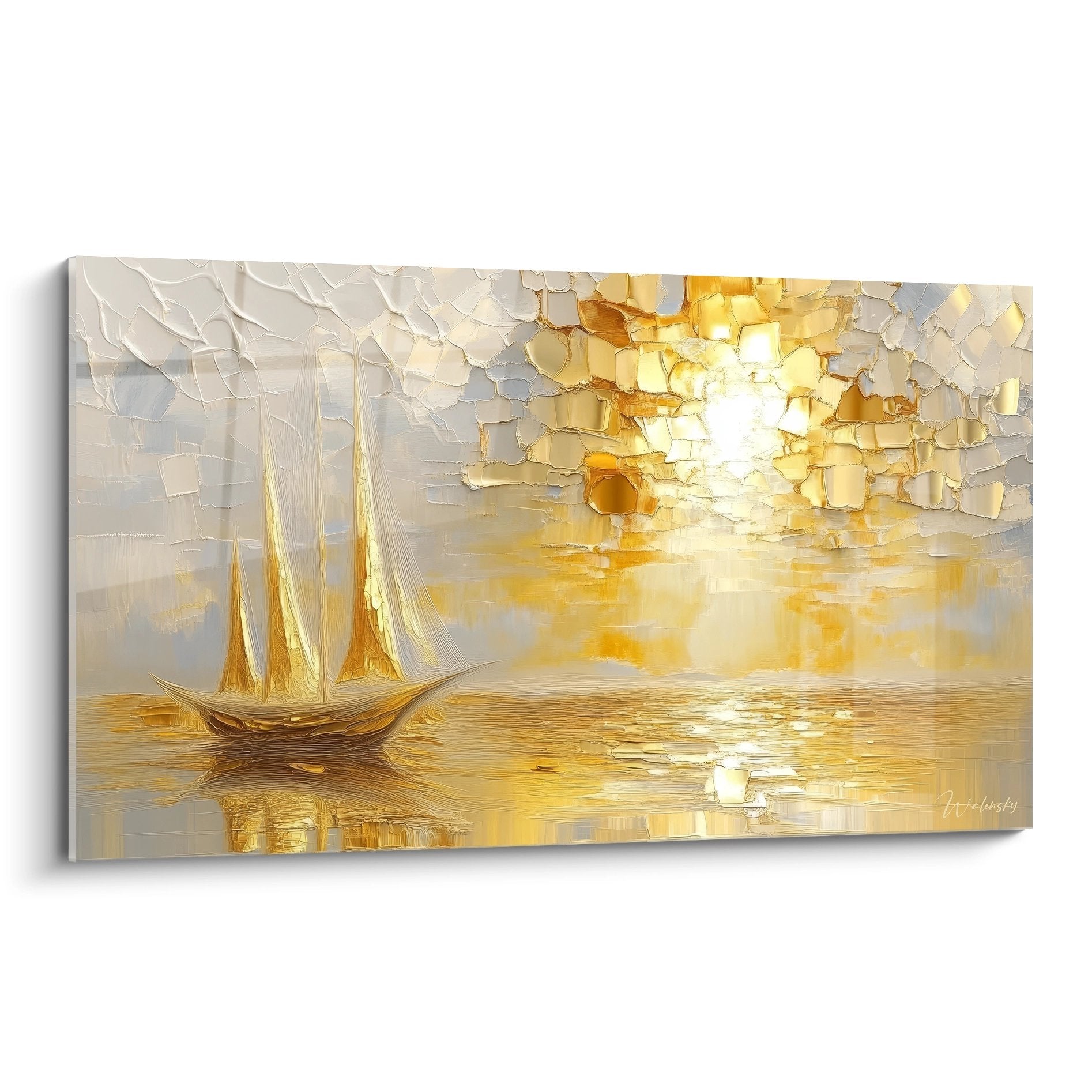
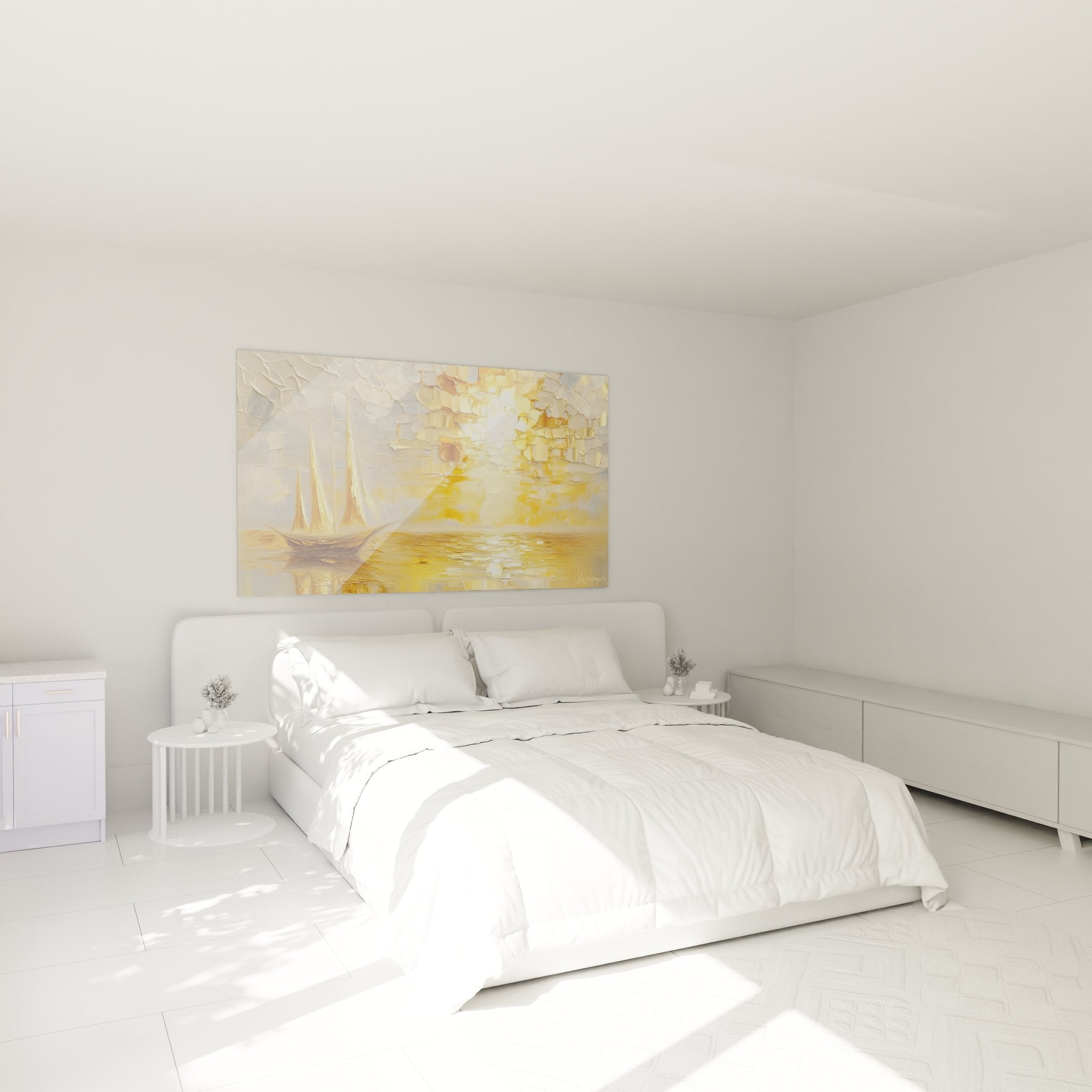
- Presentation Abstract Landscape Painting
- Abstract landscape painting and spatial perception
- Abstract landscape painting and emotional impact
- Abstract landscape painting and modern decoration
The abstract landscape painting represents a form of artistic expression that transcends literal representation of natural landscapes to create an emotional and conceptual interpretation of the environment. These captivating works transform interior spaces by inviting the eye to journey through imaginary horizons and unique spatial compositions.
Unlike figurative representations, an abstract landscape painting offers infinite freedom of interpretation. Each viewer can project their own memories, emotions and personal associations with nature. This interactive quality makes these works particularly suitable decorative elements for contemporary interiors that favor individual expression.
Abstract landscape creations are distinguished by their ability to radically transform a room's atmosphere. Their suggested horizons and vast chromatic ranges create a sensation of amplified space, particularly valuable in urban environments where access to natural panoramas may be limited.
In current interior design, these abstract representations of landscapes offer a versatile decorative solution that adapts to evolving trends while maintaining a deep connection with our innate need to commune with nature. Discover how these paintings can transform your living space by exploring their different aesthetic and functional dimensions.
Spatial Perception Transformed by Abstract Landscape Painting
Abstract landscape paintings revolutionize our perception of interior space by creating virtual windows to alternative dimensions. Unlike figurative works that faithfully reproduce reality, these artistic creations play with our cognitive mechanisms of spatial perception to generate sensations of immensity in restricted spaces.
How does an abstract landscape painting modify our perception of spatial limits?
Research in neuroscience demonstrates that our brain reacts to suggested horizons in abstract compositions by activating the same cerebral zones as when observing real natural panoramas. This neurological stimulation creates an illusion of spatial expansion particularly effective in urban apartments with limited dimensions.
The predominant horizontal lines in these works, even when fragmented or suggested, automatically trigger our mental associations with vast natural expanses. This characteristic makes the abstract landscape painting an architectural tool in its own right for visually pushing back the walls of a room.
The effect of stratified depth unique to abstract landscapes
Unlike other genres of abstract art, abstract landscapes intentionally cultivate a stratification of visual planes that guides the viewer's gaze from foreground to background. This construction through successive layers generates a perceptual depth that considerably amplifies the perceived space.
- Atmospheric gradients creating an illusion of infinite distance
- Superposition of textures evoking different geographical planes
- Games of opacity simulating natural atmospheric variations
Owners of spaces with low ceilings particularly benefit from installing abstract landscapes whose vertical compositions create a sensation of elevation. The eye is naturally drawn upward, counterbalancing the impression of oppression sometimes felt in these environments.
Which dimensions should be privileged to maximize the spatial impact of an abstract landscape painting?
Panoramic horizontal formats (ratio 2:1 or 3:1) considerably amplify the effect of lateral spatial expansion. These proportions, rarely used for other artistic styles, constitute a distinctive signature of contemporary abstract landscapes intended for modern residential spaces.
For rooms with atypical configurations, abstract landscape triptychs offer unequaled installation flexibility. Their modular nature allows them to fit complex architectural spaces while maintaining the visual continuity of the represented landscape, a characteristic impossible to reproduce with single-block works.
Transitional spaces such as hallways, often neglected in decorative projects, transform into immersive galleries thanks to sequences of abstract landscape paintings. The strategic alignment of multiple works creates a kinetic effect that naturally accompanies the viewer's movement through space.
The perceptual fusion between real space and represented space
A fascinating phenomenon occurs when installing a large-format abstract landscape: the boundaries between physical space and represented space become perceptually porous. This cognitive fusion transforms the overall spatial experience by integrating the dimensions suggested by the work with the actual dimensions of the room.
High-end commercial space designers deliberately exploit this characteristic of abstract landscapes to create environments that seem to transcend their architectural constraints. This approach proves particularly effective in waiting areas where temporal perception is influenced by spatial experience.
The dominant tones of abstract landscapes also interact with our volumetric perception: compositions with blue-green dominance recede visually, widening perceived space, while warm dominances advance to create zones of psychological intimacy without structural modification of the space.
The Profound Emotional Impact of Abstract Landscape Painting
The contemplative experience offered by an abstract landscape painting far exceeds simple aesthetic appreciation to reach the deep layers of our psyche. These works act as emotional mediators, transforming a room's atmosphere through their presence and significantly influencing the mental state of those who reside there.
Why do abstract landscapes provoke such intense emotional responses?
Research in environmental psychology has demonstrated that our brain is biologically programmed to respond to spatial configurations evoking landscapes, even when they are highly stylized. This innate response, known as "biophilia", explains why abstract representations of horizons, valleys or water expanses trigger measurable changes in our physiological state.
Unlike figurative paintings that dictate a specific interpretation, abstract landscapes function as emotional projection screens. This unique characteristic allows these works to evolve subjectively with the viewer's state of mind, thus offering a constantly renewed artistic experience that adapts to daily emotional fluctuations.
- Emotional regulation through contemplation of suggested horizons
- Psychological anchoring through stable compositional structures
- Stimulation of spatial imagination favoring mental escape
The specific therapeutic power of abstract landscape compositions
Highly stressful professional environments increasingly integrate abstract landscape paintings as biophilic design elements. These works create focal points of visual decompression that allow collaborators to perform contemplative micro-breaks, measurably reducing cortisol levels without interrupting workflow.
In health and healing spaces, these artistic creations are selected for their specific soothing qualities. Clinical studies demonstrate that daily exposure to abstract compositions evoking natural landscapes accelerates post-operative recovery and reduces analgesic consumption in hospitalized patients.
The unique ability of abstract landscapes to communicate atmospheric sensations rather than literal representations allows viewers to establish deeply personal connections with these works. This individualization of artistic experience explains why these paintings retain their emotional impact even after years of daily exposure.
Which chromatic signatures generate which types of emotional responses?
Abstract landscapes dominated by gradations of blues and greens activate parasympathetic receptors, inducing states of calm and sustained concentration. This physiological reaction makes these works preferred choices for intellectual work spaces and environments requiring sustained attention.
Conversely, compositions favoring ochres, oranges and reds stimulate the sympathetic system, generating sensations of energy and vitality. These paintings naturally find their place in socialization zones and spaces where collaborative creativity is encouraged.
Monochrome abstract landscapes, particularly those exploring subtle gradients of a single hue, produce meditative effects documented by brain imaging. These works facilitate entry into deep contemplative states, making them precious additions to spaces dedicated to relaxation and mental recovery.
The emotional temporality unique to abstract landscape representations
Unlike other forms of abstraction that can be apprehended instantaneously, abstract landscapes gradually reveal themselves to the viewer. This gradual revelation creates a distinct temporal experience that starkly contrasts with the accelerated pace of contemporary life, offering a valuable counterpoint to daily visual overstimulation.
The reflective properties of certain media used in these paintings, such as textured applications and translucent glazes, cause the work to evolve visually throughout the day. This constant metamorphosis depending on natural lighting creates a subtle link with circadian rhythms, strengthening our innate connection to natural cycles even in urban environments.
The absence of explicit narrative in these works frees the viewer from interpretation cognitive processes, allowing for a more direct and visceral experience. This sensory immediacy explains why abstract landscapes are particularly effective at inducing specific emotional states without requiring conscious intellectual effort.
Integration of Abstract Landscape Painting in Contemporary Decoration
The abstract landscape painting establishes itself as an architectural element in its own right in contemporary interiors, far exceeding the simple decorative role to become a structuring component of the space. Its unique ability to dialog with surrounding architecture makes it an essential design tool for ambitious residential and commercial projects.
How can you orchestrate an architectural dialogue with a monumental abstract landscape painting?
Large-format abstract landscapes respond particularly well to minimalist architectures characterized by vast bare wall surfaces. The interaction between the building's structural lines and the suggested horizons in the work creates a visual conversation that enriches the overall spatial experience without compromising architectural purity.
In spaces with high ceilings, vertical installation of abstract landscapes creates a striking cathedral effect. The ascending composition naturally guides the eye upward, amplifying the volumetric perception of space while visually anchoring the functional zones below.
- Creation of architectural focal points without structural modification
- Definition of functional zones through chromatic horizons
- Optical correction of spatial disproportions through landscape framing
Panoramic abstract landscapes integrate remarkably with contemporary fenestration, visually extending actual outside views. This continuity between the visible urban or natural landscape and its abstract reinterpretation on the adjacent wall creates an immersive experience that deliberately blurs the boundaries between interior and exterior.
New supports and technologies enriching the abstract landscape experience
High-definition printing on composite materials now allows for exceptional fidelity reproduction of the textures and reliefs of original abstract landscape paintings. These technological innovations preserve the tactile dimension essential to the complete experience of these works, unlike traditional reproductions that flattened textural expression.
Contemporary finishes such as aluminum supports with floating effect create a three-dimensional presence that visually detaches the work from the support wall. This apparent levitation reinforces the perception of the abstract landscape as a window to elsewhere rather than a simple decorative element affixed to a surface.
Minimalist frames, specifically designed for large-format abstract landscapes, favor ultra-thin profiles that maximize the visual surface of the work while ensuring its protection. This contemporary approach contrasts with traditional framing that limited the visual expansion inherent to these compositions.
What lighting strategy should you adopt to enhance an abstract landscape painting?
Variable color temperature lighting systems allow you to adapt the appearance of the abstract landscape painting to different times of day and various space functions. The progressive transition from warm to cool tones reveals different dimensions of the work, multiplying visual experiences without modifying the installation.
Tangential lighting, specifically developed for textured abstract landscapes, generates micro-shadows that considerably amplify the tactile dimension of the work. This illumination technique, radically different from traditional frontal approaches, transforms visual experience by revealing the subtle reliefs invisible under conventional lighting.
Programmable lighting technologies now allow synchronization of luminous variations with residents' daily rhythms. This light choreography subtly evolves the perception of the abstract landscape throughout the hours, strengthening the emotional bond between the work and its observer through this perpetual transformation.
The seasonal evolution of environments integrating abstract landscapes
Unlike other artistic styles, abstract landscape paintings demonstrate remarkable seasonal adaptability. Their chromatic palette resonates differently depending on the natural lighting conditions of each season, offering a constantly renewed visual experience throughout the year without requiring decorative modification.
Seasonal textile complements can be strategically selected to amplify certain tones present in the abstract landscape. This evolving chromatic coordination allows you to radically transform a space's atmosphere without replacing the central work that maintains aesthetic continuity through peripheral decorative changes.
FAQ on Abstract Landscape Paintings
What is the fundamental difference between an abstract landscape painting and a traditional landscape painting?
An abstract landscape painting captures the emotional and energetic essence of a natural environment without literal representation, privileging the expression of spatial sensations through non-figurative compositions. Unlike traditional landscapes that faithfully reproduce recognizable scenes, the abstract approach invites personal and evolving interpretation of the represented space.
How do you choose the ideal size of an abstract landscape painting based on your space?
To maximize the spatial impact of an abstract landscape painting, prioritize a format occupying at least 60% of available wall surface. Panoramic horizontal compositions (ratio 2:1 or 3:1) considerably amplify the sensation of space in narrow rooms, while elongated vertical formats reinforce the impression of ceiling height in compact spaces.
Can abstract landscape paintings integrate into classic interior styles?
Absolutely. Abstract landscapes with muted tones and balanced compositions create a harmonious contrast with classic decors. The key to successful integration lies in selecting works that privilege a chromatic palette echoing the existing tones of the space, while introducing contemporary dynamism that revitalizes the traditional atmosphere without brutal aesthetic rupture.
What specific maintenance is recommended to preserve the visual quality of an abstract landscape painting?
High-quality abstract landscape paintings generally benefit from UV and dust-resistant treatment that minimizes required maintenance. Gentle quarterly dusting with an electrostatic duster is recommended, absolutely avoiding liquid cleaning products. For textured works, annual cleaning by low-pressure compressed air can be performed to preserve the integrity of reliefs without risk of abrasion.