


Glycine Artwork
The collection Glycine Painting brings together suspended floral cascades, where mauve, violet, and white blend into cascading clusters on bright backgrounds. Each canvas captures this particular spring feeling, between a sun-drenched pergola and a garden suspended in time. Generous impasto and color runs give these glycine paintings an almost tactile relief, a living material. An invitation to slow down your gaze and let a touch of floral sweetness into your home.
 Painting Purple and Pink Clusters with Lightly Browned Leaves - Delicate Branch Isolated - Glycine Edition273,90 €
 Artwork Twiggy Branch with Mauve and Pale Pink Clusters - Light Misty Background - Glycine Edition273,90 €
 Grape Clusters Ivory and Mauve on a Faded Beige Background - Falling Flowers Curtain - Glycine Edition273,90 €
 Grape Clusters in Mauve and Gold Blue - Spring Glow - Glycine Edition273,90 €
 Purple and Gold Grape Cluster with Red Berries - Gilded Ornamental Foliage - Glycine Edition273,90 €
 Grape Clusters in Indigo Blue and Pale Pink on Cream Background - Faded Gray Foliage - Glycine Edition273,90 €
 Painting Purple and Pink Grape Clusters with Long Drooping Tendrils - Light Leafy Branch - Glycine Edition273,90 €
 White and Mauve Trellis Painting with Intertwined Branches - Filtering Golden Light - Glycine Edition273,90 €
 Flowering Tree in Violet and Turquoise near a White Fence - Flowered Path - Glycine Edition273,90 €
 Blue and Turquoise Grape Clusters with Golden Outlines - Foliage with Fine Veins - Glycine Edition273,90 €
 Grape Clusters in Navy Blue and Mauve on a Deep Night Background - Leaves with Golden Outlines - Glycine Edition273,90 €
 Purple and White Cluster on Pale Blue Background - Entwined Tendrils in the Background - Glycine Edition273,90 €
 Painting Purple and Gray Elongated Clusters Falling - Gradient Gray Background - Glycine Edition273,90 €
 Purple and Pink Grape Clusters with Blue Titmouse - Spring Halt - Glycine Edition273,90 €
 Round Purple and Ivory Portal Painting with Stone Steps - Black Tile Roof - Glycine Edition273,90 €
 Purple and Blue Tree by the Water - Twilight Glow - Glycine Edition273,90 €
 Painting Purple Clusters and Emerald Green Foliage - Perfumed Cascade - Glycine Edition273,90 €
 Glycine Purple and Antique Wall Lantern Painting - Flowered Alley - Glycine Edition273,90 €
 Painting Lavender and Pale Green Clusters on a Blurred Background - Petals Close-Up - Glycine Edition273,90 €
 Painting Purple and Green Clusters with Scratched Black Branches - Washed Ivory Background - Glycine Edition273,90 €
 Purple Clusters and Pale Blue in Vaporous Light - Fine Intertwined Branches - Glycine Edition273,90 €
 Purple and Mauve Grape Clusters with Hanging Tendrils - Solid Lavender Background - Glycine Edition273,90 €
 Twisted Trunk Painting with Mauve and White Clusters - Thick Knotted Bark - Glycine Edition273,90 €
 Rooted Trees with Purple and White Clusters - Flowing Filaments in the Background - Glycine Edition273,90 €
In the same family
Also explore the theme Nature
-
 View all5000
artworks
-
 Aloe vera94
artworks
-
 Tree64
artworks
-
 Tree of Life50
artworks
-
 Azalea106
artworks
-
 Bamboo241
artworks
-
 Nature's Beauties372
artworks
-
 Cornflower133
artworks
-
 Cactus81
artworks
-
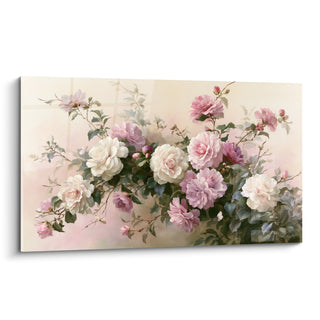 Camellia197
artworks
-
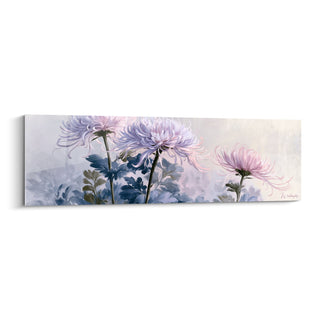 Chrysanthemum225
artworks
-
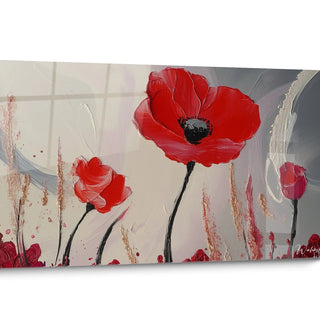 Poppy341
artworks
-
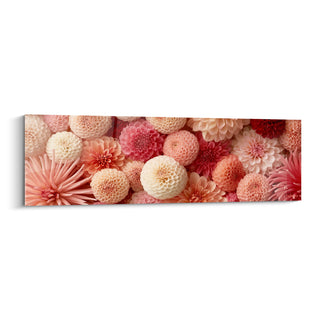 Dahlia161
artworks
-
 Eucalyptus119
artworks
-
 Banana Leaf72
artworks
-
 Golden Leaf2
artworks
-
 Flower276
artworks
-
 Iris Flower179
artworks
-
 Wildflowers5
artworks
-
 Pebbles9
artworks
-
 Ginkgo71
artworks
-
 Hydrangea140
artworks
-
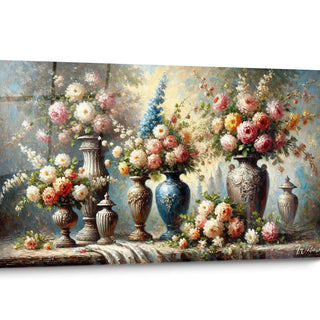 Garden18
artworks
-
 Daffodil163
artworks
-
 Lavender135
artworks
-
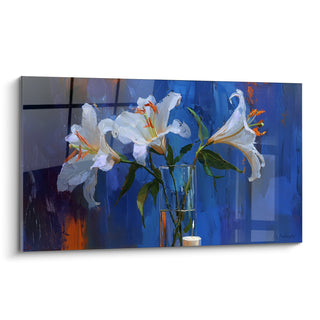 Lily135
artworks
-
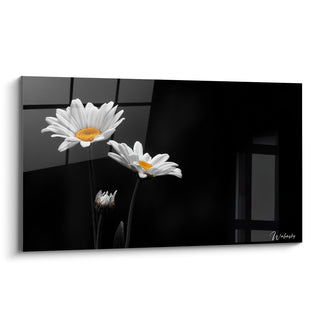 Daisy156
artworks
-
 Monstera8
artworks
-
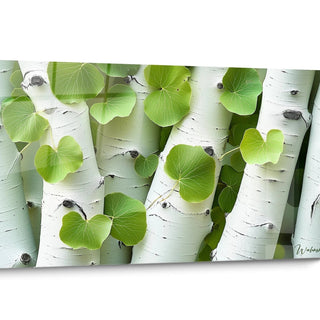 Other Nature80
artworks
-
 Water Lily105
artworks
-
 Olivier321
artworks
-
 Orchid87
artworks
-
 Palm Tree375
artworks
-
 Peony168
artworks
-
 Roses14
artworks
-
 Terracotta436
artworks
-
 Sunflower152
artworks
-
 Tulip542
artworks


All about Glycine Artwork
- Glycine Painting Presentation
- The purple, color of the threshold
- A plant that climbs and asserts itself
- Filtered light, suspended season
The Glycine Painting collection brings together works where floral clusters cascade down from the top of the canvas, in a downward movement that evokes the lightness of a flower-covered pergola. It is not simply a series of painted flowers: it is a variation of this recognizable fall, between deep mauve, immaculate white and golden touches, which makes each glycine painting a fragment of spring frozen on the wall.
What unites these canvases is both the palette and the pictorial gesture: visible impasto, stems drawn with a steady hand, transitions that blend like watercolors. The glycine paintings in this collection all play on this same principle of suspension, as if nature had chosen to freeze for a moment before our eyes, between shadow and light.
This collection is aimed at those looking for a floral presence without heaviness, a vegetal motif that brings height and depth to a wall without ever crushing it. It finds its place as well in a light-filled entrance as in a living room where one wants to install a vegetable breath, a discreet reminder of the garden indoors.
Finally, these glycine paintings speak to those who like vertical compositions and the natural movement of the gaze, guided from top to bottom as under a real pergola. It is a collection designed for those who want to suspend a little spring, without waiting for the season.
Why does mauve dominate these glycine paintings?
Where does this hue between blue and pink come from that runs through all the canvases?
The mauve that dominates these glycine paintings is not a random choice: it is the exact color of the flower itself, a rare vegetable pigment that has long fascinated painters for its difficulty to be fixed on canvas without turning gray. Historically associated with precious dyes and clothing of high rank in the Far East, this pale violet carries an almost aristocratic charge. On these works, it creates a visual suspension effect: neither warm nor cold, it floats between the two, which explains why the gaze lingers without ever tiring.
Does the navy blue and lavender contrast have a particular meaning?
On several canvases from the Glycine Painting collection, the almost nocturnal navy blue background makes the light clusters stand out like a natural light emanating from the darkness. This technique recalls the chiaroscuro used in Japanese floral painting, where the dark void served to reveal the delicacy of the motif. Hung in a sober room, this contrast acts as a point of luminous breath, a reminder that the softest color is best seen when it stands out from a deep background.
Why do orange and golden touches appear at the heart of the mauve?
The fine orange stems that run through some compositions are not decorative by chance: they reproduce the gesture of the painter reconstructing the natural network of stems and tendrils characteristic of this climbing plant, often captured backlit at dawn. This golden yellow, almost solar, evokes the light filtered through dense foliage. In a glycine painting, this linear detail structures the entire floral mass and prevents the composition from becoming uniform, bringing rhythm to the whole.
What the climbing silhouette tells in these glycine paintings
Why do the flowers always seem to be falling rather than growing upwards?
Unlike most flowering plants depicted in paintings, this climbing vine blooms in pendant clusters, naturally imposing a downward composition. This botanical trait explains why each glycine painting guides the viewer's eye from top to bottom, a rare movement that reverses the usual reading of a floral canvas. Hung high, a work from this collection visually extends the ceiling, as if nature were inviting itself from the room's sky.
Do the gnarled branches have a function in the composition?
The trunk of this climbing plant twists and thickens with age, forming gnarled structures that are painted in broad black or brown strokes on several canvases. This graphic gesture, almost calligraphic, recalls the branches depicted in traditional Asian painting, where the dry stroke of the trunk contrasts with the suppleness of the petals. This contrast between rigidity and lightness is what gives these works their visual tension, a balance between strength and gentleness that avoids any saccharine effect.
Why has this climbing plant fascinated ornamental gardens for so long?
Known for its vigorous growth and ability to cover entire pergolas in a few years, this vine has long been planted to create shade and fragrance in European and Asian gardens since the nineteenth century. This reputation as a generous and invasive plant is felt in the density of the clusters painted on each canvas in the collection, where the flowers seem to occupy all available space. A glycine painting thus captures this natural abundance without ever giving an impression of disorder.
The particular light sought by these glycine paintings
Why does the light always seem filtered rather than direct?
This climbing plant traditionally grows in pergolas, forming a dense vegetal ceiling under which daylight passes only in fragments. It is this subdued light, never harsh, that the glycine paintings of the collection reproduce through golden touches and veiled areas of white. This particular treatment of clarity creates an enveloping atmosphere, different from the frontal light of open field scenes, and is particularly suitable for rooms where one seeks a soothing ambiance rather than a frank brightness.
Do these canvases evoke a specific season?
The flowering of this vine is brief, concentrated over a few weeks in spring, which makes it a motif associated with the idea of transience rather than lasting abundance. The glycine paintings in this collection play on this short temporality: the petals seem captured at the precise moment of their maximum bloom, just before falling. Hanging one of these works is choosing to freeze that specific moment of the year rather than a timeless still life.
Does the blurring of the contours have a particular meaning?
The pictorial treatment close to watercolor, with its dissolved contours and diluted transitions, imitates the way the eye actually perceives a wisteria in bloom: never a sharp contour, but a moving mass under the effect of wind and changing light. This technique takes up a process dear to Impressionist painters, who sought to capture a fleeting impression rather than a fixed contour. The result gives each canvas a depth almost hazy, like a memory rather than an exact observation.
FAQ on glycine paintings
Why do the clusters always seem to fall from the top of the canvas rather than being placed in a vase or a classic decor?
Because this climbing plant naturally blooms in cascades from trellises or trees, never in a posy arrangement. Painters reproduce this downward movement inherent to the plant itself, which radically distinguishes this motif from a classic floral still life and imposes a top-down reading of the painting, unusual in painting.
Is this motif suitable for a room without abundant natural light?
Yes, precisely because the filtered and golden light painted on these canvases visually compensates for the absence of real brightness. The play of light touches in the heart of the mauve clusters creates a source of pictorial brightness that animates a wall even in a poorly lit room, without requiring a particular exposure.
Why does this motif particularly appeal to lovers of Japanese gardens or old trellises?
Because this climbing vine occupies a strong historical place in Asian and European ornamental gardens, where it traditionally covered pergolas and trellises to create fragrant shade. People attached to these places or this specific memory find in these canvases a direct and sensory evocation of this particular vegetal universe.
L'art qui suscite l'envie
Maison belge d'art mural grand format
14 jourspour changer d'avis*
Protection Walenskyincluse
Fabriquéen Italie
FormatXXL
Kit de fixationtoujours fourni
* Hors tableaux personnalisés et tailles personnalisées


