


Modern Megalodon Wall Art
The Megalodon Modern painting transforms the legend of the prehistoric shark into a striking contemporary work of art. This exclusive collection celebrates the majesty and power of the largest marine predator through bold artistic creations. Each megalodon wall decoration captures the fascinating essence of this mythical creature with spectacular visual compositions and a contemporary oceanic artistic style. Perfect for enthusiasts of marine life and contemporary art.
 Megalodon Shark Wall Art - Multicolor Digital Predator - Megalodon Edition273,90 €
 Colorful Shark Wall Art - Artistic Explosion - Megalodon Edition273,90 €
 Megalodon Stylized Wall Art - Majesty of the Depths - Megalodon Edition273,90 €
 Megalodon Shark Painting - Colorful Geometric Art - Megalodon Edition273,90 €
 Megalodon Shark Painting - Power of the Depths - Megalodon Edition273,90 €
 Great White Shark Megalodon Painting - Ardent Predator - Megalodon Edition273,90 €
Explore further
In Modern Megalodon Wall Art

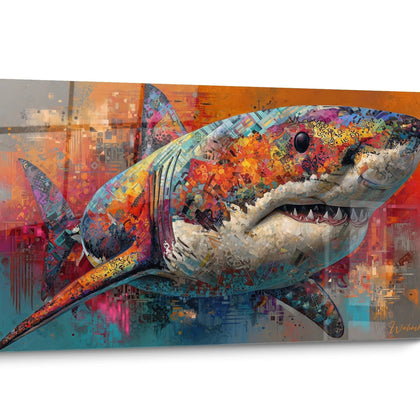
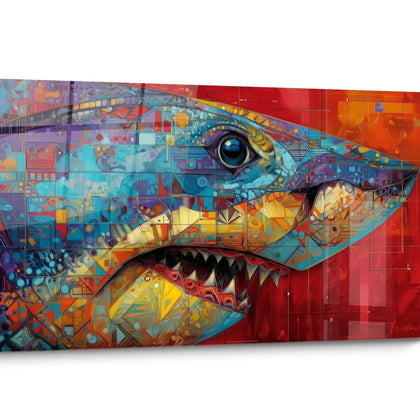
All about Modern Megalodon Wall Art
- Description Painting Megalodon Modern
- Visual Impact and Presence
- Contemporary Decoration
- Acquisition Advice
The modern megalodon painting transforms the prehistoric power of the largest marine predator into a contemporary decorative element. This artistic representation captures the raw essence of Carcharocles megalodon while adapting it to current aesthetic codes, creating a unique fusion between paleontology and interior design. Large-scale formats amplify the intimidating presence of this giant shark that disappeared 3.6 million years ago, offering a spectacular wall piece that radically transforms the atmosphere of a space.
The Imposing Presence of the Prehistoric Shark in Wall Decoration
How does a modern megalodon painting create a striking atmosphere?
The visual impact of a modern megalodon painting lies in its ability to materialize the immense scale of this ancestral predator. Large-format representations recreate this feeling of direct confrontation with an animal measuring up to 18 meters long. Jaws revealing triangular teeth 18 centimeters long immediately capture attention, generating dramatic tension in professional spaces such as specialized orthodontics clinics or naval architecture offices.
The visual dynamics exploit contrasts between dark abyssal depths and illuminated surfaces, creating a three-dimensional depth that seems to project the megalodon out of the wall. This technique reinforces the impression of movement and imminence, particularly effective in industrial lofts with high ceilings where the eye can embrace the entirety of the composition without spatial compression.
Symbolism of the ultimate predator in professional environments
The modern megalodon conveys a powerful entrepreneurial symbolism: absolute dominance in its field, evolutionary adaptability, and positioning at the top of the chain. Tech startups and strategy consulting firms adopt these representations to communicate ambition and the ability to innovate disruptively. The reference to an extinct species also brings a reflective dimension on adapting to environmental changes.
The scientifically documented anatomical details - cartilaginous structure, multiple rows of teeth, massive body proportions - confer intellectual legitimacy to this decoration. Unlike fanciful representations, the modern megalodon painting relies on recent paleontological discoveries to offer a plausible visualization, seducing profiles that value factual rigor.
Large size and transformed spatial perception
Imposing formats exceeding 150 centimeters create a focal architectural point redefining the entire room. The viewer's eye is naturally drawn to the predator's mouth, establishing a clear visual hierarchy. For commercial spaces such as watersports shops or diving centers, this piece becomes a memorable identity element reinforcing the marine theme.
Vertical integration into stairwells or entrance halls exploits the natural upward trajectory of the megalodon hunting from the depths. This orientation creates a spatial narrative guiding circulation while maximizing the emotional impact of the visual confrontation with this extinct ocean titan.
Aesthetic Integration of the Megalodon into Contemporary Design
Which environments value a modern megalodon painting?
Scandinavian minimalist interiors find in the modern megalodon painting a dramatic counterpoint to their chromatic purity. On an immaculate white wall, the silhouette of the prehistoric predator generates a maximum contrast without saturating the space. This approach is particularly suitable for urban apartments seeking a unique statement piece rather than an accumulation of decoration.
Industrial environments preserving raw elements - exposed brick, metal beams, polished concrete - resonate with the primitive and brutal aspect of the megalodon. The juxtaposition between the building's ancient materials and the representation of an extinct creature creates a stratified temporal coherence. Rehabilitated lofts particularly benefit from this aesthetic synergy between architectural heritage and paleontological iconography.
Color palettes and modern rendering of the predator
Contemporary interpretations abandon uniform grays to explore unexpected ranges: bioluminescent electric blues, black-and-gold contrasts evoking mineralized fossils, or cyan-turquoise gradients reminiscent of Miocene tropical waters. These color choices distinguish the modern megalodon painting from simple documentary illustrations, firmly anchoring it in contemporary decorative art.
Some compositions incorporate geometric graphic elements - vector lines, hexagonal shapes, mathematical grids - superimposed on the shark's organic anatomy. This visual hybridization between prehistoric nature and digital abstraction resonates particularly with tech and digital professionals. To further explore this fusion between primal power and contemporary aesthetics, enthusiasts will also appreciate an abstract megalodon painting that radically deconstructs the predator's form.
Association with other marine decorative elements
Successful integration avoids excessive thematic kitsch, like a "nautical child's room." Sophisticated combinations pair the megalodon with geological elements: fossilized coral formations, samples of sedimentary rocks dating from the Miocene, reproductions of authentic teeth under a glass dome. This museum-like approach elevates the decorative status to a cultural and educational dimension.
Furniture with fluid, organic lines - amoeba-shaped coffee tables, sculptural armchairs - creates a formal dialogue with the megalodon's hydrodynamic silhouette. Materials reminiscent of the ocean - blue blown glass, iridescent glazed ceramics, metals evoking shipwrecks - reinforce the thematic immersion without falling into literal decorative clichés.
Selection and Acquisition of a Quality Modern Megalodon Painting
Selection criteria for a lasting decorative investment
Anatomical accuracy is a primary quality indicator. A credible modern megalodon painting respects scientifically established proportions: a conical snout, pronounced gill slits, and proportionate dorsal and pectoral fins. Fantastical representations with oversized teeth or disproportionate bodies betray a lack of documentary research, limiting appreciation by connoisseurs.
Graphic resolution determines the painting's ability to maintain its visual impact even when viewed up close. XXL formats intended for large surfaces require exceptional resolution to avoid visible pixelation. High-fidelity printing techniques preserve texture nuances - the roughness of placoid skin, the luminous gradients of marine depths - essential for visual immersion.
What guarantees should you look for when purchasing?
UV resistance certifications protect against chromatic degradation, particularly critical for spaces receiving direct natural light. A modern megalodon painting exposed in a sunroom or near large windows requires stabilized pigments guaranteed for a minimum of 50 years. This durability justifies a higher investment compared to lower-end productions that fade in a few seasons.
Reinforced fixing systems are essential for large formats exceeding 2 meters. The substantial weight of these pieces requires specific wall anchors, ideally supplied with the artwork. Professional sellers offer solutions adapted to different supports - drywall, stone, concrete - ensuring a secure and permanent installation.
Pricing positioning and quality-investment ratio
The market clearly segments standardized industrial productions from semi-limited editions. Entry-level modern megalodon paintings use basic offset prints on lightweight supports, suitable for temporary installations or budget constraints. Premium ranges incorporate special finishes - protective varnishes, textured reliefs, metallic inclusions - justifying a significant price differential.
Relative uniqueness influences valuation: a limited edition numbered series retains its value better than a massive reproduction. For emerging collectors, prioritizing contemporary artists specializing in prehistoric fauna offers a greater potential for appreciation than anonymous reproductions. Documented provenance and authentic signature are decision-making factors for patrimonial acquisitions.
Where to install a modern megalodon painting to maximize its impact?
Reception areas - entrance halls, main living rooms - optimize visibility and first impressions. Installation facing the main access guarantees an immediate visual confrontation, creating a memorable moment. Executive offices leverage the symbolism of dominance, positioning the megalodon behind the seat of power as an assertion of authority.
Is a modern megalodon painting suitable for family residential environments?
The spectacular dimension particularly appeals to teenagers passionate about paleontology and natural sciences. Installed in a spacious bedroom or games room, it stimulates the imagination while maintaining educational legitimacy. Shared living spaces benefit from a universal conversation starter that transcends generations, unlike more divisive artistic choices.
How to maintain a large-format modern megalodon painting?
Regular dusting with an anti-static microfiber preserves the clarity of the details without abrasion. Avoid harsh chemicals that alter the protective layers. For installations in humid environments - private spas, indoor pools - check the material compatibility with hygrometric variations before acquisition.
L'art qui suscite l'envie
Maison belge d'art mural grand format
14 jourspour changer d'avis*
Protection Walenskyincluse
Fabriquéen Italie
FormatXXL
Kit de fixationtoujours fourni
* Hors tableaux personnalisés et tailles personnalisées


